WWilts
-
Posts
782 -
Joined
-
Last visited
Everything posted by WWilts
-
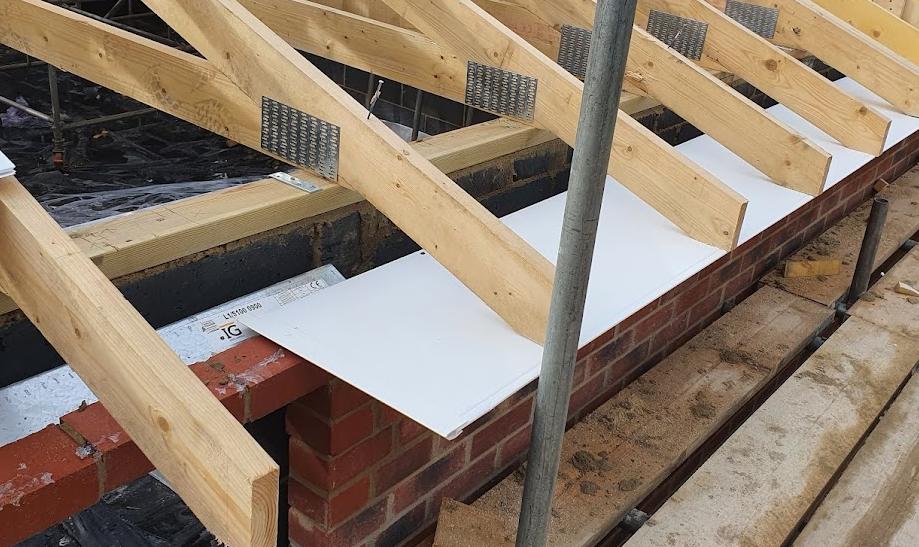
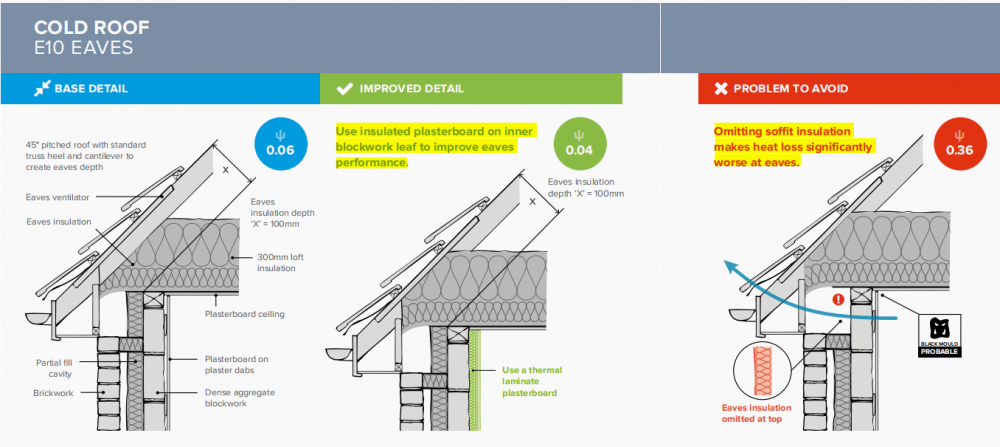
Builder thinks loft insulation spilling over into soffit space should be sufficient for heat insulation purposes. Is that true? Cavity closer will be fire sock Rockwool. Except where two small lintels are close together. Between those lintels (~50mm gap), builder proposes to use foam to close the cavity. Will foam suffice to keep EPS beads in the cavity when they are pumped in?
-
True. These are manmade slates though. Interlocking, not double lapped Others report leaks due to tree debris etc getting into the sidelock channels https://www.diynot.com/diy/threads/low-pitch-cambrian-tiles-leaking.464038/ Hence trying to take preventive action
-
Would a latent defects warranty cover vs roof leakage for 10 years?
-
New build in progress. Hipped roof. No gables. Roof trusses placed in slightly wrong position. Consequently, one elevation has a roof slope of 18.4 degrees instead of 19 degrees. Covering: Proctor Roofshield air permeable water resistant membrane. Topped by Redland Cambrian slates & Marley Universal ridge tiles. Some trees nearby could grow to above the roof height in a few years. Tree debris then might block the Cambrian slate sidelock channels. Water buildup would then test the roofing membrane. Questions: 1) Is it possible to buy insurance specifically for roofing work? To cover defects (insurance backed warranty)? Does normal household insurance do the job after completion? 2) What precautions to take? (Cut the relevant tree branches, Allow a wider lap of roofing membrane, Ensure maximum permitted slate headlap on that shallower slope, other?)
-
Hegehogs working fine on current house
-
Hedgehog will be used to trap any gunk. Hedgehog clips don't fit deep flow. Perhaps galvanised wire around gutter can hold hedgehog in place, without being too prominent from ground level. White guttering
-
Half round gutters ok? What benefits from deep flow gutters?
-
QS/project manager for timber frame house in SE London
WWilts replied to cc247's topic in Surveyors & Architects
From a detailed drawing (to Building Regulations level of detail), Estimators Online provide reasonably well-informed quantities, rates and prices for a small fee (under £200). Very detailed, down to the number of fasteners. If going the TF route, they can be instructed to use your TF price & to provide quantities/prices for the rest. Armed with this info, you can then ask prospective main contractors for quotes. Providing them the spreadsheet of quantities (but with rates & prices blanked out). If they too use Estimators Online for their own quote, that makes life way easier down the line. The advantage of a well-established Main Contractor can be that they obtain labour and materials at near the agreed prices despite all the shortages. They give a lot of business to the building merchants & subcontractors, so they often get priority for supply for labour and materials. You can put clauses in the contract to incentivise them to keep costs down. eg., 50% share in cost savings, 50% share in cost increases. Plus a sweetener eg., generous bonus at your discretion if they bring things in on budget. Using a MC who holds Trustmark status can be helpful, because if errors occur then they can be reminded of that status and the codes of practice involved. This is just one option that has been known to work reasonably well. The key is to maintain a collaborative atmosphere throughout, the contracts etc are just for if/when things go wrong. Good luck -
160mm. Had to adjust a staircase position accordingly, and to lose a bit of floor space from an inner storage-type room. Builder was responsible for setting out, and acknowledged his error. But now says that digging out the structural wall down through the concrete slab and all the way to the footings would not have reduced the quality of the concrete slab. At the time we clients judged that there was a risk of the digging up reducing the quality of the concrete slab. We chose to adjust everything to accommodate his error. That saved him a fair bit of expense. Now just want to put things in the right perspective with him: we have gone out of our way to be good to him. So it would be good if he keeps doing his best for us.
-
Yes, structural spine wall. Steel might well have worked if we had thought of it at the time. First floor joists in & build now done up to roof trusses. Given that we are stuck with the slightly off-position structural wall, we merely want to demonstrate to the builder that we are being exceptionally good to him by adjusting everything to accommodate his error in setting out the structural wall. This might encourage him to do his best for us in every other respect.
-
More advanced stage than that unfortunately, DPM & concrete slab already in place, block wall going down to trench fill footings already in place (just slightly wrong place). Earlier hesitation to dig up the (nice) slab was due to fear that the repaired slab might not be as sound. Any basis for that fear?
-
New build with trench fill footings. Hardcore, sand blinding, DPM, 100mm concrete. If a block wall with foundations is in the wrong place, one option is to dig up the concrete oversite & move the wall to the right place. Are there any disadvantages to digging it up and relaying the hardcore + concrete (apart from time & cost)? Might there be a less sound structure in some way? Not going to dig it up, just want to be informed for giving the builder a talking to.
-
I am told BG will install a 3 phase smart meter. Could be wrong
-
New build in progress. Cost considerations For various reasons, there will be some penetrations of the external walls (100mm, 150mm, small overflow pipe sized etc). Thinking of buying some EPDM roofing material and cutting grommets as needed, to maintain airtightness. Is that EPDM suitable?
-
New build in progress. DNO installed their 3 phase cutouts in our external kiosk, but for various reasons postponed connecting the electric supply. They will shortly provide 3 phase supply. After the DNO connects electricity, BG electricity will install a smart electricity meter. Not familiar with any of this. Is there anything we need to be doing before the electricity meter is installed in our kiosk? BG have not mentioned anything. Will they simply turn up and do their thing?
-
Committed to this local co. (& Solidor) Kommerling uPVC frames are used by Solidor. Perhaps 2 frames can work. Local co have not raised any objections so far, following their on site survey to measure the openings.
-
New build in progress. Traditional cavity wall. Outer stone or brick, inner aircrete blocks. Solidor booked, local company. Opening width 1110mm. No questions raised by the local co. Subsequently read somewhere that Solidor max width is 1013mm If local co. / Solidor come back stating 1013mm is maximum, how to fill the excess opening (50mm each side) in a thermally efficient yet low cost way?
-
Is the 30mm minimum overhang for window frames part of Building Regulations? (Of course maximum overhang is best, that is not the question) Is the 30mm minimum overhang of cavity for window frames applicable to door frames too? Just trying to lay down the law to window/door installers
-
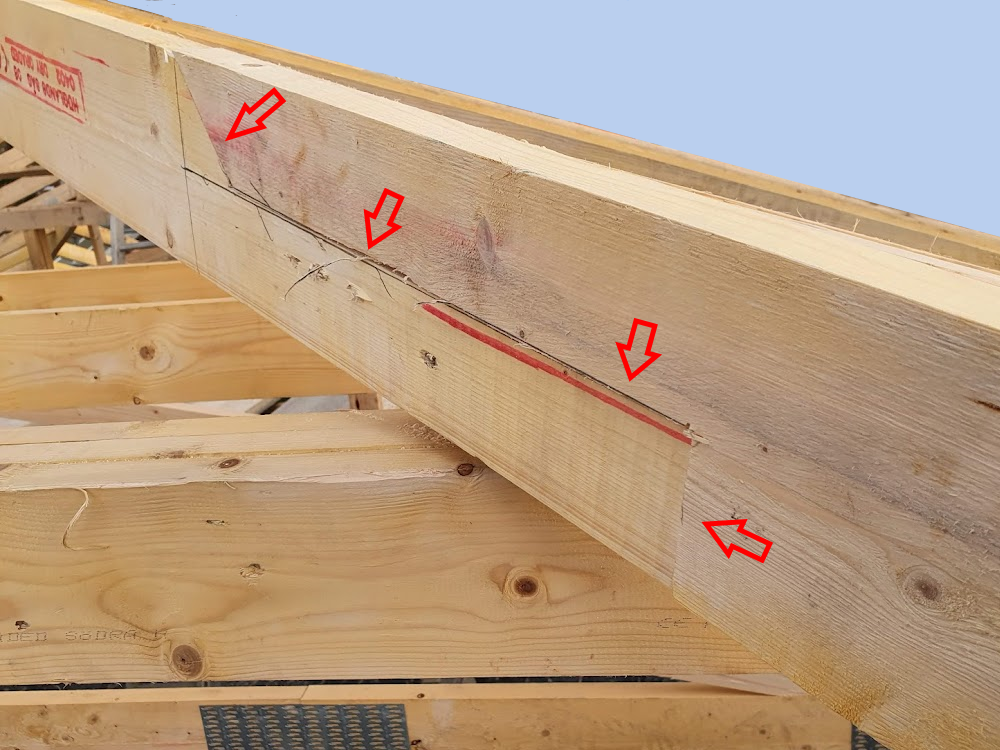
New build in progress, hip roof. For various reasons, one of the hip rafters is spliced (pic). Can D4 glue be sufficient for such a splice? Builder thinks so. Alternative is a steel plate, but that would involve rewinding & redoing a few steps. Trying to gauge how hard to push the builder on this.
-
Anyone had ok or bad experiences with rooflights? Specifically Burglar resistant Electric remote control Solar powered blackout blinds Rain sensor Aware of Velux & Fakro.
-
New build in progress. Loft storage flooring to be on attic trusses designed to take 150kg/m2. No other support required, structurally. Want to add a timber post under a truss, for belt and braces approach to load bearing Post will sit within a 100mm (or 75mm) wide stud wall. What timber to use for the post? Perhaps double up two stud posts?
-
Preventing gutter overflow into cavity
WWilts replied to WWilts's topic in Roofing, Tiling & Slating
Will be included -
How to design out this problem?
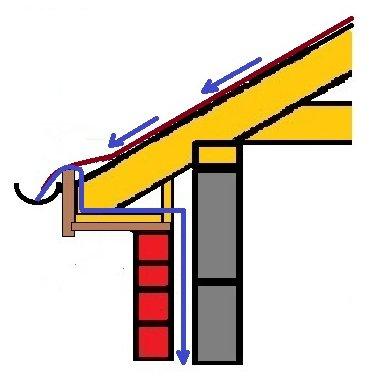
-
22mm T&G P5 chipboard D4 glue (Egger brand) being used. Mildly expanding. Spax Wirox screws. Read somewhere here 150mm centres for the screws. Just want to understand exactly what that means. Does that mean a) a 2400mm x 600mm board would take 64 screws? ie screws at 150mm centres in all directions? Or b) 2 times 4 screws (only short ends of board screwed to joists)
-
For various reasons, plasterboard inner face is the designed airtight layer. That's why membrane around joists (& around blocks at joist level) is to be taken in to seal to the inner face of plasterboard (behind skirting board). Masonry jointing not bad inside and outside, Celcon blocks in independent tests reasonably airtight. But 1:5 cement:sand joints are the first line of defence only. Plasterboard is the second line of defence. Still left with the challenge of repairing the airtight membrane (staples, tears). Any and all suggestions gratefully received.