


SimonD
-
Posts
1941 -
Joined
-
Last visited
-
Days Won
10
Everything posted by SimonD
-
How to measure the remaining HW in an unvented cylinder
SimonD replied to Adsibob's topic in Boilers & Hot Water Tanks
Generally speaking with 25kW you'll get to see about 9-11l/min with an instantaneous temperature lift of 30-35 degrees C, sometimes you can be lucky to see a bit more. -
How to measure the remaining HW in an unvented cylinder
SimonD replied to Adsibob's topic in Boilers & Hot Water Tanks
No, it should actually improve the efficiencies and reduce wear and tear on the boiler. One of the reasons for this is that if you're heating up your cylinder for a longer period of time from empty, the flow rate throught the cylinder and boiler is high enough for the return temperature to go above 54C. Therefore, there is likely to be a long period of time where the boiler is not condensing. It's also more likely you'll see higher return temps causing boiler cycling. If you run PDHW and allow the boiler to top up the cylinder frequently, the time period where the return is above 54 is reduced, therefore efficiencies are improved. This is partly the case because with modern cylinders manufacturer's don't tend to advise that flow is balance using a gate valve so you have full boiler/pump flow rates without much restriction. You can further improve your efficiencies by reducing cylinder temp and thus required related dhw flow temp to get the cylinder to required temperature IYSWIM. -
How to measure the remaining HW in an unvented cylinder
SimonD replied to Adsibob's topic in Boilers & Hot Water Tanks
This is where I'd like to know the set up of the system, the controls being used and how it's wired up because on some systems, like the Evohome system I have installed, I have full control of this so I can set a differential, pump over-run time, minimum run time etc., and why using something like the Viessmann cylinder stat wired directly to the boiler on a 4 pipe system is designed to make this approach as efficient as it should be. Hence why I'm confused about how the PDHW has been approached in this installation, but also why the system isn't being used as it is suggested it's been installed. @Adsibob? -
How to measure the remaining HW in an unvented cylinder
SimonD replied to Adsibob's topic in Boilers & Hot Water Tanks
But Mixergy won't solve this problem because it learns your regular patterns of use and therefore you'll still need to manually top it up following unusual hot water usage. -
How to measure the remaining HW in an unvented cylinder
SimonD replied to Adsibob's topic in Boilers & Hot Water Tanks
As @ProDave really. This is not really priority hot water, you keep the hot water on all the time to top it up automatically, but you can obviously turn it off over night. And also look at your hot water recirc. and the timing of the pump. This is where it's important to understanding usage patterns, particularly short draw offs as that's where the energy losses can be greatest with long runs and poorly insulated pipework. It connects straight into the boiler and is a low voltage connection - it tells the boiler by how much the cylinder is below set point and then by how much it is above it to manage firing up and switching off. It also manages boiler dhw output according to set temp of the cylinder to reduce re-heat time: You don't get this if you have a normal cylinder stat connected via relay connection within a wiring centre. All that then happens is you have to manually set to DHW output temp. at the boiler and then it fires up according to the cylinder stat. If you have sufficient cylinder coil output, then it is better for the boiler to manage the temperature differential between boiler output and target cylinder temp. This is definitely not PDHW. With PDHW you want a higher boiler output temp, which is above the desired DHW temp, and with PDHW the system should close off all flow to the central heating system during a cylinder heat cycle to permit the great flow temp. You don't want to boiler modulating for CH during cylinder heating. Then when hot water demand is satisfied, the system is able to reduce flow temps according to either weather comp or load compensating controls to your central heating circuit. If you are mixing these two functions, you're undermining the whole pdhw approach and you may end up providing flow to the DHW cylinder for very long wasteful periods and it will never fully get to desired temperature, which may be why you're experiencing times when the cylinder doesn't reach desired temp. I think we need to know exactly how your system has been configured with the motorized valves and wiring because something doesn't ring right here. -
Heat loss over time (Vented Cylinder)
SimonD replied to marshian's topic in Boilers & Hot Water Tanks
If you go for the heat only 100-W you lose the built in PDHW capability that comes with the system version which supports a 4 pipe installation and weather comp., plus it has better connected functionality out of the box. That way you also get the full benefit of the modulating pump working with the boiler where you wouldn't get that with the heat only. A small bit of extra pipework is a small price to pay for the long-term benefits. -
How to measure the remaining HW in an unvented cylinder
SimonD replied to Adsibob's topic in Boilers & Hot Water Tanks
I don't think you need anything nerdy. I reckon you're best off simply setting up your system to be priority domestic hot water and keep the cylinder topped up. By modern accounts that's more efficient than letting the cylinder drop to cold and doing a full re-heat cycle, especially if there are times the timer isn't set long enough. Just make sure the cylinder temp sensors are installed on the cylinder correctly and adjust to the right temp. I can't remember exactly which Viessmann boiler you have but it will have a 4 pipe layout capability for PDHW using the Viessmann low voltage cylinder stat. I'm surprised this wasn't the installed setup, or is it? -
How to repair crack in thin coat render on EWI
SimonD replied to SimonD's topic in Plastering & Rendering
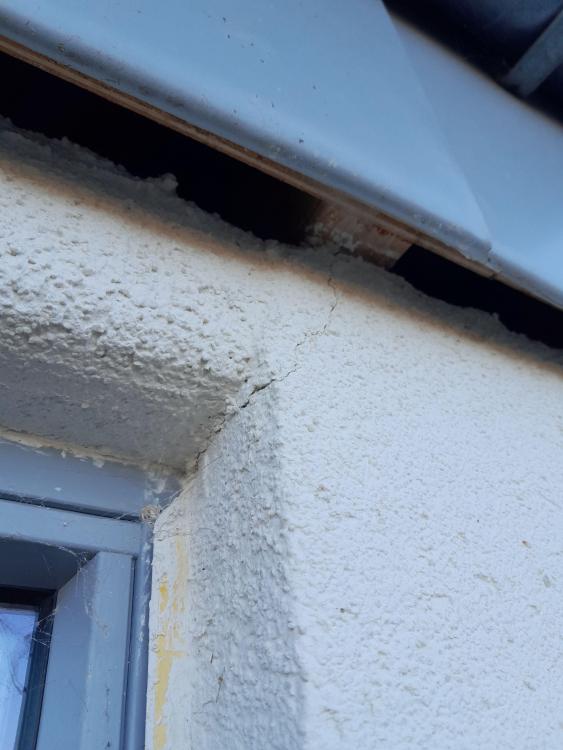
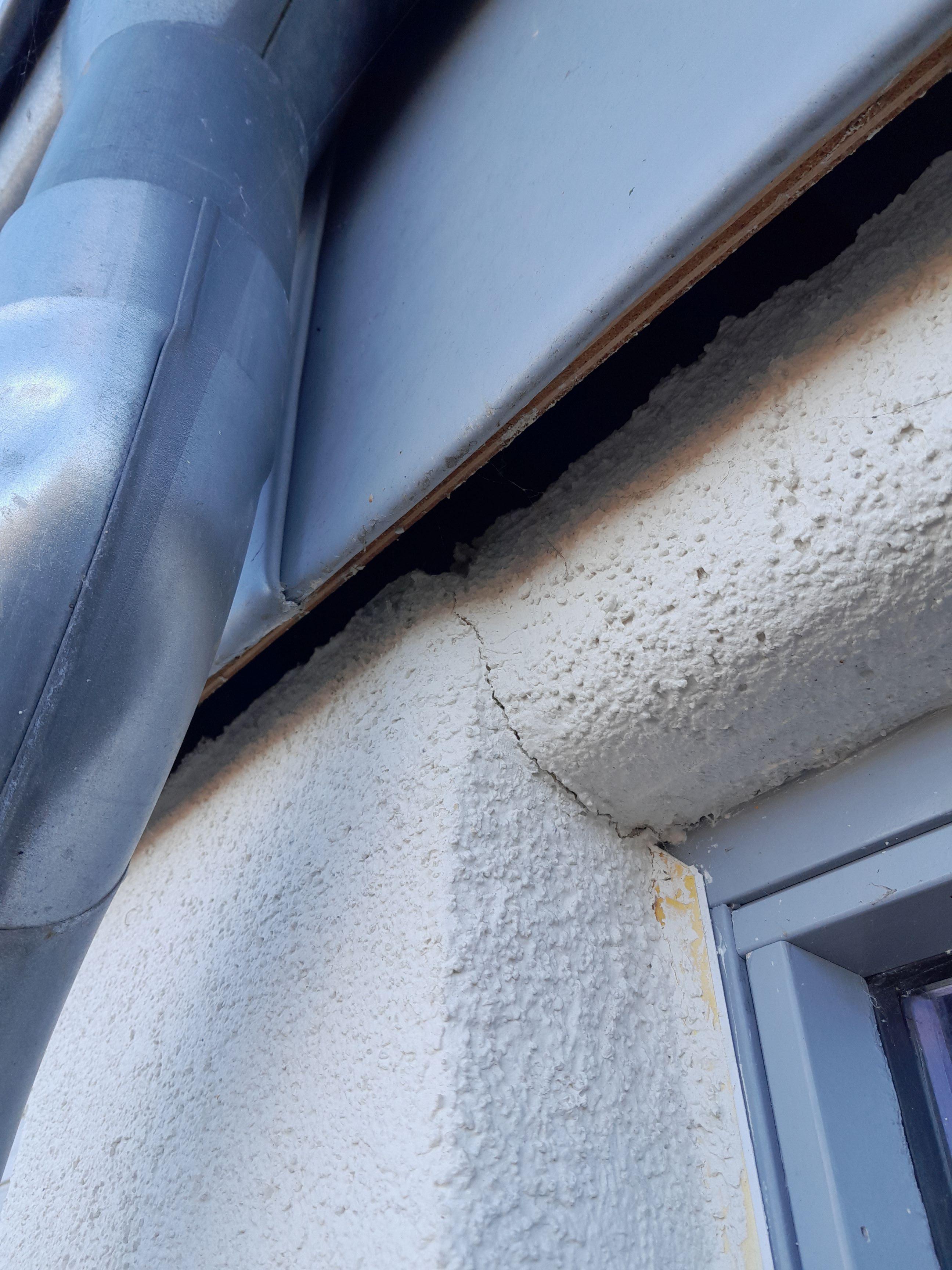
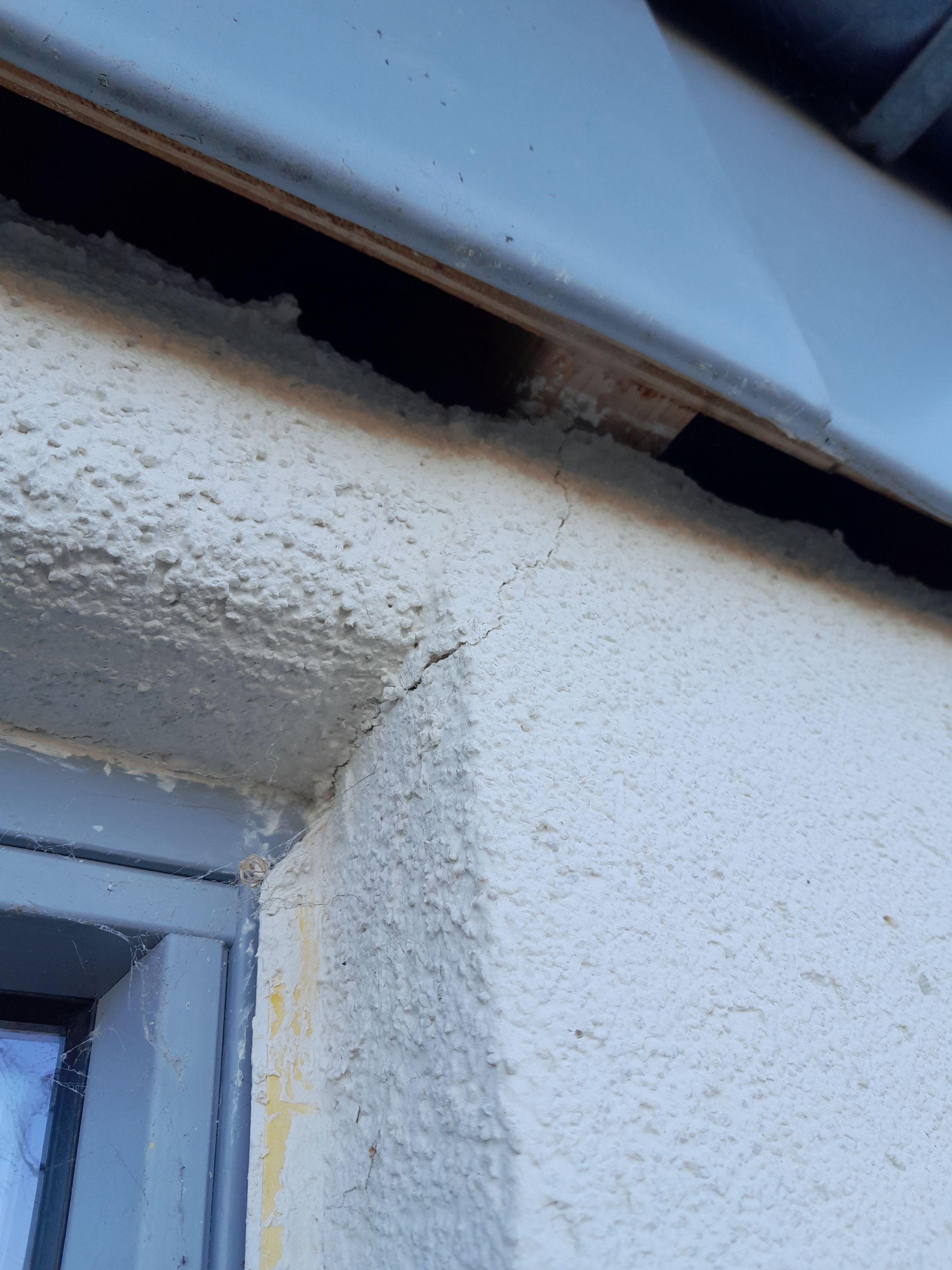
Thanks, yes, it's on the reveal and I don't have 150mm. Pics below. Also come to think of it, I've got a very thin length of ewi at the top of the doorset and sidelights. I'm wondering whether this has contributed the issue as it's a big heavy door, it's on a timber frame and the ewi is thin along the top so not much area to reinforce with the mesh. There's probably a lot of potential movement, and it seems it's only appeard following the very cold snap immediately followed by warm wet weather. (and yes, before anyone says anything, I do need to tide up the render on the door frame 😁)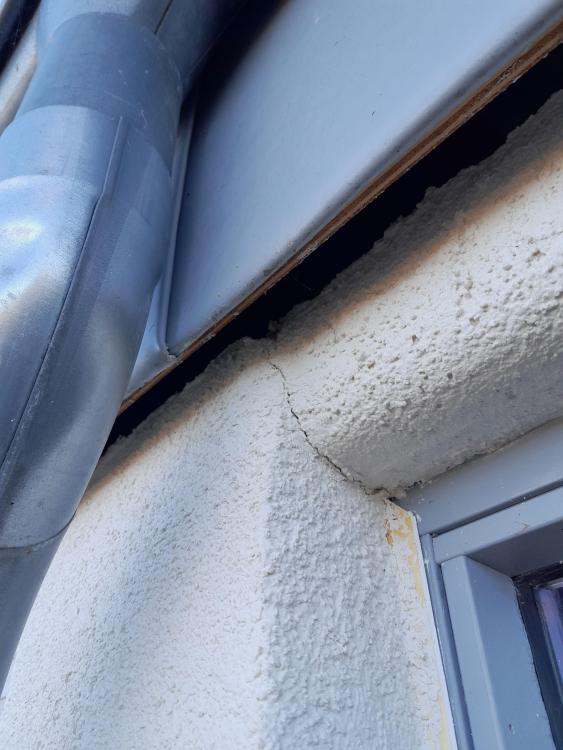
-
I clearly must have had a moment when I did my rendering on the EWI as I've just noticed cracks in two corners around my front door frame. Clearly, forgot to detail the mesh correctly, or even put it in place. Can someone advise on the best method of fixing this? How much of an area do I need to take off to add mesh and how do I blend the repair in to the existing?
-
For PDHW you can also use a normally open and normally closed 2-port valve if you're modifying an existing s-plan, but the boiler should ideally support two temps of course.
-
Radiators not reaching flow temperature
SimonD replied to Helene's topic in Air Source Heat Pumps (ASHP)
It's in the photo -
Radiators not reaching flow temperature
SimonD replied to Helene's topic in Air Source Heat Pumps (ASHP)
Yes, that's more helpful. From the looks of it you have one pump on the flow side - this pumps your hot water into the heating system and hot water cylinder - and one pump on the return side - pumping the cooler heating water back to the heat pump. The flow appears to be on the left, the return on the right, just after the system filter (the black bubble thing). I'm not familiar with the Mitsubishi Zubadan and can't find any tech specs indicating a need to install two pumps in series, nor can I find the heat ex resistance values other than that the pipework needs to be designed for flows that can exceed 1.5m/s. It's not unheard of for this to be recommended in some circumstance, or when one pump sits before a buffer and another after a buffer, but the question still remains as to why on your system? And then we've got the question as to why you're not getting sufficient flow rates even with the two pumps. I would be calling up Mitsubishi technical department to ask questions about the installation recommendations to determine the need to 2 pumps but it does seem like you need to get someone in to take a closer look at the installation. Was the installer MCS certified? And do you know which Certification body they're a member of (e.g. NICEIC, OFTEC etc.). It is possible to raise a complaint through these organisations for FWIW, but at least if it starts costing you money getting someone else in, you've got a better case to claim back the costs. If you complain through these bodies, the installer does at least have a time limit to act. Because you did manage to get heat to your cold radiators when you closed some trvs, I still think it's worth trying to balance the radiators while you're trying to sort this all out. It's also worth getting yourself set up with melcloud so you can see the functioning of the heat pump and energy use. -
Radiators not reaching flow temperature
SimonD replied to Helene's topic in Air Source Heat Pumps (ASHP)
It is unvented. -
Radiators not reaching flow temperature
SimonD replied to Helene's topic in Air Source Heat Pumps (ASHP)
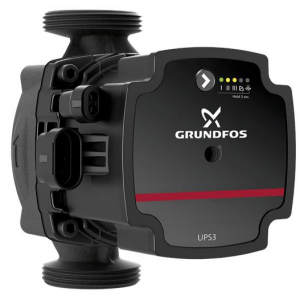
In most domestic properties, you don't need a commercial circulating pump capable of that kind of head and flow volume, so you choose a pump more suitable, like a domestic circulating pump - for example: Grundfos UPS3 or a Wilo Pico, each of which also have proportional pressure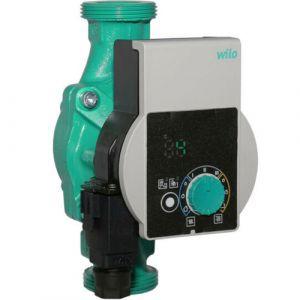
-
Radiators not reaching flow temperature
SimonD replied to Helene's topic in Air Source Heat Pumps (ASHP)
Unfortunately those aren't really going to help. We've got to determine where the pipes come from and where they lead to. We also need to understand how the pumps have been installed - are they in parallel or in series and is there some kind of hydraulic separation installed too? Unless there's a piece of equipment, like the heat pump heat exchanger that has a very high flow resistance, I think that 2 of these pumps is over the top, eve a single one of these in most houses is over the top. But, there may be a reason. What has happened to the installers? Are they not available to answer questions and help with getting this sorted as to me it points to a basic customer service issue. I certainly wouldn't leave a customer of mine with a system that didn't work properly. -
Radiators not reaching flow temperature
SimonD replied to Helene's topic in Air Source Heat Pumps (ASHP)
Okay, so the plot thickens. You've got 2 commercial circulating pumps installed on your system - these are your red things. Both are set to number 3 as shown by the lights. We definitely need to understand how these have been plumbed in as it seems quite incredible that your system with just 18 rads needs two of them running at setting 3. And you're right about them being installed different ways not looking right, but as always it depends on the plumbing. Are you able to take photos to show the whole area of pipework so we can see more? If the heating system is producing lots of air, it can sometimes be a sign that the pumps are churning rather than pumping. -
It's interesting that payback period is one of those things so often raised as a problem when it's down to spending on the fabric of the building or the heating system, but never gets a look in when it comes to a bathroom, kitchen or some other internal home improvement. Yet from a daily living perspective it's worth so much more. Everyone who visits our house for the first time, especially in the winter remarks on how comfortable and warm it is - which I explain is because it is well insulated and doesn't have any draughts. Is that worth the just the extra £10k I decided to spend on insulation? Absolutely.
-
I'm now about to embark on getting my bridge done almost as per details below. We've decided on using a timber deck, which is simply plain treated deck board with build in grip strips. We've change our minds about the balustrade and I though that given the whole top floor of the house is timber, we ought to just go with a timber balustrade. Couple of things I'm pondering. 1. We're actually going to install the deck boards across the bridge not along it so I need to think of the best arrangement to modify the direction of the joists, bearing in mind that the span along the bridge for the joists would be almost 4.8m. Any neat suggestions? 2.how best to fix the balustrade timber posts to the steel columns - do I fix with hollo bolts directly or do I need a bracket which in turn is fixed to the column using hollo bolts? 3. how to detail and make the balustrade itself. 4. any other suggestions ideas on detailing the decking to look nice, especially at the edges just beyond the steels - should I just leave a little bit of a cantilever, or would some kind of edging/frame at the end of the deck board look better?
-part-2.thumb.jpg.33ba127fd14eb236f4f28fd06d70a1da.jpg)
-part-3.thumb.jpg.e937708c4416d2962e7b33391f1f03f2.jpg)
-
Rubbed down by lots of baby wipes too IIRC. But he's a bit slippery mind you, impossible to get hold of due to supply chain problems right now.
-
Thanks, good shout, you've anticipated my next step and question. I have one stone shower tray for the guest bathroom already so will need to remind myself of the best waterproofing process - I know it's been covered to death so I'll try and do a search before asking for a repeat😊
-
Radiators not reaching flow temperature
SimonD replied to Helene's topic in Air Source Heat Pumps (ASHP)
Even so, they will heat up in some sort of sequence and yes, it might be hard but you have to go through the process if you want to balance your system and get it working properly. The circulation of the water in the system isn't just about flow rate, this is some basics on how the system works: Flow rate is determined by the amount of heat you need to move into the house which is in turn determined by your Delta T - the temperature differential between flow and return. The greater the differential, the lower the flow rate, the smaller the differential the higher the flow rate. Once you know your flow rate you then determine the resistance to this flow through the system. The higher the flow rate the higher the resistance becomes in the circuit for the same given pipe diameter. if you double the flow rate you quadruple the resistance and require eight times the power to move the fluid through the system. This is why there is so much talk about needing to upgrade system pipework to accommodate retrofit heat pumps. I think there's an unecessary focus on flow rates right now because the 'low' flow rate could be interpreted in many ways - for example, the circuit has too much resistance for the pump to overcome, or that there is some modulation going on somewhere, or something else. Turning up the pump speed may not have any impact at all on heat distribution, especially if you're dealing with a house with multiple random system extensions - the water could easily be short circuiting back to the heat pump because that's where the lowest resistance is. So some further information is helpful here: what pump do you have? Can you take a photo and post please? However, like it or not, you've simply got to go back to the fundamentals, which means taking a deep breath, taking a good dose of patience and spending the time to balance the radiators. Given that you get heat to the cold rads when you've closed some trvs is a good indicator that you're not actually that far off. So do this and then report back. -
Thanks all for the input all. The panels I'd previously come across were at a self-build show and were made of plastic/pvc or something so hadn't come across these multipanels with the timber core. I will get some samples and find somewhere to have a look at them. However, talking to my wife last night the suggestion of large format porcelain tiles from @Russell griffiths has gone down the best, especially with the addition of thin epoxy grout joints.
-
Radiators not reaching flow temperature
SimonD replied to Helene's topic in Air Source Heat Pumps (ASHP)
Assuming that your heatpump is outputting 14kW, if it's at a Delta T of 5C - eg flow 40/35 or flow 45/40 - this should equate to a flow rate of around 40l/min. 30-33l/min equates to an output of 11-12kW at 5C Delta T With regard to your radiators, you need to be more methodical: - let the system go completely cold and then turn the heating on - as it warms up check and make note of the order in which the radiators get warm and then take note of the temperature of each radiator when the system has been running for a good period of time. - To easily see if you can get hot water to the coldest rad, simply turn off the hottest radiators using the TRV only and then see if heat gets pushed to that cold radiator. -
I know this probably doesn't exist, so maybe it's about finding a balance, but I need to find and expedient way to build a shower enclosure for a family bathroom that stands up to two teenage boys who seem to be able to wreck most things without trying. I've done microcement, and will probably tile another bathroom, but not sure about the general family one... So what would you use and why?
-
What's more important for comfort U value or 'thermal mass'
SimonD replied to Gone West's topic in Boffin's Corner
https://www.theguardian.com/environment/2024/jan/13/human-behavioural-crisis-at-root-of-climate-breakdown-say-scientists You might wonder what's taken them so long 🤷♂️

-part-2.jpg.8cd84edc690e379ab74ab49f496d72ce.jpg)
-part-3.jpg.b02df8c20933be0103dfb657b2273114.jpg)
