Adsibob
-
Posts
3604 -
Joined
-
Last visited
-
Days Won
10
Everything posted by Adsibob
-

Drying and re-insulating a 2.5 year old damp cavity wall
Adsibob replied to Adsibob's topic in Heat Insulation
Yes, you must be right. But I think it will be quite invasive to get through the top, as I think we would need to cut into the membrane and the membrane‘s substrate OSB/plywood. Do able, but then will require call outs from the membrane company to reinstate it, and will complicate the repair as instead of a one tradesman job, it becomes a two tradesman job, which contributed to how I ended up in this mess in the first place. I’m probably not thinking rationally right now though. Waves of anger still permeate through me every few minutes and must be influencing my thinking… -
How much technical detail should a construction drawing show?
Adsibob replied to Adsibob's topic in Damp & DPCs
Thanks. The brickwork was indeed done really well, as was the majority of the work, which is why this f&£k up has come as such a surprise. I think part of the problem was that to make a long story short, the parapet is where two different tradesman’s scope of works meet. One tradesman was doing the roof membrane, that was meant to overlap the parapet, the other tradesman was effectively responsible for everything else, ie the rest of the house. To make matters worse, I think the design was very ambitious, because it didn’t use the aluminium profiles you mention on the rear elevation, just on the parapet walls at the side elevations. (And those parapet walls are free of mushrooms!) So to work, it had to be executed meticulously. But it wasn’t. To answer @joe90’s question, I think small errors were made by all parties involved, including me as ultimate project manager. Enough errors that if I challenge any of them on it, they will just point the finger at the other tradesman and we will all just fall out, so it’s probably not worth going on a witch hunt. As long as it’s not too expensive to resolve, I rather keep people onside so that they can help me resolve it. @Mr Punter I’m considering utilising an aluminium profile to cap the rear wall’s parapet, and would be interested to know which type you recommend. Do the ones you’ve used have an integrated drip profile? -
Drying and re-insulating a 2.5 year old damp cavity wall
Adsibob replied to Adsibob's topic in Heat Insulation
Not sure it will be that simple, as I think there are structural elements, namely the sloping roof structural bits that will be in the way. But possibly. -
Drying and re-insulating a 2.5 year old damp cavity wall
Adsibob replied to Adsibob's topic in Heat Insulation
I think this is a good idea. Thank you. Presumably removing a brick will expose the insulation? -
For reasons you can read about in the nightmare I reported here, the rear wall of our rear extension that went up 2.5 years ago is very damp and it's likely that the mineral wool fibre that was used to insulate the cavity is also wet. I am considering my options as to how to fix this aspect of the damage (after I have found a solution to fix the parapet wall issue described in the other thread). In an ideal world, the existing insulation just dries out and we can leave it there. But it's not clear to me that is very likely to happen very quickly / at all. It may therefore be the case that we have to open up the cavity by removing every other brick in a row or two, and then pull out the wool fibre. I will check with my main contractor, but from recollection, the wool fibre we used was amongst the cheaper products that pass building control, so it is not rigid and should come out easily. This would then allow us to either inject foam or bead insulation (in fact bead insulation can be injected through a small hole of only 22mm diameter). I'm thinking of something like the bead insulation described here. The majority of the wall is actually glazed, so the cavities are actually quite small: a triangle above our sliding doors which is about 5m wide by 1.3m high (at the apex of the triangle); and another triangle above our window which is about 3m wide by 1m high (at the highest part of the triangle). The problem is that the wall will be wet still. It is sealed from the outside (except at the parapet above, where the seal is crap and split/missing in various places) with a brick and mortar sealant and that is likely to impede its ability to dry quickly. So is there an injectable (or pourable) cavity insulation material that performs well in a damp wall and might even assist with drying it out? Sounds like wishful thinking, but I'm hoping some clever company has invented something. The only alternative I can think of is to remove the wet insulation, then try to run some dehumidifying ventilation into the cavity, or remove the wet insulation and live with no insulation until it is dry. Just wondering if anyone has any experience, albeit more likely upgrading a much older wall, not one that was built so recently.
-
How much technical detail should a construction drawing show?
Adsibob replied to Adsibob's topic in Damp & DPCs
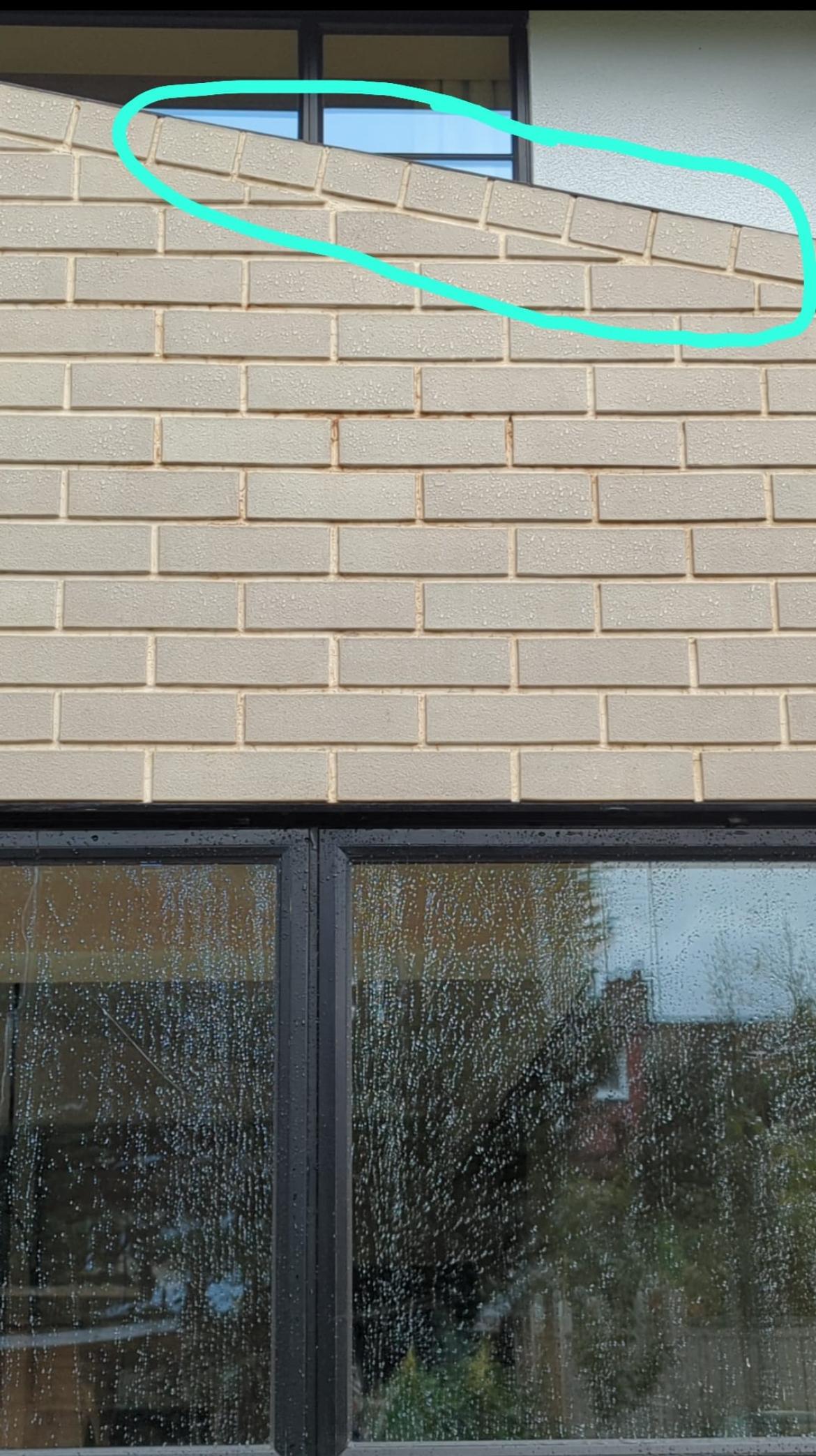
So I got up on the roof today. It’s pretty pathetic. The parapet detailing is poor. I can see three different ways water could be getting into the parapet. To make matters worse, in the last two weeks, an outbreak of mushrooms has grown towards the top of the parapet wall. I counted 12 in total. Difficult to see from a distance, as our wall is more or less mushroom grey, but up close today, unmistakeable. I’ve sent photos to the RICS surveyor who confirmed my fears. He thinks it should be relatively easy to redo the parapet capping, which is the main issue, but he was a little concerned that with the wall being so wet that it is now a thriving mushroom fest, the insulation is likely to be wet. As the bricks and mortar have been sealed, it may take a very long time to dry. He thought that once the parapet capping is fixed it should dry “eventually” but couldn’t be sure. Incredible. I probably should schedule an appointment with my cardiologist as a precaution. -
How much technical detail should a construction drawing show?
Adsibob replied to Adsibob's topic in Damp & DPCs
Yeah, I think you are right. The concern I have is that the leak is very intermittent. For example we had two ingresses of water yesterday, several hours apart, yet absolutely nothing today, despite there being quite a bit of wind and rain today. Also, somewhat weird that there has been no water ingress for the last 7-8 weeks since the weep vents went in. So I suspect it’s a very slow leak that requires water to accumulate over time, in a particular way, caused by a certain rate of rain and possibly a certain wind direction. But without knowing what those variables are I’m not sure I’d be able to do any testing which is scientific. In that I could put the tarp up tomorrow, it could rain for a month, but because the rain wasn’t blown in a CV particular direction, it might not cause the problem, yet I would mistakenly conclude the tarp had fixed it. -
How much technical detail should a construction drawing show?
Adsibob replied to Adsibob's topic in Damp & DPCs
I’m reflecting on the challenges ahead of trying to identify the source of the water ingress, and I’m wondering whether I should even try the DIY approach of temporarily clamping a DPM over the parapet wall, or whether my amateur skills will just be wasting my time on this and instead I should just throw money at the problem and get a specialist in. My original thought of the right “specialist” was a RICS surveyor whom I trust, and he has helped with a few things in the past, usually relating to damp or roof leaks in much older properties, but his only piece of equipment is a basic damp probe and several engineering and surveying degrees. I think of him as a very competent RICS surveyor, but one who is somewhat limited by his business model which is that he is a one man band, who hasn’t invested in any specialist equipment really. A second type of specialist would be a building defect detection company. If their marketing is to be believed, they can use lots of clever diagnostic equipment to quickly get to the bottom of the issue before more damage is done. For example, googling around I found various companies that can do all manner of surveys and tests using specialist equipment, for example: I’m sure this is all expensive, but having spent a crazy amount of money on our home, several hundred K on top of the crazy sum to purchase the old version of the house, and more than enough sleepless nights, in the grand scheme of things, I’m tempted by the professional approach. That said, I’m sure the industry has its share of cowboys, and I have little idea how to avoid them. Just wondering if anybody here has experience of hiring so called “specialists”? Do I understand correctly that @saveasteading or @MikeSharp01 may have professional experience of hiring or working with such “specialists” that is relevant here?
-
Plus 1
-
We have the same, and I really like it. Every bedroom, my study and the lounge has this. It is extra cost to do, but worth the convenience in my opinion. Particularly as I’m not much of a fan of ceiling lighting, so much of our lighting is a cocinaron of wall lights, table and floor lights.
-
Thanks @joth. It's really only in one room where it will be helpful to have integrated USB because the room is tiny so the only place where a bedside table could go is also the only place where the socket can go, so integrated saves space. In the end I went with this as it has one of each type, which seems useful for now: https://alertelectrical.com/click-deco-matt-black-usb-a-c-port-13a-single-socket-vpmb585bk.html I appreciate it only offers: Independent Charging: 5V DC, 4A – USB Type A (2.4A), USB Type C (3A) Dual Charging: 5V DC, 4A - USB Type A (1.2A), USB Type C (3A) But that will do for overnight charging of phones and similar devices.
-
How much technical detail should a construction drawing show?
Adsibob replied to Adsibob's topic in Damp & DPCs
Hi @ETC, the window does have an aluminium cill under it, which has been powder coated the same as the aluminium window. I will check whether it has a drip profile. But why would this be relevant in respect of water ingress that is coming into the house from above the window, given the cill is below the window? -
I think that now that USB-C is mandatory in the EU for pretty much all new handheld devices, it will become universal, even here in Brexitlandia.
-
Each to their own. Which brand are your noisy ones @JohnMo?
-
We have a couple of single gang 13A sockets, each of which has two USB type A sockets as well. When a USB cable is inserted to charge a device the socket makes a very slight high pitched sound. It normally wouldn't be bothersome, but these sockets are either side of a bed (and designed to allow the user of the bed to charge their device whilst they sleep). I can't find the receipt, but I suspect this was a fairly cheap socket, so I'm now looking to replace it with something better. Ideally, I would like something like thisL https://www.screwfix.com/p/knightsbridge-13a-1-gang-sp-switched-socket-4-0a-2-outlet-type-a-c-usb-charger-matt-black-with-black-inserts/756vf because it has both a Type A and Type C usb socket, which i think will be more useful now that Type C is becoming more prevalent. However, I've not had particularly good experiences of Knightsbridge products (the only Knightsbridge product we have is a shaver point in our bathroom, and that makes a slight buzzing sound when something is plugged into it); plus the expense of this socket looks extortionate. Any suggestions gratefully received.
-
How much technical detail should a construction drawing show?
Adsibob replied to Adsibob's topic in Damp & DPCs
Yes, should in they be possible to do that with some clamps. What sort of tarp is 100% waterproof? Standard one from screwfix looks like it will do the job. I don’t really fancy getting on a ladder in this rain. -
How much technical detail should a construction drawing show?
Adsibob replied to Adsibob's topic in Damp & DPCs
I agree. Unfortunately I fear this is now going to be an expensive fix. -
How much technical detail should a construction drawing show?
Adsibob replied to Adsibob's topic in Damp & DPCs
Thanks @Mattg4321, it is quite concerning but I’m going to try and not panic, as it must have a solution, just need to figure out what that is. The only photo I have to hand is below. You will see a think grey material at the top of the parapet wall. This is the fake slate tile we laid at the coping stone. We have no overhang, in fact we have the opposite: a small 5mm recess. In addition to the plastic fake slate tiles we have the membrane, which I will check tomorrow and photograph more closely. Then post here.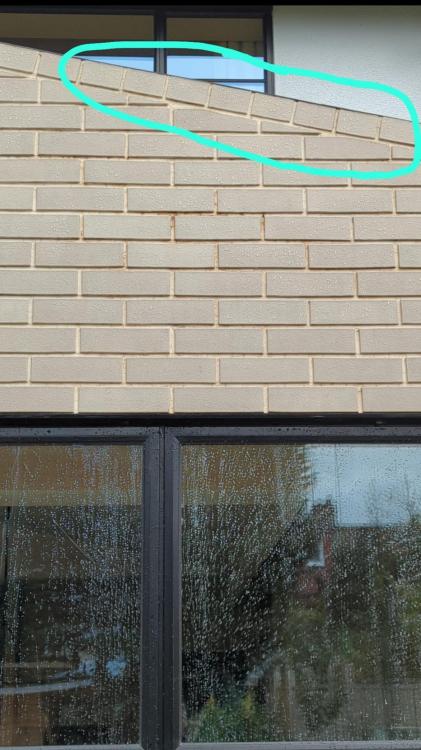
-
How much technical detail should a construction drawing show?
Adsibob replied to Adsibob's topic in Damp & DPCs
Update: some 7-8 weeks after the “fix” entre had water ingress today, after about a week’s worth of almost daily rain. It wasn’t a lot of water, around 20ml. So unfortunately, the introduction of 5 weep vents, removal of the vertical screws and filling the holes with plenty of sealant does not appear to have fixed this issue, although the amount of water getting in appears to be marginally less than before. I’m pretty confused about what is causing this issue now. Here are my current ideas: Possibility One: I need to check, but I believe the coping tiles at the top of our parapet wall do not cover the entirety of the top course of bricks on the parapet wall, because they were installed to end about 5mm away from the facing edge of the brick, meaning that the entire parapet wall has a small 5mm wide strip which is exposed. My architect, who designed this, didn’t think it was an issue because bricks can be pointed with a recessed pointing, so it’s quite common for that much of a brick’s edge to be exposed. Possibility two: The coping tiles touch each other, but there must be a vulnerability at the their joints. That said, the roof membrane is laid to go up the parapet wall and over the coping tiles, or perhaps it was the other way around, but either way there is a membrane protecting the top surface of the parapet wall (other than the 5mm strip mentioned above). Possibility Three The sealant applied to the bricks could be rubbish, or it could have been inadequately applied. I have no idea what product was used as I didn’t specify it. It was just something the main contractor did of his own volition and I didn’t object because I thought it was a good idea and I was happy he was doing it. I think they were thorough in the application as I recall being concerned the white liquid was discolouring the bricks, but then felt reassured once the sealant dried and bricks returned to their original colour. Possibility Four Some issue caused by the window company having pierced the cavity tray when they screwed into the lintel from underneath. These screws were removed 8 weeks ago by my builder who told me they weren’t necessary and that the window “wasn’t going anywhere” because it’s sufficiently fixed at the sides. They filled the holes with sealant, but I guess there could still be an issue. Possibility five: Something I’m not thinking of. Any thoughts as to what to do? A RICS surveyor I spoke to about this a couple of months ago thought that to eliminate the parapet wall as the culprit I should do a hose test on the different parts of the parapet wall. But given the omission of weeps was such a bad error, we ended up focusing on that, so never hosed the parapet wall. Also tricky as to how you do such a hose test given water will trickle down from the parapet wall along the outside of the brickwork, so it does not seem to be a sufficiently specific test so as to be reliable. -
I don’t know, but surely if they did, that would just be a scam way of increasing your premium at renewal time.
-
electric boilers are cheaper than heatpumps to run
Adsibob replied to dpmiller's topic in Environmental Building Politics
Our glorious ministry of defence. Vote Tory! -
Good advice. I will leave it a few days then decide. It has made me wonder about the benefits of a keyless smart lock. But at least according to our local locksmith, who would have a vested interest in saying this, they are not as secure and therefore not insurance approved. I believe @Pocster may have a smart fingerprint activated lock on his front door. If so, I’d be interested to know if it is insurance approved and if so, what make and model it is and whether he is happy with it.
-
It’s really just in the extreme situation, like somebody observed the loss and followed them home, or it was lost on the street and someone took the time to try it in every house. There are about 280 houses, so it would take a while. The main concern is that the video I have shows the house guests looking for it in our front driveway and on our front steps. So if they lost it that close to our house, an opportunist who found the key would not have many houses to try.
-
https://www.telegraph.co.uk/news/2023/12/30/military-trials-cutting-edge-electric-boilers-heat-pumps/
-
I’m just a little confused as to how I can access the lock itself. The door is made of steel, and the lock appears to be behind a a rather long metal profile that travels the whole length of the door. I guess I will have to disassemble it and investigate.