


BartW
-
Posts
349 -
Joined
-
Last visited
Everything posted by BartW
-
I checked the spec of the tiles for flexural strength and it suggests minimum of 15N / mm2. This loosely translates to 152kg per cm2. Average contact patch in a 2t car tyre is likely to be 200mm x 100mm. Assume then 200cm2. So about 30.5t per wheel. That's of course static, and unsupported load. Mine will be dynamic but fully bedded.
-
I am not sure doing it cheaply and quickly is what I want to do. If I have to redo, then might as well do correctly now. The ceramics are R11 slip resistance, so that should be ok? As for the ACO, yes it was going to drain to the main drainage, but I could implement a polycrate soak way... if needed? Am I just trying too hard?
-
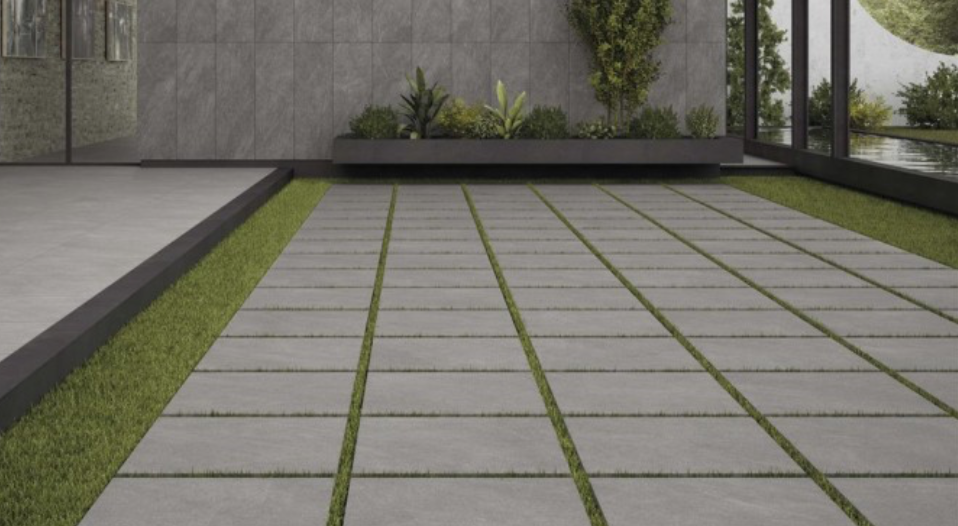
Hi, As above, planning a SUDS compliant driveway. We were going to use resin bound aggregate, but we do like a look of ceramic tiles laid with large gaps filled with grass. I appreciate the above is not water permeable, but would it make it compliant if: A) Aco drain was introduced? B) where the standing grass would be that could be classed as means of draining away C) both? Picture for reference:
-
Loxone question: So many dimmers...
BartW replied to BartW's topic in Networks, AV, Security & Automation
Would it work with Loxone? -
Loxone question: So many dimmers...
BartW replied to BartW's topic in Networks, AV, Security & Automation
We have always had dimmers in houses we lived and would not want not to have them going forward. Sonetimes all lights one circuit can give is not what we want / need. plus, it is too late to skip HA: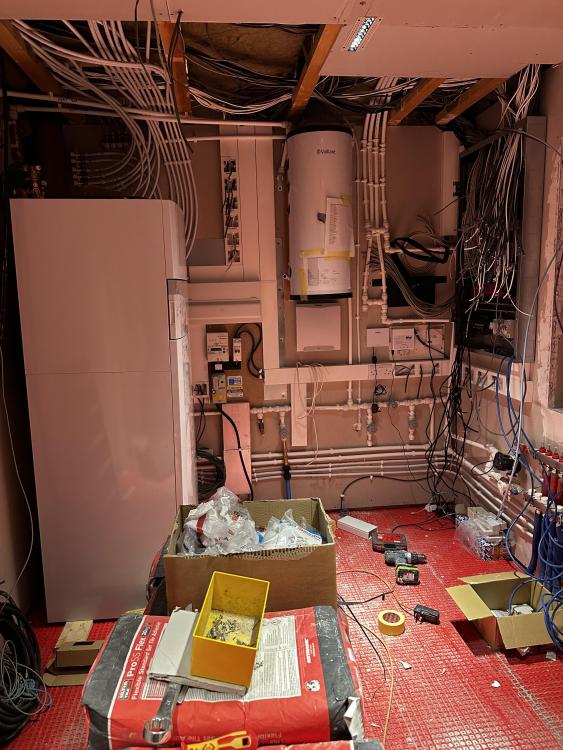
-
Loxone question: So many dimmers...
BartW replied to BartW's topic in Networks, AV, Security & Automation
Hi, yes, as a quick update I went to check after I sent my last comment and they are constant current. calling West Wing tomorrow -
Loxone question: So many dimmers...
BartW replied to BartW's topic in Networks, AV, Security & Automation
Just checked, and all bar a few of the mains dimming lights have actually got a mini driver each, so with a bit of luck I should be able to remove those and enjoy low volt dimming with rgbw dimmers from Loxone. £70 odd quid or so? And they would do 4 individual channels each, so completely solution for around £500 + vat and still within a fully native system. gone to tinker! -
Loxone question: So many dimmers...
BartW replied to BartW's topic in Networks, AV, Security & Automation
Yes, the whole point of automation for us is to be able to create scenes and moods. that and a DMX gate from Loxone right? -
Hi, Is there an economical way to introduce AC dimmers to Loxone cabinet? I counted and a total of 29no is required 😳 That is 7no dimmer extensions. White Wing dimmer would have done, but that does low voltage only, no? Any ideas? Many thanks! Bart
-
My only concern was top floor manifold, but it is not a very big installation otherwise. From the boiler room to the top floor manifold there is merely 12m of length in 22mm. Yet after yesterday's sunny day I conclude I might, indeed (as previously suggested on BH) never run it once in the gym. I will probably have to look into air con at some point...
-
Ok, thanks lads, so in a nutshell: - run the buffer LHS top flow in - through to - RHS bottom flow out? Then cold return pipe to pie. - Can loose the pump, or should? I feel it would help push water around the house, no? I am not worried about the cost of running it. More to ensure the rest of the individual pumps do not sweat too much. - install a bypass valve? Automatic or manual? -magna clean to go cold return fairly close to the Unitower?
-
Yes all in.
-
Thanks! yes many pumps and cost of running those. Upper floors are likely to work / run very little, but it could add up. the secondary pump is part of the kit, ao am in two minds whether to install anyway. Top floor pump sits at 6m above GF FFL. That could put a lot of strain on the Unitower pump? in two minds about buffer piping…
-
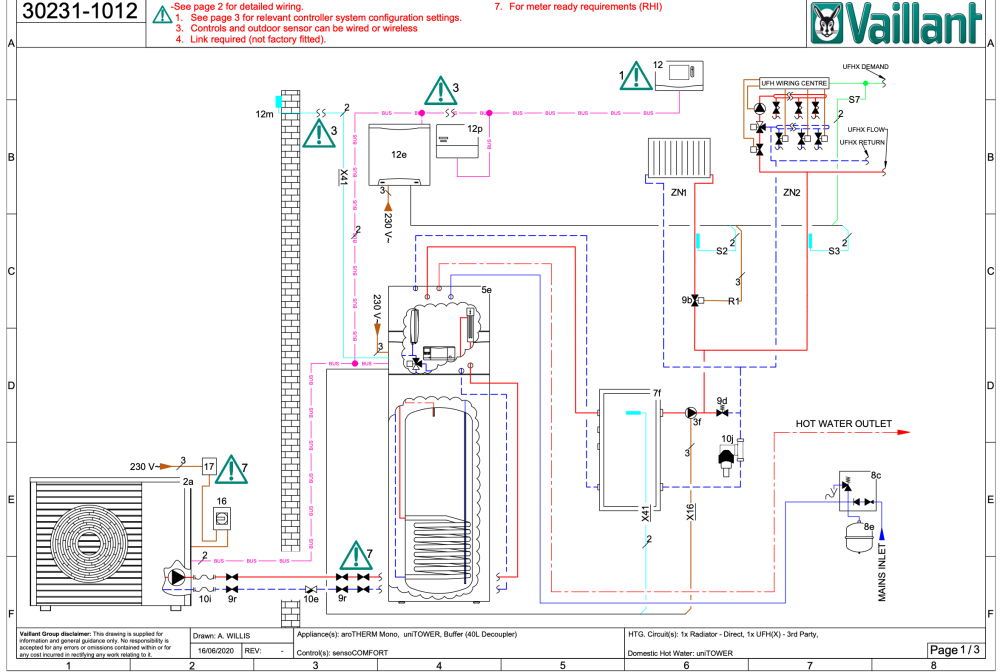
Hi, I am currently doing the plumbing for my heating system. I am following the attached diagram. Except for the fact that we have no rads, but only three separate UFH manifolds (one per floor). What I am unclear about is: - do I need a bypass valve? Some sources say it is optional. And if I do, do I get an auto bypass valve? @Nickfromwales suggest gate valve in this post: - we are using a valiant 45L buffer tank. Current plan to 4 tappings. LHS top for primary HP flow / LHS botom for primary HP return / RHS top for secondary flow to UFH / RHS bottom for secondary return from UFH. Some sources suggest (and Vaillant buffer manual as an option) to run only primary flow through the buffer to secondary flow, whilst having the return piped right through. Any benefits to one over the other? Our heating arrangement is most likely: - GF manifold: single zone (possibly keeping the guest room as a separate zone) - FF manifold: single zone (or all three bedrooms separated, but maybe not...) - SF manifold: single zone Many thanks! Bart
-
Ok, I would check with BC if I were you. Mine point blank insisted, and wanted to see they had been done. The following source seems to suggest the same: https://www.labcwarranty.co.uk/technical-blog/damp-protection-for-concrete-floor-beam-systems
-
Don't forget to paint all beam ends with black bitumen paint. Essential to prevent corrosion of rebars. Also, the 10mm is due to "natural" camber. Quite surprised you had to cut them, as it is possible to order full design with beams in the correct size for your application.
-
I am using these throughout: https://www.hafele.co.uk/en/product/led-flexible-strip-light-24-v-rated-ip20-cob-monochrome-loox5-led-3069/83376391/?MasterSKU=P-01565497# 8W per metre, and longest strip at the furthest location @ around 6m, so 48W, fed both ends on some of them. So all in all up to 2Amps @ 24V. I guess I could trial and error, and if need be, I could just move the drivers closer without modifying the circuits.
-
ok, so my longest run is in the region of 12 - 15m run in 1.5mm T&E. That's where it is supposed to have a driver connected to it, and run in 0.75mm over a 5m final feed line. The loft is one area where this happens to 5 different circuits. I wonder if I could test the full line with a meter and see the actual resistance it returns, then decide whether to move the dimmers to the Loxone cabinet, or have remote drivers closer to the final run. Whilst the walls are yet to be covered, I might be able to redirect the said 1.5mm direct to the lighting points, and shorten the runs at the same time. So, with these DMX dimmers, do I just beef up my PSU and driver voltage direct through them up to the light fitting? All strips are going to be 24V, and my initial idea was to have it all in the cabinet.
-
Ok, thanks! So supposedly I could use one of these to drive all my 24V LED strips?: https://www.aliexpress.com/item/32734596270.html?spm=a2g0o.detail.0.0.2c856d0ePot8RK&gps-id=pcDetailBottomMoreThisSeller&scm=1007.13339.291025.0&scm_id=1007.13339.291025.0&scm-url=1007.13339.291025.0&pvid=8394cd96-5a79-46ce-8d51-a16ab02a53c4&_t=gps-id:pcDetailBottomMoreThisSeller,scm-url:1007.13339.291025.0,pvid:8394cd96-5a79-46ce-8d51-a16ab02a53c4,tpp_buckets:668%232846%238114%231999&pdp_ext_f={"sku_id"%3A"61422846924"%2C"sceneId"%3A"3339"}&pdp_npi=3%40dis!GBP!26.48!26.48!!!!!%40211b58ef16774439383547046e5bd2!61422846924!rec!UK! Downside being distance between the Loxone Cabinet and all LED strips in various locations adding to the resistance by a lot? If I choose to use the Westwing dimmer as linked on the other hand, then I still need to run multiple drivers. Am I right? In which case, is its only additional benefit the price vs Loxone Dimmer extension? Thanks, and yes please do share some more
-
I would probably be more tempted to do dmx if I actually understood it better. But I don’t… for a standard domestic application with a few (dozen) of led circuits of standard single colour dimmable stuff. Is it worth it?
-
Main CU under HA is what I prefer and I think would logically fit under the ceiling (2.44m FFL). is there any software out there to help visualise / configure all gear that I need to be able to squeeze in? I don’t want to buy a cabinet that is just about big enough (or heaven forbid too small) but equally I don’t want to end up with 50% empty space. Supposedly I could start counting din units and see what count I get? Bee Automation when doing his loxone cabinet demo, had a nice clean printout with everything on there. Surely software created it? on a separate note, do I need connection blocks? It seems a common thing to, say, have relay output cable go to the connector block inside the cabinet first, and only then into a typical T&E cable and out. Any logics behind it?
-
I considered DMX dimming but am struggling to decide if it is of any value on my project. The scenes are far from extensive (maybe bar the gym) but not totally obsessed with being able to set individual lights separately in terms of brightness etc. so it’s just a lot of TRIAC drivers for me run off loxone relay box. Nothing too fancy.
-
Ok, so stuff I would have seen online from various businesses is not necessarily conforming? which leads me to another question: i have various lighting and power zones. Sockets are easy to terminate to an mcb. But what about lighting? Do I run , say, 6A breaker out of CU to loxone cabinet and bridge across relays, then out of loxone cabinet? Sounds like the only way, but this will be a busy Summer 😵💫
-
Hi, I am currently planning my Home Automation cupboard (room?) and am wondering if it may be possible to have the typical Consumer Unit with main switch, RCD with banks (or individual RCBOs) integrated into a big din cupboard. This would then be shared with full loxone shebang as well as other “things” to neatly conceal it all away. And whilst I appreciate technically it is all no rocket science, would I be caught out by the regs? Part M stipulates height range for a standard CU with a double row unit achieving certain height in the middle of it (sorry not quoting exact extract word by word, as I don’t want to confuse in case wrong). loxone cabinet by the time built, would be around a metre (maybe more) in height. any thoughts on this please?
-
Installation of Vaillant AroTherm Plus - DIY
BartW replied to BartW's topic in Air Source Heat Pumps (ASHP)
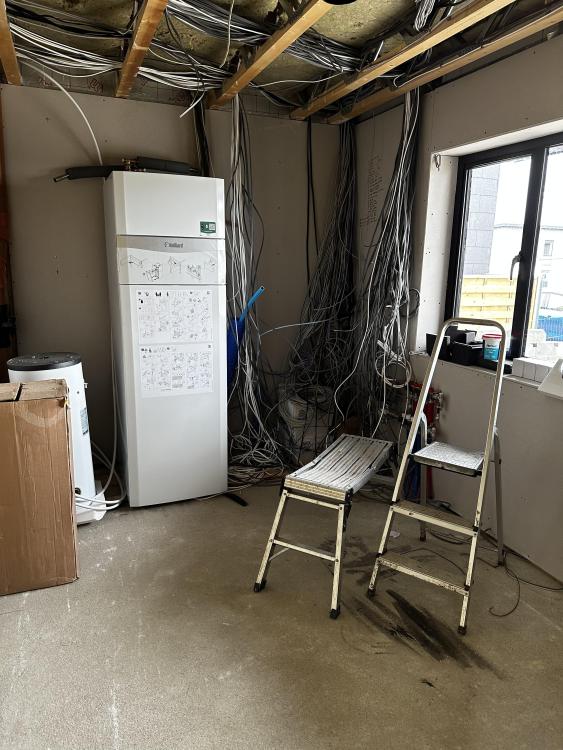
I managed to run the ebus in standard 0.75mm twin. Totally along its own joist and away from anything so that’s sorted now



