BartW
-
Posts
349 -
Joined
-
Last visited
Everything posted by BartW
-
UK, wasn't sure where to even look for German price.
-
On a totally separate note, On an example of a warm deck roof, how do you install VCL underneath the insulation, and not puncture it? Equally, how do you install VCL behind plasterboard / PIR and not puncture it?
-
Blimey, this product is... expensive. I got a price for Powerlon VCL170. Twice as expensive as the cheap Wickes, but still four times cheaper that the above, so perhaps I might settle for that
-
Ok great, in which case, would one want to go for a super expensive VCL, or would a £25 roll from Wickes do the job? https://www.wickes.co.uk/Wickes-Green-Polythene-Vapour-Barrier---2-5-x-20m/p/153230?fix&gclid=CjwKCAjw0dKXBhBPEiwA2bmObfb-x1ACapPpsPABhUsKGk2MIAoA9rnLUhCK08Jk3ho2SIpS6gPXzxoCItgQAvD_BwE&gclsrc=aw.ds
-
Hi, As per the title, would you tape all joints on the external house wrap membrane on a timber frame structure? We will have VCL everywhere internally, but would taping all joints externally help with airtightness? Many thanks! Bart
-
Thanks for the advice guys. I spoke to my (friend) merchant and they will replace the timber to 25 x 50... I feel d!ck...
-
I am more concerned about the width of the battens. Is what @Roundtuit says right? Will it be impossible to meet two plasterboard layers side by side?
-
Hi, as per the question in the topic. are 25 x 38mm service battens ok size wise? i have just had a delivery of it (a lot), and am now thinking whether I bought the right size, or should they have been 50mm wide? also, are these ok to use as battens and counter battens for timber cladding? NHBC states, minimum 1.5times as wide as the cladding. My cladding is 20mm thick. could someone please clarify? thanks bart
-
Thanks guys, cladding with cement board, or hardie, and so on sounds like another level of complicating it. Adds to fitting time / fiddliness, and costs as much as 25% to 30% of what I paid for the charred wood. I think good UV membrane is going to have to suffice on this one. Perhaps I will adjust my gaps to something like 5mm, so that come Winter cold, the gaps become wider.
-
The timber is now on site, and it would not be practical to rework it. It is charred all around, and there is over 300m2 of it. I think I will carry on pursuing the open rain screen cladding, in which case I am assuming I need to go for: - UV breather - insect mesh top and bottom, or just wrap breather tight to meet the wall and prevent any gaps top and bottom? I think the above would be the most sensible solution, given where I lead myself to Comments welcome!
-
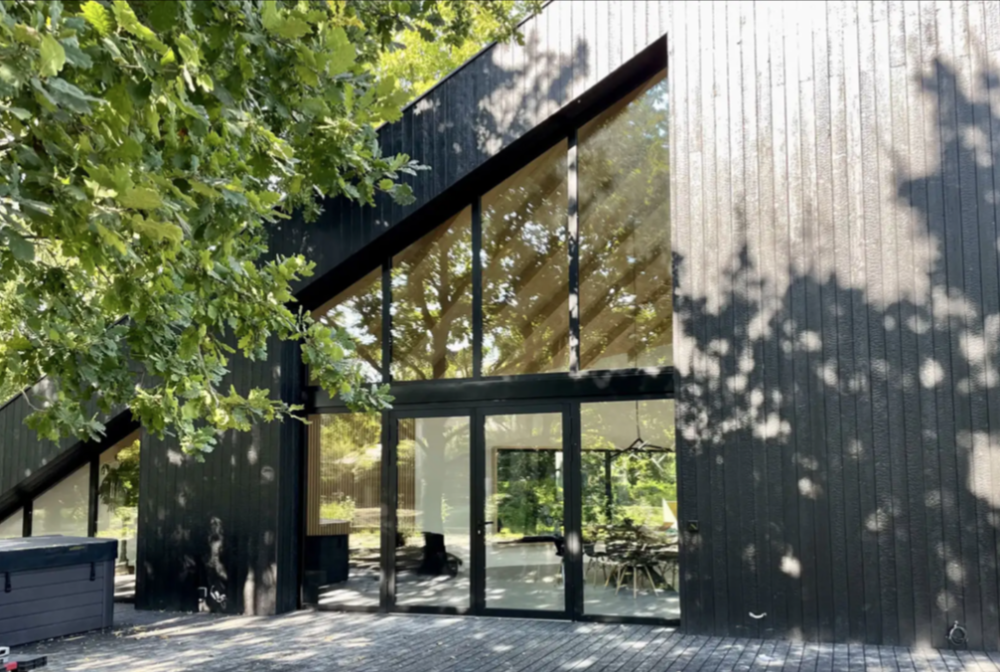
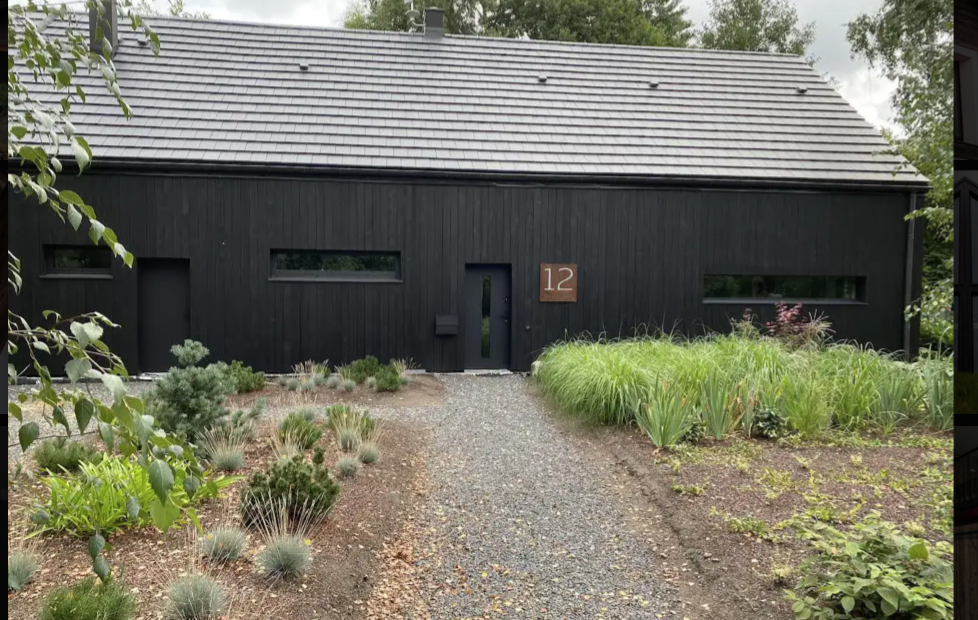
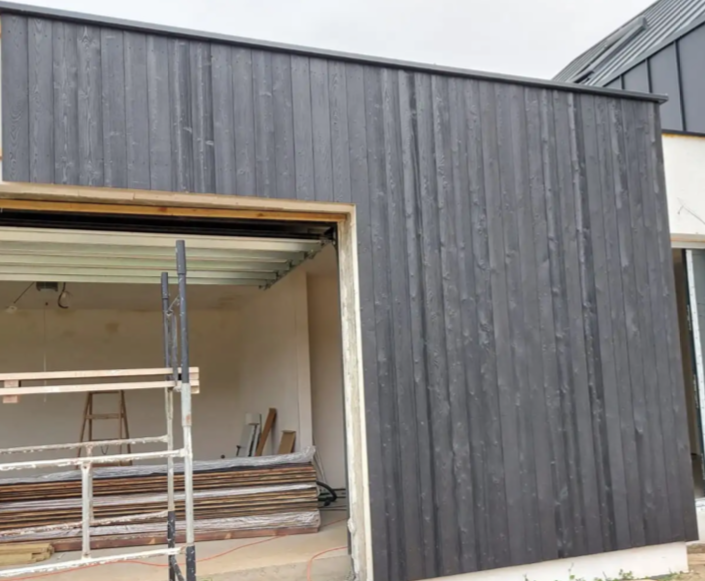
Thanks chaps, I will do a full read at home, but the following look is what I am after. What if I lay butting up?
-
You mean sit them tight? Not sure if I like it. Spent enough to make it special, taking away from that would feel wrong.
-
Ok, So certain thing highlighted itself: Timber frame panels are factory wrapped in https://glidevaleprotect.com/product/protect-tf200-thermo-insulating-breather-membrane/ It is not UV resistant... Given the above, is my only option to wrap another layer of black UV breather? Or could it be black NON-breather? and NON-UV? Black DPM? Thinking about it, even if I paint all my battens, I will still see the reflective TF200 through the gaps, as that is silver colour. Help!
-
Thanks, Our timber is on site, and arguably open rain screen would look better if spaced out as planned. I found some UV membranes, but they are stupidly expensive. I wonder if I should just paint the battens and be done with it that way...
-
Hi all, We are installing open rain screen vertical cladding on our TF build, but my worry is that we will be able to see battens through the 10mm gaps. How do people normally go about it? - paint battens? crazy time consuming - throw another layer of cheap breather? perhaps even geotextile? expensive given the m2 - not do anything?
-
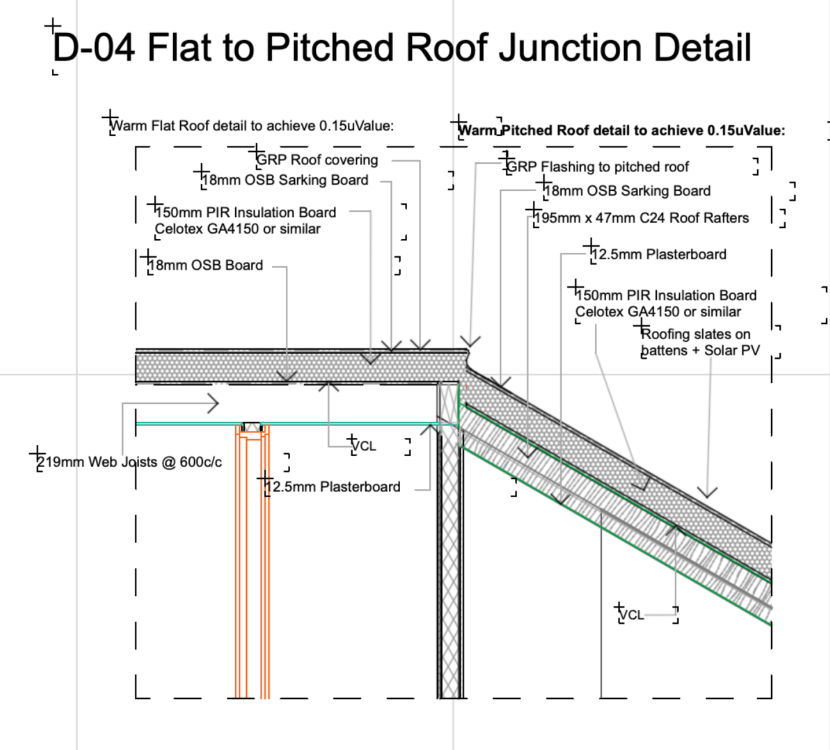
Hi, We are starting on the timber frame on Monday, and technically in three weeks time I should be in a position to take over and start working on my roofs and facades. After my recent dilemmas with hybrid / cold / warm roofs, I decided I was going to stick to warm roofs on both flat and pitched. All roofs are to achieve 0.15u Value, so 150mm PIR has been selected. All flat roofs will be GRP, and pitched will be Cedral Thrutone Blue-Black slate tiles. I have a few questions, however: - should frame the insulation on all flat roofs with a 6"x2"? - I am going to use Twistfix nails / screws to secure the PIR insulation on the pitched roof. I had the calculations done, and worked out I need 12 screws per sq m. Do I still need a stop batten on the bottom of the pitched roof? If so, do I just stand a 6"x2" upright, or do I need to install 3no layers flat? - do I lap the VCL on the flat roof (below the insulation) with anything? Or just run an excess and ensure it is continuous across the roof? - as above, but breather tyvek membrane - I want a hidden gutter on the pitched roof. I found a design that achieves exactly what I am after on Cedral Website. Can anyone suggest a technical detail for this? Should I build a gutter box out of OSB, then lap extended GRP flashing up the pitched roof? It should in theory then sit below the Tyvek wrap, or should it? Link here: https://www.cedral.world/en-gb/roofing/projects/scrabo-clachan---ireland/193252/ - do I just use a dry verge trim from Cedral to finish off the pitched roof? Adjacent facade beneath said side will be charred timber. - the flat roof adjoins the pitched roof. Should I just use the GRP "A trims"? If so, how do I nicely detail the junction? Or should I have some bespoke A trims made out of pressed aluminium for consistent looks? I know may of these questions are down to aesthetics, and quite frankly it has been doing my head in, as the concept I am working on is rather uncommon... Can anyone help, or even better, has done something similar, and can offer advice please? PS. I designed the house myself. Did all my drawings. Read all Building Regs, TRADA, and NHBC documents, and it has been a very steep learning curve full of pitfalls (that I am sure to still discover, and most probably pay for), but I am trying to stay positive, and motivated that one day I will be able to say it was my brainchild from concept to finishing. Many thanks! Bart
-
Both electrical and MVHR ducts, just no plumbing.
-
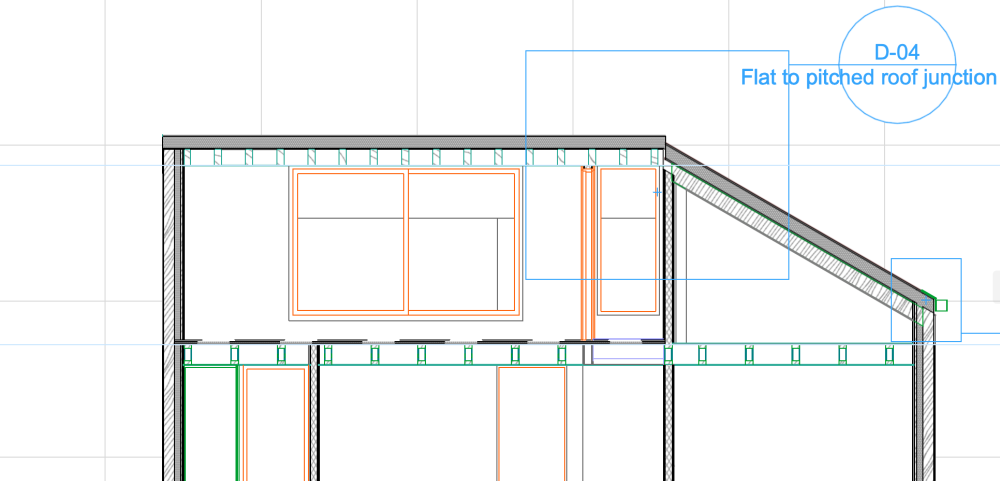
It's just a loft room, so typical trim detail at the edge of flat GRP roof. Falls are being achieved with firings, and pointing towards the pitched roof. We have pozi joists contracted as part of the build, but there will be services there indeed. Wider section of the building here:
-
Good find, thanks! And not bad a price too.
-
Hi, Current commitment is roof with OSB and breather all around. Target U is 0.15, which is same as for the the rest of the thermal envelope. Warm above and in-between (as specified by Kingspan) seems an easier detail, which does away with thick stop rafter, and very long (and expensive) fixings. I just wonder if it would still function as designed if there is the "inherited" OSB layer and breather above it, between the rafter level PIR and the "above" layer. Decisions, decisions...
-
I was my own architect and frankly have not given it enough thought. It stacked up on paper, but now we are nearly physical on site with it…
-
Trouble with this is that Helifix only go up to 200mm, and with 150mm pir and 25mm battens, then 18mm osb inderneath, I am not achieving the 38mm substrate penetration…
-
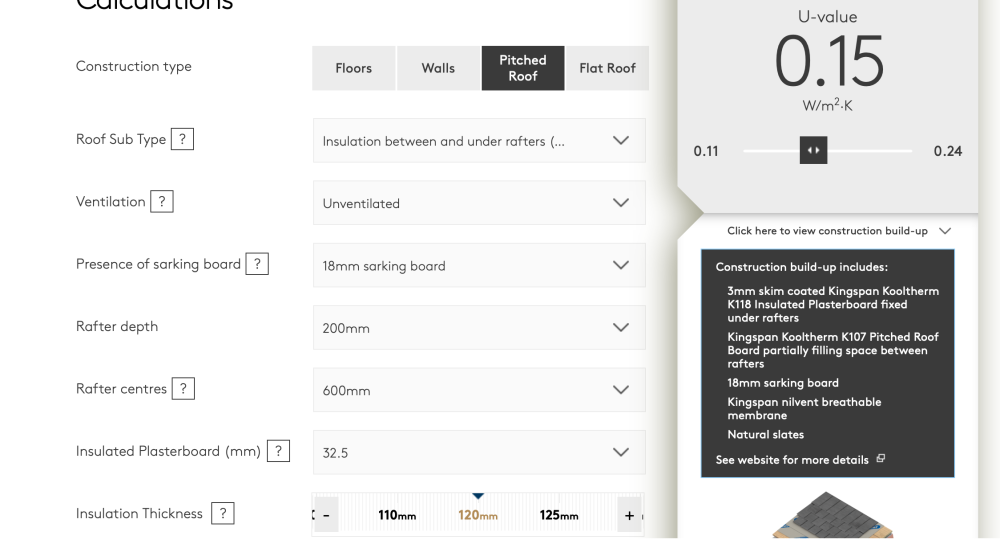
Thanks for the comment. Current remit from the TF supplier is that they fit OSB and breather on top. On the basis of which I was leaning to just having cold unventilated roof (yes, got enlightened that it was possible and in line with all BBA / NHBC guidelines). So like this: Having said that, warm roof would be more consistent with the flat roof, less tricky junctions. If I follow your advice, would I ask the TF supplier not to install a breather above OSB? Or should I just put PIR on top, and put another independent layer of breather on top, then battens and counter battens, slates?
-
That roof is unventilated and there is no way it would be. So I somehow need to get it approved by Building Control.
-
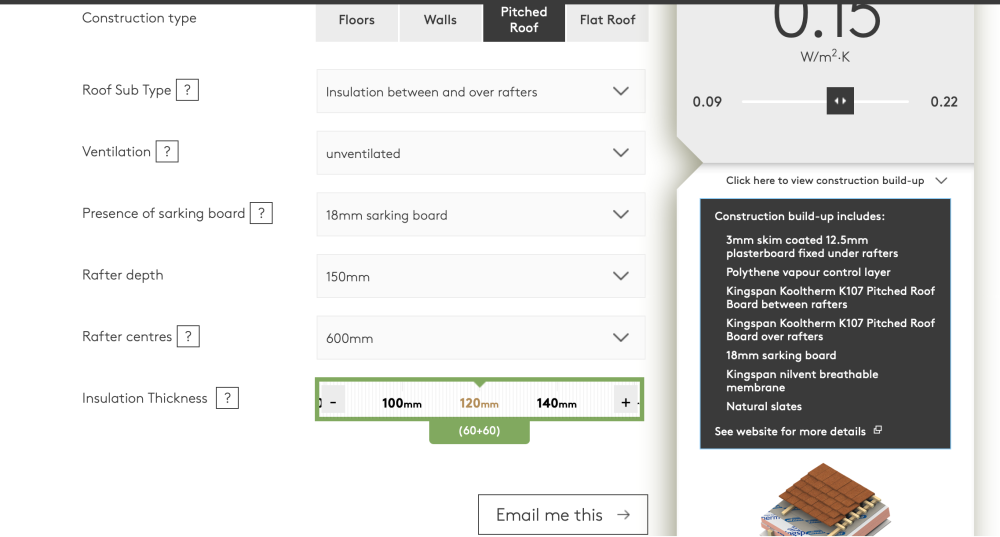
Hi, I posted about it elsewhere on the forum, but it is still making me wonder. Kingspan details "warm pitched roof" as: - insulation above - and inbetween - like this: I, however, have detailed it like this: My questions: - am I doing it wrong? - should I have a layer of OSB on top of rafters before the insulation? - will I struggle to anchor a 150mm PIR to the roof? - should I consider means of preventing the roof sliding down under its own weight? Advice highly appreciated. I got nowhere with it so far...