


Oxbow16
-
Posts
442 -
Joined
-
Last visited
Everything posted by Oxbow16
-
Hinges that allow DG windows to open like wooden windows / doors
Oxbow16 replied to Oxbow16's topic in Windows & Glazing
The problem with T&T - a couple of which we have elsewhere in the house - is that the frames tend to be thicker, and we're trying to get our frames as slim as possible to maximum views. Plus T&T aren't so good when it rains; especially if the reveals aren't very deep... Thanks for the suggestion though. -
Hi We'll be getting some new double glazing soon, in aluminium. One thing I've always disliked about double glazing is how the windows open and move toward the centre of the opening as they open more. I would much prefer it if they opened like a normal butt hinge opens a window (or door for that matter). When it comes to friction hinges, I see that the egress / fire safety hinges allow for this. But...: - Are they only available for side hung windows? Is there anything out there that allows a top hung window to open 90 degrees to the frame like a butt hinge would? - Do the egress hinges have less friction than standard hinges? Would the windows be more likely to swing about int he wind, etc.? - Aside from egress / fire safety hinges, are there any other types of friction hinges that do what I'm after? Many thanks
-
Thanks for the replies. Good call RE the tower, and I had planned to get a small one for some other work we need to do. Perhaps for any extensive work on the roof I would set up the tower, but for just nipping up there I'd use the extension ladder to roof ladder. And I guess it depends which roof too, as we have both single and double storey height roofs... Cheers
-
Hi I'm back with my second ladder question... I must admit, I usually just lean my ladder against the gutters and I've not had a problem yet. But I can see that a stand off is a better idea, and at the same time will make working easier. So I'm going to get myself one. But I've got some roof work to do soon and will be getting a roof "hook" ladder for that. I know the ground ladder should extend around a metre passed the gutter to make it easier / safer to step across. But I can't imagine that would work well with the stand off. So what do people do? Put the ground ladder against the gutters? Or is there a better/safer way to do it and avoid using the gutters? Many thanks
-
Hi I need to get a roof ladder and I've not had one before so just wanted to check... 1. What's the ideal length? Is it best if the ladder stops just short of the last tile / before the gutter. Is having the ladder extend belong the gutter a bad thing (obviously not to use! ...just it being there)? 2. I've read in places that a roof ladder should always be a single piece ladder and never an extendable. But then I've seen extendable versions available and in use. And in my case I have different parts of the house with different length roofs, so an extendable would be handy in as much as it could be adjusted and used for all of them. But is it a no-no? Many thanks
-
How to cut a slate slab (and how difficult is it)?
Oxbow16 replied to Oxbow16's topic in General Self Build & DIY Discussion
In the end, I wasn't able to get that particular piece but will have the need to cut slate in the future so all really helpful stuff that I'll refer back to Many thanks one and all PS - I do like to do things manually where ever possible so I might well start with your suggestion @saveasteading - especially if I've got a scrap piece or ten to practice on first! -
Hi An old slate slab has come up that I would like to use for a kitchen worktop. It's from an old snooker table and is 30mm thick. I'll need to cut it roughly in the first instance so that I can move it and fit it into the car. I can then cut it more precisely once the unit is made and I have exact details. I've never done it before... For a rough cut and at that thickness, what would be best to use? I have got: - a large circular saw (are they all capable of cutting stone with the correct blade or are some machines for wood only)? - a mini circular saw (Worx) - an angle grinder (but with no discs so would need to buy whatever would be suitable). Hoping to collect tomorrow, so any advice would be fantastic. Many thanks
-
Thanks for the replies. Still mulling it over! @Conor - by double patio do you mean sliders as opposed to french doors?
-
Hi all We're looking to have new doors put in soon. The opening is 2.1m wide x 2.05m tall. I've been reading and thinking lots about it these last few days and I've got all the usual pros and cons covered, i.e. being able to open the whole thing up with bifolds (but needing space for the concertina'd folds), smaller sight lines of sliders, etc. etc. For my situation both could potentially work. If going for sliders I would look for something with 2 panels and a sightline of around 35-45mm. If going for bifolds I would only consider 3 panels, and models with the smallest sightlines. So the Smarts Visofold 6000 would be the pick of the bunch at 94mm, though I might consider the Origin OB-49 at 110mm (and there's a couple of others in between). The thing I'm not finding much info on - and what could end up being a deciding factor - is how robust they are. A local supplier / fitter recently said he would choose sliders every time. He said they are often going back to repair bifolds put in years ago and some customers are opting to have them changed for sliders because they just keep having problems. Would anyone agree / disagree with this. If there is some truth in it, could it also be the case that having bifolds with smaller frames could mean they're even less robust? Or in our case, would a triple pane in a 2.1m opening means the leafs are small enough to be ok even of the frames are thin? Any thoughts most welcomed Many thanks PS - Definitely don't want french doors.
-
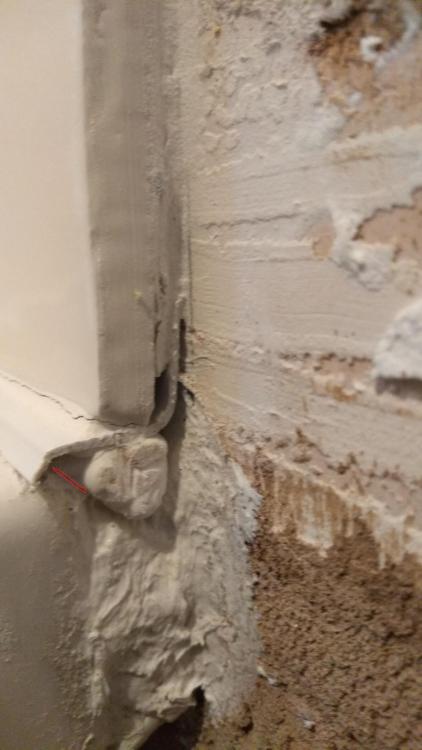
Thanks @Onoff - appreciate the run through. Unfortunately, I have since found out the exact trim that was used: https://www.tilerite.co.uk/bath-trims/overtile-trim/bbs621/ It's an overtile trim ***facepalm*** And it says "WARNING - avoid silicone contact with trim flex" ***double facepalm*** So really, the decision to use it is going from bad to worse. Perhaps using at all was a bad decision. But if it had to be used, why he didn't use the undertile version I've no idea. Probably because it was a few quid more! The other thing I've realised is that where the gap between wall and bath is widest, here: Should water get under the trim lip, I think it will actually end up in a spot that is lower than the bath edge (where I've marked red), and so won't work it's way out so well. Grrrr!
-
Don't mean to be a pain, but if anyone has any further thoughts on any of this, that would be a massive help. I'm going to need to discuss all this with the plumber/tiler next week and the more I understand what has been done vs what should have been done, the better (as well as what needs to be done to put it right!). Cheers.
-
Hi all I've been away at work and so haven't been able to do anything to the bath yet. I have had time to read a bit more about it though... The verdict I've reached through reading is that siliconing onto the grout wouldn't be a good. Firstly it would be far better for the silicone to go INTO the gap that the grout is currently in. It would make for a much better longer lasting seal. Secondly, and maybe more importantly, the silicone is there to accommodate future movement whilst keeping things water tight. Having both grout and silicone bridging a gap isn't good from the movement point of view. With that in mind I'm wondering whether I'll need to bite the bullet and remove the grout before applying the silicone. Just to be clear, I'm referring to where the bottom tiles meet the trim, but also to the vertical sections where two walls meet; which have also only been grouted. Any thoughts? Thanks a million EDIT: I say this with hesitation, but I guess there is another more drastic option... Remove the bottom row of tiles, and the plastic trim, and half start again. Or totally start again - but not sure how easy removing the copious amounts of silicone between bath and wall would be. Obviously I'd rather avoid doing any of that, so if it's going too far then great. But if it needs that level of re-doing to be a decent watertight job, then I might as well face up to it now!
-
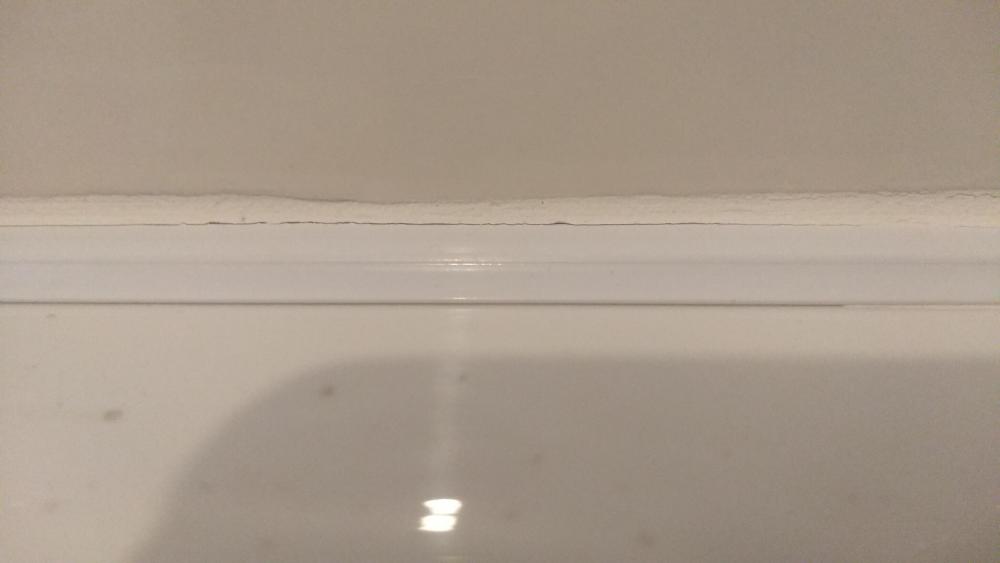
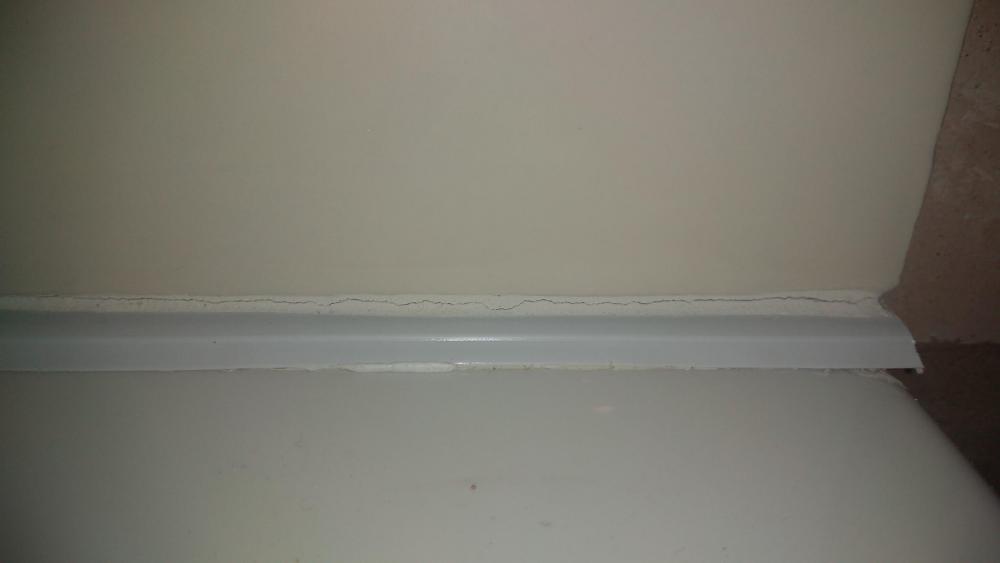
Happy new year everyone. Appreciate all the detailed guides as to how it should be done properly, and only wish my plumber/tiler was of the same mindset! The bath was definitely empty when they siliconed and later grouted. We've only used the bath once so far and there are some cracked in the grout to trim line. I'll put some pics below. Another point of interest, should there be batons or anything around the wall to give the bath extra support? There are four small plastic wall brackets that came with the bath. He used three of those. And of course the legs/feet. But that's it for support. Maybe that's enough? RE: Fugi kit. Cheers for pointing that out and for the link. I've watched a few videos and it does look handy. My only reservation is how well it will or won't work when the two surfaces don't form a right angle. Usually bath lips are sloped inward to the bath. Likewise where the back of sink meets the wall. Would the kits work in these situations. Most if not all of the videos show folk using the Fuji on an artifical demo set up (with two boards at a right angle), or in the wall to countertop join, which again is a right angle. Thanks, I'll do that then as they haven't. Thanks for pointing it out. but just to check, is it ok to silicone over the grout? Cheers all
-
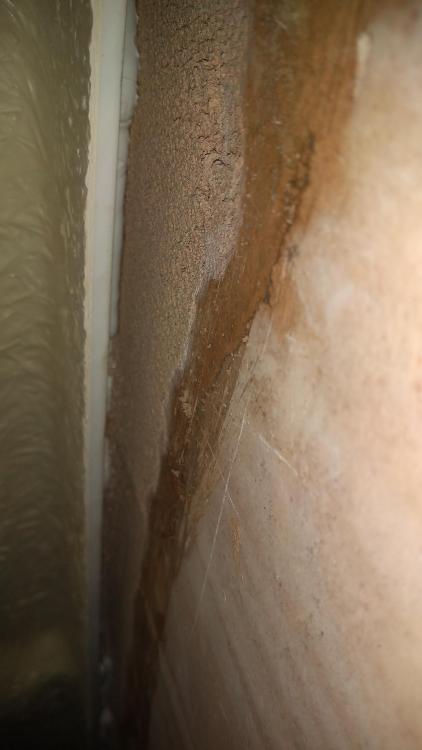
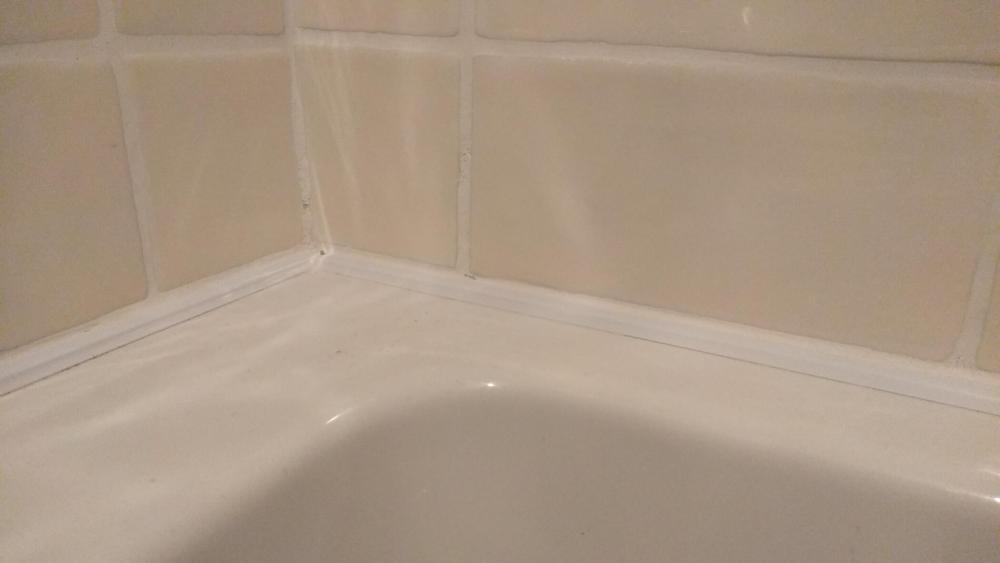
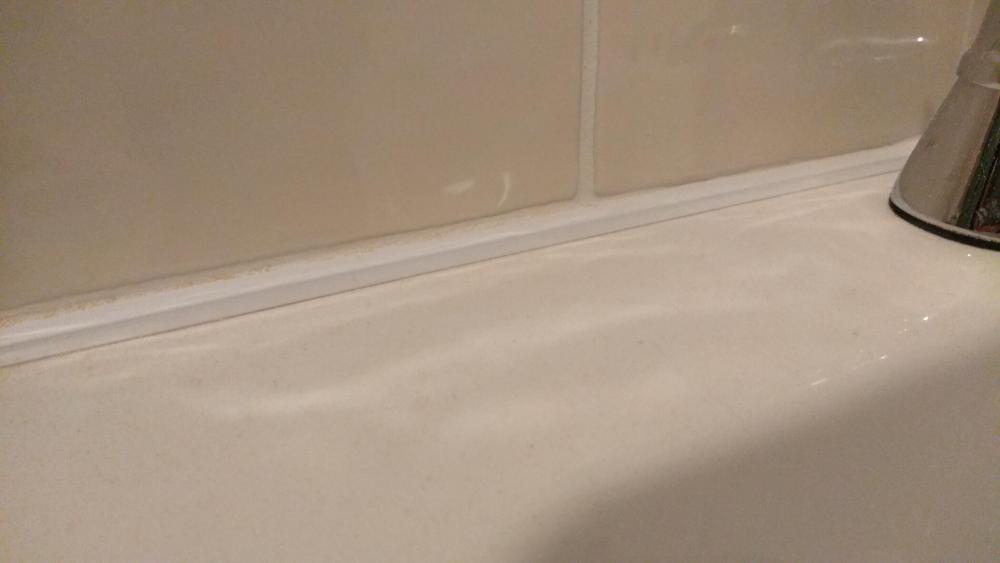
Thanks for the replies. So seems a score draw at the moment as to whether it's a good or bad job/choice of materials. I know he didn't fill the bath when he siliconed, so that's not good. But he did use a lot of silicone to fill the wall to bath gap before the tiler came, albeit with the bath empty. I think I can handle the discolouration, just about, though I'd obviously much rather not have it and if there were other ways to do the job I wished they'd have discussed them with me first. I tend to question most things, but with this they seemed confident and so I was happy to take their word that it was the best solution. But want I want to be sure of is that the seal will be good and that it's water tight. Either as it is now, or after further silicone is added if needed. I'll post some more photos below. The first two show where the tiles and trim meet the wall at the end of the bath. That shows better how the tiles sit on the trim. and the type of trim profile that was used, which may give a better clue as to what it is. Photos 3 and 4 show the silicone from beneath the bath - at the head end (applied before the tiler came), and photos 5 and 6 show the same at the tap end. Any further thoughts most welcomed and thanks for the help so far
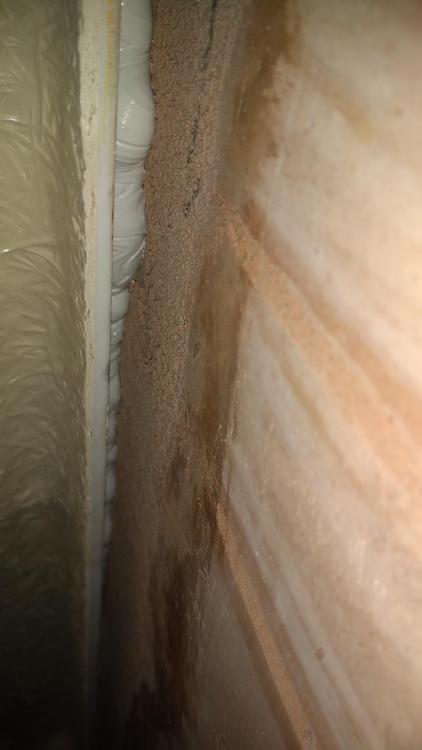
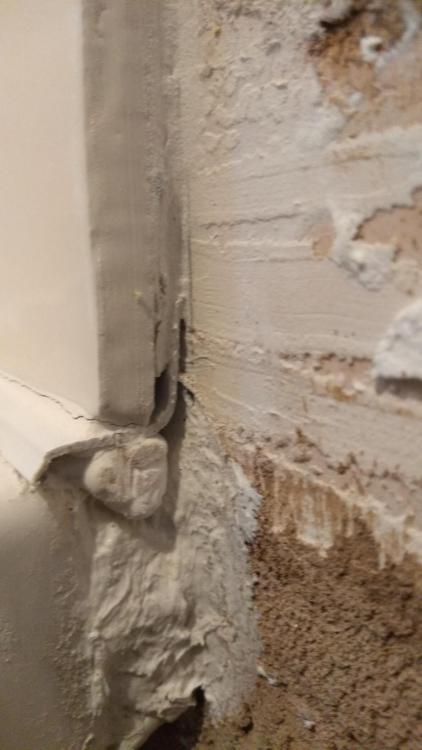
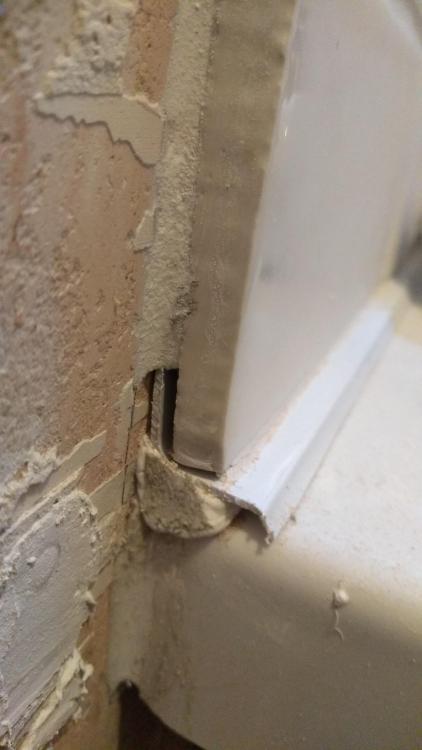
-
Should downpipe connect directly to the running outlet?
Oxbow16 replied to Oxbow16's topic in Rainwater, Guttering & SuDS
I think the socket piece should connect directly to the outlet without issue. The 112 degree bend slots on nicely, and I think the socket will be the same fitting as that. So all good and I'll get one on order. Cheers -
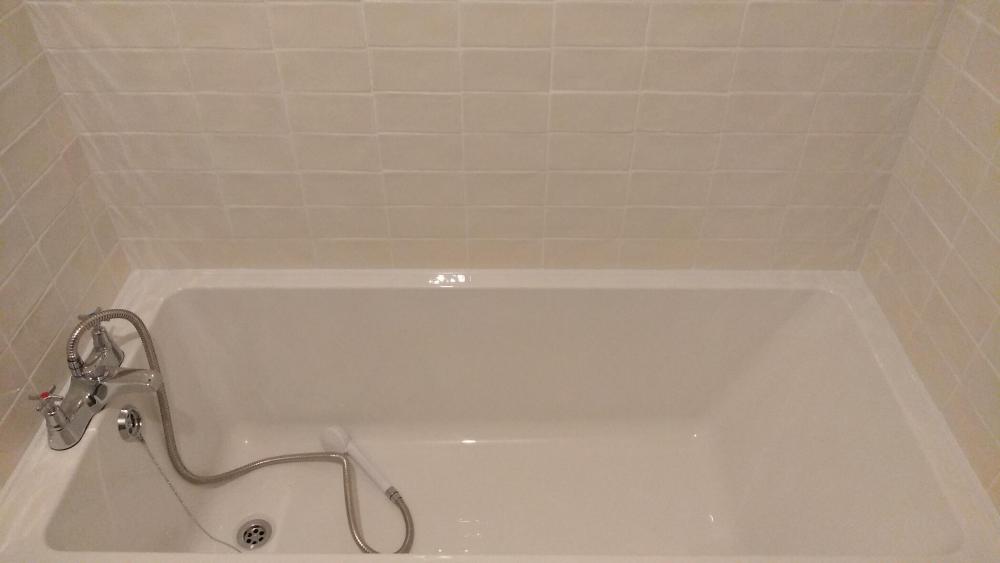
Hi all We recently had a new bath installed. It is surrounded by walls on three sides, and it turned out that one of the walls wasn't square leaving a larger gap. So when it came to tiling, the tiler said it would be best to have a tile trim, the type you put into place before tiling and then tile onto. The bath was siliconed before the tile trim, then the trim was added and then the tiles... The plumber said he would come back to add more silicone as a final step. But when he came back (he had other work to finish as well) he changed his mind and said the silicone wasn't needed. I asked whether water would get under the trim but he said it wouldn't be a problem. Just wanted to check in with you guys whether you think he is right, or whether it needs sealing? Many thanks and hope you've all had a good Christmas. Cheers
-
Hi all I've had to move and reconfigure a downpipe because I've fitted a new kitchen extractor and the vent is slap bang where the downpipe was. The guttering is ogee and the downpipes/bends are square.... I bought a couple of 112.5 degree offset bends, thinking that's all I'd need. The bends will need to sit lower than directly beneath the running outlet, and I thought I would be able to use a small piece of downpipe between the running outlet and the bends. But the downpipe doesn't fit onto the running outlet. I've watched some videos and on all of those the downpipe fits directly. Mind you, most of the videos were for round guttering. So is it because I'm mix and matching different brands? Or is it normal for square downpipe not to fit directly? I'm wondering if this will solve the problem? https://www.toolstation.com/65mm-square-pipe-socket/p22842 And if so, is it a bodge or is one of these always needed in this scenario? Cheers
-
What's the highest temperature rated paint available?
Oxbow16 replied to Oxbow16's topic in Stoves, Fires & Fireplaces
Thanks for all the thoughts and suggestions. I'll be the first to hold may hands up and say this is a quintessential first world problem! But it's the firebricks in my stove that I find really ugly, being the pale yellow-ish colour that they are. Especially when the fire is lit and bright and you can really see them. So I was hoping to paint them so they disappear more. I'll also be giving the baffle plate a once over at some point and was planning to finish with some paint on that too. No big problem though if no paints would be suitable. Cheers -
Hi I'm not finding anything beyond 650C after an initial search. Does anyone know if higher temp paints are available? It's for internal parts, not the stove body. If 650C is as good as it gets, is this suitable? It's not specifically for stoves, but... https://www.toolstation.com/high-temperature-spray-paint-500ml/p64927 Cheers
-
Afternoon folks I've been doing some filling around the house. Some of it was quite deep, so I've used mortar for the bulk of it and will finish with filler on top. How long should I wait for the mortar to dry before using the filler? Cheers
-
Bit of an aside, but relevant to the post, when using mortar for repairs such as these should the substrate get a coat of PVA first? I was hoping to do it in the morning, and I don't have any PVA, so that will slow things up. But if it makes a lot of difference and is recommended, then I'd rather get it right. Cheers
-
Thanks for that! I'm not sure what it's based on though! Yes, all cables were disconnected when testing for continuity. Great, thanks for the explanation. No, just a pull cord to turn it on/off. In any case, it's all done now - fan removed and I replaced the worn ceiling rose while I was at it. Appreciate all the help that got me there Many thanks and have a great weekend.
-
That's great to hear and along the lines(ish) of what I hoped was the case. But didn't want to risk it without being certain. In terms of being certain, is it safe to replicate what happened (MCB off, touch earth and neutral and see if it trips again)? Or is there any potential risk? As for finishing the job, I thought it would be as simple as: - removing the cable that connects the pull cord to the fan itself - and then removing the cable that connects the pull cord to the ceiling rose. But please do correct me if I'm wrong and if I could cause problems, open cans of worms, etc. I'm confident with the practical side of doing it, but like to make doubly sure on the theory. Thanks a million for the help
-
Hi I'm removing an extractor fan from our WC, as it's just a toilet and sink and we never use hot water in there anyway... The extractor is on the light circuit, but has it's own pull cord. I double checked by turning the fan and light on, then switching off the MCB. All good. I triple checked with a multi meter and all was 0. So after disconnecting I started checking for continuity so I knew which cable to pull on. Once sussed, I started wiggling it and pulling, at which point the RCD/RCCB tripped. I'm not great with all the consumer unit parts and what they're called, but it's a split unit and the left side tripped - which the same side as where I'd already turned off the MCB. Think it'll probably be wise to get an electrician in to see what's what. Most the house lights are on a separate circuit so there's no rush. But I'm really curious in the meantime.... - Is it possible to trip the RCD/RCCB by doing something on a circuit, even when the MCB for that circuit is off? - If not, must I assume that something from another circuit is going on in the ceiling void? Hope I'm making sense! Happy to add a couple of photos if it would help. Cheers


