


Oxbow16
-
Posts
442 -
Joined
-
Last visited
Everything posted by Oxbow16
-
Angle Grinder - Wattage, Button/Trigger, and Recommendations?
Oxbow16 replied to Oxbow16's topic in Tools & Equipment
I'm not sure what you mean tbh. In the manuals it just says maximum thickness. That's very kind of you. You've been above and beyond with your help. Thanks a million. -
Angle Grinder - Wattage, Button/Trigger, and Recommendations?
Oxbow16 replied to Oxbow16's topic in Tools & Equipment
Being at work and unable to do anything practical, I've been reading a little more about angle grinders.... The Makita manual says that the maximum disc thickness is 6.4mm. While the Parkside says 3mm!!! Is that a "we can't condone using a thicker disc" type maximum? Or are they saying a thicker disc physically wouldn't be compatible/won't fit? Does anyone have a 5" Makita or a Parkside they could check this on? Potentially scuppering my idea of using a thicker disc.... Ta -
Hi all I'm going to be stripping slates and putting in new lead soakers with a flashing next week. It's a stone wall, so the flashing will be a straight diagonal line, parallel to the top of the roof. At the bottom, the roof extends beyond the wall by a few inches. What's the normal way to detail that? I've had a look online but not been able to find anything.... Many thanks
-
Angle Grinder - Wattage, Button/Trigger, and Recommendations?
Oxbow16 replied to Oxbow16's topic in Tools & Equipment
Thanks for your concern! And to everyone for all the additional replies. I'm working away this weekend so work begins next week. Turns out the Parkside isn't available until Thursday coming, so thinking to swap the order of events and get/use that once it's in stores.... Cheers -
Angle Grinder - Wattage, Button/Trigger, and Recommendations?
Oxbow16 replied to Oxbow16's topic in Tools & Equipment
If you're a St. John's Ambulance volunteer, we're on... Thanks for all the other responses and advice. Yes, I've got all my PPE all ready thanks. Although with this c@p weather it took me a while to find my sandals. Turns out there's a Parkside angle grinder this week at Lidl. I know they're not the best, but have over the years heard good things about Parkside - especially given the price - and the few handtools I've had from there I've been pleased with. The Parkside ticks all of my boxes, and some boxes I didn't enough know needed ticking!!! The design features are amazing. But will it perform? Any thoughts or experiences? Thanks again -
Hi again Sorry to follow my other thread so quickly with another, but need to choose which one to buy over the weekend so I can get started next week. - I'm a bit confused by wattage. Looking at the Makita range, as the wattage goes up the RPM doesn't go up accordingly. So what difference does the wattage actually make in use? And for my main intended use - cutting a chase into a stone wall for lead flashing - what kind of wattage should I be looking at? - What are people's thoughts and experiences on sliding switches (permanently on) vs trigger types? - Any brand or model recommendations? Hoping to get 125mm so that the chase can be 38mm deep. - A novice user question... Are you supposed to work from left to right or vice versa? With the spin of the disc or against it? Many thanks and I promise to shut up about angle grinders after this!
-
Duplicate - deleted.
-
Duplicate - deleted.
-
And the winner is.... Turns out the discs probably aren't 10mm thick after all! It took a LOT of digging to find that out! I'd even had various emails with their tech discussing my intended use, within which I'd mentioned several times that I was using them because the 10mm thickness was perfect for the 10mm width chase I was planning to cut, and not a word said. Bl00dy useless! It seems the 10mm refers to the width of the diamond, NOT the width of the disc. Grrrr. Also, it seems they are one of these companies that have two different trading names and branding styles, but with the same items, the same website, etc. That's what first got me to suspect the discs weren't 10mm. All seems a bit odd and I think I'll steer clear. For reference, the other "brand" is TopsTools. Cheers, and sorry I didn't listen harder to you @SteamyTea I had intended to ask them directly when they responded to my last email, but they hadn't replied yet so it was in the pipeline. I found out inadvertently in the meantime.
-
Thanks a million @Gus Potter - that's exceptionally kind of you to share all that. And thank you for the posts that followed too To answer the latter posts first... Sorry if I wasn't clear, but the work to be done is where a pitched roof abuts a wall, so it's diagonal not horizontal. There's no chance of following a mortar line unfortunately, apart from at the apex where I'm going to use a preformed lead saddle. With regards the stone, it's a soft sandstone. And the mortar is lime, NHL3.5. On to a few of your points @Gus Potter (thanks again!): - I'd ruled out a 9" grinder thinking it would be too unwieldy and awkward to use. So perhaps I should rethink based on what you've said. However, I don't think it will get a tonne of use after this job and did wonder if a 4.5 or 5" grinder would be more versatile going forward for other jobs. Advice taken though, cheers. - What's the disadvantage of using an 8-10mm thick disc? Being quite new to this, I thought a single cut would be easier and eliminate the risk of not keeping the two cuts parallel (or even finding the disc working its way into the first cut). But if I'm overseeing the disadvantages would be good to know what they are is possible please? - All other points I have learnt the theory on, but time will tell how it comes out in practice! I was planning to use hall clips instead of rolled lead wedges. And roofers sealant instead of mortar. I've got some of this stuff: https://www.screwfix.com/p/geocel-trade-mate-roofers-seal-lead-grey-310ml/72630 I've got some follow up/new questions about angle grinder choice, but thought might be best to put them in a new thread than take this one off course... Thanks again everyone! I'm looking forward to getting stuck in once I'm all in order. Cheers
-
Certainly more choice than I currently have Interesting... Can you see or do you remember which disc that is that you have? Cheers
-
It's what it says. But to be certain I will just double check with the manufacturer... Cheers
-
Thanks for the warning An update... I sent the manufacturer an email RE the two discs linked in the OP... They said they think that the Turbo version (second link) would be better suited than the segmented (first link). And also, that although it is hard to tell, I may need 4-5 discs for the 7-8 metres I need to do. Does that sound right? Cheers
-
Probably a bit overkill to share with my cordless drill and impact driver set And by the sounds of it using the grinder with 18V 3ah batteries won't bring much joy or success? Many thanks
-
Thanks, but as I've said a couple of times, it's not brick, it's a solid stone wall. And because the chase and flashing will be straight rather than stepped, the cut will be into the lime mortar in some places, and the stone itself in others. Interesting the different opinions on whether the cordless will have enough power or not...
-
I'm not replacing mortar, I'm cutting a chase to fit lead flashing. And it's a "random rubble" stone wall, so no bricks. The chase will be a straight run and so will go through mortar in places (lime), and the stone itself in other places. For the same reason, I'm not sure scraping a chisel would work, especially when trying to get more depth in the chase where the cut is into stone. I have been considering using a thin blade and and making two cuts. In fact, that's what I thought I HAD to do before I found the thicker blades. But because of the nature of the stone wall with it's bumpy undulations, and because the work will be in an awkward place, I was concerned about how parallel I will be able to get the two cuts. Hence why I thought a single cut with a thicker blade made more sense. Having never used one though, I take on board what you're saying about them being horrendous to use! @Thorfun - thanks for the suggestion and the link. I had considered one of those, and perhaps I should again. What put me off was the fact I'm only likely to need it this one time. Whereas an angle grinder I'm sure I'll find uses for in the future. The 30mm channel depth is a bit less than what I'd prefer, although perhaps other makes/models would offer more? And I have read mixed opinions on these chasing tools, with some folk saying they prefer to use an angle grinder. The bottom plate and side of the machine could potentially make keeping the straight cut easier (using a piece of wood attached to the wall as a guide). But I'm not sure in practice if that would work on a non-flat stone wall... Food for thought though. Many thanks
-
Thank you very much for the replies, that's really helpful. Anyone have any thoughts on using the mortar rake to add extra depth (as per OP)? I'm not sure what you mean tbh? I'm pretty sure the discs in my links are 10mm thick. Thanks again
-
Hi all I've got some lead work coming up and will need to chase the stone wall for the flashing. I'm planning to get an angle grinder and use a 10mm thick blade like this: https://www.amazon.co.uk/gp/product/B08CY465GJ/ref=ewc_pr_img_2?smid=A213SFYA0CUE59&psc=1 Or https://www.amazon.co.uk/gp/product/B08CY32NQ4/ref=ewc_pr_img_1?smid=A213SFYA0CUE59&psc=1 (or the 125mm equivalents if I get a larger grinder). My question is will a cordless angle grinder be powerful enough or am I better getting a corded model? If going cordless, my preference would be DeWalt 18V as I've some other gear of the same. One other question.... If once I've cut the chase it isn't quite deep enough and I can't get deeper with the grinder and disc, could I use this inside the chase to make it a little deeper? Just to be clear, the chase will be a straight line (parallel to the roof below), and will be cut through both mortar (lime) and the stone itself, as the wall is random stone. https://www.screwfix.com/p/mortar-rake-8mm-x-40mm/31307 Any help most appreciated. Cheers
-
Questions RE fitting a ventilated ridge to a slate roof
Oxbow16 replied to Oxbow16's topic in Roofing, Tiling & Slating
If anyone has any thoughts I'd love to hear from you Many thanks -
Hi there I’m hoping to install a ventilated ridge soon and after reading up there’s a few things I’m unsure about. I wondered if anyone could help please? The roof is Welsh slate and has stone/concrete ridge tiles (not sure which m but they are the old type). There is ventilation already at the soffits. In case it’s relevant, the roof has sarking boards, and the felt is the old style black stuff (1f?) laid directly onto the boards. 1. Should slates be cut flush to or proud of the top battens? Strangely, at the moment the slates are cut flush on one side, but on the other they overshoot the batten by around 75mm. 2. What is a good size gap to have between the top battens at the ridge? Currently they are 105mm apart. Does that sound ok? 3. How much do ridge tiles need to overlap the slates by? The current overlap is 97mm on one side (where the slates are cut flush) and 155mm on the other (where the slates overshoot). 4. The existing felt fully crosses over at the ridge. I’m presuming this would need to be cut to create an air gap, but am I right? If so, how much to cut and remove? 5. And finally, any recommendations for a good ventilated ridge system? I want something that is effective but also that won’t look too out of place on an old house with Welsh slate. Obviously it will need to fit/overlap the slates sufficiently, given the above dimensions. And also, because we live in a very rural area, it would need to keep vermin and insects out! Happy to upload photos and get any more details that might help with the answers. Thanks a million for reading. I’ve been trying to answer these questions as best I can but not having much luck, so any help would be fantastic.
-
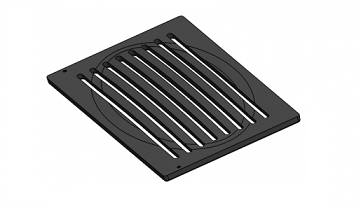
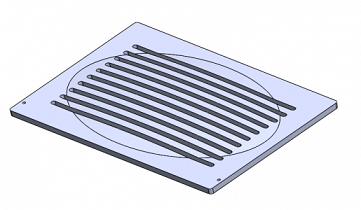
Hi Sorry to return so soon with another wood stove question... This time it's about multi-fuel (MF) vs wood only (WO) stoves. From the reading I've done, there seems to be mixed opinions on whether a WO stove performs better than a MF stove, when burning wood only. Open Grate. One of our shortlist stoves is the ACR Earlswood III and Astwood II. Both are MF and have grates with permanently open slots. See: The stoves tick a lot of boxes for us, but the grate puts us off. The manufacturer has said that it won't affect performance, so long as there's a good bed of ashes. But logic and the opinions of some on the net would perhaps suggest otherwise. "Hybrid". I used the term "Hybrid" in the title to refer to stoves like the Clearviews and Woodwarm Fireviews (others too I'm sure), which have riddling grates which can be put into a closed position and provide a flat bed. But there's still gaps between the bars so it's not a truly solid bed. And whilst the primary air can be closed (at least I know it can on the Woodwarm), I'm not sure if that totally prevents air getting through. A Woodwarm Fireview Eco is a contender. Wood Only. Another contender is the Dik Geurts Ivar 5. True wood only burner with vermiculite bricks on the bottom. Any thoughts on the three types and how relevant or important the grate/base situation is for wood only, would be most appreciated. And just to add, I've read that a bonus of the MF and Hybrids is that the Primary Air coming in beneath the grate can be very helpful getting the fire going. Yet on the other hand, a WO without the grate and ashpan means a larger firebox. Over to you guys! Many thanks
-
Thanks for all the additional replies, much appreciated. I think once we've decided on our stove (new thread coming up to help with that), I'll speak to the manufacturers about distances to non-combustibles, risk of plaster cracking, minimum distances for good airflow, etc. And I'll discuss it with the installer as well. I'm hoping we won't have to do anything. But if we do I guess my favoured option would be to fix some thin fire rated board to the walls around the stove, and paint them in the same colour as the walls to help disguise them. If that's not sufficient, then perhaps remove the plaster in the necessary areas, get the walls back to brick/block, and then replaster with Vitcas type stuff *OR* use the thin fire rated board, fixed directly to the brick/block. Thanks again
-
That's why I've made the thread - to try and find out what is a good distance to avoid these things. Not least of all because one installer has said 100mm is ample whilst another has said 400mm. I only made the "Non-combustibles don't combust" comment in response to the point about invalidating a potential insurance claim if the proximity to the wall caused a fire. Just thinking about other options... Aside from the heatshields you can get with some stoves, and the Vitcas type plaster you can apply to the walls instead of gypsum, is there any type of THIN fireboard which you can add to the plastered wall WITHOUT an airgap? Something I could then paint in to be the same colour as the rest of the room and therefore barely noticeable? If so, what's the thinnest available and does anyone have any info or links please? The only thing of this ilk I'm aware of requires an airgap between it and the wall, but hoping there's other options... Many thanks
-
But that's with regards combustibles. Non-combustibles don't combust! We're lucky in that there's no nearby combustibles. And anyhow, it will be installed and signed off by a HETAS registered fitter.
-
Not totally certain, but I don't think there is a hetas requirement when it comes to non-combustibles. The manufacturer only "recommends" and says ultimately it is up to the installer. Their recommendation is 150mm, but that's more to ensure adequate air flow around the stove. Seeing as it will be in a corner, even if the back corners of the stove were 100mm away, much of the rest of the stove at the sides and the back would be over 150mm away and kinda compensates perhaps? But again, that's more about air flow than potential damage to plaster. Yes, well, almost. It's likely to be a Woodwarm Eco Fireview Vintage. Any further thoughts and real life experiences most welcomed Many thanks
