


Gus Potter
-
Posts
2155 -
Joined
-
Last visited
-
Days Won
26
Everything posted by Gus Potter
-
Overkill spec on reinforcement- suspended slab, basement wall
Gus Potter replied to Tony C's topic in Foundations
Hope all goes well / has done with your zoom meeting. Most Engineer's are delighted to be asked how something works and will often be very helpful and keen to explain to an enthusiastic Client. The motto is don't be afraid to ask how for a layman's explanation of how their design works. As an aside, if you have a basement that is going say 3.0 m into the ground you need to know what is under the basement floor a good bit below. If you are doing trial pits an average JCB will go down say 3.5 m tops and you can’t get in the hole safely to inspect the ground in situ in its undisturbed state. Once the soil is out the ground it’s disturbed. I’m not referring to the music scene here and the band Disturbed.. You can investigate deeper by using a technique called “window sampling” – tubes knocked into the ground to collect samples. You can find out more on the internet. So don’t always assume you need a big drilling rig to do boreholes. Window sampling can be cost effective in the right, but not all types of ground. Food for thought. -
Ground bearing or Raft? (Insulated foundation - Kore)
Gus Potter replied to SuperJohnG's topic in Foundations
Hello all. Rafts. To quote Peter W “EPS isn’t fully waterproof as there are potentially thin capillary gaps between the EPS blocks. Not unusual to see radon or other thick barriers added as BCOs “expect” to see them” I’m just getting the hang of this so not sure on the etiquette; how to quote others etc, compliment , reference others, length of response and so on. Any guidance will be much appreciated. Peter - Good point. To compliment you points (please feel free to add or question, again not yet sure of etiquette). DPM - It’s not just a bit of plastic and should it be more appreciated? The DPM on top of the insulation stops any concrete directly laid on top of the insulation from bleeding water/ the fine content of the concrete down into the gaps or forcing the insulation apart and potentially creating thermal bridges. Your concrete (assuming ready mix rather than hand batched) is mixed assuming a certain amount of water content, so maybe you don’t want to lose it into the gaps as it can make not least hard to float / polish off, especially on a hot day and when you have run out of steam after a hard day. The water is also required for the curing process as the batching plant measure this very carefully. Don’t be tempted to add water to a ready mix concrete, your won’t need to if you plan and you prepare for the pour. That includes food, coffee etc, leave the Sherry / Buckfast tonic wine (choose your region / tipple) for later when you have finished and cleaned up. Concrete slab design is still very much an art, although there has been some progress in terms of analysis, but we are talking about domestic projects here. In that vein one of the keys is to control cracking in the slab as it cures and then dries out. You don’t want to lose your wallet / money container into the cracks. What you often look to do is to allow the slab to shrink and you then dictate (with a fair wind) where you want this movement to take place. The DPM acts as a slip membrane so when the slab shrinks it slides on the plastic. If you have gaps the DPM sinks into these and starts creating keys which grip the slab, a bit cautious to be honest but more importantly if you have a badly prepared substrate this can lead to problems. Take your time and prepare well what is going under the slab / insulation. If your sub base (type one etc) is all wavy (flatness) and not level (there is a difference between flatness and level funnily... for another day, but worth finding out a bit more about so that you don’t have an issue with your flooring etc later) then you are inviting problems. Essentially if you have not prepared the surface the slab sits on properly then slab starts to “get a grip of the ground” and this causes unwelcome stresses which exacerbate the cracking, if your substrate is too high then your slab will be too thin in places and this too will cause problems. Take your time. Last but not least the DPM can be designed to work in both directions. The one we think about most is to stop water coming up from the ground. It can also work the other way. Very broadly speaking (comments welcome ) on a hot day the house gets warm, you do some cooking say and the moisture content in the air rises further. We know water vapour condenses on cold surfaces. You have a nice cool slab so it starts to attract moisture. It may start to raise the moisture content in the slab. Fine it will dry out but you don’t want it to go further and start forming puddles under the insulation. That is one good reason for considering putting the DPM on top of the insulation and under the concrete as it work in reverse as a vapour barrier. Next time you buy a roll of DPM and maybe feel and you paid a tenner too much look at what it may be doing for you. Perhaps there is a free lunch after all! The dreaded raft foundation? Again to quote (sorry) Peter W “A raft is normally a thickened edge with steel etc that is designed to work as a stressed member. An insulated slab is just that - a slab of concrete with mesh in it and pretty much that’s it.” Good summary. To expand a bit, some food for thought and a bit of background. Start with a light domestic strip foundation. This is usually a strip of concrete laid in the ground with some light steel mesh in it. The mesh is really intended to control cracking rather that to turn the strip of concrete into a reinforced concrete beam which is a different animal. You may see this type of light crack control mesh mentioned as an A142 sometimes A193 mesh. Often the house walls will sit over the centre of the strip foundations unless there is a significant mismatch between the load on the outer and inner leaf. Remember we are dealing with domestic projects here so perhaps look at the practical and buildability side of things to suit your circumstances. All other things being equal the pressure the strip found puts on the ground is fairly even. If you locate the wall at the edge of a strip foundation then it puts more weight on one side This can cause the foundation to overstress the soil (formation) on one side and the foundation can start to rotate/ twist (settle on one side!) more than you want. There are lots of ways of designing a raft /basement structure but in the spirit of things I’ll continue with one option. You can have what (depending on where you live ect) is called an edge thickened raft as Peter describes. One way of making this work (broadly) is to put heavier (more than that usually required for simple crack control) steel reinforcement in the top of the slab all the way to the edge. The edge of the slab is thicker (thickened edge) and can if need be designed to act as a beam if you have concentrated loads say each side of a big set of bifold doors or under a column. The steel in the top of the slab stops the foundation rotating but often it needs to be heavier (thicker bars) than that required just for the crack control. But how? The detailed explanation is very lengthy and best left for now. Essentially you decouple the two forces – the downward load is resisted by the soil under the thickened edge (just the same as a strip foundation) and you use the slab and it's top steel to stop the foundation from rotating. Essentially this part of the slab works a bit like a cantilever beam, like a balcony on a building (being very simplistic). Often you can use the same techniques when designing a basement. Real life and rafts? If you’re a self builder, extending or just doing some stuff then is there not merit in keeping it simple, easily buildable and approaching the structural type work pragmatically? Discussions can revolve around a few millimetres of slab thickness (an inch or two) , quantity of rebar and so on as that is something that is more easily quantifiable an easy to price when you are doing it yourself. You can nail the material costs to a good extent but the labour costs are more flexible. Thinner more heavily reinforced slabs are harder to do (conjested reinforcement etc) and pour and compact properly hence the labour cost goes up if you want the same quality of workmanship? What about the unknowns such as variable ground conditions that Peter mentions? Is it worth while starting with the “simple stupid” but proven to work type of design and work up from there? You reduce the risk perhaps and that allows you to spend money on the exciting things like heat recovery systems, kitchens and the things that float your boat? After all once it's all finished you don't see the "structural" design" unless it's a feature of the build. One pragmatic solution to rafts whether you are self building or extending etc is to look at the worst layer of ground, below the hard core, look at the thickness and depth of this layer and decide if you want to design for that. The zone of pressure that a raft type foundation imposes on the ground often goes much deeper (well beyond the standard 150mm hard core layer) than a strip foundation anyway. If you have a simple design you will probably get more realistic quotes. More builders will have the capability to take on the job as they will be in their comfort zone. Perhaps you will feel better able to manage your project. Maybe it’s worth maybe sacrificing a bit of extra concrete here and there? How common is it for a builder to look at a set of drawings and think.. that looks hard so I’ll bung on 50 – 100 % and if I get the job then I’ll then work out how to do it as I’ll be well covered anyway? In the interests of fairness that last comment was slanted. There are lots of very experienced builders about who have spent many years learning their craft and will give good sound advice on the dreaded rafts and point out that while the material cost may be a bit more the reduction in labour cost for the" simple stupid" will more than offset the material savings. -
Drainage lintel strength and bearing
Gus Potter replied to MortarThePoint's topic in RSJs, Lintels & Steelwork
I would give them a quick call just to check. -
Drainage lintel strength and bearing
Gus Potter replied to MortarThePoint's topic in RSJs, Lintels & Steelwork
I think the Naylor P215 lintel is still only 65mm deep. I would run it by your Engineer just to be sure. It should just be a quick phone call. All the best. -
Drainage lintel strength and bearing
Gus Potter replied to MortarThePoint's topic in RSJs, Lintels & Steelwork
Hope this helps. Lintel sizing. Engineering units an explanation and how to get a rough gut feel for how heavy / how much load a simple wall for example imposes or a beam / lintel. Keeping it simple if you weigh 15 stones this is roughly 100 kilograms. An old Volvo was commonly referred to (reputably) as weighing 1 Tonne = 1000 kg. You may wish to take this as an Imperial Ton but let’s not split hairs! UK Engineers tend to work in units of load called Newtons (N). Often seen in structural calculations is the abbreviation kN = kilo Newtons thus 1 kN = 1000 Newtons (N). To convert kilograms to Newtons you multiply kg by gravitational acceleration which can be rounded for most practical purposes to 9.81m/s^2 (metres per second squared) when producing the calculations. To get a feel for things just say this is 10 m/s^2. Now 100 kg x 10 m/s^2 = 1000 Newtons (N) = 1.0 kN. If you weigh 15 stones in Engineering parlance the load on the ground when you are standing still is ~ 1.0 kN. An old Volvo weighs about 10.0 kN ~ a tonne. What about the lintel? Dense concrete block wall (block compressive strength 7.0 N/mm^2) weighs round about about 20 kN/ cubic metre (density) including the mortar to stick it together, (ref: Structural Engineers Pocket Book. F. Cobb). If you have a wall 3.0m high you have a load per metre run of wall of 20 (density) x 0.1(thickness) x 3.0(height) = 6.0 kN/m ~ 600 kg per metre run of wall. You often see this referred to in calculations as a “UDL”, a uniformly distributed load. Key Point! The load calculated above is a “working load” per metre run of wall (kN/m) also called an unfactored load. This calculated load has to be less than the “safe working load (SWL)” declared by the manufacturer. Some manufactures give tables based on a “total safe working load” or “total permissible load” thus if you have a lintel of 1.2m long the total load is 1.2m x 6.0 kN/m = 7.2 kN Some give information based on a safe working load per metre run of lintel (kN/m). Look carefully! You’ll also see data tables that refer to a “characteristic load” Please do not confuse the two as the SWL / permissible load tables have some (but not all) safety factors built into them. Characteristic loads do not. These loads have a higher value so are not safe to use without safety factors. You still need to make sure the rest is adequate and anything below and to the side. Not all lintels are the same! For pre stressed concrete domestic type lintels there are generally two common types. One is called a “composite lintel” the other a “non composite lintel. A composite lintel works mostly by creating a triangulated “A” frame where the masonry above acts in combination with the steel rod in the lintel which is in tension with the masonry above acting in compression. Essentially, you create a deep composite beam to span the opening. To make this work you need a good few courses of continuous masonry above it, a bit either side too and generally no concentrated loads directly above. This is usually qualified in the manufactures tables. However, if you have say an offset opening above the lintel which introduces concentrated load or some floor joists perhaps that bear on or near the top of the lintel then you can lose the effect of the composite action. You need then to perhaps consider a non composite lintel. I have copied a screen shot from Robeslee data table below for a flavour. For a clear span (structural opening, not to be confused with an effective span... best for another day) with 5 layers of brickwork above and assuming correct and adequate lintel rest at the ends, the lintel will support a UDL (distributed load) of 30 kN/ m run. This looks promising when we look back at a 3.0m wall leaf loading of 6.0 kN/m run. If you have the wall width you possibly can use two side by side and introduce a header course or two of brick to tie them together along their length. But “without brickwork” to create the “A” frame / composite action” it drops massively to 3.86 kN/m which is ~ 380 kg /m and that is roughly a ninth of the allowable permissible full composite load Now you have overloaded the lintel by a serious amount when we compare this to the load from a 3.0m wall leaf. However it looks like you are using blockwork not brick. When used to support blockwork the composite strength of these lintels can be a good bit less than when used with brickwork so check with the manufacturer. Much also depends on where you put the DPC. Clearly if you are opting for the composite route and you have a slippy piece of DPC inserted in the bricks that are acting compositly it stops working. Practically you may just want to go for a non composite lintel in case you want to knock a hole in the wall later on! In summary. Look up, see what is above and what you need to hold up and just as importantly how stop anything moving sideways (lateral restraint) or twisting (torsion). Remember that the inner and outer leaf of a wall could be carrying different amounts of load. Also remember that it is important to look down too and see what you have below as a support. There is a saying “if it doesn’t look or feel right it probably isn’t”! If you have any doubts at all it’s always best to ask the structural designer which you may want to do once you have had another look.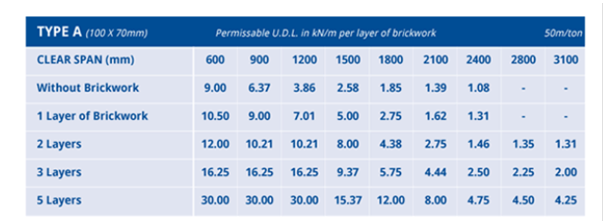
-
Overkill spec on reinforcement- suspended slab, basement wall
Gus Potter replied to Tony C's topic in Foundations
Hope this helps, a bit lengthy but... You maybe can use mesh but if you want to achieve the same equivalent bar area to 12mm diameter H12 bars then you may need to look at the B type structural meshes, perhaps a B785 mesh? The rub here is that the bars are different sizes in each direction with different spacing. Has the slab (maybe basement walls too) been designed as a two way spanning slab. Roughly meaning that all the edges of slab are fully supported all round so that the main reinforcement bars act in two directions perpendicular to each. If so, then you may need four layers of mesh (2 top + 2 bottom) as opposed to your 12mm diameter H12 loose bars top and bottom as the secondary bars in the mesh may be too small. Although mesh can be great you can have a problem with “nesting” if using lots of layers. Were four sheets come together it’s difficult to lap them properly and keep the concrete “cover” to the reinforcement. You can get a flying end mesh but on a small project this can add to the cost, difficulty in sourcing and you may need to detail it up so it fits. Also think about how you reinforce the corners of the basement walls as you can get congestion here too. Although mesh can be appealing if you have congested reinforcement it’s harder to compact the concrete properly and that can cause problems later on. Perhaps have a look again at using loose bars. An H12 is not a bad bar, not too floppy and not too heavy. They come in various stock lengths, easy to source and price match. Also, if you run out you can nip to the stock holder and grab a few more. Any off cuts are great for garden stakes or using as dowels etc. Once you get going with tying loose bars you’ll get along fine I’m sure. If you make a small mistake then all you need to do is remove the odd bar or two rather than sheets of mesh that you may have cut. Just remember that when rebar is tied together it is very heavy so make sure it is properly braced and shuttering is supported. Clay soil (say when you have cut down a tree) can exert a significant load on the walls of a basement. The soil can take a number of years to readjust to the new ground water conditions. There are a good few ways of designing concrete basements / floor slabs. When you don’t have other buildings /sewers etc close by then broadly some key areas considered are; strength (so it does not collapse), deflection (so it does not bend too much and damage other parts of the structure) cracking (to control water ingress and again damage to other components and finishes) and buoyancy / drainage... it’s not a boat so you don’t want it to float if the ground water rises. When a floor slab is say simply supported at each end only and it is loaded from above you will get tension in the bottom of the slab. Steel is good for resisting tension hence your main bottom steel. If you have a load bearing internal wall in the basement then you have a two span beam. You still get tension in the bottom of the slab as you approach the middle of each of the two spans. However, you usually get tension in the top of the slab over the internal wall. Hence your main top steel. It may be that the basement has been designed as a continuous box. In effect the concrete and reinforcement work together at the corners (often called a moment connection) as opposed to say the basement floor and walls acting together with the suspended slab only designed to prevent the basement wall heads moving inwards and to carry the loads from above this is more of what is called a pinned connection. If this is the case then you also have tension in the top of the suspended slab and the outside of the vertical basement wall at and near this junction thus you need some steel in the top and outside of the vertical walls and this can be a congested area. You can ask the Engineer how the design works, often they are more than happy to explain. It’s worthwhile to know how something stands up, especially when you are finished the project and enjoying the fruits of you labour in front of the fire on a windy winters night.

