JohnMo
-
Posts
13296 -
Joined
-
Last visited
-
Days Won
200
Everything posted by JohnMo
-
Think you need to fall in the insulate well or no insulation (as longs as floor is direct to ground) camp. The little bit of insulation doesn't charge ground well and if it does the insulation stops it coming back into the house. So it's just energy lost.
-
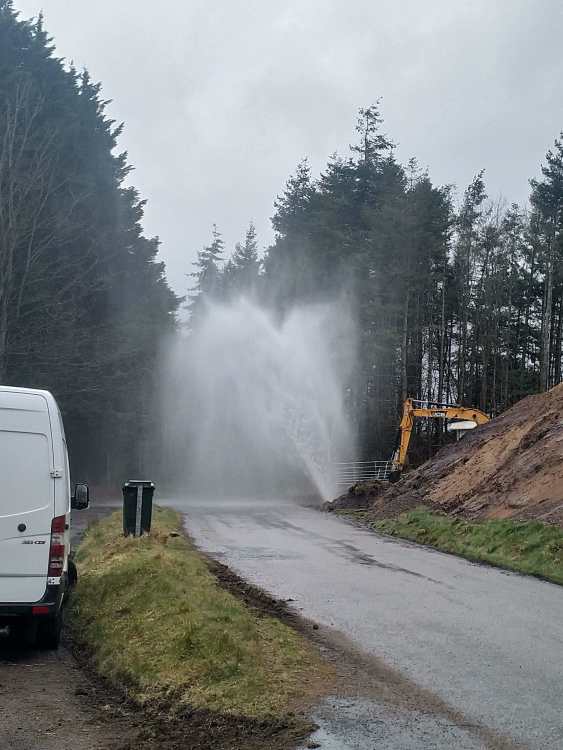
No idea of the answer but don't hit it - our grind contractor did, got a huge fine. Makes quite a mess
-
 You have not missed anything. You will have extract in the en suite and plant room. So air will be pulled though the house. You still need to balance flow and extract rates overall. Air will sort of following the red lines and be extracted following the blue. So whole house is covered. Use a couple of coanda nozzles at top of wall by cycle room and the air will travel across dining room before dropping down and being sucked to extract points.
.thumb.png.b96f5228843f34ce79f64e051ed61512.png)
-
The 1m rule only really applies to R290 heat pumps. R32 doesn't make much difference.
-
VAT 'edge cases'
JohnMo replied to Alan Ambrose's topic in Self Build VAT, Community Infrastructure Levy (CIL), S106 & Tax
Sure you can. But 30 mins one guy did ours. Why bother with the faff, the double checking yourself. Straight from cad drawing to actual marks on the ground. It also positions house globally correct for position (longitude and latitude) and height from a given datum. -
Kitchen Tiling - Wall to wall or to edge of units?
JohnMo replied to Antec123's topic in Floor Tiles & Tiling
You can do it either way. Depends on the order you are doing things. We did whole floor in tiles. It was easier at the time, no guessing where units ended up. -
VAT 'edge cases'
JohnMo replied to Alan Ambrose's topic in Self Build VAT, Community Infrastructure Levy (CIL), S106 & Tax
Good for a simple layout, but when a little more complex not so easy. Ours falls in the complex bucket.
-
Electric underfloor - over existing timber board floor?
JohnMo replied to Walshie's topic in Underfloor Heating
Not really, generally 4x as much as wet UFH. Have you looked at skirting board heating. Replaced existing skirting with water heating ones. Do a Google search. -
Fitting rock wool in interior walls - how to fit pre boarding?
JohnMo replied to DownSouth's topic in Sound Insulation
Me too. But in my example from 1830, such stuff didn't exist. -
I didn't size at 6kW I bought it because it was super cheap and really only for cooling (now does everything). It does the job with all UFH, no buffer or volumiser needed to stop short cycling. Can batch charge on cheap rate, really well. But doing WC it would get a better CoP is it could modulate down further but it's ok. Its way more important to try to find the minimum modulation kW at 7 degs rather than ultimate max kW. The new mitsubishi 8kW (only that model), is really two heat pumps in one case. There is a fixed speed 2kW and an inverter driven 6kW heat pump in series. So will output a constant range between 2kW and 8kW. These seems to tick quite a few good boxes. Good modulation for WC, plenty of power for DHW and plenty of power for using cheap rate electric. Not sure if it ticks the cooling box? On the Panasonic front I would be more tempted to go J series (proper monobloc as @Nick Laslett says) they are cheaper, have good control algorithm, modulate well, very quiet. Think it's @Nickfromwales go to heat pump.
-
From the installer manual for the Panasonic L series.
-
The L series are a bi bloc, so hydraulic (water) split. As per last post. While deleting storage space. Don't know you would want anything inside when it happily sits outside. I would just choose a simple monobloc every day. We have our heat pump a good distance from the house and it doesn't seem to suffer much by it.
-
VAT 'edge cases'
JohnMo replied to Alan Ambrose's topic in Self Build VAT, Community Infrastructure Levy (CIL), S106 & Tax
For us he came, opened computer, connected to satellite, marked out building location and every corner. Digger dug, we filled with concrete. Man came back, redid corner marking in the concrete. Everything was square, dimensions correct etc. No more than 30 mins on site each time. Makes an easy accurate job of it. -
Fitting rock wool in interior walls - how to fit pre boarding?
JohnMo replied to DownSouth's topic in Sound Insulation
Our last house built in 1830, use the same principle between floors. The joists were filled with builders waste in a uniform fill. -
Not quite correct. A bi bloc is water split, not refrigerant split. A split unit is refrigerant split. This is the internal unit. It has water connections to outdoor unit - not refrigerant. It contains water filter, water pump, expansion vessel and the control system for the whole unit.


-
That's double our PV production with similar size array. Long way north and with plenty of trees, to shorten solar day by a few hours PV envy.
-
No hydraulically split is water split. You have an external monobloc (with some parts such as pump moved inside) that only works with the internal unit. I would do a proper monobloc (everything outside) and third party cylinder. Have you sized heat demand at 7kW? I have a 6kW and it's twice the size I need.
-
Fitting rock wool in interior walls - how to fit pre boarding?
JohnMo replied to DownSouth's topic in Sound Insulation
Or just use rockwool Flexi for internal partition stud walls, for acoustic insulation. If a 75mm or 100mm stud use 50mm and fit in the centre of the stud, so you have an air gap both sides. Make it a good interference fit (not huge so it bulges) it will stay put for as long as needed.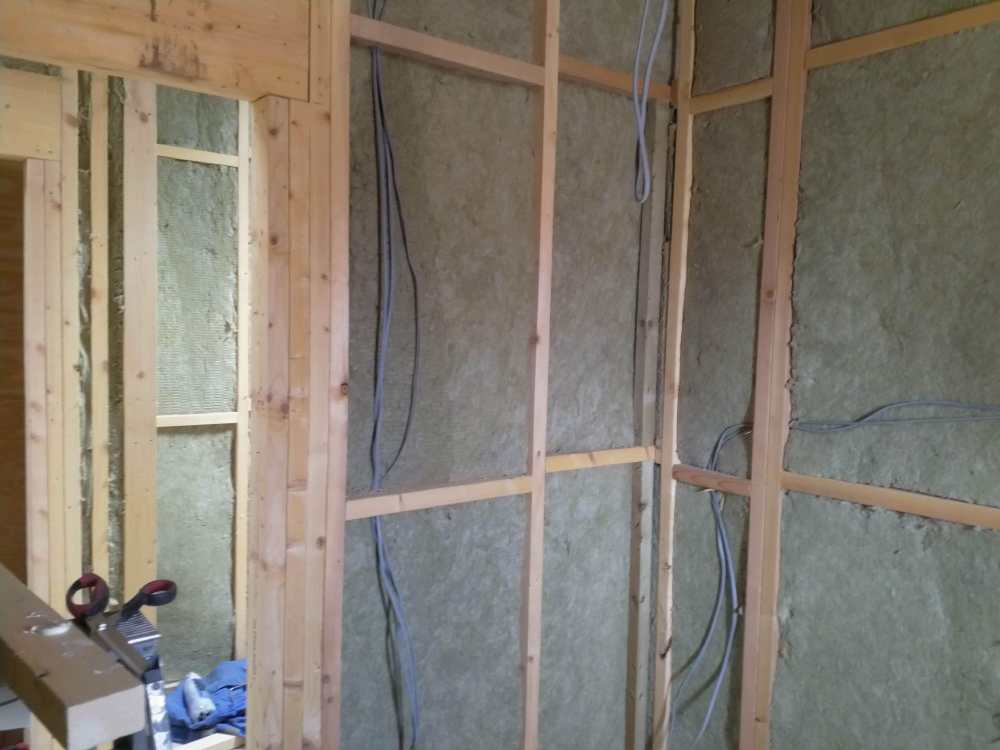
-
Some comments on the above Intake placement makes little difference as long as BOTH inlet and outlet on the same face of building. This is for pressure balance. Keep away from bedrooms is wise, but with careful design can be placed there. Extract over shower areas, many schools of thoughts on that subject, really makes little difference as long as the extract isn't next to door, so room gets washed with fresh air. Kitchen extract, not above hob is good advise. But place for longest distance from likely supply terminal to wash whole kitchen with fresh air. Kitchen etc need double runs - no, flow rate, length, diameter and overall pressure drop, make the case for number of runs. Nothing else. Rooms greater than 20m² need double runs, see above Keep ACU flow as low as practical. Not really, you need to keep pressure drop at either side of ACU (or MVHR) as low as possible. This means fan runs lower on its performance curve (so rpm for a given flow rate) and therefore less noise is generated for a given flow rate.
-
You have to be a certified contractor to install the apron as it has to comply with roads spec. So be careful. We are on a similar road the contract just did the work with a couple of cones and a sign. Openreach are working down the road today on the road edge (not for us), no road closures, just a sign.
-
VAT 'edge cases'
JohnMo replied to Alan Ambrose's topic in Self Build VAT, Community Infrastructure Levy (CIL), S106 & Tax
Our ground contractors brought that person in under his subcontract, so it just was absorbed into their fee VAT free. Just invoices I added to the pile and the vat was paid back when I claimed. Just claim everything, that isn't obvious like an architect. -
But is it? Your figure assumes no import to allow export. If you are paying to charge battery at 7.5p to allow export at 15p, your effective rate is 7.5p (15-7.5p). So that becomes 3,333kWh export to break even.
-
Thought the title may drag you in - this is the rubbish installers see, hail the buffer makes your life simple - not the home owner that pays the bills. https://www.installeronline.co.uk/heating/hewer-launches-under-cylinder-solution-to-support-heat-pump-installations/
-
Crappy roof junction detail...
JohnMo replied to Mulberry View's topic in Insulated Concrete Formwork (ICF)
So how many joints that are not on corners? What's wrong with a joint or two, they are not seen, unless you start looking for them. Your gutters will be covering it anyway, so visually invisible. Too much other stuff going on for the eye to pick up on that detail. Step back a little and don't over think it. Or do a wooden facing board and have it wrapped in zinc while they are doing the roof? Then render up to the zinc -
Something like this https://www.wolseley.co.uk/product/armaflex-evo-tube-selfseal-armaflex-evo-tube-selfseal-1-1-8-od-x-1-wt/





.png.10e5de3497b42c685ba45e89cca216f5.png)