
JohnMo
-
Posts
12468 -
Joined
-
Last visited
-
Days Won
179
Everything posted by JohnMo
-
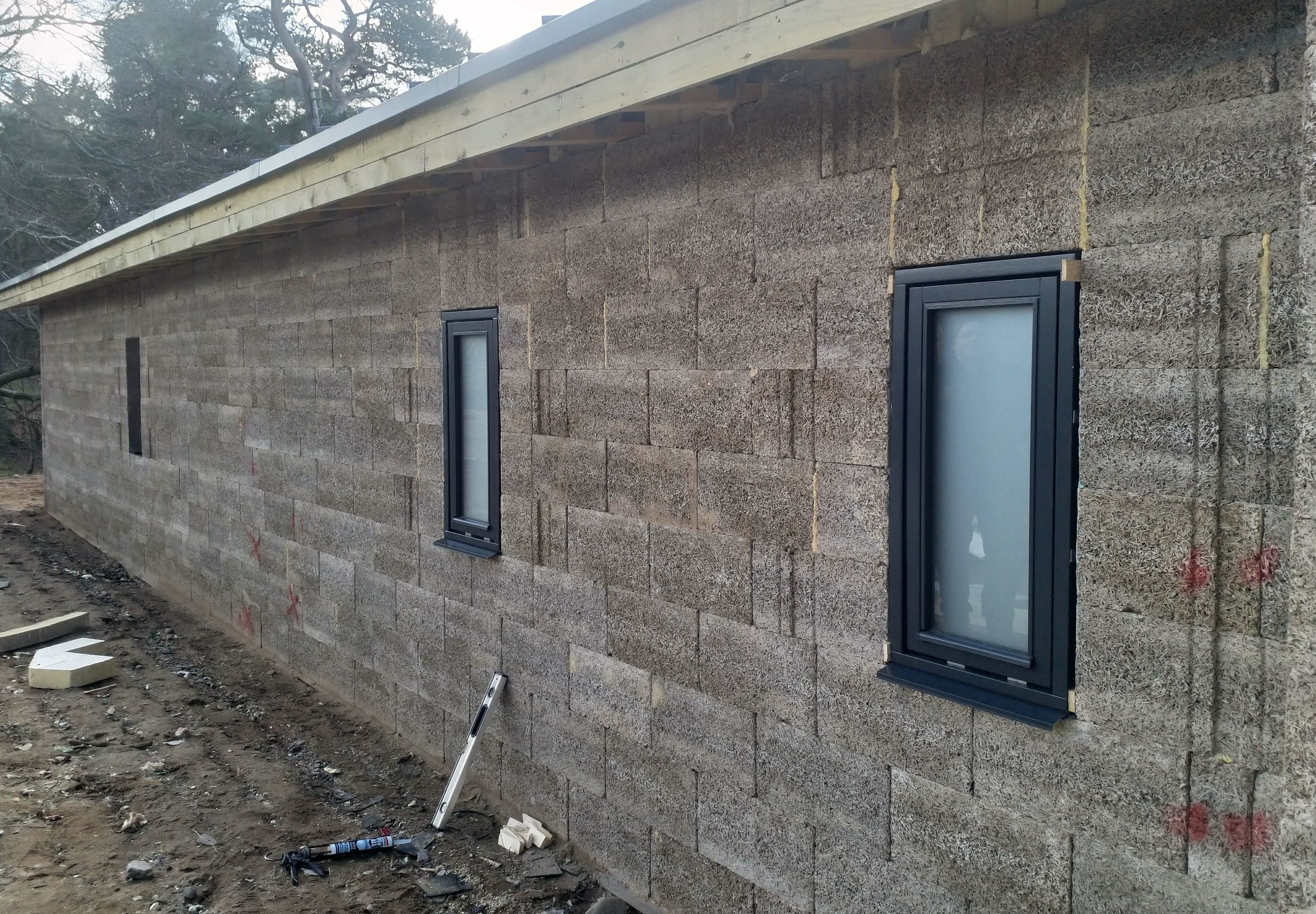
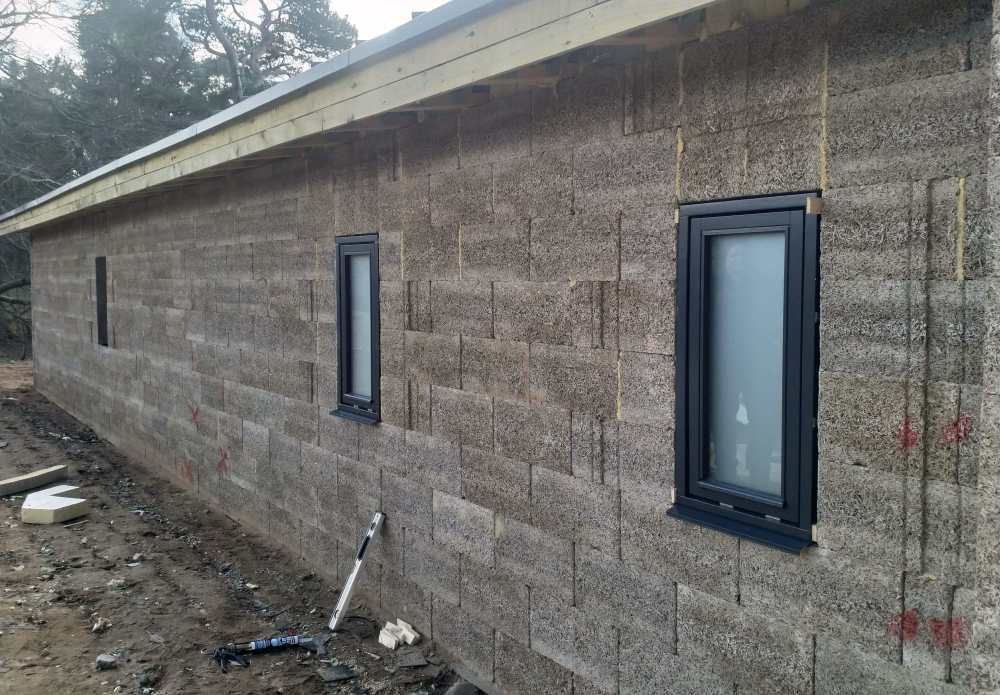
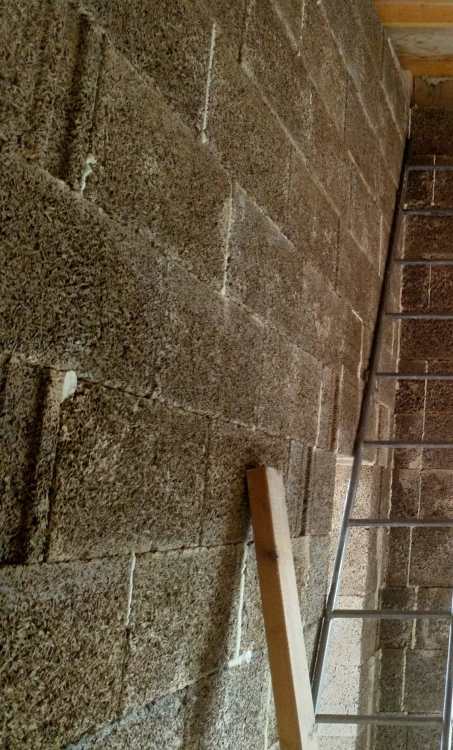
Just found the long external wall - about 15m long and 2.5m tall.
-
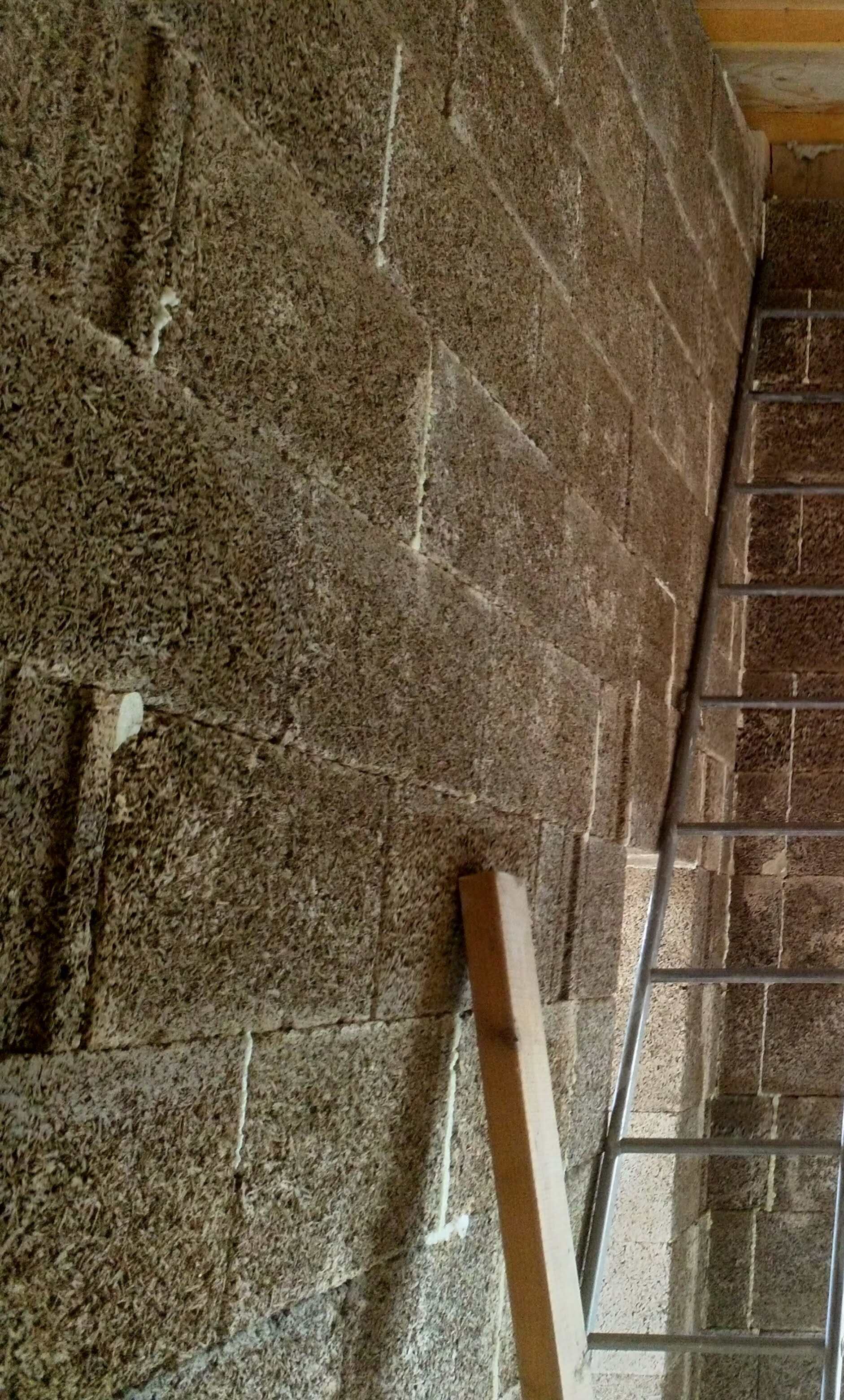
Photo for clarity on what an unfinished wall looks like. This internal but exterior the same
-
@lizzieuk1 I would do the maths on additional external insulation is it worth the expense and head ache? Moving from 0.14 to 0.12?
-
Sorry you are all over thinking this. Durisol blocks have a slight taper to allow them to be removed from moulds. But it is slight. The wall when complete will be vertical and straight. Apply flexible external tile adhesive and just apply slips. We did stone slips with zero issues direct to block. By the time you have completed it the wall will be mostly airtight. The issue is the DPC area, but this acts as a drain should any moisture het behind the slips. Forgot to mention the securing tabs on the slips, I use copper nail but can also be screwed directly to blocks
-
Think you may be confusing them, they input to a strategy, they ultimately take responsibility for a design they don't understand. Basics of heat pump install and UVC is simple especially if connected to UFH. You maybe simpler, to draw up design pipe sizes from A to B etc, and say you want a plumber to implement. Buy all the odd stuff like manifolds your self. I would start a new thread or two, one for your plumbing design (cold and hot water) another for heat pump. Draw up your base plan for each and get it reviewed and commented on.
-
Just zero point running 22mm cold to each room. Do it 15mm, it is more an adequate. Why would you need 22mm hot anywhere? As the crow flies our ensuite is 15m from the UVC. If I switch the shower on (with hot water circulation off) by the time I am undressed the shower water is coming out warm, another 10 secs it hot. All 15mm plastic pipe. 15mm hot or cold to high flow shower or bath is fine. 10mm to sink if you want to run additional pipe to bathroom. That is a bonkers flow rate, why would you even need half that?
-
200mm PIR is nearly equal to 300mm EPS. For the same internal space both options are similar.
-
U value calc will be pretty much the same as a floor. No. Concrete isn't an insulation it a good conductor of heat, add another 100mm of PIR, would bring your U value closer to 0.1. The ground is always around 6 to 8 degs. So heat loss will be constant all year around. You don't get the extreme cold of air temp but you don't get the warmer temps either.
-
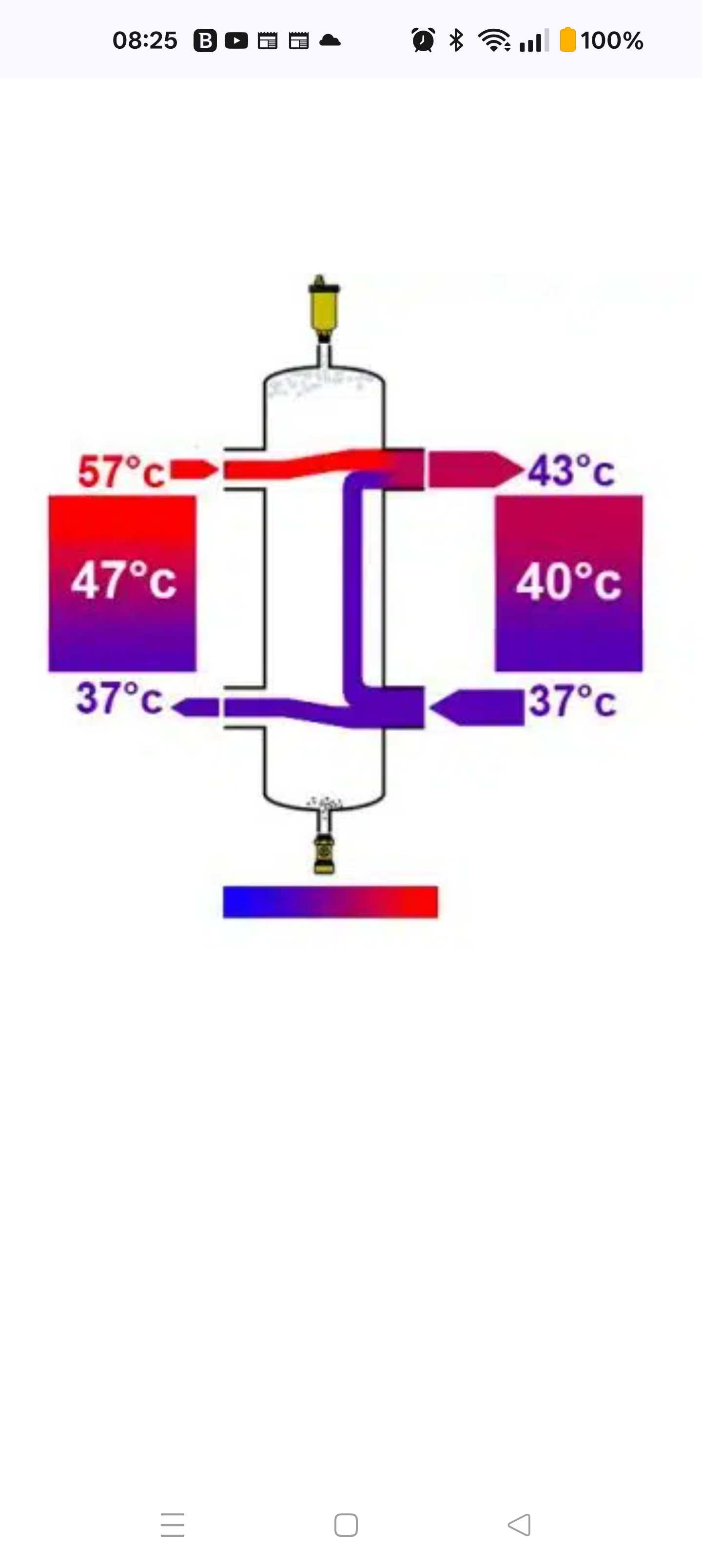
I am reading the secondary flow is higher than the primary and that is the reason for the LLH. If that isn't the case why install the LLH? If secondary flow is higher than primary then the distortion illustrated will be there. If it's the other way about primary flow is higher than secondary you get similar distortion, but with return temp to boiler higher than coming back from the secondary side. Add zones on the secondary side you have one system that cannot do what you want or expect. Flow temp or return temp will always be compromised for the boiler side.

-
So you have two very different flow situations on primary and secondary sides of the system. This is cause huge flow temperature distortion. Basically you will have return from secondary side going back to the satisfy the flow to secondary side.

-
What I find amazing is Heat pump installs now avoid a LLH or buffer like the plague, because they rob efficiency, cause distortion in flow temperature/return temperature. Generally a waste of money at time of purchase, and then rob efficiency for ever more. Distortion and driving additional pumps. Now they are being installed on boilers - why? They bring nothing to party (that is good), as the whole of this thread seems to show.
-

Tile straight onto 22mm CABERBOARD bathroom floor ?
JohnMo replied to Post and beam's topic in Bathrooms, Ensuites & Wetrooms
Caberboard is water proof with a coating, I would be worried about the adhesive just lifting after a short while. So you may have to do something to act as medium to allow a sound connection. Maybe an overlay of ply or something similar? What do the caberboard instructions or website say on the subject? -
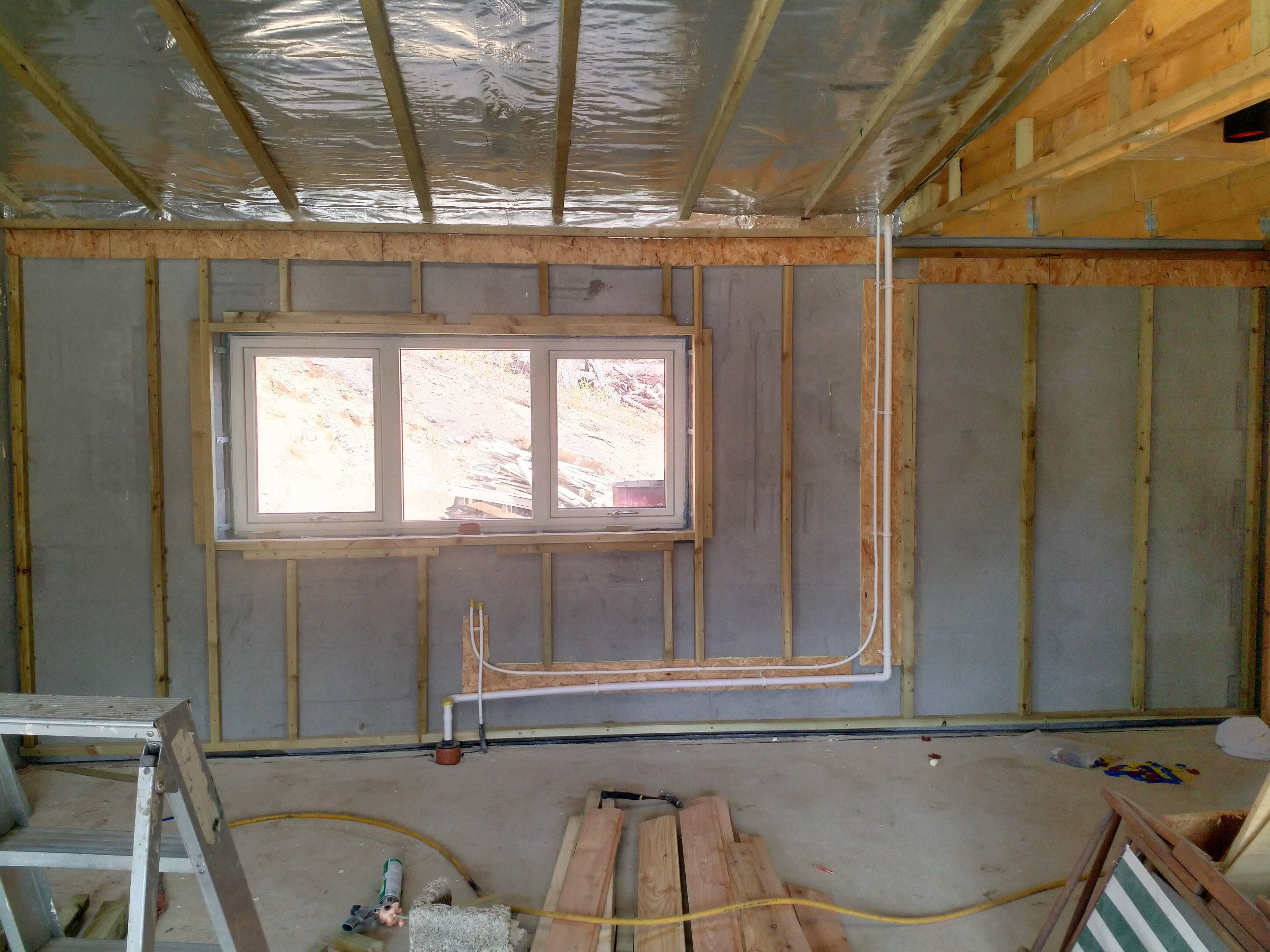
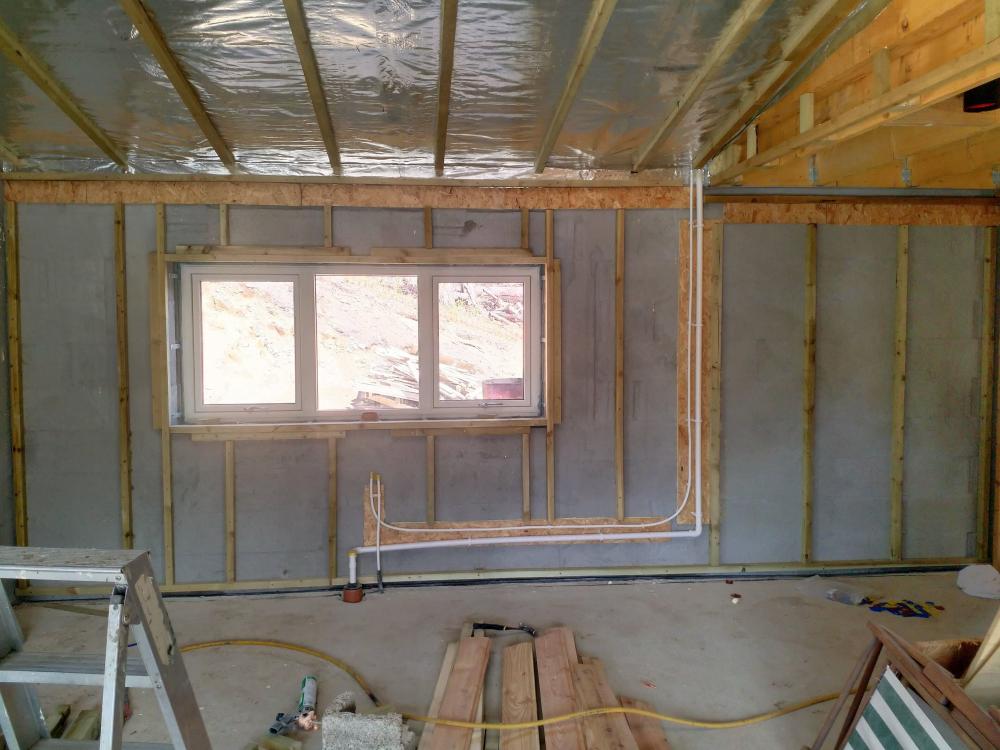
OSB foam glued to parge coat.used to attach pipes and the top channel for all wiring. 50mm battens used on walls and ceiling.
-
If you include an unvented service cavity it come in at 0.14. Work out where you need the airtight layer so it concedes with the ceiling, roof etc. then go from there. But inside is best as above. But your call. Airtight can be parge or membrane, battens can be packed out if needed to get straight vertical walls. Advantage for doing all this internal, it's not weather dependent.
-
If you are concerned about water etc, wasn't block and beam the design solution made for you? Not a fan of block and beam, but it moves all insulation away from possible water and may be the correct solution here.
-
Or even the MVHR sub forum?
-
You can use the floor as a storage heater. So a simple thermostat is used to start heat pump during cheap rate electric period, the heat pump just adds heat energy into the floor. Once you get a low energy system the floor becomes quite self regulated. Heat out from the floor is a product of area and delta temperature between it and the room. The closer the dT the lower the output. Summer cooling is similar to heating but it's sucking room heat in from the room. You keep away from condensation issues by flowing relatively high temperature for cooling, my flows vary between 18 and 14ish. This is the side pipe temperature, floor surface temp is a couple of degrees lower than room temperature. Not sure passivhaus ever say you do not need heating, they say you don't need conventional heating systems. People think that means no heating, which isn't correct. The fact that passivhaus state a max heat demand of 10W/m² is purely to allow air heating via MVHR. So our house at around 200m², if Passivhaus certified would need 2kW of heat on the cold design day. Or 48kWh.
-
Hi welcome, you may be best to start a topic in the correct area, and explain why you think you have an issue.
-
Planning Approved - Feedback on proposed layout
JohnMo replied to Owain1602's topic in New House & Self Build Design
I would just take the wall out between plant and pantry. Bigger plant room, come additional storage, come airing cupboard. Or just use a combination supply extract something like this https://www.paulheatrecovery.co.uk/product/160mm-directional-external-combi-grille-for-mvhr-black/ -
You will read a lot about about warm floors etc, but when well insulated (house and floor) the floor remains pretty cool - very low 20s. Then depending on screed thickness pipe spacing it's response time varies. We have 100mm concrete screed (57 Tonnes) and pipes at 300mm centres. So our floor is super slow in response. Which I use to our advantage. We charge overnight on cheap rate, when the sun's out and we have excess PV electric the heat pump starts, the last few days heat pump has run for 4 to 5 hours in the day, So for every kWh spare PV electricity we convert it to 4.7kWh of heat. It doesn't overheat the house surprisingly. Floor is currently at 22.1 degs, house is at 21 degs (8 hrs after heat pump stopped) and it's 4.5 degs outside. You can't do this with an electric heater. Cooling in summer is basically free also.
-
Removing tree ear marked for retention
JohnMo replied to flanagaj's topic in General Self Build & DIY Discussion
We had to do a full tree protection plan, root protection etc. Got the boxes ticked, all the trees located on a map blah blah. Once planning process was complete, no one cared less, not a single question ever asked again. It's all a tick box exercise. Once they the boxes ticked they move on to the next application. Make up your own mind what you do. But I like @nod suggestion -
Look on eBay, I paid £1300 delivered. There a good ones on there currently for £1000. You need a cylinder a heat pump cylinder is only a couple of hundred more than a direct immersion one. UFH throughout, run direct from heat pump, you have heat and cool for very little cost. All you need is pipes and manifold run direct from HP.
-
Isn't really a new build standard so is quite easy to achieve. It has a heating requirement of 25W/m². So a 200m² house would have a max heating demand of 5kW on your coldest day - so worst case. So over a 24 hrs period is 120kWh of heat needed. So the coldest day would cost (at 25p per kWh) £30. With a heat pump or A2A £10. A more average heating day would used half the heat energy, so direct electric heating (£15). With heap pump nearer £6, due to better CoP. CoP, is coefficient of performance, so electric input compared to heat output. CoP of 5 is 1kWh electric and 5kWh heat out.
-
Traditionally-styled low temp radiators?
JohnMo replied to YodhrinForge's topic in Central Heating (Radiators)
It is just as easy to kW as it is kw, so why not use the correct units? -
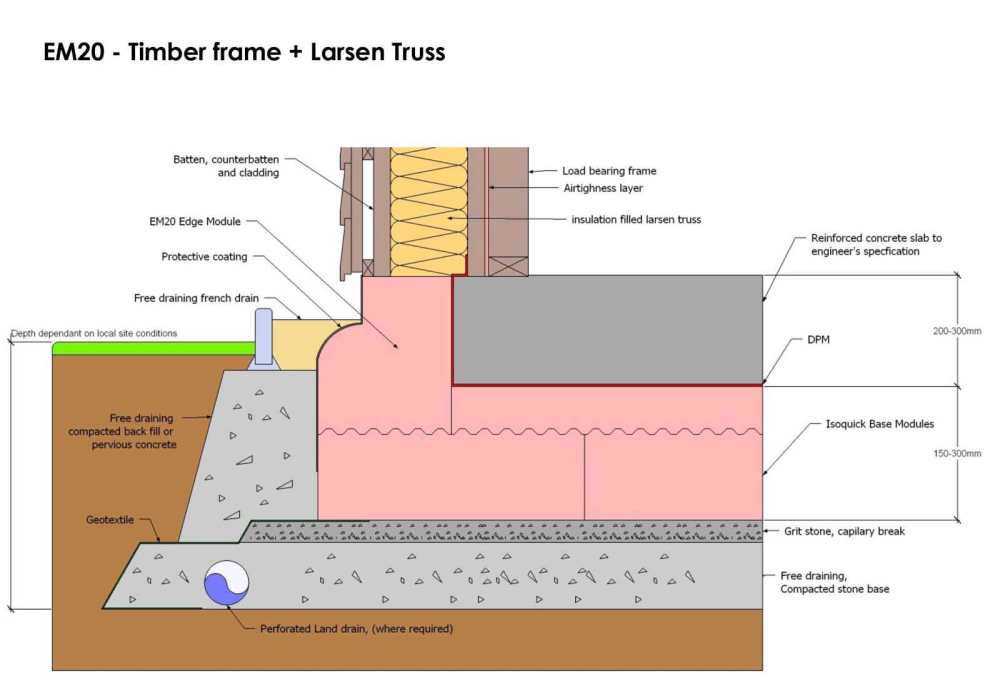
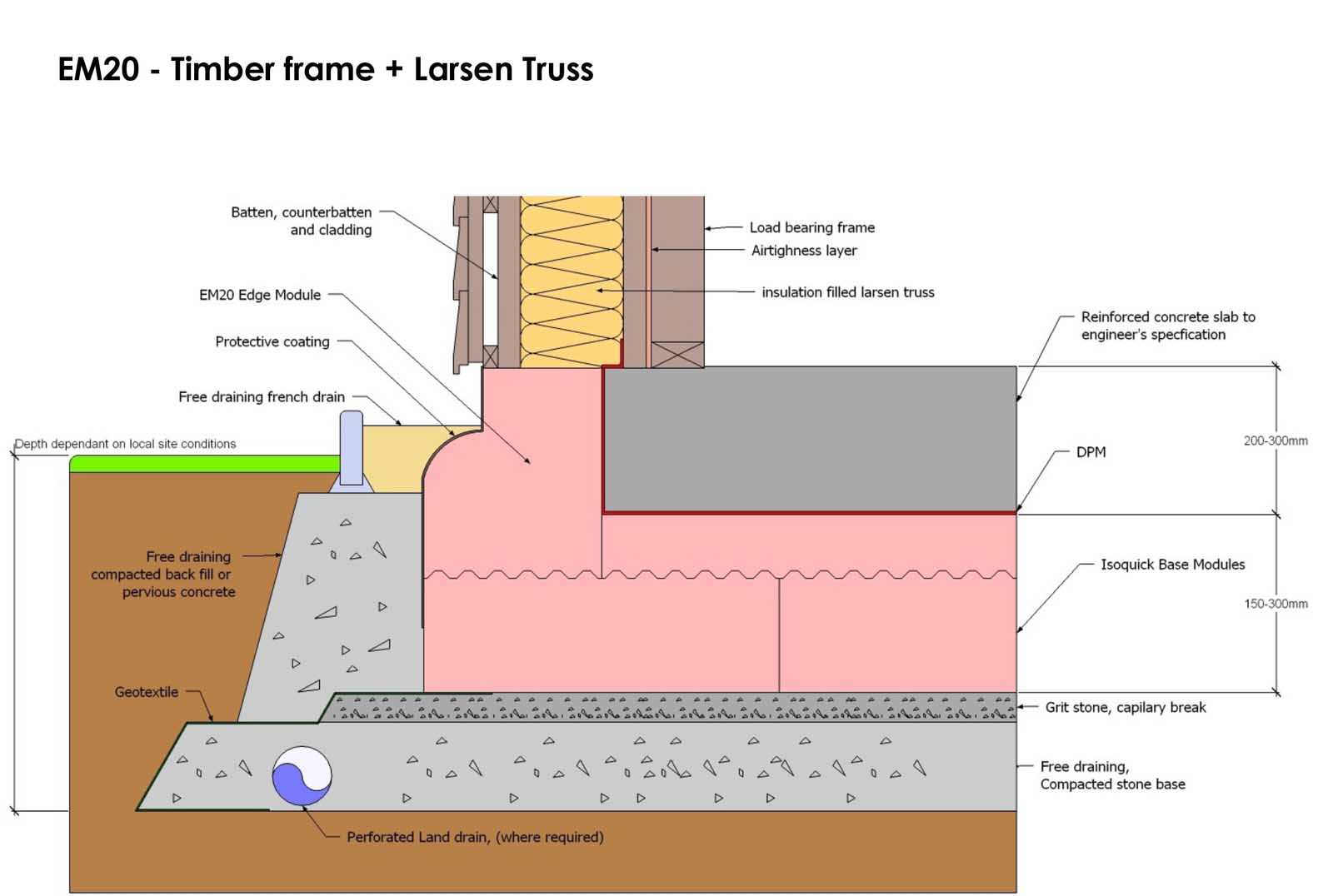
That then means the slab cannot be your finished floor and you have to screed? Which makes no sense. So surely the dpm would be below the concrete, not on top. As per sketch