


hotnuts21
-
Posts
76 -
Joined
-
Last visited
Everything posted by hotnuts21
-
Hi Guys, I have two questions. 1, all the images I have seen for warm flat roofs look like a sandwich with board, insulation, board. However im struggling to find any information on what to put around the outside and how I attach this to the flat roof, I could use OSB but then screw it into the top and bottom deck? Or do you run a batten on the inside of the sandwich, or not do anything. Im using 150mm insulation so was thinking of running a 150x40mm piece of timber along the edge of the roof to double up as something to attach the fascia etc too and enclose the roof and give me something to run the vapour barrier up around the insulation. 2, On one side of the flat roof it buts up against the second floor of my timber frame, however this is supposed to have woodfibre board insulation on the outside. Im not sure if I should run the roof upto the woodfibre, or install the roof under the woodfibre and bring it down on top, but then I worry about any water running onto it and keeping it damp. Hope that makes sense. Paul
-
Screws for wood fibre insulation through batten
hotnuts21 replied to hotnuts21's topic in Timber Frame
@BenP have you used doubled up batten around the Windows to give a 50x50 perimeter? Did you have to wrap them in dpc? -
Screws for wood fibre insulation through batten
hotnuts21 replied to hotnuts21's topic in Timber Frame
The other question I have, is when batten and counterbattening, do you use one screw through both battens, or fix the counter batterns first and then a second long screw through both into the stud too? Thanks. -
Screws for wood fibre insulation through batten
hotnuts21 replied to hotnuts21's topic in Timber Frame
Thanks all, I think I will stick with standard screws. The ejotherm and similar anchors I might use a few to hold the insulation in place before I batten, rather than trying to fix board and batten at the same time, but with the big round plastic head they are not designed to go through a batten, rather sit directly on the insulation, with a batten they will then leave a raised area on top of the timber, causing issues for the other cross batten. Thats kinda why I asked the question in case I was missing some similar fixing without the head. Just got to work out what to do with the board at the dpc level now as we are having a flush patio at the back doors ? -
Screws for wood fibre insulation through batten
hotnuts21 replied to hotnuts21's topic in Timber Frame
Yes screws into Studs. Makeup from outside to in Timber cladding Batten Counter Batten Insulation (60mm not 40 as below) breather membrane OSB3 Stud. Makeup diagram below, although the sizes and products are wrong, it gives you an idea.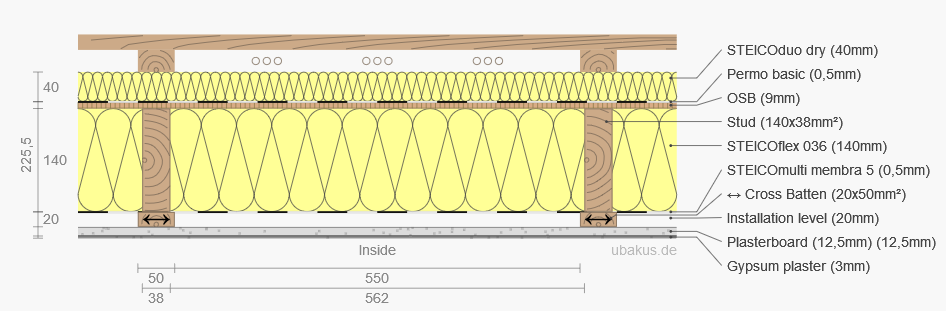
-
HI Guys, Im fitting 60mm steico woodfibre boards to the outside of the TF. These will be secured in place as per the manufactureres instructions with counter battens (38x50) and the cladding will go onto the horizontal batten also 38x50. Instructions say to use 6*180 screws, but im concerned these will lead to cold bridging? Although they will be buried in a batten and then covered with another batten. Would something like the following be suitable? https://www.aboutroofing.com/insulation-fixing-6-0mm-x-180mm-countersunk-pozi-woodscrews-box-of-100.html Thoughts? Paul
-
Making window reveal smaller, studs or insulation?
hotnuts21 replied to hotnuts21's topic in Heat Insulation
Cheers guys, yes we have been through quite a few quotes and this company has met all our requirements. I think one of the issues at the moment is they are all so busy, that customer service has gone out the window a bit, ive been into one local (well known) supplier 3 times and been told someone will ring you later today and not heard anything, its got to the point where I just want to order now and these guys can deliver. Plus the window next to it 2m away is 1200 wide and 2400 high so there no issue making this one a bit smaller ? The manufacturer has said the issue is with the opener, its only rated to 750, and they have had issues going bigger in the past, although the frame manufacturer says they can goto 800, which is a bit odd, but its not the end of the world, I just want the windows on site now ? The windows are aluminium, using the flush Altitherm 800 profile and double glazed. Ive got another thread on this forum about installing them (had no response to that so I presume im on track.), if anyone knows of any well priced aluminium flush windows who its worth getting a quote from, drop me a DM. I will go with the 1 stud as suggested. Will be ordering this week. -
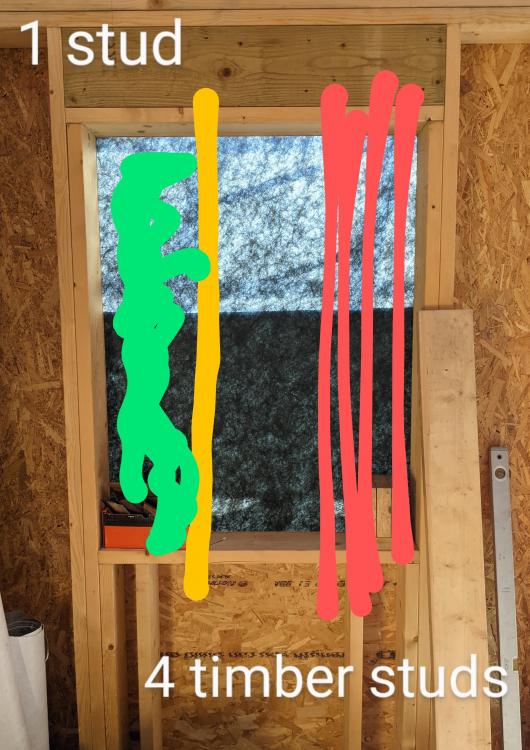
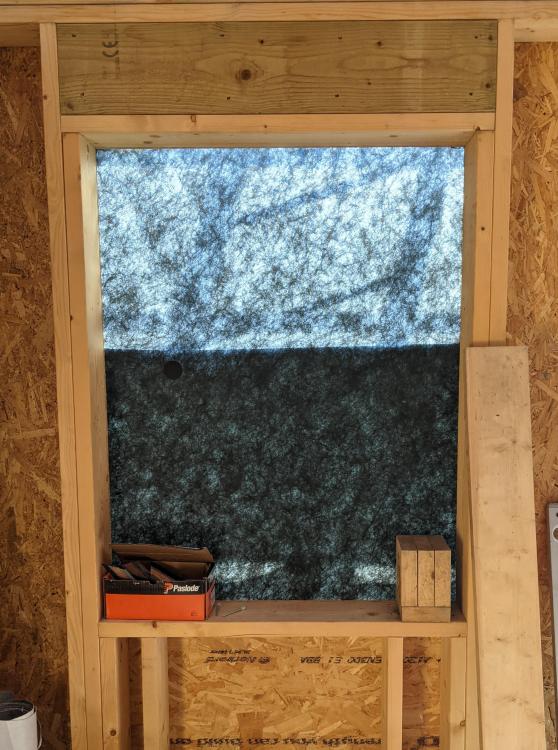
To be able to fit an egress window our supplier can only go upto 750 width, so I need to make the 900 aperture in our timber frame smaller. The quickest way to do this is just put in 4 stud (140*40) timbers 2 on either side of the opening. But I was wondering would it be better to put in one stud 750 mm from one edge and create a little void filled with insulation? Obviously we will also put osb3 and membrane on the outside.
-
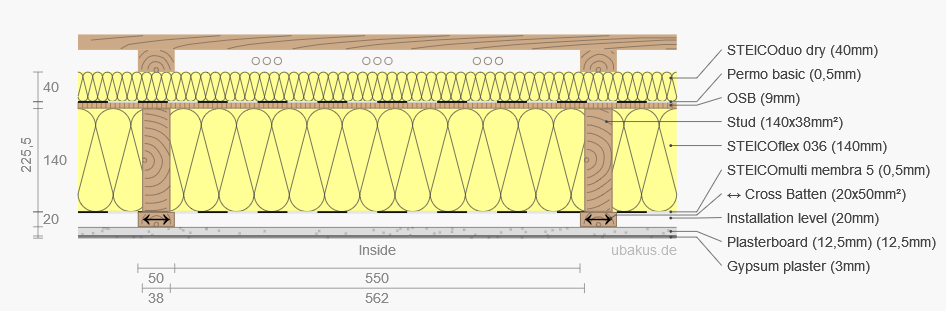
HI all, Im buying Aluminium windows for out TF extension. They are Alitherm-800 flush windows. And were not a great deal more than some UPVC quotes we got. The suppliers have said they can provide a sill for the window and I just want to check that what I am doing is right, more of a sanity check as this will be a first ! This is a build up of our TF, 140mm deep, with wool insulation between the studs. 60mm wood board insulation on the outside, battened and counter battened for vertical timber cladding. The diagram below is correct except it misses one of the battens and shows 40mm instead of 60mm woodfibre board. 1, measuring the aperture in the TF and deduct 10mm allowing for 5mm gap all round. Gap to be filled with expanding foam. 2, Install the window just inside where the OSB would be to allow full support underneath and keep it within the insulation. 3, Ensure the sill is long enough to go out and over the cladding/battens. 4, Cut the wood fibre insulation to same aperture as window hole, bring cladding around upto window. 5, Cut membrane and fold back into TF aperture 6, Place DPM under window and out over the cladding 7, Fix window with straps to TF studs. One window is huge, the size of a door and a half so I presume the glass comes seperately to allow for fitting the frame first! Thanks Paul
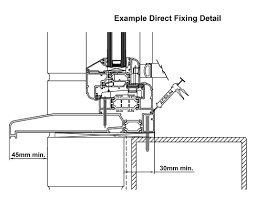
-
Timber frame insulation over breather membrane..
hotnuts21 replied to hotnuts21's topic in Heat Insulation
Thanks Gone west, thats good to know. I hadnt considered a flexible product, I will have a look into that. -
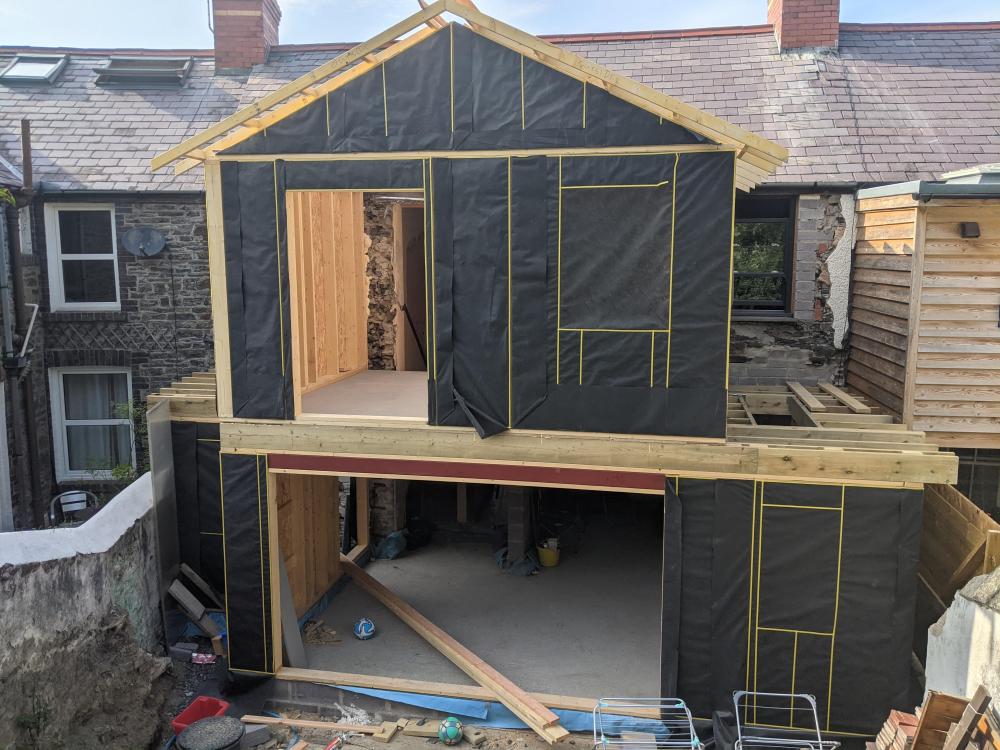
HI, We have just had our timber frame kit erected after a very very long and stressful wait. Although this is only the start of the project really. The kit turned up on a lorry and has been erected. it is literally just the kit with 140mm stud, 10mm osb and a black breather membrane on the outside. See photos. I have A LOT of questions about timber frames but thats for another thread. My original plan was to insulate the panels with sheepswool/thermafleece, and then across the inside of the walls with a batten and more wool. On the outside its batten and counter batten on top of the breather and then vertical timber cladding. But I wonderred if there is a product that I could potentially put on the outside of the breather membrane too, maybe a wood fibre board like pavtex so I could eliminate all cold spots/bridges and protect the inside from the hot southerly sun. Maybe sometihng that I could place either between the battens, or instead of the battens and then fix the counter battens above the insulation. Ive heard of insulation on the outside, but from the research I have done this is always against the OSB and then the breather membrane on the outside. I dont really want to risk taking off/damaging whats there. Hope that makes sense. Paul
-
Indeed, there is a bit of soot in it, but not a lot. Its in what is now the upstairs bathroom, but in the past must have been a bedroom. When I pulled up the flooring the original tiles were still there too, they were very basic though. Interesting, I have been wondering about using the Chimney flues to run the pipework through but not sure if its viable. Not sure I trust they are air tight enough all round to just use room ducts. I did wonder if I could use them for the incoming and outgoing air sources for a mvhr though. At the moment all our quotes are coming in at around 6k for MVHR and with such an old and draughty house its not worth it, but I think it will be in the future as we slowly seal everything up. But nows the time to run in the ducting and no one seems interested in a two stage approach. Its just one of many nightmares I have going on at the moment where im not sure what to do and where to spend the money ? Thanks for al the tips/advice guys. I might try photographing all the chimney flues eventually (we have 8). Paul
-
Advise on type of works for mezzanine
hotnuts21 replied to hotnuts21's topic in General Construction Issues
Hi Temp, Sorry for taking so long to come back to you and for the detailed answer. Yes I think we will need to cut the purlin to do the work and It was around this and supporting the new floor where my concerns were. Im trying to get a feel for what work would be required if we do this before I speak to a SE. I dont want to shell out hundreds just to find out its impossible or way out of realistic budget, but it might be the only way forward. Thanks again, all the other points I had already considered and we think its a possible go, but I want to find out more before pulling the trigger ? Paul -
Hello, as part of ongoing extension/refurbishment of the house, we are considering opening up the bedroom ceiling into the loft and having a mezzanine style opening level above an ensuite at the end of the bedroom. We would then look at putting in one of those velux rooflight balconies. However this is still very much at the planning stage, and before we get as far as paying for structural engineers etc, I would like to get an idea of the type of works that might be required and if our roof lends itself to this type of work without a lot of alteration. The house is a 1907 Edwardian terrace, There are 4 wooden beams running the length of the roof, which hold up the rafters. The roof does appear in the bedroom below, so I know the 'floor' of the mezzanine would be lower than the existing ceiling. The wooden beams run from a brick wall at either end and are supported about a third of the way across with an a frame of sorts. This would not be in the area we would open up, it appears to be over the wall between the two front bedrooms. As always a picture is better than words so I have added some photos to explain. Mezzanine area marked with green box, A frame marked in orange. This is just to get an idea of feasability at this stage so any and all opinions excepted.
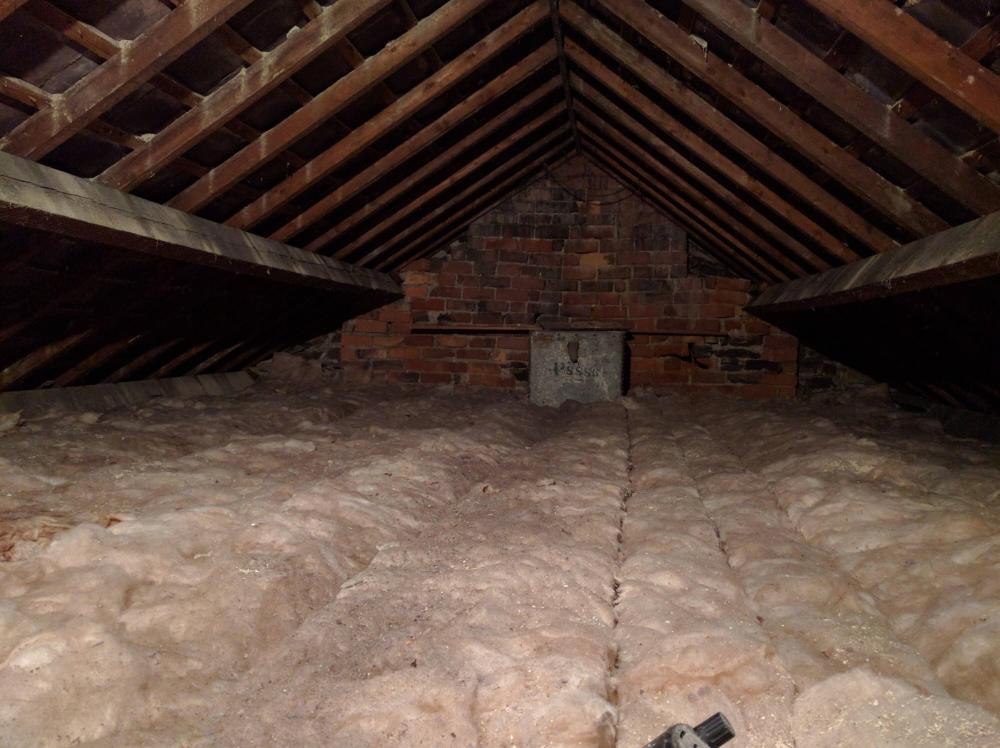
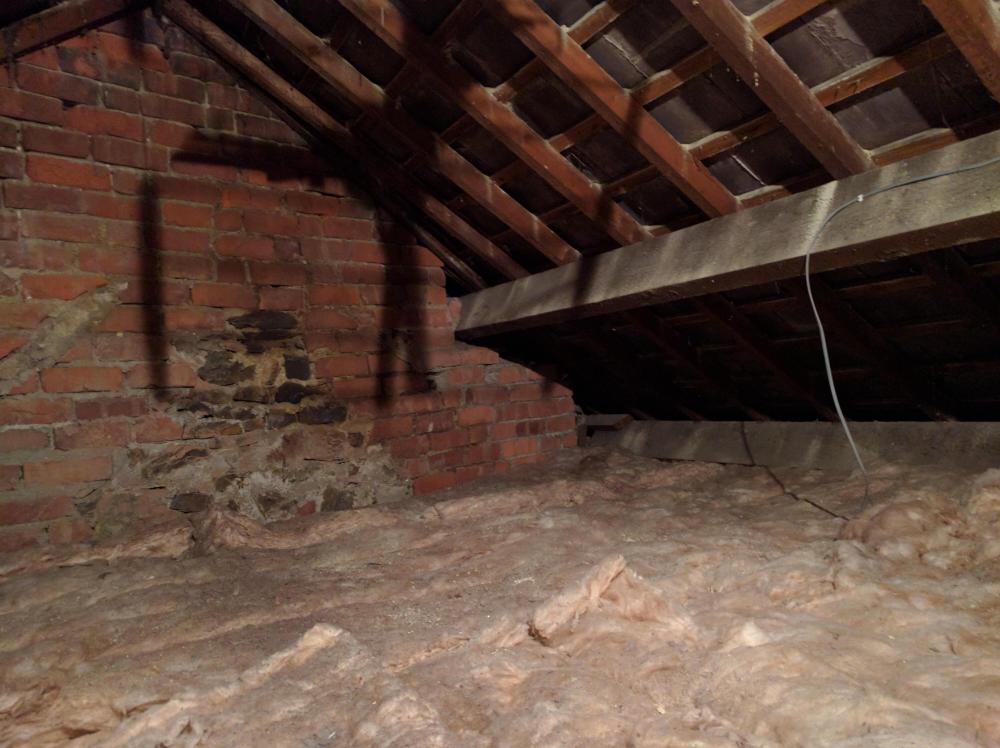
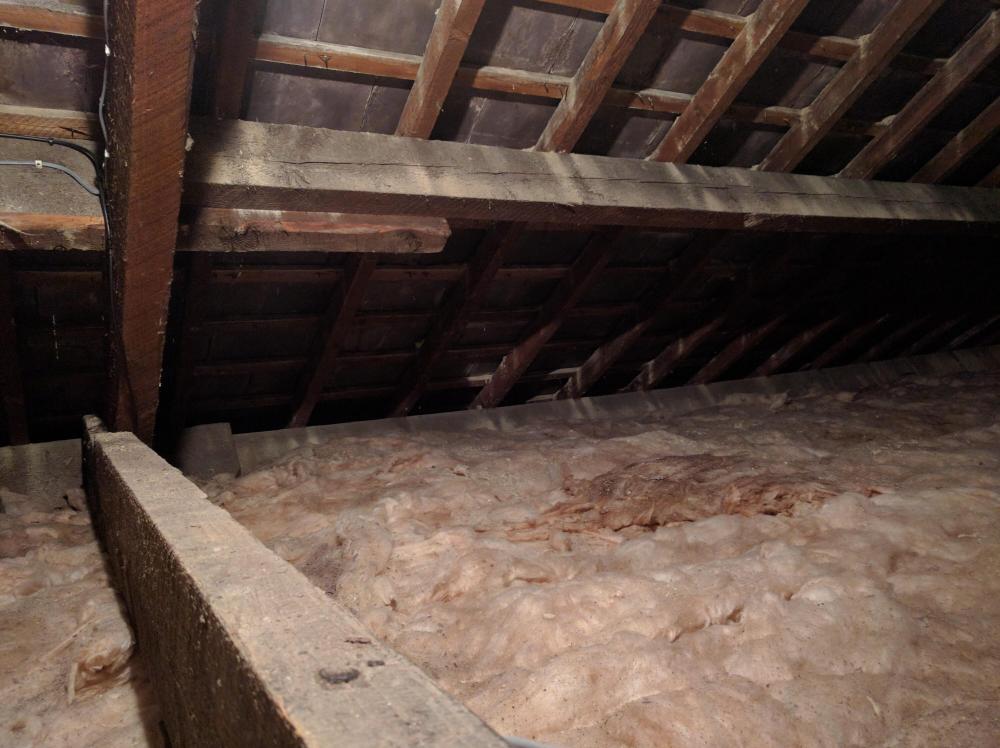
.png.8c22a80878fef7b53899b5ca52ebe799.png)
.png.89e4722115ae53404e6835080316f639.png)
-
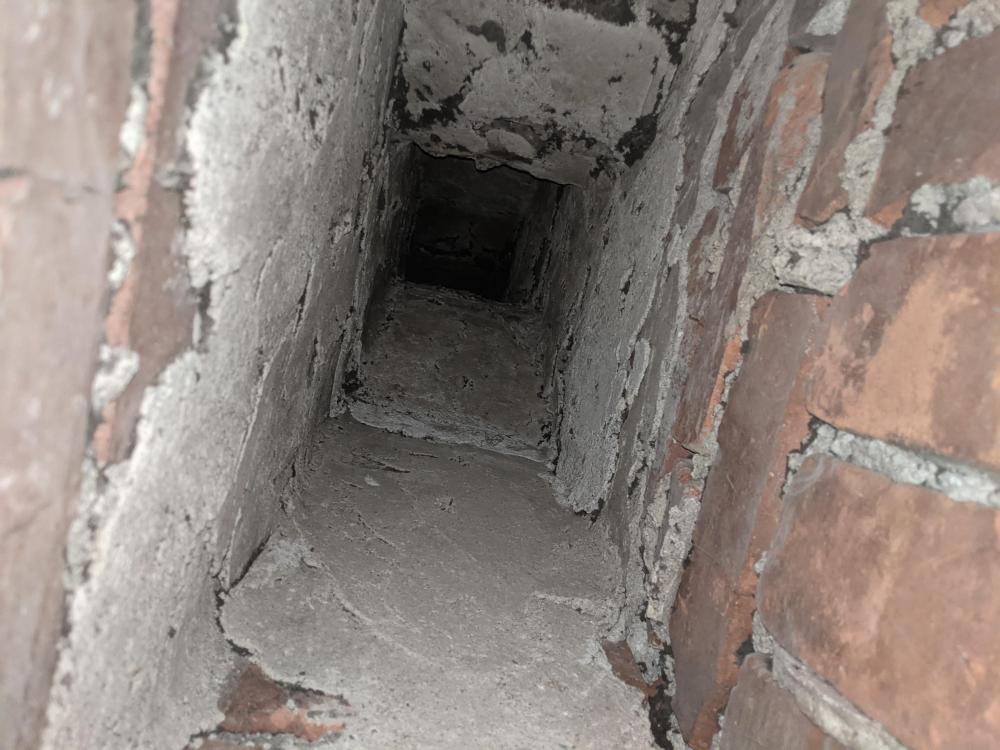
Slightly off topic but I'm still amazed someone plastered the inside of the chimney over 100 yrs ago and what a good state it's in.
-
Thanks Tony thats interesting, when you say you insulate them, is that internally inside the chimney or just on the breast walls in the rooms? I was wondering exactly the same thing, if we put an elephants foot on the top to stop water getting in but its still able to breathe, but then seal them up at teh room level there is still space for the moisture to evaporate if any ever got in. I like the idea of venting into the loft space. I did also wonder if you could vent your MVHR out through a chimney, if we install on its going to go into the old fireplace in the utility room anyway. Not sure if thats been done or not.
-
We are renovating and extending our Edwardian terrace which has 8 chimneys, 4 on either side. Pretty much every room has either a fireplace, or an air brick and two are completely blocked up (which is a bit worrying). We are looking at installing an MVHR unit, but I cant reconcile this with the need to let the chimneys breath or at least have airflow. Im sure we are not the first people to look at making an old property watertight and what damage maybe done to chimneys if we cap them, and if we do at which end? The extension is a timber frame and airtight structure, and as we are working through the house we are slowly incorporating a much more airtight structure to the property, with decent fitting doors/windows etc. Internal insulation and externally the stone walls will be repointed with lime to let them breathe outwards. Has anyone come across anyone who has capped chimneys or sealed them up and has some years under the belt with no damage inside the chimneys? Im sure blocking them at both ends could cause damp/condensation with temperature fluctuations. Many thanks for reading. Paul
-
Running 25mm mdpe pipe under slab from 15mm pipe.
hotnuts21 replied to hotnuts21's topic in General Plumbing
AHH yes will get some of that. Should I use that under the concrete for the kitchen island too? Or wait and lay it above the slab? -
Running 25mm mdpe pipe under slab from 15mm pipe.
hotnuts21 replied to hotnuts21's topic in General Plumbing
Thanks for the feedback although I think it should be with a lower case S as half my question/plan about the water side was ok ? Its also the reason I was asking so I could get feedback as I wasnt sure if it was a good idea, I have a lot of the blue pipe spare and as it will be under a slab, hardcore, insulation and screed and would terminate where it came out the blocks/wall I didnt think anyone would come across it in the future, but you never know. Happy to run something else in though. Would this be ok https://www.screwfix.com/p/tower-corrugated-conduit-20mm-x-10m/50443 Whilst im thinking of future proofing and hiding cables/aesthetics. The kitchen island will need power, am I better running this under the slab (or at least a conduit with draw cord), or above the slab and within a conduit in or in the insulation, both options have been suggested to me. Thanks for all the replies, really helps to clear the mind and set me on the right path even if my ideas are sh*t ? Paul -
Hi guys, Doing my extension and the foundations are in as are the blocks upto floor level. Hoping to get the slab done next week. Im planning to run two lengths of 25mm mdpe blue pipe through the hardcore that goes under the slab and out through a gap in the blockwork. One will be a conduit for running an electric cable out in the future so we can have power in the garden. This will come up by the fuse box. The other is to allow a water supply to the garden. This will.be connected in just after the stop cock. Is there any problem going 15mm (main feed) 25mm (under the slab) 15mm (outside tap). Was just wondering if this sounds ok? Or if I'm missing anything? Thanks Paul
-
I I like the Yet bit ? I was just worried about whether we needed 140 or 150mm blocks, luckily I saw Moonshines comment over the weekend so was happy to carry on as planned. Be warned there may well be a lot more silly questions.
-
Great thanks for clarifying that, it was driving me crazy, we blocked up with 140mm blocks yesterday now im happier with thats what was needed.
-
Hello all, I've been trying to find an answer to this all night and it's driving me mad. I've been told to put 140mm blocks down on the foundation for the timber panels to be built off. But the panels are using 140mm studs so when the outer ply/sheathing (10mm) is added the nominal thickness of the wall is going to be 150mm?? Doesn't this whole thickness need to be supported? Do I need to find 150mm solid dense blocks instead or is a slight overhang OK?
-
Hi, i am in the same boat with BC and I am going to use a cant rail as suggested here. These have to be placed over counterbattens, but I cant seem to find any guidance on what thickness the two battens need to be, can I go thinner 19mm with the vertical batten? Also whats the best way to fit the two battens, screws? Im pulling my hair out at the moment trying to work all this out. Thanks Paul
-
@redtop did you ever get this sorted? I need to replace a 2.4m high 7m long wall, holding back just soil of sloping garden. Thinking of just doing reinforced concrete block buy trying to get a SE in rural Wales is proving difficult.


.png.8c22a80878fef7b53899b5ca52ebe799.png)
.png.89e4722115ae53404e6835080316f639.png)

