MortarThePoint
-
Posts
2168 -
Joined
-
Last visited
Everything posted by MortarThePoint
-
Pretty small trees. NHBC considers the zone of influence for high water demand trees to be 1.25 times mature height so you can be surprised how far away tress can have an affect. Makes sense, I wouldn't either. The NHBC guidelines will be cautious and you're not building multiple storey habitable space.

-
Trying to install linux on a VERY old laptop
MortarThePoint replied to ProDave's topic in Boffin's Corner
PLOP may be a better option than GRUB: https://www.plop.at/en/bootmanagers.html A video that talks about it: -
Trying to install linux on a VERY old laptop
MortarThePoint replied to ProDave's topic in Boffin's Corner
Are you installing ubuntu on a HDD in the laptop then? If booting from an HDD is an option then it's the way to go. -
Trying to install linux on a VERY old laptop
MortarThePoint replied to ProDave's topic in Boffin's Corner
A left field thought could be to have a CD or DVD with GRUB on it that then supports (i.e. set to default to) USB boot. That way you can install the OS on a cheap writable USB FLASH drive. You can get some nice low profile USB sticks (64GB SanDisk Ultra Fit £8) that mean it's almost unnoticeable. -
Actually, I just checked an old quote and I'm wrong. The plant insurance is owned or hired in. I would still guess it to be an expensive way to go to cover plant only though, but if you expect to get underway quickly it could well make sense.
-
I haven't looked at this side of things for a while, but I think most site insurance policies cover hired in plant but have a pretty small allowance for your own tools and therefore plant too. The site insurance policies are also very expensive as they cover some greater risks that probably make it a more expensive way to go.
-
Possible steel portal frame conversion
MortarThePoint replied to Rumbutza's topic in Introduce Yourself
You could build an insulated envelope inside the steel frame using cold store panels. Just a thought. -
You have a double whammy as the geology is likely high volume change potential (VCP) and the trees removed are high water demand so that will maximise any resulting heave. How high were the Leylandi? If over 9m or 10m (I think) then they would be classed as mature and their full height (>=18m) would be used for any foundation calculations. What are the different strata? Don't forget to consider other nearby trees. NHBC have a foundations mobile app but I don't know if it covers raft. Chapter 4.2 of their guidelines has useful information (NHBC 2020 Chapter 4.2). I have some experience in this area as we are to build a large(ish) garage with high VCP geology (alluvium over gault clay). We can't bear on the alluvium so need to do bulk soil replacement down to 1.25m with MOT Type 1. Thankfully we should be yielding some concrete from demolition. There are some sizable trees and ex-trees near by so a raft was the best bet. Thankfully this isn't the case for the house, but the trench foundations need to be pretty deep there. I'd expect the dimensions of your workshop are consistent with a less fussy approach, but you will certainly need reinforcement and +1 for the thickening round the edges. You could (some might say should) spend a lot on geotec and structural engineering, but that's your call and I don't think I would for the likely cost of what you are proposing. Be careful of building regulations (Outbuildings vs Building Regs) but the size you are proposing (26m2) will be OK if you are >1m from the boundary or substantially non-combustible (i.e. no timber cladding). I'm no expert on any of these areas so don't take the above as gospel.
-
Wiring Diagrams: looking for standard symbols library
MortarThePoint replied to ToughButterCup's topic in Electrics - Other
I like QCAD for doing drawings like this. You should be able to find a DXF or DWG with the symbols in that you can copy out and then it is easy to measure everything out. I you're only creating a sketch, on top of an image file then an image editor (or even PowerPoint) could work, but QCAD does allow image import as a base layer. QCAD has a freemium price model so if you are doing basic stuff it's free (or more advanced stuff before the 10 minutes after opening the software hasn't expired). I spent a while opening and closing QCAD to make use of the advanced features until I bought it for about £30. -
I'm looking at using Kingspan GreenGuard under a slab floor. It will be on top of compacted hardcore (due to soil conditions) but may be suitable for what you need.
-
I had to replace some old 20mm chipboard and did it with 18mm on shims. Whenever I bounded down the stairs on to that floor I convinced myself I'd go though it some day. I suspect good timber floorboards would be stiffer and inspire more confidence though.
-
Nervous as to what might be under the concrete
MortarThePoint replied to MortarThePoint's topic in Demolition
Thank you for all the suggestions. Hopefully it is a bridge we won't have to cross. We have already been through all the site investigation phases and there is some old road planings that need to be dug out anyway, other than that all good so far. -
Nervous as to what might be under the concrete
MortarThePoint replied to MortarThePoint's topic in Demolition
Thanks guys. We will use professionals for all of this, but I wanted to work out if there was a way of reducing the amount that went to waste if the issue were to arise. Fingers crossed! -
Nervous as to what might be under the concrete
MortarThePoint replied to MortarThePoint's topic in Demolition
I'll crush and reuse all the concrete I can, but if any is contaminated with asbestos it would need to go. -
Nervous as to what might be under the concrete
MortarThePoint replied to MortarThePoint's topic in Demolition
Thanks Russell, but I'd be keen to get it off site. As I understand it, the 'rules' do allow you to use such material on site if your landscaping plan requires raising levels and it is then suitably covered by clean soil. -
Hope everyone is having a nice break over Christmas / New Year. Thank you to those who might be working. We are clearing our site ready to get started in the new year. Part of this involves demolishing some ex commercial buildings that are in the way. The largest (300m2) was built in 2010. As there were previously old sheds on the site (seen in some aerial pictures) I am nervous that there could be fragments of asbestos roof sheeting underneath the concrete floor, and worse could be stuck to the concrete. Sending asbestos contaminated concrete to landfill is eye wateringly expensive. If the concrete is 150mm thick and all had to go it would be 45m3 and cost about £13k, of which about £10k is landfill tax. Businesses would be able to reclaim that tax, but not us selfbuilders as far as I can work out. I don't know if the problem exists, but the risk is pretty stressful and I need to be prepared if it does occur and we end up under pressure to make decisions (plant on site etc). Any thoughts as to how to reduce the quantity of concrete would be greatly appreciated. There are some companies that undertake the treatment of soil contaminated with asbestos fragments (Provectus and Biogenie) and I think that involves hand picking at their facility. Bonded onto concrete is a different matter though. I have thought about 'planing' ~120mm off the concrete to thin it before lifting and therefore reducing the quantity to ~9m3 (£3k). I had a quote for water cutting and it was 10s of thousands so not viable. Any thoughts would be gratefully received and hopefully provide some sleep filled nights. Hopefully won't be needed but pays to be prepared.
-
Reclaiming underfloor insulation (built 2010)
MortarThePoint replied to MortarThePoint's topic in Demolition
The total area is 300m2 (~100 panels) so it would take about 5 days (~40 hours) to liberate the lot. As new it would be worth a pretty penny, but in this sort of condition there are occasional listings on eBay at around £10 a panel. I wouldn't need that much and I've already learnt that I can't chase every opportunity even when it's tempting to do so. I hate to have it go to waste, so I will talk to the demo guys about whether they can get it out faster with a 20 ton digger. -
Reclaiming underfloor insulation (built 2010)
MortarThePoint replied to MortarThePoint's topic in Demolition
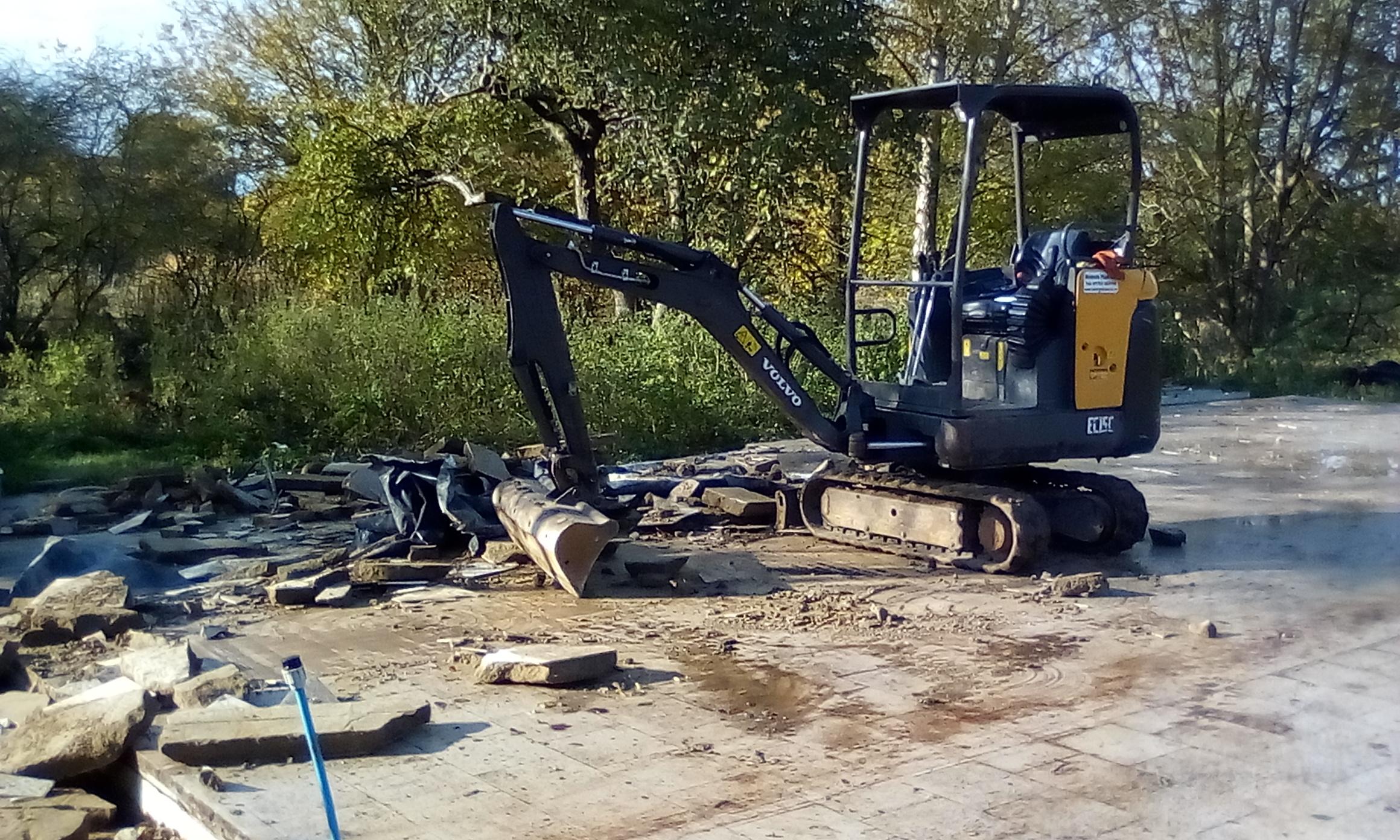
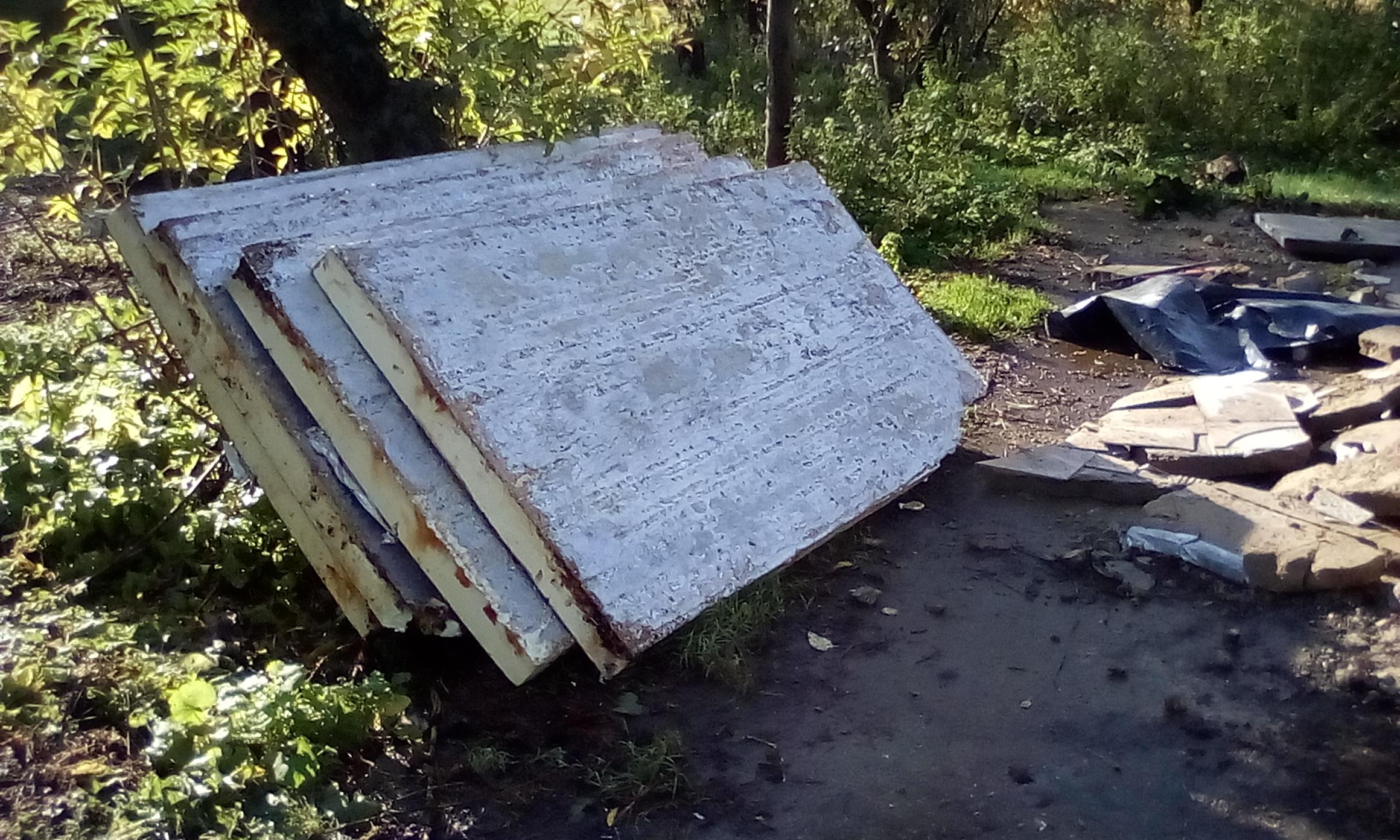
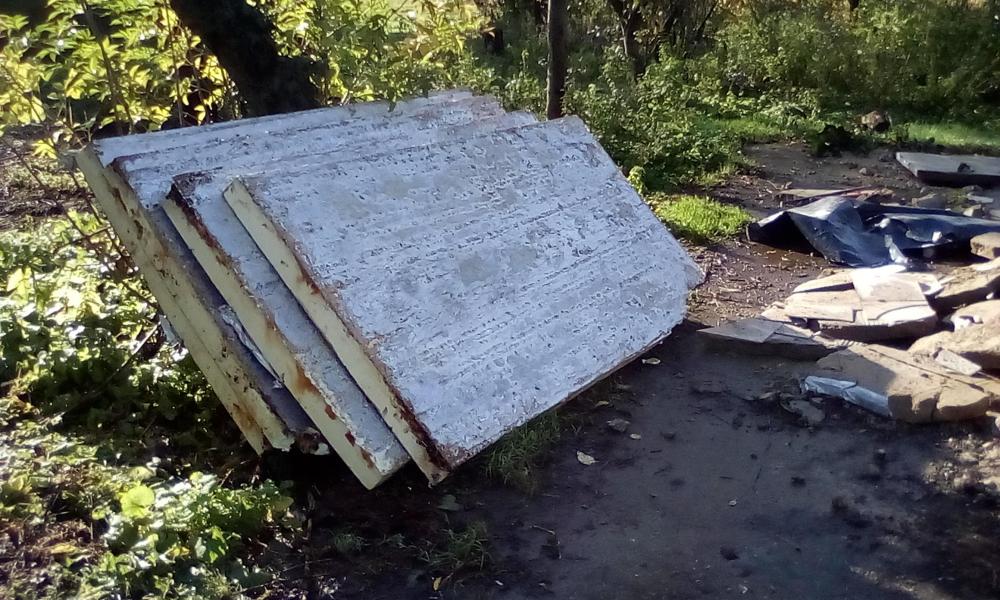
Thank you for all the suggestions. I gave it a try using a mini digger and after about 2.5 hours I had freed up 5 whole panels and 2 half panels so I'd say it's it's not worth the effort. The panels are not it great condition either, but will hopefully be useful for something. It was interesting to see that the interface between the panels and the underlying concrete was completely wet. Some pictures of how I got on: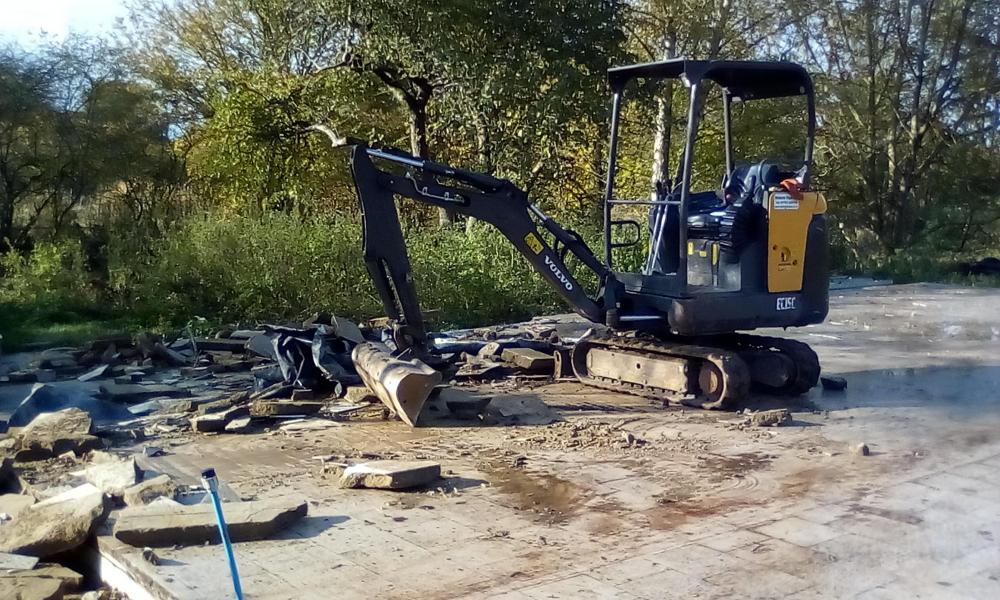
-
Reclaiming underfloor insulation (built 2010)
MortarThePoint replied to MortarThePoint's topic in Demolition
Nice idea, I've got lots of 18mm ply as well. -
Reclaiming underfloor insulation (built 2010)
MortarThePoint replied to MortarThePoint's topic in Demolition
Speedy look to do one for about £110 a week, but I don't know about the blade. I think it would take an age to lift all the rectangles though. If they were 1m2 they would weigh about 100kg each and there would be 300 of them. That's 5 hours if it took only a minute to shift each one and I think it would be more 5 five minutes each though. -
Reclaiming underfloor insulation (built 2010)
MortarThePoint replied to MortarThePoint's topic in Demolition
I'd thought of that and think that would be the end of the road as it would then takes ages -
Reclaiming underfloor insulation (built 2010)
MortarThePoint replied to MortarThePoint's topic in Demolition
I like your thinking Mr Punter, can screed become MOT Type 1 as I need plenty of that? The photo is probably a bit confusing. I think you're referring to a thin draft strip in a metal channel that the perspective makes look thick.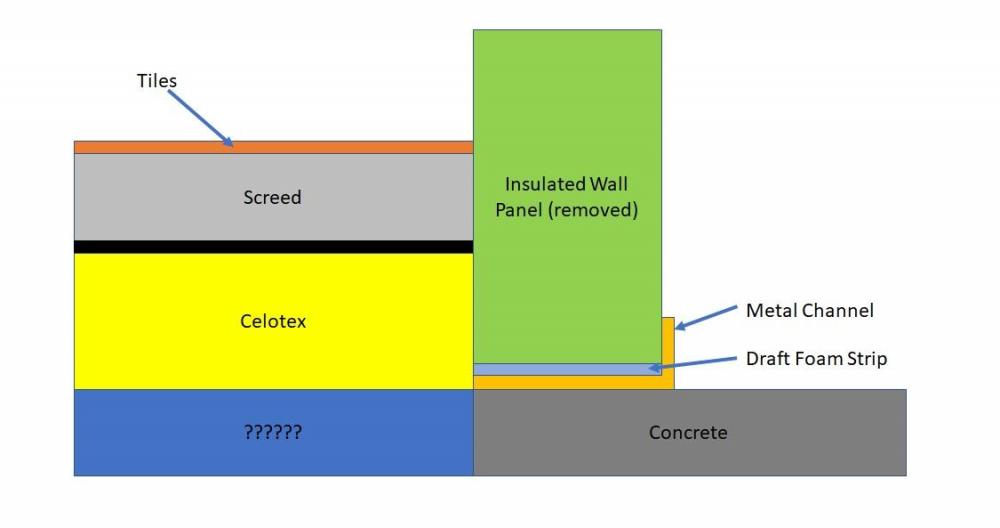
-
Reclaiming underfloor insulation (built 2010)
MortarThePoint replied to MortarThePoint's topic in Demolition
Russel griffiths, you must be pretty nifty with it as it would scare me trying to get the right height without gouging the insulation.? -
It wouldn't be rewarding if it was easy, that's what I have to keep telling myself when it get's hard. It's also important to appreciate my limitations though so I will be getting the ground works contractor to do the major demo work that is beyond unbolting.
-
Reclaiming underfloor insulation (built 2010)
MortarThePoint replied to MortarThePoint's topic in Demolition
Nice idea Ed Davies, but the foundations etc will be very different.