


MortarThePoint
-
Posts
2294 -
Joined
-
Last visited
Everything posted by MortarThePoint
-
I like playing with Excel to understand things and have knocked up a cost estimator for brickwork and blockwork labour. I hope that the figures in it are relatively conservative. A lot of the figures are finger to the wind, so let me know what you think. Ideally, it could prove a handy tool for others to get a feel for what the rough cost should be. Some of the main assumptions are highlighted and are: Day rates - I've used £200 for a brickie and £100 for a labourer. I chose round numbers as everyone's local rate will be different. Bricks per day - I've assumed 600 stretcher bond bricks/brickie/day which should be on the low side, so consistent with the quality level us lot typically want. Blocks per day - I've assumed just over 2 minutes per 100mm medium density block lay which gives 20m2/brickie/day. There are then speed factors for heavier or lighter blocks. That handles the area based work. There is a section for things that are on an item basis like windows, steels and chimney tops and costed on the basis of quantity and serviced brickie hours each. As examples, I have assumed that it takes: a brickie 2 hours to install all the extras needed for a window opening (i.e. cavity closers, lintel, cavity tray and weep holes) 2 brickies and a labourer half a day to install a moderately large steel beam a brickie 3 hours to install a wind post on the basis of them being uncommon on the job. As I said, the numbers are a starting point. It would be interesting to see if we could get some more realistic numbers in there though. ? Brickie_Labour_Cost_Estimator_BUILDHUBv0.xlsx
-
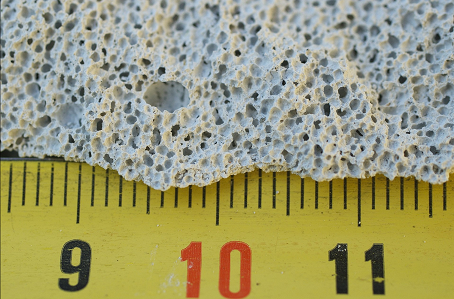
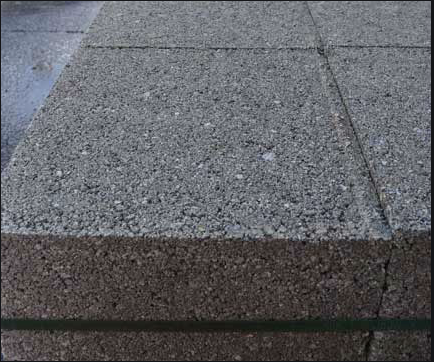
I'm learning on this, but there is also a lot of marketing at play around blocks. I feel there is a clear distinction to be drawn between aerated blocks (AAC) and aggregate blocks. AAC blocks "Unlike most other concrete applications, AAC is produced using no aggregate larger than sand. Quartz sand, calcined gypsum, lime (mineral) and/or cement and water are used as a binding agent. Aluminum powder is used at a rate of 0.05%–0.08% by volume (depending on the pre-specified density). In some countries, like India and China, fly ash generated from coal fire power plants and having 50-65% silica content is used as an aggregate. When AAC is mixed and cast in forms, several chemical reactions take place that gives AAC its light weight (20% of the weight of concrete) and thermal properties. Aluminum powder reacts with calcium hydroxide and water to form hydrogen. The hydrogen gas foams and doubles the volume of the raw mix creating gas bubbles up to 3mm (⅛ inch) in diameter. At the end of the foaming process, the hydrogen escapes into the atmosphere and is replaced by air." Wikipedia Thermalite and Celcon etc are AAC blocks that have a density in the region of 450 - 800kg/m3 and lambda of around 0.11 - 0.20 W/mK. Whilst easy to handle and thermally performant, these are the blocks that people typically worry about cracking. The article linked above notes as a disadvantage: "Installation during rainy weather: AAC is known to crack after installation, which can be avoided by reducing the strength of the mortar and ensuring the blocks are dry during and after installation." Aggregate blocks It's a bit more obvious how these are made, consisting of cement and aggregate. Typically available as Dense (~1900kg/m3) , Medium, Lightweight (~1400kg/m3) and Ultra Lightweight (~1000kg/m3) this refers to the aggregate type used in their manufacture. The marketing department has done well to describe a 100mm block weighing over 10kg as Ultra Lightweight and this is twice the weight of the equivalent AAC block. Their reduced weight comes from the use of naturally occurring (e.g. pummice) or man made (expanded clay, blast-furnace slag) aerated aggregate. As well as reducing weight, this lowers the lambda values, with 0.28W/mK available in Ultra Lightweight aggregate blocks. Comparison Obviously both block types have their place, but personally I'm inclined to avoid AAC. They have exceptional lambda values and can be half the weight of even the lightest aggregate blocks, but they can be unforgiving and present future problems. Not as good thermally, Ultra Lightweight aggregate blocks do provide a useful improvement in wall U-values over using denser blocks. The aggregate itself in Ultra Lightweight aggregate blocks won't be as strong as in Dense aggregate blocks, but the mechanical properties of an aggregate block will be a function of the aggregate and how well the aggregate is held together. Aggregate blocks aren't immune to cracking. It may be obvious, but cracking happens due to movement so eliminating the sources of that movement is a key part of avoiding them. Shrinkage is one of the key reasons cracking could occur and avoiding the blocks becoming excessively wet can reduce this risk. There are some scary picture here. Another reference: Forterra Pocket guide to Aggregate Blocks
-
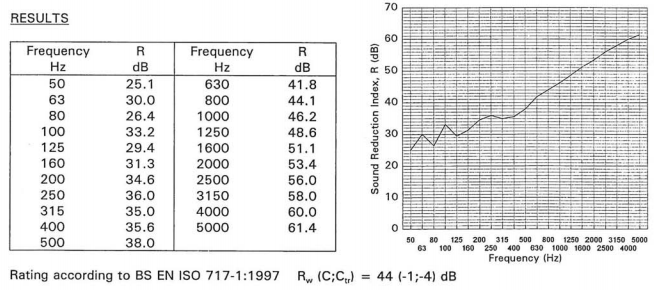
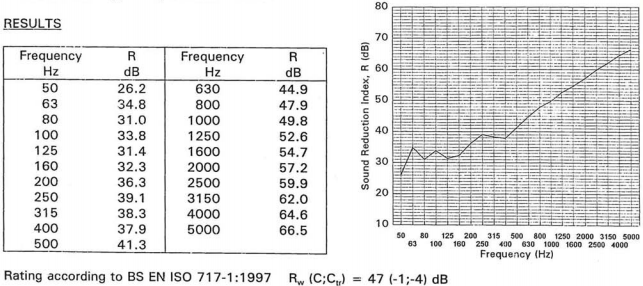
Fibolites seem to have 3dB less attenuation than Stranlites. I think that means the transmitted sound energy is double in the case of Fibolite. I don't know what a stud wall looks like in terms of sound attenuation though for comparison. Fibolite 100mm (850 kg/m3) : https://www.plasmor.co.uk/uploads/files/Technical_Library/Technical_Data_&_Reports/Acoustic Test Certificates/100mm_Fibolite_-_Plastered.pdf Stranlite 100mm (1400 kg/m3) : https://www.plasmor.co.uk/uploads/files/Technical_Library/Technical_Data_&_Reports/Acoustic Test Certificates/100mm_Stranlite_-_Plastered.pdf
-
I'm ordering the blocks (ouch) and made a decision I thought I'd gauge people's thoughts on [over-analysing hat on again]. I decided to stick with a single 7.3N block type, rather than using 7.3N Fibolite for the inner leaf of exterior walls and 7.3N Stranlite for the load bearing partitions. So Fibolites for both wall types. I saw the pros and cons as: Pro's to using Fibolite internally: single block type for brickies order simplicity Con's cost (51.4m2 @ £1.52/m2 difference --> £78.18) acoustics? lower thermal mass (950 vs 1350) Bit worried about the acoustic side of it. Does anyone have any experience of how well Fibolite blocks damp sound?
-
What goes under the door sill?
MortarThePoint replied to MortarThePoint's topic in General Construction Issues
Good thought, I've just emailed them so fingers crossed. They haven't been hugely forthcoming we details so far though. -
What goes under the door sill?
MortarThePoint replied to MortarThePoint's topic in General Construction Issues
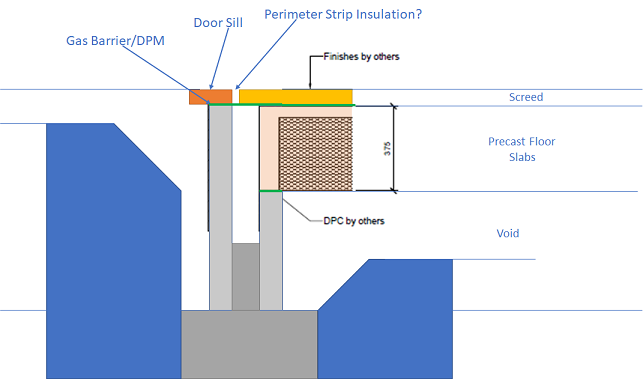
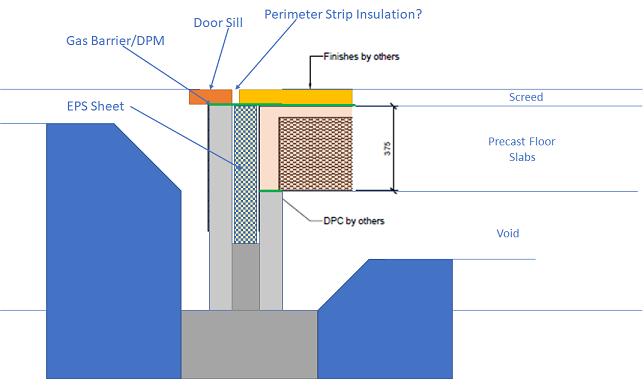
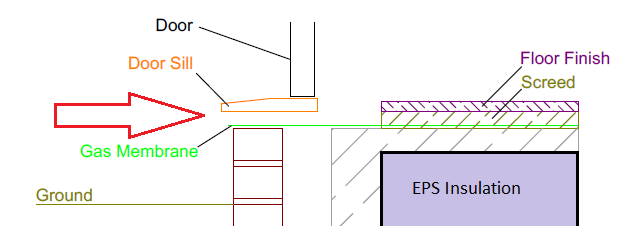
Below is what I now understand would be the normal situation for a beam & block floor with insulation and screed carrying on across the cavity. If I carried on the screed across the cavity: With EPS sheet insulation added in to void below: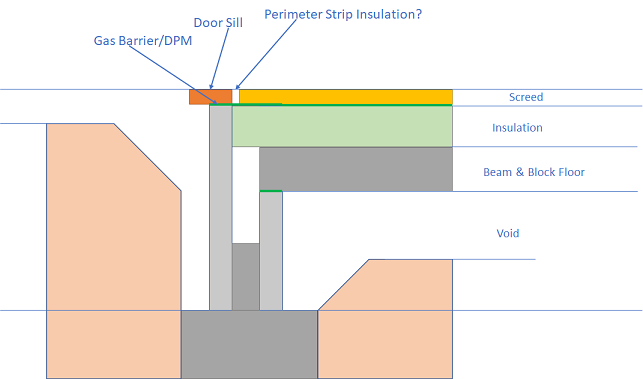
-
What goes under the door sill?
MortarThePoint replied to MortarThePoint's topic in General Construction Issues
The EPS or PIR would be a vertical sheet in the cavity. Remember that the EPS of the floor is prefab into the floor so ends at the edge of the cavity. I guess the EPS or PIR could be cut to the height of the cavity at that point so it is bearing on the cavity fill concrete at the base of the cavity, but I wouldn't have thought that is very strong. EPS squishes pretty easily. That leaves the screed as the only truly structural part doesn't it? -
What goes under the door sill?
MortarThePoint replied to MortarThePoint's topic in General Construction Issues
@PeterW and @Mr Punter , I think you're both suggesting I put EPS in the cavity below the membrane and then screed over the top of that. That makes the screed the only structural part of that and it's only 35mm thick cantilevering over a 100mm cavity. That makes me a bit nervous it could crack under load. -
What goes under the door sill?
MortarThePoint replied to MortarThePoint's topic in General Construction Issues
I should have explained, the shaded grey part is the concrete element of the Thermabeam floor and the EPS is prebonded to that. You can see the EPS in the photo of the end of a Thermabeam slab below which is a darker grey than the concrete. The EPS extends all the way to the edge of the cavity and some concrete pillars cut through it to support the slab and the wall above it.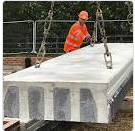
-
What goes under the door sill?
MortarThePoint replied to MortarThePoint's topic in General Construction Issues
Thanks no, looks good. If I understand correctly, that is some membrane taped (on both sides) to the membrane that is coming up from under the beam&block? That membrane is then passed over the PIR insulation. -
Does anyone have a door sill threshold detail I can have a look at? It's not for a level threshold, but I am finding it difficult to find a drawing. I am unclear what goes under the door sill (see red arrow). Should there be an insulated cavity closer there underneath the door sill? I am using blown bead insulation, so more broadly need to understand if insulated cavity closers are needed elsewhere anyway or if I can just use uninsulated cavity closers. I've used a sill height of 25mm. I am not sure if that is standard, but I saw one that was. It will be a timber sill. I have up to 50mm for screed and floor finish. I have probably put the door in the wrong place relative to the wall face, as I just popped it in roughly. The structural floor element is a precast concrete floor slab (Thermabeam) with insulation prebonded on its underside.
-
That does seem very high. I take it that price doesn't include the warranty. I don't know, but I guess it could be that conversions are more expensive than new builds as the underlying asset of the existing house is at risk. Do shop around as prices vary hugely. SelfBuildZone are another provider to try if you haven't already.
-
Mortar: Another example of 'repeating' thermal bridging is the mortar joints in block or brick walls. Whilst you might be using thermally efficient blocks for your walls, the mortar needs to be considered as well. In a standard blockwork wall the mortar accounts for 6.6% of the area of the wall. A good thermal block may have a thermal conductivity of 0.11 W/m.K, but mortar has a thermal conductivity of around 0.72 W/m.K. Forming a simplistic average, the mortar increases the thermal conductivity of the blockwork leaf to 0.15 W/m.K (0.11*93.4% + 0.72*6.6%), a 37% increase. Even for a less thermally efficient block of say 0.3 W/m.K, the mortar will increase the overall thermal conductivity of the blockwork leaf by almost 10%. Thermally insulating mortars are available that claim thermal conductivities five times lower than standard. That would effectively eliminate the effect of the mortar on the thermal conductivity of a wall using good thermal blocks (0.11 W/m.K). As most of the performance of a cavity wall comes from the insulation, the overall effect of the mortar is likely to only affect the U-value of the wall by 2-10%. For example a 100mm cavity filled with 0.032 W/m.K insulation with good thermal blocks (0.11 W/m.K) either side would have a U-value of 0.19 W/m2K, if it wasn't for the mortar thermal bridging. With standard mortar, this would be raised by 10% to 0.21 W/m2K. A similarly constructed wall with a 200mm cavity would have it's U-value raised by 6%. I'm using a relatively simplistic approach here, if someone has more accurate figures or experience of using thermally insulating mortars then please comment.
-
I can't correct it above, but made a mistake. If someone else has the power to correct it great, otherwise it's here. Wall ties: I can't find figures for these, please contribute if you have some, so here is a rough calculation. Wall ties are typically made of stainless steel and might have a cross section area of around 6mm2. At a density of 2.5 ties per m2 they account for a very small proportion of the area (~15ppm), but have a much higher thermal conductivity that the wall insulation (e.g. ~500 times higher, 17 vs 0.032 W/mK). Consequently, their thermal effect can approach 1% (15ppm*500=0.8%). U-value calculations often ignore corrections that amount to less than 3% of the uncorrected U-value of an element (allowed by BS EN ISO 6946).
-
We all put in a lot of effort considering different insulation types and thicknesses as well as airtightness and MVHR, but thermal bridging (aka cold bridging) could get neglected or forgotten at the design stage. I had a quick look and couldn't see a thread on the general topic of thermal bridging, so thought I would start one. I am far from an expert here, but wanted to draw together some of what I have learnt and prompt other more experienced members to pitch in. According to Designing Buildings Wiki : "A thermal bridge (sometimes referred to as thermal bridging, a cold bridge or thermal bypass) describes a situation in a building where there is a direct connection between the inside and outside through one or more elements that are more thermally conductive than the rest of the building envelope. ... Thermal bridges can be categorised as 'repeating' for example where wall ties regularly bridge the cavity, or 'non-repeating' such as a wall junction or lintel." 'Total fabric heat loss' is the combination of heat lost through different areas of material (sum of each area multiplied by its U-value) and thermal bridges. Thermal bridges can account for a high proportion of the total fabric heat loss (e.g. over 20%). Neglecting thermal bridges at the design stage could undermine the effort you put in on the area based fabric heat losses (e.g. using wider cavities or triple glazing). non-repeating Thermal bridges are typically at interfaces and so have a linear, rather than area, nature. Consequently, they are accounted for in SAP Assessments on the basis of their PSI values, which represents how lossy they are per metre, and their total linear length. It's similar to the area based fabric heat loss which is a sum across types of area multiplied by their U-value, but it is a sum over lengths multiplied by PSI values. Some thermal bridges to consider include: Ends of cavities Lintels Junctions (e.g. between walls and floors, eaves etc) Holes for pipes Wall ties Poor window frame placement Ends of cavities: It is standard and required practice now to use cavity closers rather than masonry closure. This makes for a huge reduction in thermal bridging around windows and doors. Different cavities closers are available with different insulating materials and performance values. Lintels: A standard "Steel lintel with perforated steel base plate" can have a PSI value of 0.36 W/m.K. Considering all the windows and doors in a house design shows that there is a lot of length to lintels. A single metre of such a lintel looses more heat than 2m2 of 150mm cavity wall (U-value 0.17 W/m2K). The difference in U-value between a double glazed and triple glazed window might be 0.4 W/m2K. That means for a 1m x 1m window, more heat is lost through a standard lintel than is saved by using a triple glazed window over a double glazed window (1.3m*0.36W/m.K > 0.4W/m2K*1m*1m). Thermal break lintels can reduce this PSI figure by more than a factor of 5 to under 0.06 W/m.K. In the example of the 1m x 1m window that is an equivalent saving to using triple glazing over double glazing. Obviously triple glazing and a thermal break lintel would give a higher saving still. Wall ties: I can't find figures for these, please contribute if you have some, so here is a rough calculation. Wall ties are typically made of stainless steel and might have a cross section area of around 6mm2. At a density of 2.5 ties per m2 they account for a very small proportion of the area (~6ppm), but have a much higher thermal conductivity that the wall insulation (e.g. ~500 times higher, 17 vs 0.032 W/mK). Consequently, their thermal effect can approach 1% (6ppm*500=0.3%). U-value calculations often ignore corrections that amount to less than 3% of the uncorrected U-value of an element (allowed by BS EN ISO 6946). Useful links: http://www.zerocarbonhub.org/resources/reports/thermal-bridging-guide
-
Whilst it is good to heat, I meant good to hear ?
-
Good to heat Iceverge! Please let us know how you get on with the trial holes if you do those.
-
Must be the hollowcore concrete flooring then
-
Yes got some windposts as well ?
-
Specified by the Structural Engineer as we have some long runs without perpendicular walls or bracing and concrete first floor
-
Can anyone recommend a good alternative for 10.4N blocks as Fibolites only go up to 7.3N? Aglite Ultima also made by Plasmor aren't as good thermally and they can have some odd constituents that I wouldn't want in the living space. Fibolite 7.3N k=0.28W/mK Aglite (special order) 10.4N k=0.36W/mK Stranlite 10.4N k=0.43W/mK
-
Yes sealing of the cavity will need to be pretty good as otherwise I can imagine millions of beads going everywhere. Calculating how many beads are involved is mind boggling.
-
Well we've surprised ourselves here because we think we will got with the Ecobeads. The U-value is essentially unchanged (Ecobead platinum lambda=0.033W/mK vs Dritherm Ultimate lambda=0.032W/mK) and I have quotes for confidence on the price. We talked to some insurers to see if there were any concerns, of which there was none. I think the factors that swayed it were: Intrinsic water handling - drains rather than dries. No on site storage - I would have worried about the fibre batts getting wet and they would have taken up space as well as being a marginal theft concern. Ease of wall construction - No fibre batts to put in correctly. I'm going to get guidance from the installer about how to build with beads in mind to make sure that things like cavity trays fill up with beads nicely. We are trying to build with a low chemical (VOC) approach and liked that the Knauf Dritherm used their Ecose technology that was Formaldehyde free. We ruled out PIR for chemical reasons. I will double check with Ecobeads that they are equally good in that regard. We're far from obsessive about this sort of thing, but would like to preserve air quality in the house as we are reasonably rural.
-
I've got 100mm cavities so not particularly wide and they've quoted on that basis.
-
Did you worked along side the brickies then or did they build up the walls to the point ready for you to install in the evenings? It would need to be the platinum ones to give equivalent Uvalue. The price seems to be the same as fibre batts 32.

