


MortarThePoint
-
Posts
2294 -
Joined
-
Last visited
Everything posted by MortarThePoint
-
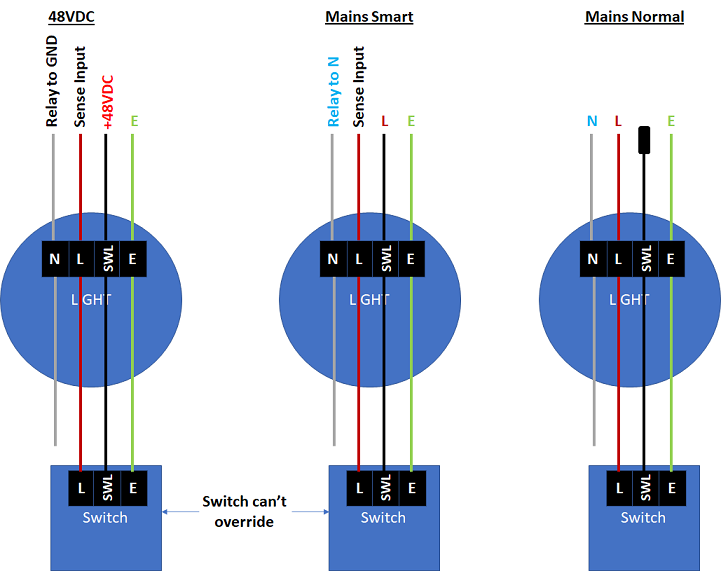
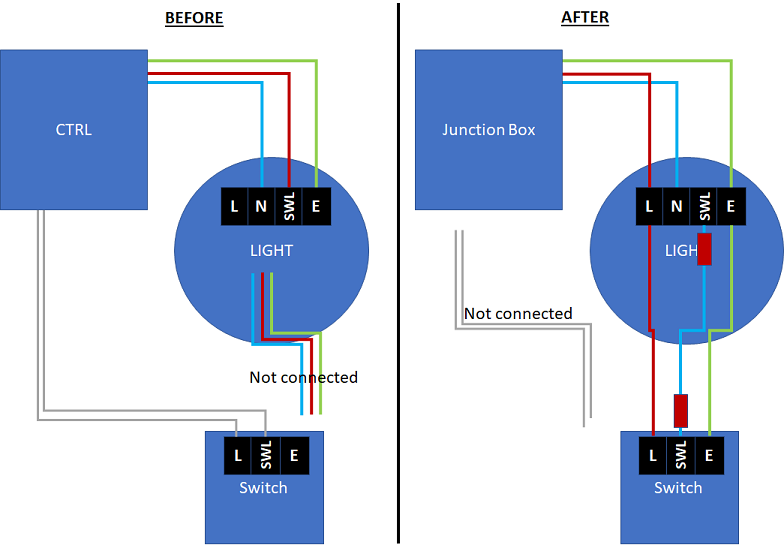
Well here is a wiring strategy that falls back to a very standard approach by only rewiring back near the Consumer Unit. Nothing needs doing at the lights or the switches. The only thing that is weird about the "Mains Normal" end result is that it is a star circuit rather than a radial. That's because each light (or group) and switch is on a spur off a central set of bus bars. The Sense Input in the mains "Mains Smart" case is a bit tricky but could be done in a couple of easy ways: Relay switching e.g. 5V logic using a mains coil Mains optoisolator (e.g. Aliexpress, though that uses about 0.4W for the opto which is disappointing)
-
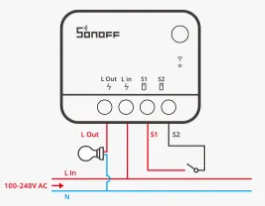
If going the more standard route, I had planned to do 3core&e between light and switch. You can now get smart switches that don't require Neutral (e.g. Sonoff). I guess they periodically charge a capacitor via the light at too low a current to light the bulb. May not work with all bulb types, I don't know.
-
For clarity and to stay on thread topic, all of the before diagram could be 48VDC (or 24VDC), as indeed could the after diagram. [Note: with 1.0mm2 T&E BEFORE: (2*10m)*44mV/m/A*(10W/48V) = 183mV --> 0.4%, AFTER: double that so 367mV --> 0.8% if still at 48VDC or 77mV --> 0.03% if mains].
-
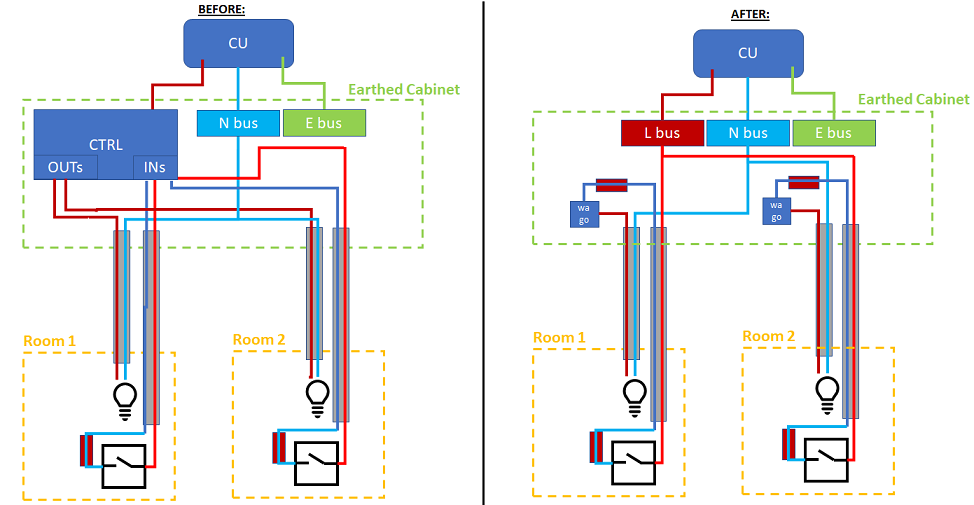
This is perhaps a clearer drawing of that rewire star circuit (before and after): red and different blue for clarity, earth omitted but would be wired. The main downside of this type of star network is that there are two round trips for the current path to the CU and so the voltage drop is larger than if just one current path to CU and one to switch. Probably weighing up 2x10m vs 10m + 4m and probably comparable to a radial circuit that has longer current paths to the light as have gone via other lights rather than direct.
-
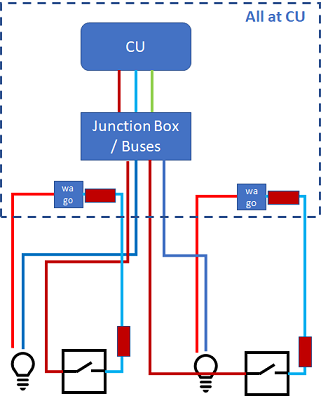
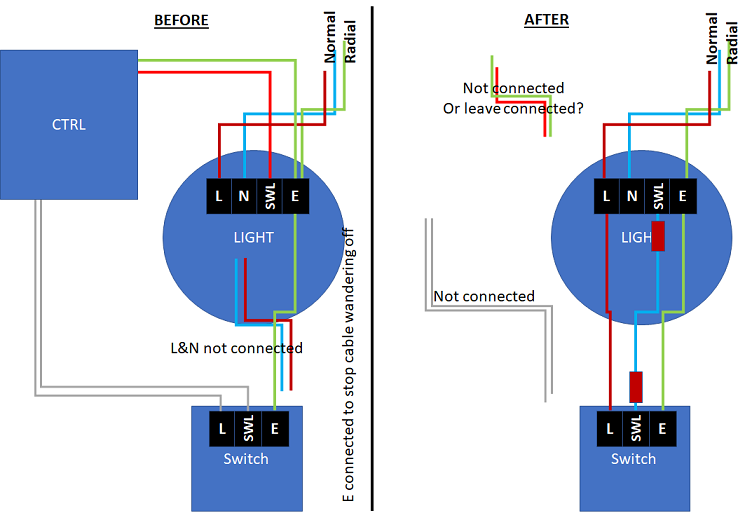
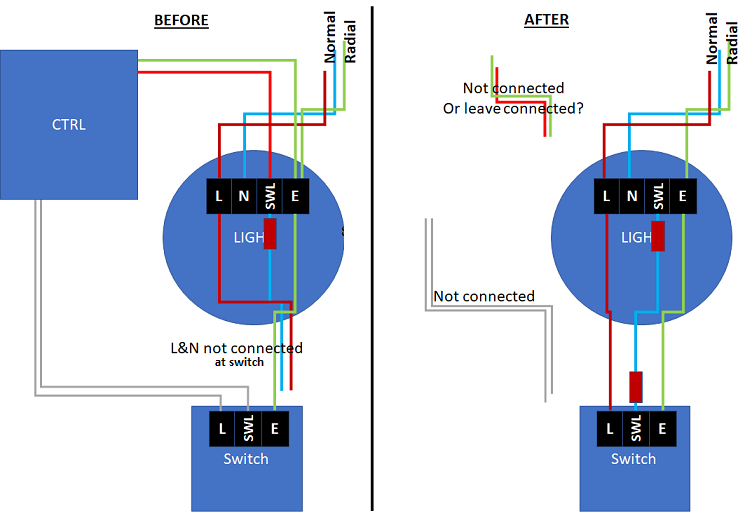
It is a lot of wires to pull, but in my case that doesn't take long as I have an open ceiling void atm. I count the following to the light in the before case: T&E from radial IN T&E from radial OUT (not for all) T&E to switch single&E to CTRL And at the switch: T&E to light (only E connected) bell to CTRL The bold is what a normal wiring would have. Your setup is need having only one cable to the light and only one cable to the switch. I get that you could revert your setup to something a bit more normal, but that would still be quite an unusual setup. As I understand it, my original BEFORE/AFTER drawing (3 posts back) is your layout with the addition of the light to switch cable. That drawing could be improved by pre-connecting the light to switch cable at the light end (but note, the blue wire would need a brown sleeve in the switch). This newer layout would allow it to revert to a totally standard radial setup with some wires left behind. The main issue I see (other than the amount of wires) is the bell wire shares the same containment as the T&E between light and switch. Sparkies would normally twitch at that (low voltage and mains sharing the same containment) but there are two things in its favour: All the bell wire (and the single& earth) would use permitted (aka 'safe') zones as if it was mains The CTRL would be in an earthed metal cabinet with appropriate labelling. If signals need to exit this metal cabinet for attachment to something (e.g. Raspberry Pi / PC) then an optically isolated USB connection could be used. If you have used T&E between your switch and the cabinet, then you could revert to a system without relays: At cabinet, connect one switch wire to Line At cabinet, connect other switch wire to SWL of light This would create an usual star circuit, but be easy for a Sparkie to understand. Here is a rewired example with just two lights, but more would just be similar: AFTER: red and different blue for clarity, earth omitted but would be wired.
-
In fact you could use Single&Earth (example, though more expensive than t&e so defeats the point slightly) for the automation wiring just to the SWL & Earth terminals of the lights and the rest of the light wiring is as per a normal radial. CTRL and 'Normal Radial' would have to share their Neutral so as to work with an RCD or MCBO which you would definitely want. Could even completely wire the light ready for the change and only need the switch rewiring. CAREFUL: couldn't be done in the no switch scenario as then there would be a hidden dangerous wire (though should only be Neutral as you wouldn't power the radial's Line). All of this will kill your cat!
-
If adopting any weird and wonderful wiring solutions, I think it would be wise to make provision for it to be changed to a more normal setup if required (e.g. selling the house). In the centralised approach, that would be a matter of running t&e or 3core&e from light positions to switch positions. In the future a Sparkie could come along and connect that cable to the light and the switch and then you'd have a more normal setup. Still not a conventional radial, but I think it would still be classed as a radial, just with one light on each spur and a mega junction box. The extra cost of running t&e or 3core&e from light positions to switch positions would suck but think of it as insurance. It could be done with cheap 1.0mm2 t&e so in my GF case cost 84m*£0.33/m = £28 of cable. If you allowed a Sparkie 30minutes for each one (generous) then it would cost about £20 each to rewire. Would be much harder is you omitted switches entirely. Then I guess you could still route the 'not connected' t&e cable to the appropriate location (in oval conduit with slack) for a backbox etc to be cut in later and hope that nobody damages it before it's needed as there wouldn't be a safe zone to remind you the wire is there. In the BEFORE case you could connect the Earth to the light and switch and so avoid the cable wandering off. For reference, I saw MK Logic Plus switch (K4871WHI) has the following Terminal Capacity: 4 x 1mm², 4 x 1.5mm², 3 x 2.5mm², 2 x 4mm², 1 x 6mm²
-
Of course that centralised approach to automation isn't limited to low voltage DC lighting. I have just done a radial lighting layout for the house GF and it uses 79m of 1.5mm2 t&e and 84m of 1.5mm2 3core&e (both could be thinner). I think with a centralised approach at the CMU that could all be replaced by 173m of 0.5mm2 t&e. If the centralisation was better (e.g. at hall), then I think that could be reduced further. The 84m of 3core&e is for switches and assumes 4m for each switch. If I didn't want to use wireless switches, I could use low voltage/current bell wire costing about 5p per metre or 50p per switch. 79m of 1.5mm2 t&e and 84m of 1.5mm2 3core&e 79m*£0.43/m + 84m*£0.61/m = £34 + £51 = £85 173m of 0.5mm2 t&e and 126m of bell wire 173m*£0.20/m + 126m*£0.05/m = £35 + £6 = £41 [£81 is using 1.5mm2 t&e for light] _________________ Cables: https://www.tlc-direct.co.uk/Main_Index/Cable_Index/Twin_and_Earth/index.html https://www.tlc-direct.co.uk/Main_Index/Cable_Index/Three_Core_Grey/index.html https://cpc.farnell.com/pro-power/bellwirecca/bell-wire-cca-conductor-100m/dp/CB14615 [though would prefer multi strand] Potentially dubious PCBS: 16way WIFI relay board £12 https://www.aliexpress.com/item/1005003297328162.html 16way USB relay board £14 https://www.aliexpress.com/item/1005001666658945.html 32way ESP32 relay board £110 https://www.aliexpress.com/item/1005004281943758.html [NOTE: choose correct version if doing own firmware]
-
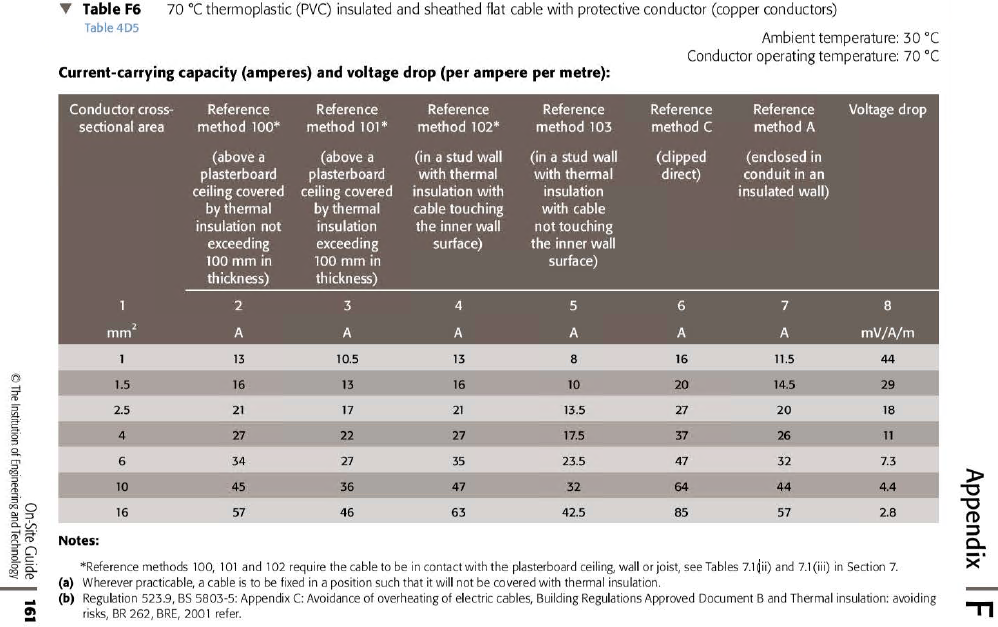
Interestingly, if you adopted a completely centralised approach where all lights are directly powered by a centralised controller, you could probably wire it in 0.5mm2 T&E (which is apparently going to be available) if using 48VDC. Extending Table F6 to 0.5mm2, that should be 88mV/A/m. A 10W 48VDC light at 33m (66m round trip) would then suffer a voltage drop of 88mV/A/m * (10W / 48V) * 66m = 1.2V or 2.5%. I would expect that with a good choice of central control location, pretty much all lights could be <10m so suffer less than 0.367V --> 0.8% voltage drop. Another plus for 48VDC over 24VDC which would suffer 4x the percentage voltage drop. You'd have lots of long cables to run, but have only one central brain to which all switches communicated. A 10m 0.5mm2 cable would probably cost about £2.
-
Oh, I'd incorporate a thermal shutoff and PTC fuse. But as I say I haven't done enough thinking yet
-
Not so sure what you mean about thermal safety, but some thoughts (48VDC): Wiring: Similar current limits will apply, though perhaps a factor of Sqrt(2) will come into play (DC vs AC), so de-rate On Site Guide figure by say 33%. I expect if limited to 5A / 7A, you'd be OK in all installation methods with 1.0mm2 / 1.5mm2 and have up to 240W / 336W of light at your disposal with out any diversity, probably double with diversity. 240W is something like 30no. 8W bulbs or 75m of LED strip. DC:DC converters: A DC:DC converter could run with an efficiency >95%. If 90% efficient and a 9W light, you need to dissipate 1W of heat. Radiative heat loss alone would get rid of 1W from around 5cm x 5cm at 75C (22C ambient), but that wouldn't be the only heat loss method. [Note: 75C is hotter than the PVC allows] Convection if open will probably dominate and conductive if a spot will help. I haven't really run any proper calculations on this, but it feels manageable. Intelligence: Average power would be in the uW range when light not on. When light on, it would be dominated by the relay (if not MOSFET controlled) and likely 0.1W. Local Switch: like a Bluetooth remote so power in uW range. The low voltage itself goes a long way. What are you thinking of for the intrinsically safe? To have it as a product you'd have to do EMC testing etc.
-
I've just found this thread looking for one I thought I had started on 48V lighting but can't find. I have a couple of questions (I'm learning): Why 24VDC rather than 48VDC? Where do you get your bulbs? I have seen lots of 24VDC strips, but not bulbs Bulb fittings, I would like to use standard bayonet or threaded bulb fittings I am an electronics engineer and would like to go all the way and make my own custom driver/control PCBs and wireless switches too, perhaps even lights. Bluetooth or Zigbee rather than WiFi. This means I could have no wire running from the light to the switch (good for a retrofit) and with a Li-SOCl2 coin cell I can have 15 years of battery life. All lights can then be locally controlled by a wall switch, centrally controlled by home automation as well as phone/tablet controlled. If you are worried about cost, a light switch, back box, oval conduit and 4m of 1.5mm 3-core probably costs about £10 depending on tastes. A wireless switch and controller probably about the same off-the-shelf. I had thought to go with 48VDC to minimise voltage drop and because it seems to be the most common voltage used by server style battery banks (based on a very quick look). I see the main benefits of a SELV system (24VDC or 48VDC) as: I can play with it outside of Part-P and other regulations [TBC and for how long] A single high quality regulated supply in place of lots of distributed LED drivers each of which is lower efficiency, gets hot and has to be found space for. I can make my own lights. I have the technical capability to do this for mains too, but that would be much more of a regulatory headache. Designing my own 48VDC (or 24VDC) light bulb electronics would be quick, the hard bit would be the fitting. Automation opportunities. Plenty of this for mains powered lights too. You wouldn't start here. If you were designing a lighting approach from scratch (no prior restrictions) I think this is where you would end up. Safety (ish)
-
Oops duplicate of Conor's post by me

-
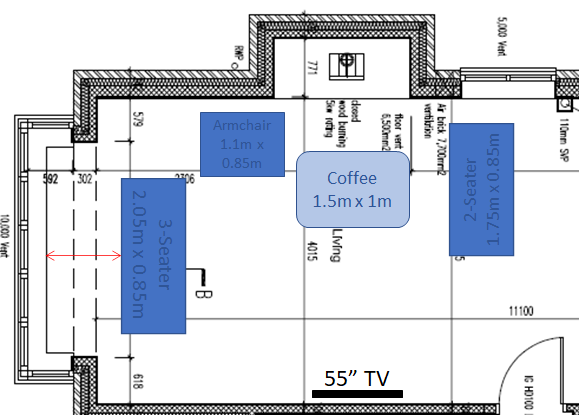
It's a bay window with a seat around its inside. Is the layout below what you have in mind? I wasn't sure which orientation you were suggesting for the sofa nearest the bay window. The TV could be on a swivel-able mount to allow it to turn towards the sofa.
-
Ouch, glad the supplier helped out. I don't think we'll have an aerial as we don't watch anything live anymore and although we may watch some sports, that could be done using broadband. An articulating mount does look like it could end in disaster one way or another.
-
I'm inclined to agree and wasn't originally planning to have a TV in this room at all. It feels brave to not make provision for a change of mind though and I am now split thinking perhaps we should have one.
-
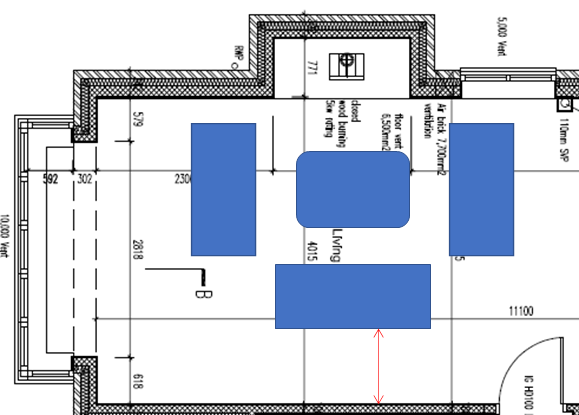
My wife is in charge of interior layouts etc and that's not decided (I know we should be more progressed there, I may have forgotten what she has already conceived) Here is a layout I have thrown together with two 2-seaters and a 3-seater targeting the closest I think a sofa may get to the fireplace. I doubt we would have that layout, but it is helpful to understand options. It has a 1m passage behind the 3-seater and the front of the 3-seater is 2.15m (7ft) from the fireplace. Your head would be about 2.7m (9ft) I guess.
-
True!
-
I'll stop posting mounts, but here is a motorised one which is cool and allows about 580mm of lowing: https://vivo-us.com/products/mount-e-mm070 Reality is I'll probably not do it but wanted to collect the info here.
-
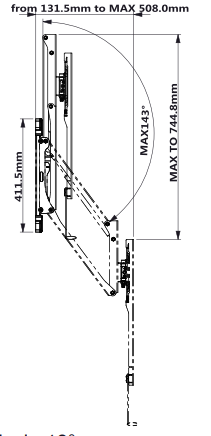
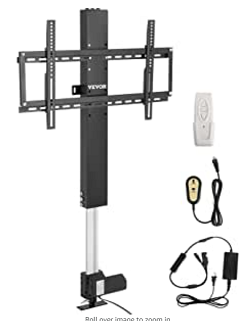
I was just mentally designing a lowering mount and there they are: https://www.tranquilmount.co.uk/mounts/pull-down-tv-mount-uk/ https://www.amazon.co.uk/dp/B09Y2ZN3LH Here is a motorised pillar type: https://www.amazon.co.uk/dp/B08B1NT8M5?th=1 It is designed to raise a TV from behind a unit, doesn't look like you could turn it upside down and use it to lower a TV though. Perhaps it could be modified. Both stick out quite a bit though. There are all sorts of ceiling swing down mounts but that's not what I am after.
-
I was wondering about to the side, but the room will be centred around the fireplace as the focal point. The fireplace is recessed as well.
-
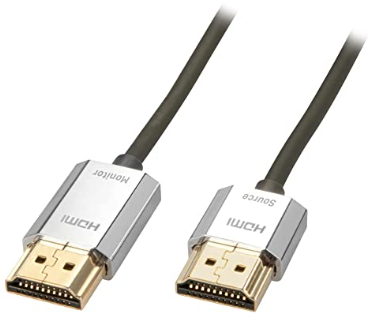
These HDMI cables from Lindy are slim but importantly have a compact connector (7mm x 16mm apparently) that should fit through 25mm conduit. Up to 4.5m long. Not cheap at ~£10/m. Connector: Dimensions (approx.) WxDxH: 19x16x7mm (0.75x0.63x0.28in) 21x16x7mm (0.83x0.63x0.28in) for connector with chipset Cable: Jacket Diameter: 3.2mm (0.13in) Spec: Supported Bandwidth: 10.2 Gbps [so not 18Gbps] Maximum Resolution: 3840x2160@60Hz 4:2:0 8bit https://www.lindy.co.uk/cables-adapters-c1/audio-video-c107/4-5m-cromo-slim-high-speed-hdmi-cable-with-ethernet-p11688 https://www.amazon.co.uk/0-5m-CROMO-Speed-Cable-Ethernet-Black/dp/B01ANI2ICQ
-
I agree, but it is a common choice these days. I was wondering if you could get an articulating backet that would allow the TV to be lowered by a couple of feet. I could make such a thing, but that would become a project in itself. Perhaps I should have a sofa that jacks up on stilts 🤣
-
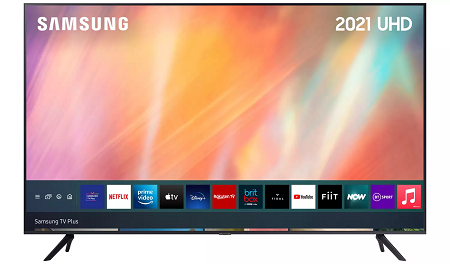
Looks like you can get a lot for your money (£379), this includes all sorts. Last year's model but I plan to have it for more than a year 🙂 Under connectivity, it says "Optical connection". Is that for audio, i.e. SPDIF? EDIT: Seems to be https://www.argos.co.uk/product/9336342?clickPR=plp:2:74
-
Good shout on the double socket with USB. I am planning to route Ethernet there as well. I may struggle to get 3 HDMI cables there. I was wondering if I could just use an HDMI switch, but that could rule out screen-in-screen if that is available on the TV (i.e. most of screen showing one input with a smaller window showing another input)
