MortarThePoint
-
Posts
2168 -
Joined
-
Last visited
Everything posted by MortarThePoint
-
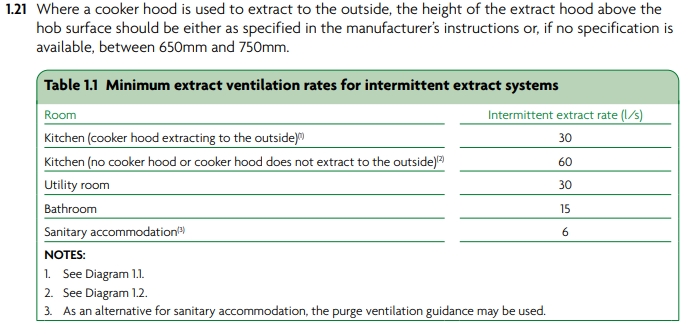
Building regs require only 30 L/s if an externally venting cooker hood. Cooker hood manufacturers recommend 10 air changers per hour though which for a large room results in a much higher flow. Our kitchen/Diner is going to be 81m3 volume, so that advice would suggest a requirement for 810m3/h = 225 L/s which is 7 times the building regs requirement so seems silly. I am contemplating going smaller than that and having a max flow rate of 500 m3/h = 140 L/s which would be only 6 air changes per hour. Will I regret that or are the cooker hood sellers over egging it? What have others done here? https://assets.publishing.service.gov.uk/government/uploads/system/uploads/attachment_data/file/1045918/ADF1.pdf https://www.faberhoods.co.uk/extraction-rate-calculator/
-
Cooker Hood Ducting (Kitchen Extractor Fan)
MortarThePoint replied to MortarThePoint's topic in Ventilation
Do Building Regs set out a minimum distance between an extractor fan exhaust and an openable window? I'd be surprised if there is as I see bathroom ones near windows all the time. -
Short length of 110mm soil stack above screed
MortarThePoint replied to MortarThePoint's topic in Waste & Sewerage
NHBC says: "Rodding access in locations such as kitchen cupboards is unlikely to be acceptable as it may be below the spillage level of appliances and also would obstruct access for rodding apparatus/equipment." this stack is going to go straight up to a double branch, the top port of which may well be unused and so could be access. That would be below the basin spillover levels though so still not ideal. -
Short length of 110mm soil stack above screed
MortarThePoint replied to MortarThePoint's topic in Waste & Sewerage
@Mr Punter Are you think of one of these. I could use one of these immediately above the 3-port boss if need be. OsmaSoil S/S Bossed Access Pipe: Floplast SP274: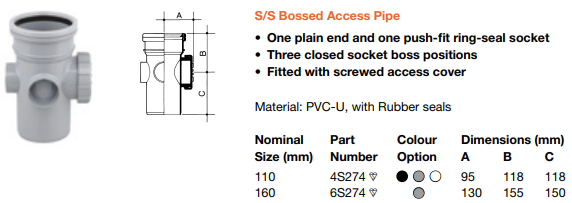
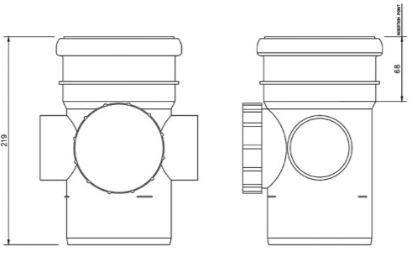
-
Short length of 110mm soil stack above screed
MortarThePoint replied to MortarThePoint's topic in Waste & Sewerage
Is that a requirement as it will end up behind kitchen cabinets. I can always install one into this if need be. -
Short length of 110mm soil stack above screed
MortarThePoint replied to MortarThePoint's topic in Waste & Sewerage
I'll air test the joint later, but certainly stiffened up when I was rotating to spread the solvent. I like this approach as it gives a last chance pipe attachment centred 80mm above the screed. Never know, that might come in handy. I didn't level it off, just pushed it all the way home so the next section(s) will correct the error in plumbness, which is about 3 in 100. I went out to do the air test and it was still smelling so I am going to wait a few hours. I always end up testing in the dark 🙂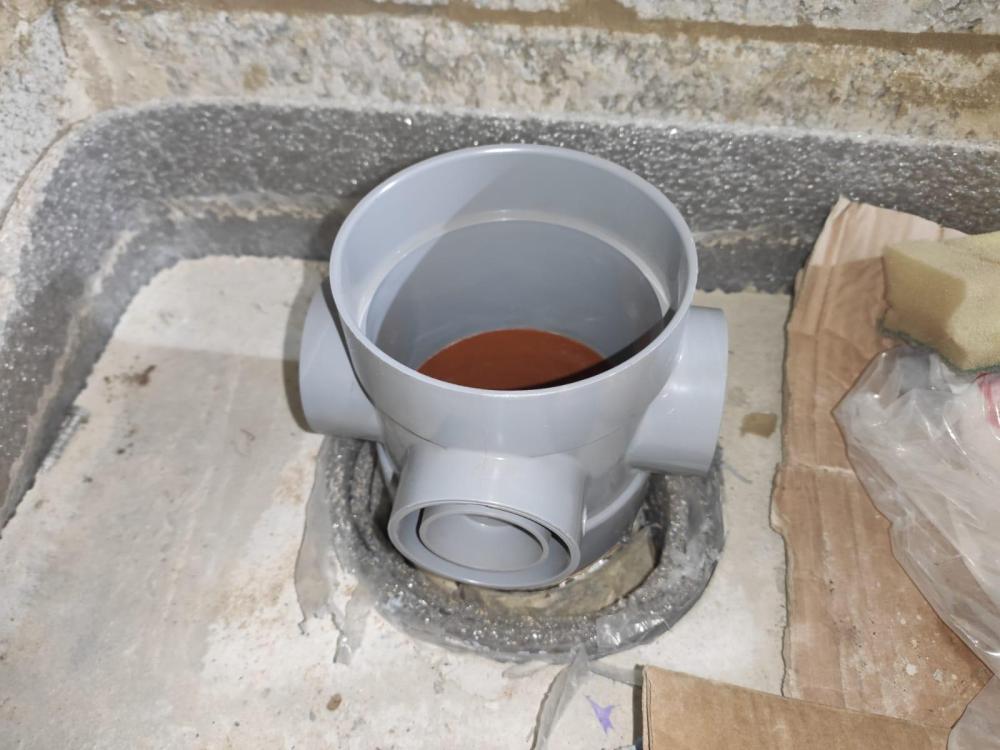
-
Short length of 110mm soil stack above screed
MortarThePoint replied to MortarThePoint's topic in Waste & Sewerage
These are a more sensible choice than duct tape, probably about a pound each: OsmaDrain Temporary Site Cap 110mm 4D295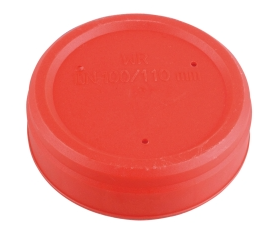
-
Short length of 110mm soil stack above screed
MortarThePoint replied to MortarThePoint's topic in Waste & Sewerage
Typical that I put on some duct tape to protect the end of the pipe and stop stuff falling in and it's then the duct tape residue that's hard to deal with. -
Short length of 110mm soil stack above screed
MortarThePoint replied to MortarThePoint's topic in Waste & Sewerage
It's actually cleaned up pretty well. I think I am going to use an OSMASoil short boss (3 port) as it has the short insertion length and all the ports are sealed so it ends up being a short insertion solvent welded coupler.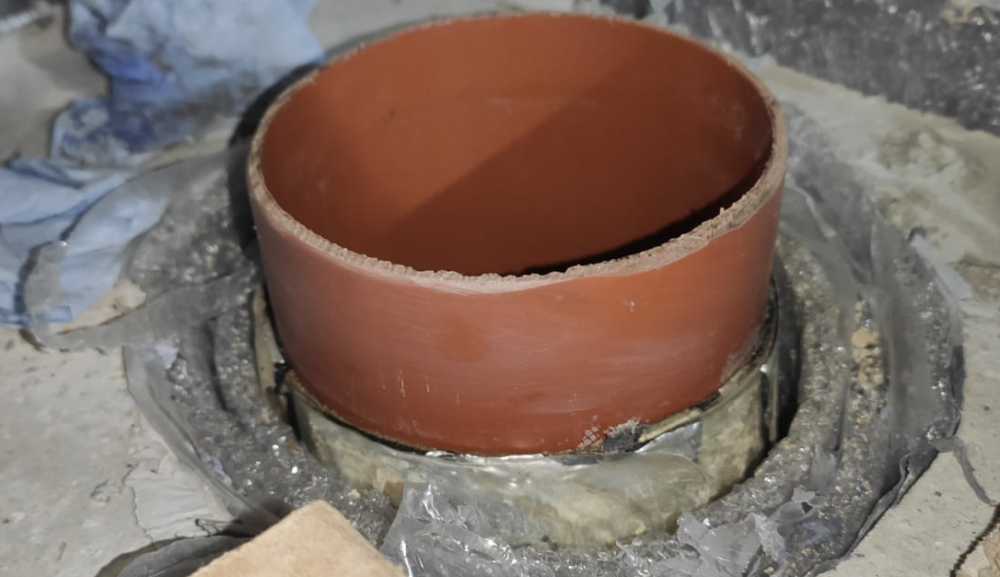
-
Short length of 110mm soil stack above screed
MortarThePoint replied to MortarThePoint's topic in Waste & Sewerage
I spoke to Floplast and they thought the SP124 was the way to go. I asked if there was a part that mated on the inside of the pipe and he said Floplast didn't produce one but hinted that others may. Is this something anyone has come across. It would be a bit like a downpipe coupler, goes inside the bottom pipe and outside the top pipe. It would hopefully solvent weld on the bottom side and either solvent weld of ring seal on he top pipe. -
Short length of 110mm soil stack above screed
MortarThePoint replied to MortarThePoint's topic in Waste & Sewerage
I am hoping I can clean it up well enough for the solvent bond. -
Short length of 110mm soil stack above screed
MortarThePoint replied to MortarThePoint's topic in Waste & Sewerage
I won't be able to remove it due to the membrane, so it's a matter of working with what I've got. I share the concern about a ring seal. Solvent weld feels like the most robust solution. There's an amount of clear pipe available that is comparable to the insertion depth of a short boss. It won't hit and end stop which is a bore, but the solvent bond should be strong enough to support the stack shouldn't it? -
Short length of 110mm soil stack above screed
MortarThePoint replied to MortarThePoint's topic in Waste & Sewerage
Beads of solvent, or a sealant? -
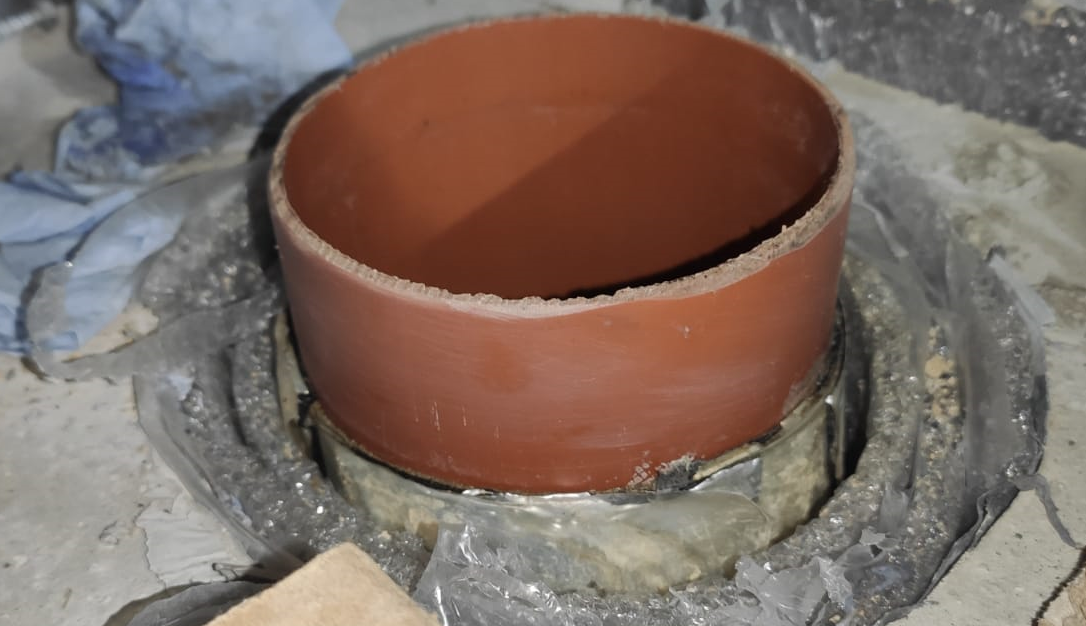
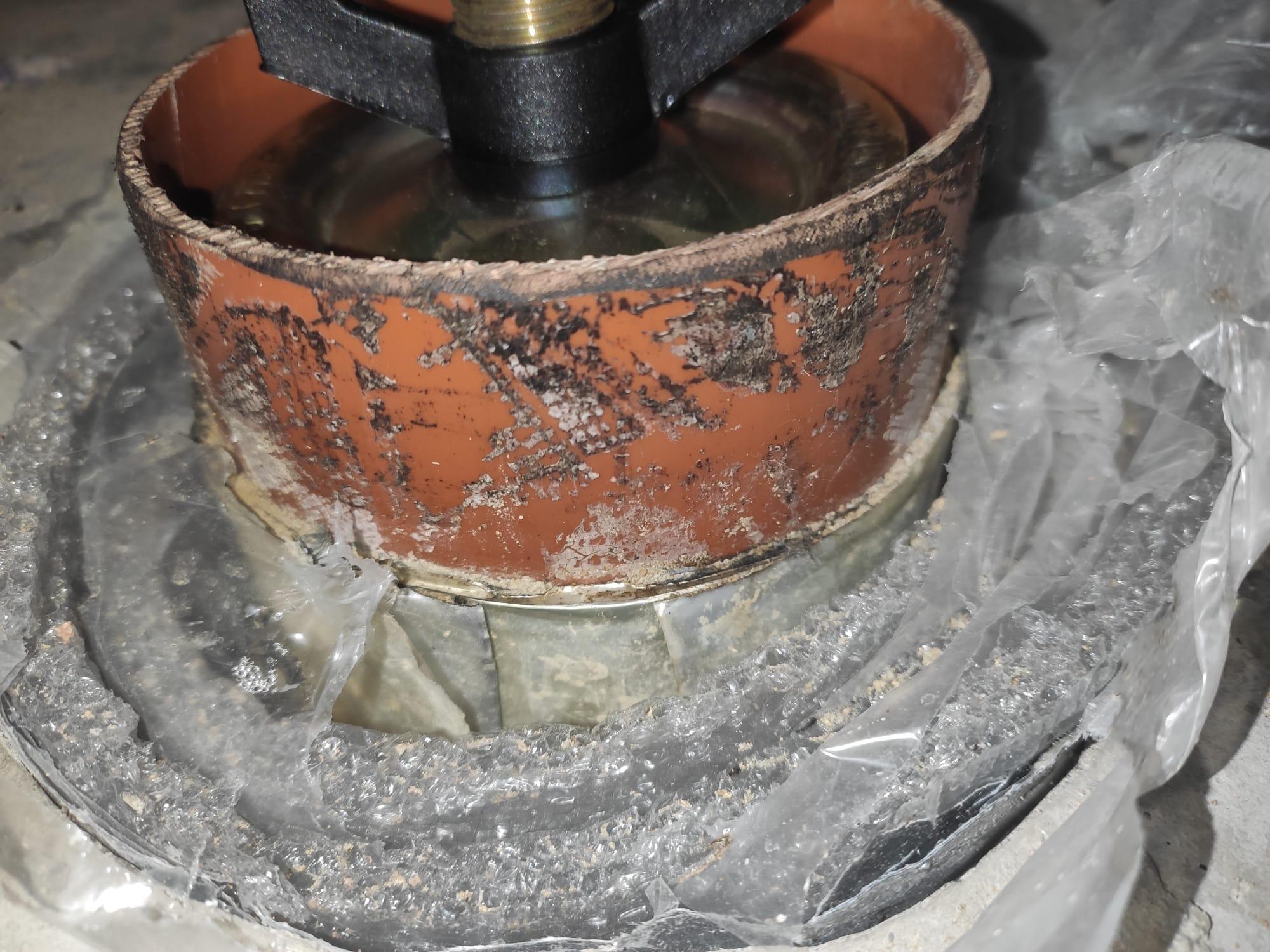
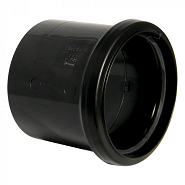
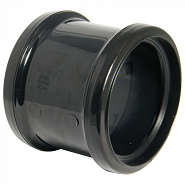
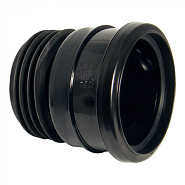
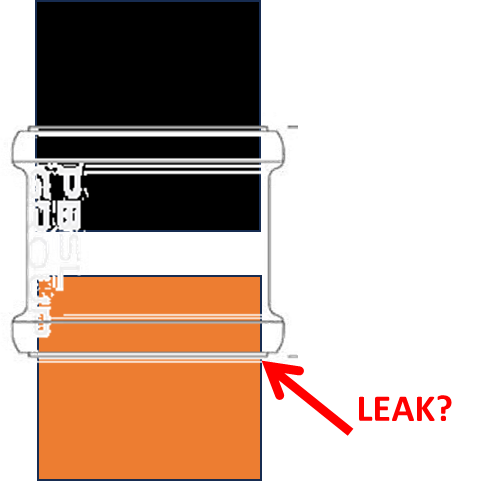
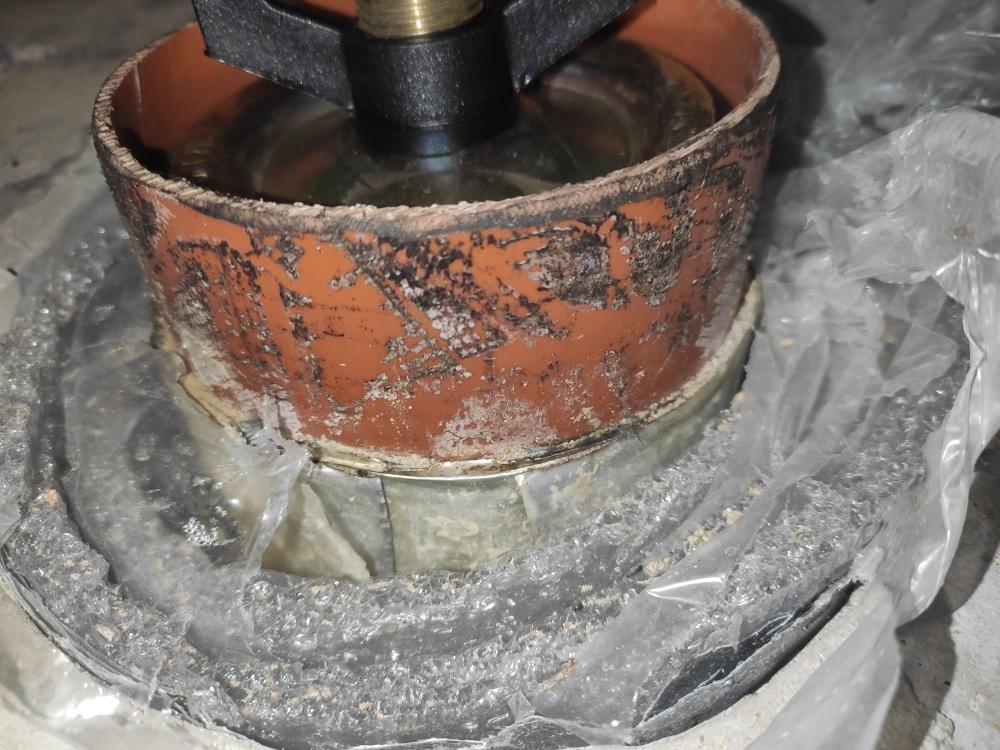
I have about 30mm of 110mm soil pipe to connect my stack to. It passes through the screed and a membrane and that's what I am left to work with. There's a photo below. Once I have cleaned the gaffer tape residue off, I figure I have 3 options: Pushfit double socket: Floplast SP105 the stub of 110mm pipe wouldn't push all the way home but would be at least 15mm past the rubber seal. I could creep under the weight of the stack above and so move down over time. I wouldn't want the rubber seal to contact the membrane that us taped to the side of the stub. Solvent weld / pushfit coupler: Floplast SP124 The sub wouldn't push all the way to the end stop, but would have ~30mm worth of solvent joint which is similar to what they have on their short 3-boss. It's pretty committed though as if I make a hash of the solvent weld I am stuffed. Universal Pipe Connector: Floplast SP140 this would push into the stub and so have no limitations as they are external. It restricts the interior diameter though. Is there no issue with using a ring seal onto a lower pipe? Are they more likely to leak that way? The black is from when I pushed a ring seal over before during testing.
-
Vertical Offset in Branch (Plumbing 101)
MortarThePoint replied to MortarThePoint's topic in Waste & Sewerage
Was that in 40mm pipe of 50mm? -
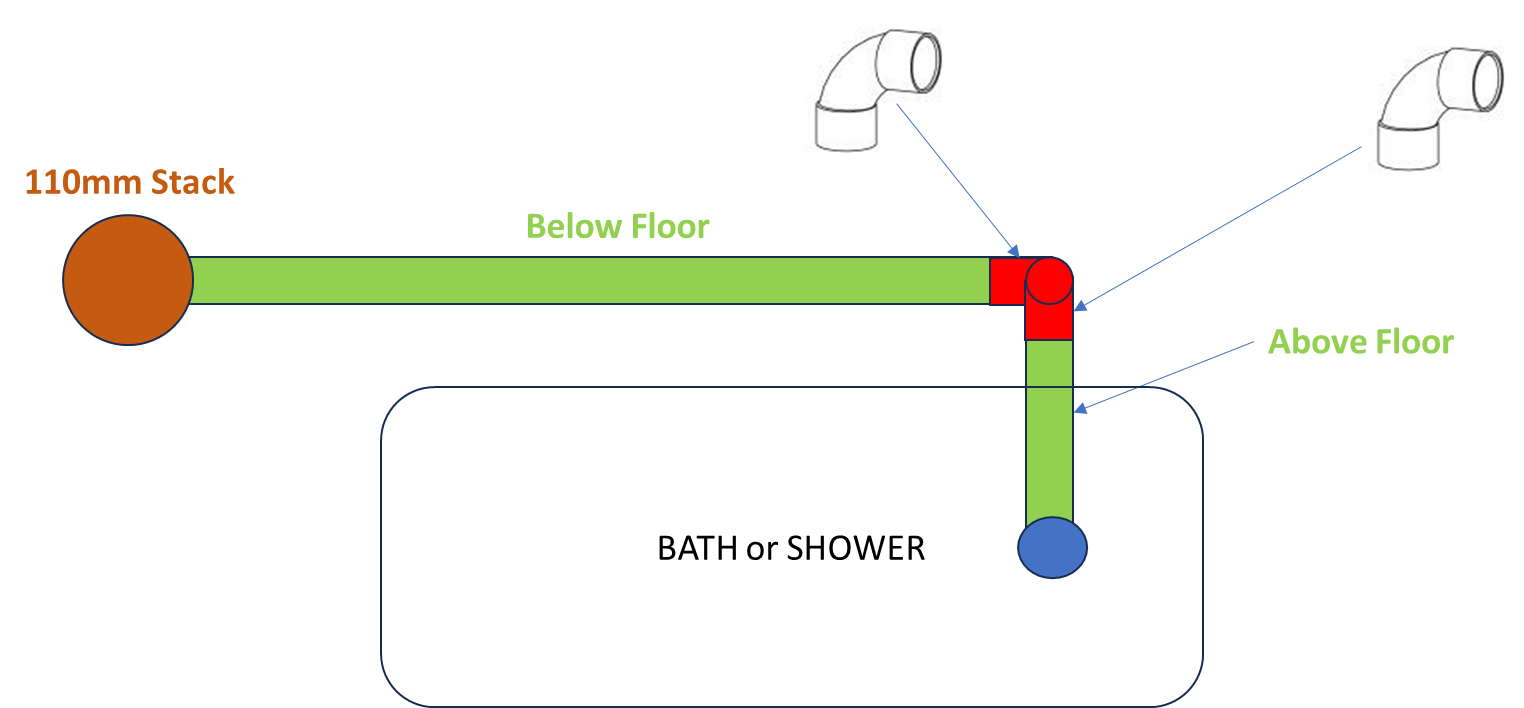
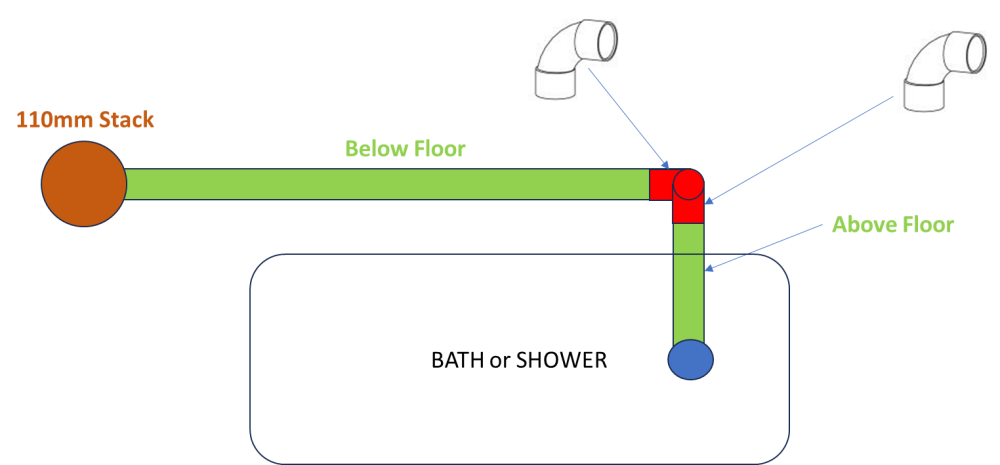
Trying to understand various options for waste pipe layout. As I understand it, a bath or shower waste has to be at least 40mm (max. 3m length) or 50mm (max. 4m length) diameter to the stack. It needs to fall at a rate between 18mm and 90mm per metre. However, can I have a short vertical section in it for passing through a floor (hollowcore concrete)? The layout below has a section of pipe above the floor for ~600mm, a vertical drop with two swept bends dropping a height of 200-300mm and then a section of pipe below the floor for about 2m. All in 40mm pipe. The 2m section below the floor joins onto the 110mm stack. Is this only allowed if the is an AAV at the top of the vertical section?
-
Minimum Toilet Soil Pipe Diameter
MortarThePoint replied to MortarThePoint's topic in Waste & Sewerage
One of those (the middle one I think) can be shipped from the US now. The one on the right is just for i-Joists. Looks to be the way to achieve a bigger pipe. -
Minimum Toilet Soil Pipe Diameter
MortarThePoint replied to MortarThePoint's topic in Waste & Sewerage
I want to send the pipe through a couple of truss bottom chords (222mm) and the truss designer has said 115mm hole too large but 80mm would be Ok -
Minimum Toilet Soil Pipe Diameter
MortarThePoint replied to MortarThePoint's topic in Waste & Sewerage
I know it's not ideal, but I need to work out a smaller size if I can. I see in Part H the paragraph below. Am I to understand from that it's OK to have a 75mm waste pipe from an <=80mm outlet toilet: https://assets.publishing.service.gov.uk/government/uploads/system/uploads/attachment_data/file/442889/BR_PDF_AD_H_2015.pdf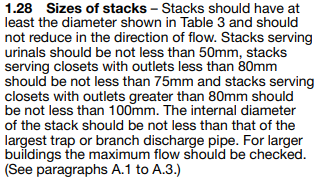
-
I know using a macerator you can get the pipe diameter down to an incredible 22mm [link]. But macerators can be noising and go wrong as well as being costly. What is the minimum diameter pipe that can be used for a toilet waste without a macerator?
-
Tanking a shower without foam boards
MortarThePoint replied to MortarThePoint's topic in General Plumbing
Good tip thanks. The plan is to S&C plaster all the blockwork so the tiles aren't too far behind the skim. That means tanking S&C plaster which should be nice and smooth. -
Tanking a shower without foam boards
MortarThePoint replied to MortarThePoint's topic in General Plumbing
Having discussed the bathrooms with the plasterer it seemed a good idea to sand and cement plaster the blockwork walls before tiling. Would that make for the following running order?: Sand and Cement (S&C) plaster blockwork Aquaseal tanking kit to S&C plaster and bare plasterboard in shower area Tile Can you prime the tanking surface to get a good key for plaster skim if I end up going a bit into the non-tiled area? I'm thinking of something like Bostik primer of BG Bond-It? https://www.bostik.com/uk/en/catalog/product/construction/emea/uk/bostik-plasterer's-stabilising-primer/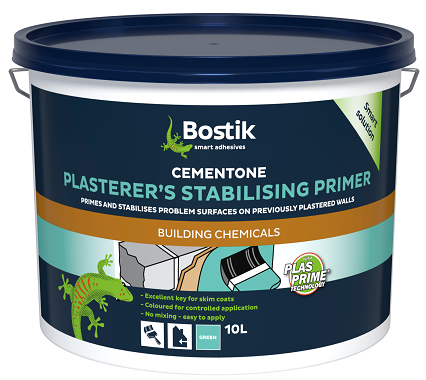
-
Cool. Is my price expectation reasonable at about £1,500 for 77m?
-
Unlucky, but I guess you don't know until you get started
-
I guess it can depend on soil conditions. It's quite easy clay here. Tree roots?