MortarThePoint
-
Posts
2294 -
Joined
-
Last visited
Everything posted by MortarThePoint
-
We've got to the stage of proceedings where 'client management' is a significant challenge. In that I mean trying to keep my wife happy. I need drawings, dimensions, products and decisions whilst she lives in mood boards and options. This isn't a picture of my wife but, I am getting used to this expression and worse: She is keen on having wall paper in a couple of places: Hallway, above shaker panelling Downstairs loo, above v-groove cladding I am sold on the panelling / v-groove but not the concept of wallpaper. A painted wall with pictures on looks much nicer to me and feels a better way to have the 'interest' that wallpaper adds since the pictures can be changed and don't damage the wall. It's very easy for wallpaper to end up kitsch. Also, I don't think I have ever seen wallpaper that hasn't started to lift at the joins. Am I rightly concerned about wallpaper or should I get back in my box.

-
He's seems really good. He's knocking back any imperfections in the plaster. His method is light sand, primer/mist, proper sand, spot prime/mist and then the finish coats (which we haven't got to yet). The first sand mainly gets rid of plaster splashes and dust etc as it's got extract. The uniformity of the white primer coat allows him to pick up imperfections with his low angle light. The spot priming is adding back primer to any significant patches that have been sanded off.
-
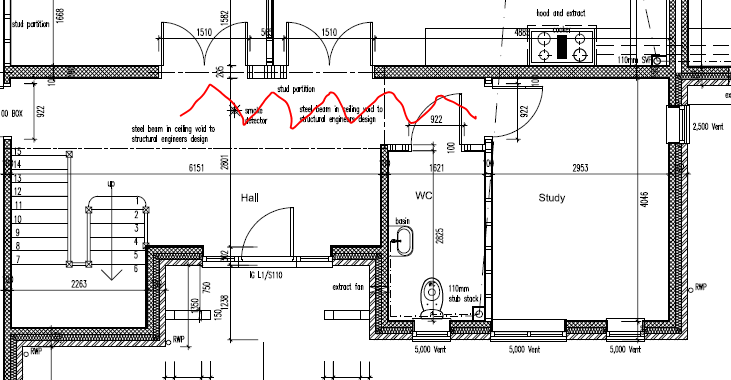
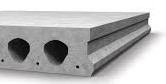
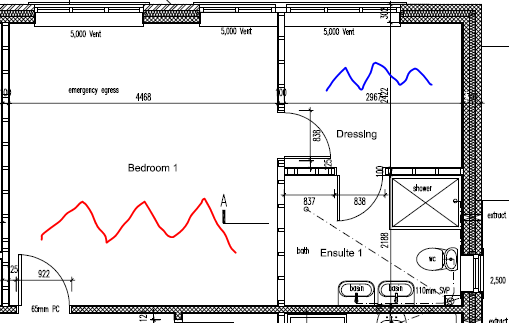
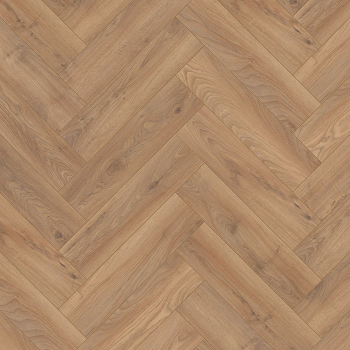
Good point and in one room that gets me thinking. I had intended to lay the laminate (10mm Egger EHL175) in the direction of the long axis of the study which also leads to the predominant light source. That does however leave it perpendicular to the direction of room entry. The red zigzag is the direction of the herringbone in the hallway. I have a similar situation in the sitting room, but there is a bay window at the end and it will also run through into the dining room with patio doors at the end so I think it only makes sense to have it going parallel to the long axis in there. That's likely to be 14 or 15mm engineered oak flooring so a different consideration to the laminate. Upstairs, we are having Herringbone 8 laminate (8mm) in the main bedroom and also I expect in the dressing room, though that may end up carpet to better cope with the possibility of wet feet. Ground floor is Thermabeam insulated precast concrete planks over 300mm void and first floor is 150mm HCF planks. I particularly liked the idea of the Thermabeam as it keeps the concrete inside the insulated envelope unlike standard beam and block. HCF was good for speed of installation and again thermal mass inside the insulated envelope. I'd be concerned if either had any mid-span settling. They've been down for 5 years and covered in screed (50 - 60mm Cemfloor cement-based liquid screed) for almost 4 years. We've only had one screed crack in a position I partly expected it on a long narrow run where I proposed a break anyway. The screed is extremely flat, with the odd bubble crater or piece of aggregate sticking up about 1mm. I think I'm over thinking it and a 3mm underlay would be fine, though I'll still hunt down and grind any pimples with a brick as @saveasteading suggests and a grinder if anything more significant, but I'd be surprised if I needed that.


-
Do you remember where you got it from?
-
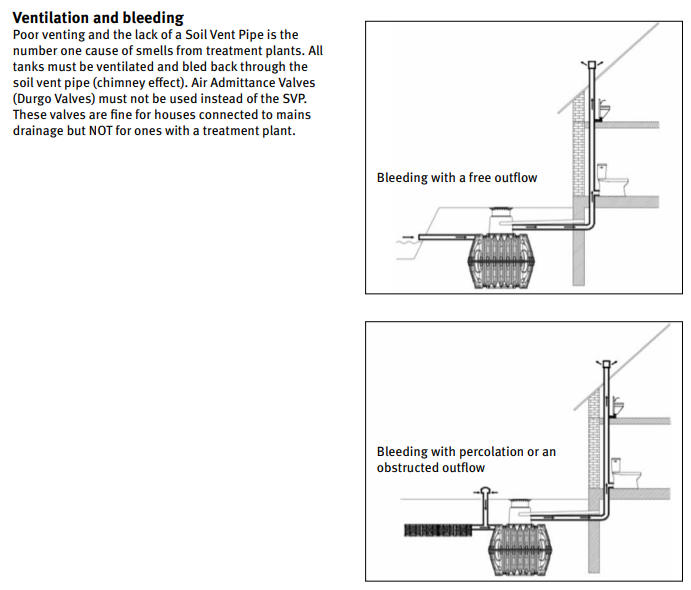
I have already been including AAVs at the end of all my significant branches (before any vertical sections of 110mm pipe so that should satisfy any negative pressure requirement (i.e. stop traps from being sucked out). I understand that septic tanks need a low level inlet and high level outlet so as to create a flow though of fresh air, but a STP has a pump so any outlet I would expect to be OK surely. Maybe not one of the BioRock type or spinning disc ones though, but I'm not considering those. I am considering Graf One2Clean and Marsh Ensign systems. The Graf looks to have significantly cleaner effluent, easier to have granular backfill rather than concrete and also has a non-continuous pump which saves energy. They do talk about having a 'chimney effect' though which I assume is to prevent smells coming out of the low level pipe.
-
I may end up plumbing the detached garage just for this reason. Will probably be grateful of having a sink in there too
-
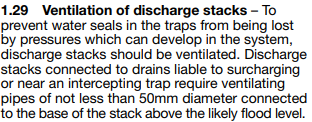
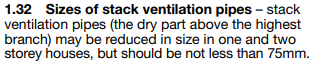
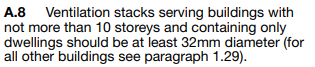
Looking at Part H I see a conflicting pieces of information: So which is it, 32mm, 50mm or 75mm? I understand the need for a large diameter if it is to allow air into the stack and there is no AAV as it has to provide a reasonable flow of air as the waste water rushes through the lower pipes. Even so, air moves much more easily through a pipe than water does. I was planning to just have an Durgo/AAV, but think I need an SVP to allow positive pressure from my sewage treatment plant (STP) to vent. Any such venting from the STP would have low flow rates and could therefore go though a narrow pipe (to a roof tile vent). Even 20mm pipe would be plenty big enough I don't fancy a 75mm pipe going up the bathroom wall and a 32mm one would be much more acceptable. Can I plead the case if I have a Durgo/AAV for the high flow inlet requirement?
-
There's definitely a mourning process
-
Looks like good stuff. It says it has a thermal resistance of 0,01 m²K/W which is 0.1tog. Thin though (2.6mm) so makes the levelling more important. I like the certifications Impressive effort, must have ended up perfect.

-
Oh, are you suggesting I have no underlay and use something that can be glued straight to the screed (or feathered) surface? If it's to be believed, 0.1 tog is the difference between 8mm and 10mm laminate, so wouldn't rob much heat. Anything that could be bonded is likely to be thicker. As an example, 14mm engineered oak is 1.13tog. that's the same as 10mm laminate plus 0.3tog underlay. Or are you suggesting something like glue down LVT would be a better choice?
-
This option is in the table but without a tog value. Looking at its datasheet it is a very good outlier (3mm, 0.1tog): https://flooringwarehousedirect.co.uk/product/timbertech-elite-silver-plus-foil-wood-underlay-10m-x-1m-x-3mm-10m2/

-
The painter is on site with his long handle wall sander. I wonder if he'd be game to give it a try?
-
There are barely any lumps and they surprise me whenever I find them. Could sanding / grinding be an option?
-
Laminate doesn't feel to me like a permanent enough surface to glue. Good though about the thermals though
-
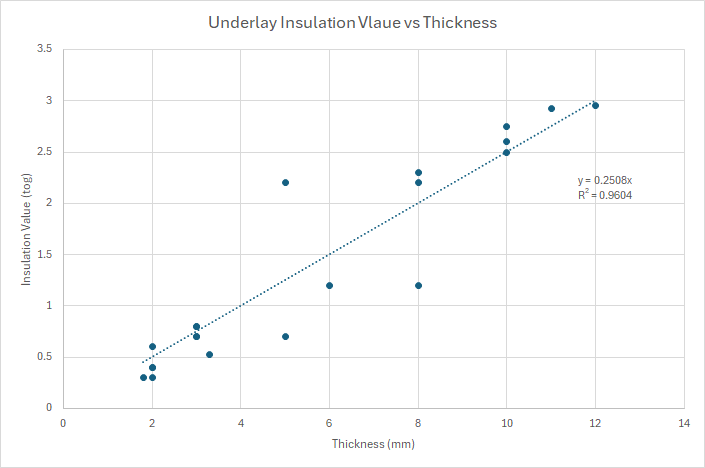
We have some rooms with laminate (8mm or 10mm I think) over concrete screed with UFH pipes in so we want to have as little insulating effect from the underlay as possible. I found a useful table of underlay options [1] and have crunched the numbers to look for outliers that have below the trend tog values for their thickness. Graph below. The winners (QA TimberTech2 Gold 3.3mm x 0.53tog and QA TimberTech2 Acoustic Plus 5mm x 0.7tog) are both rubber. For those interested, the highest insulating outlier was unsurprisingly the Polystyrene one (QA FineFloor TechniBoard 5mm x 2.2tog). Not in the table, but Vitex Premium is commonly available (e.g. Toolstation) and pretty insulating at 5mm x 2tog so not good for me unfortunately. I'm nervous of something too thin as then it won't take out any small lumps and bumps in my screed which is pretty flat but does have the odd lump (max about 2mm high). Feels like 5mm would be a good option (thoughts?). For reference, the laminate itself is 0.73tog and 0.83tog for 8mm and 10mm respectively. This data obviously isn't complete so if anyone has a good suggestion I'd be grateful. [1] https://flooringwarehousedirect.co.uk/info-guides-advice/underlay-comparison-guide/

-
Oops, didn't spot this as was cracking on. I've got a painter who will be doing the painting. I'm going with Scuff-X satin I think as it should be more forgiving than eggshell
-
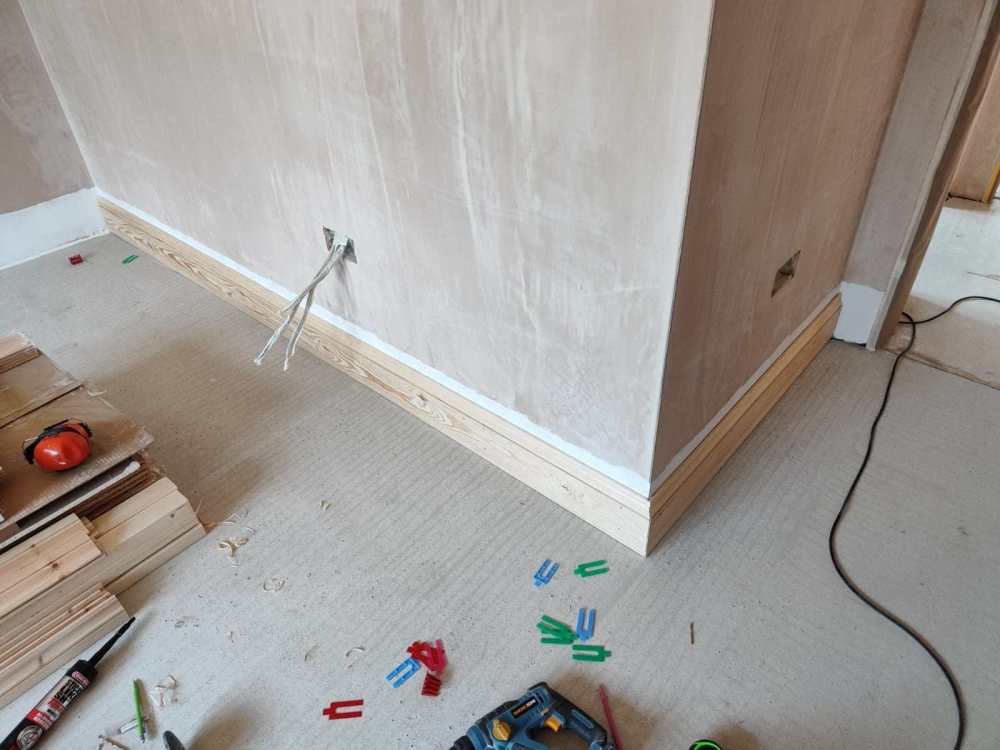
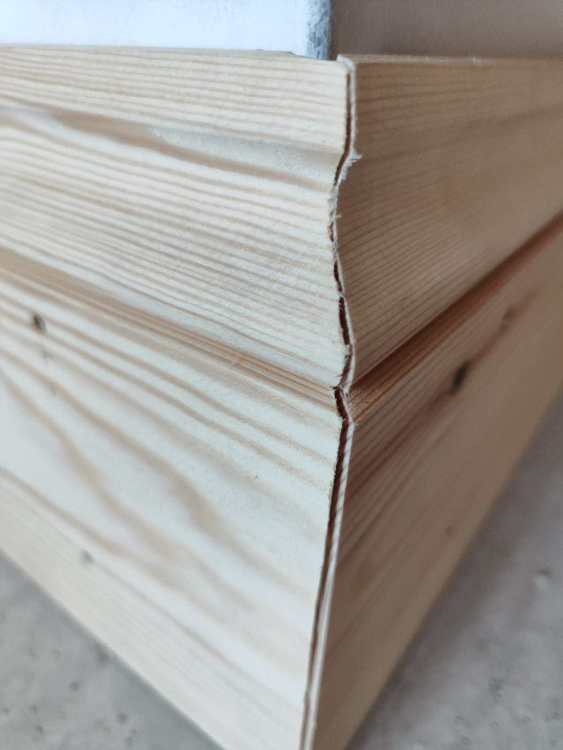
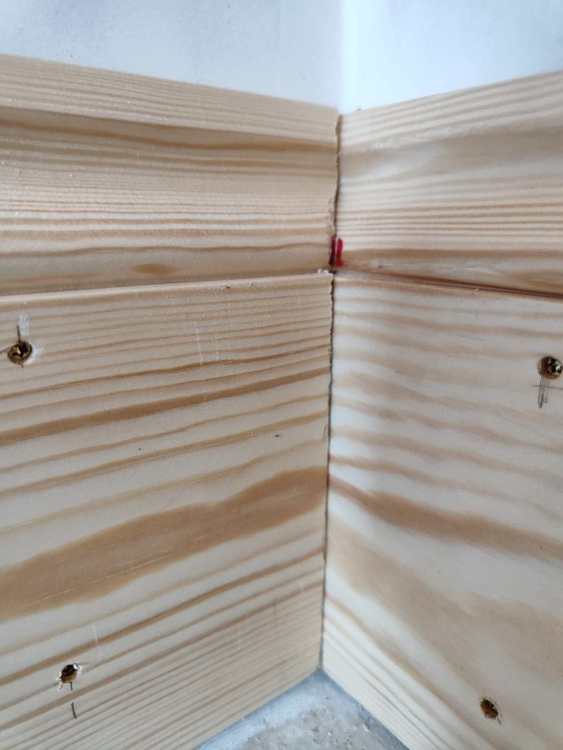
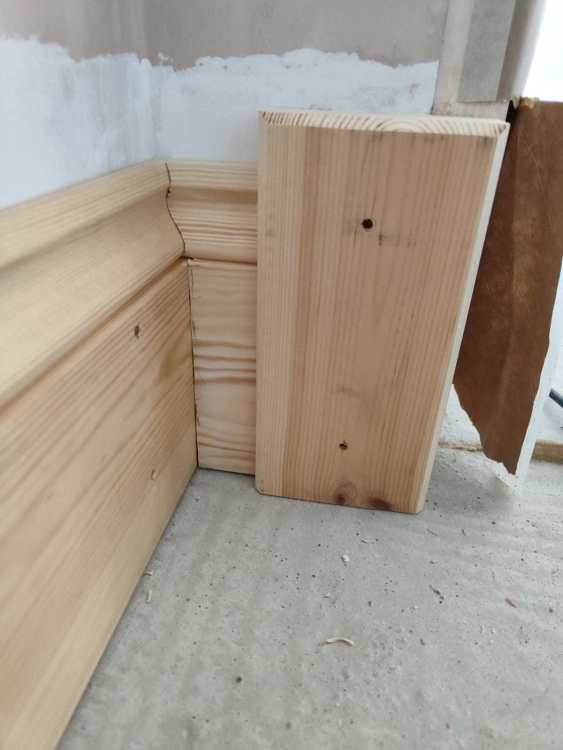
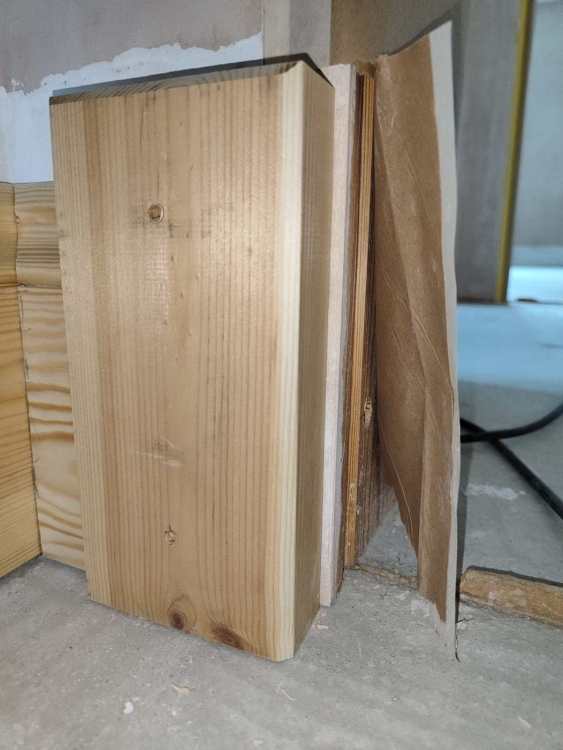
First room done, all to be filled and painted. CT1 and Lost-Tite screws. My external joint wasn't very good but I prioritised the detailed portion. Also, not very good at coping but hopefully filler will hide my sins. 170*20 ogee skirting with 90*32*190 chamfered plinth blocks. External corner: Coping: Plinth block:

-
For clarity I'm using pine not MDF
-
Time to fit skirting. For internal corners I'll use a square cut and scribe the other piece. Than makes me wonder if I should cut the piece with the square end tight to the gap or leave a little gap for expansion? I know wood doesn't move much in length (along grain) though. I may be more likely to have shrinkage after installation as the wood dries. Over thinking it and just cut tight?
-
He's already bought some bits so I'll do as @jack suggests for that. Any other stuff he gets he'll do as @nod suggests, and I'm going to shop around for the more expensive stuff (Tikkurila & Scuff-X) as @saveasteading suggests. Thanks 👍
-
Yes prob £700+
-
They won't do it. He gets 30-40% off and they say I can only get 10%
-
Decorator gets much better discounts on paint than I could. I've spoken to his supplier and I can pay for things and receive his discount. The resulting invoice would have his name and address under the 'Invoiced to' section and my name and address under the 'Delivered to' section. Would HMRC accept that for a VAT claim? https://www.gov.uk/guidance/vat-refunds-for-new-builds-if-youre-a-diy-housebuilder#vat-on-goods If the approach above isn't OK, is there another way of navigating this I've missed? Decorator isn't VAT registered so he can't sell me the items and we each claim back the VAT.
-
Exterior Skylight in Loggia/Veranda
MortarThePoint replied to MortarThePoint's topic in Windows & Glazing
I wondered about that. The elevation of the house faces West-South-West if that makes a difference. -
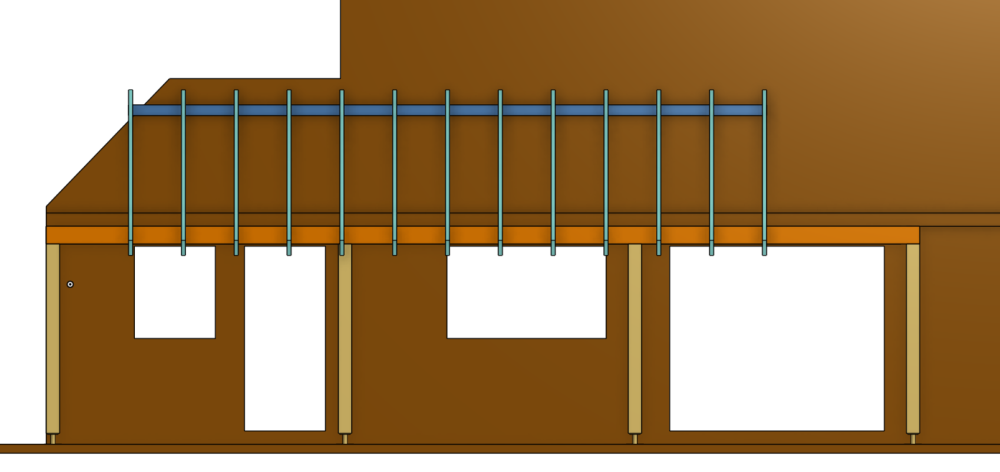
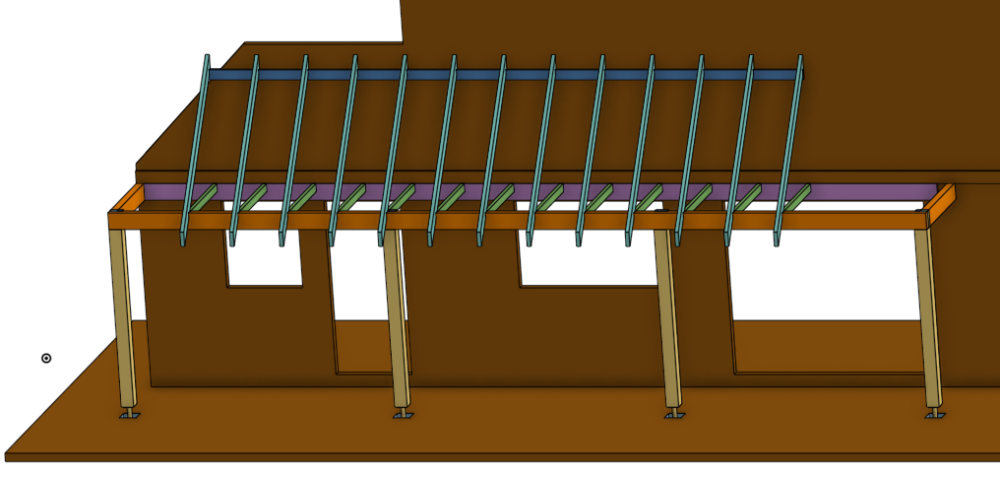
We're having a loggia along part of the back of the house. It passes over the kitchen window as well as kitchen patio doors. This means the roof of the loggia will shade these and reduce the amount of natural light. This has made us think of the possibility of having a skylight type window in the roof above the kitchen window. Both sides of the window would technically be exterior and so it doesn't make sense to use anything like a Velux. Is it possible to include a sheet of toughened glass in the tile area and flash around it? The tiles are plain clay tiles. Alternatively, is the a suitable window type of flashing kit I should consider? There are a couple of CAD drawings below and the rafters have been shifted over to fit nicely over the kitchen window (3 rafter gaps above the window).