


Thorfun
-
Posts
4892 -
Joined
-
Last visited
-
Days Won
36
Everything posted by Thorfun
-
if I may jump in on this thread and ask my own question? I have a friend who is about 3 months ahead of us with their self-build. they've had their MVHR installed and the ducts all run inside the insulated envelope, yet I noticed that the installers insulated all the supply ducts to the rooms. I assume that's because they have a 'cooling' element to their MVHR system? we are planning to plan for the possibility of using a fan coil/duct cooler fed from the ASHP to potentially add a cooling element to the MVHR if we require it a couple of years down the line. so I assume that I'd need to also insulate ALL the supply ducts to every room in case we do go down the cooling route? but if we don't need a cooling element with the MVHR then insulating supply ducts when inside the insulated envelope of the building is not necessary?
-
only assistance I'm able to give on this one is when I was researching internal sliding glass doors I found the ID systems ones that looked good. https://idsystems.co.uk/glass-partitions/ were pretty expensive though! I have no experience buying from them though so cannot give a recommendation for the doors or supplier but I believe that they have a pretty good reputation.
-
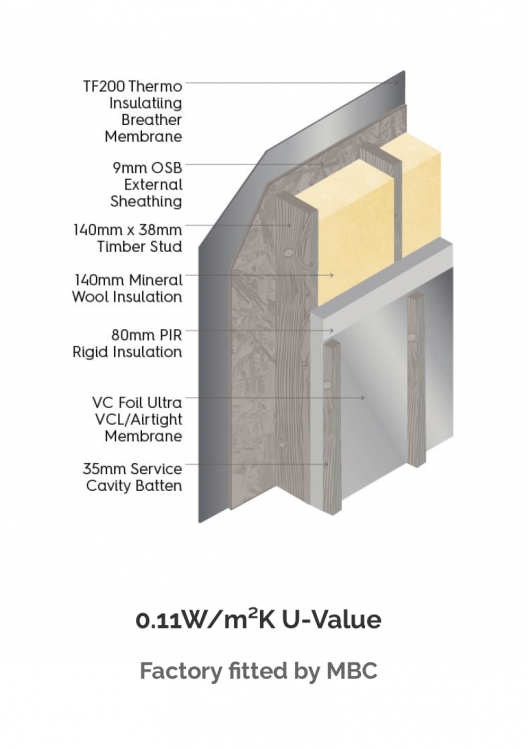
this is true! I am still toying with the idea of just using 50mm PIR (or somewhere in between, maybe 70mm) but the building control drawings are being done with 80mm PIR and the SAP calculations as well. so I'll probably just stick with that and deal with the screws as and when I get to it. I based the build up on the MBC wall as well as many other companies' designs...
-
pretty standard really. 140mm Frametherm 32 with 80mm PIR on top.
-
yes we did. it was very impressive. great quality work and the owners spoke very highly of them. the house we saw was the valu-therm panels so a little different to our open panel TF but still looked like very good work. after some thought it was actually an easy decision for us and they were the company we chose to go with. we paid our deposit and the architects are currently working with them on the TF design and building control drawings. so far I have nothing but good things to say about them. but the proof, as they say, will be in the pudding. and by that I mean when I get to the stage of delivery and erection which could be 3 or 4 months away not by what sort of culinary delights they give us after dinner.
-
MVHR Decisions...what to do?
Thorfun replied to Thorfun's topic in Mechanical Ventilation with Heat Recovery (MVHR)
But there’s a photo of David Cameron on their website. Surely that’s a top notch endorsement right there! -
MVHR Decisions...what to do?
Thorfun replied to Thorfun's topic in Mechanical Ventilation with Heat Recovery (MVHR)
I’ve already had a quote from Enhabit. I thought they were one and the same since the merger? -
MVHR Decisions...what to do?
Thorfun replied to Thorfun's topic in Mechanical Ventilation with Heat Recovery (MVHR)
ok. thanks. I really appreciate your input and I will await a response from CVC before making a decision. -
MVHR Decisions...what to do?
Thorfun replied to Thorfun's topic in Mechanical Ventilation with Heat Recovery (MVHR)
true and that's why I keep researching. but Enhabit have said they 'could' make the Q600 work and Paul have said the Q600 is fine. Both are reputable MVHR companies, right? BPC and a local company have specified 2 x units. I'm still waiting for CVC to get back to me with what they think. I'm just concerned about balancing 2 x units, plus the maintenance of 2 x units, running of 2 x units etc will be more than a single unit. true or not? -
MVHR Decisions...what to do?
Thorfun replied to Thorfun's topic in Mechanical Ventilation with Heat Recovery (MVHR)
Hi @Nickfromwales. thanks for this and I definitely don't want noisy MVHR in the bedrooms, or any rooms tbh, but....on a normal flow rate on the Q600 would the noise be perceptible? it's not like the Q600 will be maxed out at that level of ventilation? -
MVHR Decisions...what to do?
Thorfun replied to Thorfun's topic in Mechanical Ventilation with Heat Recovery (MVHR)
yes. gave me 3 options all of which were 2 x unit designs. -
MVHR with active cooling
Thorfun replied to worldwidewebs's topic in Mechanical Ventilation with Heat Recovery (MVHR)
interesting....I'll revisit this subject when I get around to plumbing first fix. -
Will my windows be a problem to source/expensive
Thorfun replied to AliG's topic in Windows & Glazing
cor....not heard of this with Norrsken! will need to speak to our sales guy as he never mentioned it. just goes to show that they don't do the hard sell I guess. -
MVHR with active cooling
Thorfun replied to worldwidewebs's topic in Mechanical Ventilation with Heat Recovery (MVHR)
I have also heard that the MVHR ducts need to be insulated if using cooling as well. so I was thinking about insulating them (or getting insulated ducts) just in case we choose cooling in the future. and shouldn't all pipework be insulated anyway? I remember going to visit an MBC house that was being built when we were looking at TF companies and the plumber there was insulating all his pipe work. so I assumed that was just the norm these days? -
Will my windows be a problem to source/expensive
Thorfun replied to AliG's topic in Windows & Glazing
I first heard of them from members on here. @vivienz and @Russell griffiths are a couple that come to mind that both had Norrsken windows and had good things to say about them iirc. so the thanks should go to them! ? -
Will my windows be a problem to source/expensive
Thorfun replied to AliG's topic in Windows & Glazing
+1 -
MVHR Decisions...what to do?
Thorfun replied to Thorfun's topic in Mechanical Ventilation with Heat Recovery (MVHR)
you'll have no issues with the Q600 from what I can tell. it does state that it's max ventilation rate is 600m3/h but maybe above 460m3/h it becomes too inefficient? that's a beast of a machine, and around the same sort of size and cost as the commercial ones on the BPC website. e.g. https://www.bpcventilation.com/freetime-smart-zone-1500 which is 1500m3/h @ 200Pa but I'm not clever enough to know what difference that figure @200Pa makes over the domestic figures quotes @ 100Pa. great minds think alike. ? -
MVHR with active cooling
Thorfun replied to worldwidewebs's topic in Mechanical Ventilation with Heat Recovery (MVHR)
well, I guess so, but I would presume that the ASHP only has one auxiliary send/return for this sort of thing so the plumbing would need feed both. I just wouldn't know if that was ok or if there was a pipe length maximum or some form of degradation by splitting the feed? I wouldn't of thought so but it's definitely not my area of expertise! -
MVHR with active cooling
Thorfun replied to worldwidewebs's topic in Mechanical Ventilation with Heat Recovery (MVHR)
can an ASHP send cold water to 2 x duct coolers if required? one on each MVHR unit? or, if having a 2 x unit MVHR system (see below thread for my dilemma on that choice) would you have to 'choose' which MVHR unit got the duct cooler? -
MVHR Decisions...what to do?
Thorfun replied to Thorfun's topic in Mechanical Ventilation with Heat Recovery (MVHR)
I've just realised that the PaulScotland calculations don't include the room above the garage which is 7m x 7.4m (approx) and contains a shower room and vaulted ceiling. I will go back to them and ask why they excluded those rooms as that could make the difference on their calculations. -
Will my windows be a problem to source/expensive
Thorfun replied to AliG's topic in Windows & Glazing
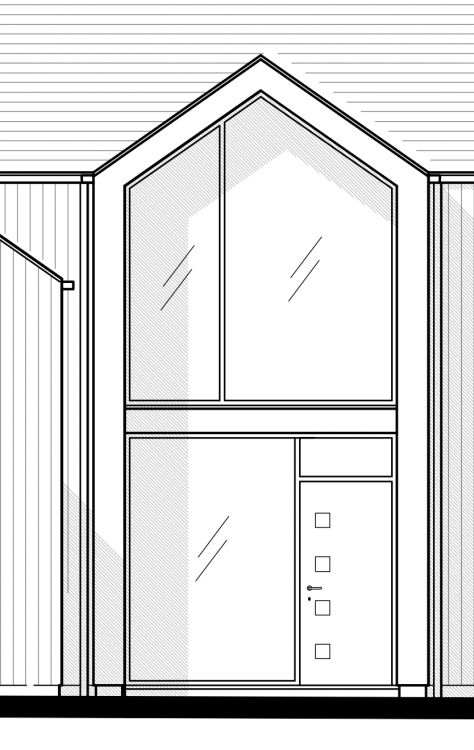
and as another comparison, here's our largest slider quote from Norrsken. and I agree with @ToughButterCup in that comparing quotes was hard. I found that Norrsken were very upfront and contained a lot of detail in their quotes and included everything I could possibly need in the quote. so there were no hidden extras. although they don't do UPVC so will probably not be what you're after. but they were able to do the following window with no size issues. (3.3m high at the apex) (all posted with the caveat that I haven't started building yet so my opinion could all change once we get to the delivery and installation stage)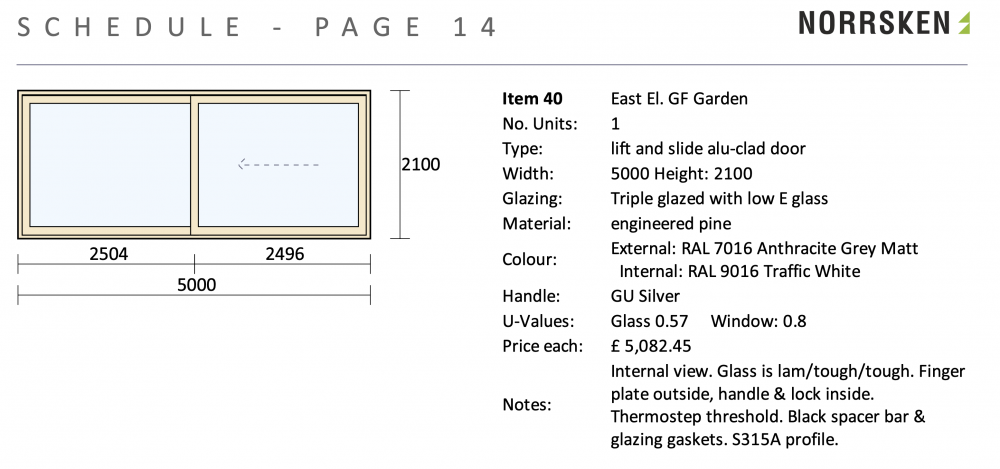
-
MVHR Decisions...what to do?
Thorfun replied to Thorfun's topic in Mechanical Ventilation with Heat Recovery (MVHR)
but 0.3ACH for 1150m3 = 345m3/h, right? and on the Q600 specifications it shows a flow rate of 350m3/h @ 100Pa is in the recommended working point (unless I'm reading that chart all wrong that is! which is possible, I did get an 'E' in my A-level physics). and then the Komfovent R-700 has an even higher flow capacity. maybe if I insist on having a single unit I need to look at commercial units?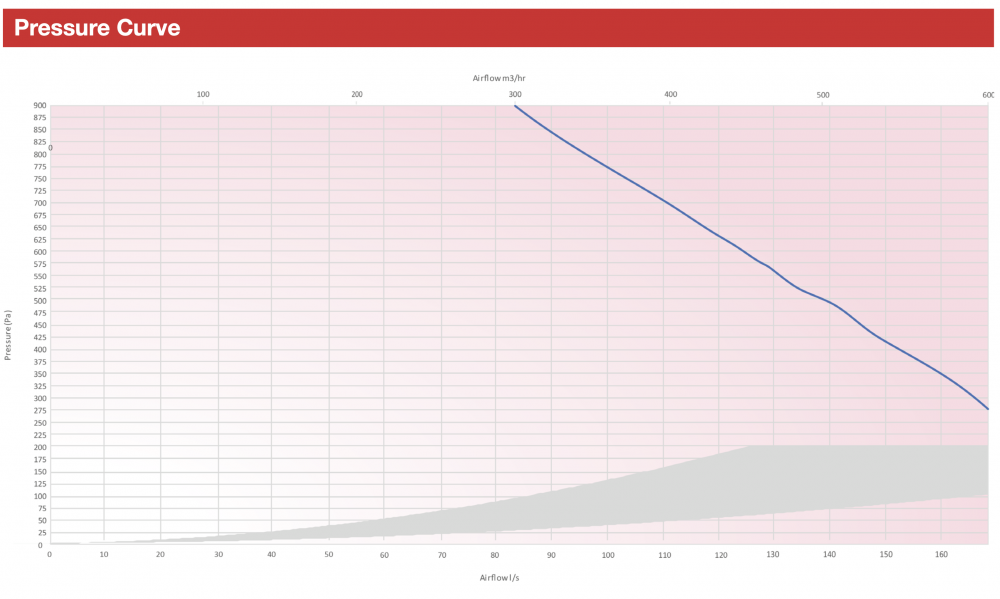
-
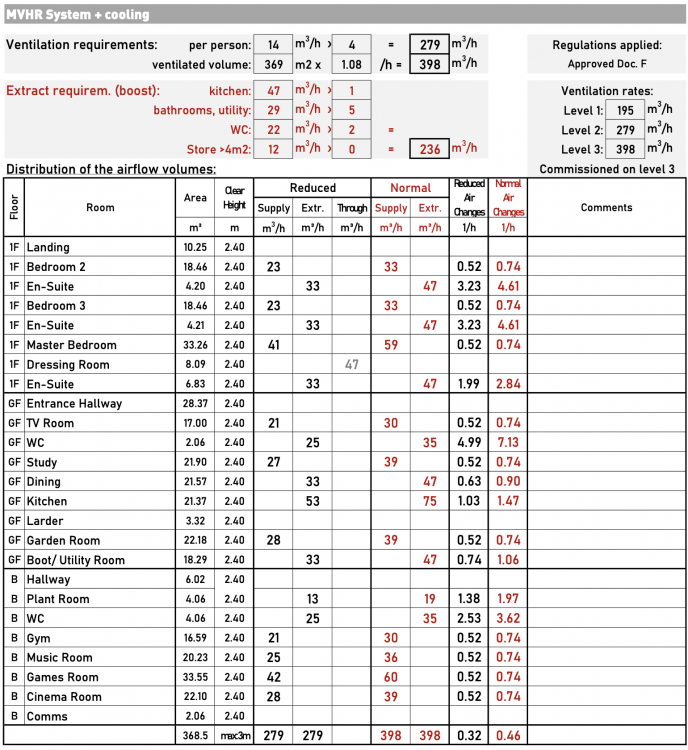
Hi all, We're at the stage with our building control/timber frame design drawings where we could really do with an MVHR design. We're building a large house with a basement and a room above a double garage. total internal floor area is approx. 450m2 (including the double garage, so about 405m2 habitable space). I have roughly calculated the volume to be 1150m3 (we have a high vaulted entrance hall, and the room above the garage is also vaulted and our basement has 2.9m high ceilings) and using the resources I've found on here and from the reading I've done I've calculated that I need a max flow rate of approx 440m3/h. Sizing Decision I have received multiple quotes, all but one have come back with a 2 x unit system which I really want to avoid. None of those have given any calculations to prove that a single unit cannot deliver what is required. The one quote that came back (from PaulScotland) with a single unit design also gave calculations which I've put below and shows that I'm not a million miles off on my initial calculations and that I've over specified my requirements if their calculations are to be believed. They have suggested a Zehnder Comfoair Q600 (https://www.bpcventilation.com/zehnder-600-unit) which seems to fit the bill. one of the 2 unit quotes specified 2 x Q350 units and when questioned about using a single Q600 the response was (in red): "1. You’ve calculated that the boosted ventilation rate is 510m3/h. Is there a specific reason you didn’t specify the Zehnder Q600 model that can deliver 600m3/hr in one unit rather that 2 separate units? The Q600 isn’t large enough, as the fan duty would be at 85% at boost – this is against Zehnder’s own guidelines. At a push we could do it, as we design to very low pressure drop, but I’d prefer to lower the fan duty." They didn't tell me how they got to 510m3/h either (and also said that the total floor area was 470m2 so not sure how they got to that unless they included our sunken courtyard) and that is way more than my calculations and PaulScotland's. Anyway, first decision that I need help with is, do you think that the single unit will be enough and should I trust the one company pushing a single unit or the 4 other companies pushing a 2 unit system? and does the response to my question in red above hold water? Design Decision now I also need to make a decision on how to/who to design the system and the duct runs and positions. a couple of the quotes came back with individual costings for design work. one at £650 (PaulScotland) and the other at £1100 (Enhabit)! is it really that hard to design that it can cost that much? I'm tempted to design it myself but I'm concerned about making a mistake as it won't be something that's easy to fix afterwards if I do. would it be worth paying someone to design the system so then at least if it doesn't work as designed I have someone to go back to? but then, if I fit it myself to their design they could just say it was installation error as I didn't get them to design it? for those members who have designed their own MVHR system, what software did you use? was the effort worth the saving or was it a time consuming nightmare that would be best left to the professionals? I am tempted to pay for the design and then buy the materials and fit it myself so I can spend some of the savings from fitting on the design. but I'm just unsure. Cooling Decision I have made a decision on this one (thanks to all those others that contributed on the various other threads on this subject) and have decided that I will run pipes from the ASHP to the MVHR unit and cap them off. then if after a year or so of living in the house our external shading isn't stopping solar gain sufficiently I will have the option to install a duct cooler/fan coil type unit at that point. Unit Decision Now, if the single unit is feasible and a 600m3/h unit will do the job then I have to decide what unit to get. the Zehnder one looks good but then the Vent Axia Sentinel Kinetic High Flow unit might also suffice. (https://www.bpcventilation.com/vent-axia-kinetic-highflow-r-h). But then there are also the Komfovent R-700 units which are a bit bigger so might be better as they would give a bit more headroom (https://www.bpcventilation.com/domekt-r-700-v). Anyone got any recommendations for a unit of the size I require or are they all pretty much on an even keel? the unit will be in the plant room in the basement so I'm not overly concerned about noise but our plant room is 1.2m x 3.1m so size could be an issue as we would need to fit the DHW, UFH and other hardware in there (although we do have a separate 'comms' room for networking, automation, electricity equipment etc). Sorry about the length of this post and I hope that the lovely folk on this forum can give me some advice on the decisions that I need to make.
-
you only do it once but what? - internal insulation
Thorfun replied to rob dayglo's topic in Heat Insulation
I've not started yet but my plan is to put 140mm Frametherm 32 between the external wall studs, then cover that with 50mm or 80mm (undecided yet) PIR, then put airtight membrane, battens for the service void, then plasterboard. seems a pretty standard wall makeup and is used by MBC. it'll cost more but as @Thedreamer alluded to, I think it's best to get the fabric right and try and save money elsewhere. I'd love to get rid of the PIR to reduce the requirement of oil based products but I feel some insulation is required to reduce the cold bridging from the stud work and 140mm of Frametherm 32 doesn't give the U-values I'm after. -
MVHR with active cooling
Thorfun replied to worldwidewebs's topic in Mechanical Ventilation with Heat Recovery (MVHR)
ok, so in the winter the UFH will be off when DHW is being heated? in that case I guess doing the same in the summer isn't an issue. and I guess then that, as we're planning on Solar PV, I can heat the DHW using Solar PV via an immersion so the need to stop the cooling with be mitigated. so, that was thinking that if we couldn't have cooling while heating DHW then if we wanted both at the same time having the cooling built in to the MVHR meant that would be possible. but if I can heat the DHW from Solar PV then it's not necessary.






