
puntloos
-
Posts
1575 -
Joined
-
Last visited
-
Days Won
1
Everything posted by puntloos
-
So what remains: I have one underground water tank, that comes with a powerful pump. I think I could even reach the front (the farthest point is 40m away). I think ideally I want: - a 'manual system' - aka a tap that can take a garden hose, both front and back. - an automatic system - perhaps some leaky pipes or maybe even lawn sprinklers run on a semi-smart computer (timer, or perhaps something controlled by smart home) So my 2 questions: 1/ (For both automated and manual) - Can I lay the pipes safely just under the surface, and avoid freezing by just draining the system every winter, or should I dig them to a safe level (1m deep? Either way much more costly) 2/ Should I Just run two irrigation loops and 2 direct pipes to tap, and power everything from a central pump at the water tank, or get the water to start of the loop first (one front, one back), and split there, perhaps with smaller sub-pumps eg this type - https://www.gardena.com/int/products/watering/pump/#products
-
Thanks all, I was wondering why people were insulating the air ducts, that explains it - the rest is more or less obvious
-
Many sources say that NOT insulating "heating pipes" inside your home is a good idea, it increases the radiation surface and therefore drops the needed flow rate and/or temp. The one below for example. But what about air con? I don't think air vs water makes a difference, and not sure but expect same from (mostly) cooling vs heating. It certainly would make it easier to run thin uninsulated pipes (we're struggling for space), but I can imagine with my air con air pipes cooling "unwanted places", it might take somewhat longer to cool the places I actually need some cooling urgently. 1/ I have fan coil units in the loft cooling 1st floor bedrooms. Loft might well be hotter than the rest of the house, so I would be trying to cool the room below with hot pipes supplying the air. I suspect I should insulate. 2/ I'm running the air pipes through my livingroom to cool both livingroom and kitchen. Probably a good idea not to insulate two adjoining rooms that need cooling 3/ As for UFH pipes, super short run downstairs, but the run to upstairs might be worth explicitly not insulating. 4/ DHW always insulate Thoughts?
-
Worth keeping in mind, especially the final heating cost impact, even if there is one, is going to be a smallish amount, I imagine. And also for heatpumps there's permitted development (but there are limits, you can't have too huge a device)
-
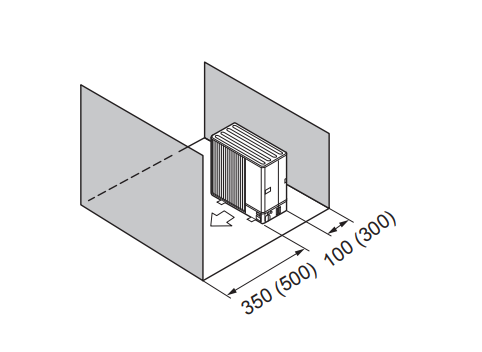
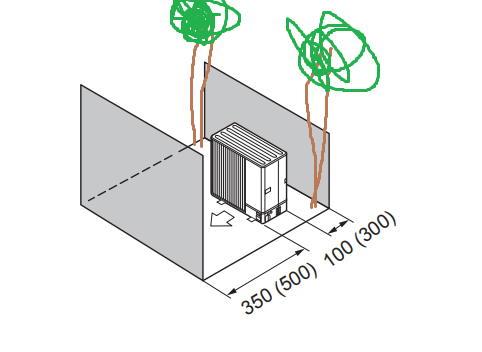
My ASHP (mitsubishi ecodan) has this in the manual: My main question really is, can I plant some trees right behind the ASHP, e.g. With the trees basically only being 'trunks' (and not impeding airflow) around the ASHP, and the foliage just above the 6ft fence? And of course some tree with a non-invasive root system that doesn't undermine the ASHP? This is from a 'street planting' site:

-
Effectively digging the water line into the ground seems somewhat overkill vs just emptying out the water line. https://www.easygardenirrigation.co.uk/blogs/news/winter-irrigation-guidelines#:~:text=Drain your Irrigation System,for allowing water to escape. seems to say an automatic drain valve might just suffice and then the water lines can be surface level?
-
One final question - how does all this equipment work with freezing temperatures? Of course no need to irrigate during winter but I imagine these type of sprinkler/punctured hose type setups are all fairly surface-level. Is it OK for them to freeze with water in them? Or?
-
 Mainsboost says 'nominal volume 110L' though, which is the same as the GWS says... I am suspecting you are right, "too good to be true" usually is - but it's still hard to see the real situation. Basically PW: 0.24x0.72 = 0.13 -> 130L volume of the cylinder outer hull MB: 0.28x1 = 0.28 -> 280L volume of cylinder outer hull So indeed I suspect what one company calls nominal is the other's "maximal" or whatever.
 -
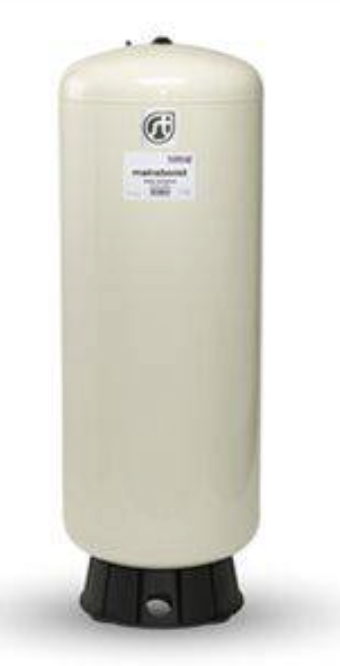
Both of the below vessels have a nominal volume of 100L (ok, ST is 110, PW is 100). But ST is 558x540x1026, PW is 720x470x470. What am I missing? (ignore location for now) #1 GWS PressureWave - PWB-100LH (horizontal) https://www.globalwatersolutions.com/products/pressure-tanks/pump-applications/pressurewave/ - info PDF here: [Data Sheet] - Pump not mentioned, I assume needs to be supplied separately - The dimensions are very small for a 100L nominal device, not sure why the Stuart Turner ones are so much bigger #2 Stuart Turner Mainsboost MB-200SH https://www.stuart-turner.co.uk/product/mainsboost-mb-200sh-1-22-44747 - As can be seen much larger device, which even sticks beyond the door. Still, 110L nominal so I'm not sure what's going on - Pump not depicted
-
sent private message
-
This is an interesting point - my DHW cylinder is 400L so perhaps I don't need to worry too much about low water temperature. Of course the legionella cycle will be costly but there you go.
-
... warm climate, if not now, then soon (yayy climate change) R290 stuff is a head scratcher. Quoted COP and SCOP vary quite a bit. I don't disagree in theory having a gas that handles high temps better might be a good idea given the focus on DHW but the numbers don't seem to bear it out as far as I can tell. For one most R290 device manufacturers list 55C performance, not 65ish that you would set it to.. But just FYI some last minute research: Mitsubishi R32 Ecodan [source] - SCOP 55: 3.48 - SCOP 35: 4.84 - COP A-7/W35: 3.20 - COP A7/W35: 4.80 Valliant R290 Arotherm Plus [source] - COP A-7/W35: 2.80 - COP A7/W35: 4.80 Nibe R290 S2125 [source] - SCOP 55: 3.80 - SCOP 35: 5.0 - COP A7/W35: 5 End of the day I don't think I disagree with @markocosic that Ecodan is 'OK, not great' but Nibe is great in many things including size. Plus, for a passivhaus, according to https://heatpumpmonitor.org/ - the Derby 315m2 passivhaus halfway down the list is similar to mine in size, and they probably pay ~300 GBP per year (900 kwh). They have a ground source pump so a little apples oranges, but the SCOP they reach is 3.7, while if I compare with the SCOP of the lower ecodans (3.1) I'd save 50 quid a year (3.1->3.7) .. not worth too much headache.
-
That's.. quite an unexpected amount of information - but thank you, it's worth thinking about and I might be able to still go for Nibe if I wanted to (my installer carries the brand, but it does make me wonder why they didn't suggest it.. ) Your point about 'mostly hot water' is interesting, I think it is probably true that a well-insulated house needs fairly little heating but a "normal" amount of hot water so optimizing for DHW is not a crazy idea. And yes while I don't need 75C (does anyone heat their DHW to 75?) clearly a coolant that can reach those levels is likely to be more efficient near 60-ish? R290 is interesting. I don't think R32 is too bad as things go, R290 is better in theory but don't know about externalities, maybe it is harder to process (and therefore costs energy?) But I seem to recall there were a bunch of downsides to R290 once you have it too. How does it perform in bad cold? And yes I'm in south-ish england. Hertfordshire. It would probably qualify as a
-
So we measured the input flow from our mains and it came out at 24L/minute. That seems perhaps slightly slim for 3 showers at the same time but that's going to be super rare? Or do we lose a lot of pressure in the house internal pipes and the effective flow will be much less than 24 when it reaches the tap(s)?
-
Thanks, I imagined there was some 'good neighbour' limitations. Ah, and a break tank effectively will be slowly drained while the pump pulls more water from the tank than the mains can top up, I take it. Can we hide these vessels at ceiling level or is this a matter of sucking it up and using 'real' space?
-
The way I'm reading your explanation (thanks for it, btw!) is that this will help ease the load on the water mains, because just connecting a raw pump to the mains will potentially drop the water pressure for my neighbours? Am I allowed to run without such a vessel and if so, would it make me a bad neighbour? Obviously I like to keep things simple, but not at the cost of others..
-
So what's the point of all the big vessels etc? I could understand it if we are in fact not allowed to 'pull' more water than given, since then you could use the vessel for temporarily pumping out more than is coming in, but in all other cases is the purpose only to resist certain start/stop conditions?
-
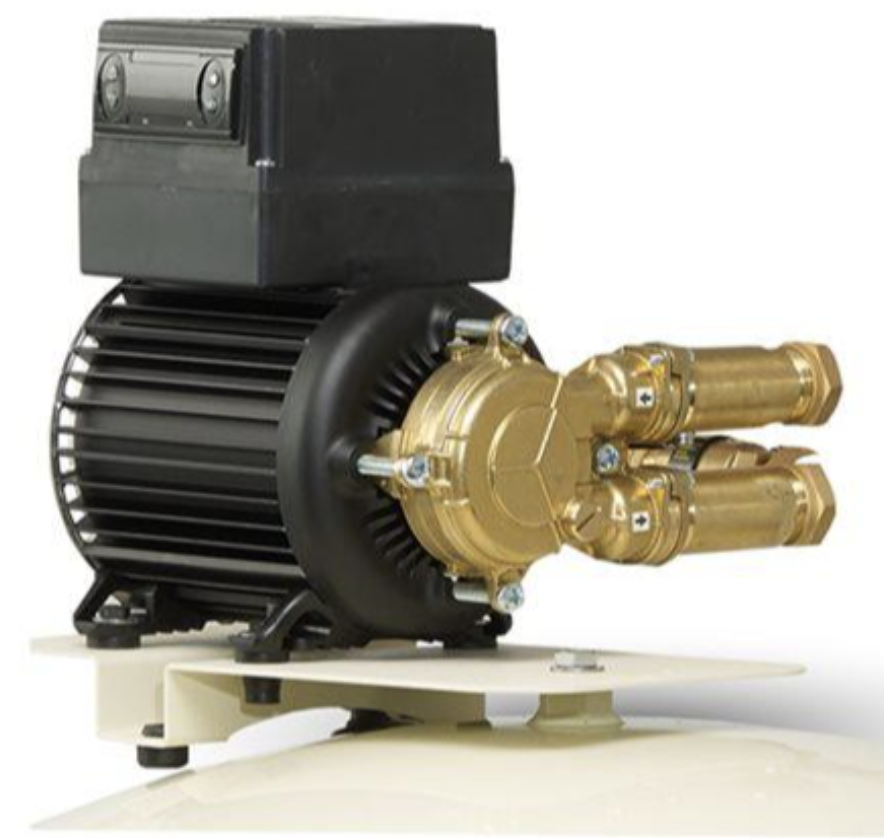
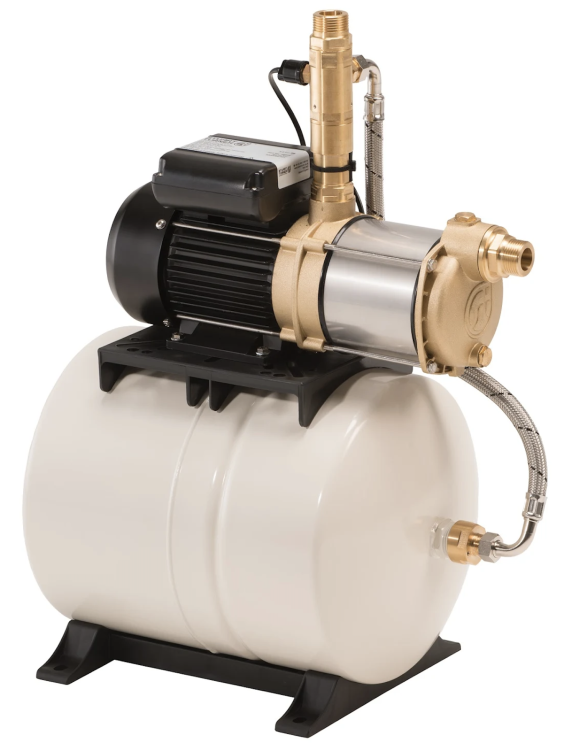
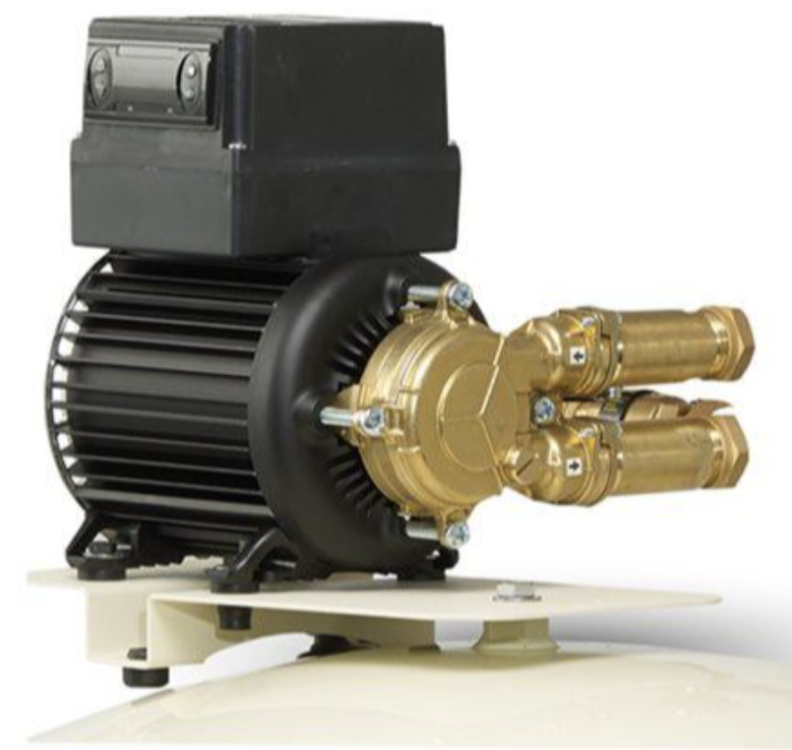
Man I really should write a blog about all my adventures.. but I just have so little time. Anyway. A few questions about water pressure: My water pressure is apparently on the low side. Plumber says it's okay-ish for 2 taps running at same time but not 3, and recommend booster. 1/ What I don't understand- why is it even allowed to pull water from mains, rather than let mains push the water to us? It feels "greedy" somehow, but I believe it's OK to install a pump? 2/ My builder's go-to is - https://www.stuart-turner.co.uk/product/mainsboost-mb-100sv-1-22-44452 and https://www.stuart-turner.co.uk/product/mainsboost-charger-wall-mount-mbc-12-28-wm-44726 -> this is a large amount of kit. Do we really need a tank? Of that size? Can't we just use e.g. https://www.plumbworld.co.uk/stuart-turner-aquaboost-abp-f120-50-1h-1-centrifugal-pressure-set-pump-44622-19703-1253840 Which might just fit under a sink. Do we even need a vessel? 3/ I understand it's best to put it close to the incoming water mains, and also our hot water cylinder is near incoming mains, but frankly we have very little space left in that area. Is it sane/possible to put just the booster system in the loft and then drop the water back down from there?
-
Triggers for a standard mortgage, with a 'self build' house
puntloos replied to Andeh's topic in Self Build Mortgages
Tagging on to this topic - my house is starting to be recognisable as a house, but it's nowhere near complete. Basically: all holes are plugged (windows, doors). Most insulation is on. No Mechanical or Electrical to speak of. But, as @Bitpipe said Even if I value my "current" property at only about 1/3 of a conservative final value, my LTV would only be 50% for the amount I'd like to borrow. Do I stand a chance with half-a-house? Ecology mortgage currently stands at 5.79 but variable rate is no fun if you listen to the news. -
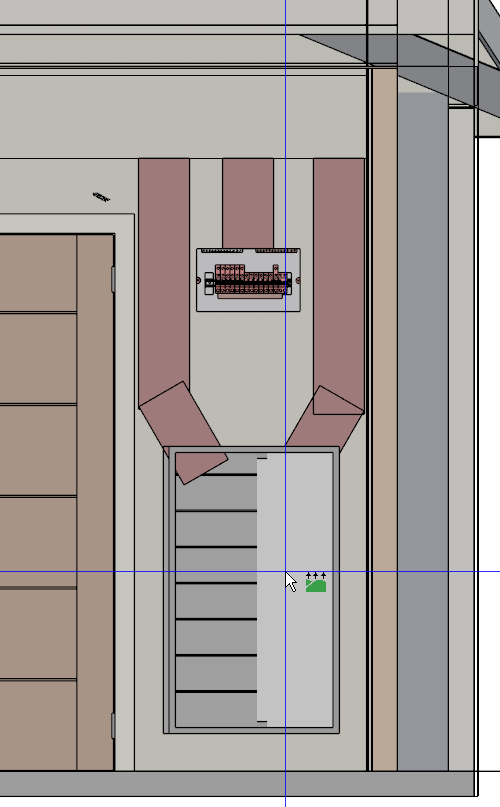
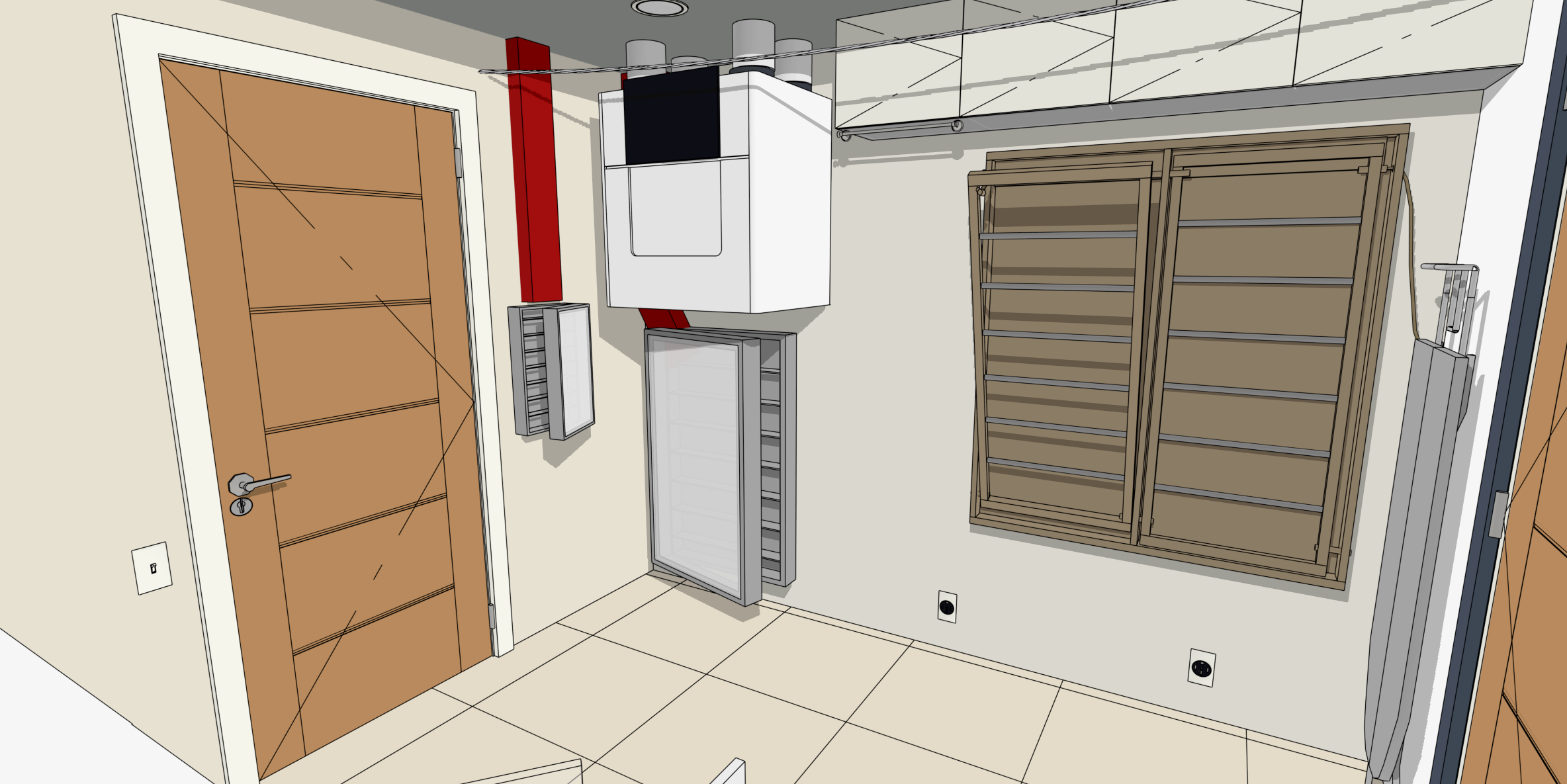
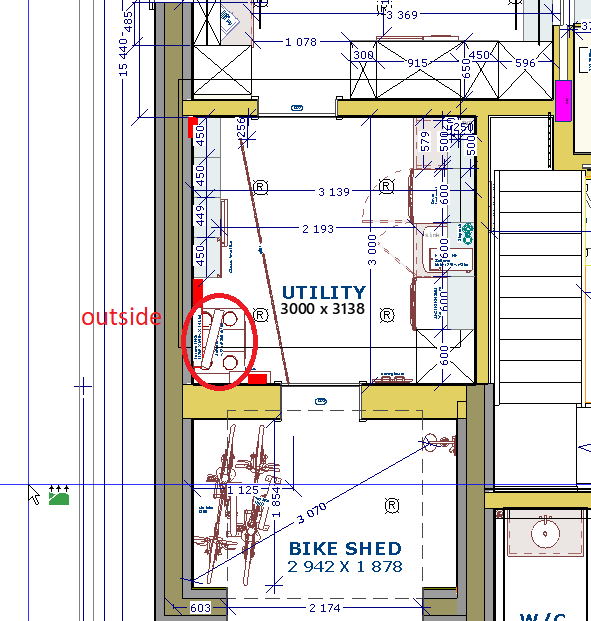
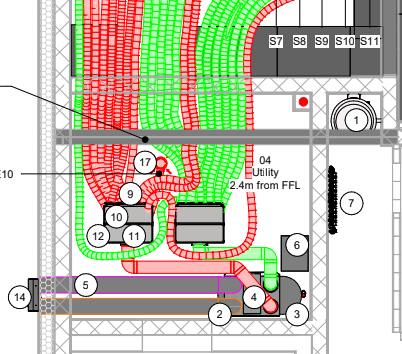
Thanks Dan but in my current design, the MVHR is on the outside wall. The crowded pipe drawing is the old situation, my recent post shows the current thinking
-
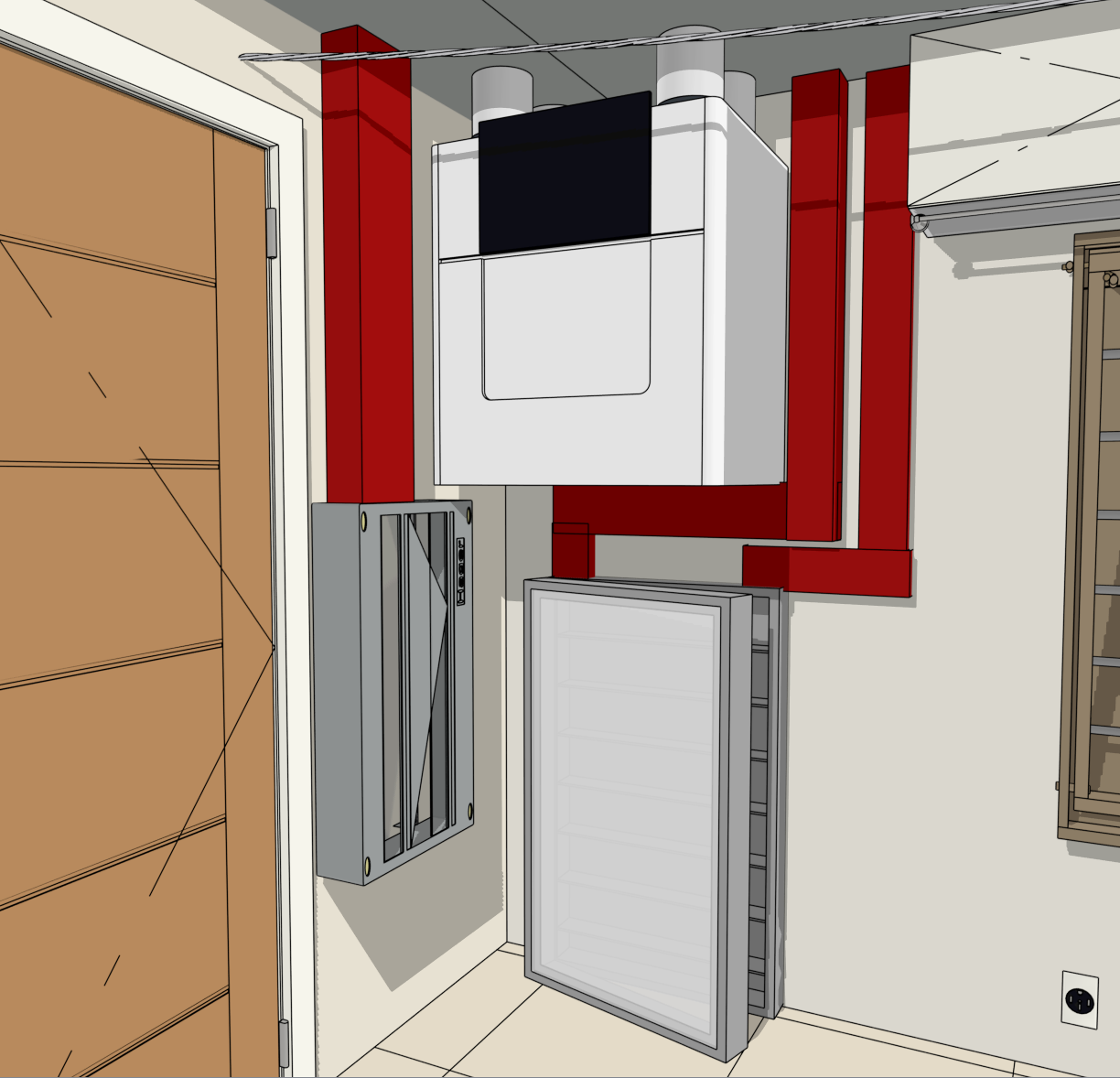
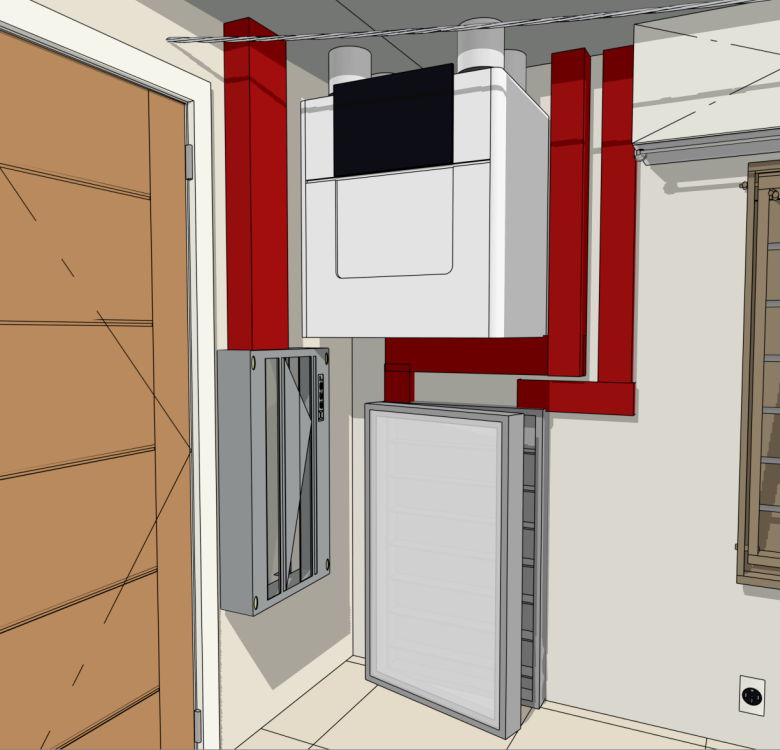
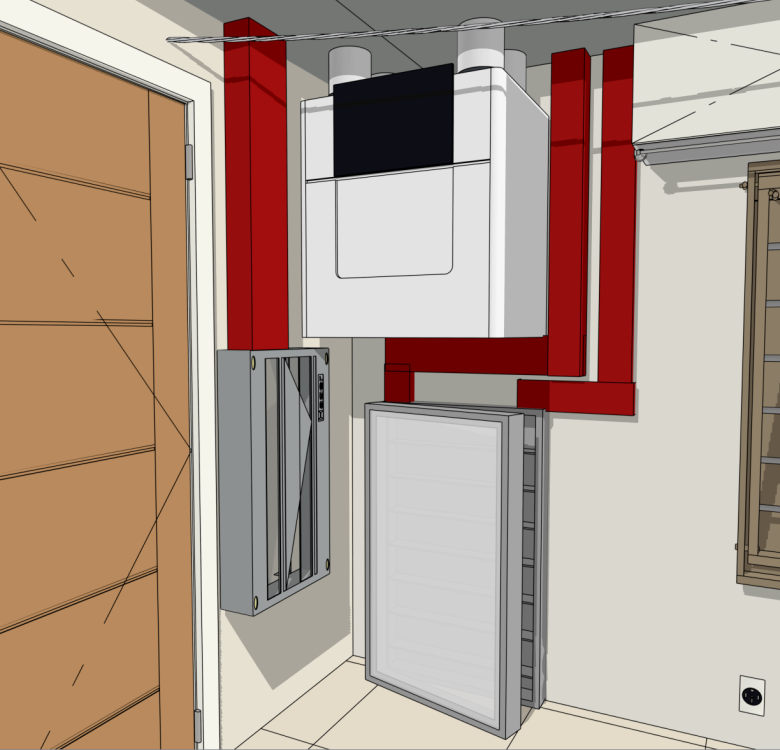
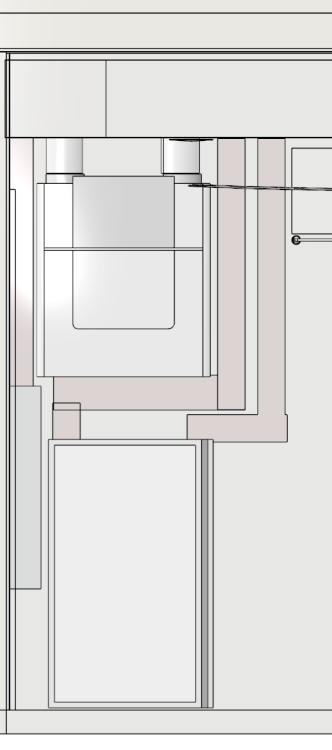
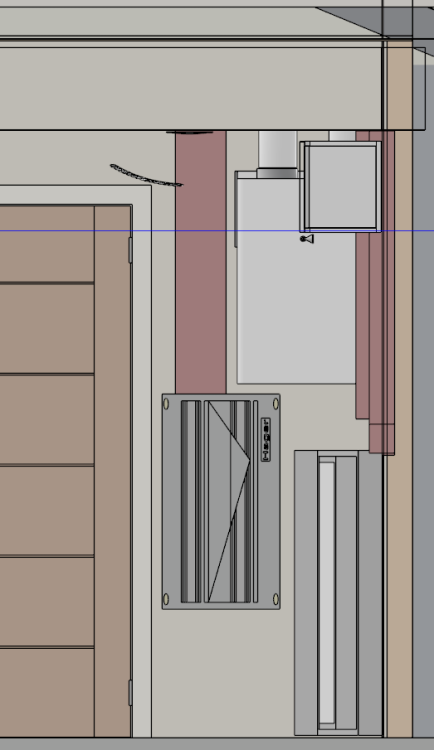
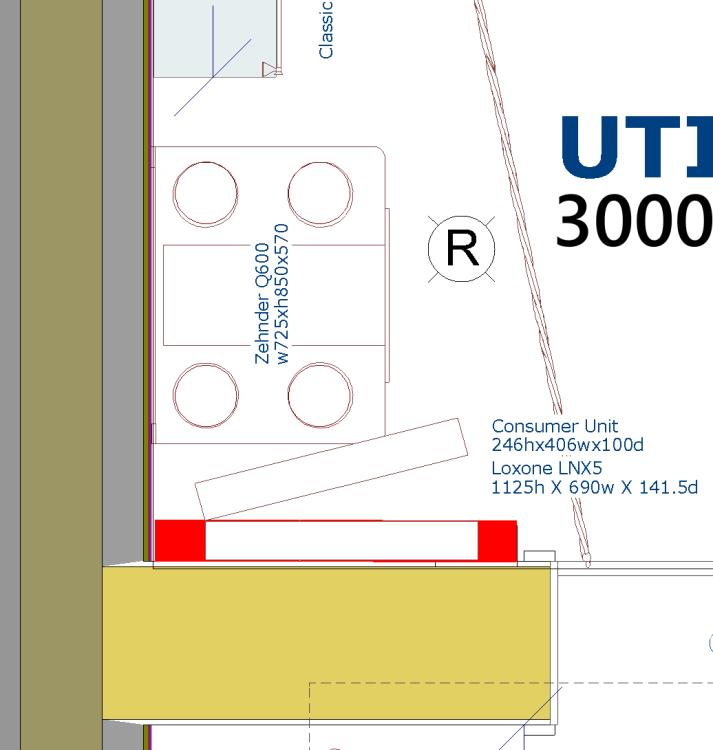
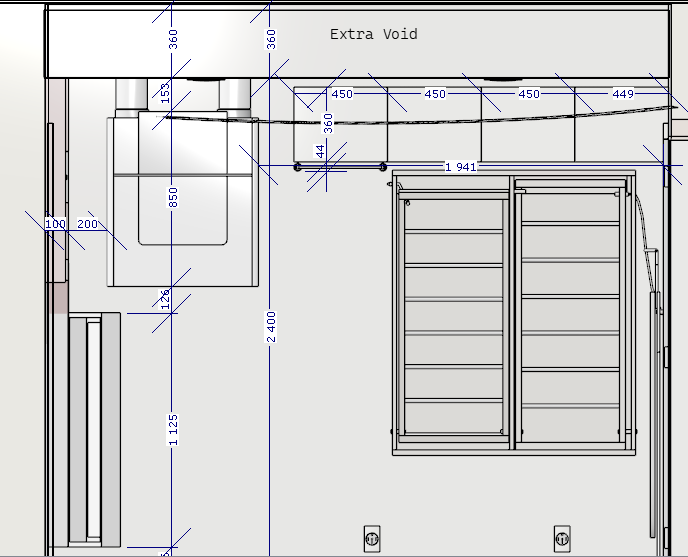
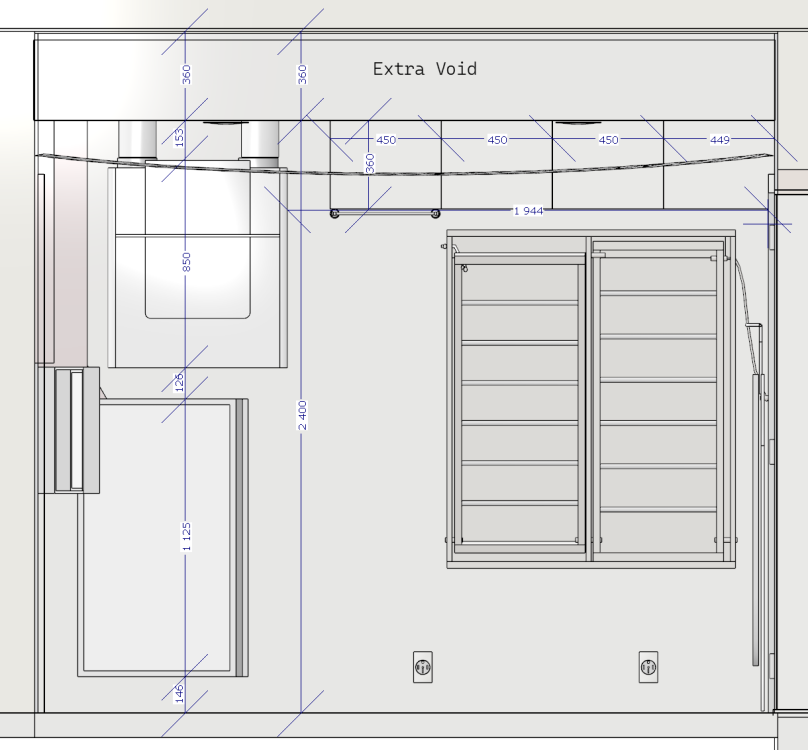
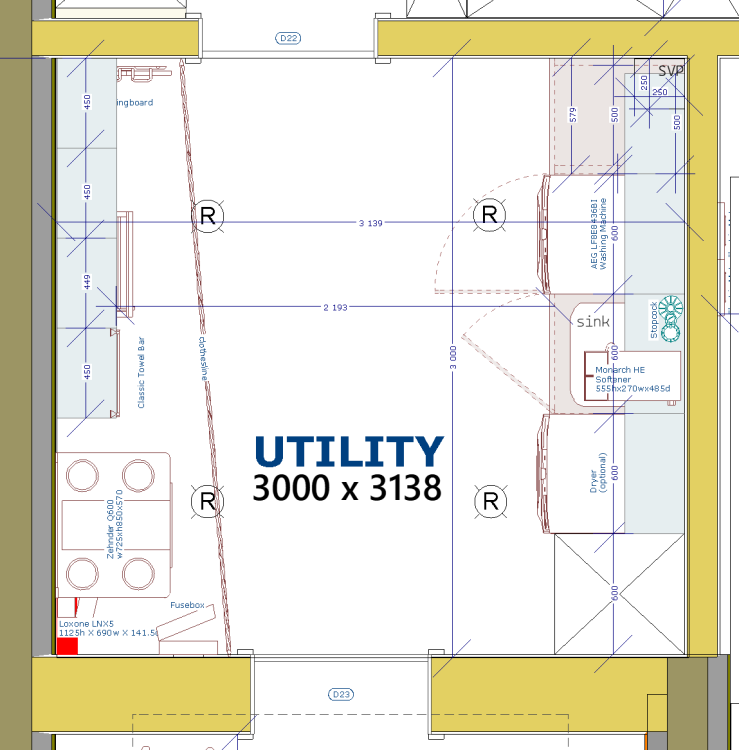
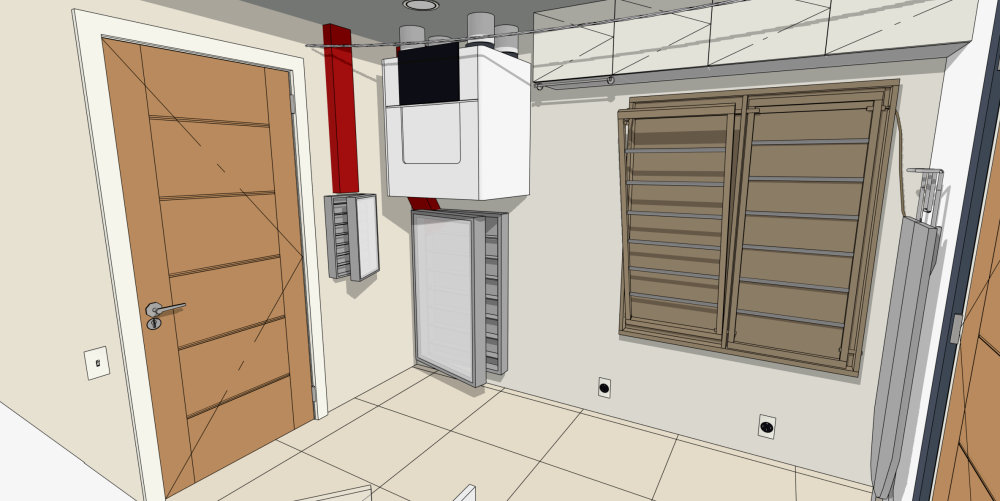
Same. We have 2760 ceiling + 150 void and we're dropping to 2400 (so a 510 void.. for....: boom. (the MVHR has been relocated to the left, after this design was issued) As for CU: Oh dear, we also have 3 phase, well, I'll use the spec of yours for now (I'm sure the elec team will pick a correct one, I just don't know which) And then rejigger... again: - CU on side wall, but does not clash with MVHR - MVHR 100mm off that wall, so opening it will be unobstructed - Loxone under MVHR, should be fine if the device is 99.9% drip-free with the enthalpic thing - LXN5 sits on floor, allowing for a decent-ish space to route the (red) cable ducts. One of our main goals is to preserve as much standing space as possible so the wall units end at 2000, and loxone, cabling is all thin.
-
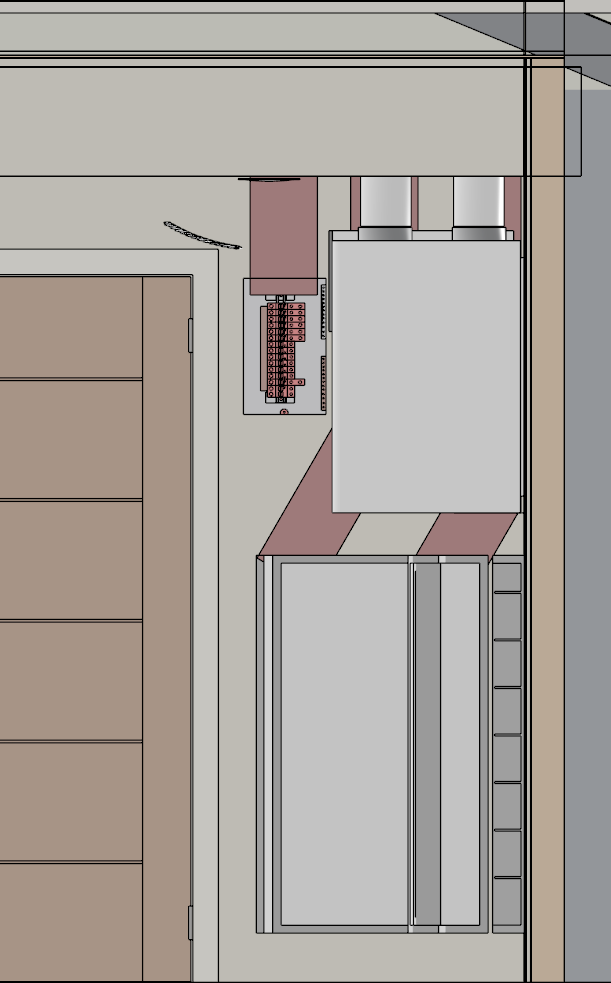
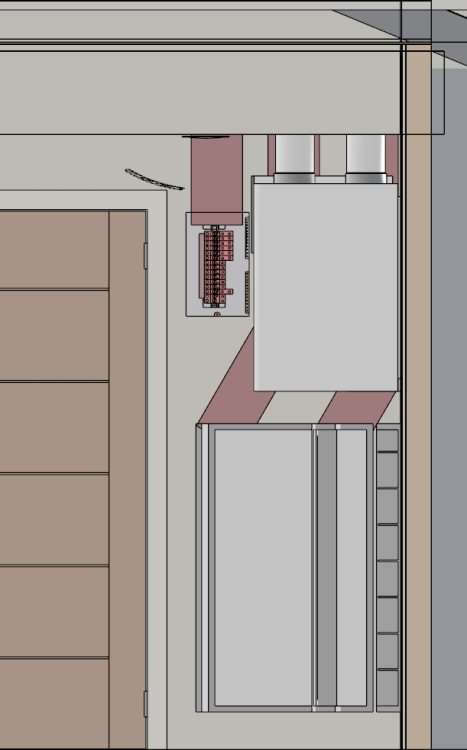
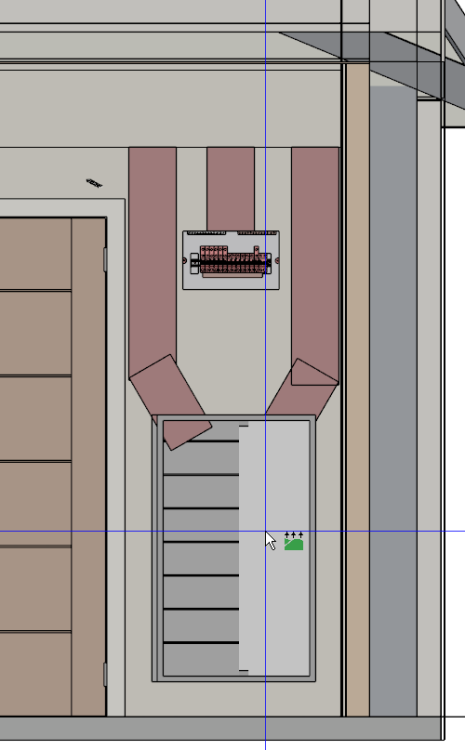
Zehnder Q600 with EE indeed, no condensate drain Worth a check - will do. My understanding of height limits is that while "1.45m" is a sensible implementation, anything below 2m seems allowable. A normal human should be able to reach without ladders, and well, most humans can reach about that. I don't know! My site manager thinks it'll be a 'standard size' - about 460x240 - but he is no electrician so will have to verify. That's a tough one. Normally it would be partially obscured by the MVHR, but if I give.. 200? 300mm clearance between them that seems.. usable? Or? IF it is indeed a standard height ('one row' - which is 240mm) then it could work nicely if it's mounted vertically Like so:
-
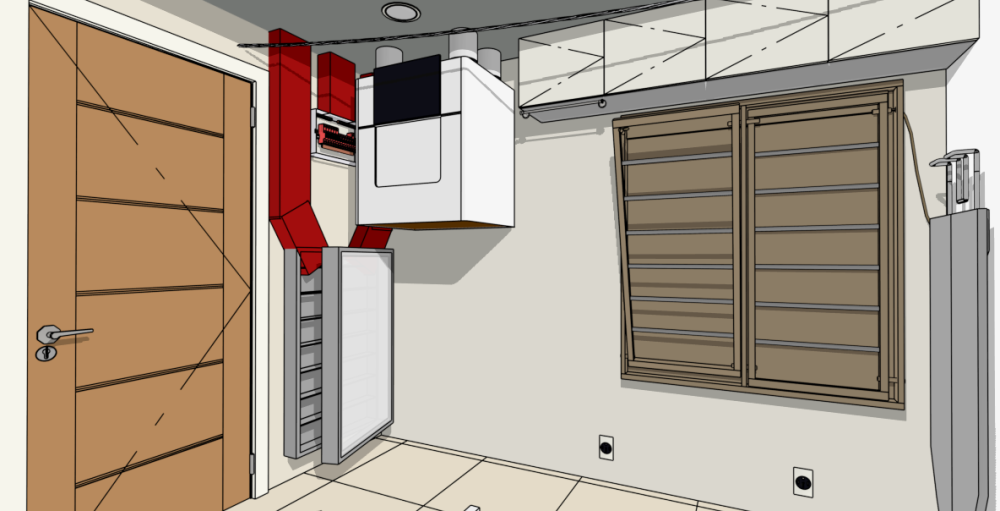
First off thank you for your detailed answers and tips @Dan F, I really appreciate the amount of questions you bring up that I as an amateur never thought of I think you're right about the loxone, but I'm assuming this is in hand How about this arrangement then? My main concern is that I don't know how much a MVHR can 'obscure' a consumer unit. Yes, we do have attenuators from Zehnder - Zehnder confowell 625 with 12 outlet and Confowell attenuator, 235 deep, CW-S 625(990323505) Not in the A2A Fan Coil Units though, would this type of device also help with FCU?
-
Small update to render: I got a note that MVHR is seen as 'plumbing' and therefore there might be a concern having it hang above an electrical unit. Is that correct? Obviously it only handles air, but _maybe_ some risk around condensation?
-
We were debating this and a similar Viessmann unit, R290 is pretty good but as I understand it slightly less good SCOP than R32, so you could argue over the entire lifecycle of the unit it contributes 'about the same' to the GWarming.. Interesting point, I'll verify, i think there's some zoning going on. No fancoils - at least, no fancoils attached to the water unit (we have a A2A R32 device)