Nick Laslett
-
Posts
687 -
Joined
-
Last visited
-
Days Won
1
Everything posted by Nick Laslett
-
@Alan Ambrose, For any large orders James Latham’s is great. I could not believe the per board price when I bought a whole pallet of Medite MDF. They supply quality recognised brands, so there is a premium.
-
Mastic, silicone, sealants and foams.
Nick Laslett replied to Nickfromwales's topic in Building Materials
Another product to consider is Sikaflex EBT+ as an alternative to decorators caulking. It can be painted and doesn’t shrink. Also UV stable and suitable for exterior use. Obviously, decorators caulk is much cheaper. I also used a lot of Siniat Foil Roll Intumescent Acoustic Sealant for my stud walls. Just following the ‘White Book’ instructions. There maybe cheaper alternatives, not sure if this is a category where there is a big difference in quality. Illbruck SP525 for sealing larger exterior gaps, and ‘painting’ over expanding foam to protect it from UV light. -
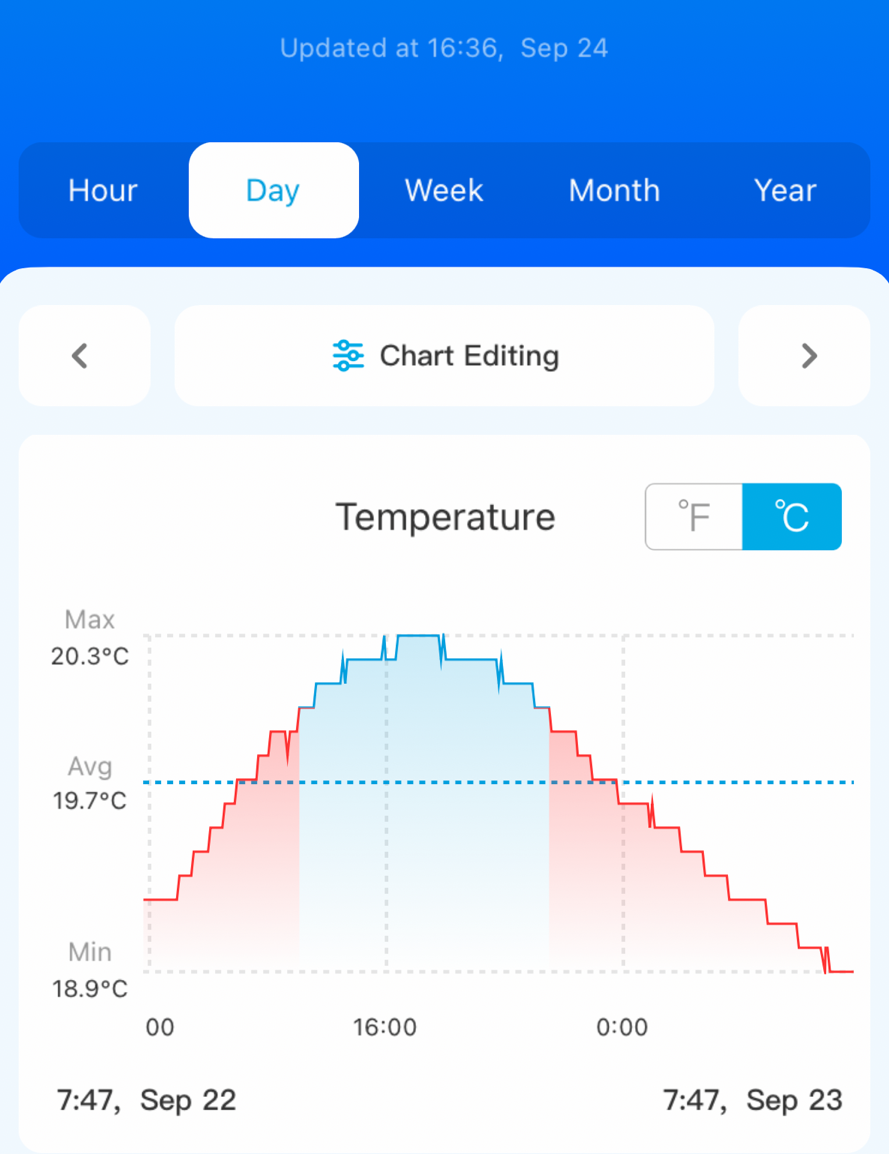
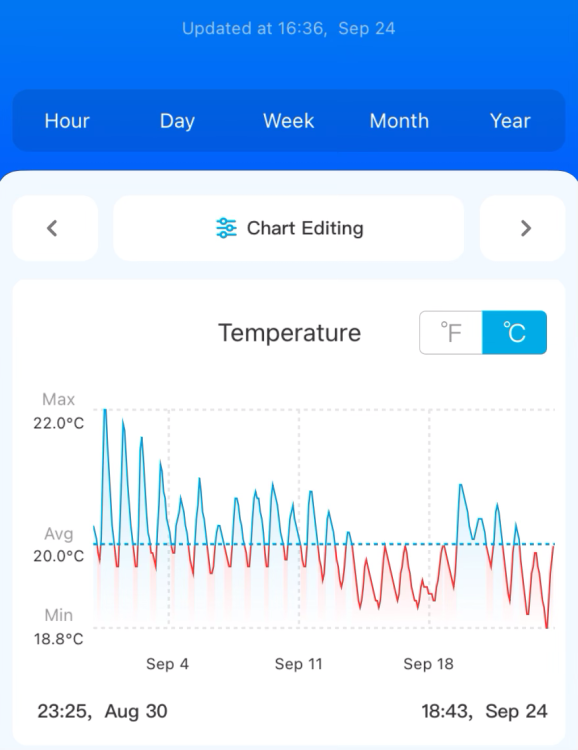
Temperature updates. Upstairs room temp is currently 18.5°C Upstairs floor temp is currently 15°C Downstairs room temp is currently 19.9°C Downstairs floor temp is currently 15°C ASHP Water temp at Outlet & Inlet 17°C ASHP Outside Unit Temp 18°C (It is a very sunny day today) MET Office says temp is 17°C It is still a bit too warm in the new build to put on the ASHP. The house will probably gain another degree across the day as it is so sunny and there is no wind. We do not have especially high U-values, only double glazed. External doors are only 1.3 U-value. We are an ICF build. We don’t’ have our ACPH score yet, but hope to get below 1.0. The point being, imho that the thickness of your UFH substrate is irrelevant with a well insulated, low ACPH house. I will try to update with the heat up time when I finally switch on the ASHP.
-
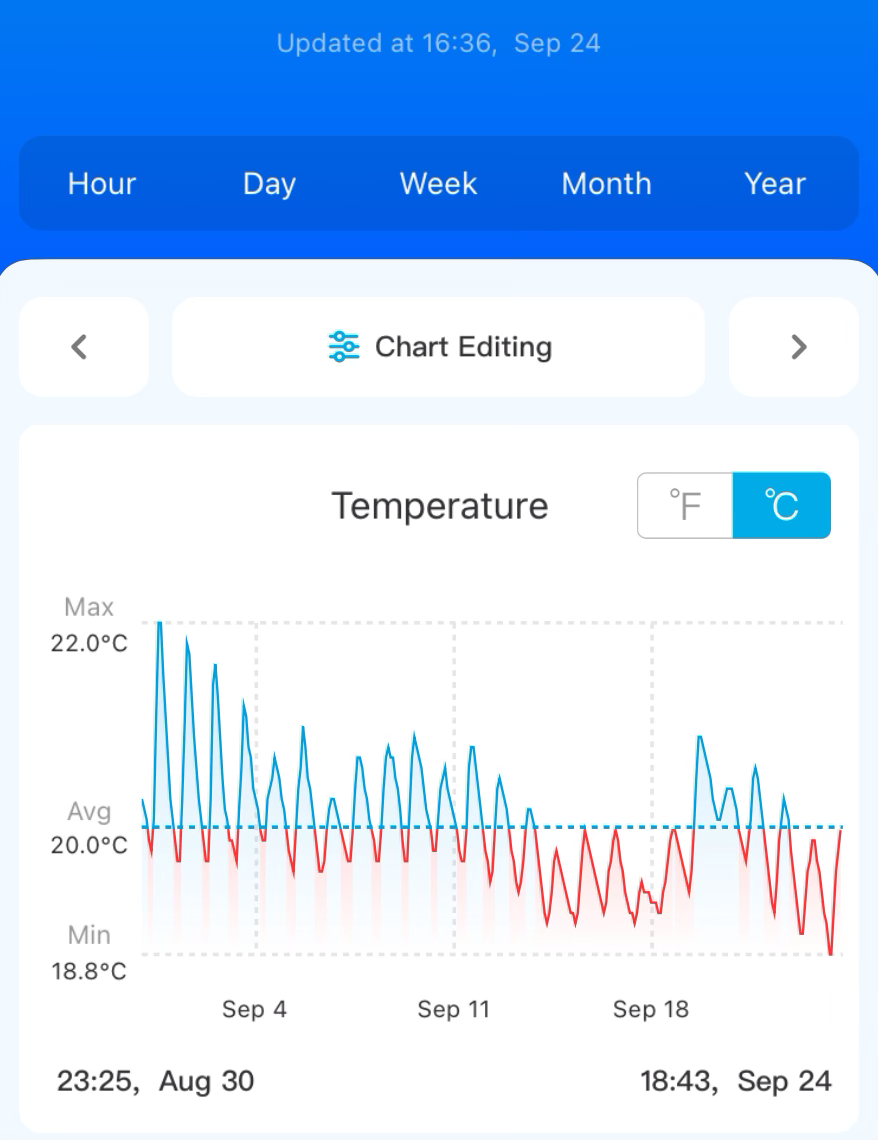
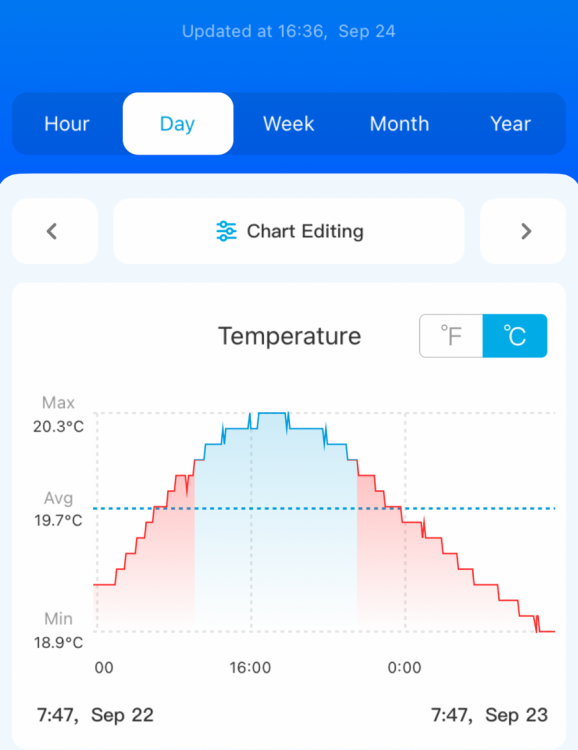
The red section where the temp is below 20°C, I had the windows open to try and cool the house down.
-
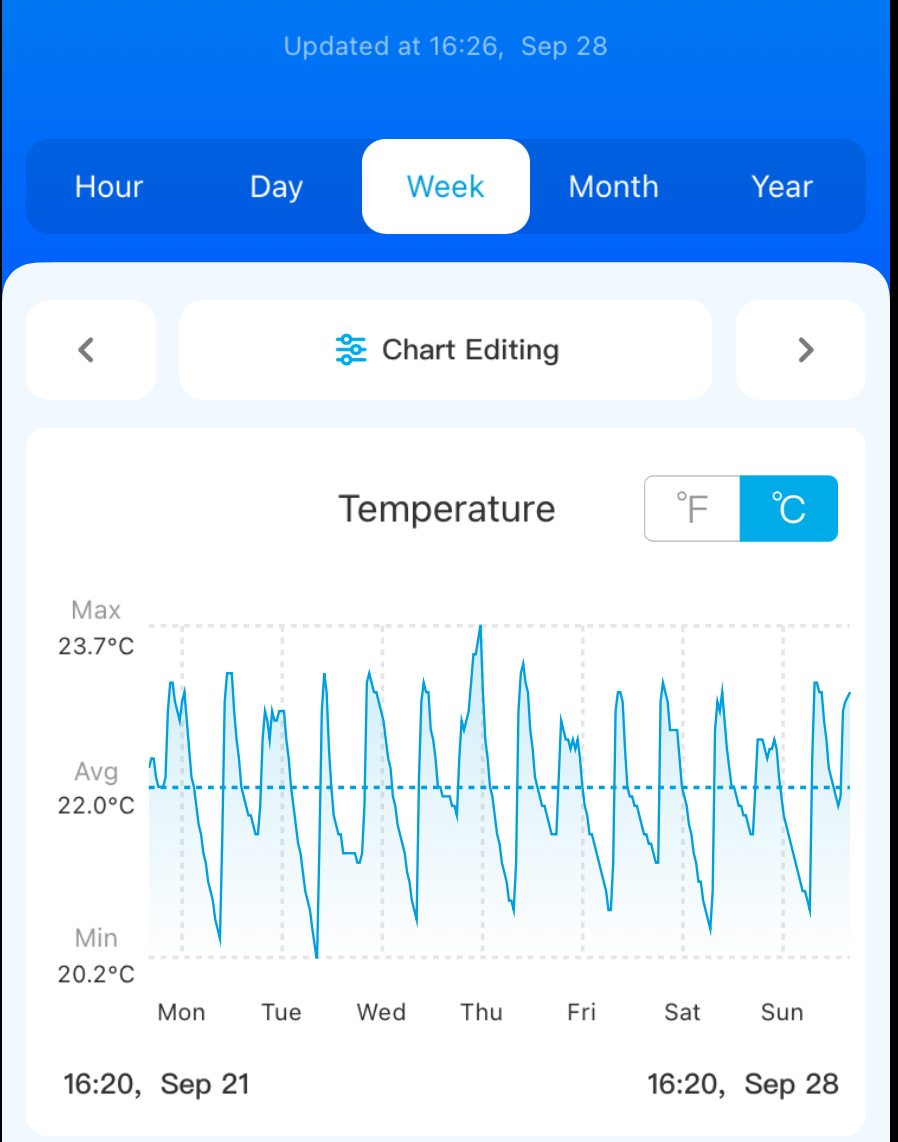
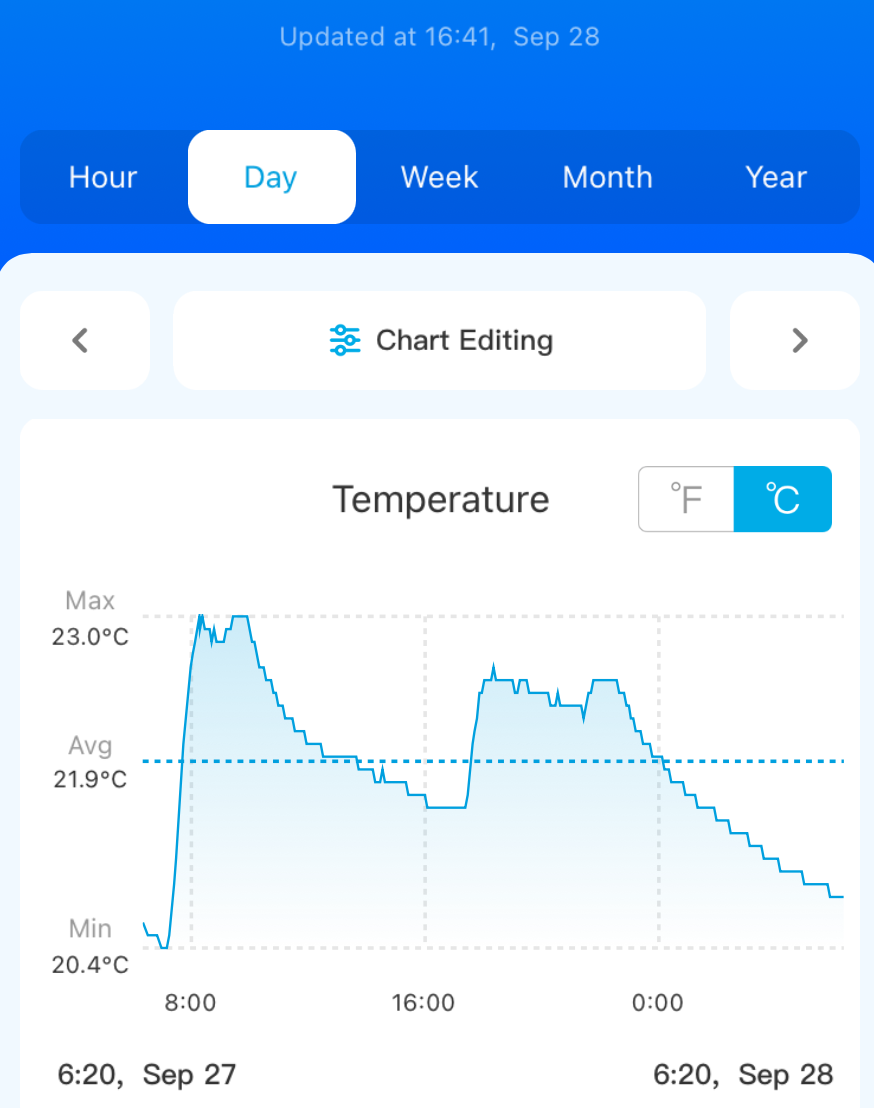
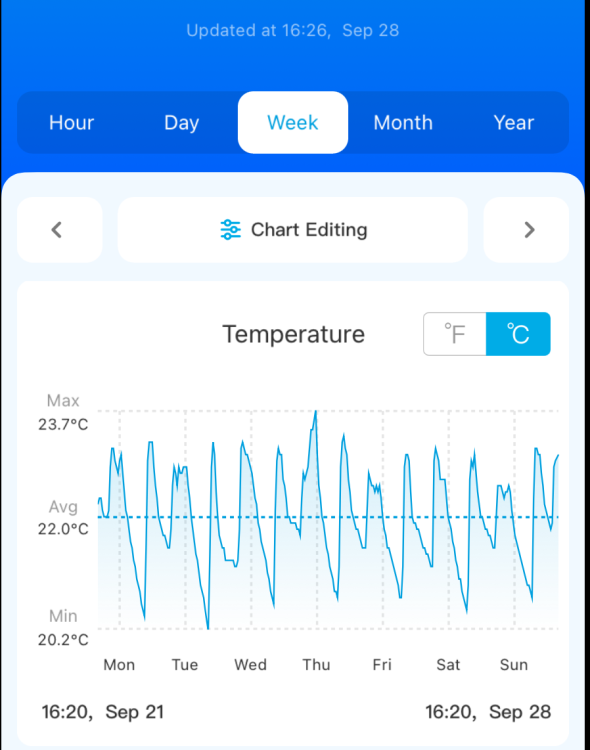
This is the chart for the 1996 rental house, with no cavity wall insulation, 6mm double glazing gap, open trickle vents. In the same village. Oil fired central heating on for 8 hours each day. 3 hours in morning, 5 in evening. Set to 22° on hallway controls. Look at the swings in temp, compared to the new house with no heating. In the rental house over night all the heat is losted. In the new build, the house just heats up with no input, gaining 1° in temp from solar gain. I’ve never really look at the rental house chart with much thought in the colder periods. I was much more focused on house cooling issues. The reality is that in the winter you can easily put on another layer, or fire up a heater. Anyway look at the rental house heat loss across the morning. From 6.00am to 9.00am the heating gets the house to target temp, then by 4pm it has lost nearly half of that heat. The evening heating session gets the house back to target temp, then it plummets overnight.
-
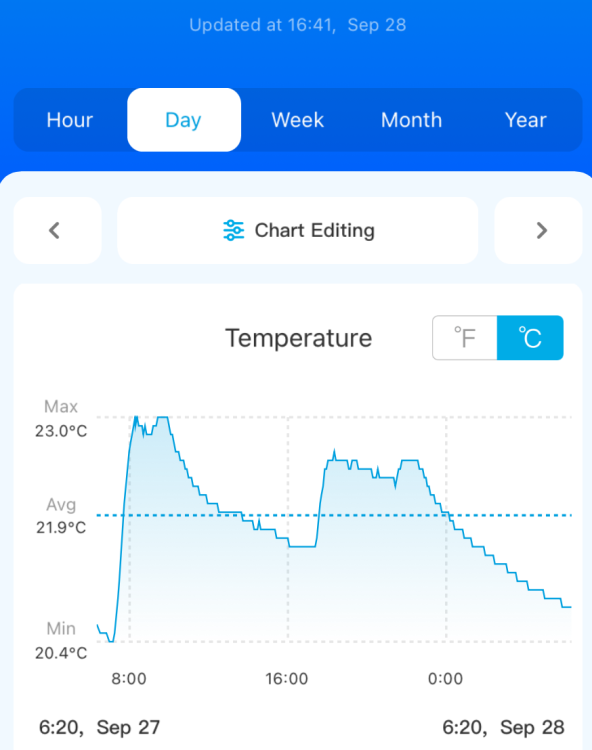
@G and J, I’m actually expecting to put on my UFH tomorrow morning for the beginning of the heating season. Last week the house was still sitting at 20-21°. The ASHP will be left to do its thing and I won’t touch it till next spring. The temperature in these well insulated house is just very stable. Remember, your floor is your radiator. The heat is going into the house. You can’t lose the heat, it is impossible in a well insulated, good air tightness house. Your screed will only take a long time to heat up, if you let it get that cold. Otherwise you are just asking the ASHP to take the floor from 16° at the beginning of the heating season. Ground temp is on average 8° warmer than air temp. I will check my floor temps tomorrow before turning on the ASHP. I have 90mm upstairs and 150mm downstairs. The real challenge over the first two years is dialling in the weather comp curve. You will overshoot the ideal temperature and be opening the windows to cool the house down and be annoyed that 28° flow temp is overheating the house and you wish you had 150mm depth screed. Here is the temp curve chart from last week for upstairs. 8am to 8pm temp change, no heating, no people, just empty rooms, 90mm concrete floor. Here is the last week.
-
Hob extractor in a passivehaus? (or nearly, at least)
Nick Laslett replied to Great_scot_selfbuild's topic in Ventilation
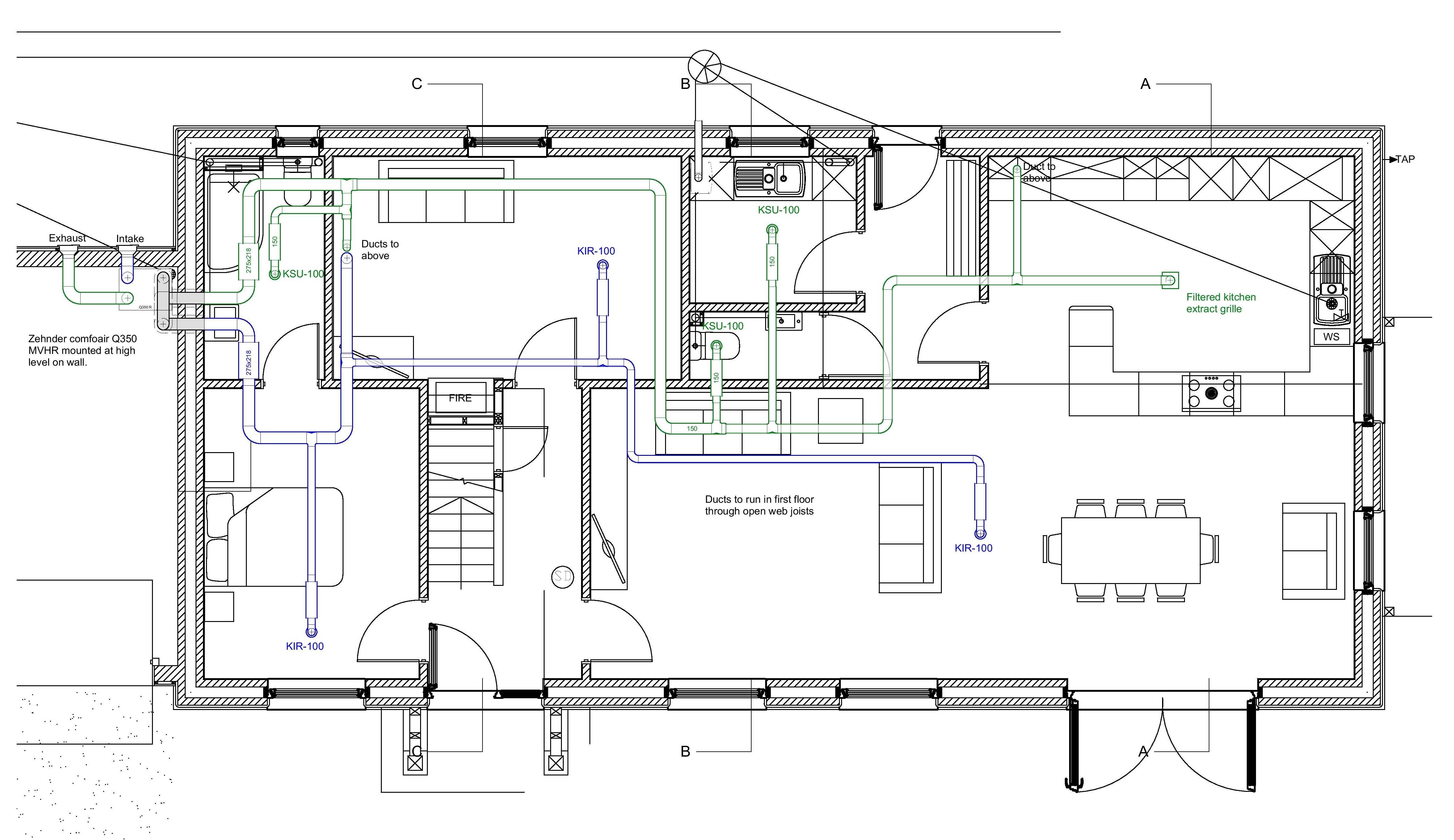
I did this. Damper controlled extract vent connected to the extractor hood. Not a fan of recirculating hoods. Nothing in the passive house standard says you can’t extract to the outside, but you must factor that into your design. https://passiv.de/downloads/05_extractor_hoods_guideline.pdf I don’t like noisy, inefficient cooker hoods, so this was an opportunity to try and rectify this with a better solution. Premium cooker extracts are not cheap. For most on the forum here recirculating hoods work fine. You can fit a filter on the kitchen extract. -
@saveasteading, we are in complete agreement. I hope that any easy changes will be made as a consequence of his original post.
-
Hello @Dunc, I feel that the short answer, is don’t worry too much about it. Does it follow best practice, no. Will there be some additional inefficiencies in the MVHR and ASHP during the two short periods when we have more extreme weather, probably. When an ASHP is going full power to heat a house, when it is -2° outside, it does create a lot of very cold air. I imagine in winter the MVHR exhaust air will probably be warmer than the outside air. Will the extra moisture in the exhaust increase the freezing of the ASHP, probably. If your MVHR has a pre-heater, it will just work harder to heat up the cold intake air. There are numerous interactions between these two components, you’ve got yourself a long term experiment to find out the ramifications. I’ve made plenty of compromises/cock-ups on my build. Don’t beat yourself up too much on this one. *Edit. You should endeavour to put your best efforts into getting as efficient install of an ASHP and MVHR, within the constraints of your build. My curiosity got the better of me, too interested in the experiment results in 3 years time, to see how these two components interact in this situation.
-
Security camera
Nick Laslett replied to Kevan Marshall's topic in Networks, AV, Security & Automation
… -
The only time you need someone to have compared the fixing strength of various adhesives from strongest to weakest, eg. CT1 to Silicone Sealant. Ideally something in the middle of these two extremes. Gripfill? (Awful stuff) Sounds like a use for all my left over tile cuts. Fix them together and see what makes the middle strength bond.
-
I will be there, too.
-
Just found this blog detailing an approach, which I quite like. Install toilet, raise on packers, silicon under pan, place back down. This guy didn’t want to drill and screw mount. https://www.sunamoon.com/articles/fix-down-toilet-without-screws.htm
-
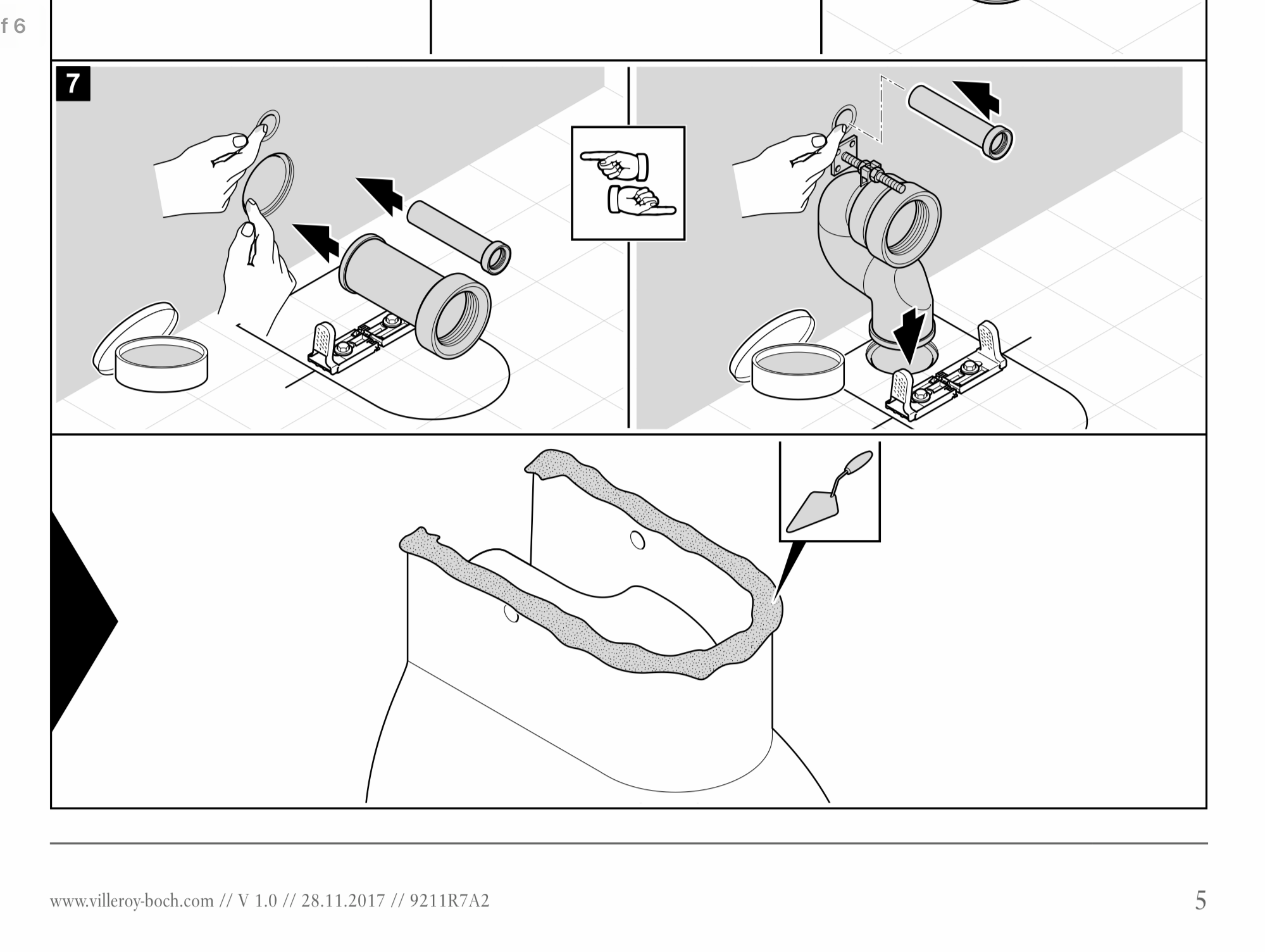
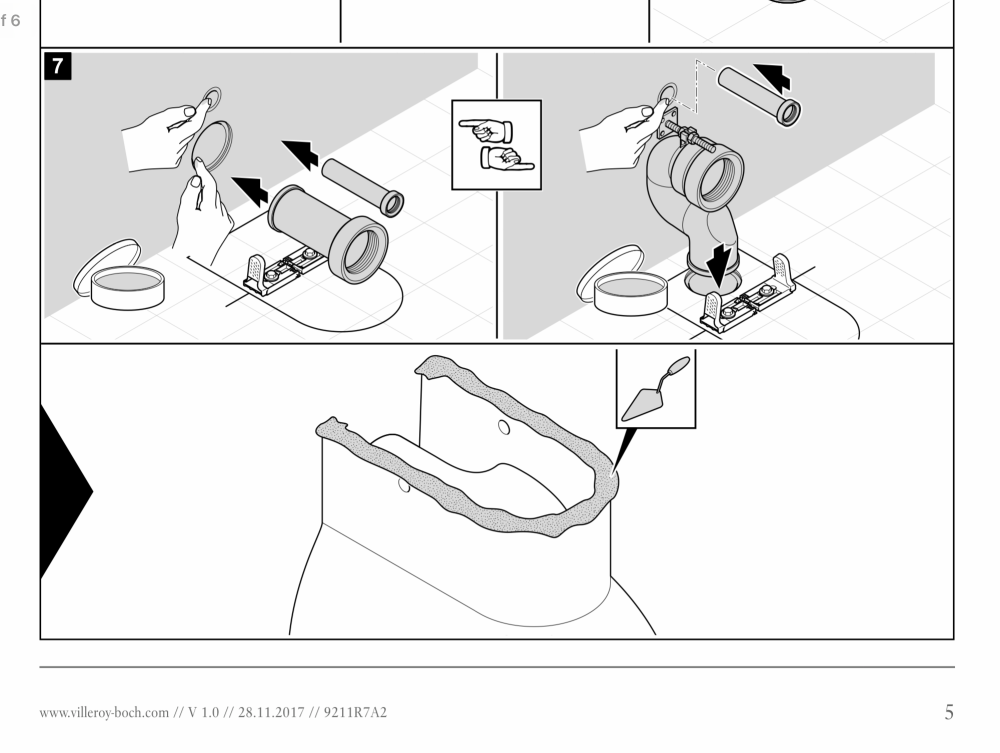
My floor mounted toilet pan had this less than useful picture in the install instructions. Which I assume is tile adhesive. But I still don’t understand how you can have adhesive on the bottom of the pan and then do all the movement to fit it to the two connections. Wouldn’t it make a right mess?
-
Another good primer video here: Paul Hibbert’s humour isn’t to everyone’s taste, but he is honest about the tech.
-
Smart home stuff - lots of choices, trade offs and complexity. UK list of Apple HomeKit compatible switches. https://www.apple.com/uk/home-app/accessories/#section-switches List includes stuff that is very recent and switches from 5 years ago. There are new protocols & standards like “Treads” & “Matter” that have superseded Zigbee. Every man and his dog has a hub and an app but some devices don’t need hubs or apps and can use Apple Home app and Matter. An AppleTV helps as it can act as a Thread Border Router. I feel like we are just getting to the point where nearly everything will work. But you do need to think about what you want to achieve. Also, UK, USA and EU all have specific devices due to certifying authorities, so you can easily find a US YouTuber talking about a device that will never be release in UK. Here is a good primer on Apple’s approach to smart home stuff.
-
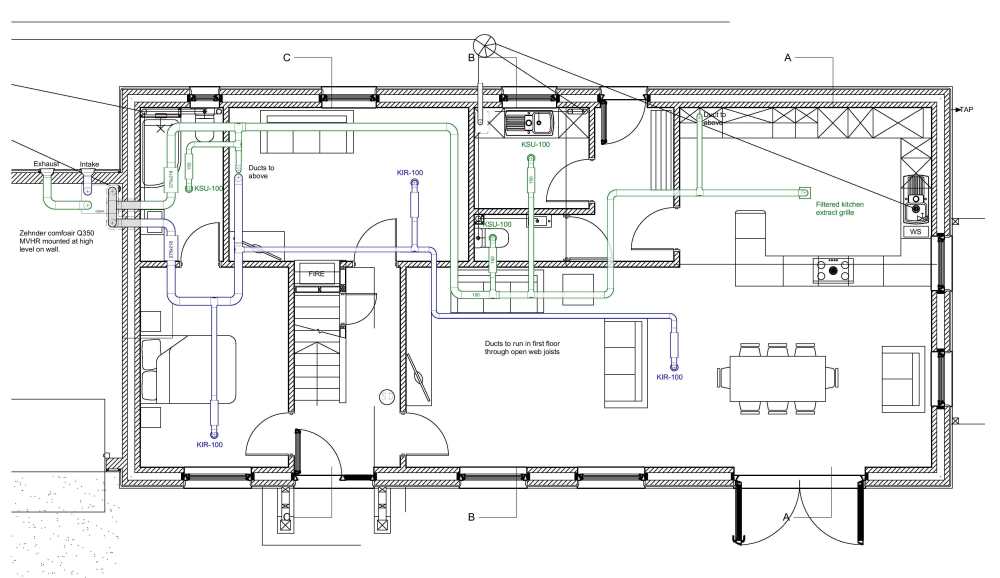
On the topic of self design, self install, this forum gave me the confidence to DIY this part of my build. In no particular order, here are some threads that I found useful. In addition to the two Robin Clevett videos, I also found the detailed podcast and associated articles on HousePlanningHelp very instructive. Ben had a rigid system designed and installed for his build. There are some interesting design compromises that give you an idea how malleable a MVHR system can be. https://www.houseplanninghelp.com/hph202-designing-the-ventilation-heating-and-hot-and-cold-water-systems-for-bens-house-with-alan-clarke/ http://www.houseplanninghelp.com/wp-content/uploads/2018/01/Alan-Clarke-2.pdf Link to the Good Practice Guide, MVHR for single dwellings (Passivhaus Trust) document http://passivhaustrust.org.uk/UserFiles/File/Technical Papers/2018 MVHR Good Practice Guide rev 1.2(1).pdf Here are some specific notes I collected during my research: House planning help podcast notes Active carbon filter for external intake, with log burners nearby. Turn unit to lower setting. Filter on kitchen extract. Boost when lot of people. Boost when cooking. Set fan speed 2 high enough to remove moisture when showering. JHarris - BuildHub post The issue regarding the number of extracts versus supplies is very important. Extract rates will be higher per room very often, because building regs mandate the minimum extract level for kitchens, bathrooms, utility rooms and WCs, and these rates are significantly higher than the supply rates you would normally want in bedrooms, living rooms etc. It's therefore best to have more supply vents than extract vents, to enable the system to be balanced more easily. That way the flow rates through the supply terminals will be lower than that through the extract terminals, meaning noise will be lower. A bit of noise on boost is normally acceptable in a bathroom or kitchen, but less so in a bedroom. Silencers must be fitted as close to the MVHR as possible, before the main ductwork. MVHR kitchen valve is located at least 600mm away from the cooker. HeatSpaceandLight - blog post comment We put filters on each extract valve (where dust from the room will naturally accumulate) which can be taken out easily and cleaned/replaced to keep dust out of the ducts. We also put a grease filter on the kitchen valve to keep grease and dust out of the ducts. Finally, the unit has F7 and G4 filters which keep pollen, carbon dust and other nasties from entering the system/fans from outside, and these can be replaced and cleaned also.
-
@Great_scot_selfbuild, like all self build questions there is no one right answer. For most of the members here, price seems to be the guiding factor. I like this page at Paul Heat Recovery that covers the ducting topic well. https://www.paulheatrecovery.co.uk/mvhr-and-mev-ducting-components/best-practice-mvhr-and-mev-ducting/ They recommend both rigid branch system and quality semi-rigid radial system. I also like this website, Heat, Space & Light Ltd. https://www.heatspaceandlight.com/difference-between-branch-radial-duct-which-better/ They have lots of blog posts and pictures of various installs, there are good discussions in the comments on some posts. With a rigid branch system, there is potential for noise transfer between rooms, which might require additional attenuators. With a semi-rigid radial system you can send more than one duct to a plenum which can be useful. Not sure if rigid spiral ducting is smoother than semi-rigid, as one has seams and the other is seamless with a continuous unbroken duct. Rigid has lots of joints, which require the joints to be sealed. Lindab SAFE rigid ducting has double gaskets, but is more expensive than regular spiral ducting. For me, I went with Lindab’s semi rigid ducting at 90mm, but this is quite expensive. I was quite strongly influenced by Robin Clevett’s install video.
-
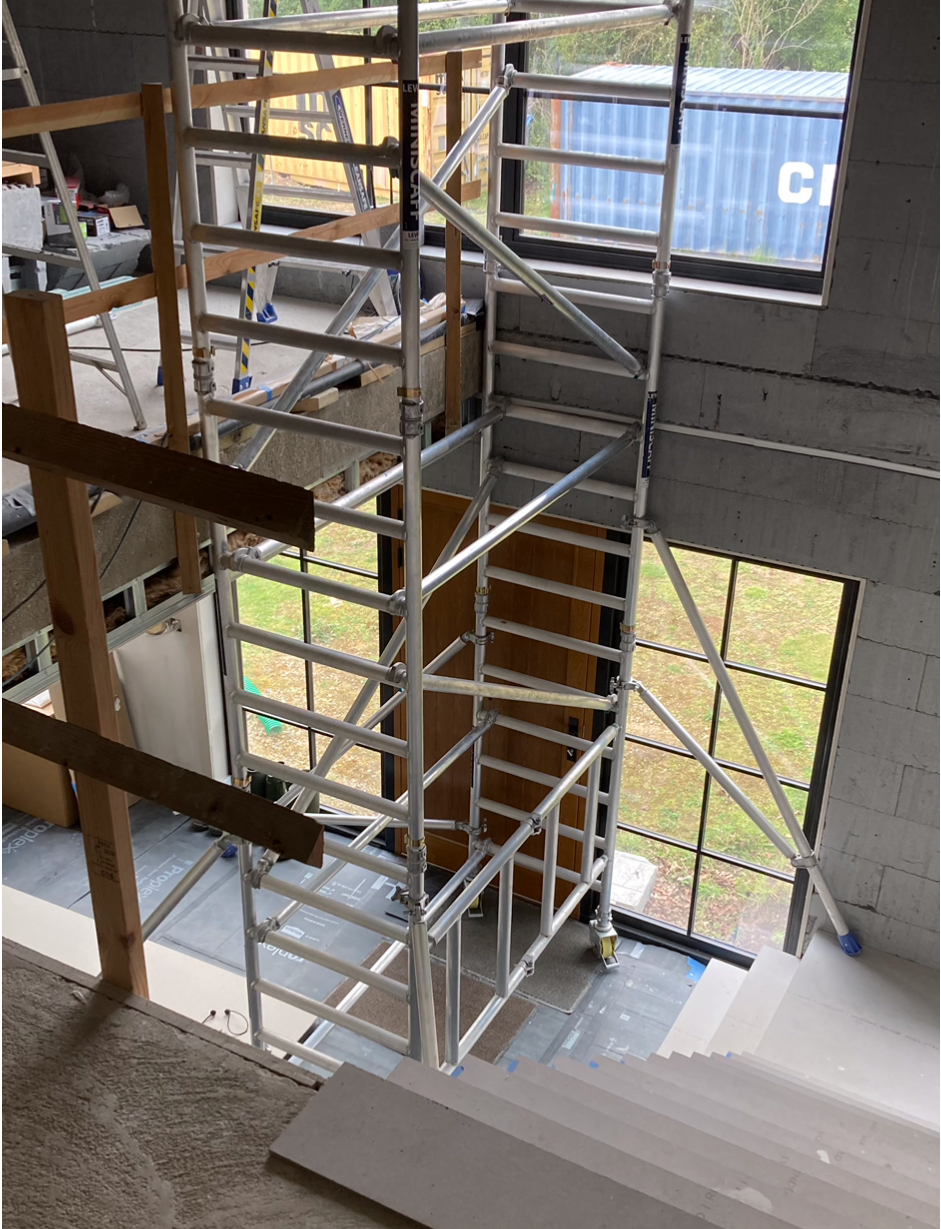
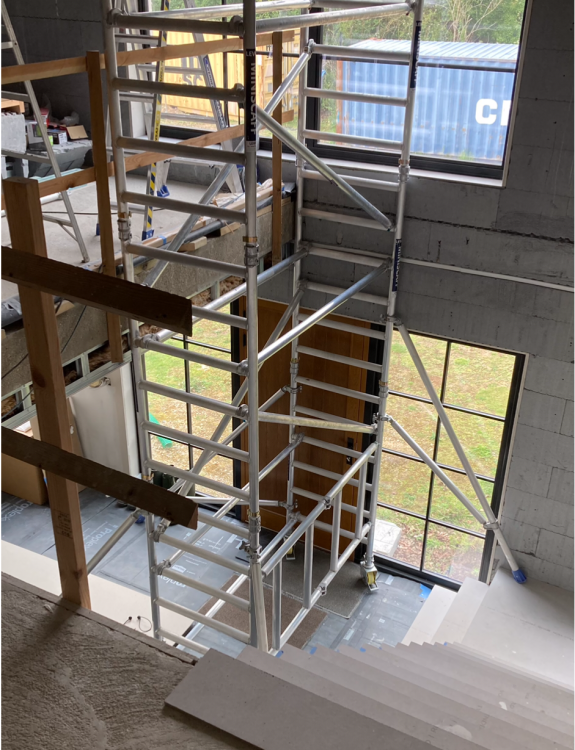
I brought a miniscaff tower direct from Lewis Scaffolding. https://www.scaffold-tower.co.uk/product/trade-folding-towers/ This was an investment for me, which I plan to keep long term. You can buy up to a working height of 8 metres. Very easy to buy add-ons and accessories. This was important for me, because I wanted to understand how to use the tower before buying to the full height I required, which was 7 metres. Strong, but light aluminium construction, quick delivery.
-
Primer and Peel & Stick Membrane Help
Nick Laslett replied to WiltshireLink's topic in Insulated Concrete Formwork (ICF)
Another photo.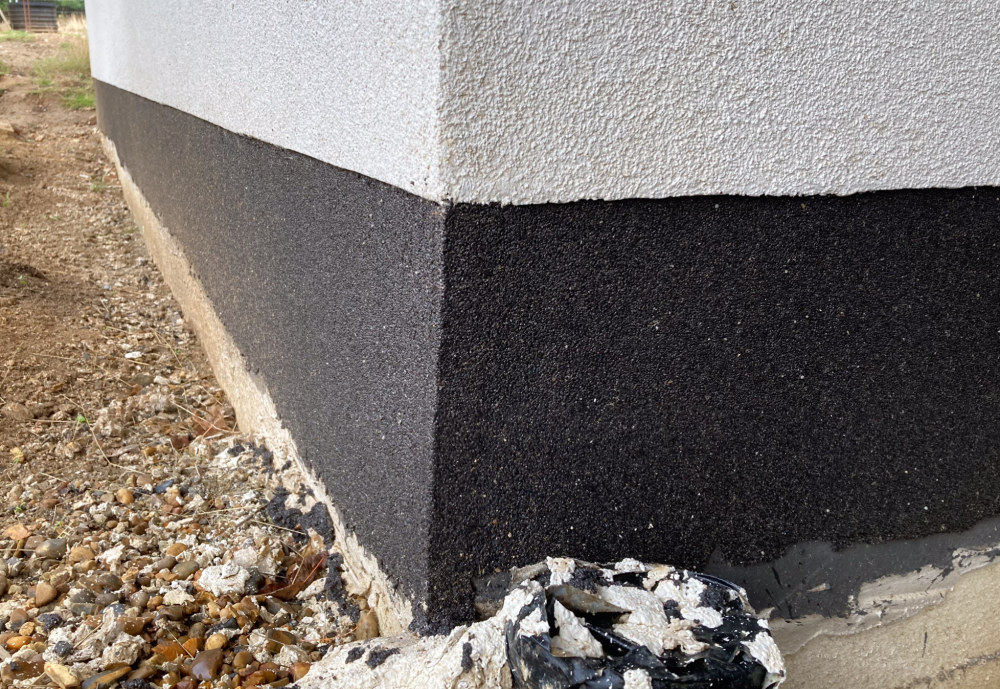
-
Primer and Peel & Stick Membrane Help
Nick Laslett replied to WiltshireLink's topic in Insulated Concrete Formwork (ICF)
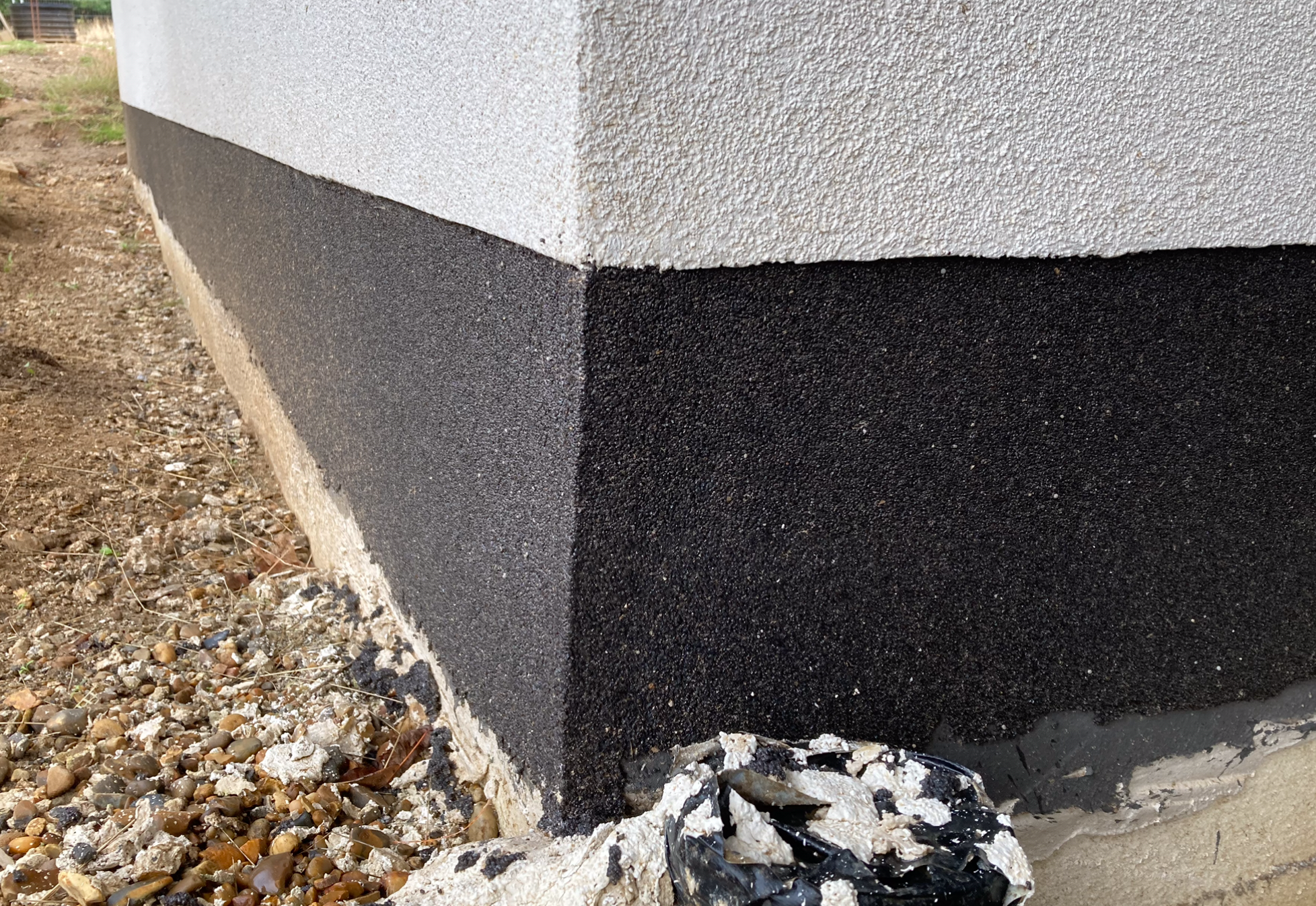
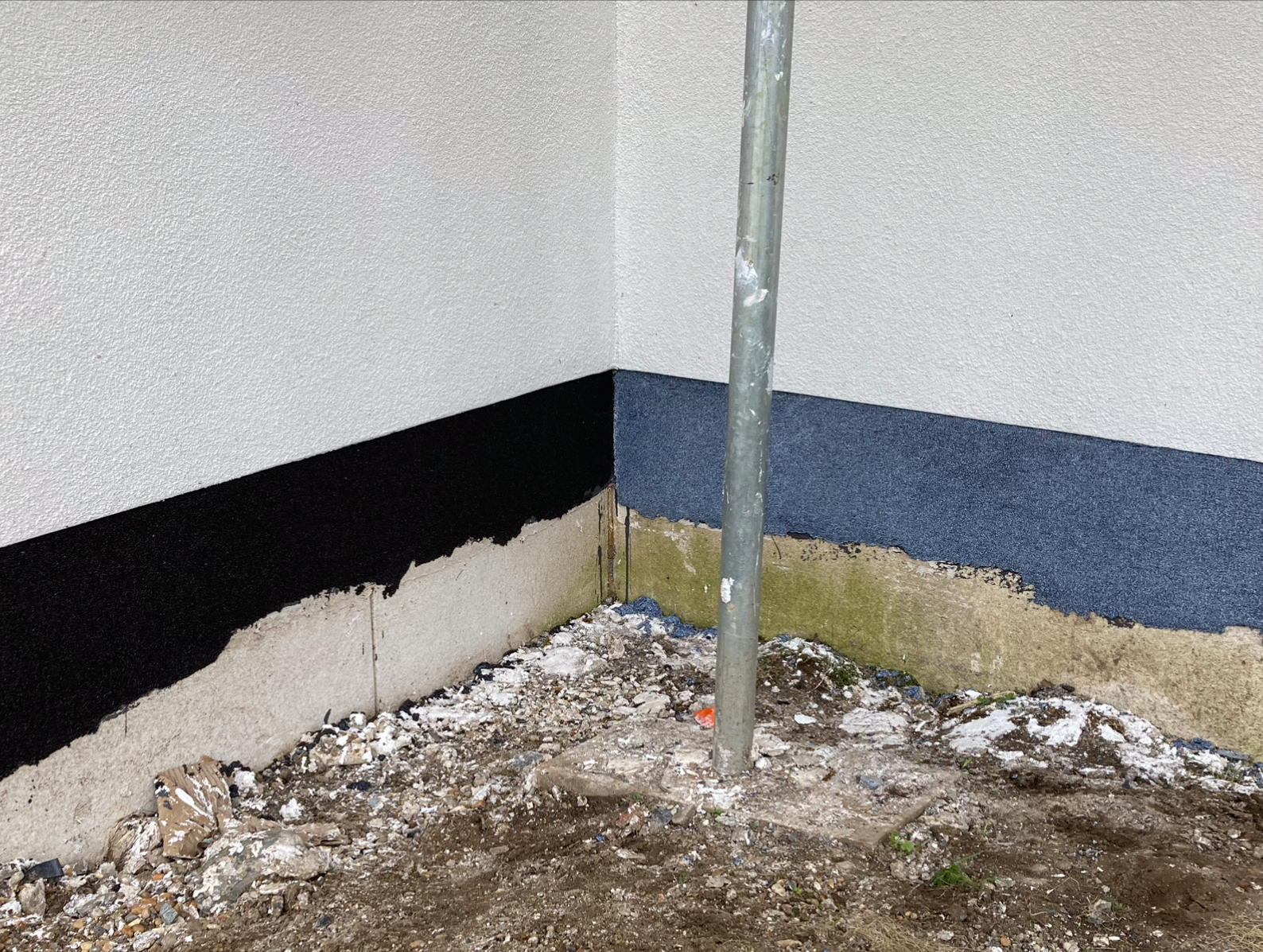
I used Thermohouse for my ICF blocks, they are Irish based. According to their technical specs, there is no additional sealing needed at the slab/wall junction. I have an insulated raft and the ICF block overhangs by 9mm. The walls are rendered and there is stop bead along the bottom edge. The EPS upstand of the insulated foundation is rendered with EWI Mosaic Render (EWI-050). Here is a picture. We used the Triton TT as a DPC on the EPS of all the rough openings of the doors and windows. Thermohouse have specific ‘check reveal’ blocks for window and door openings. There was a discussion about water ingress at the wall/foundation junction in this thread. My post in that thread. Response was not to worry. Three years later house seems okay, no evidence of water ingress at this junction. Still have Air Test to come.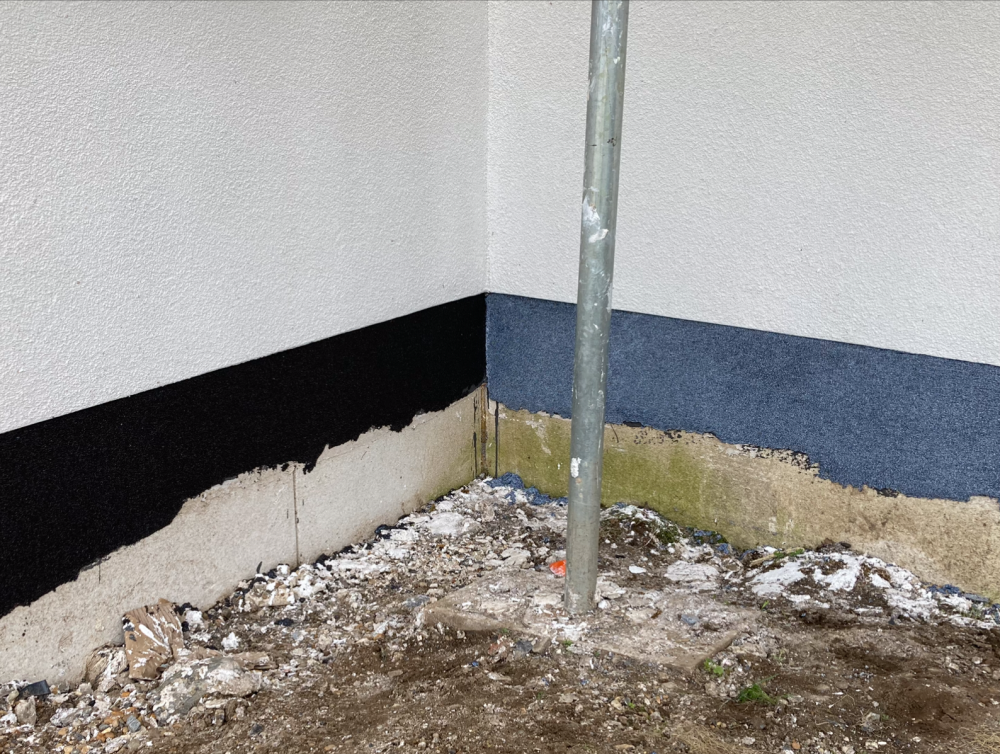
-
Primer and Peel & Stick Membrane Help
Nick Laslett replied to WiltshireLink's topic in Insulated Concrete Formwork (ICF)
@WiltshireLink, I think this is the new name for Triton TT Vapour Membrane paint. https://wykamol.com/products/technoseal-dpm If you look at the product date sheet it has Triton name address on the bottom of the sheet. https://wykamol.com/uploads/files/TECHNOSEAL-DPM-ST02-TDS7.pdf I bought my tubs of Triton TT from The Preservation Shop. They carry Technoseal, tub is the same form factor. https://www.preservationshop.co.uk/product/wykamol-technoseal-liquid-damp-proofing-membrane-dpm/ I think I have 1 unopened 5L tub of Triton TT left, but it is 3 years old. You are welcome to it if you are happy to collect. We are in Suffolk. Don’t think 5L will get you much coverage. -
Primer and Peel & Stick Membrane Help
Nick Laslett replied to WiltshireLink's topic in Insulated Concrete Formwork (ICF)
I feel like peel & stick membranes for ICF are a USA building code thing. Some of us here used Triton TT Vapour Membrane Paint. Seems hard to find now. @Russell griffiths Good discussion here: -
I like this YouTuber. I only have experience of one plaster and one tape and jointer. They both had very strong opinions about which brand/type of angle bead they wanted to use.
-
Norrsken - Let them airtight tape or do it myself?
Nick Laslett replied to boxrick's topic in Windows & Glazing
Great post, @craig. Thank you for the corrections. Funnily enough, I actually followed the Illbruck install videos and used all their products. Really rate the compriband TP651 Trio and FM330 foam. I even bought the Illbruck shears and roller! I’ve got ICF walls, so some adaptation was required, my rough openings have built in eps “check reveals”, so the window frame sits in the middle of the wall where the cavity would be with a traditional block wall. I used Siga tape, because they explicitly list EPS as an acceptable substrate. I think Illbruck want you to use a primer for EPS, but could be wrong. The thing about EPS, is that there is quite a variation and quality difference between ICF manufacturers. I did a few tests to make sure I was happy with the tapes adhesion on the EPS. Here is the Illbruck “check reveal” video, I have bookmarked. https://youtu.be/OqFE5Yr6OZo?si=2LbElKxM0JWGCA90