Nick Laslett
-
Posts
687 -
Joined
-
Last visited
-
Days Won
1
Everything posted by Nick Laslett
-
Insulated threshold detail for insulated rafts
Nick Laslett replied to WannabeBob's topic in General Construction Issues
@WannabeBob, great post. I hope you get some good replies. There are so many instances like this, where no matter how much you prep, in the real world there needs to be some workaround compromise. I don’t know if CT1/OB1 would be strong enough to hold the door? My go to solution for many parts of my build. My passive foundation upstand is only 90mm thick, so the door could still be fixed to the concrete, but they had to compromise with how the Sill would be fitted, because the door was set back. The only issue, is if the warranty or workmanship isn’t being owned by someone. -
ICF How much more expensive ?
Nick Laslett replied to Dave Jones's topic in Insulated Concrete Formwork (ICF)
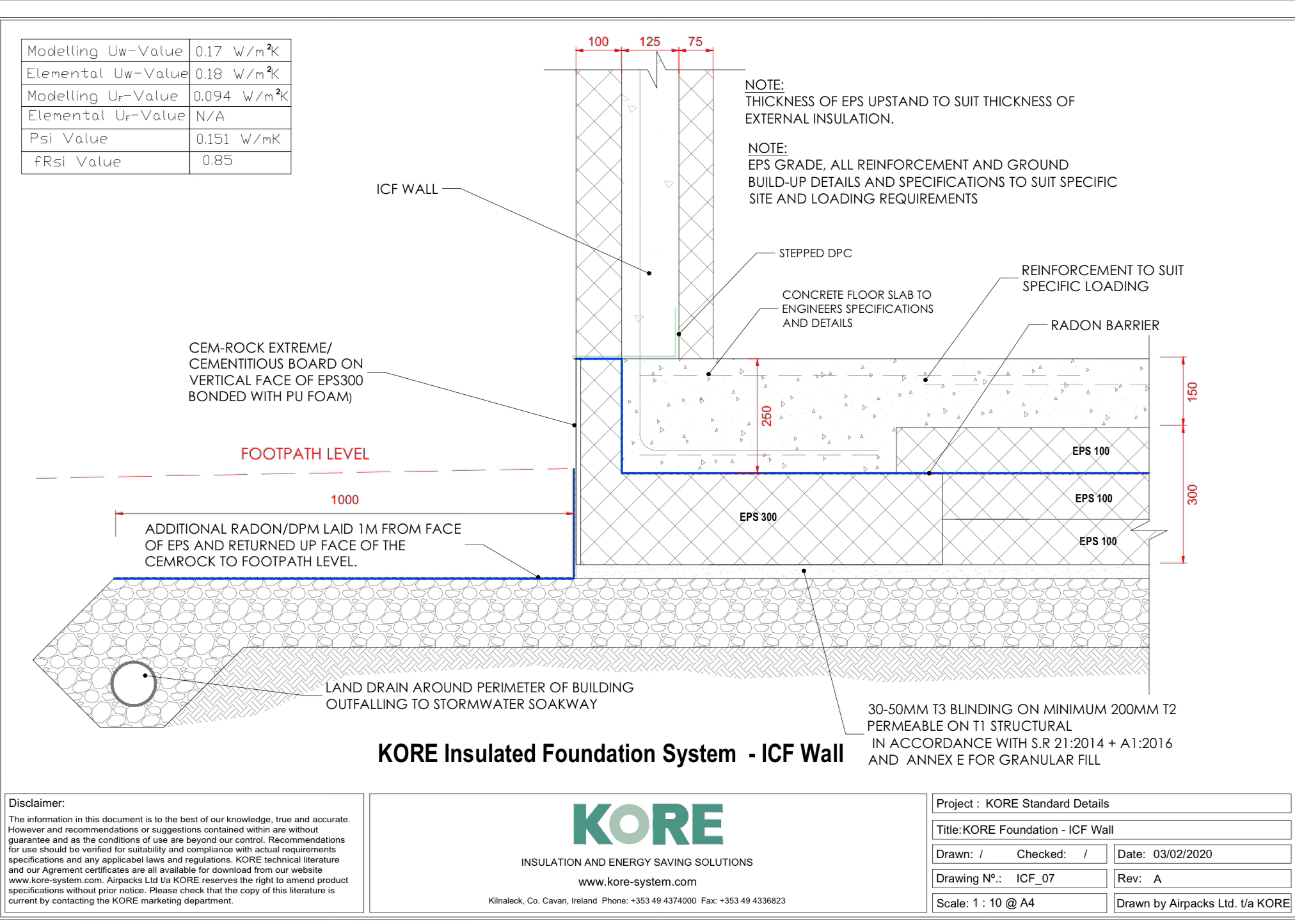
My understanding is that radon barrier is a typical requirement in Ireland, and because Tanner and Kore are both Irish based, it is a standard detail that they include. -
ICF How much more expensive ?
Nick Laslett replied to Dave Jones's topic in Insulated Concrete Formwork (ICF)
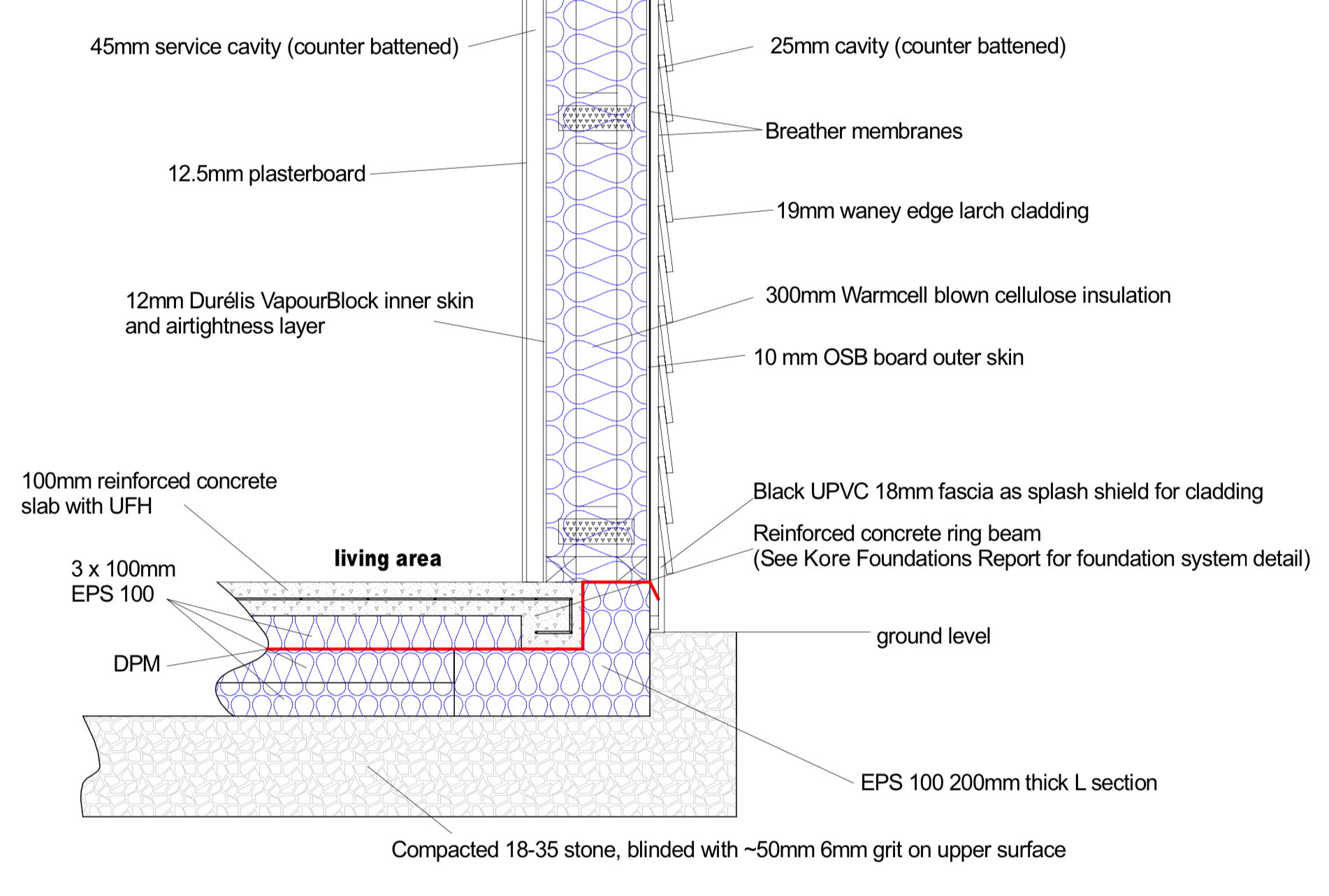
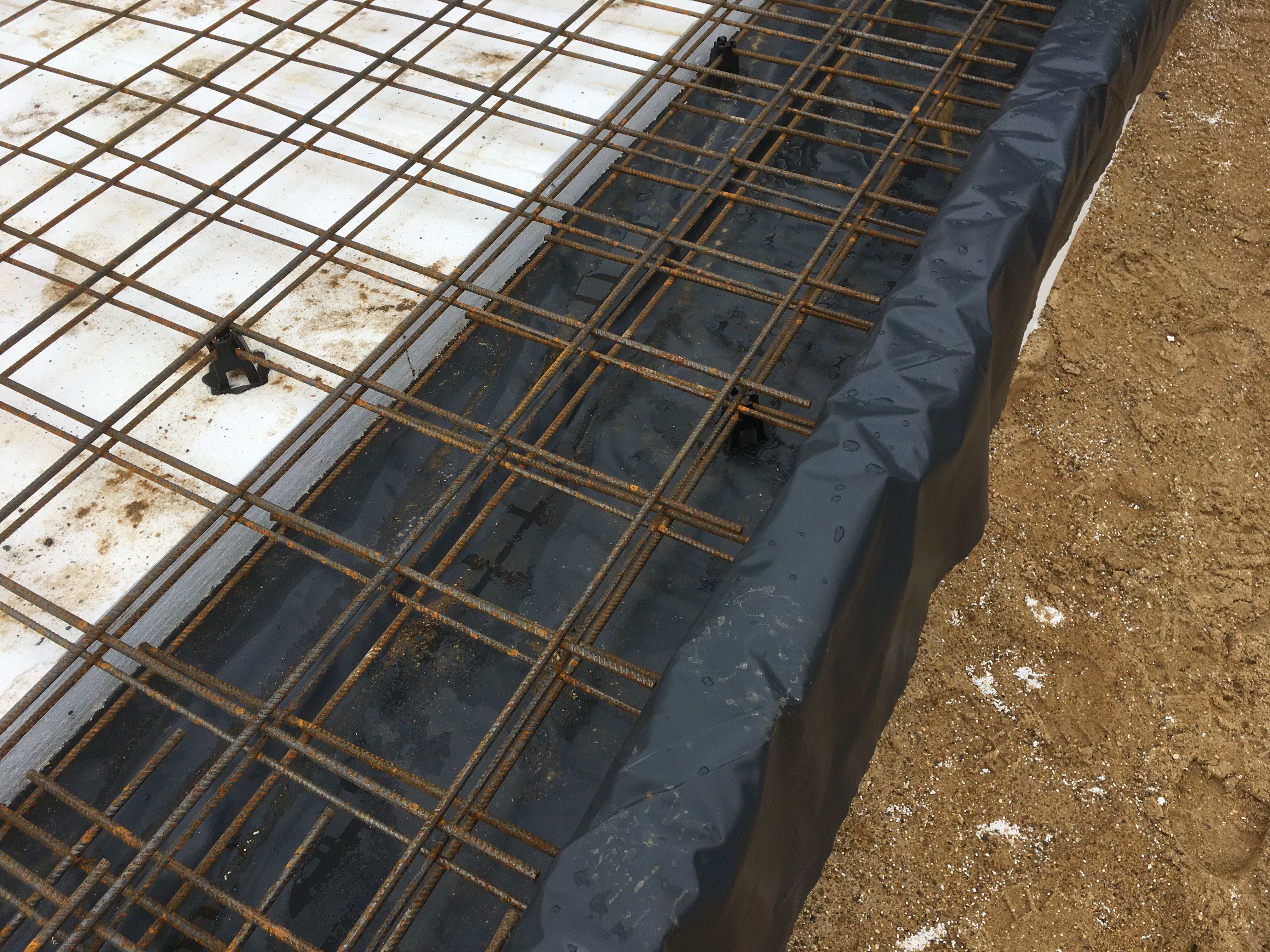
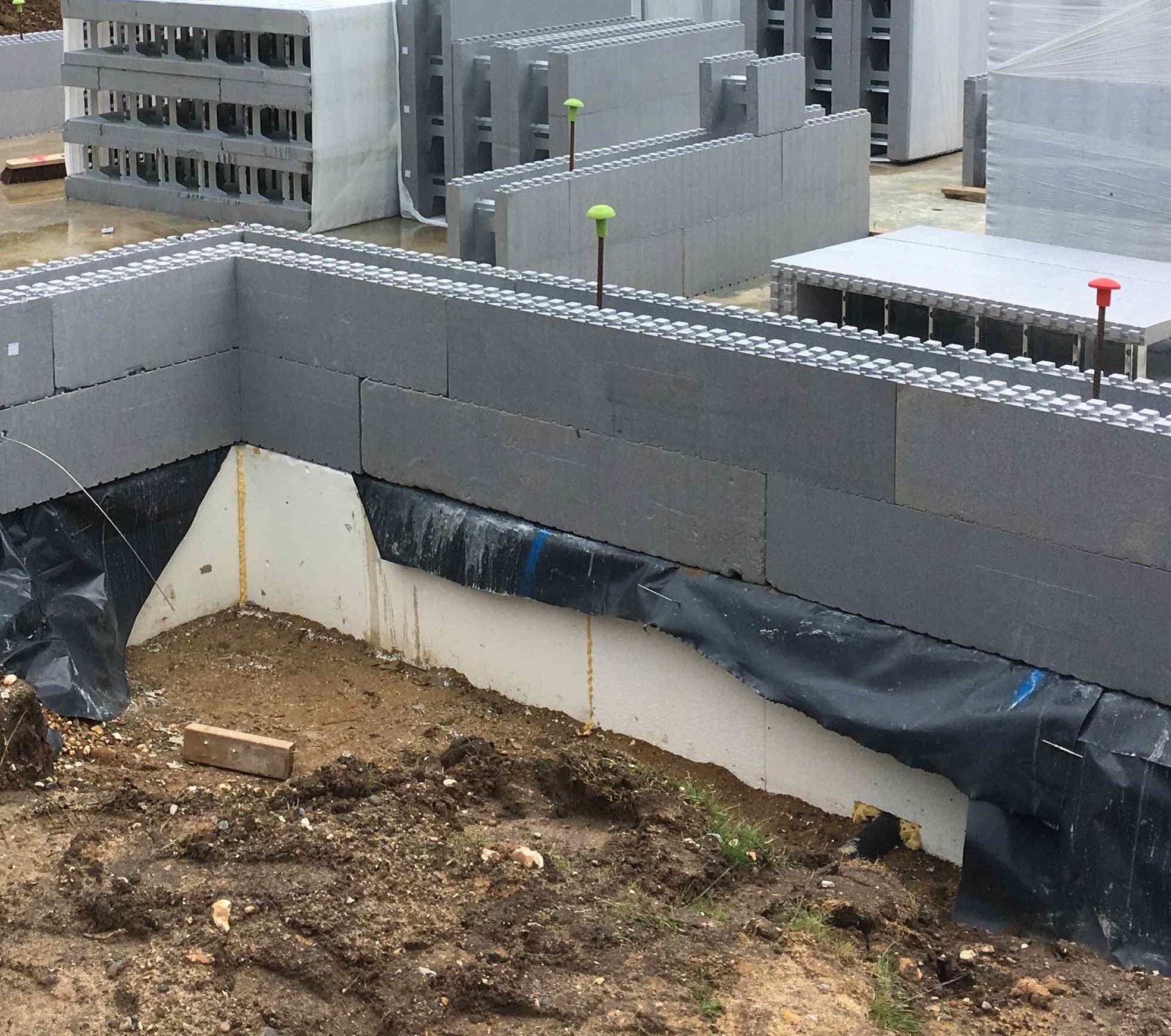
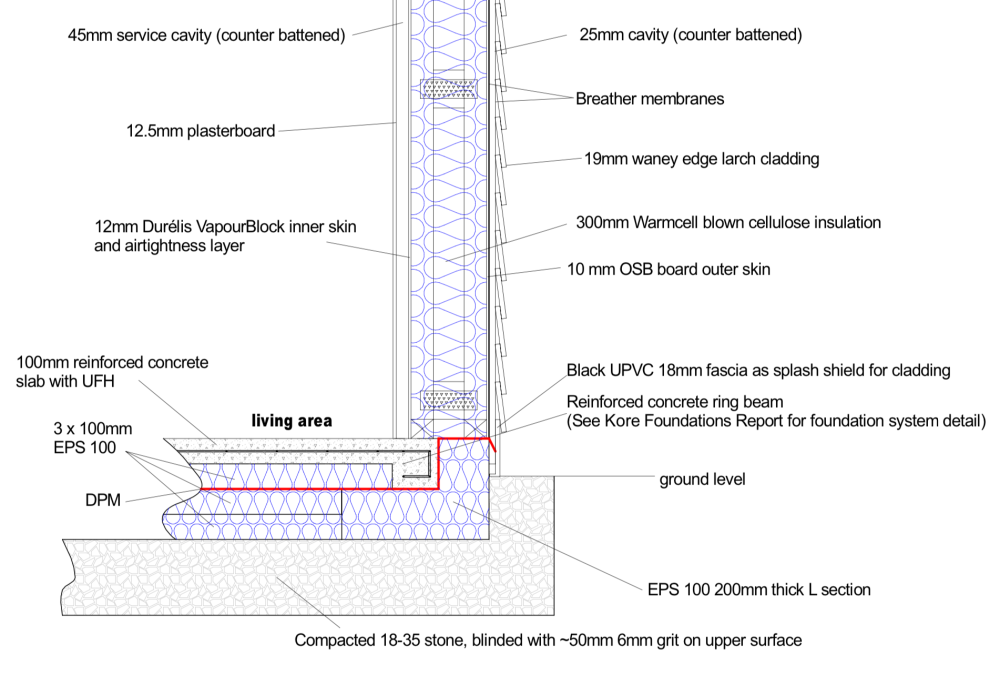
I don’t know, made no sense to me. Here is my construction detail from Tanner, the DPS under the ICF is a little different. The MBC crew did my foundation, you can see from my photos what they did. This is Jeremy Harris construction detail, he had an MBC foundation and timber frame. You can see that the DPC is consistent with my photos. I’m not trying to confuse or mislead with my posts about DPC placement. Building controls seem to be very touchy about this requirement. Please seek professional advice, don’t take my posts as advice. @ChrisJ, sorry if I have made things more confusing.
-
ICF How much more expensive ?
Nick Laslett replied to Dave Jones's topic in Insulated Concrete Formwork (ICF)
I agree, I don’t think it is critical. Here is the generic Kore construction detail, see the small green line for DPC under ICF block.
-
ICF How much more expensive ?
Nick Laslett replied to Dave Jones's topic in Insulated Concrete Formwork (ICF)
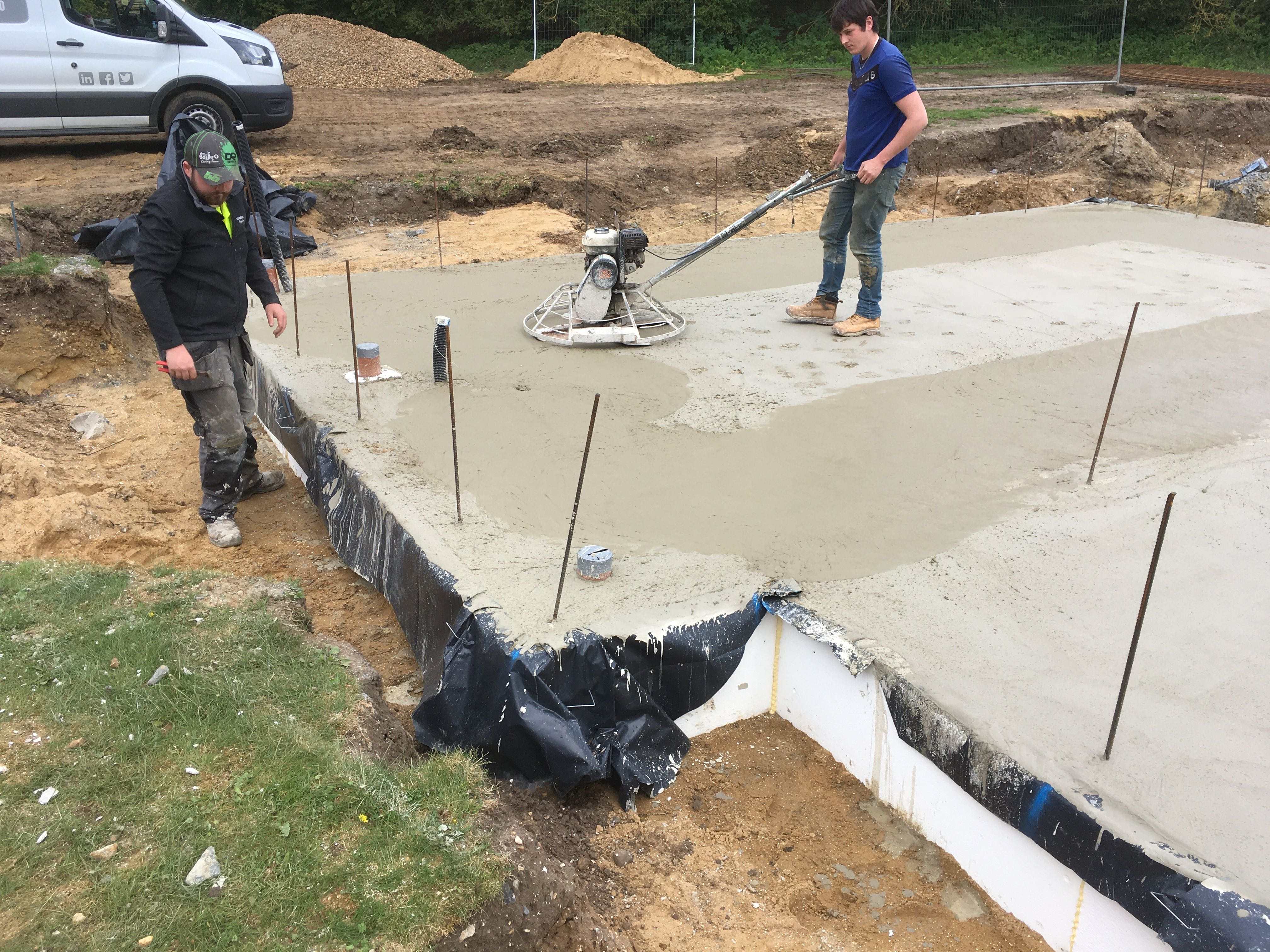
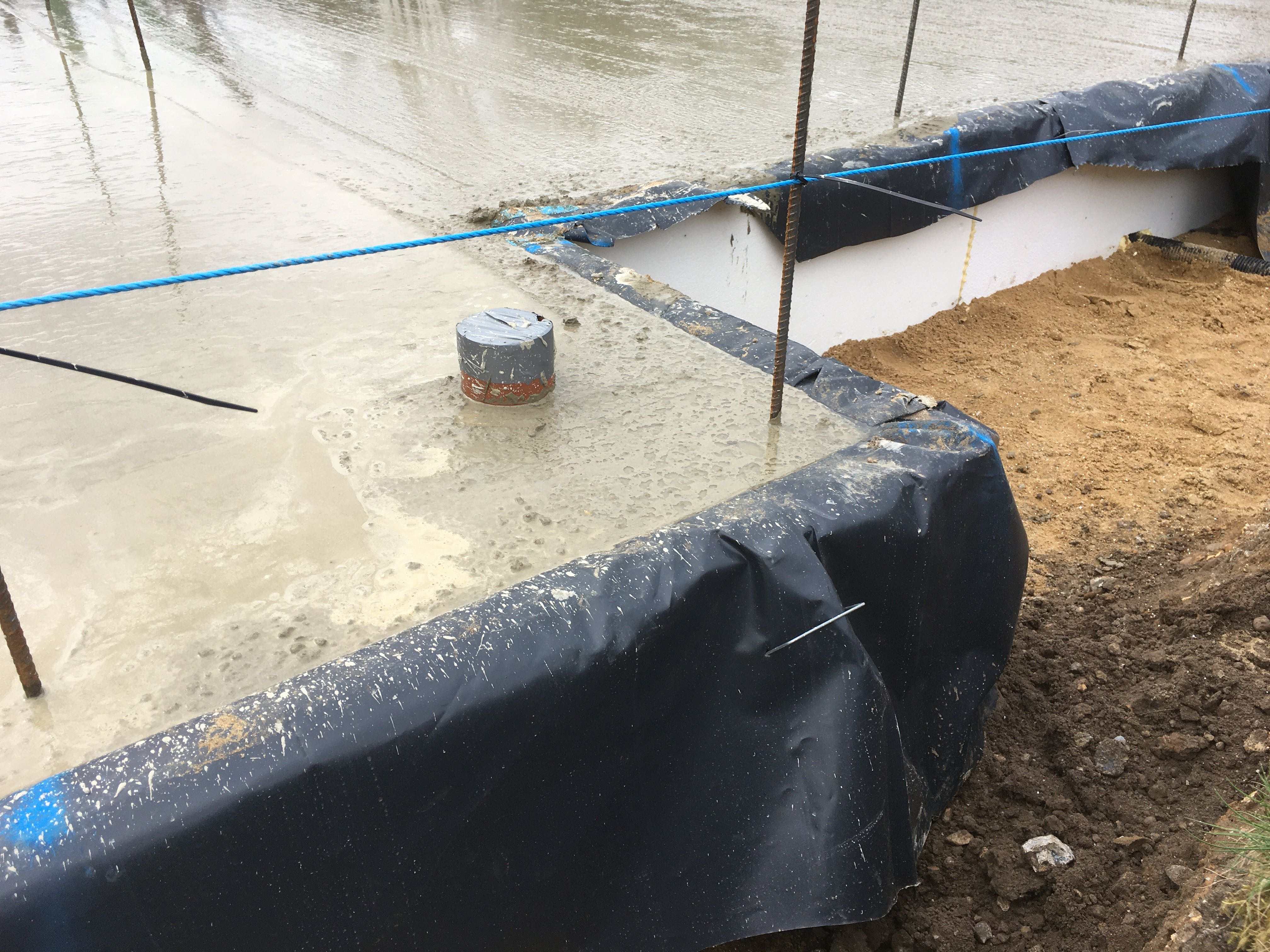
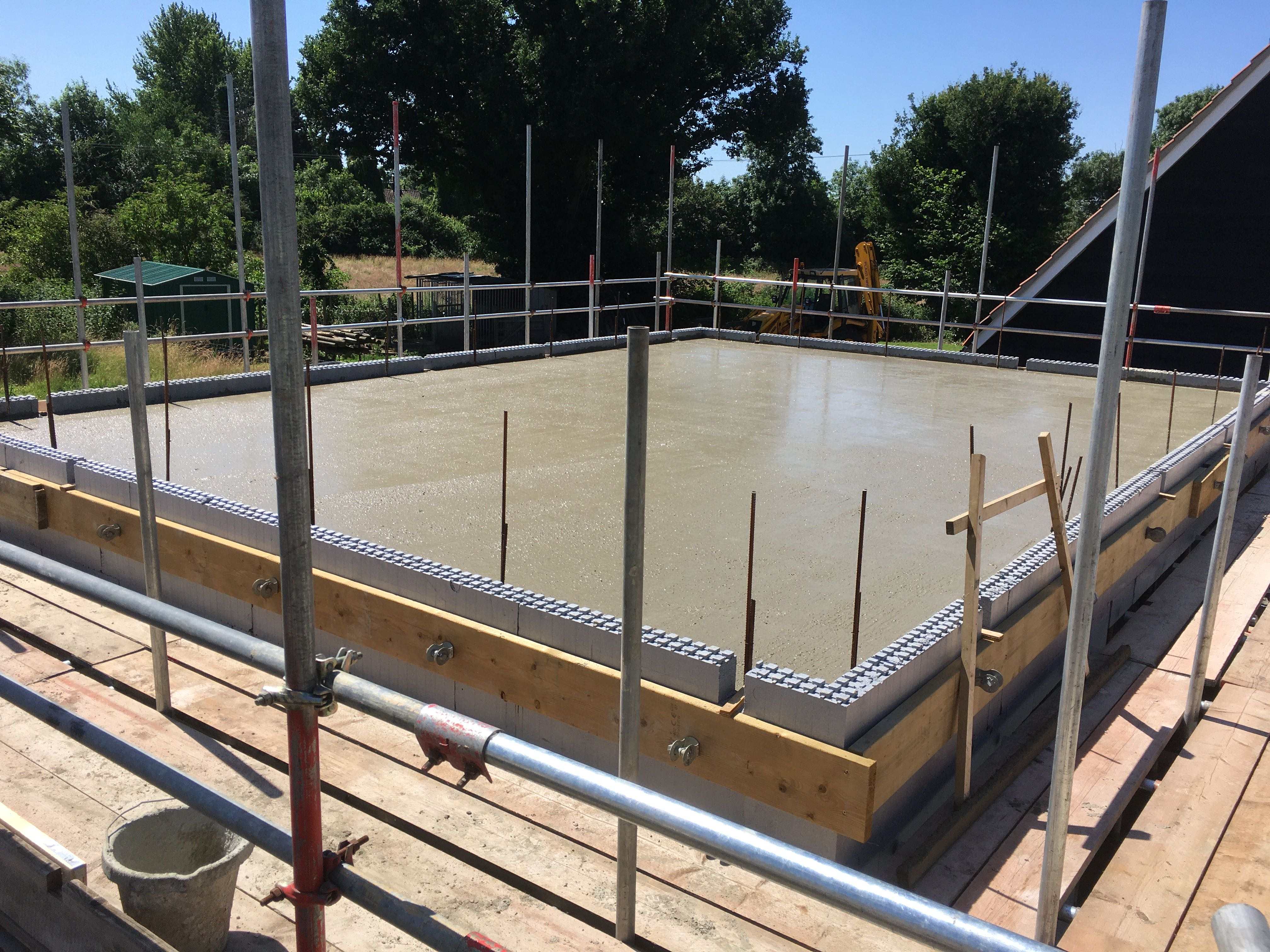
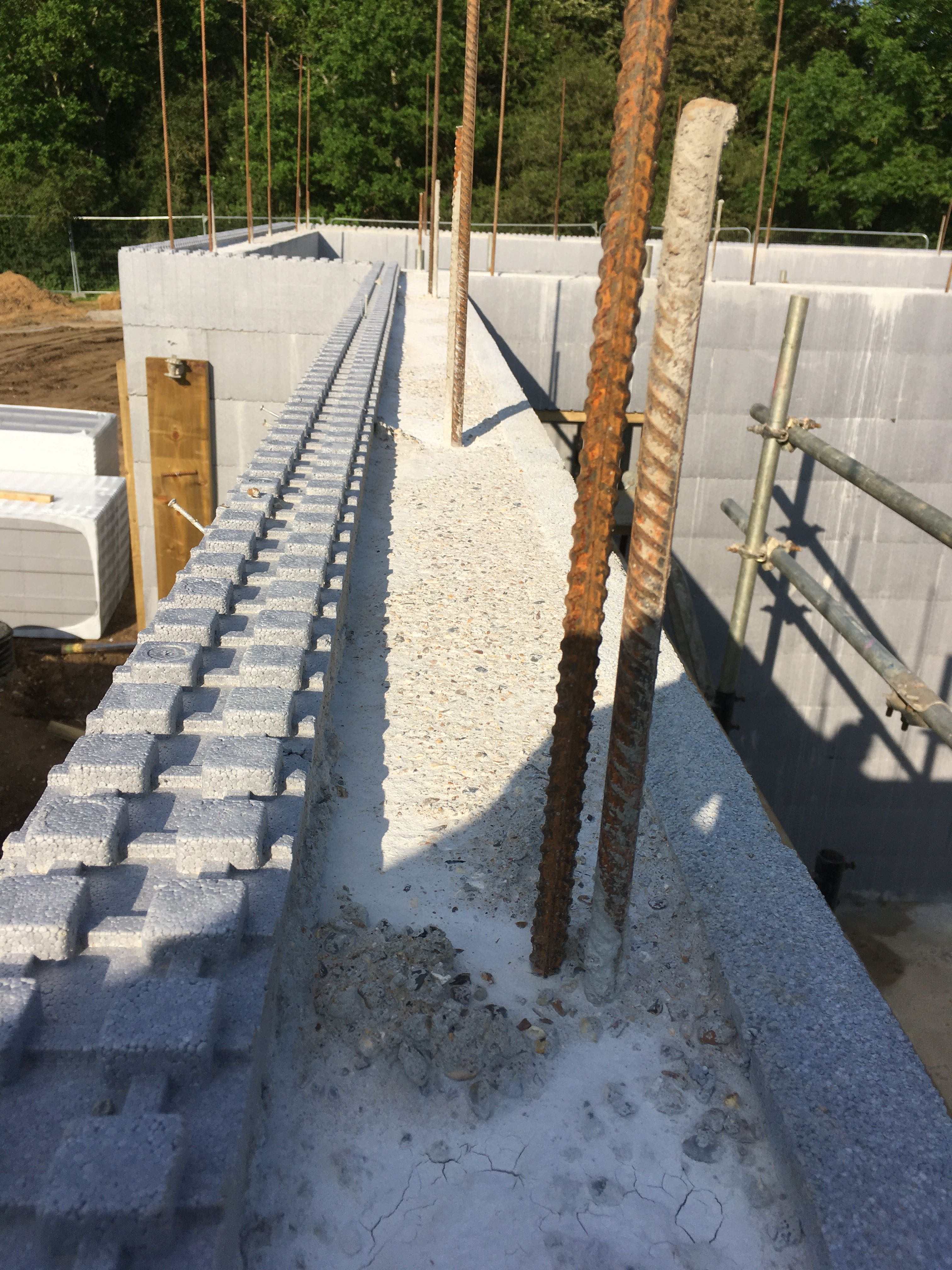
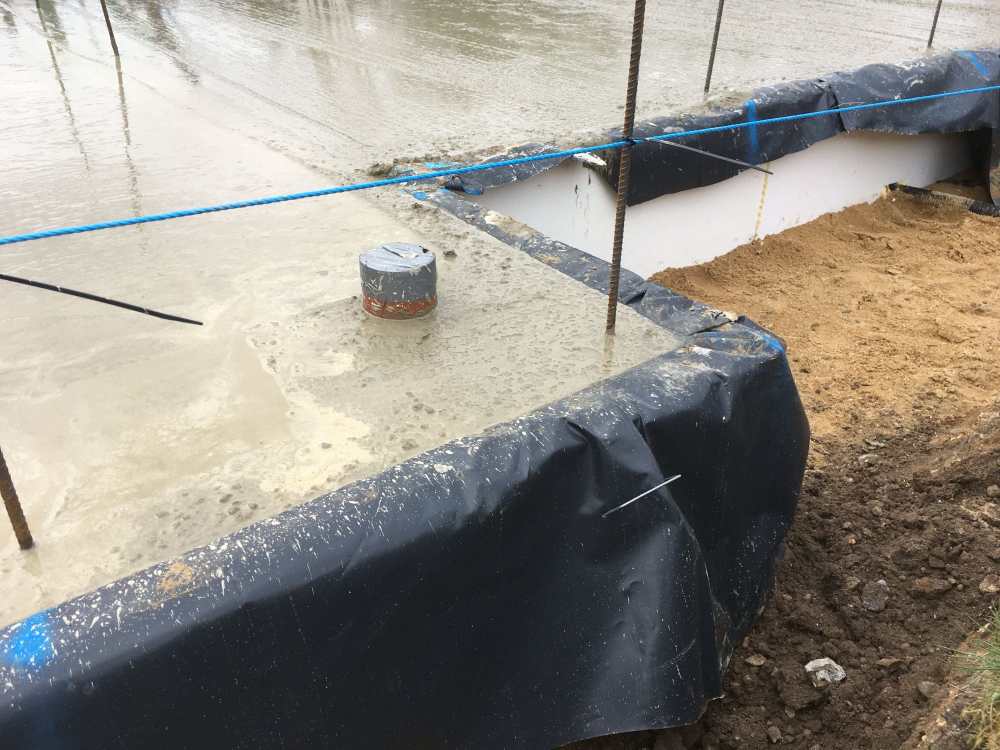
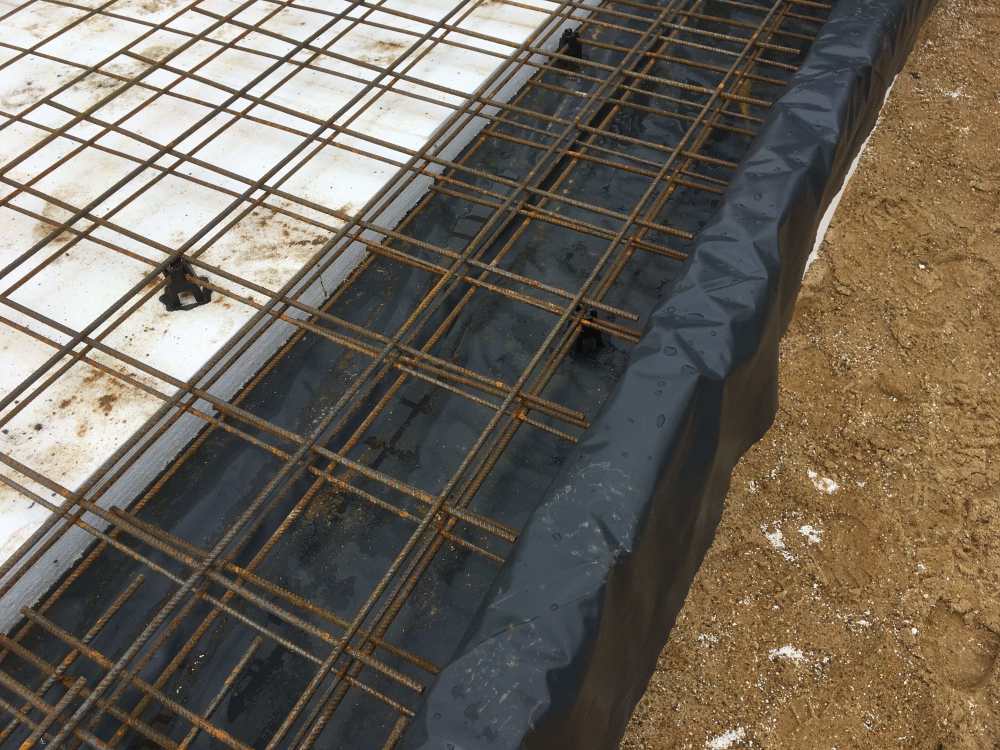
Same spot on foundation pour day. You can see the DPM is still overhanging in this photo. According to my drawings you would put a second DPM strip under the ICF blocks before you start the wall. Not sure how necessary that is with ICF walls. Here is a close up. Before the concrete.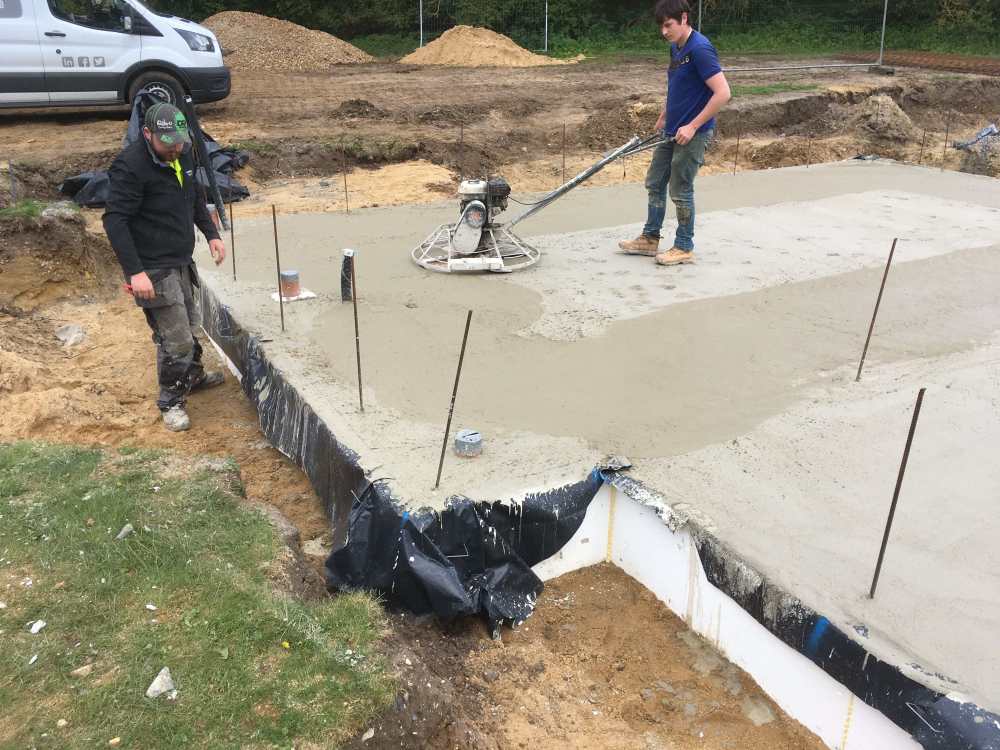
-
ICF How much more expensive ?
Nick Laslett replied to Dave Jones's topic in Insulated Concrete Formwork (ICF)
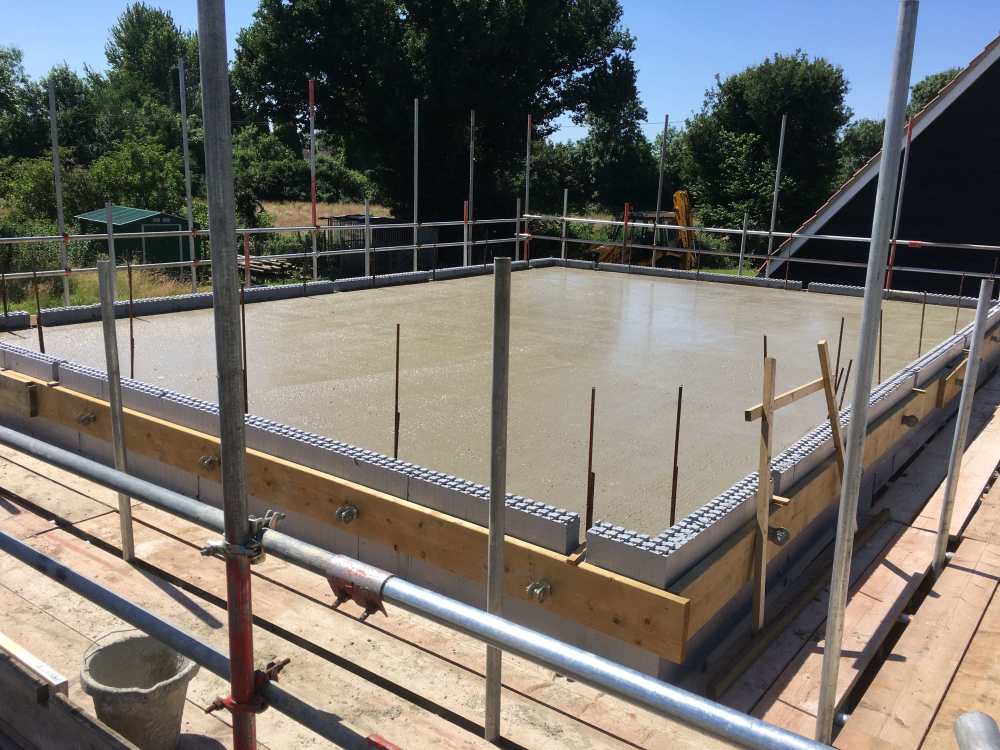
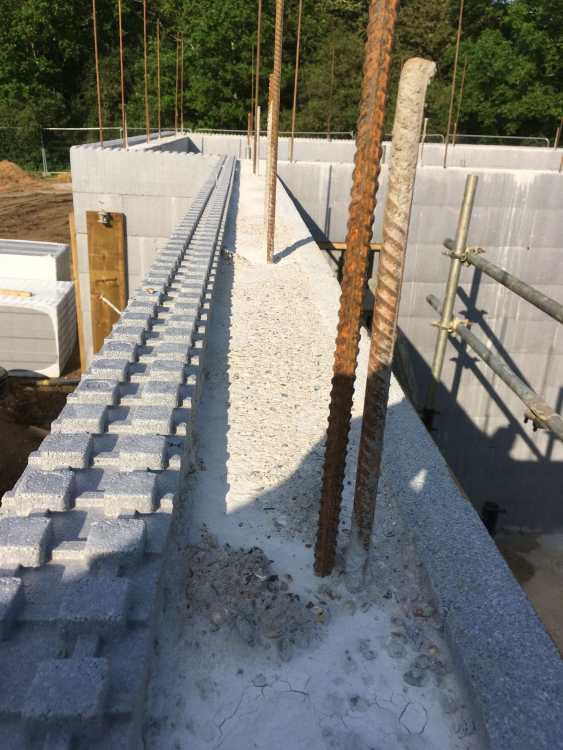
Also on my build the vertical rebar connects the ground floor walls to the slab, then the first floor walls to the ground floor walls.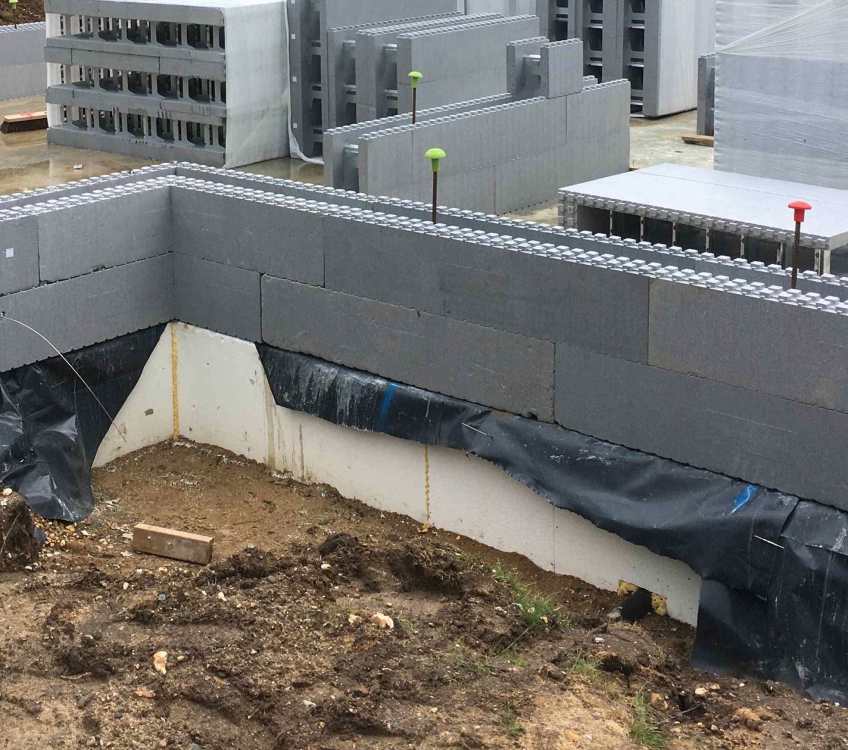
-
Galvanised gutter with timber cladding
Nick Laslett replied to bluebellcottage's topic in Rainwater, Guttering & SuDS
According to this research paper, thermally modified Ash is more acidic and corrosive than regular Ash. Thermowood Ash had a pH value of 3.75. https://www.semanticscholar.org/reader/50b811003eb14f0d700560e08f45fe22cb8370c1 -
Galvanised gutter with timber cladding
Nick Laslett replied to bluebellcottage's topic in Rainwater, Guttering & SuDS
We used Ash thermowood cladding from QTD with Lindab coated Steel guttering. Been up 2 years, no issues yet. https://www.qtdgroup.com/thermowood-ash-cladding https://upbuildingproducts.co.uk/products/steel-guttering/ Thermowood is more expensive, but it has a lot of long term benefits. *Edit: Advice from American Galvanisers Association Acidic woods or resinous/sappy woods such as cedar, pine, fur, and larch are aggressive to hot-dip galvanized steel and known to stain the HDG surface. Instead, dry, non-resinous wood species like poplar, ash, and spruce are recommended woods in contact with galvanized surfaces. Additional reference information regarding the corrosive effects of additional wood types are provided in Table 1. https://galvanizeit.org/knowledgebase/article/corrosive-chemicals-and-galvanizing -
@Temp, please could you give more details on the resistance tester for the windows. I had a disagreement with my window fitter which way round the panes should go. I clarified with the suppliers, but am still a bit paranoid, any more details would be appreciated.
-
Best products / manufacturers for 110mm & 50mm pipe?
Nick Laslett replied to Alan Ambrose's topic in Waste & Sewerage
Wavin Osma for drains according to my groundworks people. Interior SVP/waste any of the acoustic products like Wavin AS, Marley dBlue or Geberit Silent. I can bring a piece of Wavin AS to next meet-up. -
-
Here are two previous threads on this topic, that you might find interesting. This first one has links to other threads embedded in it.
-
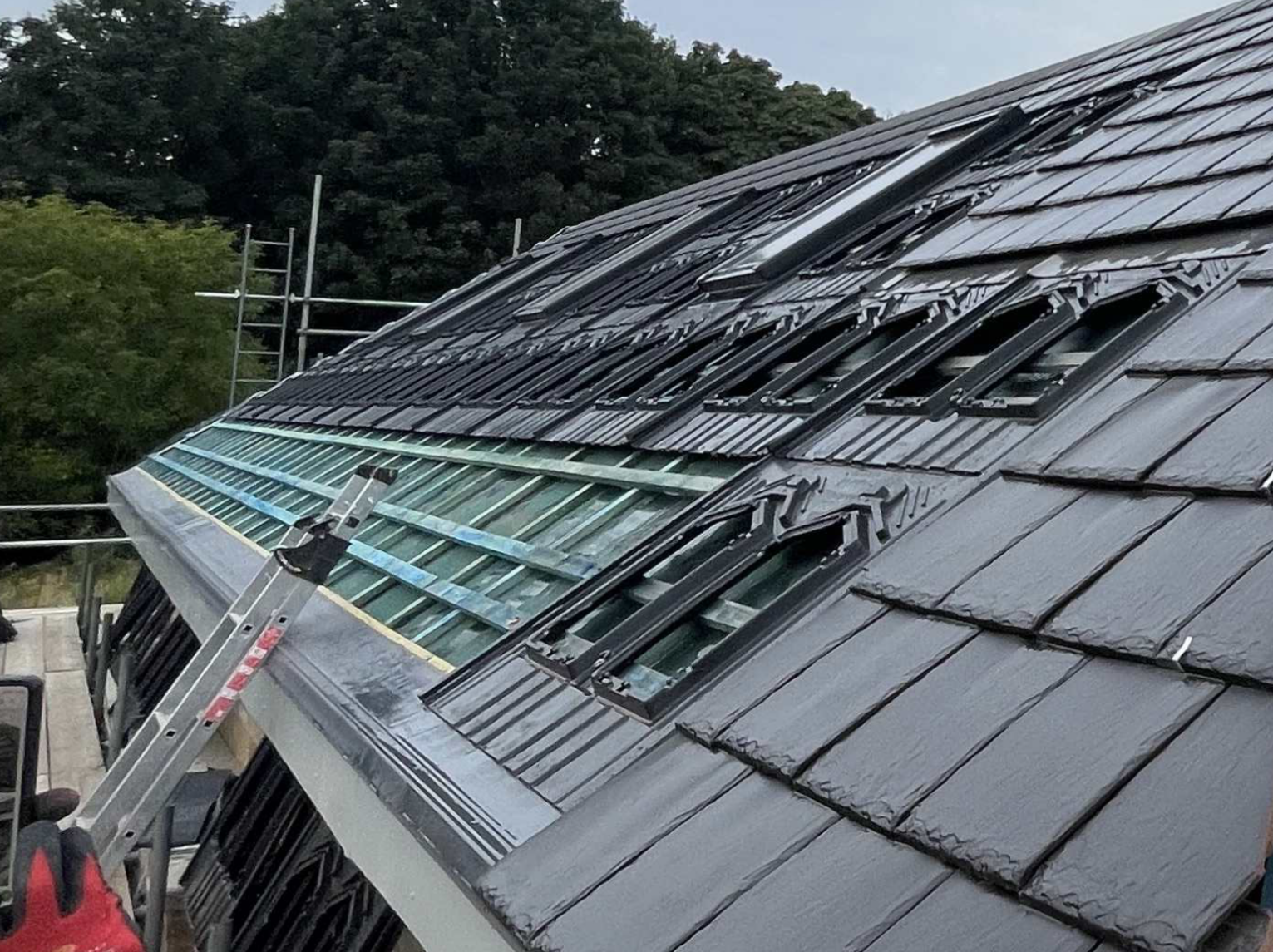
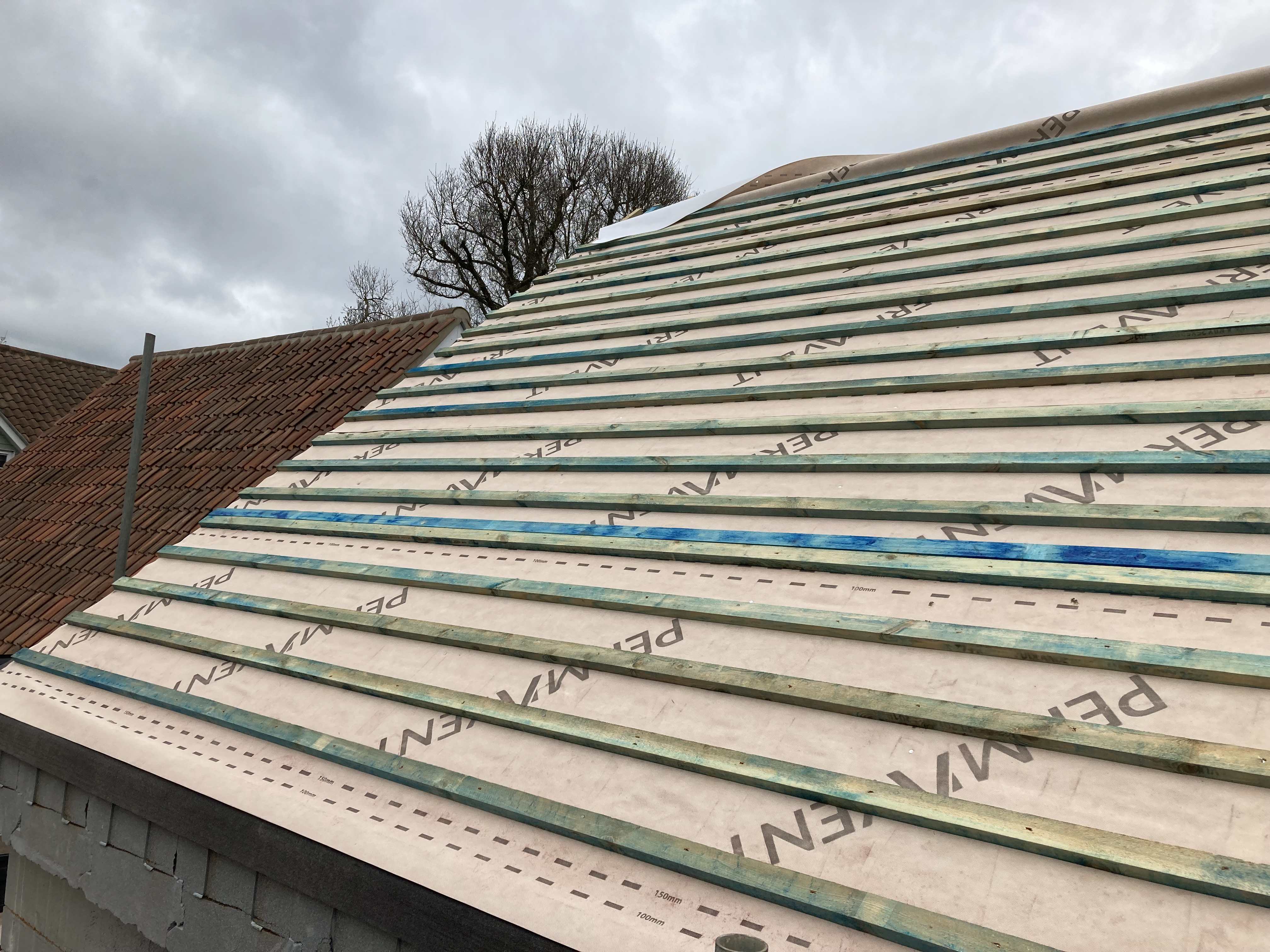
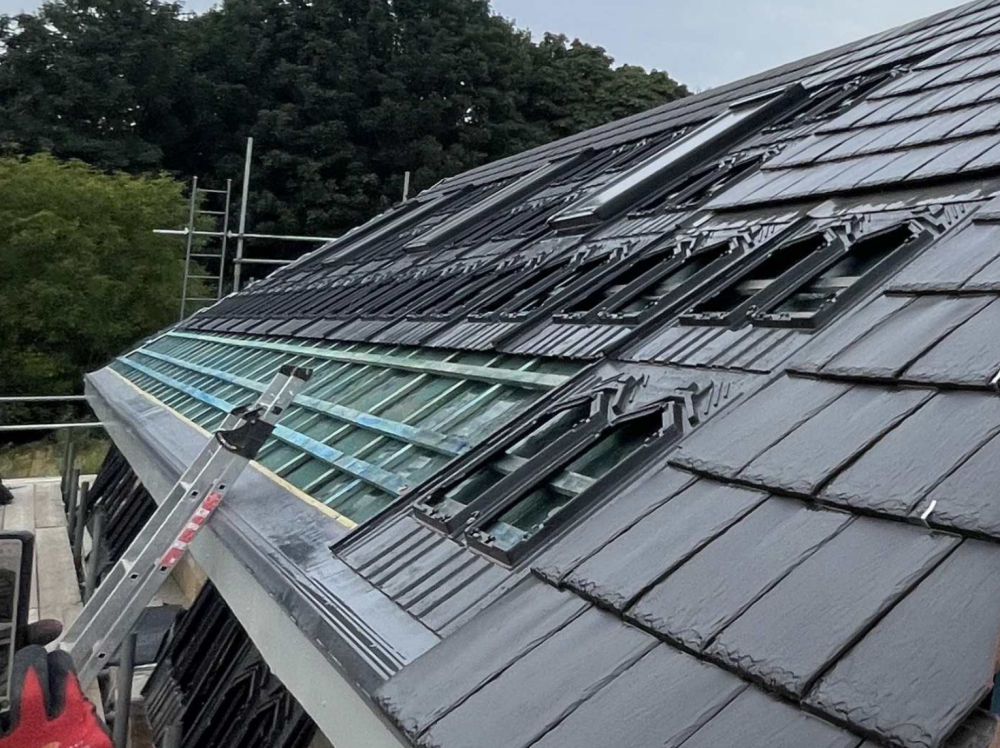
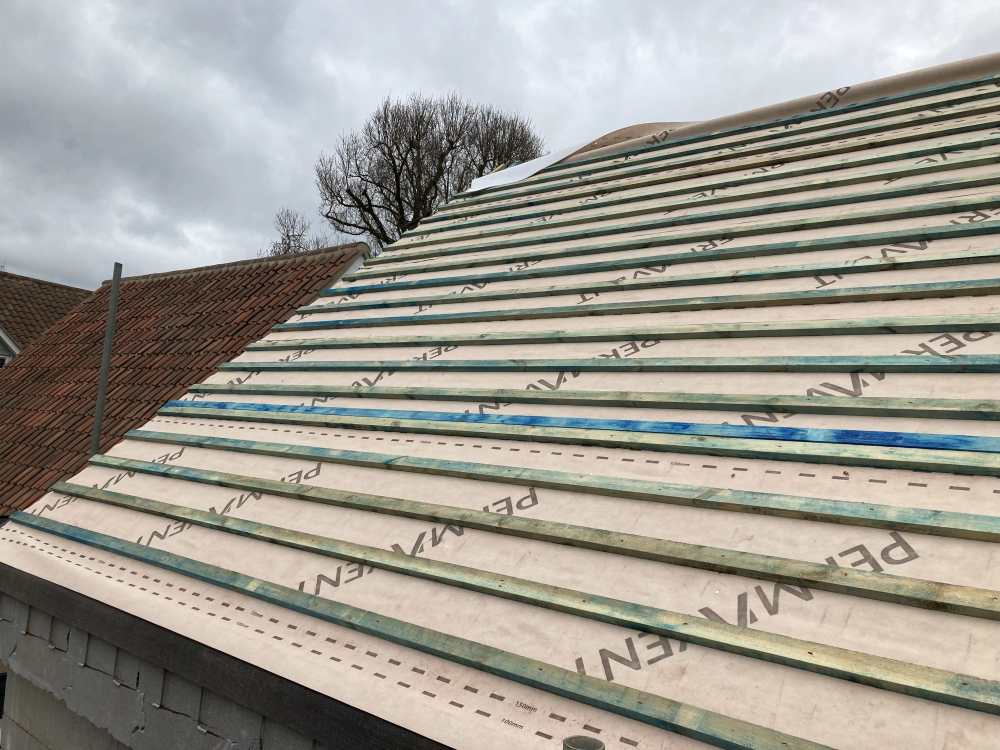
This photo is how the roofers left the roof before I started adding battens and installing the GSE trays. It is hard to see, you will need to zoom in, but there is a piece of roofing felt and roof membrane covering the bottom batten, creating the kick at the end of the roof line, the “tilting fillet”.
-
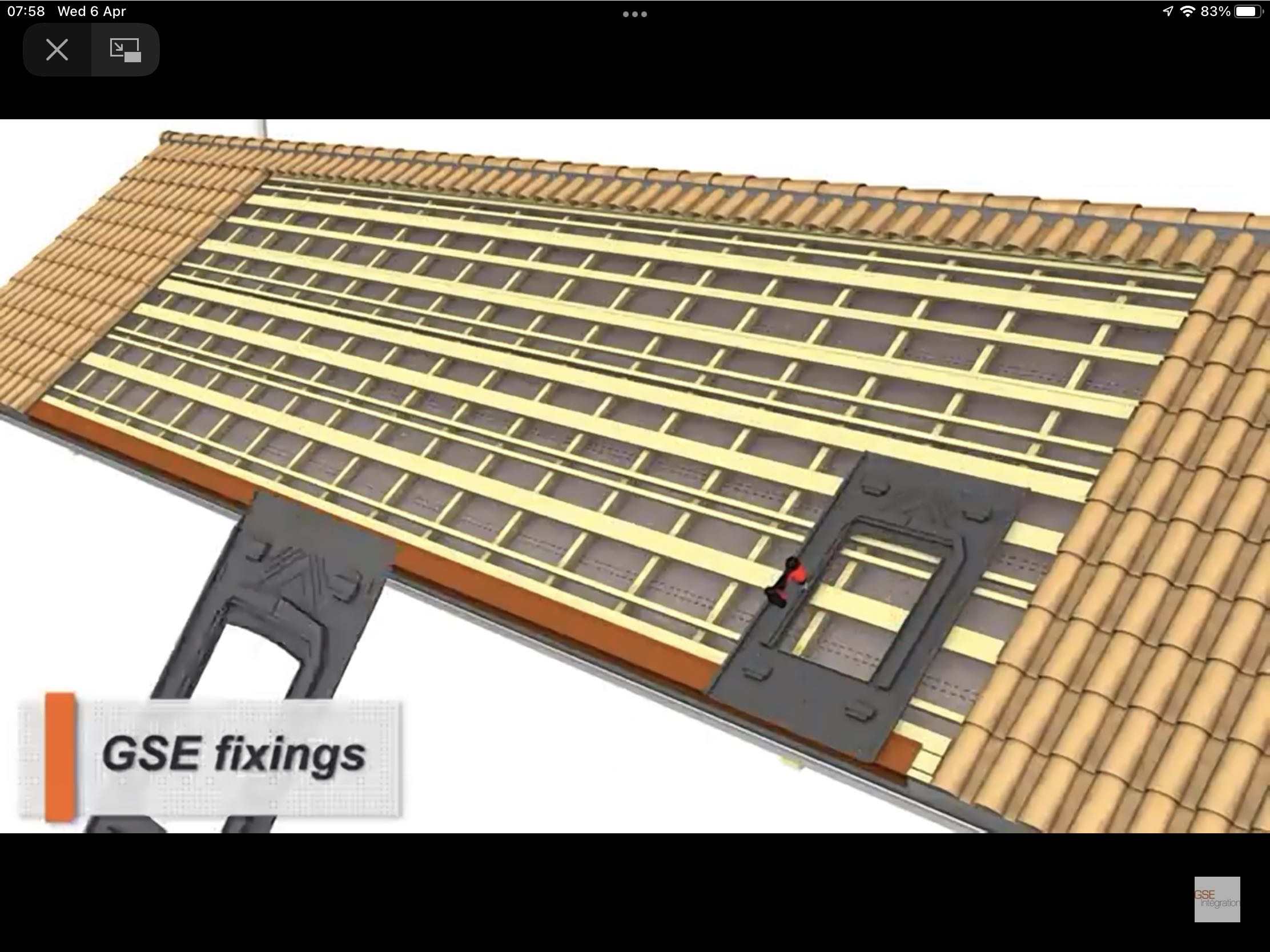
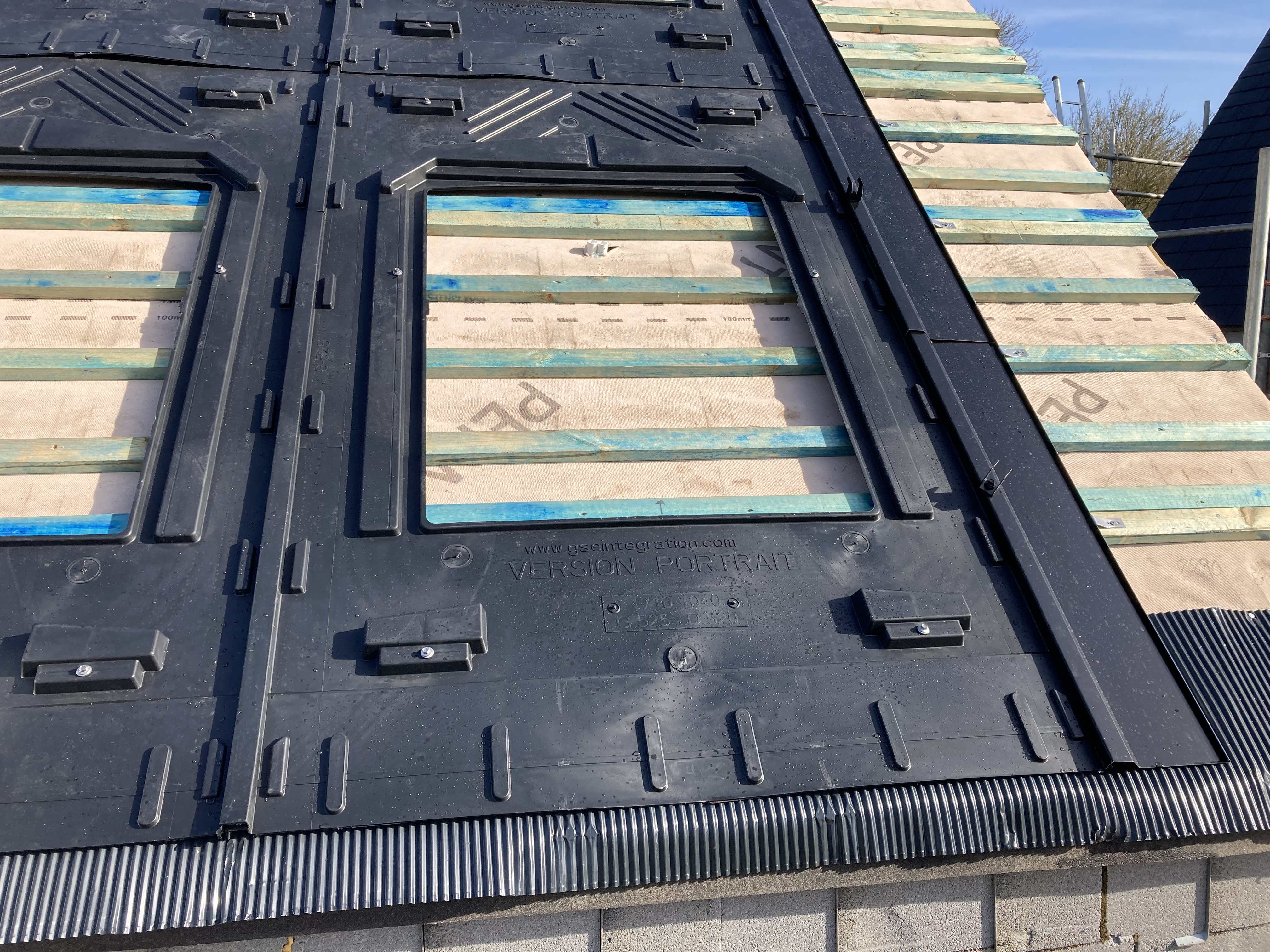
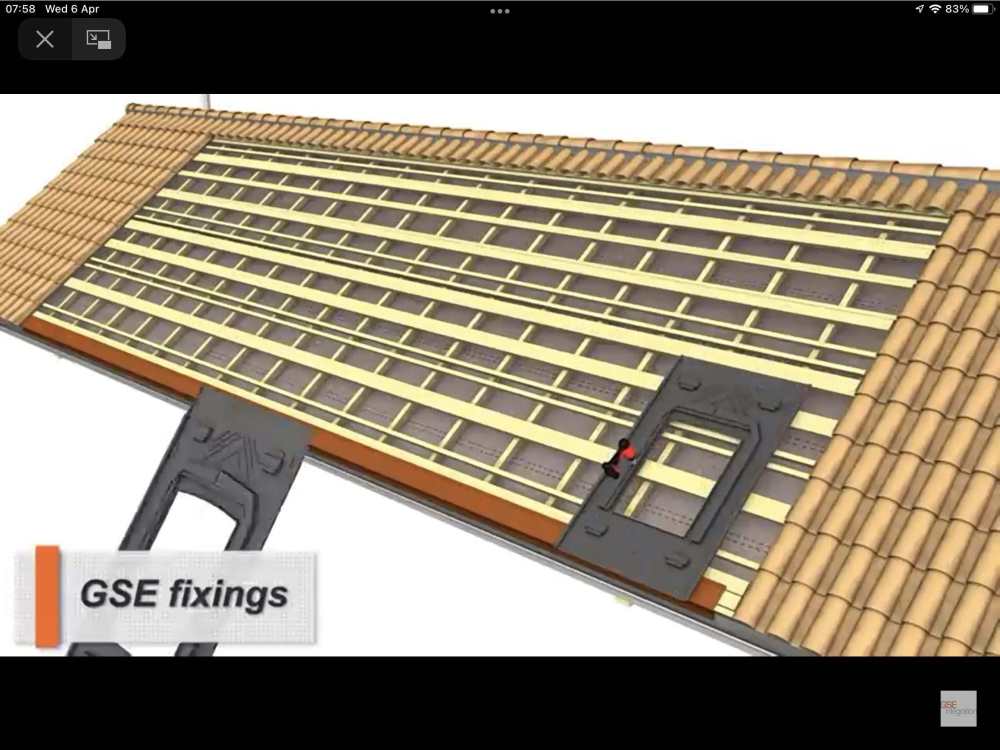
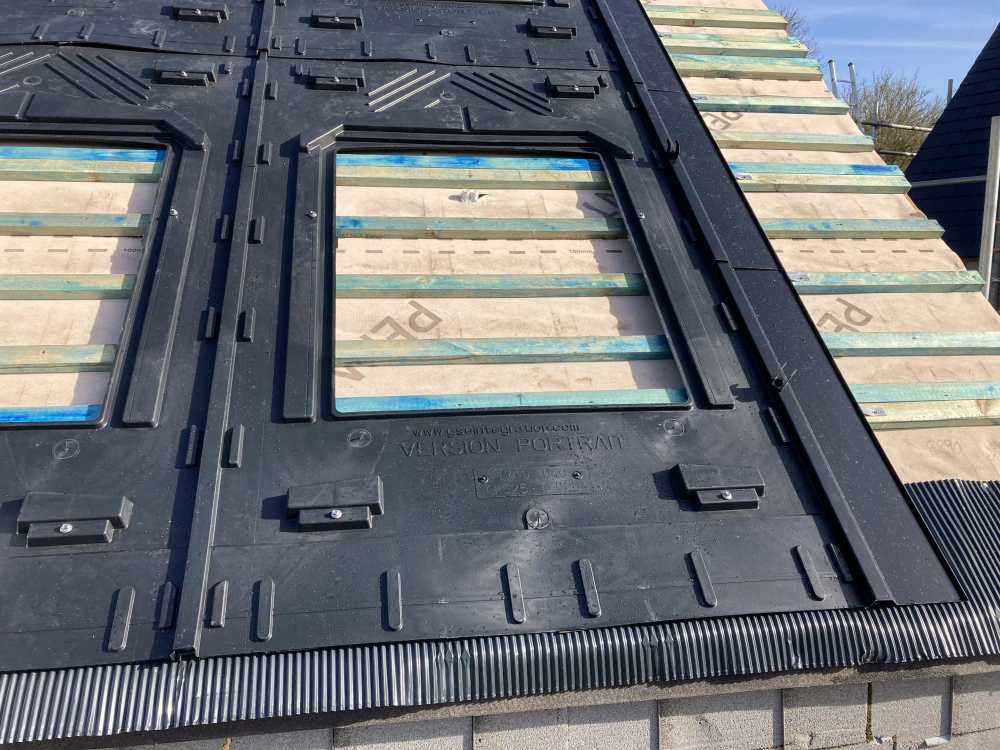
Screenshot from GSE YouTube video. It shows the support to the bottom of roof. The GSE tray on my install. The flashing hides the batten, but you can see the tray is supported.
-
Kore do talk about all the different soil types in their design guidelines, including various types of clay https://www.kore-system.com/wp-content/uploads/2022/02/KORE_Passive_Slab_Design_Guide.pdf
-
Boarding the Dormer - ceiling to slope
Nick Laslett replied to crispy_wafer's topic in Plastering & Rendering
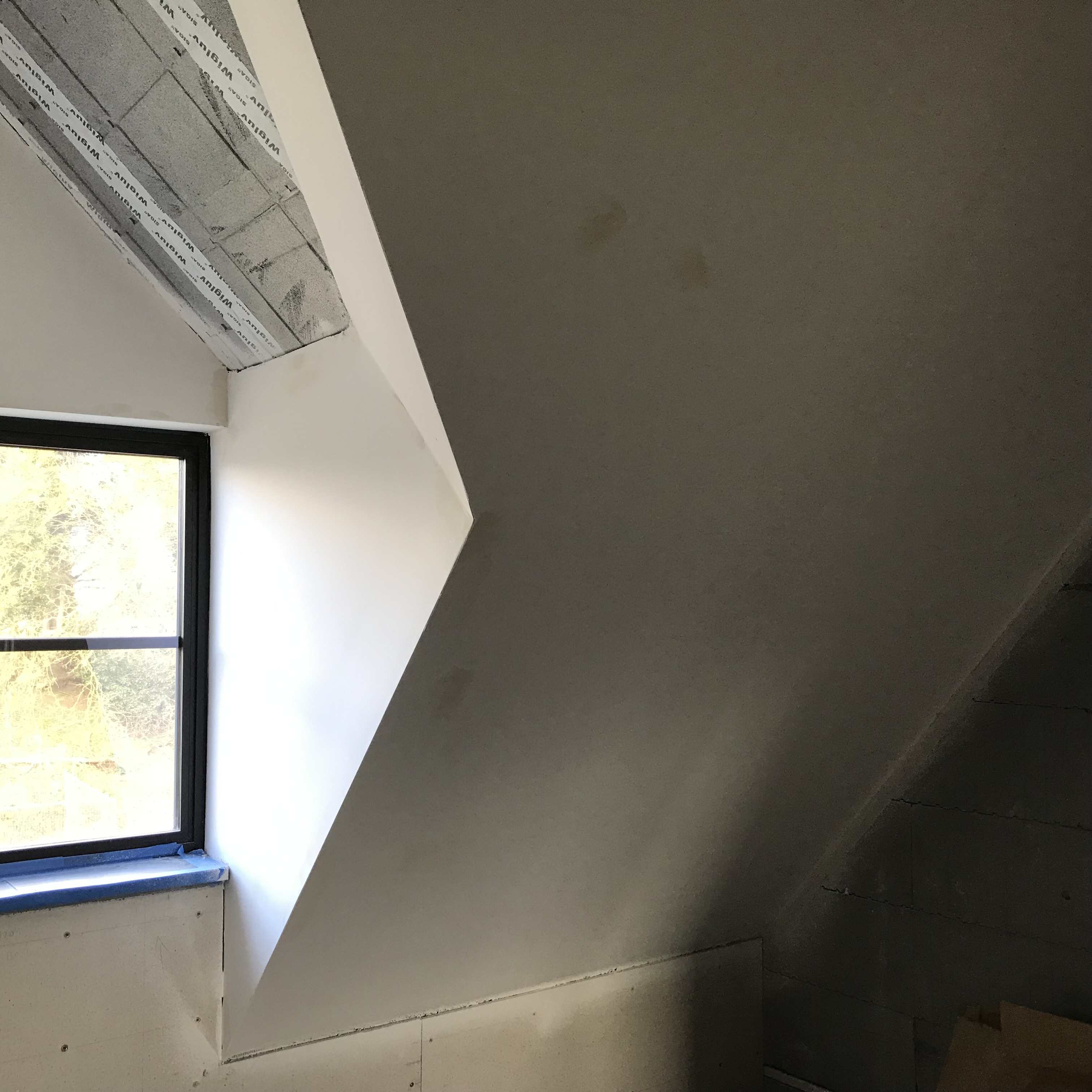
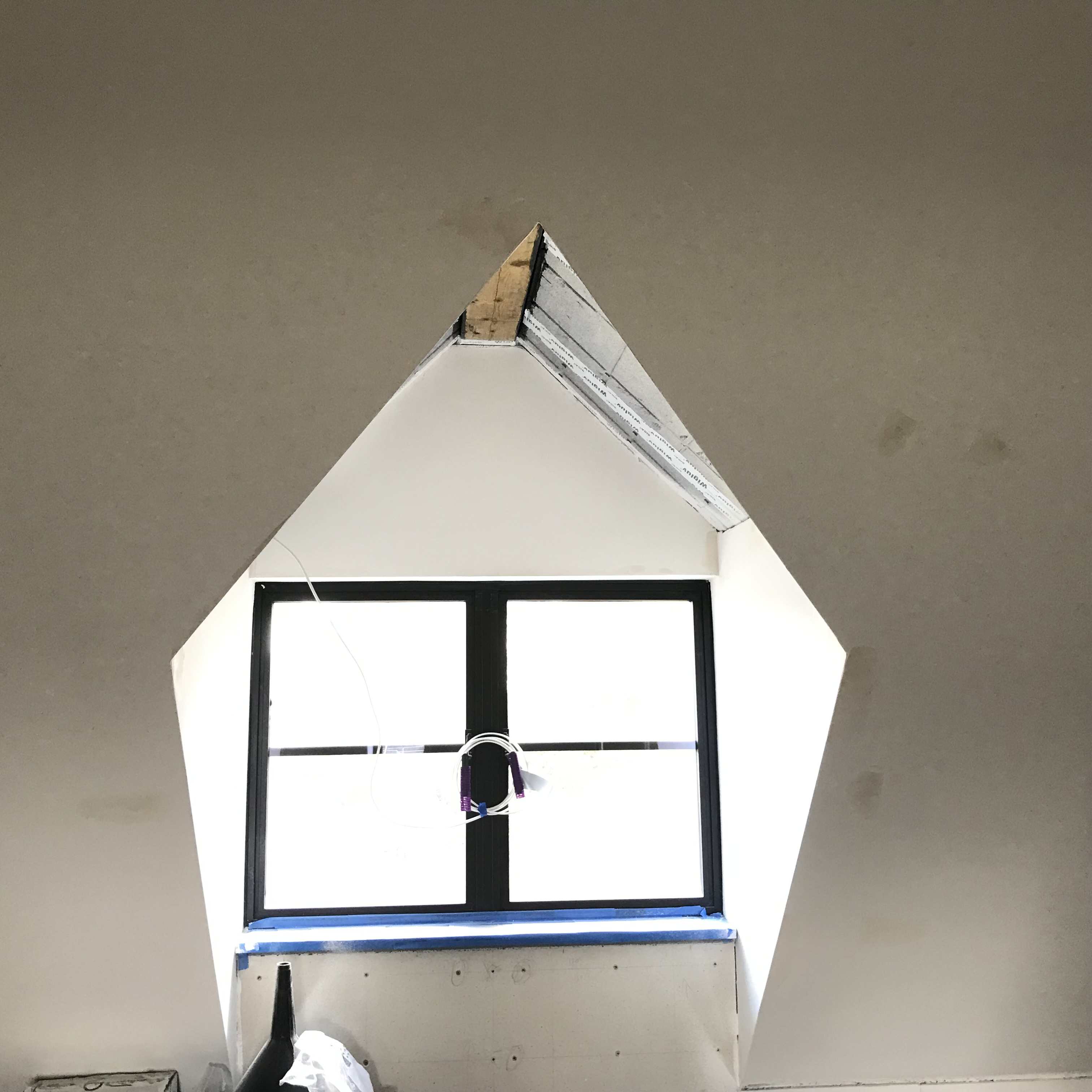
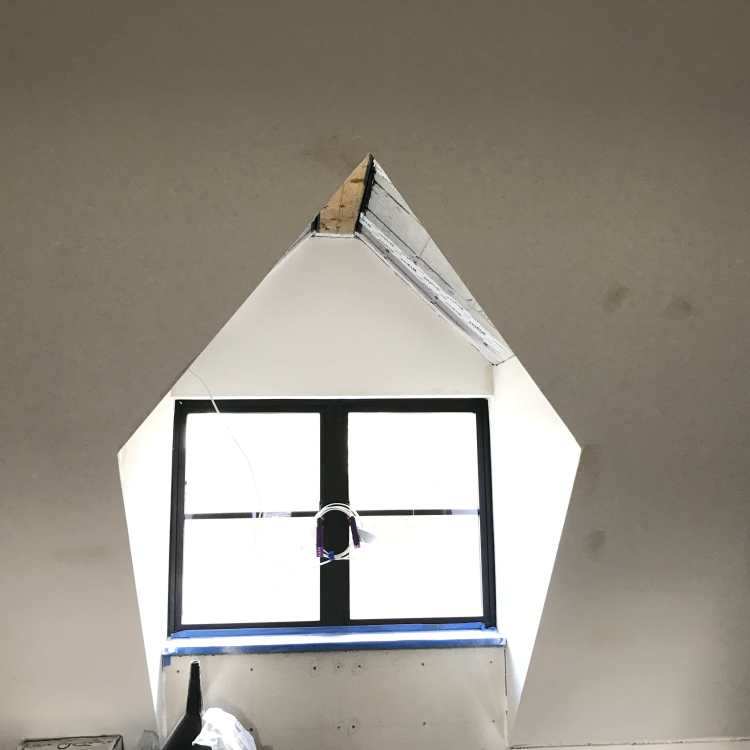
@crispy_wafer, I think I would do as @Russell griffiths suggests and discuss with your plasterer. Ours was happy to use corner beads, but every dormer is different. We have a table top roof, so they used mesh and rounded that joint. We only used plasterboard for the upstairs ceiling, we used Fermacell everywhere else.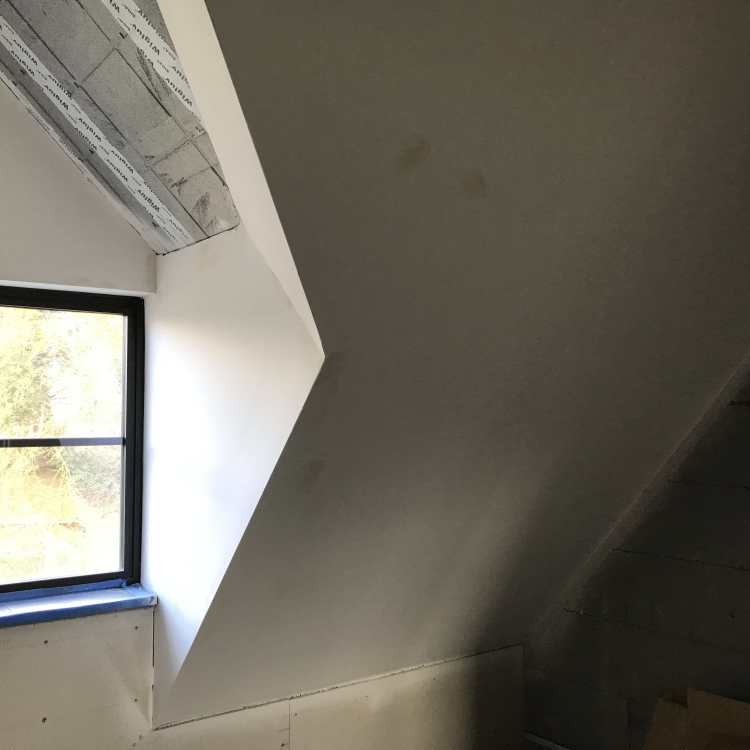
-
Extra insulation round SVP’s in a Kore passive slab?
Nick Laslett replied to Gibdog's topic in Foundations
@Gibdog, whether they are venting outside or have an AAV, they need some sound insulation. This will also provide thermal insulation, but it is the sound you really want to address. This is a good thread from the old days of BuildHub on this topic. You might have already seen this thread. NHBC is always worth a visit for minimum expected standards. https://www.nhbc.co.uk/binaries/content/assets/nhbc/tech-zone/nhbc-standards/tech-guidance/8.1/soundproofing-to-soil-and-vent-pipes-new-june-2020.pdf As others have mentioned earlier in the thread, the thermal bridging is trivial, but you have to do what is required if you want PH certification. Good luck with your pour today and tomorrow. Getting out of the ground is a big milestone. Enjoy the process. -
Extra insulation round SVP’s in a Kore passive slab?
Nick Laslett replied to Gibdog's topic in Foundations
Here is the PHPP thermal heat loss paper on the topic for anybody that is interested. This paper might not address these specific circumstances, and there might be one that is more applicable, not a rabbit hole I need to go down. https://www.elementalsolutions.co.uk/wp-content/uploads/2012/08/Heat-loss-via-internal-drainage-vent-pipes-full.pdf I might get a placard made up, so visitor's know that I most definitely don't have Phassive House Certification and saved 10's of thousands of ££££ on nonsense costs. When the revolution comes, I would be conflicted who to shoot first, Architects, Planning Officers, Buildings Controls, or now PHPP consultants. All said in jest, no harm meant, of course my build is full of passive house certified materials, plenty of intello membranes, nonsense £20 grommets, Siga tape, the list goes on. And the SVP stacks are all insulated with Tecsound FT55 AL Acoustic Pipe Wrap because the noise is a way bigger concern than a trivial heat loss. -
Acoustic underlay or sound insulation slab?
Nick Laslett replied to Beau's topic in Sound Insulation
This is one of my small bugbears. Building my stud walls was my first encounter with resilient acoustic tape. I ordered Siniat Resilient Tape along with all my Siniat metal framing materials. https://www.siniat.co.uk/en-gb/products-and-systems/products/finishing/siniat-resilient-tape/ I didn’t quite have enough and ordered some more generic tape from Amazon. The non-branded product was significantly poorer in quality than the Siniat product. It may be twice the price, but I definitely preferred it. This is probably just one of those small decisions that nobody cares about, but for me there are a number of items where the difference in quality vs the cost saving were a false economy. The more expensive Illbruck FM330 expanding foam was another item, worth the price over the cheaper options. -
Silencers for mvhr
Nick Laslett replied to mistake_not's topic in Mechanical Ventilation with Heat Recovery (MVHR)
I brought all of my MVHR ducting direct from Lindab. Here is the silencer page. They discount these list prices. https://www.lindab.co.uk/Products/ventilation/Sound-attenuation/?sort=popularity&display=16&page=1 They have a lot of configuration options. They have a double rubber gasket making for an easier seal. My MVHR system is still not commissioned, but I have 500mm long silencers. I would have gone with 900mm, but had height restrictions. For before the manifold I went with 200mm diameter, just seemed easier to overspec the system. From the manifold I went with the 90mm/76mm spiral ducting. Like @Nickfromwales suggests, don’t skimp on the MVHR components, it is going to be in place for a very long time. Robin Clevett was a big influence on my choice of Lindab. He did a very good promotional video on their system. https://youtu.be/0EQ-pJmPZ-M -
These modern adhesives are amazing, our door frames were fitted with special expanding foam adhesive, no other fixings. (These were fitted by the manufacturer’s fitters) I think if you are a novice DIY plumber, use CT1/OB1 with a little caution. I did screw down my first toilet pan as per MI, but when fitting the second toilet, I realised I had the supply pipe around the wrong way. So it was a relief that I could unscrew the fixing and put right my mistake. When I mocked up my first shower tray, I had the rubber seal on the trap in the wrong place, the funny thing is I ran the shower into the trap for 10 minutes, and it didn’t leak even though it was not connected correctly. Not a fan of the modern trend for floating toilet pans, not sure why. Anyway the frame system does make it easy to fit them.
-
ICF How much more expensive ?
Nick Laslett replied to Dave Jones's topic in Insulated Concrete Formwork (ICF)
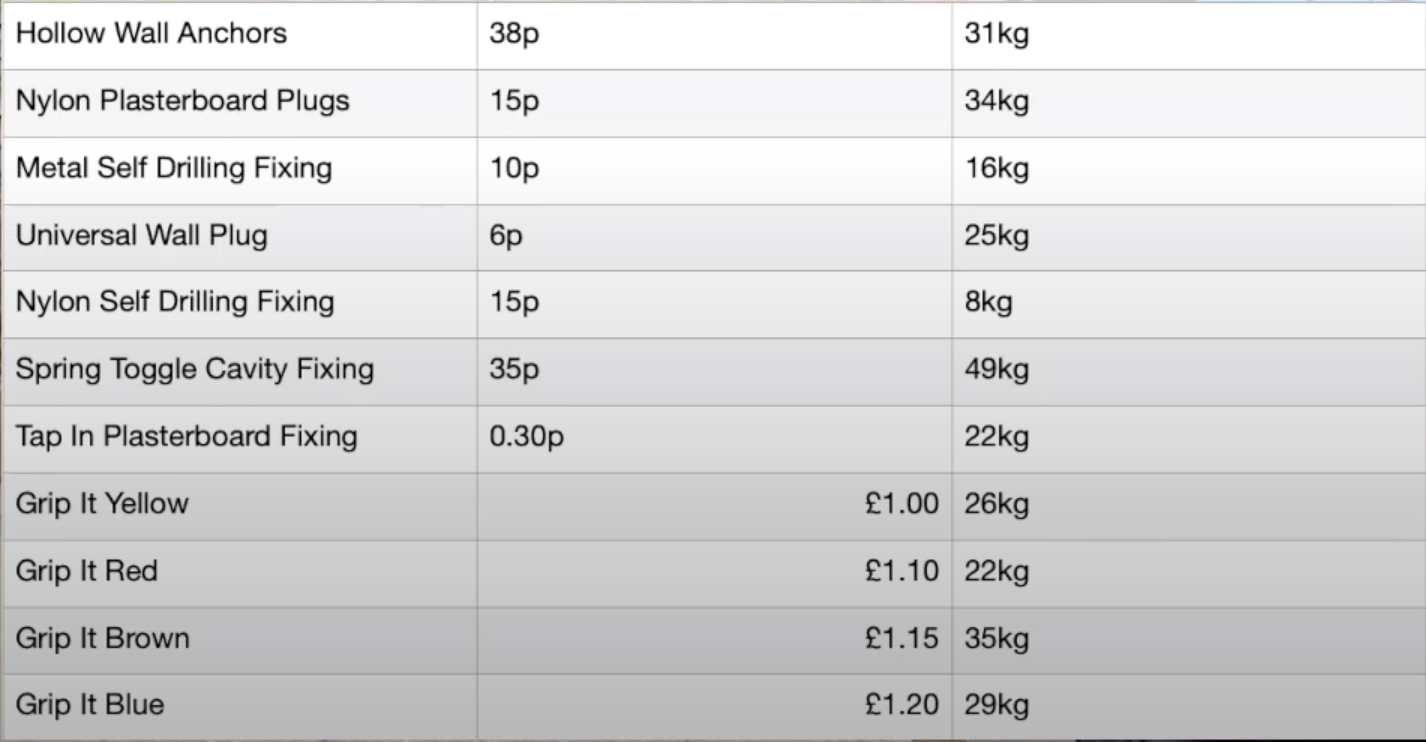
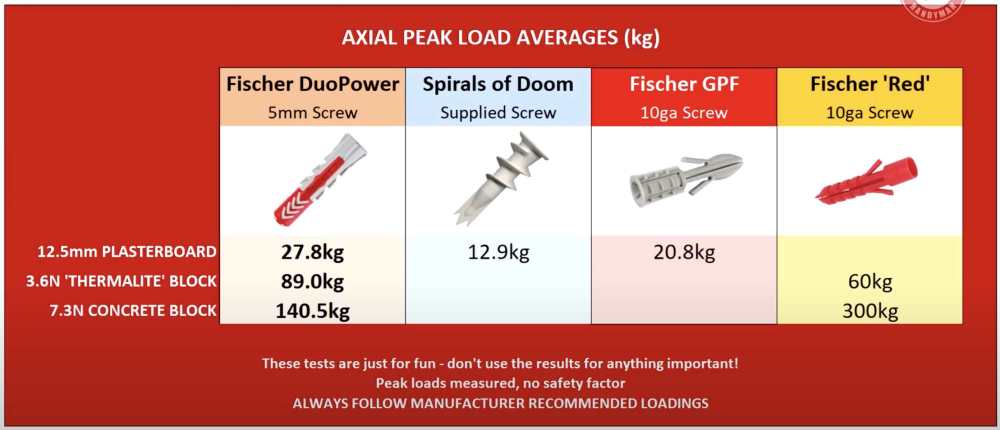
I've watched a fews of these Youtube testing videos, and it is surprisingly how much weight plasterboard can take. (Obviously there are many different specs of plasterboard.) This one tests a number of different fixings. https://youtu.be/nfGG1Z5m-5A?si=tu70HP6OMuasUncK DIYGuy Table Gosforth Handyman has a load of testing videos, and he compared the Fisher Duo fixing in plasterboard and got good results, 27.8kg Just as a point of reference the Samsung 98” Neo QLED 4K QN90D TV weighs 61.4kg. The Samsung 65” OLED S95D 4K TV weighs 18.9kg. TVs are just not that heavy these days. My old 60" Pioneer Kuro Plasma weighed 55.5kg.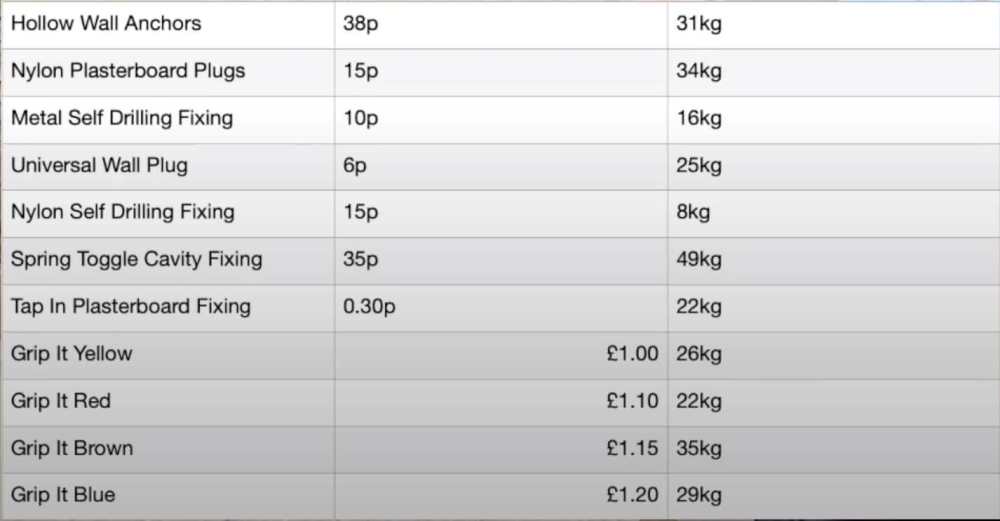
-
ICF How much more expensive ?
Nick Laslett replied to Dave Jones's topic in Insulated Concrete Formwork (ICF)
I'm not sure. They don't have any technical specs for the flanges. For internal finishing, you can either batten to the flanges, then fit plasterboard, or glue and screw the plasterboard directly to the blocks. When I finish the build, I might test the holding strength of the flange, but I would have thought it can hold 15kg on a single screw. The Fischer EPS fixings I use have a 10kg rating and they are just held in the eps.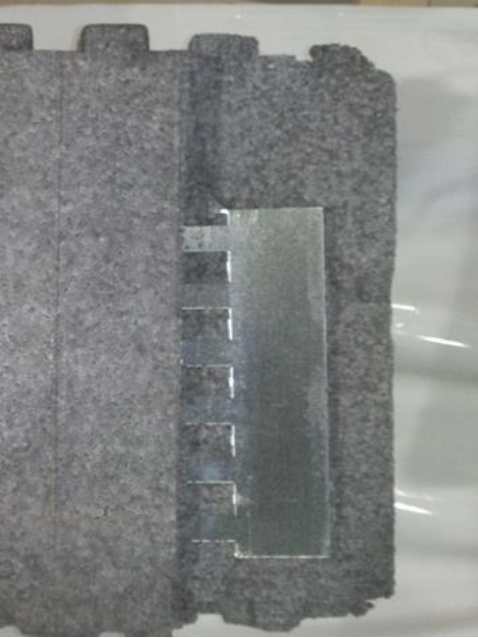
-
ICF How much more expensive ?
Nick Laslett replied to Dave Jones's topic in Insulated Concrete Formwork (ICF)
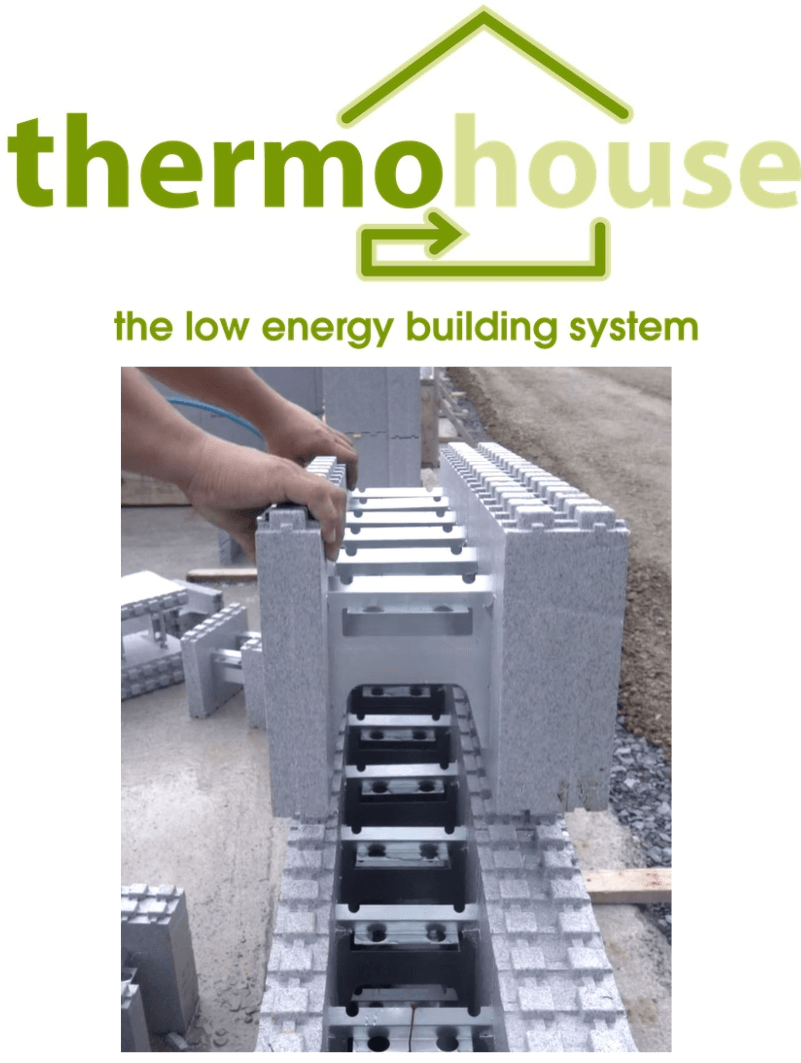
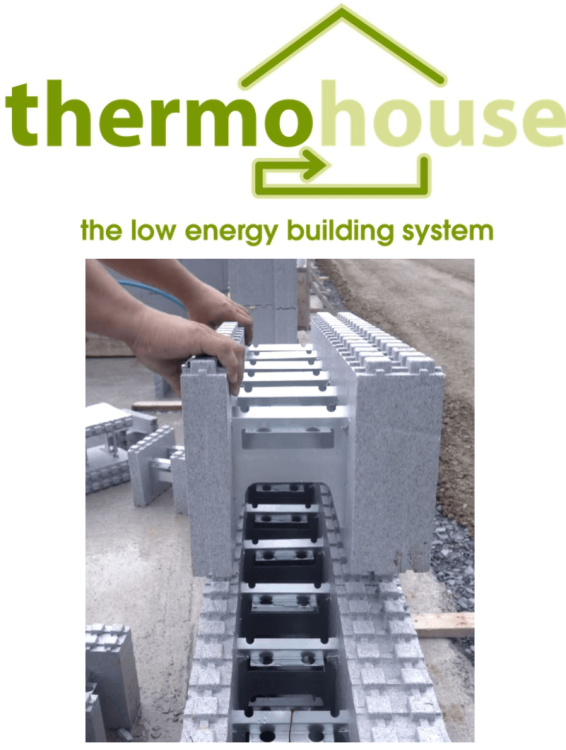
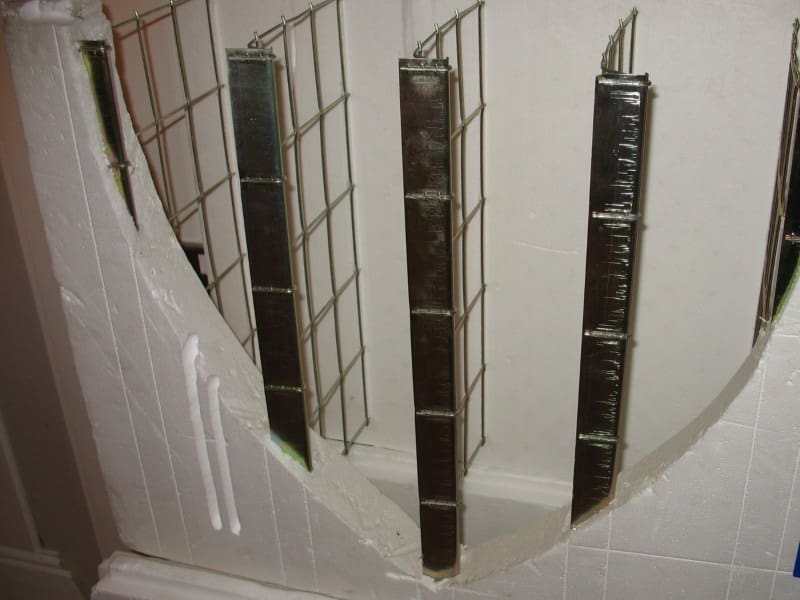
No, not really. Polysteel Block Thermohouse block The Thermohouse block flanges/webs are 40mm wide, spaced at 150mm centres.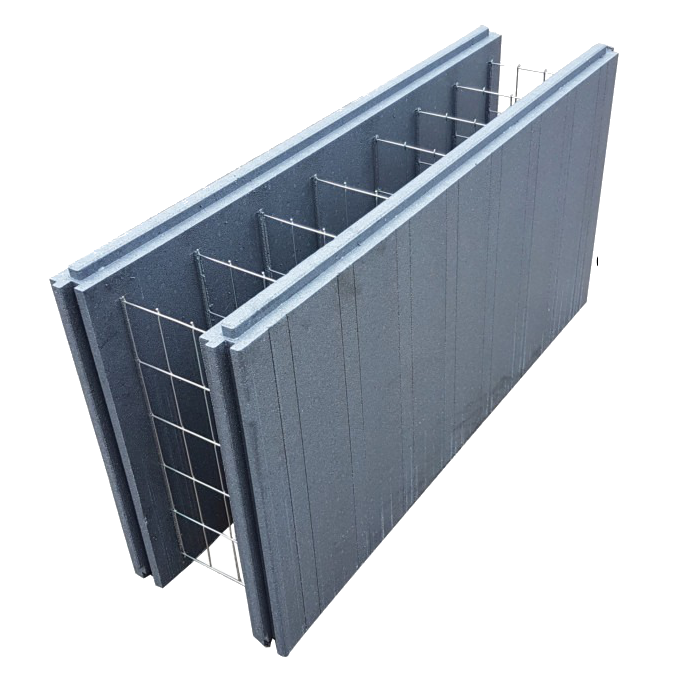
-
ICF How much more expensive ?
Nick Laslett replied to Dave Jones's topic in Insulated Concrete Formwork (ICF)
My choice to go with Thermohouse ICF blocks was a combination of many factors. The roof and floor solution were a big part of it. The fact that at that time they would build the superstructure. This greatly simplified the whole build, one company would do the structural engineering, construct the house, engineer and install the steel work, the roof etc. For me this combined the advantages of a timber frame kit built, with the characteristics of ICF concrete walls. I liked the fact that Thermohouse used the newer Neopor EPS technology from BASF. I even liked the origin story that Mike Cronin the owner of Thermohouse was looking for a way to utilise more concrete production from his main business, producing concrete. In Ireland they even recycle the EPS, because it is easy to ship it back to the factory. I believe that the Thermohouse system is licensed from and developed with BASF, so it is actually more Ireland focused in it’s attributes, to building regs compared to a lot of other ICF systems. I’m sorry if this sounds like I’m shilling for the company, but I had a genuinely positive experience on my build. If you are going down the ICF route, you need someone with good experience of the system you are going with. It looks simple, but there are a lot of small steps, that stop things like blowouts, bulging walls, etc. The bracing system brackets are an integral part of facilitating a good concrete wall pouring process as they create the platform you use whilst guiding the pump truck hose. They spent more time bracing my walls, than actually assembling them. Anyway, I could ramble for hours about ICF, I’ll stop now. 😉