


Radian
-
Posts
2586 -
Joined
-
Last visited
-
Days Won
15
Everything posted by Radian
-
There's a long list of things you can do to bulletproof a Pi. Eliminating reliance on the SD card is top of the list. I also thought I might explore that route so fired of a few emails middle of last week. Not one has replied. I'm still waiting on @joe90 for his proposed thread on DIY PV 😉
-
Sure. I'm very familiar with "the best laid plans of mice and men often going awry" as I have extensive experience in military and industrial engineering design. The knack is, as you mention, to have multiple fall-backs but even more relevant is understanding the risks due to unexpected failures. Frankly in the case of this CT bridge, a complete cock-up in relaying the true state of export/import is only going to result in undesired loss of stored energy within the limits of the approved equipment. That'd be my loss. But I don't think I'm going to get the chance anyway. But you seem to have problems with your Pi that I don't get. I have yet to see a lock-up in the server hosting Mosquitto and that's been running for about as long as yours, along with node-red and a few custom services. Do you connect to your LAN with an ethernet cable? I had a good chat with the installer about this and I've concluded that there's no point pressing them over the issue. It's been made clear that it's 'take it or leave it' situation. The market out there has utterly transformed since the recent geopolitical unpleasantness. I feel the need to get the basics sorted as a matter of urgency. I've lost a week on this already and I'm just getting further behind in the queue.
-
Still 25m away with a freshly paved patio to cross. If it wasn't for the bureaucracy I'd A/D convert locally, transmit the measurement over MQTT and reproduce in analogue form at the invertor. I suggested this to the installer who wasn't having any of it on account of this not being Type Approved. Type approval seems to be the catch even with G98 export: Requirements for the connection of Fully Type Tested Micro-generators (up to and including 16 A per phase) in parallel with public Low Voltage Distribution Networks on or after 27 April 2019 includes the requirment for CT's to meet BS EN 61869 (Instrument Transformers: Additional requirements for current transformers) I'm stuffed.
-
OK, finally got the answer as to why we would need to install an AC coupled battery/inverter in the house rather than what we wanted - a DC coupled battery/hybrid inverter system in the garage. I've been told it's because the DC system needs a wired connection to a CT on the meter tails. I asked if this was something that could be provisioned wirelessly and the answer was no, because the DNO's insist on wired connection. There you have it. Naively I though the hybrid inverter would figure out when to charge/discharge the battery based on simple priorities: If battery charging is treated as a priority then all PV goes into the battery until full, then the PV is converted to AC until the sun stops hitting it. The battery would then discharge until exhausted. This, on reflection would defeat the goal of storage for self consumption unless it was pre-set to only convert a fixed amount of power to cover a known base load. But I'm being told the inverter makes a judgment on whether to charge or discharge the battery depending on whether you're importing or exporting. This way the battery is only bought into play to store and recover any excess generation.
-

Can I just fit heat alarms instead of smoke alarms
Radian replied to Adsibob's topic in Building Regulations
The wood burning stove shouldn't be an issue if working properly. Combustion products shouldn't be escaping into the air inside. I have an open fire that we throw logs onto and the nearby smoke alarm has yet to be triggered by it. The toaster, however, is the one appliance that never seems to be sufficiently well engineered. You might consider an extraction system specifically for this device but that's pretty extreme. One of my little projects is a hacked toaster that uses a PM2.5 sensor to trip the power when it gets the tiniest whiff of smoke. Perfect toast whatever the conditions and no more false alarms. -
Well, it's really a matter of semantics and how you 'dispose' of the unwanted power if your supply is fixed i.e. the mains supply. Semantics because the end result will be always involve a reduction in both the current and the voltage to the load. In order to reduce the current you have to reduce the voltage and vice versa. Assuming, however, that you want lossless power control (i.e. you don't want to dispose of the unwanted power in another resistance) then you will need to introduce a component to buffer some energy at certain times. This switched-mode system can be as simple as pulse width modulation where the buffering comes from the time constant of the heating device. Or it could be that you choose to monitor either current or voltage and feed this measurement back to the switch to adjust the power accordingly. Voltage measurement is more convenient than current (there are no intrinsic current measurement devices, they all measure a voltage drop which is proportional to current) so this seems to me to be the only practical distinction. Ultimately though, if open-loop PWM is used with a predetermined duty factor then there is no voltage or current control - just power.
-
Citation required 😁 🤔 😳 🕯️
-
Practical considerations aside, there can't be any theoretical distinction between current vs voltage control of a non-reactive load. The commutative property of multiplication makes the power product the same.
-
Yes, the only distinction being that they're a 'practical' current source not an 'ideal' one.
-
Yes @Temp I would expect all modern inverters to have MPPT (Maximum Power Point Tracking) as significant conversion efficiency gains are available by optimising the load presented to the PV modules. It's also the process that allows us great flexibility in choosing our PV modules and the number we use. It's quite a fascinating design challenge - measuring the power being transferred is as simple as measuring the voltage (V) at the input of the inverter along with the current (I) flowing in. But then what do you do with the measurements? Power is V*I and, in the case of the inverter, can be changed by controlling the load impedance presented by the conversion stage. If the load presented by the DC to AC converter is started off at a high impedance and gradually reduced while monitoring V*I the power should increase up to some maximum point then begin to fall off again as current continues to increase but the PV voltage falls. The MPP has therefore been found. The trickier bit lies in the algorithm that adapts this process to the dynamics of numerous variables like the radiant energy being absorbed and other factors that affect this such as shading and temperature. I had a go at designing one for the PV/battery combo I use to power my garden lighting and the best I could come up with at the time was to hunt up and down, constantly going past the MPP in each direction to achieve a good average but then all kinds of finer tuning has to come into play to manage situations such as sudden loss of power due to passing clouds. All good fun though.
-
This has opened a number of opportunities I hadn't really thought about. I have an 8m wide, 3m deep, South facing deck that gets too hot to use in the summer. Unfortunately its around 30m from the house. I don't fancy trenching in a SWA but it sure would make a fine spot for an PV array.
-
Damn that's a good idea. I've chickened out of fixing them to our roof but we once had a pergola against our SE wall and I could always rebuild it as an array support. The grapevine would thank me for reinstating it too 🍇
-
The optimum core voltage has a slightly complicated relationship with the clock speed. To maintain a sensible level of dissipation the voltage really needs to be reduced when the clock speed is increased. But this works against the need for a higher core voltage to keep rise times within stability bounds. I'm reasonably convinced that it is the adaptive change in clock speed that throws the processor as it switches from one speed to another. Enabling force turbo mode ensures that the clock speed is fixed. If there was an option to fix any other clock speed I think this would have the same effect. The only possible benefit of altering Vcore is to bring rise times into spec for higher speeds. The default value should be adequate for all the speeds including turbo. It is only that there will be additional dissipation when force turbo is enabled. If stability could be maintained with a lower Vcore then this may be worth doing.
-
I know you want to educate and that's very noble. I'm currently so depressed by world events, I can't bear to lay any more misery on anyone else. Let's be as gentle to each other as we can 😔
-
The inverter MPP tracker will adjust to the maximum input current the inverter can handle. Note that this may cause the input voltage to the inverter to rise towards the sum of the maximum OC voltage ratings for the modules - this is where the actual danger arises. Exceeding the maximum input voltage will definitely do damage. You should be aiming at no more than 75% of this figure IMO. As well as ensuring the maximum OC voltage is within limits you will also have to consider the minimum voltage that will be presented by your series string. If the aim of using these high power modules is to reduce their number, you may be providing insufficient Voltage to start the inverter.
-
How to fix light switch in Neff Neff K4663X0GB/42
Radian replied to Radian's topic in Kitchen & Household Appliances
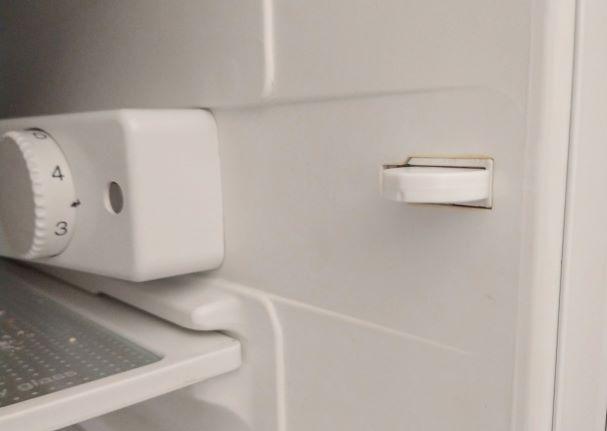
It doesn't respond well to being prised out. I think the aperture is too small to allow an feasible switch body with de-mountable wring contacts to come through anyway. It looks big in the photo but measures just 10mm x 30mm and the plunger for the switch is innermost (where the aperture tapers down) so there's plenty more hiding behind the cam. Funny you should mention using an LED - that's what I put in there years ago. The original bulb was 15W IIRC but the smallest LED I could get to replace it was 3W. Good job too because I have no idea how many years it has been stuck on! -
I'm sorry if my cautious approach has thrown you, it's just that I'm beginning to see unmaintainable lighting being plastered-in and I have a lot of experience with Chinese LED products. The drivers are inexpensive so you might consider getting a 350mA one and give it a try. It will definitely work and if it gives you an acceptable result, it will prolong the life of your LEDs and save you some money on the electricity bill.
-
Agreed it's being driven correctly, but possibly inappropriately. The label on the LED shown seems to say 700mA 2.8V (A voltage that sounds a little on the low side, especially for a white LED @ 700mA) but therefore at least 2W. That is not a trivial amount of dissipation and unless mounted on well ventilated heatsink of at least 10°C/W will be taking the LED die towards 50°C where its lifetime will be significantly degraded. I doubt that such a heatsink is provided or would have sufficient airflow.
-
How to fix light switch in Neff Neff K4663X0GB/42
Radian replied to Radian's topic in Kitchen & Household Appliances
Been in that position and had the blood pool in my head on a number of occasions 😝 A stupid place to put a relay with a crappy connector (under the dash, not my head). Yes as much as I'd like to get it all done in one extraction by having the parts already, I don't think I'm going to be able to this time as I can't even find anyone showing the business end of the light switch. Lots of things called Switch-Element but no part number or photo. At least two listed for my fridge. This may turn out to be a job for the 3D printer. -
@James94 I have a small suggestion for you: Assuming that the LED's themselves are non-replaceable and are to be plastered-in, then, if the full brightness is not really necessary I would swap the 700mA constant current driver for a standard 350mA one. This would ensure the longevity of the LEDs by running them cooler. It shouldn't affect the colour temperature (like it would if they were incandescent lamps), just the brightness. China often over-drive their LED products to make them more spectacular but the consequent reduction in lifespan is something that takes place out of sight of the market. 2.8V at 0.35A is roughly 1 Watt which should be more than enough for this distributed lighting application.
-
Yes, a single piece of stranded wire. Maybe slit down a bit of flex if you have some.
-
I can just read the ratings label. 700ma from the driver up to 17V max. 700mA for the LED at 2.8V so just about 6 LEDs to a driver. But their diagram is a hot mess. Ignore it and just connect the red from one of your LEDs to + on the driver then daisy chain the next LED's red to the black from the first one until you take the final black to the -ve on the driver.
-
How to fix light switch in Neff Neff K4663X0GB/42
Radian replied to Radian's topic in Kitchen & Household Appliances
It's strange anyway. The replacement part above described as "K4663X0GB/42 Switch-Element" is just a dumb cam wheel with spring that presses in a button hidden within the recessed part. Well wort a tenner plus postage and a 10 day wait 😖 Although Mr Jeremy Clynes - London - 20th Feb 2013 thinks: The real switch lies out of sight. And has terminals with wires etc. Brilliant. Can't believe a vendor of spare parts calls themselves 'Ransoms'. Genius. And I never bodge anything thank you very much. 😁 -
I hooked up a power logger to my fridge and soon discovered that the light was permanently on inside! Doh! How many people think to check this I wonder? Anyway, I can't see any way to repair this without extracting the built-in fridge from its cabinet. Just wondering if anyone has experience... It seems this is a replacement part:
-
Check out these diagrams detailing double stud wall soundproofing
