

TerryE
-
Posts
3806 -
Joined
-
Last visited
-
Days Won
30
Everything posted by TerryE
-
Which parts did you DIY?
TerryE replied to BadgerBadger's topic in General Self Build & DIY Discussion
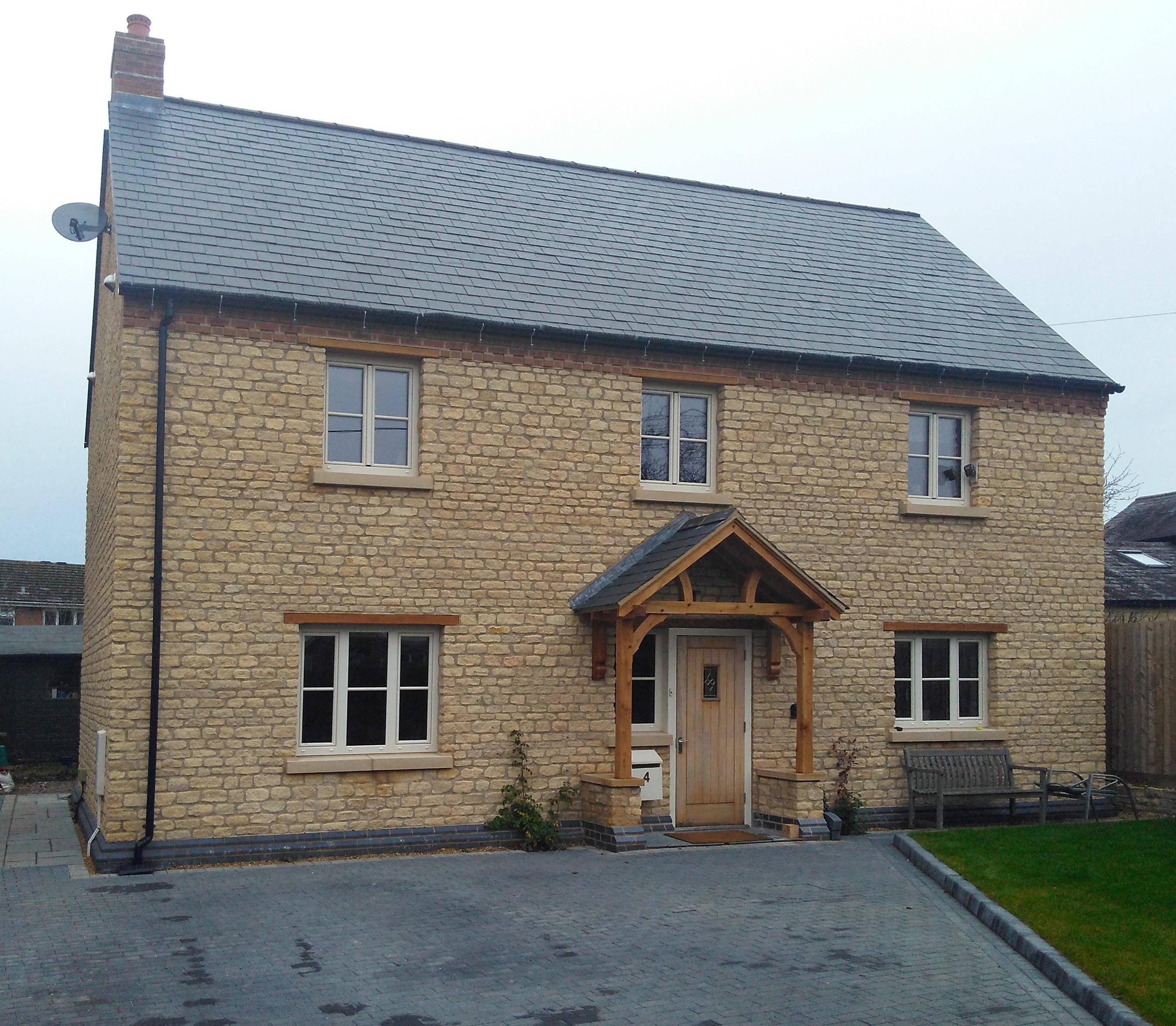
@pocster, I like your summary, but there is also an element of QA and also ensuring the design and build is actually what you want. I was involved career-wise in the project management and technical assurance of a lot of large IT projects, and I learnt a lot of rules of thumb here, which we applied well on our build. Anyone who leaves a bespoke build to a bunch of subs is foolish. You must have independent design and project management from someone that you truly trust, and comes with an excellent track record. This is not cheap -- maybe a 15% overhead on build costs -- and this is a fair reflection of the skill and time involved. TBH, most of the successful self-builders here have taken on these roles themselves. In our case, I got a TA to do the outline plans for planning consent, but worked closely with the TF companies TA to develop the detailed TF, slab, UFH plans, etc. I think we went through 10 design revisions. We were also onsite daily during the build, especially during critical phases. You must be willing to invest in quality subcontractors with a clear track record and establish a well defined scope. In our case we had two main subs and a couple of minors: The slab, TF, and airtightness was a fixed price on stage payment contract with MBC. IMO one of the best decisions we made, and I would unreservedly recommended them as a supplier. The groundworks, slate roof and stone skin was done by a local builder with an excellent reputation, all on time and materials. He normally only does complete developments to his own design, then sells them as-built. However, we were lucky to catch him between jobs as he'd run out of plots that had cleared planning. Again, this proved an excellent choice. Internorm for fenestration. Two internal custom made wood staircases by a good supplier. We used some of our builder's tradesman subbies at his recommendation, but we contracted them directly. However, his recommendation had major advantages in that (i) they were good and (ii) they weren't willing to cross him (iii) we could see the standard of their work on some of his builds: electrician, plasterboard fit and plastering out, tiling. Things typically go wrong at the interface between 2 subs; they always go wrong if it's a 3-way interface, so these need to be monitored in absolute detail. We didn't split the scope of any one trade: either subcontract or DIY. I did the entire rewiring of my old house, but that was pre the Part P certification requirement, so this got subbed out. In terms of what we did, it was everything else: design and oversight, project management, all submissions for Planning and Building Control, financial control including VAT claim; a lot of the procurement, all of the internal joinery and woodwork, CH design and all plumbing, MVHR design and implementation, all other second fit, including staircases, kitchen, utility, en-suites and bathroom. Neither of us like P&D, but that's my nephew's trade and he's good, so we had him to stay for ~3 weeks to do this. After we moved in, we subcontracted the drive way, electric gate installation and rear garden landscaping again to local specialist contractors. My wife and I are delighted with how the build turned out, both in terms of quality and fitness for purpose. We have a passive-class, low maintenance house built exactly to our spec. Because we had a large plot in our previous house and could split it, the plot only cost us maybe £50K off the sale value of our old house, so this saving plus the value of our own labour meant that we realised quite a lot of capital in the move into a house that was perhaps 20% smaller than our previous pretty large farmhouse, but extremely well suited to our retirement. So we are very glad we took this on. It was also extremely hard work and at times extremely stressful, so we would never do it again. Once in your life is enough, IMO. -
It's taken about 3 years for my registration to complete!
TerryE replied to DamonHD's topic in Introduce Yourself
TBH, I post my stuff in blog here, and then copy the content to my own hosted blog. -
It's taken about 3 years for my registration to complete!
TerryE replied to DamonHD's topic in Introduce Yourself
@DamonHD, I was scanning another topic and I have just noticed that an old member is back (from eBuild days that is). So a belated hello and welcome again ? Jeremy has gone cold turkey on the forum, so some move on and some return. BTW, I liked your Thermal Imaging Survey blog post. It's a pity that this stuff isn't more accessible to member here. -
The Economics of our SunAmps
TerryE commented on TerryE's blog entry in The House at the Bottom of the Garden
Sorry, I discussed this on my previous blog entry at this comment. My control system circulates water through the slab for 8 mins every hour throughout the year to redistribute heating from direct sunlight, etc., and the averaged UFH return flow temp at the end of 8 min window is an extremely accurate measure of the overall slab temperature. Flow immediately loops back from the slab return through the Willis and the pump back into the slab input. If I were to hook in the ASHP then I'd only want to do this when the ASHP is running (with maybe 10 mins bracket either side.) I certainly would want the water circulating through the external loop to the ASHP when it is powered off. @Dudda, I've always done it. My house front faces SSE so we do get a bit of solar gain through to ~2PM. I also use it for the slab temperature. This is less that 0.2 kWh / day so the cost is a few pence and ends up heating the slab anyway. -
The Economics of our SunAmps
TerryE commented on TerryE's blog entry in The House at the Bottom of the Garden
Yup, but I would never go back to having the CW @ 3 bar and the HW @ ~0.5 bar. All the mixers just work so much better on a 3+3 configuration. -
The Economics of our SunAmps
TerryE commented on TerryE's blog entry in The House at the Bottom of the Garden
An ASHP running at an output of 30°C will have a CoP over 4, so will save around £300-600 p.a., say, depending on tariffs, say. Probably not worth investing £5K, but £2-3K is a goer, which is why I would only consider a simple approach of directly plumbing an ASHP into the stab loop, albeit with a Y-plan valve so the ASHP can be bypassed when doing hourly recirculation and the ASHP is off. -
The Economics of our SunAmps
TerryE commented on TerryE's blog entry in The House at the Bottom of the Garden
@ProDave, what really triggered this was a comment by @Bramco on another blog post where he said that he'd ended up configuring his UFH system as multi-zone to keep his plumber happy. Another friend did a self build locally and his plumbing was just amazing - the amount of copper involved and HW cycles, etc. Again he did it that what because his plumber insisted he need this to have rapid HW. As @Nickfromwales would point out: use a manifold system on run most of basin hots in 10mm -- the whole installations would have been a lot simpler and more energy efficient. So I adopted an either / or approach: I either gave the job to a tradesman / sub (e.g. tiling, electrics, PBoarding and plastering) or did it myself (all joinery, plumbing, MVHR, home automation, ...). In our area when the build taking place there was lots of construction going on, so finding decent tradesmen for small piecework was fraught. @Dudda, I think that you are right: the 40% "back of the fag packet" is probably to high. I am going to do a reinstall of the control and power switching in the summer to make it easier for my son / son-in-law / 3-rd party to take over maintenance if I pop my clogs. This will include metered switching of the SunAmps, so I will have a better idea. However this only serves to strengthen my overall conclusion of this topic: the running cost savings gained by using external ASHP, etc., to preheat water going into the SunAmps is far too small to justify the extra installation complexity. -
The Economics of our SunAmps
TerryE commented on TerryE's blog entry in The House at the Bottom of the Garden
@SteamyTea, Note that I've added an extra SumAmp advantage above. Unlike a UVC, the SunAmps don't require a G3 certificate, so Jan and I could do the entire plumbing installation ourselves. This saved us maybe 3× the cost premium of the SunAmps over the UVC alternative, and we also got the installation that we wanted and not one suited for a conventional new build. -
An Overview of my House Heating and Controls 4 years on
TerryE commented on TerryE's blog entry in The House at the Bottom of the Garden
@Bramco, Clearly too late for you now, but other members who tend to use this blog as a reference, this daily QR during these intensive periods is absolutely essential IMO. I discussed a good example in our case in this post, Coping with a thermal flaw in the design. I picked it up before the actual pour and agreed the workaround with MBC within a couple of days including getting it signed off by their SE before the pour was done. We also helped the crew by taking off XY offsets of rising pipes etc from the nearest slab corners directly from the AutoCAD files, and Also checked the levels and diagonals of the EPC framing before the pour to make sure the mold was true and ditto the poured slab before the frame was shipped. Another unnamed MBC customer who was a member here expected magic to happen. Their groundworks sub didn't do the compaction layering correctly and so the entire slab slumped by about 3 cm in one corner during pour. This was a cockup that could have been largely mitigated with an extra few days work to reshutter and add a self levelling layer whilst the slab was still green. Because no one checked, so this cock-up wasn't discovered until the framing crew arrived with all the cassettes on a couple big lorries only to find the slab base was out of design spec. This issue of your trades not understanding the characteristics of designing and fixing services in a passive house is a real PITA, IMO. I gave up with plumbers and did it all myself, with some absolutely invaluable remote advice and help from @Nickfromwales. Ditto all of internal woodworking and MVHR install. -
The Economics of our SunAmps
TerryE commented on TerryE's blog entry in The House at the Bottom of the Garden
Nick, doesn't this 5°C refer to the top of the tank? You have a thermal gradient throughout the tank, with the corresponding number at the bottom over 25°C and a tank average some 15°C so surely the losses are ~ 3× what you say. But still a good number. ? -
An Overview of my House Heating and Controls 4 years on
TerryE commented on TerryE's blog entry in The House at the Bottom of the Garden
@Bramco Simon, I am quite surprised that you managed to fit 1200m of UFH heating in your slab. We only have 280m or so. IIRC we have ~ 230m² living space (but that's over 3 floors) and only the slab is heated by UFH. We were lucky to have a large plot that we could get planning permission to split off a plot for a new dwelling, so we were literally living next door to the new build and being retired we were able to provide lots of tea, coffee, and bacon butties to the onsite crews as well as being able to keep a very close eye on build process and quality without being overtly intrusive. We were also very lucky with the crews who were extremely hard working and committed to doing a quality job. Even so we did pick up a couple of major design cock-ups early enough that we could liaise with MBC and get fixes put in before the consequential ripple forward. The MBC build process compacts their onsite work into three intense 7-10 periods. IMO, you really need a project manager who is independent of the construction crew on-site daily during this work to do quality control, trouble shoot and handle supplier liaison. In our case I was competent enough and also had the free time to do this role. So many self-builders seem to think that you can leave it to the subs and trades and assume that magic will happen. IMO you don't need in-slab sensors as you can measure out and return water temperature directly. I have a quite few Zigbee Aqara temperature / humidity dotted around the house for my home automation system. But my CH control system uses a directly connected DS18B20 embedded inside an internal stud wall as the reference internal temperature. I also bought 20 of these. They were cheap as chips and I ran some calibrations on them to ensure consistency and discarded 3 that were out of my spec. I also determined a temperature offset for each individual thermometer so that the reported temperature for all were within a ¼°C tramline across the operating range. (I posted about this calibration exercise). One other thing my CH control does is to circulate the water in the slab for 8 mins every hour throughout the year. This has two benefits: (1) this redistributes heat from hotspots (e.g. from direct sunlight through windows) to the whole slab (Thanks to @Jeremy Harris for this suggestion); and (2) the averaged UFH return flow temp is an extremely accurate measure of the overall slab temperature. I only use one thermostat for feedback into the CH control system because (i) this was easy to directly wire up; (ii) when you go around the house with a FIR temperature probe, every surface is the same temperature within a degree or so, so a single probe is quite adequate. -
The Economics of our SunAmps
TerryE commented on TerryE's blog entry in The House at the Bottom of the Garden
@SteamyTea Nick, if you bring the tank to temp say up to midnight, turn off electricity and don't draw any HW until the morning, then you could use the sort of curves above to estimate the daily heat loss and do the sums and trade-offs on insulation options. I suspect that that its doing to be a few kWh of heating being dumped into the general internal heating. I haven't done this calc for a conventional cylinder because I don't have one, but I do know that the one in our old house lost a lot of heat -- we used it as a drying / airing cupboard because of this. The choice of SunAmp for us was one of those informed coin tosses that you have to make when finalising the house design. It's also one that I think experience has shown to be a good one for us. Why? Form factor. The 2 units are the size of a large PC / small server and are cuboid rather than cylindrical. We use a small cupboard off our downstairs toilet for all of our services: DHW, CH and water filter. This form factor means that we could stand them on a shelf against the walls, and so be very space efficient. Low heat losses. The thermal density of PCM means that the units have a small external area, and the flat surfaces means allows for the use of vacuum insulated panels which have an R-value maybe 5-7 × greater then equivalent foam insulation. This means that the service area doesn't overheat, and we can do all of our heating overnight. Redundancy. Controller failures (see below) have meant that we've been on one SunAmp a couple times, but one SunAmp still gives enough HW even if I needed a midday heat top-up -- a lot better than no HW. No CITB training requirement / G3 certification needed for installation. I installed and plumbed in the SunAmps myself. (The electrician wired them in and his Part P certificate covered this.) My BCO did as for the G3 certificated, but accepted the manufacturers statement that there was only ~1 litre internal H/W at 3 bar pressure, there wasn't a safety issue as with an UVC. Being able to do all the plumbing ourselves saved us a lot more than the price premium for the SunAmps. The general build quality of the SunAmpPV units is excellent, though I notice that some members have reported quality issues with the next generation Uniq units. I also personally view the controller board design as overly complicated and poorly implemented (used in both types) . For example there is no proper separation of the 5V logic and the 240V power and the 240V tracking is totally inadequate. Also, even though the PCM-base units are more thermal dense and hence kWh for kWr they are a lot lighter than the equivalent full water cylinder; however unlike a conventional cylinder, their empty weight is still basically the same as their full weight so they aren't easily movable for maintenance. For this reason, I view this "all in 1 box" approach as unwise because of long-term maintenance issues, though to be fair I can see why this is a better option for the vendor and for most customers and installers. It's a pity that you can't just get a mini dumb thermal store in this cuboid + PCM form-factor. -
An Overview of my House Heating and Controls 4 years on
TerryE commented on TerryE's blog entry in The House at the Bottom of the Garden
@Dan F, picking up a relevant point in your last PM, IMO the MBC built -- or equivalent -- low energy houses have some common high insulation, little or no thermal bridging, very airtight, MVHR. Large thermal mass within the insulated shell. This first leads to a typical daily heating requirement of perhaps 50 kWh (+/- a factor of two) for typical January temperatures. A good way to evaluate the second is to let the house read a stable "normal temperature" and then turn off the heating for 24 hrs and measure the temperature drop. Our house loses about 1°C / day. That is the house as a system has a very long time constant. IMO, most heating control systems are based on a on/off demand based on some dead-band around a temperature set-point; these really only work well for typical houses which might lose more like 1°C / hr. Given this 1°C per day response, I think that my overall strategy is far more robust: Once per day calculate how heat will be required for the following day based on some simple formula. I base mine on external temperature, but if you have large window areas, then you might need to factor in solar gain, etc. Execute a daily plan to dump the calculated amount of heat into the house. In my case I pack most or all into the cheap-rate time window then dole out the remainder (if any) based on a simple temperature sensor threshold. I use resistive heating but IMO the same approach would work equally well for an ASHP. As part of the daily calculation I check to see if there has been any drift against set point (e.g. if your supplied heat was only 75% of that actually needed, then the house will have dropped ~¼°C or so) and then adjust the heat demand accordingly to correct for this. (I had to add this feedback term because I found that the daily average temperature would slow drift without it. This feedback also corrects for effects like guests staying which can generate quite a few kW from their body heat and all the associated entertaining!) We do most of our heating overnight because we use E7, but the downside is that we do have this ~ 1°C ripple on room temperature. With an ASHP then it might be better to have a more spread out execution plan. You should avoid letting the two control systems (the house and the ASHP) fight, and to do this you want to configure that ASHP to be as dumb as possible: if the heating / cooling demand is on the supply a fixed heat input (say 2-3 kW) in your case in blocks of one hour on (or so) spread through the day. Even if you can't monitor the heat the heat output directly from the ASHP, there are measures which correlate very well and could be used as proxy -- for example, use a power monitor relay to measure the power input to the ASHP and the actual heat output can be estimated from this. -
An Overview of my House Heating and Controls 4 years on
TerryE commented on TerryE's blog entry in The House at the Bottom of the Garden
@epsilonGreedy, the EPC is a poor indicator: ours got knocked down, because we don't have a gas boiler or ASHP. What is more relevant here is the overall heating requirement. This is mainly a function of delta of internal vs outside temperatures, but heat loss through air exchange (without heat recovery) is also a big hit. Our house is super insulated; it is also very airtight (about 0.4 on the ACH50 test compared a more normal 5-10 for dot&dab boarded block + brick skin.) The house air is always fresh because we have an MVHR cycling in new air 24 × 7 through a heat exchanger which recovers about 90% of the heat. IMO this approach wouldn't be cost effective if our house took twice as much energy to heat -- and that is still far better than stock builder build to. -
We use 2 × SunAmp PVs for our HW system in a household of 3 people. According to our water bills, our consumption is about 83 ltr per person per day. Our pattern of use is pretty even across the year: more showers in the summer; an occasional shared bath in the winter. The year round average temperature of our rising main is 11.3 °C (Oh, the wonders of logging everything in a DB and knowing how to do SQL subqueries). The H/W manifold is mixed to 53°C (perhaps a little too hot for kiddies but we are an adult household). I estimate that ~40% of our water is run as hot. (The washing machine and dishwasher, bogs, etc. are cold fill.) Cranking these number into a heat calculator, this gives a total heating requirement of just under 5 kWh / day + another 1 kWh / day heat loss as the SunAmps are tight side-by-side and amazingly insulated. (I don't separately meter the SunAmps, but a quick sanity check of my actual half-hourly electricity meter readings would indicate this figure is about 20% too high, but let us stick with this figure for estimating purposes. All heating is done at cheap rate tariff ( fixed at 9.66 p / kWh inc VAT) so this costs us ~ £211 p.a. Using an ASHP to supply the SunAmps at 40 °C, say, would drop this to 2.5 + 1 kWh saving us less than £100 p.a. or about £1K over 10 years. So in our case if we decide to install an ASHP, there aren't enough savings to make it worth installing an extra pump, a buffer tank and a two temperature ASHP to use it to (part) heat the DHW. We will stick to Keep It Simple Stupid. A couple of caveats here: I think our pattern of water use would be very different with children in the household. We have a fixed price deal until end 2022. We are going to see a big hike in our next tariff, but I feel that this will settle down in the longer term, so I am ignoring this for now.
-
An Overview of my House Heating and Controls 4 years on
TerryE commented on TerryE's blog entry in The House at the Bottom of the Garden
Actually TerryE is an ordinary user just like @SteamyTea. I resigned from my Forum roles back in 2018 after being trolled by some members who held to some conspiracy theory that the forum as being run by a bunch of MBC-paid infiltrators. ? I also have access to the Admin user but I only use this account when I need to debug some SysAdmin issue on the server. Creators are free to edit the any of their posts in their blog or new topics, including the opening post. I often paste the post content into Google Docs and do a Spelling and Grammar check; I find that this picks a load of stuff that my typing / proofing misses. Disclosure: My house does use an MBC TF and slab; however we paid the then commercial price for this. I have never received any payment or other in-kind gift from MBC. (For that matter, I've never received a penny for my time and expertise acting as the forum SysAdmin this past 6 years.) Jan and I think that our choice of MBC was probably best single supplier decision we made, and we would recommend them unreservedly to other self-builders. -
An Overview of my House Heating and Controls 4 years on
TerryE commented on TerryE's blog entry in The House at the Bottom of the Garden
I have tidied up some typos in the OP, and added a link to my topic discussing how I modelled the heat flow in the slab during "chunked" heating. Also in this topic, Raspberry Pi based CH and HW control, I discuss some the design issues and implementation details of my system. I'll do an update post here and will role up my overall conclusions in a new blog post. -
An Overview of my House Heating and Controls 4 years on
TerryE commented on TerryE's blog entry in The House at the Bottom of the Garden
Yup. We have a vaulted central hallway running though the 3 floors of the house and with a roof-light window on the top floor. We find this gives good convective cooling to mitigate this issue if we open a door or window on the side of the house in shade, and this allows us to dump the hotter house air during the early morning or late evening. Even so overheating is a nuisance typically for a couple of weeks a year when there is a sustained heat wave and even morning temperatures rise above 20°C or so. -
An Overview of my House Heating and Controls 4 years on
TerryE commented on TerryE's blog entry in The House at the Bottom of the Garden
Given that the whole heating system dies without electricity, I don't view loss of power per se as an issue. What I want to avoid is system corruption on power-fail. I have lost microSD cards in the past, so I regard these as suspect. Hence I always use SSD storage on my RPi servers and this seems to be a lot more resilient to power-fail and wear levelling failures than microSD storage. Also Linux / Ext4FS gives excellent file system resilience to power failure. All of my configuration and critical data gets backed up off server and to cloud storage -- and on a occasional basis to offline USB HDD for disaster recovery. My CH RPi3 does have a small battery backup hat which basically facilitates orderly OS shutdown on loss of power. Both my Hass.io server and my general server are configured as Docker hosts, so for example my pihole and WireGuard setups use standard containers; their build scripts are ~20 lines of bash script each and the R/W volumes are a few Mb that is backed up nightly. I don't use RPi0s at the moment, but if I did, then using OverlayFS is nicely enabled through raspi-config, and this allows you to boot and run with a read-only SD card setup. If I did need to store data locally on the SD card, then my inclination would be run OverlayFS for the root partition, but to have a separate F2FS partition for non-volatile R/W data. I generally prefer to use protocols such as MQTT on such IoT-style devices to transport updatable configuration and logged data off-board to an external MQTT server. -
A quick snap is a lot simpler, but quite so satisfying a project. ? BTW, you would be better off posting this sort of video to YouTube and including the link here. The forum S/W is clever enough to convert a YouTube link into an embedded video. This also has two advantages: You might end up getting more hits directly on YouTube anyway. This uses up less file space on our server. ? I use YouTube quite often: not so much for public consumption, but more "non-searchable" links of snippets for friends, insurance claims, background info and context for suppliers, etc.
-
An Overview of my House Heating and Controls 4 years on
TerryE commented on TerryE's blog entry in The House at the Bottom of the Garden
@Jenki IMO, implicit to all this is that I have a passive class house in terms of U-values, air tightness, MVHR, etc. In this, inter-room or inter-zone heat transfer is an order of magnitude higher that interior to exterior transfer. I have what is called a warm slab -- that is the entire reinforced floor slab is within the insulated perimeter so my total thermal mass internal to the external insulation barrier (I did the sums once and reported these on a post somewhere) IIRC is equivalent to that of ~100 tonnes of concrete. If the heating fails, then the house as a whole cools at around 1°C per day. In my previous house we heated by room, with only a few rooms kept at a comfortable temperature. In our current house every room and touchable surface is essentially at the same temperature within a degree or so; zones make no sense in this new context. Our UFH, loops were laid into the slab by being tied to the rebar before pour. The layout avoided walls etc, but MBC advised that we keep the loops all the same length (and close to the 100m roll length). We could have just about fitted in 4 × 100 loops, but this was tight. As I only needed to pump a few kW into the entire floor, we spaced the runs out a little and dropped heating the utility room, so that we could make do with 3 loops (which when laid actually varied from 93 – 100m, IIRC). I trimmed the manifold valves by setting them to max and slightly closing them as need so that the temperature drop across all three zones when heating was the same. The Willis actually draws 2.88 kW, so an entire 7 hour heating budget works out at just over 20 kWh. 2 × Willis seemed like overkill at the time, as a single unit should have been enough to keep within cheap rate for maybe 95% of the year with our planned 20°C target, given our expected other waste heat. However as I said previously, we upped the heating set point for comfort ending up with an average some 2.8°C higher. BTW, pretty much all electricity used within the house ultimately cascades down a waste heat within the environment. In practice our new lighting, computers, and our other base electric load ended up being quite a bit more energy efficient in the new house, so this waste heat element was less than anticipated from previous use. The electric rad on the landing typically adds 8 kWh over night for a full 7 hour window. We have maybe 30 days a year where we need to top up over this 28kWh threshold, and end up using peak rate electricity. So yes, using a bigger resistive heater such as a 5kW inline or just 2 × Willis (as others have done) could have kept heating in the cheap rate window, but it just wasn't worth the hassle to make this change, as our current arrangement only adds maybe £10 - 15 to our annual electricity bill. -
Just a dissenting perspective for anyone considering a Loxone route. You are looking at something like £10K +/- a factor of 2 for this route, and building, configuring and maintaining this type of system will either require a lot of expertise on your part or having to pay pretty high unit-rate Loxone certified engineer time to do this. Yes, this type of system might be sensible if you want a 100% automated house, but IMO if you are a more typical builder then an approach of only automating stuff where there is a good reason to do so means that you can sensibly look at options which will cost £100s rather than £1000s. If you have basic IT literacy and any basic programming skills then such more budget route is to use low cost server modules (such as PRi4s) and open-source components such are Home Assistant (HA) and Node RED. I spent 35 years in the IT industry from engineer through to CTO and there is nothing "cheap and cheerful" about these H/W and S/W components. The build quality and documentation are absolutely 1st rate. I use one RPi4 to run control my CH + DHW, another for HA doing general home automation, and a third as a gateway / general Docker host. I have around 50 Zigbee devices controlled by HA, plus a few Sonoff and Shelley devices running Tasmota and controlled through MQTT. The CH system has ~20 directly connected sensors and controls 4 directly connected power relays. This give me precise control of CH, DHW, various lights and external systems, etc. all for around £500.
-
Heating the Slab – an overview
TerryE commented on TerryE's blog entry in The House at the Bottom of the Garden
@Dan F I've just added a new post. Enjoy -
An Overview of my House Heating and Controls 4 years on
TerryE posted a blog entry in The House at the Bottom of the Garden
We moved into our new build mid-December 2017 in time to host an extended family Christmas. We are now over 4 years into living in our new home. We have lots of accumulated experience and made a few small tweaks. However, we are delighted about how the house has turned out, and we love living here. There were no material cock-ups, or regrets on design decisions, so we have probably fared a lot better than most new purchasers or self-builders. Maybe a general experiences post should be on the to do list, but what I want to focus on here, and a couple of follow-ups, is a general topic that others on the forum have asked about over the years: that is how our central heating system works in practice, and how I control it. The system as currently implemented is still largely the same as when I first commissioned it, that is a now 5 year-old RPi-based custom control system directly controlling the CH and DHW subsystems. This is a pretty minimal headless system running Node-RED, MySQL and MQTT client for control. The three material changes that I've made since moving in are: I have followed my son and son-in-law in using Home Assistant (HA) for general Home Automation. My server (an RPi4 in an Argon One case) uses an attached Zigbee gateway, and I have a lot of Zigbee devices around the house: switches, relays, light sensors, etc. and I do the typical home automation stuff with these. There are loads of YouTube videos and web articles covering how to implement HA, so please refer to these if you want to learn more. My HA installation includes an MQTT service for use as a connection hub for these IoT devices. I also have another RPi4 acting as an Internet-connected portal / Wireguard gateway/ file-server for caching video snippets from my PoE security cameras. Note that none of my IoT devices directly access the internet, and the only in-bound access into my LAN is via Wireguard tunnelled VPN, and my HTTPS-only blog. All other ports are blocked at the router. Before moving in, we assumed a target internal temperature of 20°C. In practice, we have found this too cold for our (fairly inactive OAP) preference and so we have settled on a minimum control threshold of 22.3°C. As you will see below, because we largely heat during the E7 off-peak window the actual room temperatures have a ~1°C cycle over the day, so the average temperature is about 22.8°C. This hike of 2.8°C increases the number of net heating days since my design heating calcs and the increased delta against external temperatures in turn increases our forecast heating requirement by roughly 18% over our initial 2017 heating estimate. Because our UFH is only in the ground-floor slab, we found that our upper floors were typically 1-2°C cooler than the ground floor in the winter months. We also need more than the 7 off-peak hours of heating in the coldest months, so I have added an electric oil-filled radiator on our 1st-floor landing; HA controls this through a Zigbee smart plug that also reports back on actual energy drawn during the on-time. HA uses MQTT to pass the actual daily energy draw back to the CH control system. This radiator provides enough upper-floor top-up heat, and does so using cheap rate electricity. Note that all servers are directly connected to my Ethernet switch, and the CH/DHW system has all of its critical sensors and output controls directly attached. It can continue to control the CH and DHW subsystems even if the HA system or Internet is offline. There is also no direct user interface to the system, with all logging data is exported to MQTT, and key CH/CHW set-points and configuration are imported likewise. This integration with MQTT, enables user interfacing to be done through the HA Lovelace interface. If there is sufficient interest I can do follow-up posts on some more of the "Boffins Corner" type details on these implementations, or if this turns out to be more of a discussion then it might be better to move this stuff to its own BC topic. However, for the rest of this post I want to focus on the algorithmic and control aspects of the heating system. In terms of inputs and outputs to the control system, these are: There are ~20 DS18B20 1-Wire attached digital thermometers used to instrument pretty much all aspects of the CH / DHW systems. Few are actively used in the control algorithms but were rather added for initial commission, design verification and health checking. Some are also used to monitor and to trip alarms; for example, there is a temperature sensor on the out and return feed for each UFH pipe loop. These were used to do the initial zone balancing. However, the average of the return feeds is used as a good estimate of the aggregate slab temperature. One of the temperature sensors is also embedded in the central hall stud wall to act as a measure of average internal house temperature. There are two flow sensors on the cold feed to my 2 SunAmp DHW storage units to monitor DHW use and to help automate during-day DHW boost. There are 4 240V/20A SSRs used to switch the power to my (2-off) SunAmps, my (1-off) Willis heater, and my (1-off) circulation pump. These and the rest of my 240V household system were wired up and Part P certified by my electrician. These SSRs are switched by a 5V 50mA digital input, and so can be driven from an RPi or similar. (I used a I²C attached MCP23008A multi-port driver to do this, as this can drive 5V 50mA digital inputs, but its input I²C side is compatible with RPi GPIO specs.) There are many ways to "skin this cat", but whichever you choose for your control implementation your system will need to control some 240V/12A devices and take some input temperature sensors. My preference was to directly attach all such critical sensors and outputs. My heating algorithm calculates a daily heating budget in kWh (each midnight) as a simple linear function of the delta between average local forecast temperature for the next 24 hrs and the average hall temperature for the previous 24 hrs. This budget is then adjusted by the following to give an overall daily target which is converted in minutes of Willis on time. heat input from the heater mentioned above. a simple linear function of the delta average hall temperature and the target set-point (currently 22.3°C). This is a feedback term to compensate for systematic over or under heating. I initially calculated the 4 coefficients of the two functions using my design heating calcs and an estimate of the thermal capacity of the interior house fabric within the warm space. After collecting the first year's actual day, I then did a regression fit based on logged actual data to replace the design estimates by empirical values. This was about a 10% adjustment, but to be quite honest the initial values gave quite stable control because of the feedback compensation. The control system runs in one of three modes: No heating is required. Up to 420 mins of heating is required. The start time is set so that heating ends at 7 AM, and the slab is continuously heated during this window. More than 420 mins of heating is required. 420 mins of heating is carried out in the off-peak window. On each hour from 8 AM to 10 PM, if the hall temperature is below the set-point (22.3°C), then an N-minute heating boost is applied, where N is calculated by dividing the surplus heating into the 1-hour heating slots remaining. Here are two history outputs from HA showing some of the logged results. The LH graph is the slab temperature over the last 7 days. The general saw-tooth is identical from my 3-D heat flow modelling discussed in my earlier topic, Modelling the "Chunk" Heating of a Passive Slab. The 7 hr off-peak heating raises overall slab temperature by ~4-5 °C; well within UFH design tolerances, and no need for any HW buffer tank: the slab is the buffer. The RH graph is the hall temperature. Note the days where on-hour boosts were needed. (Also note that the CH system only updates the MQTT temperature data half-hourly, hence the stepped curves.) So the approach is fairly simple, and the system works robustly. ? And here is a screenshot of my HA summary interface, which gives Jan the ability to control everything she needs from her mobile phone or tablet.- 36 comments
-
- 13
-

-

-
Heating the Slab – an overview
TerryE commented on TerryE's blog entry in The House at the Bottom of the Garden
Dan, TL;DR it continues to work extremely well albeit with a few tweaks. I have been meaning to do an update for some time. Let me put together an update post. I'll do it later today, and ping you back to let you know when I've posted it. ?