


gc100
-
Posts
651 -
Joined
-
Last visited
Everything posted by gc100
-
While I'm sure that would work my only issue with that is the same as above - we'd basically have this running diagonally across what will be our garden lawn so not ideal
-

SuDS and Off Mains Drainage : beware, here be dragons
gc100 replied to ToughButterCup's topic in Rainwater, Guttering & SuDS
Ok thanks. What exactly is the definition of 'watercourse' ?? I still don't really get it though as the discharge would just soak into the (dry) drainage ditch and not go anywhere . -
No not really. I had this in a house I lived in before (in France), we used to have to open the front door and it ran through the hallway entrance and out through some patio doors!!!! I don;t want to have this happening again hence why I'm thinking about oversizing this by quite a lot. My only other option would be to landscape the land so that the water split as it came down the slope and ran to either side of the house - but I'm not too keen on this as it would effect what would be essentially our garden.
-
We have a slope running down from a field to the side of our build. During heavy rain there can be a lot of water running down here which would try and enter the house those the glazed sliding windows. So I'm wanting to put a good storm drain across this section of the house and run into a large drainage pipe to one side which will just lead into an existing drainage ditch. However I'm struggling to size the channel drain (something like this https://www.drainage-channel.co.uk/category-6084/DCPC908.html ) I need something that can handled flash flood type downpours but have no idea how I could calculate what size, aside from just going with my guts! Any ideas?
-
SuDS and Off Mains Drainage : beware, here be dragons
gc100 replied to ToughButterCup's topic in Rainwater, Guttering & SuDS
Bringing this thread back to life. I'm a bit worried about my situation in regard to drainage. For our planning we had to specify the treatment plant and where the drainage would go. As we are in open countryside there is already a drainage ditch that runs down the side of the barn we are converting and off down the edge of the field and wood and eventually ends up draining into the wood at the bottom about 200meters away. We specify the discharge would run into this ditch. This was accepted by the LPA. However reading this : https://www.gov.uk/guidance/general-binding-rules-small-sewage-discharge-to-a-surface-water There is a section that says: "Make sure the surface water has flow New discharges are not allowed to a ditch or a surface water that does not contain flowing water throughout the whole year. That is unless there is a drought or an unusually long period of dry weather. New discharges to watercourses that seasonally dry up are not allowed under the general binding rules, nor are discharges to enclosed lakes or ponds." There is a reasonable slope to the ditch so the water does not sit in it, and drains quickly. Its dry in the summer as obviously there is little rain in Norfolk relatively speaking and all the ditches on the farm dry out. Speaking to the company supplying the treatment plant they don't seem worried about this fact, however I'm not very confident and get the impression it depends on the BCO person who turns up and whether its been raining recently. If they turn this down and say I cannot use the ditch, I presume they will want me to make some form of drainage field? My problem is that due to the slope of the site this would need to be in the wood which is part of my site, which is not a good idea as it would damage roots of the treats and I suspect I wouldn't be allowed. Any guesses? Also why do they not want discharge into a dry ditch? -
Marine ply overflow - how to protect it?
gc100 replied to Visti's topic in Rainwater, Guttering & SuDS
This is probably a dumb question but why would they fill up? In case the downpipe was blocked basically? Or are you saying during heavy rain the gutter can't empty itself quick enough? -
Marine ply overflow - how to protect it?
gc100 replied to Visti's topic in Rainwater, Guttering & SuDS
Can I ask my you need to add the overflows? I have hidden gutters in my design but there is no spec for overflow -
Any need for Structural warranty (no mortgage)
gc100 replied to gc100's topic in New House & Structural Warranties
Thanks all -
Hi all, My quotes for ASHP are coming in around 14K , and given the price of the components (7K at best) I'm wondering if I can get a willing plumber to install instead of going the MCS route which all of the suppliers in my region are. On a 14Kw system, they are saying we would get ~1.2K back a year . However talking to one supplier these figures are a bit pie in the sky because they cannot make the actual calculation until you get the EPC done. Given we are going for a fairly airtight triple glazed house I'm wonder how far this could be off. Does anyone have an example of what was quoted vs the reality once you finished the build in therms of RHI payments.? Many thanks as always
-
Hello there, we have no mortgage and we are not going to sell after (forever home on family farm). Is there any need or requirement for structural warranty as they don't really seem worth it? Many thanks
-
Yes indeed all valid points and worth knowing, but I didn't think the OP would be interested in those aspects given his opening statement about something small etc in the countryside
-
My project is in open countryside and planning was very resistant to say the least. However the BY FAR the quickest and easy route is class Q permitted development of an existing structure. You only have to fulfil 9 points the most important is it has to be structurally sound enough to take a home. I went that route, and then once I got that, I then went for full planning (as we wanted it to be a little bigger) which had to go to committee - which I won but had all my normal planning rights removed (so I cannot extend etc,). I looked a lot into para 55 and spoke to a local architect that had so far got about 8 through, but didn't go that route as you need a huge amount of documentation to support it and he said on average it could be anything from 40K to 80K for their fees. However getting an innovative design etc wasn't really the issue, it was more about how the development would actually enhance the area. The last one they got through was for quite a minor building, but it was on reclaimed land that was made into a nature reserve the the building was to be rented out for bird watchers.
-
Kind of agree with this, even though I'm being a hypocrite as my build is in open country side. It took a very long journey with planning (about 4 years), ultimately going to a committee decision. Whatever route you want to go down it has to be based squarely on planning law and not feeling/common sense - most planning laws are there for pretty good sound reasons. I paid for a planning consultant/team
-
Shipping container??
gc100 replied to gc100's topic in Self Build VAT, Community Infrastructure Levy (CIL), S106 & Tax
Can you hare how they are broken into please? -
Shipping container??
gc100 replied to gc100's topic in Self Build VAT, Community Infrastructure Levy (CIL), S106 & Tax
Ive already brought it thanks -
Shipping container??
gc100 replied to gc100's topic in Self Build VAT, Community Infrastructure Levy (CIL), S106 & Tax
Yeah thought it might be the case. Oh well thanks!! -
Hi, I needed to buy a shipping container to securely store tools, and materials on my site. Is it possible to reclaim the VAT on this does anyone know? thanks
-
I have no idea to be honest. I'll have to go back to them.
-
Just to add, this price is installed and supply
-
Most of them are for 8Kw system. They haven't suggested a temp on the quotes
-
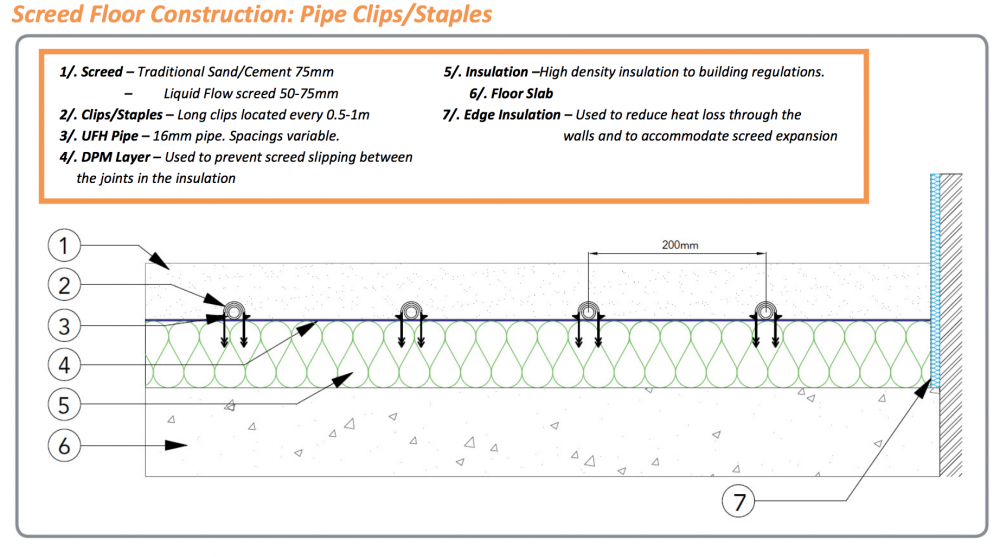
This was supply and fit: Supply & Install: Under-Floor Heating to Ground floor (Based on a Clip/Staple & Screed system) Includes: • 1 x 9-port Manifold • 1 x 7-port Manifold • 16mm UFH Pipe • EK16 Pipe Connectors • Pipe Clips/Staples • Edge Insulation – to be installed by others • 5 x Room thermostats. • 6 x Zone Actuators • Installation is to install pipe and manifold. Pressure testing of pipework. Labour & Materials = £3,895.00 VAT @ 0% Primary pipework. Pipe and installation from heat source to manifold. Labour & Materials = £300.00 VAT @ 0%
-
All the quotes I'm getting for our 3 bed 4 people family ASHP install are quoting about 180 to 200 litre cylinder. I've read in some other thread people recommending at least 300 due to the fact the water temp is lower. However I challenged one of the installers about this and they said it doesn't really work like that as it will take much longer to heat the water up. They are all respected installers in my county yet they all quote around the same size - are they all wrong?? Anyone install a 200 litre with a family of 4?? Thanks as always.
-
Hi, I've got a 155m2 house to build and I'm getting quotes of around £4K for the UFH part (and then the ASHP/fitting on top). Does that sound about correct or expensive? Thanks!
-
Not hijack the thread but a quick question - we have only 150mm of insulation due to certain constraints of our conversion. Is there anything we can do material wise to reduce the heat lose through the floor with UFH?
-
We had a white quartz top, over 6 years later it looked exactly the same as when we installed it. I'll be getting the same in the new build.
