Jilly
-
Posts
1719 -
Joined
-
Last visited
Everything posted by Jilly
-

Resubmission after dismissed Appeal - Help!
Jilly replied to Mrsmedhurst's topic in Planning Permission
My architect tried to get my stables through on Class Q but it wasn't eligible and we had to withdraw it (partly because class Q means using the same entrance and we needed a new one) and make a full planning application. It was successful, however so don't give up hope, it doesn't mean you can't do things, just that you may have used the wrong process. Full planning involves more research and box ticking. Incidentally conversion of a building is a bigger complicated expensive faff than new build so while you are at it, research whether your council would allow demolition and rebuild. There was a Farmer's Weekly article by a farmer turned property advisor who advises other farmers on class Q but I can't find the reference. -
Any chance of a photo of how you've used it, please?
-
Ensuring vaulted ceiling won't get hidden condensation
Jilly replied to Jilly's topic in Ventilation
So... my ridge beam seems to block the exit to the ridge tile ventilation. On the SE's diagram the steel is encased in the insulation, but that was for sheeps wool with and a breathable membrane. This issue with bats was overlooked when the BC drawings were submitted. My fault.- 35 replies
-
- 1
-

-
- vaulted ceiling
- ventilation
- (and 2 more)
-
Ensuring vaulted ceiling won't get hidden condensation
Jilly replied to Jilly's topic in Ventilation
Yes, the roof is on, clay tiles on top of the Bitumen felt. I don't have a section of what the roofer did, but I don't think it communicates with the ridge tile, as in the diagram someone has posted. -
Ensuring vaulted ceiling won't get hidden condensation
Jilly replied to Jilly's topic in Ventilation
Thats another long post. Its not actually 'Batsafe' (its still tanglefoot polyester) and there are several lawsuits pending. My builder ordered it by mistake, but luckily I checked with the ecologist and we could send it back. -
Ensuring vaulted ceiling won't get hidden condensation
Jilly replied to Jilly's topic in Ventilation
The modern breathable roofing membranes are polyester and it fluffs up and tangles in their feet so they can't escape from it. Bitumen roofing membrane is very common in old buildings, but before this PIR stuff came along. Ahh, battens makes sense. No sign of them. So there needs to be something to create a chimney effect to draw air up and out, which I'm guessing might be present in the roof tile ridge but isn't actually joined because of the ridge beam?- 35 replies
-
- 1
-
-
- vaulted ceiling
- ventilation
- (and 2 more)
-
Ensuring vaulted ceiling won't get hidden condensation
Jilly replied to Jilly's topic in Ventilation
There should be ventilation 'things' in the soffit board, I'll have to double check.. I can see now that the lads who have been chopping the insulation have got confused at the apex under the beam as they didn't understand the detail either. As long as insulation isn't packed into the apex their should be a gap (I think they were going to stuff it with rock wool). I can see its difficult to keep the insulation off the roofing felt and not pushed up too far against the F1, which could accidentally close the gap in places. -
The builder is taking a rest... I've lost trust and am checking everything as it's all down to me now.. The rafters are 200mm. The original spec of the vaulted being was 200mm of sheeps wool, BUT we had to then change to F1 bituminous roofing membrane, non breathable, because of the bats and so was encouraged to change to PIR 150mm and a 50mm gap. Fair enough. However, I need to understand the detailing. On the SE diagram the steels are outside the thermal envelope, except for the one resting on the internal wall. (NB the vaulted ceiling will be the whole area, the diagram is slightly wrong as the design was amended, it seems to me that the vertical steel could go in or out of the thermal envelope). See photo: the steel is bolted to the wooden ‘beam’ of the roof ridge. This means non breathable membrane stops at the top there, so the gap is not contiguous with the ventilation things in the ridge tile. Unless I’m missing something, there’s an 50mm air gap but no actual air circulation. There’s nowhere for the air to be drawn in at the top. Surely non breathable membrane and 'plastic' insulation are a potential problem, even if there is a vapour barrier in the plaster board? I feel it needs air to be drawn over it somehow and not being able to inspect it bothers me. Do I need to change tack and think of a breathable house as its a conversion with all the associated compromises? Steel detail.pdf Steel in situ.pdf
-
Mmm, I need to do more research, I'll do a separate post to explain.
-
Ahh, OK. Thank you. I'm worried about hidden condensation in the vaulted ceiling
-
Sorry to be thick but could you draw what you mean, please? I think this might help me too but I can't visualise how..
-
I second research research research.
-
Advice or survey to help with insulating period house
Jilly replied to Benjseb's topic in General Self Build & DIY Discussion
For later, I've been exploring clay plasters, eg by Clayworks.com they are breathable (and apparently easier to DIY). -
Hello. Yup I'm at the point of deciding how much of this I can DIY!
-
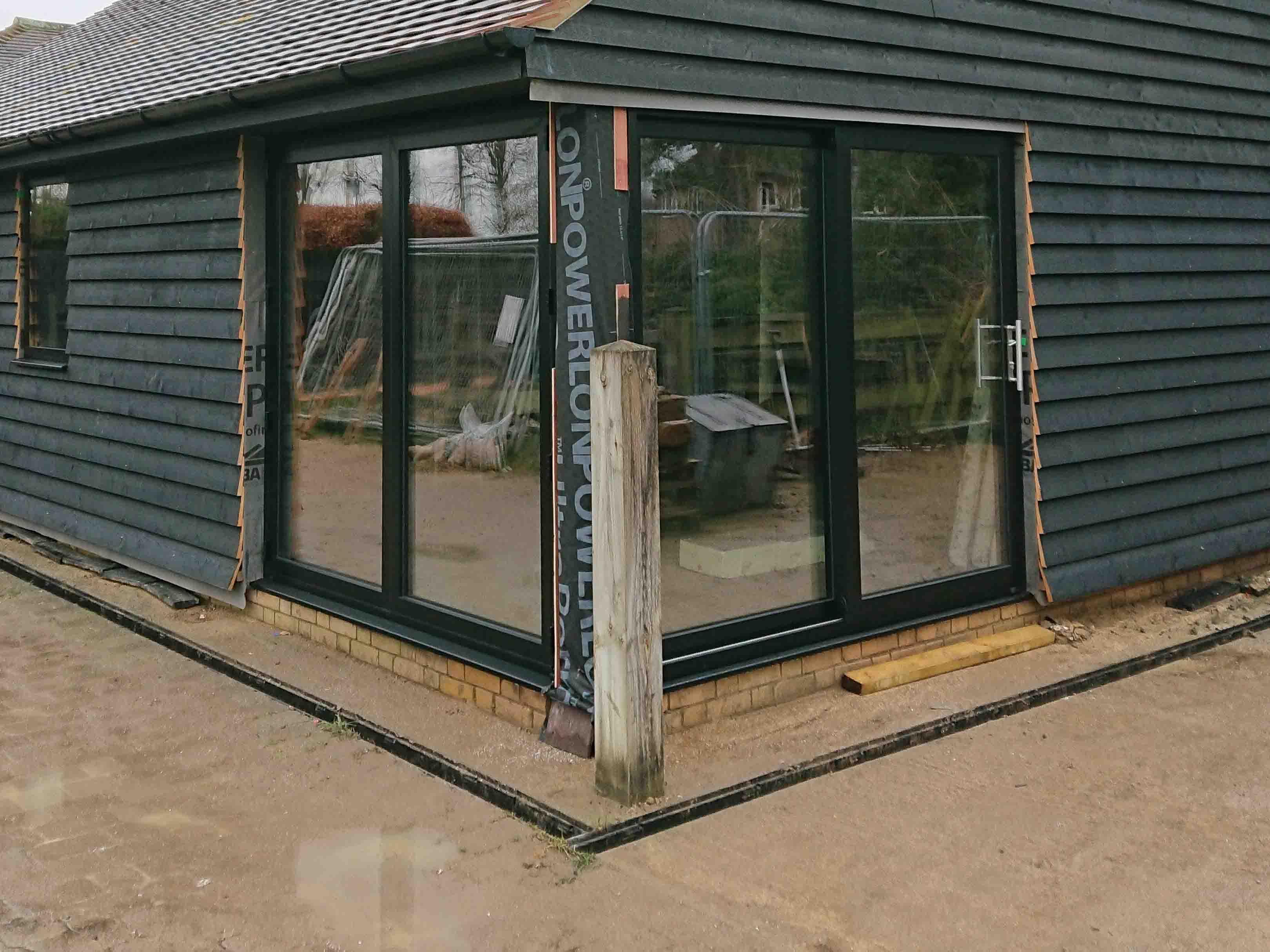
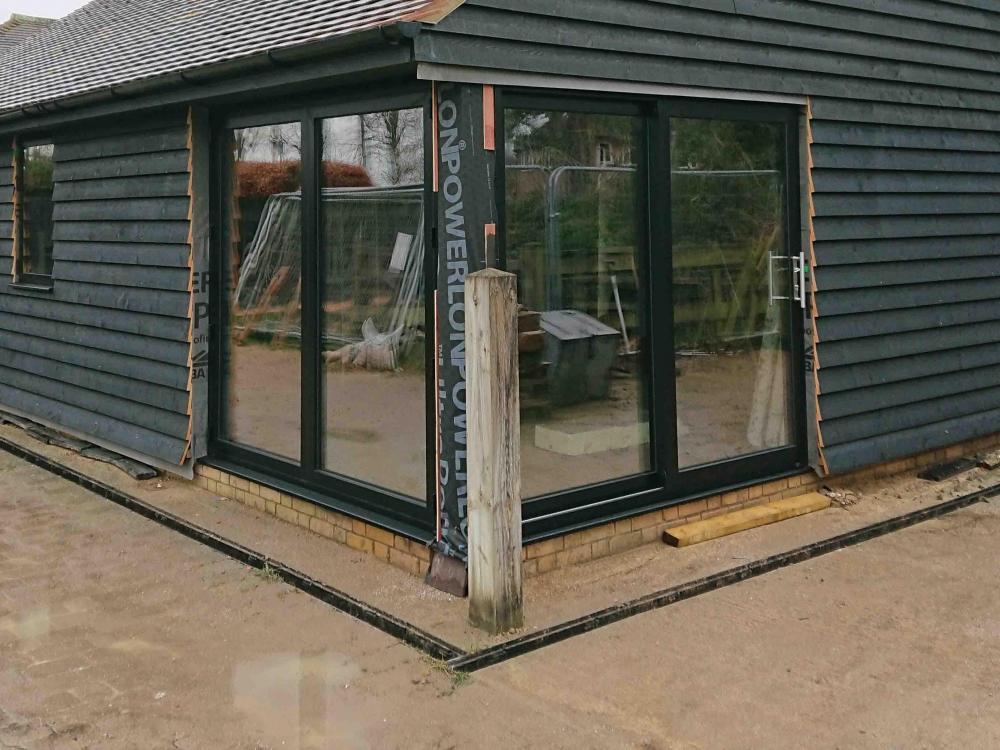
Update: the window people are coming back with an aluminium cover for the corner, so when it comes off I plan to do the bitumen, although I suppose I could try to take it off myself and have a look and paint. I haven't paid the balance, so I know they will come back! What should the timber cladding be coated with?
-
The same may have happened to them
-
Off-Grid Static Caravan Living (for now anyway!)
Jilly replied to MrsMozart's topic in Introduce Yourself
Good luck with your venture, it sounds like a big lifestyle change. A lot of people want to keep their old horse but have no where at home so you should have a good business. -
Gus’ Structural Engineering and DIY Part 02
Jilly commented on Gus Potter's blog entry in Gus Potter
This is really interesting, thank you Gus. To take up your point about being a competent person, is it acceptable to do self calculations for your own extension (for Building Control/Insurance etc if you properly understand and execute the concepts? Your demonstration of a confident, rather than competent builder is pertinent, as a self builder, I've been guided so far by the principle that if it looks wrong, it it might well be, rusty physics A Level notwithstanding (see what I did there?). I'm guessing the homeowner panicked and asked for a second opinion? In my own field, I've had an overconfident rider get on a difficult horse without a helmet, telling me he was 'insured', as if that would somehow protect him. -
All the 'humanure' info I got only refers to urine diverting, no sex segregation was mentioned. Everything composts just fine, given a very long time (don't go tipping the bucket for a year). You might be right about the garden size as my female Labrador never made typical bitch lawn stains, I suspect that happens when (any) dog uses the same spot constantly. Males don't really do that as most learn to cock their leg. I think the National Trust female bar might have been to preserve modesty, considering the logistical difficulties (in the absence of sheewees). Urine pH varies according to diet and metabolism, our urinary systems are similar, but sex hormones and the prostatic secretions play a part in odour, and as many domesticated species are not intact it's hard to be certain this isn't an urban myth. Yup, things we discuss...
-
Im a secret hippy and after a lot of research, I've created a DIY compost loo since the contractor took the disgusting Blue thing away. It's just a plaster bucket with a bale of wood shavings in a little shed. You do your thing with skiing legs, then top up with shavings and it seriously doesn't smell. I will upgrade with a proper box to sit on soon, I promise. I'm with you Mr Punter.
-
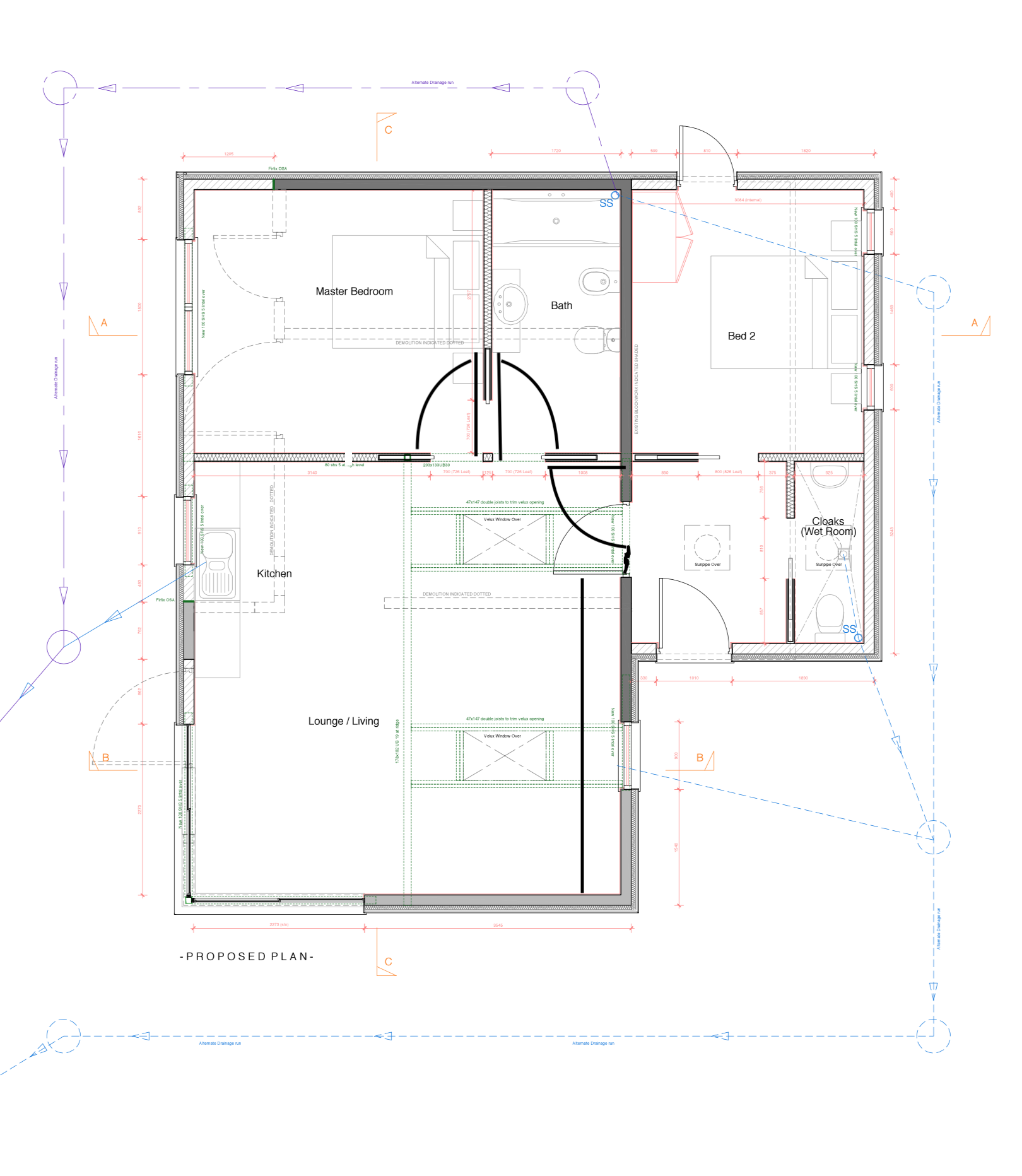
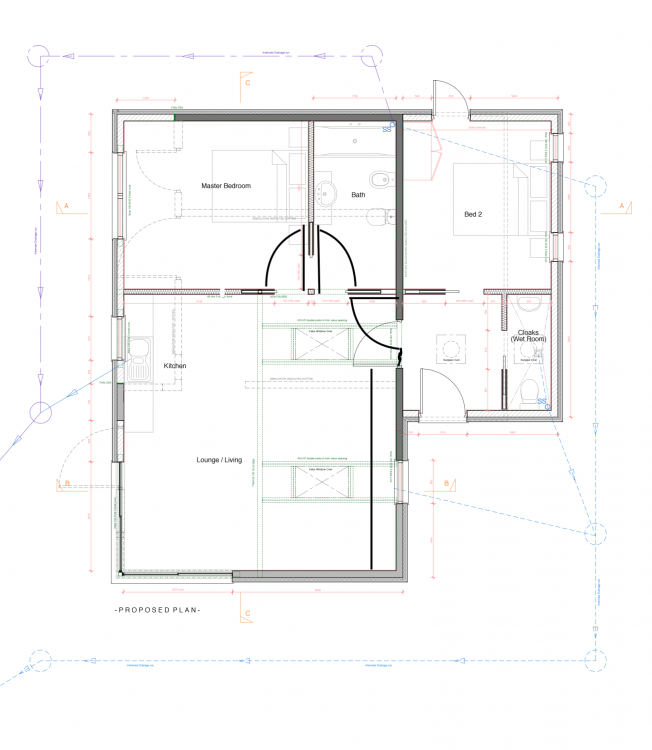
This is the floor plan, you can see the main rectangular stable building, with a hayshed extension (I've had the foundations, 6m piles, done so far).
-
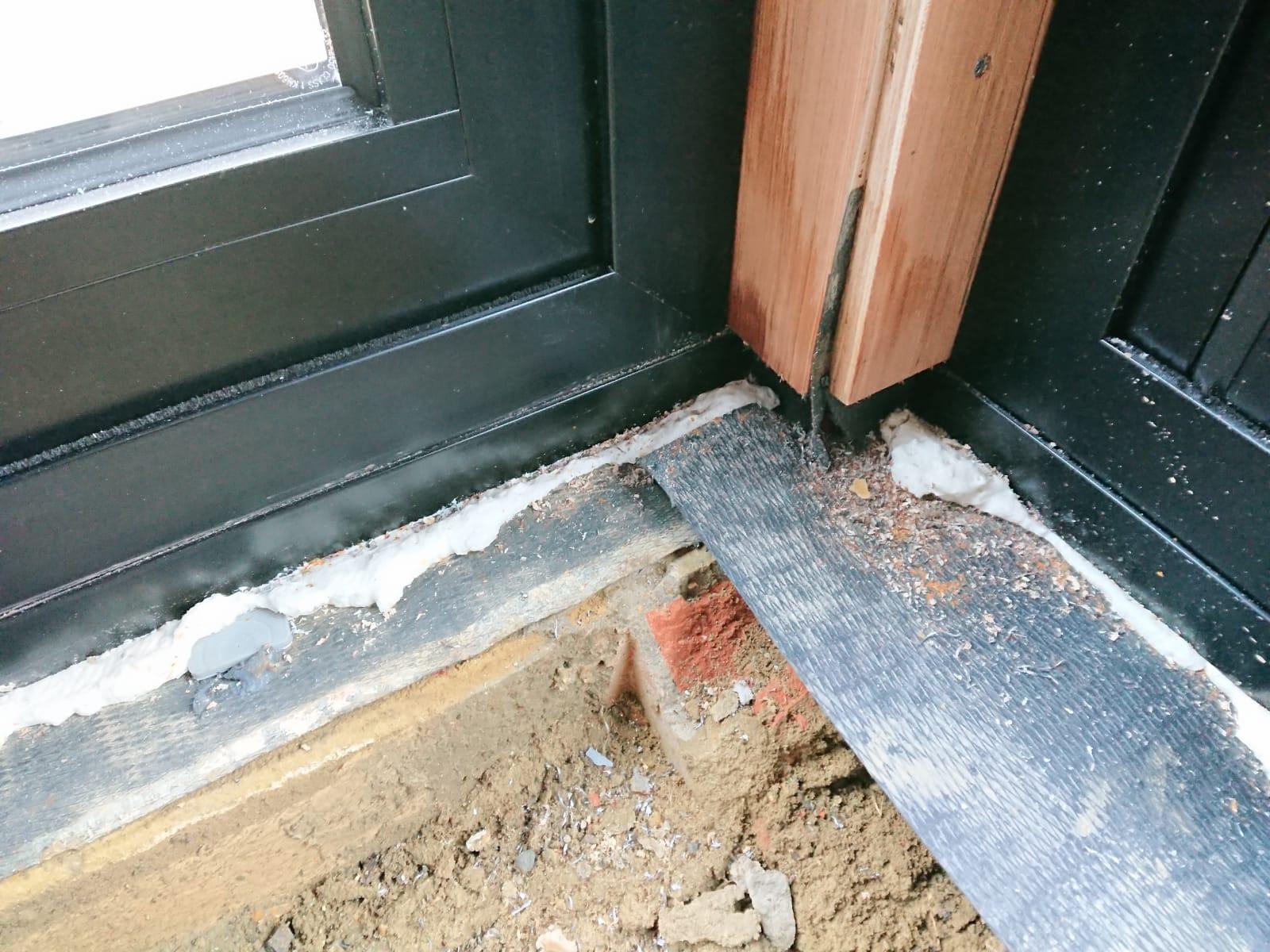
Thank you so much, that makes a lot of sense. I think this journey both makes use of and develops a lot of transferable skills! The window fitters clad the steel externally with 20mm (I think) celotex and ply. The damp visible internally I'm assuming is tracking in from poor sealing between the window and the steel, and there is some water collecting in the sliding door track, so I'll get the drainage channels of the window checked. it is however, highlighting my concern that the steel is going to remain dam at the bottom, so I'd like to way to rectify or at least improve it, as damp must (also) tracking up from the slab. It's also surely going to get condensation too when the building is heated?
-
If I get them to strip off the exterior corner insulation and bitumen it, will that be sufficient?
-
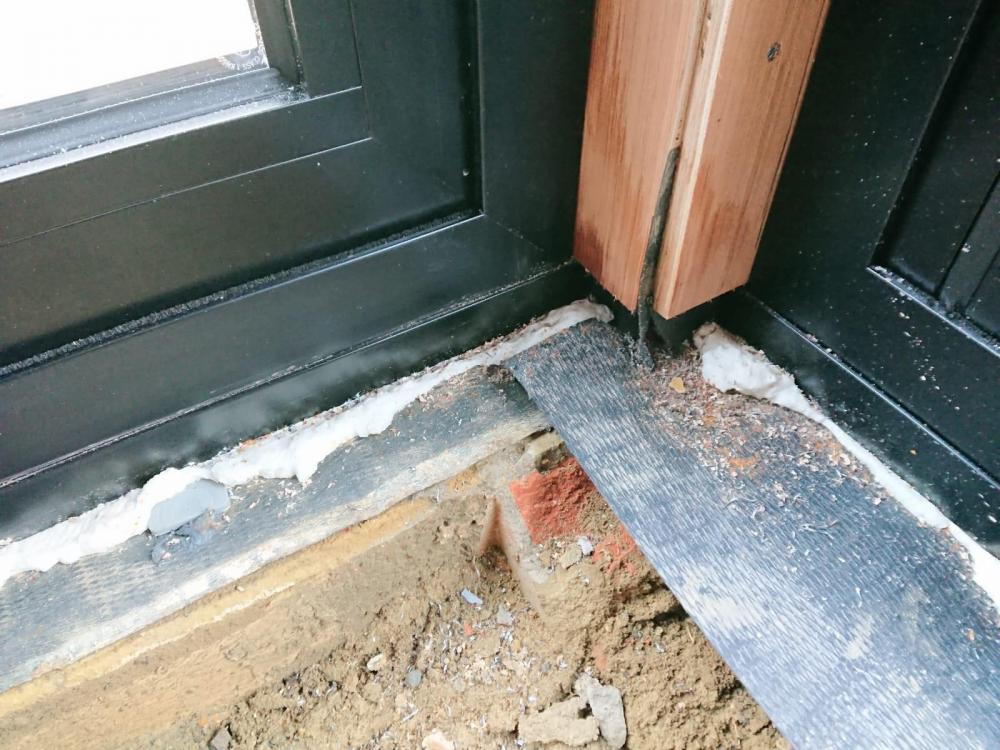
Update: I'm a bit stressed. ..I didn't get these replies until after the job was done and it was too late... I chipped the cement off as best I could, cleaned the steel and painted with red oxide. However, the windows have been installed and there is a small leak at the bottom near this place, the fitters came back to seal again but its still leaking. They will come back (but Christmas is causing delays), and they are making an aluminium shroud for the outside. I didn't realise about the bituminous paint thing (which the structural engineer specifies when you look through the detail). OMG, I can see this is my fault. Because there had been so many little problems with the builder I had decided to ask him to stop at the superstructure and I would go on to subbies, but this has left me wide open to making mistakes...like this. Is there some kind of desiccant that will dry this out? How can the steel be treated retrospectively?? Will BC make me take the windows out??
-
That tree will be a fabulous thing to give your new garden character ?
- 14 replies
-
- 1
-
-
- completion
- selfbuild
- (and 1 more)