


marshian
-
Posts
1605 -
Joined
-
Last visited
-
Days Won
6
Everything posted by marshian
-

Indoor Humidity
marshian replied to Marko's topic in Mechanical Ventilation with Heat Recovery (MVHR)
Between 55 and 60 in all areas except the loft - thats crazy high -
Just to explain what an ABV does - it’s a circuit pressure activated bypass It should be set to open only when the circuit is too small for the boiler to be happy with flow thro it. my old glow worm boiler needed 10 litres per min (absolute min it would run with) when the CH circuit got down to less than 3 rads the flow was below 10 lpm so it would fault out - introducing an ABV into the circuit allowed a small amount of recirculation back to the boiler maintaining a min flow of 10 lpm - it did however mean the boiler cycled a lot but a cycling boiler was preferable to a fault code that stopped the boiler and required resetting manually
-
Having two ABV’s would be a bit odd - unless you have two heating zones?? If that was the case then you’d be balancing rads in each zone not trying to balance the whole circuit as one……. any chance of some context - ie what pipes are they on and what pipes do they link too?? oh and a really simple check if they are ABV valves and they are allowing flow is when the boiler is on a burn see what the temperature of the pipes above and below those two pictured is. If temps are same or similar it would indicate that they are allowing flow back to the boiler This would reduce the pressure in the CH circuit leading to rads not getting warm (or hot) and raise the return temp to the boiler and lead to increased cycling when the circuit gets smaller as TRV’s start to close or close completely
-
They both look like ABV’s to me - yikes
-
Love that second one - brilliant!!!
-
What next for heat pumps after BUS and MCS?
marshian replied to joth's topic in Environmental Building Politics
Thanks for sharing @SteamyTea That was a good read -
lol Ours is always "Norfolk n Good" or if someone has nabbed it "Quiz team Aguilera"
-
I think the suggestion was for just one pub Oh and you aren't going to be crawling drinking guinness zero - peeing yes crawling no
-
Well it's pretty clear that that's the smoking gun found I've not seen a valve that choked before but I have seen a pump that was pretty similar Have you had a magnaclean or similar installed in the system yet - If you've put Fernox F3 in the system it's probably going to free up other deposits I'd want something in the circuit to collect them rather than letting them build up And yes you can look at it as £5 K saved (for now) Now do you still have the old Grundfos pump
-
https://www.facebook.com/norfolkmountainrescue/?locale=en_GB
-
I meet with a group of "Car Guys" under the umbrella of Norfolk Mountain Rescue Club I think that sometimes people think we actually do mountain rescues - I have to explain that Norfolk is well flat (unless you are on a push bike) It's just an opportunity to share tools, knowledge and occasionally we have been known to hold a spanner party
-
Baxi 400 Heat Only according to another thread - what kW rating is it?
-
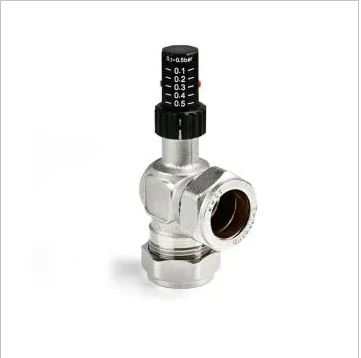
ABV can look like this What boiler do you have?
-
For following rads - close the lock shield 1/8 turn - recheck flow and return after 20 mins if no improvement (ie bigger gap between flow and return another 1/8 of turn on lock shield and recheck after 20 mins Loo Bed 2 Dining 1 Dining 2 When you've got the DT's better check the rads where you had an issue and especially those towel rails because they are too good 8 and 12 deg on a towel rail means they are either massive towel rails or they aren't getiing that much flow - closing the lockshields on the other rads could increase the flow and drive down the DT - they you will need to do the same with those TR's ABV normally near the pump or could be in the boiler
-
Suggestion "Crown" at Stowupland (Just outside Stowmarket) Close to A14 been a while since I've been there but it still seems to get good reviews (Dog Friendly too)
-
Vaillant Ecotec plus 630 system boiler efficiency on controller
marshian replied to j_s's topic in Boilers & Hot Water Tanks
Oh please tell me how the chuff that works maths wise -
@Dee Have you got an ABV in the CH system or do you run a couple of rads with no TRV intervention? I was just thinking that if you do have an ABV if it's set a little too free that could also 1. drive up the return temp 2. Lower boiler efficiency 3. Cause furthest rads in the CH circuit to be cold ABV - Automatic Bypass Valve
-
so Future Homes Std was planned to ban sale of gas boilers in 2035 so like for like replacement would not gave been possible https://eciu.net/media/press-releases/2025/plan-to-scrap-gas-boiler-ban-comment https://amp.theguardian.com/environment/2025/jan/06/uk-government-scraps-plan-to-ban-sale-of-gas-boilers-by-2035 I reckon a few ASHP manufacturers aren’t going to be happy
-
I have a monthly club meet 2nd Wednesday of every month so I think most months I would be OK and not have two meetings in same week IP24 so Breckland Area (ie I'm Suffolk/Norfolk boundary)
-
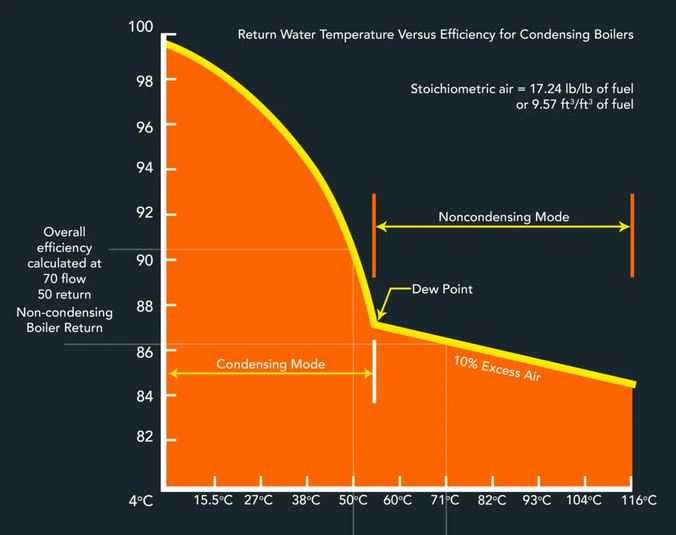
@Dee Lets go back to basics - it's not a test just a few statements to develop understanding of the point of balancing and the benefits. So at a boiler flow temp of 60 deg and a well balanced system Heat Geek table of earlier would expect a return of 42 Deg (You currently have a return of 50 Deg so that's a bit higher than would be expected) So if it's a bit higher then there can be a few potential causes 1. Pump speed too high - water is being pushed thro a rad (or rads) too fast and being returned back to the boiler before it's had chance to release the temperature into the room. or 2. Too much flow thro a rad (or Rads) leading to water being returned to the boiler too soon (AKA Poor Balance) or 3. Rads too small for the heat output required for the room so flow needs to be quicker to raise the mean temp of the radiator to get the room up to temp Why is return temp important for efficiency - well if it's a condensing boiler the efficiency of the boiler improves the cooler the return temp is So currently your return is 50 deg so from 50 C at the bottom scale (Return Temps) go up to where it hits the yellow line on the outside of the curve and then go horizontally left and you get 91% - that's the efficiency currently of your boiler when its running with a 50 Deg C return temp Now follow the process taking my return temp of 25 deg and go up to the yellow line on the curve and then go horizontally left and you'll see that it's about 97% efficient So about 6% improvement (or reduction in gas usage) that's my payback for over sizing my rads to be able to run lower flow temps and buying a boiler that can actually run happily at those flow temps without cycling (My old boiler min flow temp was 39 but realistically the lowest it could actually run was 45 and even then it cycled) Now if I have a target room temp of 20 Deg C in a room no matter what the flow temp I am never going to see a return from a radiator in that room below 20 deg it's only going to be above So If I'm feeding a rad with 30 deg and even if it's a massive rad the minimum temp leaving the rad is going to be 20 deg or more - this is why as the boiler flow temp is lowered the difference between flow and return is always going to get narrower. So this explains why my drop between flow and return on all my rads is so much narrower or lower than yours. The difference between our boiler flow and returns is because I'm running a flow temp that is 50% of yours. Now lets look at what we want to happen across all the rads in the CH circuit - we want them all to release heat into the rooms - as heat is released the rads get cooler and as a result they all contribute to the drop in the return temp back to the boiler but the return temp is going to be impacted by the level of flow thro each rad Example (with easy Math) CH system with a flow of 10 Litres per min 4 rads in circuit all being fed with 60 deg water All the rooms are the same size All the rads are the same size So in a balanced system each rad gets 2.5 Litres a min Each rad has a temp drop of 18 Deg C The return temp to the boiler is 42 deg C (Ignoring any losses in transmission pipework) Now lets show the impact of "inbalance" in the same circuit everything in Bold above is the same Rad 1 gets 2.5 Litres a min - In 60 out 42 Rad 2 Gets 5 Litres a min - In 60 out 54 Because Rad 2 took 5 Litres per min the remaining rads can only have 1.25 Litres per min each Rad 3 Gets 1.25 Litres a min - In 60 out 40 Rad 4 Gets 1.25 Litres a min - In 60 out 40 What's the temp of the water back to the boiler?? 25% of the water is at 42, 50% is at 54 and 25% is at 40 The answer is going to be more than 42 - probably around 47 if my back of a fag box maths is close As a result efficiency of the boiler drops from 93% to 91% a difference of 2% all because one rad was providing the easiest path back to the boiler Those rads with very narrow differences between flow and return are my concerns in your circuit - as I've said before Water is inherently lazy it will always find the easiest path to get back to the boiler
-
Your house is over twice the sq m. of mine.... My House has 75mm of insulation under the suspended wooden ground floor, Double glazed windows, Back door and front door all from 1994 (The two double french doors are from 2019 and are to modern stds) Brick external skin construction, breeze block inner with a 50mm cavity filled with blown insulation Cold roof and just 100 mm of loft insulation PIV unit with a heater (not used) not MVHR Heat loss calculated is 4700 w at -2.4 deg C outside with an internal temp of 20 Deg C Annual Gas consumption for CH and HW is 8900 kWh and Electric is 3500 kWh (No electric heating) so annual total cost for both is £1644 at current rates £2677 doesn't sound bad but I bet your heat loss calc is less but the bigger the property the more heat will be lost The issue for me is MCS approved suppliers do not want to end upcoming back to fit a bigger ASHP when the house doesn't reach target temp and they aren't going to be the ones paying the bills for the running costs................ As a result they oversize
-
You have 10 rads in circuit where the DT is 10 or greater (That's pretty good depending on the rad type) You have 6 greater than 12 (one is 16!!!) My only conclusion is your maths is quite poor 😉
-
I'm running a boiler flow temp in very low 30's You are running a boiler flow temp of 60 deg I heat 24/7 with no setbacks - I am assuming you heat to timed schedules or 24/7 with set backs day and night The boiler flow and return difference as well as individual radiator difference between flow and return are always going to get narrower as the flow temp drops Heat Geek sourced https://www.heatgeek.com/do-we-really-need-dt20/ Flow Temp Return Temp Diff 80 56.0 24.0 75 52.5 22.5 70 49.0 21.0 65 45.5 19.5 60 42.0 18.0 55 38.5 16.5 50 35.0 15.0 45 31.5 13.5 40 28.0 12.0 You use the same clamp to measure boiler flow and return too? Clamps are a bit hit and miss especially on pipes - better to use and hand held IR on rads - they aren't expensive and it's a lot quicker as with pipe clamps you have to wait for the temp to stabilise Don't measure rad temp in the middle - you'll get random results - Top Middle OK but not centre of the rad OK be good to know which rads were Towel Rails rads because they are terrible for acting like a great short circuit and returning HW straight back to the boiler and starving other rads of flow without appearing to do that. OK were all rads calling for heat ie TRV's wide open? I'm not technical but I am a bit data driven............. We all want a warm house and bills that don't make us cry 😉
-
Me trying to make sense of it (It's in the same order from top to bottom but I've fixed where flow and return were wrong and worked out the DT Normally I'd say if the DT (Difference between flow and return was small there would be too much flow thro the rad but if the rad concerned is a towel rail then all bets are off because they are terrible for getting a decent drop between flow and return (they aren't much good as a heat emitter either IMO) B. Flow 60 B. Return 50 Rad Flow Rad Ret DT Rad?? Comments 54 43 11 45 56 45 11 44 54 38 16 41 44 40 4 45 What sort of Rad? 57 45 12 45 52 45 7 46 55 40 15 40 54 40 14 43 54 51 3 50 What sort of Rad? 43 29 14 30 55 43 12 47 55 47 8 49 49 39 10 39 57 46 11 46 54 46 8 44 49 47 2 44 What sort of Rad? 52 47 5 ?? What sort of Rad? 44 41 3 40 What sort of Rad? 41 39 2 39 What sort of Rad? ?? ?? ?? ??
-
Just to clarify - the boiler was no longer on a burn when the last radiator (Lounge) Flow and Return temps were taken and that rad has the highest flow rate of all the rads at ~1.2 Litres per min so it doesn't take long for the flow side to cool quickly Also to add Everything before Bed 1 is downstairs Circuit and after Front Hall is Upstairs Circuit - the whole house is one Zone for CH Every radiator has flow restrictions in the TRV body and lockshield wide open I have a fairly good understanding of the flows to each rad
