


Beelbeebub
-
Posts
1521 -
Joined
-
Last visited
-
Days Won
11
Everything posted by Beelbeebub
-
UK production of oil and gas I have - can you tell me how many are in operation today? 2 - one in china that took just over 11 years to build and floating one in russia that also took 10 years to build. And there are 6 or so under construction with intended in service dates sometime before 2030. Ideally we would have gone ahead with the various reactors we had planned back in the early 00's and have several up and running by now, but we seem to be very bad at nuclear construction in the UK. I'm not convinced we will get any better in the timeline we need. We have 2 under construction (hinkley C and sizewell C) with a combined capacity of around 6.5 GW coming online in 2030 and late 2030's. But that only covers the loss from the 5 existing plants shutting down before 2030, and as they are AGR's they are going to be difficult to life extend - not impossible, they will be about 40 years old at planned shutdown and the design has been extended to 50 years at other sites. Without a time machine, nuclear isn't going to dig us out of the hole. Except when they don't keep prices down. Several years ago our gas and elec prices rocketed because a politician 1,500 miles way decided the country next door was his. Our gas and oil prices recently shot up because a politician 3,000 miles away got mad at a country 3,000miles the other way and started flinging bombs about and suddenly, ships with oil bound for us turned round in the ocean and headed to china and the far east because they outbid us. Environmental issues aside, oil and gas are very shaky foundations. We struggled in ww2 for oil. We struggled in the 70's for oil. This isn't going to get better but they don't - they offer (in effect) fixed price deals for capacity. Those prices are lower than a new build gas plant can offer (and that was before the higher gas prices). And whilst there may be a security issue with inverters made in china, in the sense they could be controlled from abroad - and there are strong arguments that the uk or at least europe should be making it's own inverters or at least the software running them - the fact the panels are made in china is irrelevant. Once you have bought them they are yours, they are dumb bits of silicon and glass that create a voltage when illuminated. That's it. Once you have bought them they will last for 25 years or so, churning out power every day. A barrel of oil, on the other hand, can be used one. Then you have to buy a new one. You realise we have wind turbines, right? They tend to do well in the winter. And if the sun doesnt shine and the wind doesn't blow - what will we do? Burn gas in CCGT plants exactly as we do now. The difference is we will be burning gas for a month or two a year rather than all year round. The future energy mix will have nuclear, wind, solar (etc) lots of battery capacity and a good chunk of CCGT plants with gas storage for the times when we need them.
-
Is nuclear power really green?
Beelbeebub replied to saveasteading's topic in Environmental Building Politics
if the SMR was a container sized device that just needed hookup to (ship) power grid, monitoring and cooling - i could see it working if electric drive was used. Then, as you say, the module could be craned on/off fairly easily and exchanged for a factory fresh unit whilst the old one went back to be refueled. -
A good friend is an expert (as in one of the guys the MoD call when they want to know about radar) and has specifically looked at this. His answer is "there are effects but nothing that causes a problem". The radar issue is one raised by non-experts (repeatedly) but is not a concern of the people who are actually in charge of operating our radar. And as for birds, cats kill far more than wind turbines (which don't kill many at all)
-
For the UK the fossil fuels are running low now. Oil and gas are currently 50% of consumption and that will halve or worse *in the next decade*. Not the next 100 or 50 years but the next 10 years. Unless we want to be dependent on importing gas and oil when 20% of the world supply can be cut off at the whim of a power mad dictator we need another way to power the UK. Nuclear takes ages to build. Far longer than the 10 year time frame. Solar farms are the cheapest form of energy generation and they are quick to build. Yes they are intermittent but one thing they do provide is lots of power when it is sunny, which is also when hot countries (which the UK is becoming) also tend to see highest demand due to air conditioning. Batteries are also becoming cheaper year on year. Right now solar is providing 30% of our electricity, 2x that of gas. At a time when gas prices are high we are saving 2/3 on our national gas bill (of which we import abiut half).
-
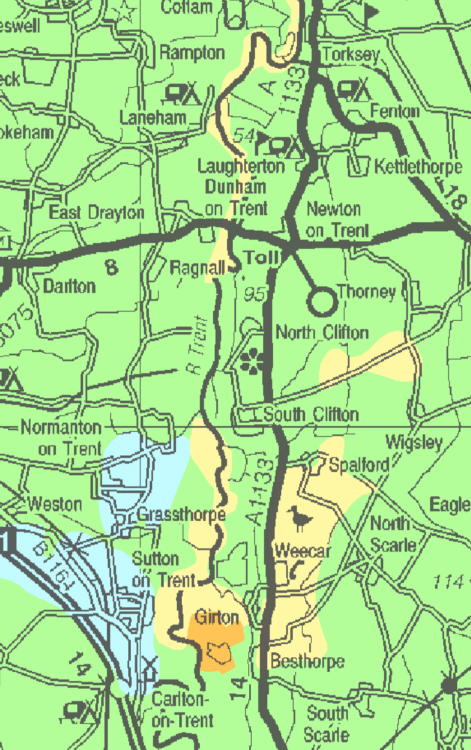
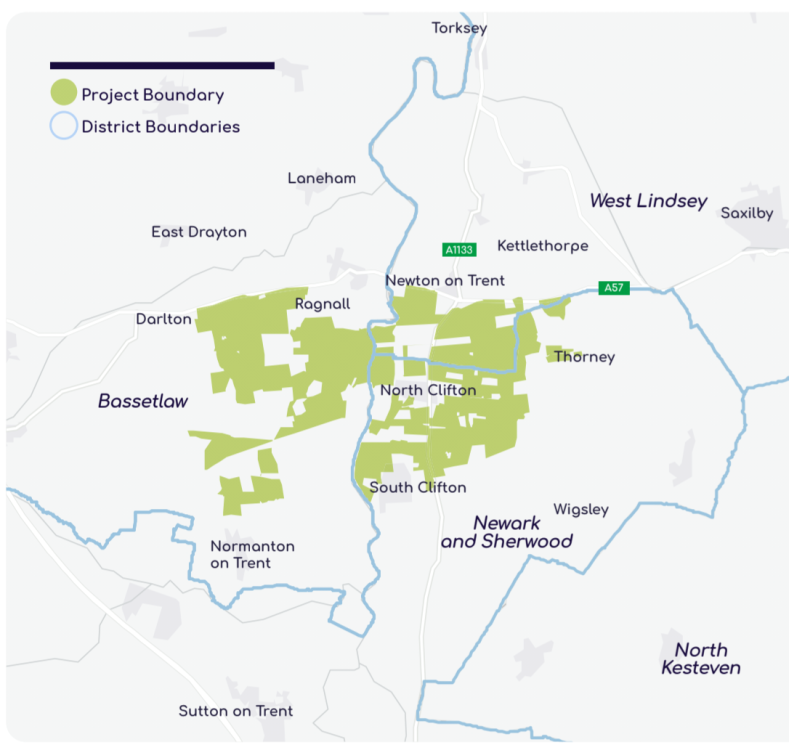
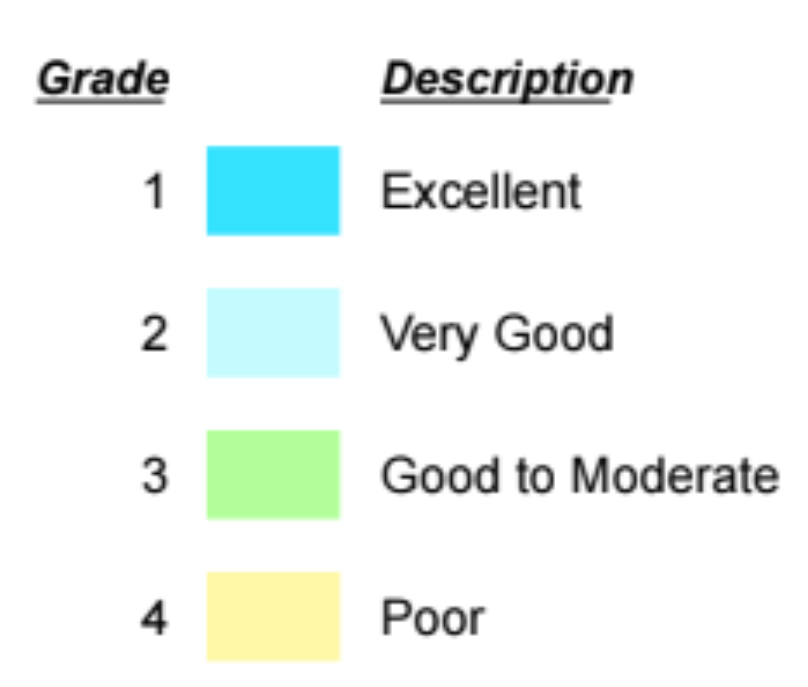
From the OP article "The Energy Secretary on Wednesday said he had granted planning permission to the One Earth Solar Farm development to be built on prime farmland across Nottinghamshire and Lincolnshire." (emphasis mine) So prime farmland eh? Must be some of the most productive land in the country. We'll starve without the breadbasket of thr East Midlands that is Newton-On-Trent. Let's have a look at the map of agricultural land quality. The project is the area south of Newton-On-Trent either side of the river. As you can see the land is green which is grade 3 "good to moderate" Grade 3 is 2 sub grades A and B the maps don't distinguish but here's the description Grade 3a (Good): capable, but notable limitations that reduce cropping flexibility or consistency. Grade 3b (Moderate): more restricted: typically fewer arable options and/or less reliable output As you can see neither of these could be described as "prime". Every single time anyone tries to build anything on farmland people start banging on about food security and the land as though it were the best soil in all Europe. In reality nobody is going to put their solar farm on grade 1 land when there is lower grade and available.
-
Is nuclear power really green?
Beelbeebub replied to saveasteading's topic in Environmental Building Politics
The thermal plant (fossil fuel or nuclear) issue during hot weather is more regulatory than technical. These systems have delta T's of several hundred degrees, the increace of 10nornsondegrees at the cold side isn't a major technical problem. But all thermal plants have limits on the temperature of the "used" cooling water. This is for ecological reasons, if you started dumping thousands of m3 an hour af 80C water into a river or the sea you'd kill everything downstream. There are also limits on the amount of water they can take. During hot weather there is a much smaller window between the maximum water temperature leaving and the regulatory limit. This is particularly acute for river cooled plants that may also experience low river flows at the same time. -
Great page! Bookmarked
-
Interesting - where can/did you get those figures? 80% of Scottish demand wouldn't be far off the 2.5GW of wind total?
-
https://www.theguardian.com/environment/2026/jul/09/great-britain-grid-operator-issues-another-warning-over-power-supplies-in-heatwave Interesting bit is how the French are having to curb the output of their nuclear stations due to the high temps. The same issue can also affect gas stations. And as the anti-renewable brigade never tire of mentioning, low wind conditions can coincide with heatwaves and drastically reduce the output of wind farms. Right now (1.30pm 9th July) wind is only producing 2.5Gw, about 10% of it's maximum and 1/3 the current gas plant output. Of course, there is one tech that correlates extremely well with heatwaves.... Solar, and that is currently pumping out 14Gw. My own array is powering my portable air con unit and the battery will continue to do that well into the night. Zero impact on the grid. In contrast to the challanges facing renewables in our winter peaks, solving for the likely summer peaks is much easier. Lots of PV, local and grid scale, lots of batteries, local and grid scale.
-
Heat Pump Running Cost Poor Reporting And Misinformation
Beelbeebub replied to PhilT's topic in Air Source Heat Pumps (ASHP)
Yeah, but the idea is they don't leak the heat away during the day when you're out and then be spent in the evening requiring you to use fan heaters. Storage heaters are a shit idea based on the old idea of "spare" elec always going free at night. Which was true in the days of big coal plants. Less so with renewables, batteries, ev's etc. . But there we go. This is the official EPC system that we are forced to adhere to. I get about half as much effect on my epc for replacing all the single glazed windows with double glazing as I do by just swapping the panel heaters to HHR units.... -
Heat Pump Running Cost Poor Reporting And Misinformation
Beelbeebub replied to PhilT's topic in Air Source Heat Pumps (ASHP)
The EPC system is pretty crap. I just had an all electric flat done - got a poor E score, mainly because of direct electric heating and hot water. The assessor model 2 options for me. Swap to air to air HP or new high heat retention storage Heaters. They both came out the same points, despite the HP option using 1/3 the electricity. Shrugs. -
I love airships but I don't think they are the answer apart from some very niche uses. The biggest issue is the slow speeds mean long cycle times. A 737 can cycle back and forth between London and Rome 4 or 5 times a day, so it's capital and operational costs can be split over many passengers. But the airship might do one leg, maybe a return with fewer people and the capital and operational costs would be similar if not greater than a 737. They do look cool though.

-
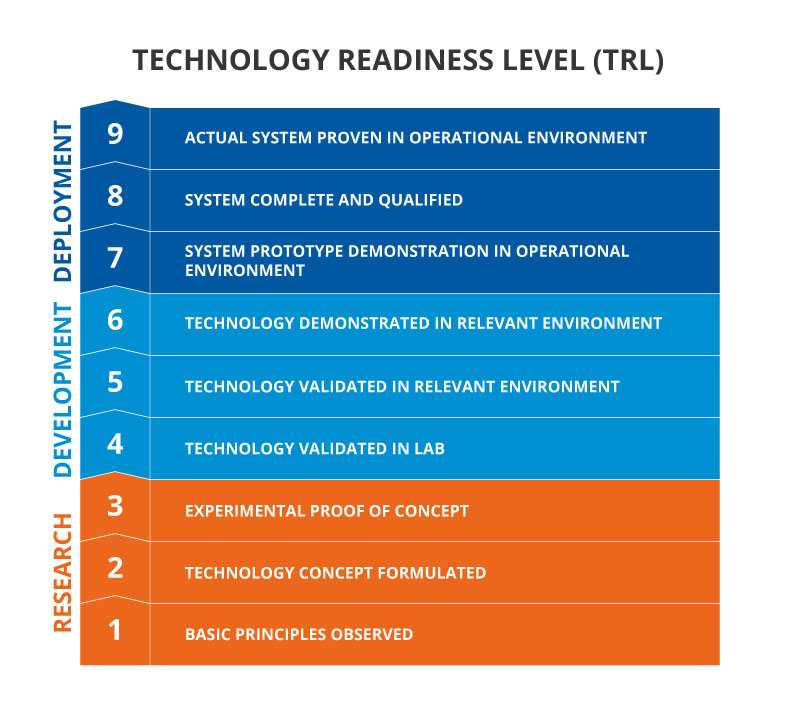
No it isn't - but I would put it lower down the list of priorities than the other two items. Those are bigger bang for your (political capital) buck. If we reduce demand for oil (and gas) from road transport there will be more oil available for things like flying. I'm not in the same camp as "just stop oil" - we will need to extract oil for the foreseeable future for chemicals and things where the intra high energy density is critical (mainly aviation, but also some critical "off grid" applications). I just think we should stop burning oil (gas) if we don't have to. Cars and HPs do need more generation and there are some swapping costs (though less if you just replace with electric at the end of normal life) - but again these are problems we have known "mature" solutions to. They are, in tech nerd speak, technology readiness level 9 "actual system proven in operational environment" Low carbon long haul aviation is TRL 4 at best with short haul at maybe 7 (there are some electric float planes operating in Canada for example) Absent some massive break though in creating hydrocarbons from electricity, water and co2 (which would also solve a whole bunch of other problems) aviation will be tied to fossil fuels for a while yet.
-
You can play all sorts of tunes with the statistics - do you count methane leaks in that gas heating stats? What exactly is the average uk house? How much worse are high altitude emissions? How do you attribute international flights? Etc. But the co2 emissions from flying are several times less than those from gas heating or private vehicles. Even if you 3x them to account for the altitude flying is only equal to one of those other items (in round numbers) We can definitely replace the majority of heating emissions now, today, with proven tech you can literally buy off the shelf. Likewise, we can replace the majority of cars on the road with EV equivalents that are availible today. There would be no major change to lifestyles or functionality. People would still have warm homes and still be able to drive about. (obviously both of those sectors will see a gradual phase out due to the relatively long life cycles of cars and boilers) But there is no currently available way to replicate the functionality of air travel without carbon emissions. Maybe one day there will be (fingers crossed). If there was I would 100% support swapping to that ASAP, in the same way I support EVs and HPs. But until then, I think we should focus on tackling the two sectors that are - much bigger than aviation - much easier - result in minimal disruption to people's lives. Otherwise we will alienate the public even more. The right wing press already bang on about "Greta stealing your holidays" or some such bollocks whenever any free taxes are applied to air travel. Imagine what would happen if we actually tried to ban air travel.
-
The average uk house with a gas boiler emiits 4-5t co2e a year. A full transatlantic return flight is about 650kg per person. So say 2 people and allow for lower average occupancy maybe 1t per person so 2t for your trip (4t if a family) You could swap to a HP, take your family on a trip to NY, and still be (a bit) lower carbon than staying at home and keeping your gas boiler. If you had an EV as well, you'd be well ahead.
-
I rarely fly, maybe 3x in the last decade, though I have flown to NZ once and the US a few times in my younger days. Incidentally my NZ trip took 24h all in. My grandfather visited NZ before the war to study farming techniques and other things. He went by boat. It took over a month. Without air travel International travel woill essentially become impossible for everyone but the super wealthy. If you focus on individual actions everything looks pointless. This is a variation on "the UK is 1% of emissions so why should we do anything". Say we wanted to cut our co2 emissions as a nation by 25%. We could totally ban flying. Nothing leaves the ground. No travel for business or pleasure. No fast cargo of goods. Nothing Can you imagine the public backlash. Holidays abroad, trips to visit friends and families, school exchange trips, sports tours, sports tournaments, academic conferences, specialist consultancy, music and arts tours etc all gone. And we would still need to do something else to reach the target. Or We could insulate our homes and swap to heatpumps. We would end up with warmer, cheaper to run homes that are less dependant on foreign fuels and easily meet our target. Or we could phase in EVs (and more rail) and have cleaner air in our cities, less noise pollution and also easily exceed our target Focusing first on air travel is like religiously turning off your TV at the wall each night to save energy whilst not insulating your loft.
-
Ha! I can see why you might think that but I'm not a carbon zelot. Being able to move things, including people from one side of that globe to the other in under 24h is a huge benefit. We should be minimising flying where possible. Eg, sub 500 mile (to pick an approximate distance) flights should be replaced with rail, business meetings that could be done remotely should be done remotely. But I would rather we saved carbon by moving to EVs and heatpumps and continue flying (albeit maybe at a slightly lower rate) rather than cut flying so we can drive ICE cars and use gas boilers. And we would save *much* more carbon by doing those things (and improve energy security) than by stopping flying all together.
-
Whilst air travel does ha e a carbon footprint it also has massive benefits. Without it intercontinental travel, especially between the America's, Australia and africa/europe/Asia would become almost impossible for the average person. It would become the preserve of the ultra rich who could afford to take 2 weeks or more to travel each way. I would point out that the carbon emissions of uk domestic and international air travel (I know attributing carbon to a territory is tough but there are various estimates) is around 40MtCO2e The emissions from passenger cars is about 60MtCO2e and residential heating is about 50MtCO2e So we could decarbonise (electrify) passenger cars and heating (Ev's and heatpumps) and carry on flying.
-
UK ‘built for climate that no longer exists’
Beelbeebub replied to SteamyTea's topic in Environmental Building Politics
+1 on the overhangs, a good foot or more. Defo, oversize the gutters. The current regs are based on historical norms. We've had several "monsoon" downpours already that have overloaded standard gutters. We used large (150x150 irc) square extruded aluminum ones. Interestingly we set them "in plane" with the roof. Ie at 30 degrees (for our roof) so they acted as "V" gutters. Minimise south-facing glass or provide externalnshades/shutters. My old house had very little south facing and I was glad of it. The "winter sun heating" didn't really happen as our winters tend to be gloomy. Every time I see a grand designs with a south facing curtain wall or giant windows to "catch the sun" or similar I wince. Cross ventilation, and also up and down ventilation if multistory. Defo level access (be aware of flooding!) and don't forget wider doors for wheel chairs etc, if you can. We did this and it was a godsend when we swapped with my parents when my dad got dementia. The buikding regs already spec higher sockets and lower light switches. It seems odd at first, but - again is a massive plus for any one infirm. Even an able bodied person can get temporarily injured (back or arm injury) and these things help then. On that note, the front door lock shoukd be accessible - the traditional rim lock is often at shoulder height which makes it difficult if you ha e a shoulder injury and crucially (my parents learned this the hard way) avoid any door setup that requires 2 hands to open. Specifically a door knob and yale lock combo. My mum broke her arm and could get into her house on her own for a month. Even now it's right pain carrying stuff back in from the car. (sorry rant over) No smart stuff. -
This is clutching at straws a bit. In the actual report they call out that renewables have lowered the daytime price putting downward pressure on the cap and the quote was from the regulator itself so one would assume they are aware of the context. But if we wear our steixlty logical hat - whilst we cannot say that a rise in renewables certainly lowers prices we can say that a rise in renewables does not invariably lead to a rise in prices. In fairness they do also say that the loss of revenue for thermal plants during the daylight hours means the costs have to be put into the price of thermal power when it is needed pushing that bit up. They also note that a drop in the Lng prices in late 2025 helped lower wholesale costs, though that has now been reversed. They say that grid scale battery systems are starting to mitigate those fluctuations by providing a customer during daylight to recharge and providing cheaper than thermal power on the evenings further displacing thermal power. Bear in mind the displacement of thermal power during the day doesn't markedly increace the fixed (capital, depreciation etc) costs of thermal power it just concentrates them into a smaller output. So the overall cost of having a thermal plant on the grid is roughly the same regardless of it running or not, so it's not true to say the intermittency makes it more expensive (beyond some increace in maintance and fuel burns for start/stop running) overall. If it costs you £100m + fuel to keep a plant up and ready it is still cheaper to run it once and get low cost elec the rest of the time than to run it 365 days a year. Again, the report explicitly calls out the rise in the price of coal and gas on the international market as historical upward cost pressures and not the increace in renewable generation. Despite being a big exporter of coal and gas the thermal plants have to compete with international buyers so when coal jumps up the cost per Mwh from an Australian coal plant burning Australian coal also jumps up. There will be inevitable challanges and it will not be easy. But we need to get away from the narrative that there is a sensible choice between doing it and just staying as we are and lowering prices by drilling.
-
My understanding was that the high voltages are occurring away from the sub stations and out on the local network. Imagine you and your neighbour were both fed of a single extension cable plugged into the substation down the road. If you both export 5kw each, during the day the total is 10kw down a little B&Q extension cable. And if you both consume 5kw each that 10kw has to flow back up the cable. Putting a battery to absorb that at the substation wouldn't help the poor extension cable. 10kw would have to flow down during the day, and 10kw back at night. But if you both had battery packs capable of absorbing the power during the day and giving it back at night, the cable would see 0kw - essentially you'd be off grid.
-
Whilst solar has obvious advantages in Australia, the UK generates more from renewables (125Twh vs 100Twh) and Australia has a lot more distance for grid infrastructure.
-
How would they stabilise the voltage? As I understand it the voltage spikes and sags are more related to the lines between the house and substation. The voltage at the substation is much more stable than the voltage at the homes and jas to be set so that, at max draw, the furthest property is still above the legal limit. Unfortunately this means when there is zero draw the voltage is already high and if that hose starts to pump power in, it rises higher *at the house* so their neighbour sees higher voltage too. A battery at the substation wouldn't be able to raise or lower the voltage by much or for very long. Lowering the grid voltage to 230 rather than 240, which I believe they are doing, would help. I did see some plans for "solid state transformers" which looked to be giant inverters to change the voltage output up or down on real-time. Traditional ones can do so via changing the tapping on the winding but that is normally a maintance task. These could lower the substation voltage when generation was high so the max voltage on the network was on limits and then, when the power is demanded, raise the sub station voltage to ensure the min voltage on the network is above the limit.
-
But batteries at the substation won't help with the last mile of transmission. Pretty much by definition they are at thr junction between the low (relative to grid voltages! 😁) 240v system and the higher transmission voltages. If DNO's wanted to reduce the peak loading on their local network and avoid having to upgrade - then that might be an incentive for them to put batteries in customer's houses. But I'm not sure shirt term peak loads are that much of an issue for DNOs because of diversity. Their problem might be the sustained medium loads that never used to exist eg heat pumps and car chargers. That said, if you have an electrically heated street or estate, it would have been the case it would be sized for a sustained storage heater load overnight from everyone. So 4 or 5kw per house overnight. If you swap that out for heatpumps your load drops to maybe half or even 1/3 continuous. Which leaves the rest availible for charging cars overnight.
-
That may be a technically and economically better solution, but it may be difficult to create the incentives for that to happen. The hardware needs to go into the substation area, which is owned and operated by thr DNO, who has no interest in the consumer or the wholesale market. The energy Co doesn't have access to that facility. Putting the batteries at the consumer's end is, whilst less economic, much easier - especially if it's just shipping a box to the consumer who plugs it in and connects it to WiFi.



