


Beelbeebub
-
Posts
1521 -
Joined
-
Last visited
-
Days Won
11
Everything posted by Beelbeebub
-
I'm not certain the geophysics works like that. Some fields are interconnected across national boundaries but I don't think all are and even those that are connected aren't strongly coupled. It's not a big cave of gas or oil, more like a giant sponge where the gas and oil moves slowly - which is why we need multiple wells in one field. So if the UK doesn't extract from them nobody else can either. "Reserved for UK use only" is easy to say but hard to implement. There are no private "UK" only oil companies. They are all multinational. So you'd need to set up one specially. Then what is "uk use only" - selling to a UK refinery (assuming one is set up for the oil). What if that refinery sells abroad? What if the UK wholesaler the refinery sells to wants to sell abroad? How far down the chain do we go?
-
Anyone gone down the max self consumption route?
Beelbeebub replied to Alan Ambrose's topic in Photovoltaics (PV)
Sorry, fat thumbs. -
Anyone gone down the max self consumption route?
Beelbeebub replied to Alan Ambrose's topic in Photovoltaics (PV)
Yeah, i'd have thought so too. -
Anyone gone down the max self consumption route?
Beelbeebub replied to Alan Ambrose's topic in Photovoltaics (PV)
What is slightly annoying is my inverter limits by power - which varies the amps as the voltage goes up and down. My voltage is regularly high 240's so i could export about 4kw but occasionally it dips to 230 or so which is only 3.6kw It would be nice if the inverter had a current limit export -
Anyone gone down the max self consumption route?
Beelbeebub replied to Alan Ambrose's topic in Photovoltaics (PV)
I should have said export power - 16A export limit. -
Anyone gone down the max self consumption route?
Beelbeebub replied to Alan Ambrose's topic in Photovoltaics (PV)
Yes. 8kw inverter 3.6kw export -
Anyone gone down the max self consumption route?
Beelbeebub replied to Alan Ambrose's topic in Photovoltaics (PV)
Yes with a suitable battery and inverter you don't need to spread the generation via different orientation. On a slight tangent, my 24 panels system occupies the 12 degree mono pitch of a roughly 7x7m footprint carport. That's 50m2ish. Or about the footprint of modern 3bed house (about 100m2 over both floors). It strikes me that you could provide any house with 24 panels if you use a low mono pitch. Sure some would be sub optimal in terms of orientation or shading but even shaded or on an overcast days they put out 500w or so - enough for base load. It was about £3k in panels and mounting hardware (inverter and batteries were another 7-8k) and very easy to install (low pitch, metal roof). Hardly breaking the bank for a new build. And that house would be low electricity consumption in the winter and zero in the summer. If the occupants had an electric car it would do a good deal of their "fuel" over the summer, an immersion heater or heat pump and free hot water as well. That would do very nicely against the cost of living. -
Anyone gone down the max self consumption route?
Beelbeebub replied to Alan Ambrose's topic in Photovoltaics (PV)
I went the max panel and inverter route. Size of inverter was partly determined by desire to cover peaks without drawing from grid i.e. kettle, toaster, air fryer all on at same time. This allowed for a large number of panels (24). This was dictated strongly by my (carport) roof size. I wanted to get it looking neat so fewer panels would look stupid. 24 panels filled the roof really nicely. It also compensated for sub optimal angle and orientation (12 degrees and South West). It also allowed reasonable generation (enough to cover daily demand) in the shoulder months as the panels are badly shaded by trees and the house. All in all we have zero import for 6 months and produce about 25% of demand in deep winter. The array easily saturates my export limit (a measly 3.6kw) so we have alot of potential excess in the summer. One advantage of the big array and inverter in the winter is the charge rate can be really high so you can take advantage of the 2 or 3 hours of sun during an otherwise dull day. 3 hours of good sun is about all I need to top up. -
Sorry I wasn't clear. They don't normally need to be close though some of the sleek all in one type obviously do! This was in the context of a long DC cable run from panels to inverter (and battery) There was a suggestion about putting the inverter next to the panels and running the underground cable in AC. If we used AC coupled batteries they could then be at the house connected via AC But a hybrid connects to the inverter over a DC line so if the batteries are to be at the house i'd need a DC line from the inverter by the panels to the house alongside the AC line from the inverter to the house! Which defeats the object of putting the inverter by the panels (to avoid a buried DC cable) in the first place 😁
-
Plus it takes no account of expenses so massively punishes small businesses and self-employed Say 20% flat rate 30k a year salary pays 6k tax and has 24k taken home 200k a year tradesman with 170k expenses. Pays 40k tax and has a take home of -£10k Like it or not tax is always going to be complicated.
-
Convoluted tax accounting?! Shocked I tell you! Shocked!
-
So if the HOC figures are correct (£4bn in revenue) the tax payer could well be net negative .... (Depends if the £10bn is per year or over a period)
-
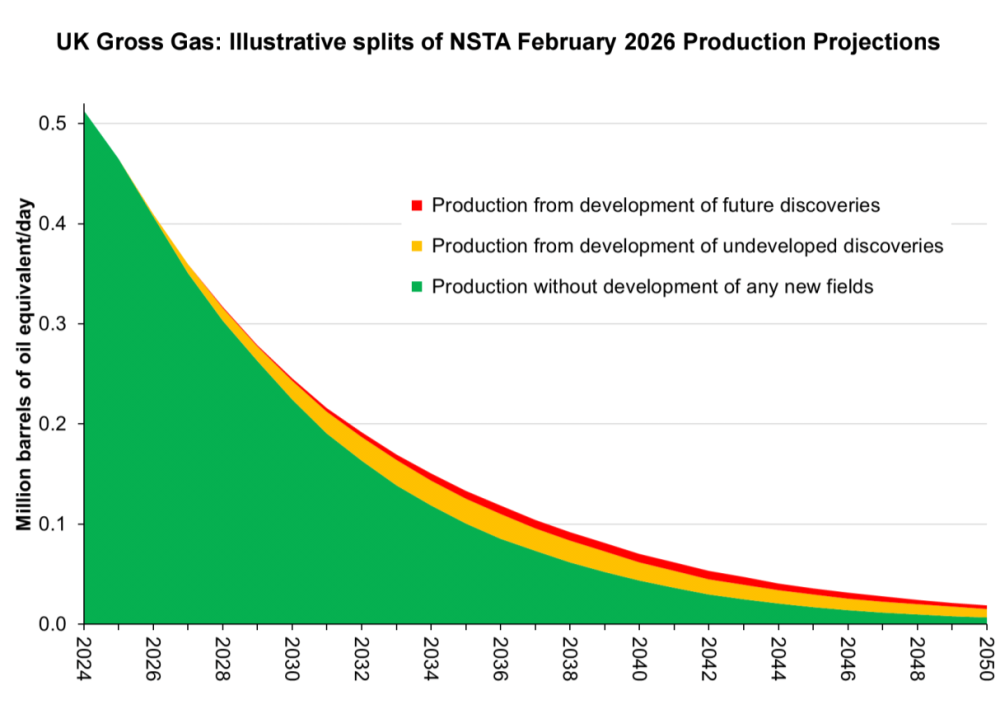
The HoC library says "How much money are oil and gas taxes forecast to raise in future years? The OBR has forecast that taken together receipts from offshore corporation tax, petroleum revenue tax and the energy profits levy will raise £4.1 billion in 2025/26. Receipts are then forecast to decline to £0.1 billion in 2030/31, primarily due to the expected continued fall in oil and gas production and expiry of the EPL" That's not a lot in government terms (or oil company profit terms) So the argument seems to be that the pio companies want to pocket the 4bn for themselves rather than allow it to go to the Exchequer. But they also argue that continued O&G extraction is vital for government revenues. "Allowing us to keep going will give you lots of tax revenue but we can't keep going unless you lower the taxes" We either lose the tax revenue because the companies don't operate or because we don't charge them. BTW whilst I agree about the sentiment over local extraction over importation the difference we are talking about is tiny Again, the difference between the green and red lines. It doesn't make much odds to security of supply, prices, CO2, jobs or anything else whether we do or don't allow more extraction. The only thing it really effects is the oil company bottom lines. I'm not sure they need or deserve more profit.
-
Plug in solar is here (well in a couple of weeks)
Beelbeebub replied to JohnMo's topic in Photovoltaics (PV)
Quite! -
BP editing the north sea. https://www.bbc.co.uk/news/articles/c62q7w003lro "As we focus our portfolio and direct capital to our highest-value opportunities, we believe our North Sea business will be better positioned as part of another company" Implying that the North Sea isn't a high value opportunity. Another data point I found. In round numbers. In 2025 the UK produced 330Twh of gas and net imported 330Twh (460 imp 139 exp) for a total of 660Twh used. Of which 190Twh went to electricity production to produce 90Twh of electricity A further 250Twh went to domestic (mainly heating) Leaving 220Twh for other stuff. Renewables generated just over 100Thw. If we replace the majority of domestic heating with heat pumps we would need another 100Twh (assuming scop of 2.5) If we add another 100Twh we would be able to dissolace gas from generation* Which would leave a gas demand of around 220Twh which is around about our current production. So tripling our current production is needed - which happens to be the target. *We would still need gas plants and storage to provide backup and peaker demand, at least until we get enough storage but the overall gas demand would be much lower therefore freeing up gas for things that we cannot easily replace either with.
-
Plug in solar is here (well in a couple of weeks)
Beelbeebub replied to JohnMo's topic in Photovoltaics (PV)
I'm fairly sure all "proper" inverters now have this built in. As for the micro inverters that are suitable for plug in solar - I'm not sure, obviously the "approved" ones will along with the shutdown hardware etc. I'm sure it's possible to buy some cheap ones without the necessary hardware online. But I think the main point is that even in the worst case the risk is just blowing your old RCD up with your unapproved inverter. So you end up getting a new bi directional RCD and hopefully a proper inverter. I don't think there is any additional risk to things catching fire or people getting shocked beyond the normal risk whenever you plug something in. There are plenty of dodgy gizmos you can buy online that have a far higher likelihood of shock or fire than your old RCD crapping out -
Plug in solar is here (well in a couple of weeks)
Beelbeebub replied to JohnMo's topic in Photovoltaics (PV)
IIRC, the issue with unidirectional RCD/rcbo only occured if the inverter continued to feed power when the grid goes down -which shouldn't happen (as has been pointed out) And then the problem resulting from that situation is that the RCD/rcbo is damaged - which would result in a dead circuit and the home owner getting it replaced with a bidirectional one I think the bigger issue is the electricians industry bodies not wanting something where electricians aren't needed. I am fairly sure they would mandate only qualified electricians are legally allowed to plug or unplug devices if they could. -
I was thinking of the higher rates! They were 15p, now 12p And I suspect they will keep falling as solar generation gets more and more common. https://www.theguardian.com/environment/2026/aug/02/solar-powers-record-share-britain-electricity-july
-
Yes, no plans to sell. I've looked at the multi tenant systems (solshare or something). They are pretty pricey (5-10k) and have 15 outputs (5 x 3phases) so make the most sense in blocks of flats. That is the most hard nosed approach but the benefit to the tenants is much more limited - especially with lower export rates.
-
If I did an AC transmission system the temptation would be to make it a non battery system and leave fitting of batteries to soak up the excess something for the tenants to do if they wish. This might be easier with plug in battery systems.
-
There are 4 houses in a loose crescent around a "green". A field backs on to the "green" to the north with a high hedge The panels are being fitted to comply with the EPC regulations and get each property to. "C" grade 1 house is a good candidate for normal E/W roof solar being a bungalow with a low pitched concrete roof. The other 3 have problematic roofs. Either not good aspect (shaded) or not good enough condition to allow solar to be fitted with out a new roof first or both But a ground mounted array could be fitted in the "north" field out of sight (and far enough back so it's not shaded by the hedge. I figure it's easier and cheaper to install and maintain one array in a field than 3 arrays on 3 roofs. And then for the bungalow I have to decide if it's cheaper/easier to put panels on the roof Vs chuck some more up in the field array and run a cable to it (that would be the 100m one. The others are closer to 50m) Strictly speaking the batteries are not needed as the EPC system currently only accounts for the panels and inverter - you get no points for batteries. But it gives so much extra benefit to the tenants it's hard not to justify it beyond the purely mercenary view.
-
Good point The array will be fairly large (maybe 8+ panels for each house) so the voltage will probably be higher than mains so the current lower. Plus we have had high voltage issues in the past.
-
In favour hybrid systems so the battery generally needs to be next to the inverter. If I use the AC method then there is one AC line (a line, neutral and earth) going to the remote inverter connecting to the meter tails between the meter and the consumer unit and I need a switchover box at the house to isolate from the mains in a power cut so I don't energise the mains. I could arrange for power cut cover but there would need to be a Comms line as well which cuts onto the cost savings.
-
Not a bad idea, it would definitely cut cable costs but I think i'd I be giving up the power cut backup function? And is there a problem with exporting the earth? The panels will all be earthed together by virtue of being fixed to a metal frame stuck to the ground. But the houses they supply are 50 to 100m away. wouldn't the same issue with car chargers and remote earth/faults raise it's head?
-
I don't have a fence only a hedge, and at one point I have to pass a gate and another a drive way. In the field I could see effectively building a fence to carry the cable - i'll probably do that. at least the buried sections will then not be in a field. the biggest bugger is there are a ton of other services around, gas, mains, water and sewage plus some telephone. Potentially I could go overhead the whole way, it's just passing over the drive way and gate are a bit untidy.


