


Beelbeebub
-
Posts
1521 -
Joined
-
Last visited
-
Days Won
11
Everything posted by Beelbeebub
-
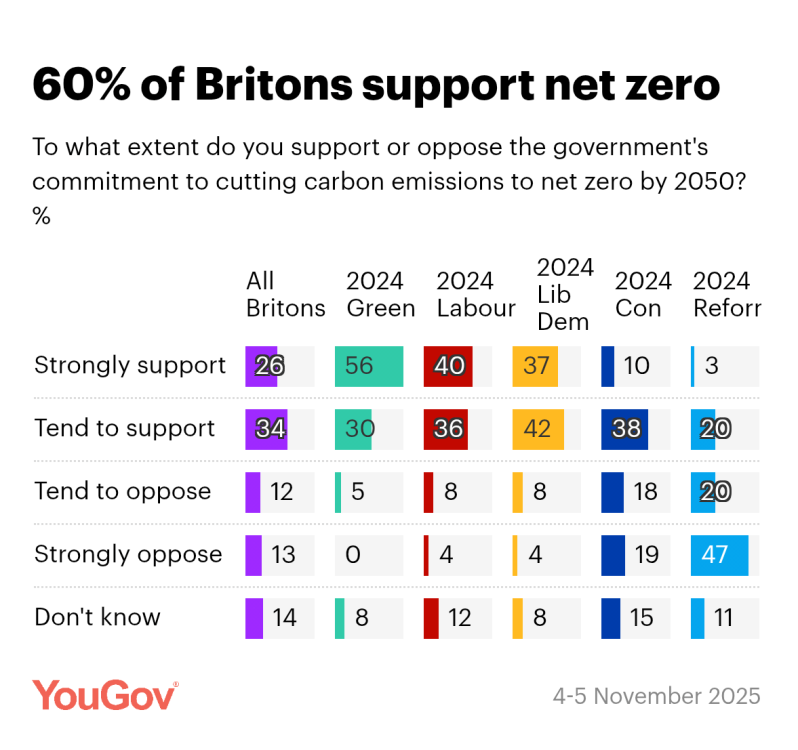
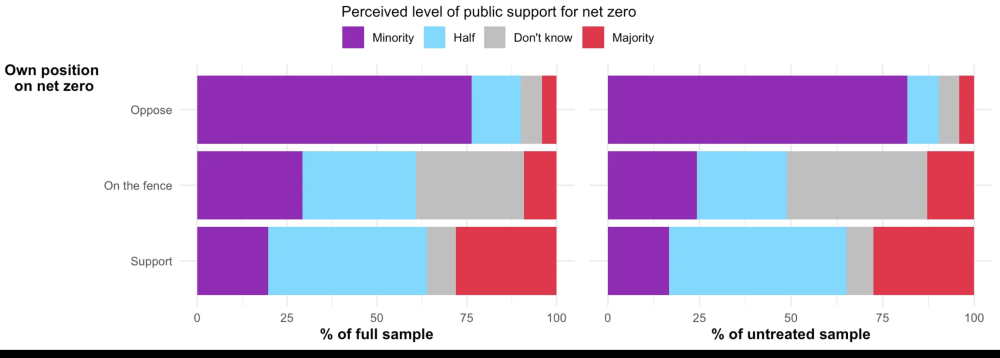
60% of Britons support "net zero" to a greater or lesser degree Vs 25% who oppose it. That's a pretty big majority The interesting thing is the majority of people who oppose it think their view is the majority of the public's view rather than realising they are a minority. About 3/4 of the 25% who oppose net zero,so a bit under 20% of the public think their view is the majority view. Which explains a lot of the confidently wrong takes we see online.
-
More Fixed Balcony Solar, and Impact on EPC?
Beelbeebub replied to Ferdinand's topic in Photovoltaics (PV)
That's odd We've had a bunch done and when we reran the assesment with the addition of 2.5kwp of panels wen got loads of points. Easily lifting one and sometimes 2 grades (10 points or more on some cases). It did seem to depend a bit on the individual property. Some were a bit less than 10 and others were well over -
We used shortish rails (I can't remember the brand, Van Der something) that were screwed parallel to and on top of the ridges in the roof. This is to allow the landscape orientation of the panels. It did mean the placement of the clamps was varying from panel to panel but we managed to get them all (just) in the allocated clamping zones. The only issue (apart from the rail locations being fixed to ridge locations) was I had to be careful when placing the stitching screws that tie the ridge of one sheet to the next. If I had a choice I think I'd go for the type of short rail that spans between 2 ridges for a portrait orientation. Which would avoid that issue.
-
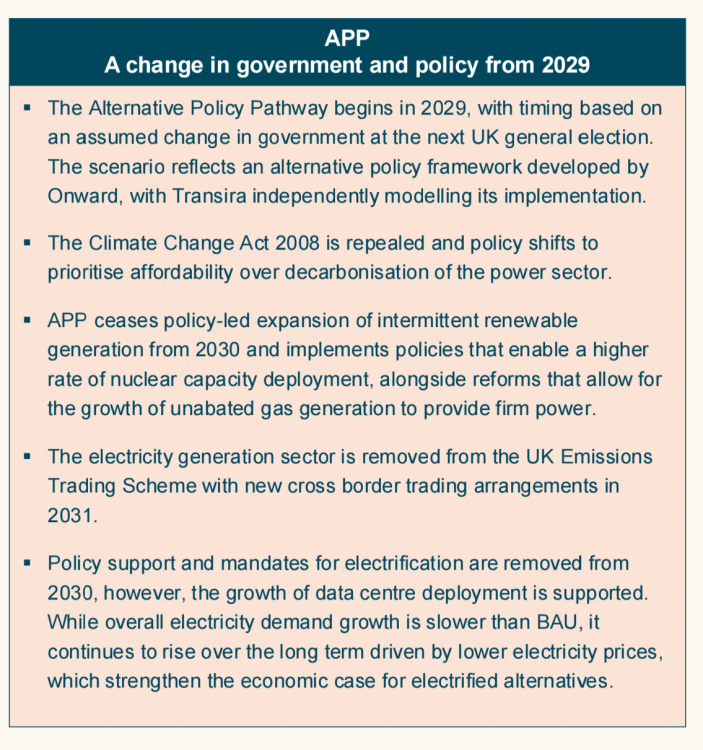
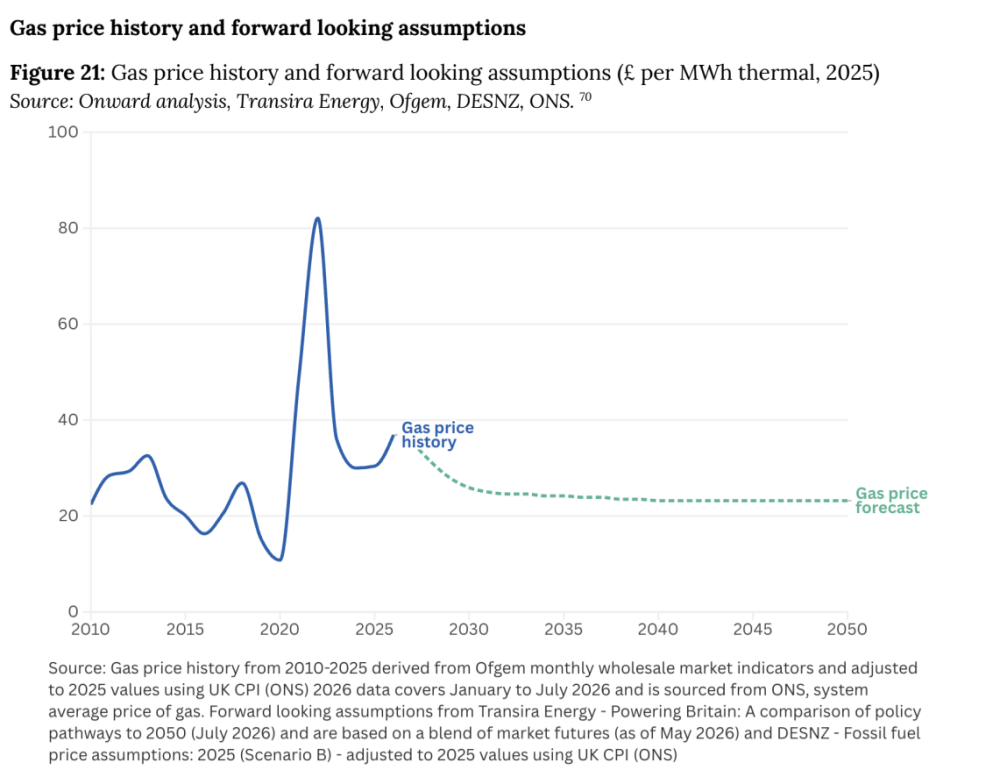
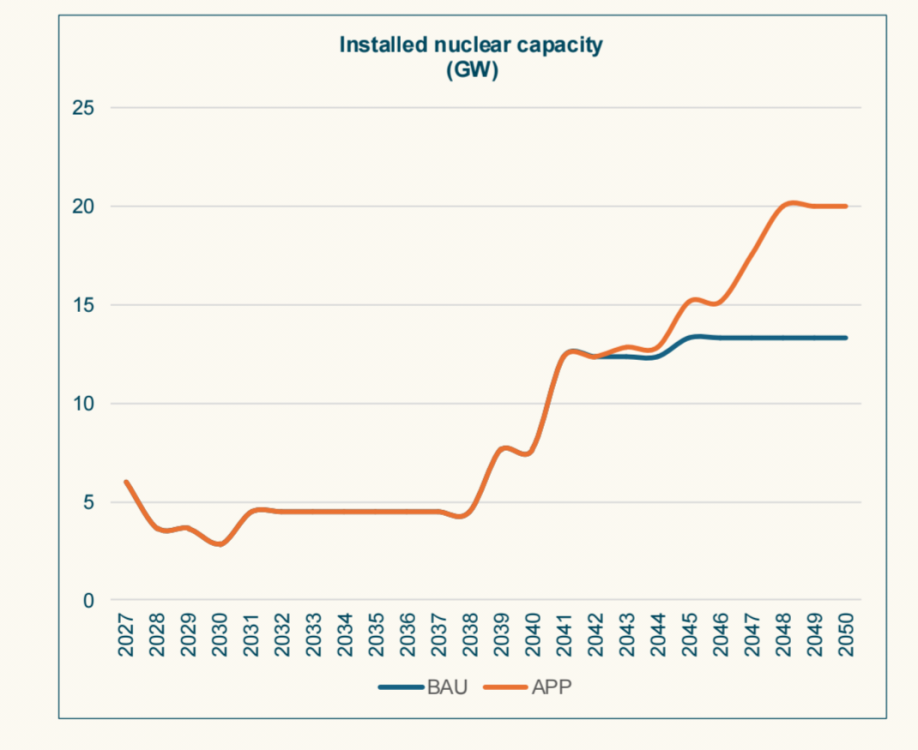
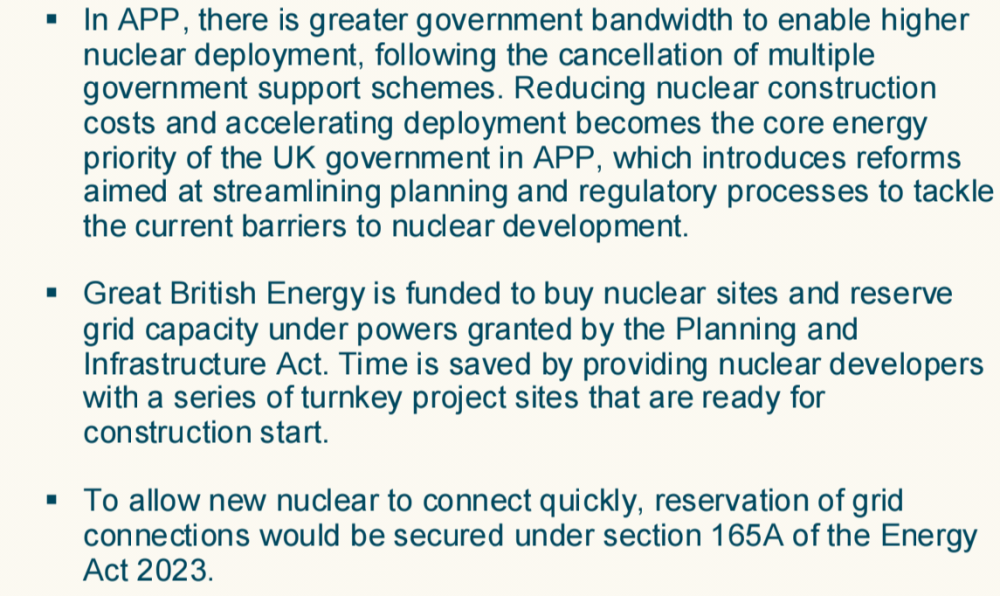
The conservatives have announced their energy policy It appears to be based on this document https://ukonward.com/wp-content/uploads/2026/08/Powering-Britain_-A-comparison-of-policy-pathways-to-2050.pdf The net effect seems to be to get a lot more of our energy from gas than the current trajectory. This makes their cost savings assumptions very dependent on their assumptions of future natural gas prices. They have assumed a stable future price around £24 per Mwh (in 2025 prices) They are also relying on building an extra 7Gw of nuclear capacity (about 2 to 3 new plants). And they will achive this by making government more focused on delivering nuclear - as if this is a magic wand. These assumptions seem to be, in the words of Sir Humphrey, "courageous". Nowhere on the document can I find anything addressing the energy security in the context of being able to source gas from abroad. There is a lot of focus on "security of supply" - which in the context it is used seems to mean firm Vs intermittent power. But nothing on how we secure the continuity of our power supply if there is an issue with gas imports eg a pipeline or LNG terminal being destroyed by sabotage.
-
Maybe let's get back to the subject of UK oil and gas reserves relative to consumption and leave discussions of local recycling politics behind us.
-
Running a business and local politics/volunteering organisations are different. People don't really understand local politics and what they can and cannot do witness reform candidates running for country council positions on a platform of stopping the small boats - an area in which they have absolutely zero power. I would suggest you try a turn at parish council - with your amazing competence I am sure you'll be able to turn things around and then you won't have to worry about the recycling or potholes or whatever irked you. And in the unlikely event you fail you'll have learned a lesson in how even brilliant people with good intentions can't always succeed.
-
And i bet everyone marvels at how well run the ville hall is. Absolutely nobody whines about the booking system or the noise or the parking or the sound system or the kitchen not being laid out well or any of the hundreds of reasons people complain about the village hall.
-
Retired people make up a large % of parish councillors because they have the free time.
-
Then do it. Stop carping and become a parish councillor. You'll probably find things aren't as easy as you think and then have to endure people calling you useless and saying they could 100% do better.
-
There are several businesses that pivoted to new sectors successfully but that doesn't mean every business is looking for that pivot and often big shareholder companies will find it harder to do so because the senior management team are incentivised to maximise short term profits which rarely means long term investments in things that are not "core".
-
Actually on the topic of companies investing outside their "core" business, the story of "LEO" (Lyons Electronic Organiser) - one of the world's first real-time business computers - being designed and built by a company that specialised in cafes serving tea and cakes is pretty cool.
-
It's also that companies don't invest in the best possible return. They invest for the best possible return *given their circumstances*. A vegetable wholesaler might invest in new forklifts or chilled storage and ignore the oil field off the coast because their expertise and structure are set up for selling spuds and carrots and not extracting oil An oil company is set up to extract stuff out of the ground, maybe refine it into petrol or diesel and sell it. They aren't set up to invest in windfarms and solar panels that make electricity they have to sell to the grid.
-
Indeed. The point being the logical trap of "BP is not investing on X, therefore X cannot be a good investment".
-
They are also selling their North Sea operation..... Renewables are making money. People are happy to build them on the promise of selling the electricity at about 9p/kWh for the next 20 years. In contrast people want over 10p for a gas plant (and that's excluding any carbon costs, it's closer to 16p with carbon costs) Nuclear builders want similar sums too. For context the octopus agile average export rate (which is just above the wholesale rate) is currently 17p and got as low as 13p this week. You are absolutely right about oil companies worrying about the bottom line but are drawing the wrong conclusion. They can make more money over the next few quarters by using existing infrastructure to sell oil and gas at ever increasing prices than they can investing money in long term assets that drive the profit of your existing assets down. And the management only care about the next 4 quarters. Anything beyond that is a problem for future them. Kodak invented the digital camera but decided it was more profitable to focus on selling film than to invest in a camera that didn't need film. And it worked. For a while.
-
Explain to naïve old me exactly how my data is inaccurate. Provide sources (ex-brother-in-laws don't count) showing the larger reserves. Explain how the government can make the oil industry under project production but can't stop them lobbying for more licences? Explain how the government can influence Norway to not only under project future production (they are also predicting decline albeit at a lower rate) but also to reduce current production to show that decline. Is it via the same mechanism the suppress the car that runs on water?
-
"Loads" is doing a lot of work there.... The largest onshore oil has 480 million barrels of oil..... sounds alot until you realise the UK consumes about 1.4 million barrels a day. So all that oil wouldn't last us until this time next year. And 1,420 million cubic meters of gas sounds alot until you factor the UK uses around 142 million cubic meters *a day* in the summer So all that gas wouldn't even last us to the end of this month. Again we are simply discussing the difference between a two declines, one slightly shallower that the other.
-
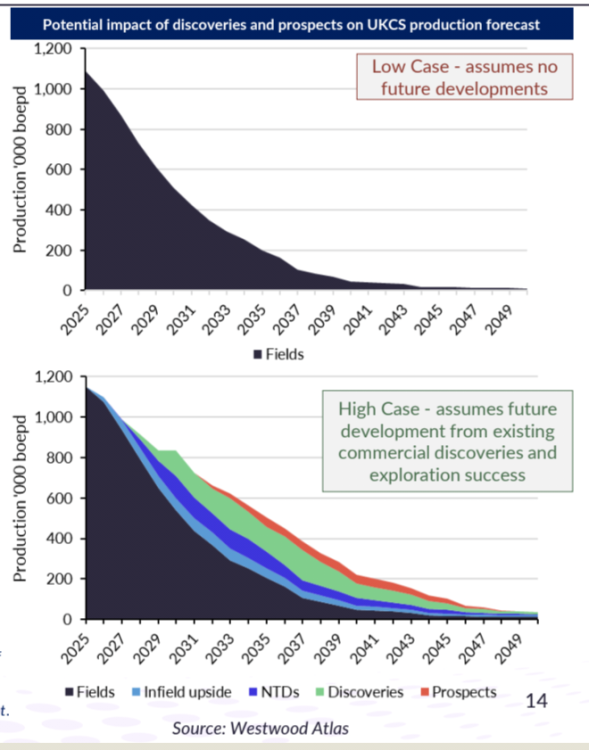
Lots of "my ex next door neighbour's sister once dated an oil rig worker in the 90's and she said there was loads of oil under Glastonbury tor" I'm going to use the projection done by the oil industry on the basis that A) they know more about the potential for pip and gas extraction around the UK than anyone on this forum B) they have no vested interest in minimising potential - which is a common retort to using the NSTA figures "ah but Ed Milliband told them to lie, there is actually loads of oil left". these is the oil and gas industry low and high projections The low one is approximately (but not exactly) the NSTA "current course". So by 2035 we will produce at best, half the oil and gas we do now (ie 25% of current consumption). On current trends maybe 13% of current demand. So all the arguing is arguing over the rate of decline - steep or steeper. There is no "up" scenario. There is no going back to the late 90's when we had a surplus and became a (small) exporter The only way the UK can become less dependent on imported oil and gas is for the UK to become less dependent on oil and gas
-
Chesterton's Fence is very much a thing and the likes of trump, RTKjr and Hegseth have absolutely no idea what the parable means.
-
I'm actually not surprised. The stuff that makes a country run happens pretty invisibly most of the time. Roads get repaired, bridges inspected, food hygiene is checked, school busses organised, flu clinics set up, bins collected, planning decided etc and nobody really noticed *until* something goes wrong. Then we notice and moan about how shit it is. The civil service is like plumbing - we only think about it when it goes wrong and what is there is a confusing jumble but replacing it is a ton of cost, disruption and work and often creates entirely new problems.
-
The speed and simplicity of the Brexit process was legendary ...
-
I don't think people quite understand how vital the civil service (and to be clear there are huge areas that need improvement) is to a smoothly running country - and yes the UK is a smoothly running country on comparison to alot of countries. The US has recently gone on a civil service slashing spree. Lots of parks and environment people fired. Cutting monitoring of diseases and food standards. Huge cuts of "dei" at the pentagon. They now have raging wildfires, explosive diarrhea and salmonella outbreaks and their sailors are jumping off ships because conditions are so bad
-
The greens have quite an extensive program of nationalising big utilities and taxing oil companies ....
-
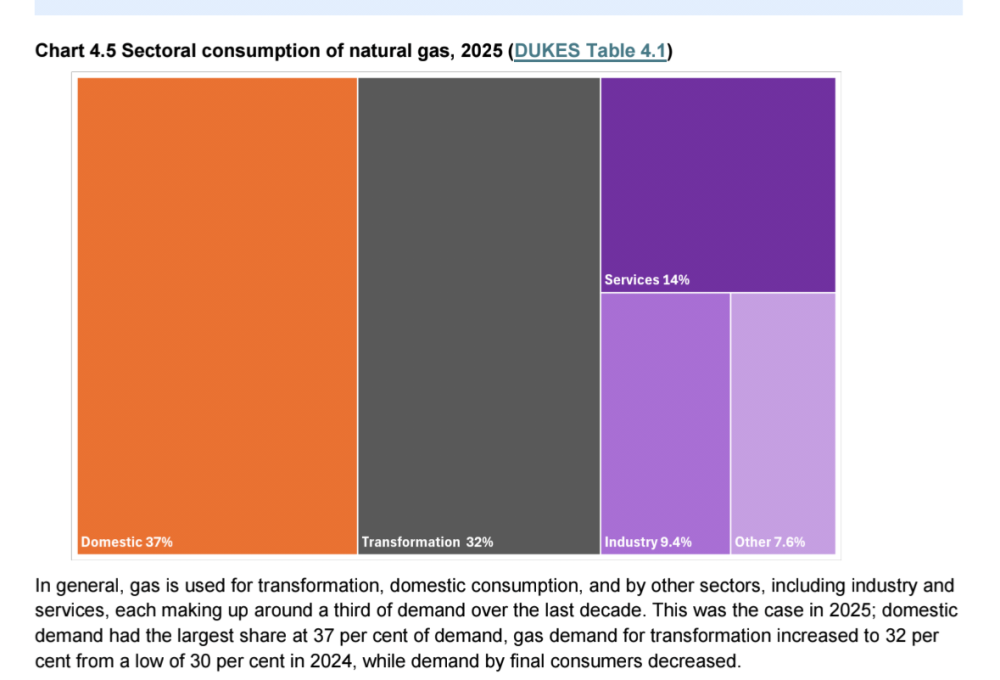
I'm really not Those graphs are from the North Sea transition authority and the absolute difference between net zero projection and "drill baby drill" is bugger all. Every single projection has long term decline. Even the most wildly optimistic oil industry projection has decline to 25% of current production over a decade. This is a good example of reading the statistics you want to see... Industry uses 10% of gas demand. On current track the UK will produce enough gas to supply only industry in a decade. If we go wild and do absolutely everything the oil industry can think of we could supply industry and others. If we go big on renewables for the grid (net zero) then the "transformation" chunk will shrink massively And if we go big on heat pumps (net zero) then the domestic but will also shrink dramatically.
-
"UK plc" doesn't really exist so we would need to set up a nationalised oil company with storage etc and some legal framework to define who they can and cannot sell to. Which is fine, but we'd have to do it - with all the attendant faff (parliament, setting up the structure, hiring peeps etc. And the resource is dwindling. By 2030 it will be half what it is now. And who thinks we can set up this national company by then? The time to do it would have been around 1980. just to reiterate - THERE IS NO OIL AND GAS BONANZA JUST WAITING FOR US TO CLAIM IT. Nobody, not even the oil industry thinks there is. The only people who say there is are Trump, Farage, Badenoch and their circle.
-
Curtailment payments also happen for gas power stations. The grid buys firm future generation. If the grid can't use it, it's not the generators fault. Likewise there are penalties for not delivering that firm generation. Imagine booking caterers for a big event and then telling them, when they turn up ready, because not as many people came or the car park is full. You'd quickly find caterers would build the cost of cancellation into their quotes and you'd never know how much it cost to do the catering because it would be muddled up with the cost of you canceling them. The grid is building out new capacity especially at the known bottlenecks. I think by 2030 alot of the current curtailment costs will fall away (though total curtailment may rise simply because of the higher renewables overalls)





