


sharpener
-
Posts
1492 -
Joined
-
Last visited
-
Days Won
1
Everything posted by sharpener
-
Gas boiler lobby obstructing heatpumps
sharpener replied to Beelbeebub's topic in Air Source Heat Pumps (ASHP)
Vaillant do. In addition they have a field engineer force who will come and troubleshoot installations done in line with HQ approved designs, whether generic or custom. You can also call them out to fine-tune your system e.g. after the first year, said to be well worth the £300 or so. Or so I glean from e.g. the facebook group. I think it's more about a priori risk reduction. No reason to suppose they don't honour the warranty provided it is installed by their own lights. One of my interests was analogue circuit design - which is why my home-made immersion diverter uses an analogue multiplier IC to get the real-time product of the voltage and current waveforms and hence measure the signed true export power flow. In this field it is maybe a bit different from digital ICs, as Analog Devices, National Semiconductor and so on published very extensive application notes with typical component values and pcb details. So the technician can build working circuits quite easily but also the professional engineer can study the examples, understand the principles and come up with novel designs. Vaillant's standard schematics are analogous to the application notes. I don't regard it as interference so much as a response to a complete absence of the involvement of professional engineers, in the domestic market at any rate. -
Gas boiler lobby obstructing heatpumps
sharpener replied to Beelbeebub's topic in Air Source Heat Pumps (ASHP)
Not so, wrt non-standard ideas like adding an HX or secondary pump, the installers refer back to Vaillant as discussed upthread for anything that is not in their book of approved schematics (which I have). It doesn't make much difference to the end user if this is bc it is a term of their approved installer status or just backside covering, it is what the 3 who have quoted all do. And there are constraints from Vaillant, the allowable relationship between HP output and (Vaillant) cylinders is published in the cylinder literature extract above - at roughly 7kW/m^2; the advice from their tech support is even more restrictive at 4. Whether they will accept any third party cylinder as compliant is conjectural, I can't demonstrate that the surface area of my OSO cylinder is 3 m^2 so they won't agree to it. No reply to my latest missive as yet (nor from the Guardian). -
Gas boiler lobby obstructing heatpumps
sharpener replied to Beelbeebub's topic in Air Source Heat Pumps (ASHP)
No, but following the option of "Bespoke Layout - speak to your Installer" imposes in practice whatever constraints they or the company choose to believe. -
Gas boiler lobby obstructing heatpumps
sharpener replied to Beelbeebub's topic in Air Source Heat Pumps (ASHP)
Can you give a link for that? I have got the installation instructions <arotherm-plus-230v-double-2626669.pdf> for the twin-fan units but there is nothing at all about constraints on DHW cylinders, only that they need min 150l of engaged volume (45l with the auxiliary heater fitted) - this would seem to be about defrosting though. Not if you want the 7 yr extended warranty which is only available via approved installers, and can't find an installer who will fit the HP to your existing tank without running it past Vaillant for pre-approval which to date has not been forthcoming. I am persisting with this bc their units are R290 and have an unusually narrow footprint (only 605mm including air space behind) but there will be rival products out in 2024. And it is already getting late for this season as the P/P is not due until 12 September. -
Gas boiler lobby obstructing heatpumps
sharpener replied to Beelbeebub's topic in Air Source Heat Pumps (ASHP)
But as you say, with an HP from Cool Energy who are much more relaxed about the whole thing. -
Well yes, I have no idea what happens with the average domestic install, I suppose it is done with the boiler "service" or not at all. Your case is a bit unusual in that you have a recent vented installation,@Beelbeebub has many for reasons above. In a commercial setting I am not surprised a G3 ticket is an insurance requirement (though the course is not that expensive). If there is a suspicion of tenants fiddling with the system then it might need someone with a G3 ticket who knows what he is looking for to spot that. I am not a professional landlord but in the past when I rented a flat out nothing surprised me, best was a tenant who wanted me to pay for an electrician callout, turned out he admitted to knocking the standard lamp over and the bulb blowing also tripped the RCD, muppet! How did they know to get their (unknown) UVC inspected then? Or was it bc you put them all straight <g>? Yes, the concept of the tundish is pretty rubbish, at full flow from the relief valve it splashes out of the cheapo plastic ones and goes everywhere. Since they are usually tucked away somewhere the idea that the overflow will quickly come to someone's attention is risible. My D2 pipework was installed by G3 qualified person and is fully compliant regarding size vs length, but still will not quite take the full flow when I test it without backing up to the tundish and overflowing, and that is after I had to relocate the bladder trap myself - before which it was much worse.
-
Gas boiler lobby obstructing heatpumps
sharpener replied to Beelbeebub's topic in Air Source Heat Pumps (ASHP)
From https://www.vaillant.co.uk/specifiers/products/cylinders/: coil SA is 145l slimline 1.0 m^2 200l 1.4 250l 2.4 300l 2.8 So you are correct, they are a long way from meeting their own recommendation of 1.75 m^2 for the 7kW unit, and a factor of >2 out on requiring 3.0 for the 12kW.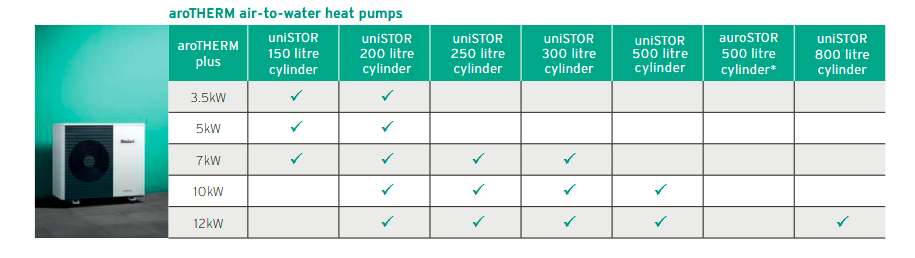
-
You've mentioned this before, I am not sure it is mandatory to pay a third party to do it, what is the basis for yr thinking it is? For those paying for an annual boiler "service" it is a trivial amount of additional work and I think routinely included.* Just looked it up, my UVC mfr (Ariston) says the following should be done annually by a "competent person". Hard to argue a degree in physics is not sufficient(!): Clean the filter screen in the PRV, test the pressure vessel pressurisation and the temp and pressure relief valves, check that the drain pipes (D1 + D2) run clear. Check the pressure reduction valve works OK by measuring the pressure at a draw-off point (I doubt the professionals ever do that, if the spring in it fails [which has happened to me] flow/pressure will be catastrophically low anyway). I test the valves more like 4 times a year as by repute they have a tendency to not re-seat properly if not used in a long time. *Not that they do any work! This is another racket, Domestic and General which underwrite a big proportion of maintenance contracts admit that their policies only cover an annual inspection and they do not carry out the service procedures recommended by the boiler mfrs.
-
Gas boiler lobby obstructing heatpumps
sharpener replied to Beelbeebub's topic in Air Source Heat Pumps (ASHP)
FYI I had the following from Vaillant tech support in respect of the Arotherm Plus (R290) HPs: "The rule of thumb for sizing a coil surface area for a heat pump is 'for every 4kw of heat you need 1m2 of surface area'. This would indicate a 12kw unit would need a 3m2 surface area coil within the cylinder." which to my mind demonstrates a woeful lack of understanding of the product that they promote as being capable of 75C flow temp. I am continuing to press them for a better answer. -
I understand why even with weather comp S-plan is less than optimal because you then feed the CH at the HW flow temp. But Y-plan? FWIW the HP would replace a 28 y/o oil boiler. We currently have its stat set to the min which is 65C. Weather comp not possible because this would result in acid condensate all the time. It has an economiser in the flue and this produces a small amount on startup, the condensate tray has been replaced twice as it is. No, since the HP will increase the flow temp until it can get rid of the heat, the reheat time will be no worse than before. 6kW min o/p from an HP will still be twice as fast as the immersion heater. In any case it is not a consideration for us, the 210 l tank only needs heating once in 24h, atm entirely by PV. No, the objections I have to replacing an OSO s/s tank in good working order are none of the above: (i) massive disruption in order to dismantle and rebuild the airing cupboard, and lift carpets and flooring to run new pipework or site new tank in utility room meaning there is no space for the thermal store I also want (which will fix the turn-down problem anyway as it will be a parallel sink for the heat) (ii) cost thereof vs the small marginal savings given electricity is E7 night rate or free PV (iii) waste of resources in scrapping off a tank prematurely (iv) it is an unthinking brute force approach which totally lacks elegance in its design.
-
Just so. I have said to Vaillant that if they can relax the automatic requirement for a new cylinder it would be a competitive advantage for them as they will sell fewer cylinders but many more heat pumps.
-
Gas boiler lobby obstructing heatpumps
sharpener replied to Beelbeebub's topic in Air Source Heat Pumps (ASHP)
Well done for persisting @JamesPa, another small step in the right direction. -
That's the situation I inherited. It struck me as very unusual but I can only think that (with an S plan setup) it is so the coil cct (which is very short) does not starve the radiator cct when they are on at the same time. Otherwise I agree with all your calcs, I have put similar to Vaillant - as they make a point of pushing their 75C flow in their advertising, wot is point if you cannot make use of it to avoid having to change your cylinder? Will report here in due course. PS would not fit a Stuart Turner booster again. Despite what they say some products are rebranded Far Eastern imports. Have had a shaft seal fail, no spares stocked, zero support after 18 months. Full price replacement has recently developed an unexplained crack in the plastic impeller shroud, with drastic drop in o/p pressure, have now built one good pump out of the bits of two. Endless hassle with it, will buy DAB next time.
-
York Heatpumps - any experience?
sharpener replied to Beelbeebub's topic in Air Source Heat Pumps (ASHP)
Thanks, presumably you didn't want to publish the tables here. Even if the turndown is better than I expected the big takeaway for me is that they will not achieve 65C flow below an OAT of 5C. As you may have read on this thread, because of the small coil I will need a high flow temp to drive the heat through the small surface area. Hence my interest in R290 HPs which will provide up to 75C flow, the CoP is not good but it would be running on E7 whlile producing the DHW. -
York Heatpumps - any experience?
sharpener replied to Beelbeebub's topic in Air Source Heat Pumps (ASHP)
Precisely my point, which means if the 16kW has 2:1 modulation (which I don't know but would be reasonable) and turns down to 8kW then so will the 12kW which is quite poor and would not cope with the small coil in my cylinder without cycling. -
York Heatpumps - any experience?
sharpener replied to Beelbeebub's topic in Air Source Heat Pumps (ASHP)
Other things being equal then it is important that you try and avoid getting a model which is software restricted, because you will automatically get a worse turndown ratio. The York range seems to achieve quite a high output from their middle frame size, 16kW from a package 1040 x 865 x 410mm is pretty good - a "thin" design and well inside the 0.6 cu m. Unfortunately I am looking for 12kW which is the lowest of the three ratings with 1.8 kg of R32, so the turndown ratio would almost certainly be poor (?min o/p of 16kw/2 so maybe only 1.5:1). In these circs better to choose a different mfr with the break point at a different rating. From the engineering point of view I am not sure about the modular concept, it's nice in theory but there are a lot of things (pcbs, reversing valves, pumps) where the costs don't increase much if at all with rating). And installation would be a faff unless like Pylontech batteries you just physically stack them one on top of another and all the interconnections are made automatically. Which I can see being expensive on the hydraulic side. -
York Heatpumps - any experience?
sharpener replied to Beelbeebub's topic in Air Source Heat Pumps (ASHP)
The first unit may be PD*, but after that they all need express Planning Permission. *principal requirements are MCS install and not more than 0.6 cu m, which is likely to apply to small units. If the mfr varies the refrigerant charge I would expect the min would vary along with the max. If they just limit the max by a software truncation then it wouldn't, seems like York are in the second category. So are Vaillant, the 10 and 12 kW uinits both have 1.3 kg R290 and AFAICS the output map for the 10 is simply a subset of the 12's with the top end chopped off. -
Wow, thanks for the full model. It seems not to be quite linear in delta T but by a bit of extrapolation it looks to transfer about 7.18 kW at W = 55 and falls to 6kW at W = ~61C, would that be about right? It seems plausible at least and so a bit of margin for scaling (not that I will get any with the rainwater, on the outside of the coil at least). Separately I calculate 34 litres/min required to shift 12kW at delta T of 5 deg, which in 28 mm pipe is 1.1 m/s so all good. I will tackle them with this but am not overly hopeful, I fear they will not countenance running at 75 any more than they will run the rads at >55 or the UFH at >45.
-
The thought experiment was about adding the TS and DHW systems myself after the MCS install but that wouldn't work. Certainly I could reprogram it how I want once installed. Yes but only I think within the timing window you programme for the DHW. Also they typically have a programmable max duration and lockout times to prevent it hogging the heat supply. Anyway a 210 litre cylinder takes about 10kW to heat from cold so with a 300 TS as well the total will be about 25kWh. Worst case a 12kW HP would take 2 hrs, leaving 5 hrs for space heating. So it would probably be split it into two sessions either by choice or by operation of the default settings. I envisage the HW/TS getting up to temp by 0600 so the UFH can come out of setback before we go downstairs. In the depths of winter there will also be the AGA to warm the kitchen.
-
Air-to-air ASHP replacing warm air heating
sharpener replied to Gooman's topic in Air Source Heat Pumps (ASHP)
With a 2:1 disparity yes I think you should. Either one of them is going to cost you much too much or the other one will not heat your house. Remind us of its age, construction and floor area and we might be able to suggest something. For reference I have had several estimates now and am reasonably confident a 12-15kW HP will be enough for a 200 m2 barn conversion in the SW. -
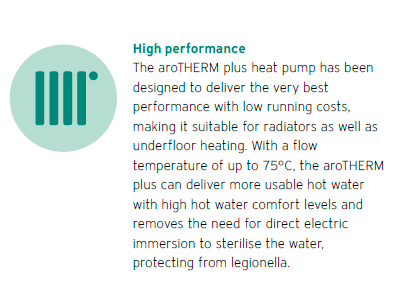
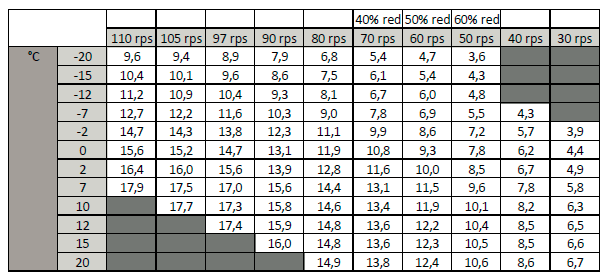
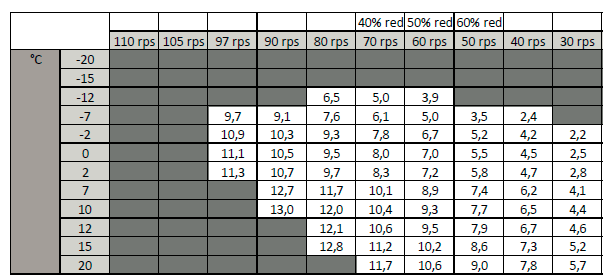
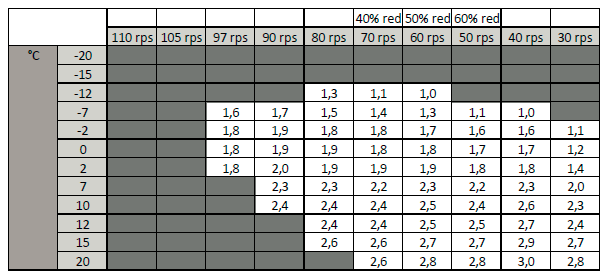
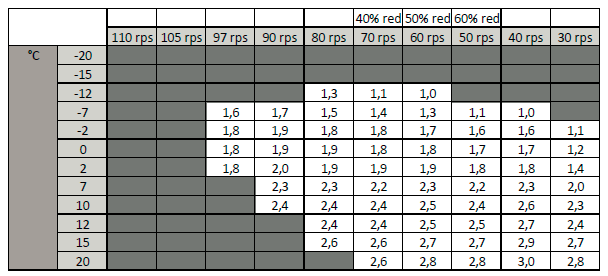
I have had no luck on this score with Vaillant tech support or their recommended installers despite the following claim in their publicity material: I am assuming that if you can run it up to 75C the heat transfer to water at 55 will have no difficulty in getting rid of the minimum o/p, maybe you can check for me if you have got the formulae handy for a 0.8 m2 coil @JamesPa. According to this chart the 12kW unit will defo turn down to under 6kW and that is for the stated conditions "Topný faktor (COP) a topný výkon při A/W 65-57" (Heating factor (COP) and heating output at A/W 65-57) They don't publish figures for 75C but they can hardly be any greater. Running off E7 as I propose to do even a CoP of unity would be fine and it achieves this OK (at 65C) but I get met with "the CoP will be awful" to which I reply "E7 is so cheap in comparison (1/3) that I do not care in the least". Though heating up from cold it will not be as low as that for most of the journey anyway: If it turns out to be less than 1.0 in practice I can always use the immersion. Thinking about it maybe I should tell them that is the plan, no that won't work, MCS says it has to be the HP even if less efficient. HTH
-
I have my immersion which is fed from the solar diverter set to 55C, and it has priority over the separate thermostat for the oil boiler which is set to 50C. They were originally 5K higher but the rainwater dissolved copper from the pipework which ended up as a green deposit in the shower tray. Never had a problem with any organisms, perhaps they are poisoned by all the Cu? Shipbuilders would put a copper coin under the foot of the mast as it prevents fungal attack.
-
Maddening. A friend of mine had a newbuild where they had wired the room stats to all the UFH actuators completely at random so the entire house went into wild oscillations. Sounds like the same kind of thing.
-
Ah, slightly unusual situation. Well done, Cool Energy seem to have a good rep on here, are you pleased with it? (You allude to problems) Have sent my three penn'orth to both, will see what happens.
-
How did this come about? Did you have the calcs and the design from another supplier? Did you fit the cylinder and buffer yourself beforehand? Were Nationwide happy about finishing off a part-complete project? Or have I got it all wrong?
