


sharpener
-
Posts
1492 -
Joined
-
Last visited
-
Days Won
1
Everything posted by sharpener
-
My point exactly, what is it I "expect"? If I design for 99% worst case OAT (-0.2C for the SW) then using weather comp I expect the flow temp to vary from say 30C in spring and early autumn to say 55C in the depths of winter. I don't anticipate spending a high proportion of the time at 55C but I think it is a reasonable corner case to design for. At this temp the Vaillant Arotherm + 12 is still producing more than the nominal 12kW output and the claimed SCoP (whatever that turns out to mean) of 3.63 is enough to beat the price I am currently paying for oil. Problem is that the Vaillant installer I spoke to recently won't under any circumstances design for flow higher than 45, which seems not to take advantage of the machine's capbility on the limited number of days it might be needed. And chose a -3.0C worst case OAT which increases the required emitter sizes even further. IMO it should be my choice how to trade operating efficiency in extreme conditions against investment in 12 new radiators.
-
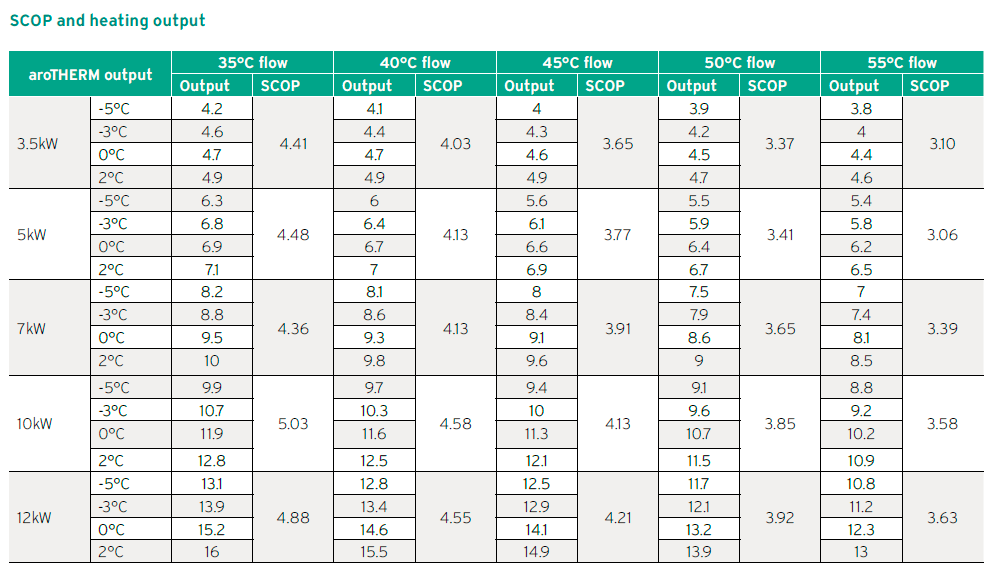
So I read that SCoP is formally defined as total heat output over a year divided by total electrical energy input. As the instantaneous CoP is a function of Flow Temperature and Outside Air Temperature this leads to performance tables like this: Are the OAT figures in the table then the design minimum figures, and so already take account of the variation through the seasons of the actual OAT. If so, what is the source of the OAT probability tables used for this (e.g. CIBSE?), which will vary from region to region? Furthermore, with Weather Compensation (which is mandatory under MCS rules) the flow temperature is itself an inverse function of OAT. So do these tables already take that into account as well? If not then they will underestimate the year-round average CoP as the flow temp needed to achieve a constant ambient temp inside the house will also vary with the seasons so will be less that the figure in the table. Thanks for any enlightenment!
-
So I find the Heatpunk software has some worrying inconsistencies. As well as the swapped rad selection boxes noted upthread, it seems that going back and changing the wall materials gives unreproducible results, if I reverse the changes I get an answer about half of what I started with. To get a true comparison between the stock "610mm solid stone" and the custom "sandstone 600mm" I needed to start again and build a new model identical save for the wall materials - which is annoyingly time-consuming as there does not appear to be a "copy floorplan" feature. Result is that the "610 mm solid stone" (U=1.86) needs 12180W whereas the "sandstone 600mm" (U=2.27) needs 13776W. So it is clear which one the surveyor needs to use to get the "right" answer!
-
Yes, it will. This is what I meant by generously specced (columns are 35/40/45/50/55C flow), the superiority of the R290 is obvious cf the Samsung R32 offering: One issue is the design OAT, the heatpunk s/w gives -1.3 for my postcode whereas the MCS table has -0.2. Another is making sure they do not apply any uplift for near a river (should be an advantage IMO), or intermittency. Fortunately the EPC surveyor was generous in assessing the loft insulation thickness to avoid disqualification for BUS. (Makes damn all difference to the overall picture, payback for adding more is ~10years if DIY, awful job, ?twice that if contracted). Have just spotted I can reduce the U value of the walls from 2.27 to 1.86 by selecting the stock "610mm solid stone" instead of 600mm "sandstone". But it only reduces the heat loss by a few 100 W, further investigation of this required methinks!

-
In my case, very closely indeed(!) I have now done a more comprehensive heatpunk model including internal walls and individual rooms, which showed that for some reason the previous shell model was only half my house [it is two barns end-to-end]. Now it has been fixed, the total MCS heat requirement is a shade under 15kW. Since the Vaillant A+ 12 is very generously specced (unlike the Samsung HT 14 which is positively mendacious) I think that will suffice. There is MVHR and additional heating in the form of an AGA and a WBS which of course MCS won't allow for. Result is remarkably close to the central figure from the Heat Geek cheat sheet, 75 W/m^2. And reasonably consistent with the parsimonious 6kW average oil consumption required to heat only the zones I am using at any one time (kitchen plus two bedrooms or the living room). Still nothing heard from the two installers who came a week ago. A third contacted me courtesy of the Vaillant "find an installer" scheme, Daikin seem to have given up completely.
-
Sorry, didn't realise you were talking about the boat. We used to have a Rival 32 with a very noisy 2 cyl Volvo engine, under the cockpit there was some fancy foam insulation faced with a perforated white top sheet, pretty haphazardly installed and so not very effective. Soundproofing is as much an art as a science.
-
Unfortunately the lowest temperature I can set my oil boiler to is 65C, this is to prevent condensation from the acid flue gases. As it is also quite over-sized it will even so only run for about 15 mins in the hour so very unrepresentative of HP operation. Measuring oil consumption at frequent intervals is not easy as the tank and sight glass are in an outbuilding. I could I suppose measure the actual firing time with an hours run meter but I am not sure it would greatly improve on the measurements I have already taken. , In a former life I had a project on avionics which needed a 50Hz to 400Hz motor-generator set installed in the lab, which made a horrendous noise. So over one weekend I built a box round it out of 3/4 in chipboard lined with 50mm fibreglass, leaving staggered ventilation openings with no line of sight through. On the Monday I told the fellow in the office next door what I had done and said I was about to start it up. In fact it had been running for half an hour and he had not noticed. I would guess the noise reduction was 25 or 30 dB so was well pleased. IMO the main problem with doing this kind of thing on an outdoor HP is keeping the insulation dry. I recall however you can get special non-absorbent closed-cell foam from marine suppliers for soundproofing engine compartments which might do the trick. Would also work on the wall behind the unit as upthread. A canopy covered on the top with roofing felt and on the underside with acoustic absorbent would keep the rain off it and help to reduce the radiated noise even further. But as you say, not pretty. Good luck with your multi-pronged attack on the planners. Have had my own run-ins with them but the partisan chairman of the LA lost his seat in the local elections so has now had his comeuppance.
-
Of a sort, see upthread or maybe elsethread, average oil consumption during a very cold spell was about 6kW round the clock - but with extensive use of zoning. So I am confident that a Vaillant Arotherm +10kW HP would keep the entire house very comfortable - and probably using no more energy as several have previously suggested. Possible alternative is a Mitsi Ecodan 8.5. And if I replace 4 rads but with K2s instead of P+s it would reduce the required flow temp to 45C and this just squeezes into the performance envelope of the Arotherm + 7kW which has 5dB lower noise power, is < 0.6m^3 and will run off a 16A breaker. Alternative is a Mitsi Ecodan 8.5 (but that is 3dB louder and needs 25A supply). Either would leave something in hand because of (a) the overspecified min. OAT (see above) and (b) the model assumes it puts 850W into a rad in the kitchen to simulate the AGA, whereas this actually emits about 1.5kW Another plus point for Vaillant is they have their own field engineers with vans full of goodies whereas all the other cos. pay the installers £90 for a diagnostic visit and then they have to come back again to fit the replacement parts. The main issue with them is that AFAIR there is no warranty (except presumably Sale of Goods Act or whatever) if not fitted by registered installer. ATM am waiting for the two installers to get back to me before I decide whether to pursue either the Good Energy quote or the Veritherm one. Sorry you have not had better joy with the planners @JamesPa, am keeping my fingers crossed about that. Have you investigated fitting an acoustic screen or enclosure? The MCS protocol gives a 10 dB allowance for that. I have also thought about putting noise absorption mat on the wall behind to make it 1 reflective surface rather than 2 which would give you another 3dB.
-
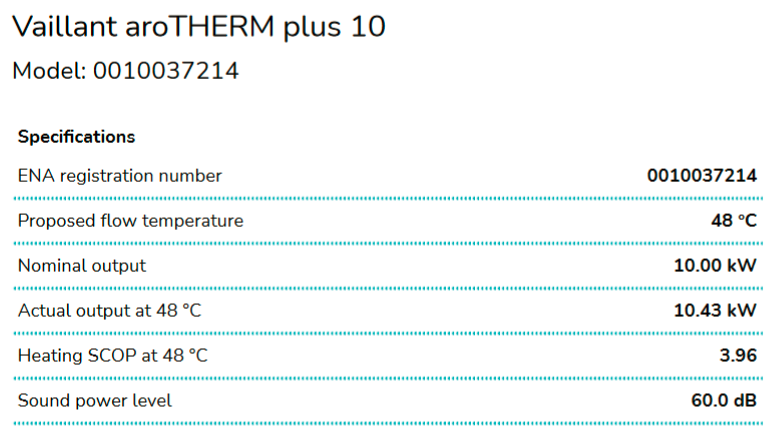
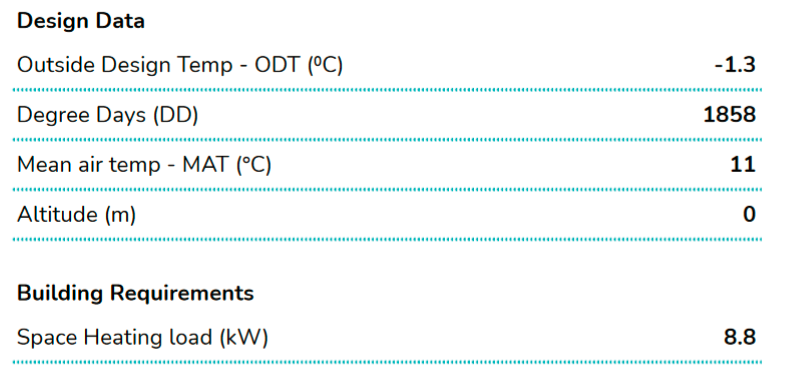
Thanks for this suggestion @billt. Not quick but very comprehensive. Process not very well explained e.g. you have to click on an Options button to get to the flow temperature slider bit. Got there in the end! Have now done a black box model of the whole house with correct external construction and rads but without any internal walls just to get overall heat loss. Result is as under. The worst case 48C flow is only required for the bedroom rads first thing in the morning and late at night when I will be wanting DWH at the same time anyway, it drops down to 43C during the day gving a SCoP of 4.31 which I would be quite happy with, and 16% spare capacity. Three points of detail with the Heatpunk s/w which someone might be able to help with: i) I had to choose K1 rads in the "Plans" stage to get them to appear correctly as K2 at the "Heat Pump" stage later on (and vice-versa), has anyone else encountered this problem? ii) the CIBSE Table A figures from various sources for Plymouth are 99% -0.2C, 99.6% -1.6. (The MCS 3005 spec says the installer can choose which column to use, without giving any criteria for this.) But Heatpunk has used a figure of -1.3 which is not valid for anywhere in the table! The degree days for Plymouth are OTOH correct, 1858. iii) Although it tells you whether you need to make a formal planning application on grounds of noise it does not seem to know about the 0.6m^3 size rule. Meanwhile Veritherm have come back to me with a price of £905 + VAT, so I would have to be extremely confident the installers would pay attention to their findings before paying that much. Also they will shortly stop doing surveys for the summer because the nights are now too short and too warm for their technique to work properly.
-
Northwest Ireland Installer Recommendations
sharpener replied to Shaun McD's topic in Air Source Heat Pumps (ASHP)
The two firms I have had in came from the "find an installer" service from Vaillant and Daikin. You could contact Lana.Mills.ext@vaillant-group.com direct to see if she can help. Don't have a contact at Daikin and their installer was indirect via a distributor I went to visit, took a lot of chasing as you have found too. -
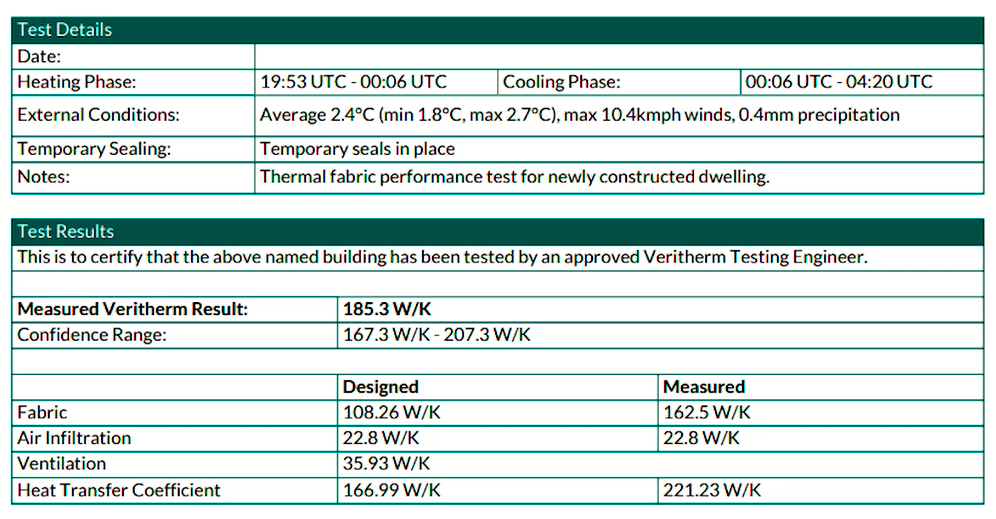
So are you saying that in fact because the zoning does not have much effect - since the rooms are not thermally isolated - then the overall heat loss might be nearer the 6kW figure than the 12kW? I would be nervous about this without getting Veritherm in, I see they charge "from £500 plus VAT" https://veritherm.co.uk/testing/ but that is of the same order of magnitude as a couple of abortive installers' paid quotes. And for me it would be preferable to a long time spent logging lots of stuff. The error bars are not inconsiderable though: But I suppose the big question is how well is it viewed by the installation trade? If they believe in it and it reduces uncertainties and therefore the risk of an unhappy customer there is something in it for them. So I will ask the two firms what they think when they get back to me. I will also ask them for references for similar properties to mine. Is this the way forward? Has anyone here had Veritherm in?
-
Well at a first stab I get this for the loss through the walls: 600 mm sandstone U = 2.504 W/m^2K x 250m^2 x 20C = 12.502 kW Less demand because of the MVHR and internal heat sources, IIRC @SteamyTea allowed 3 deg rise for that. AGA gives off 1.5 to 2 kW 24/7. Losses through the insulated loft will be about 4% of walls so neglible. D/G windows will be better than the walls. Haven't got an estimate for the floor yet but if there is any insulation at all there it will be small compared with the walls. So the big unknown is the air change rate.
-
Or on Veritherm, their answer would be quicker and require less effort on my part? Don't follow @JamesPa. Which was "this"?
-
At this rate I may not have any option. DIY - or any install with the 12kW Vaillant - will require full PP. The oil boiler will not require servicing this year as it is happy on alternate years, so I am thinking the market may be more competitive in the R290 space in 2024. BTW congrats on the analysis @SteamyTea.
-
Thanks for calculator link, will try it. No idea. No trickle vents. MVHR on first floor (also extracts from kitchen) so we have all the windows shut (which OH doesn't like). Ground floor has WBS with external air supply, oil boiler ditto, AGA which sucks air from somewhere. N Well tbf they haven't "quoted" as yet, but neither have they said it will be conditional on a paid-for survey. Yes, from a cold spell 15 months ago. Average output from boiler + AGA was 6kW round the clock, calculated from calibrated sight-glass readings. But with major zoning in use: 2 bedrooms first and last thing, living room 1630 - 2230. At other times we live in the kitchen/dining area. DHW from PV topped up as necessary by boiler. I am thinking this is not inconsistent with a 12kW ASHP set to heat the whole house all the time at least to setback levels. Incidentally both firms yesterday said the Honeywell Evohome wireless TRV system would work fine and in one case was recommended, they just need the Call for Heat contact closure which it provides. So contrary to the received wisdom that HP works best heating the entire house all the time. Heatgeek has a quite persuasive video which says that room to room heat losses make the radiators that are on work much harder so destroying the CoP, see e.g. this discussion (which is where the 9C brine temp came from). I guess it is a matter of degree, also you would think the thermal mass of the walls would even things out a lot but in practice although the living room never gets truly cold the rads lift it by 3 - 5 deg in half an hour. Which is why I put them in, the UFH was too slow.
-
Northwest Ireland Installer Recommendations
sharpener replied to Shaun McD's topic in Air Source Heat Pumps (ASHP)
Sounds like groupthink to me. No-one I have spoken to pushing for GSHPs in Devon. -
Northwest Ireland Installer Recommendations
sharpener replied to Shaun McD's topic in Air Source Heat Pumps (ASHP)
GSHPs can run under more favourable conditions, have recently read somewhere that brine temperature can be 9C all winter cf -2 OAT, this will give a better CoP. Maybe that is behind what you have been told. ATB with your project, if you have the time and a bit of plumbing experience I am sure it is not beyond an IT professional and with help from this forum will be instructive and rewarding. -
Was going to start a new thread but this is quite germane. Yesterday I had two different HP install firms round to quote. I would like to double check their answers against a black-box calculation of total heat loss but I have not found a complete table of the relevant U-values The calculator at https://www.omnicalculator.com/construction/heat-loss is the most appropriate I have found but doesn't cover my exact materials (and may not account for air changes), the nearest approximations give about 6kW for each floor. This is consistent with several other rough estimating methods. Assuming the following parameters for our 1996 barn conversion: Two floors each 5 x 20 m with 2.2 m ceilings My target temps are 20C for ground floor and 18C for first floor, relevant OAT location is Plymouth. Stone (Devon slate/sandstone) walls 600mm thick, total perimeter 50m. Pitched slate roof with 150mm of insulation on floor of loft Ground floor has 1996 underfloor heating over 3/4 of the area so I assume some kind of insulation below the slab One first-floor gable end is dry lined with 50mm sheepswool/50mm ventilated cavity/foil-backed plasterboard MVHR to first floor. 6kW WBS. AGA. can someone point me at accurate U values for this construction/suggest a better calculator (not a massive spreadsheet)/do the sum for me please? Neither installer was here more than an hour or covered all the points I would expect. In particular neither checked the loft insulation or made any measurements beyond what was on the plans I had sent in advance. Both think the existing rads will do even though a few are manifestly under-sized. Both want to replace the HW cylinder, but one will consider adding a circulating pump instead. Only one considered noise vis-a-vis the neighbouring property. However the other one did look at my intake and correctly spotted the TT earthing, the 16mm^2 meter tails and the spare way in the CU - but doubted I would qualify for BUS, without explanation. Both definitely say they will quote, on the basis of a Vaillant 12kW Aerotherm Plus (which is more than 0.6 m^3) and a Daikin Altherma HT ?16kW respectively. It remains to be seen what they come up with and whether it includes any heat loss calcs. Separately I started a new online enquiry with Octopus and this time they have come back to say given my EPC rating (E on account of the walls) "Based on your estimated heating and hot water energy requirements contained within your EPC, I'm afraid we're not quite ready to install a heat pump in your home just yet. It looks like you may require a larger heat pump or a more customised system design than we offer right now. " Good Energy quote is in abeyance as I was waiting until I had got an EPC without recommendation for additional loft or cavity insulation (which mirabile dictu I have), not sure I will proceed with them, since @markocosic didn't like the proposed 12kW Midea as it would be working very hard at a rubbish CoP. What a depressing experience this is proving to be!
-
LG therma v ASHP with solar PV and batteries
sharpener replied to Steve5260's topic in Air Source Heat Pumps (ASHP)
Nearly 3x the size of mine then, no wonder it is sufficient. Am contemplating a thermal store as cheaper/kWh. Had two HP installers visit in the last two days, neither v impressive so didn't discuss fitting a TS as didn't want to confuse the base quote. -
Is there a no-frills R290 heat pump?
sharpener replied to sharpener's topic in Air Source Heat Pumps (ASHP)
Quite by co-incidence my DNO (who is NGED, formerly WPD) have just come back to me with a plan to upgrade my cutout to 80A in response to a 7kW EV charger application put in last December(!). So I am wondering whether that will be enough to support an ASHP as well, and how big? Inverter is rated at 2x for 10 secs so there is something in reserve for startup. Common sense says that 18.4 kW is enough for the EV charger, house loads and charging the batteries overnight at 4kW and still leave 7kW for the HP, but common sense seems to be in short supply in this industry. Meanwhile I am expecting the EPC surveyor on Monday and a Vaillant installer to visit on Tuesday. Is there any way of getting the MCS design process to take account of the Aga in the kitchen, which we have running most of the winter putting out 1.5 - 2kW? As it can't have a control system which is integrated with the HP it does not seem to comply with the MCS rules for auxiliary heating, does anyone have a workaround for this? Otherwise I am concerned they may not only oversize the HP but insist on putting a biggish radiator in the kitchen where there is not the wall space for it. (Plinth heating is not an option because the piping runs would have to cross two doorways). -
LG therma v ASHP with solar PV and batteries
sharpener replied to Steve5260's topic in Air Source Heat Pumps (ASHP)
I plan to do this too. Have you got a thermal store so you don't need to run it much outside these (cheap) times, or a very big battery to supply 2.5kW for hours on end. How big is that? -
LG therma v ASHP with solar PV and batteries
sharpener replied to Steve5260's topic in Air Source Heat Pumps (ASHP)
Many HPs have a programmable night mode setting that reduces the max allowable compressor speed to make it quieter, that ought to do it. And if actually at night then you benefit from cheap rate as well (assuming you have got E7 or one of the many Octopus tariffs). It will take longer to heat to a given set temp but you have 7 (or 4 or whatever) hours which should be more than enough. Reducing the set temp will always be helpful as it will improve the CoP in DHW mode. But I am surprised if in winter at least your 12kWh battery is going to make much of a dent in the HP's overall energy demand. -
Not that I have seen, they mostly have a schedule where they call for DHW at a presettable temperature, or not. Not sure why you would want a setback rather than no call for DHW, because the norm seems to be DHW priority so (subject sometimes to a programmable timeout limit) you would have no CH while there is a potential HW demand. Don't know if the 3 port valve will revert early to CH if/when the HW demand is satisfied i.e. the cylinder is up to temperature, i would hope so. If you get a simple control interface like the CoolEnergy or Grant (Chofu) have, then you have a dry contact input for the HW call and you can drive this how you want (but still only one programmable temp). If I can find my "no frills" R290 I will drive it something like this with relay logic, external timer(s) and web interface. But with your Raspi you could presumably fool them by also spoofing the cylinder temp sensor readings with a choice of resistors.
-
Mitsubushi or Panasonic ASHP?
sharpener replied to CalvinHobbes's topic in Air Source Heat Pumps (ASHP)
No, AFAIK A2W units are rated on the output power too, the electrical input is of the order of 1/3 of the output (for a CoP of 3).


