


zoothorn
-
Posts
4774 -
Joined
-
Last visited
-
Days Won
3
Everything posted by zoothorn
-
Just called my PP officer to try & get clarification.. who couldn't find relevant info there & then on call, so is emailing me something on. But it'll likely be the same page joe90 gave me. Joe where did you get your paragraph info from, below the 2 links in your last post.. somewhere in this portal?
-
Hi Joe Hi Joe, many thanks for this. Trouble is I cannot understand this portal page: I get so stressed reading it & can't make head or tail trying multiple times- its worded so complicatedly I find a number of answers to one simple question, or the next time I read it a different answer results: I just can't cope. I think it needs experience of complex building rules to interpret it or something. The second link starts out simple, along the lines you refer to, but the last reply.. again goes into total complex xyz something to do with it all relative to the house level, meaning I cannot understand this either. I will have to go on your far superior brain to interpret. Can you definitely say, from my design (basically like your sketch, pg 2 I think, the structure on the slope looking side-on) that the H would be taken from the ground @ the shortest platform side/ the highest ground side of the slope/ let's say adjacent to where my shortass 3x 1ft high (approx) piles would be-? sorry for my thickness.
-
Platform.. thats the word I needed thanks Temp. I wonder then if I were to use the right guage beams, could I space both my side 3x footings to 5M total, my cabin 3M, to then shift cabin farthest back.. to free up a 2M area in front to form a veranda. Its the load of the cabin's front wall across, onto what this rests is the Q here. Talking to the chap at the time (the Co he works for http://www.elmwales.co.uk/ -the pic: Dyfi ospreys reserve) he mentioned 20% overhang can be safely used too. IE a bit of deck over the stream maybe.. could be a neat idea.. but I don't think quite enough area for a front veranda/ sit area etc. One possible concern, is the combined H of both base + cabin re. PP dept. If they were to deem it 'one structure' it'll be ~4.3m high. But if just the cabin.. 2.7m (IE no need for PP). With m sod n'bors itching to get at me they -will- enquire to PP dept just once Ive built it, if I just go ahead. Any ideas? maybe @PeterW might know?
-
I think you may be right, he gave me the impression that yes like you say below stream level to reach firm ground.. but this reached in only inches rather than anything dramatic. Anyway I've just measured up & I'm going for a 3M (or 3.5m) x 3m, new cabin. So now I can build footings on the exact periphery walls. In mind this one altho no thicker 45mm wall option or double glaze options.. sure would look purty & pitch of roof would compliment my house opposite end of gdn.. https://www.tuin.co.uk/Skov-Log-Cabin-3.5x3m.html
-
Good Q Joe. The only thing you're missing is just up onto the bank, say 1m away from stream.. the ground is poor/ very loose, & the gradient is suddenly steep so alot to excavate to get down to stream 'bedrock' which is where he wants to go up from, & where I'd be happy only for them to sit tbh so bad the ground is here. The ground topside is alot firmer: I'm happy to dig hole > concrete > paving slab etc footing here. I'm lucky in finding this guy- ideal guy for the job: I knew if the job wasn't sitting well with me, to not rush ahead but wait until the right plan fell into place (chap I found in this case). I think he mentioned a few re-inforcing rods rammed down into the earth prior to concrete filling too. Approx £350 to do these 3, not cheap, but I think sensible. Maybe £150 on the pillars/ deck base. Plus £2k on the cabin. cheers zoot
-
Yes I was wondering this too- good so I'll leave out the 3 centre ones he suggested (prob cos he's used to bigass hides etc without a suspended floor like log cabins). Actually its a toss up between the proper whole-hog route: a new 3x3m cabin @ £2k.. or.. Ive been offered a used 2x2m log cabin for £600. Tempting but the door askew/ to fix, window likewise, pain or two gone.. & I need to decontruct it. Saves me £1.4k tho. But the same thing applies: if I were to make the base 3x3, & say change my mind or run out of budget.. could I sit this 2x2m log cabin on it?
-
@joe90 does my reply to ProDave's shed any light? (clever pun intended).
-
@ProDave yes that's what he suggested.. & going ahead any day. The thing is trawling log cabin base info, all suggestions are to make the base fit the 4 walls, as the load is peripheral/ only here (not the floor). With mine, bc the only place to site the far side 3 pillars, is right down near the stream. Then if the cabin side walls directly above this line of three (for ideal load bearing etc) the cabin will sit too far over twds stream. I want it shifted inwards from here ~0.5m min. Maybe 1m. So is this oversize base ok? if so do I have to re-inforce its flat top somehow to accomodate this shift inwards? or is it a definite no-no/ I must make the base same size as cabin to distribute its 4 wall's weight directly down onto the footing pillars.
-
@joe90 Hi there Joe!- I need to resurrect this thread! (& anyone else who might advise). I'm finally in a position to attempt this tricky base build on my near impossible slope-down-to-stream lower garden area. I couldn't attempt myself (hence stalling on idea) as the footings too tricky for me, & also no clear solution. So I chanced upon a pro, whose work I saw on a nature reserve (builds boardwalks, & big nature reserve cabins.. so this job pretty small fry for him). So his suggestion is build 3 big solid concrete footings, 2-3ft wide, concrete into big black tubing stuff. 3 next to stream. Then its up to me to do the rest, IE corresponding 3 footings opposite (on the high slope side), 3 in between (so he says the best idea).. & timber base onto these 9 etc. What I need to establish before he starts, is how & where the log cabin should sit ontop. The next-to-stream footings, forming a line of 3, is a good 1m away from where I want my cabin side to be. My Q is if my base is say 4m sq, can the cabin sit happily within it? IE a 3mx3m cabin, onto a 4mx4m base.. is this possible if I were to build the base top in some fashion to suit? thanks, zoot
-

Timber balcony > Extension.
zoothorn replied to zoothorn's topic in House Extensions & Conservatories
Hi Bitpipe. Yes all understood. I had in mind to copy my plans to the T too (the 1:50 fairly basic plans my architectural blahblah chap used for PP approval I got).. with the added balcony, so yes agreed I do need to to it properly & to scale etc. But just once a basic idea of how one is made 1st: this is the 1st step I'm asking for help on, just that for now. Then I'm off: I can follow up/ gather info, re-draw up design properly & add to the nma. NMA/ PP in wales I honestly think is a quite different to england.. much more likely to be approved, more easy-going, even opposition less likely (I had not -one- n'bor object, even them being utterly awful sods to me for 3 yrs). Thanks zoot -
Timber balcony > Extension.
zoothorn replied to zoothorn's topic in House Extensions & Conservatories
Thanks ProDave- this concurs with my thoughts. So in your example, who designed it & basically how did you know what to do? are there any pages you found to follow as eg's you could pass on, or any tips for a basic design such as this one? I'd imagine you didn't employ anyone to design it, you just did it yourself. At the moment on my blank sheet, I've got 3 timber posts on concrete footings, metal 'shoe' bracket things connecting them. The posts will continue up past deck to form the frame for the guard rail. But that's all I've got.. I can't proceed onwards at the moment. I could just assume onwards: a horizontal beam attatched onto the extension, below Fr.windows? some opposite horizontal beams between the 3 posts > & span across with decking? but I'm bound to be wrong, or there's a simpler way, or not that's not the right basic idea at all zoot you flamin eejet! -
Timber balcony > Extension.
zoothorn replied to zoothorn's topic in House Extensions & Conservatories
But Ive never suggested it wouldn't have a guard rail. I would never consider, nor would anyone, a balcony without one.. Ive suggested the opposite in fact by way of pic eg's: all have guard rails. I really don't understand this. I certainly don't expect anyone to design it, I've just asked for help to design just a basic 'sketch' plan at this stage so that I can add to a non material ammendment. Later, I'll need to design properly & put it in detail (as will the whole extention afaict) for the detailed B.Regs application. If I can't get a basic plan together like any of the simple eg's I put up.. I'll have to employ someone to do so, but reluctantly & frustratingly for such a simple construction that negates the very purpose of this whole forum in my view: to encourage, help, & all to do with self-building. [can anyone see the 4 photos in the 1st post? Ive no idea if they are visible to anyone bar myself] -
Timber balcony > Extension.
zoothorn replied to zoothorn's topic in House Extensions & Conservatories
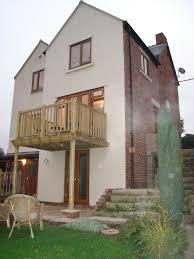
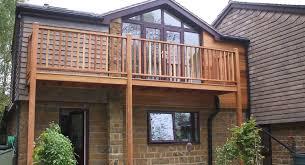
Peter, I can only think then that welsh PP then is different if Ive spoken to the PP officer himself & he's said, as I've explained. Can you just tell me you can see the images I posted in the OP?? if so.. Pic 1: if you were to narrow this (it looks approx 2m deep) to 1m, like pic 2, & add some simple steps up.. that's my basic design right there. Now that is not very complex: that's pretty much the very opposite I'd argue- very simple. Its far better to imagine a mash-up of pics 1 & 2.. rather than me sketch, or my describing it (I know I faff too much spiel: general apologies all! much appreciate your reading). thanks zoot schmootz -
Zoot's Extension- advice needed.
zoothorn replied to zoothorn's topic in New House & Self Build Design
So any ideas what can I do then? -
Zoot's Extension- advice needed.
zoothorn replied to zoothorn's topic in New House & Self Build Design
Peter, the steps down idea has thrown up a big problem.. if I need a slope-away to do this, its gonna clash with a recently laid electricity cable IN (which I asked to be laid in a dog-leg away & around my build area) which as best I could put it, still approx 2.5m away from front door. The door must remain in this side, not be pushed to the perpendicular FRwindows' end. So, I had a 'bingo' idea yesterday to crack this problem.. your thoughts please: Instead of 2 steps down to + slope dug in-&-away from door.. the steps immediately once -inside- the room instead? I realise there's the potential for water to 'fill the tub', but maybe this can be solved by a big lip &/or a tight-fitting door seal at the lower 1ft or something? -
Timber balcony > Extension.
zoothorn replied to zoothorn's topic in House Extensions & Conservatories
But I'm not overlooking their garden at all. Their garden is RHS of the balcony.. not facing it or in front of it. IE go to the short ~1m wide side end of the balcony, & were to look perpendicular to the way the french windows face, you look out -over a road 1st- & then yes over maybe 1/2 their gdn. I could even put a screen up here should these 2 complain.. but they barely say hello/ shy/ laidback & never use this front gdn (bc its right on the road). I get such a strong feeling of antipathy in the replies, anything & every little thing to pick at my idea, full of assumptions from the design to the idea to 'you'll never get PP'..or.. 'a poorly built balcony's a BRegs disaster'.. to 'it'll be a health & safety nightmare'.... it bemuses me tbh. I'd had thought I'd get encouragement (like redtop's post.. thanks) or if not thinking my idea is what they'd do, at least some help in the basic construction. That's all I need here. Its as simple a build design & project as can be: the smallest project ever on the forum? I do not overlook any house. I overlook a small road junction & a horse field beyond, a house 63m away twds the front right yes but tree screen means I barely see it (& only its side if I could). So, with these facts in mind I'd think, I've been advised to add the balcony to a non-material ammendment by the very planning officer who makes final decisions here NOT to resubmit PP for the whole extention. If I overlooked a house, or rudely over a garden rather than just a btm corner, or not at an oblique angle as I do.. I'd think YES I'd have been advised to re-submit PP. -
Timber balcony > Extension.
zoothorn replied to zoothorn's topic in House Extensions & Conservatories
Yes this I know, but in terms of 'clout' I mean: do a pair of students in a rented property have any clout at all.. or.. does the owner of the property (nasty nationalist sod lives very end of these row of bungalows- he'll want to get at me, if he can) have a say, if he's not living there? A pair of farm workers whom I rarely see & never use the front gdn/ only bit I could look onto, sideways I'm sure won't bat an eyelid re. any objection. -
Timber balcony > Extension.
zoothorn replied to zoothorn's topic in House Extensions & Conservatories
Do you know if rented properties have a say in PP (nearest hse is opposite ~30m away, young farm worker couple renting it).. or not because their 'transient' occupiers? This property I'd overlook onto with balcony, but only sideways though, & not peering into house at all/ only onto unused front gdn. -
Timber balcony > Extension.
zoothorn replied to zoothorn's topic in House Extensions & Conservatories
Ive never thought of extending the lower room right out to have a flat roof ontop of it either- its just the last thing I'd want, the looks would be awful, plus the extra cost. What's the purpose of the balcony? many things: 1) it means as Ive said that the french doors can open outwards: this saves alot of space inside a smallish room whereby the side ceiling angled sections will prevent either doors from opening in fully- a huge pain. 2) it means I have a small balcony south-facing, a great spot making max advantage of a superb view across maybe 4m. 3) if I have outside steps up to it, it means someone staying in the top room can access the WC without trapesing through main bedroom (albeit around house & into WC in extention at back of house, & more a summer thing). 4) if something like the designs pics I put up (can anyone see them??) it breaks up the stark 'box' design the extension as it is, very well indeed. 5) add some value to house/ an interesting addition, even if slight. 6) I have the basis of a 'room' below it I can easily fashion into a desperately needed shed/ making very best use of my limited space in the front of the house. 6 decent reasons. I'm not intending to build a poorly built balcony, I'm intending to build a well built balcony. Will my n'bors complain? only one couple could & there's a road + a good large tree 'screen' between us, & if deemed 'overlooking' its only on the farthest cnr of their garden (houses are.. 63m away from each other).. but if they would.. GOOD! I hope they do! (after Ive got the ammended PP for it of course).. the ammount of stress, dogmuck, nastiness from these two over 2 yrs I get one back at them, almost perfectly (perhaps reason no.7!!). Many reasons to add a balcony. Its about the best idea I've yet had. I don't understand the antipathy twds it- it might not suit folks' personal ideas, but its mine- I just want help to design it to add to a NMA as I've been advised by PP dept. -
Timber balcony > Extension.
zoothorn replied to zoothorn's topic in House Extensions & Conservatories
Hi Peter- Ive never had the idea of a cantilevered balcony, but rather as per my pic eg's: three vertical posts > connect topgether with cross beams. An opposite beam aatched to the extension (or supported by vertical posts too). Then span across with a boardwalk/ decking boards = basic shell. Then ballistrades/ or basic railing yes. I cannot think of a simpler build tbh. Its not high at all.. the lower room's set down 2 ft & barely 6.5 ft high to its ceiling too. The balcony would be approx 6ft to the deck. Can you see the photo eg's I added in the 1st post? none have cantilevered balconies: all are simple wood constructions, the outer/ far sides supported by a few pillars that extend up as the ballistrades. No I haven't heard from builder, I re-sent my quote request a week+ ago & asked if he had rcvd & seen it/ yes. But I now expect to wait another month for a reply maybe two. I have no knowledge that this sort of 2-3 month wait for quotes timeframe isn't normal. -
Timber balcony > Extension.
zoothorn replied to zoothorn's topic in House Extensions & Conservatories
500mm? but that's barely wide enough to walk/ use (so you did mean 18 inches?) not even enough to open the french doors out onto- I'm not quite sure I understand. I would've thought this was the ideal small build project, for such a self-build forum; a simple timber structure (like my pic eg's) added to the house, which I could take my time doing once the extention's built. I I explained to the Planning officer of the outline for this, & he said add it to the NMA. I even explained some steps up to it. I suspect that in wales its less strict or something to what you know in england, but, this is what I've been told to do by the officer who overseas & makes the PP decisions here. I just need help on a simple design/ just the bare basics of how any of the pic eg's I put up, is perhaps done. Just decent enough at this stage so I can add it to the NMA. -
Timber balcony > Extension.
zoothorn replied to zoothorn's topic in House Extensions & Conservatories
Hi folks- thanks for replies (had thought none so far, so dipped out of my thread: I still don't know how to get notification of replies- is this possible via email notifys? other forums do this). @PeterW I spoke to Planning, & roughly explained idea: not a big balcony (eg's as per my photo examples perhaps). They said 'add to a non-material ammendment'. I'm not following your reply, sorry. Your 1st paragraph says 'big platform-?' but I don't know what you mean by 'big'. My photo eg's should give an idea of what size (so would you deem these 'big'?). Your photo eg (lovely- wish I could afford this!!) is bigger than my eg's. But do you give this as a possible eg, without the need for PP..? or is this an eg of something far bigger that -would- need PP..? I wonder. And did you mean 18 ft not 18 inches? (18ft x 6ft would yes be far too big- far bigger than my pic eg's.. & 18 inches would be far too small). I'm googling "small balcony using a wall plate and hangers with a timber top and balustrade" to find out what you mean by this. Thanks, zoot -
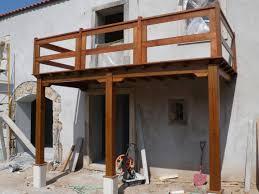
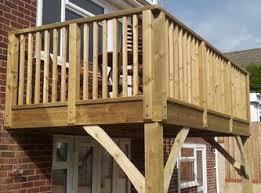
G'day folks- I need to design a simple timber balcony, onto my 1st floor extention, so a pair of french windows can open onto. Steps up to it from ground. A cost-effective pretty simple approach is key (me to build it), functional but strong: smallish & decent looking for PP to approve (a non-material ammendment). Decking boards, softwood. Are there any timber minds out there? At the moment I've got some pic eg's as a rough guide. I have some woodwork skill, & Circ/ chopsaw etc.. but no idea of basic construction. Approx eg's. Steps up to the 1st pic, from the side/ perpendicular wall. 2nd pic good for depth & simplicity (~1.2m). 3rd pic good for width. Perhaps 45* braces for aesthetics (PP might like), like pic 4. Thanks, zoot
-
I'm 100% sure the new types would have better dials, if not only better labelled. I just hope to goodness my elderly folks, & others too, can operate new types right with better labelled dials.. that's my concern. kWhrs.. I just don't understand (without a level of heat ie how hot &/or without also a unit of size, I can't see how its a useful unit of measurement) & so nor my folks would & most people too(?).. nor surely should be expected to I think, in order to use the heater with confidence. Anyway appreciate the replies- better sign this thread off as you've done your best, as I feel I have too to try to understand. I must be just thick.
-
Zoot's Extension- advice needed.
zoothorn replied to zoothorn's topic in New House & Self Build Design
A slope from the 2nd step down.. away down further you mean? I don't want to move the door from the side below thye single window: its now 4m here width, french windows end's about 4m too. Any idea on minimum room H restrictions?

