Iceverge
-
Posts
4487 -
Joined
-
Last visited
-
Days Won
32
Everything posted by Iceverge
-
 Yup although solid concrete blocks walls with EWI would be cheaper I'd wager.
 -
Have you had them price it both ways including taking down the original house?
-
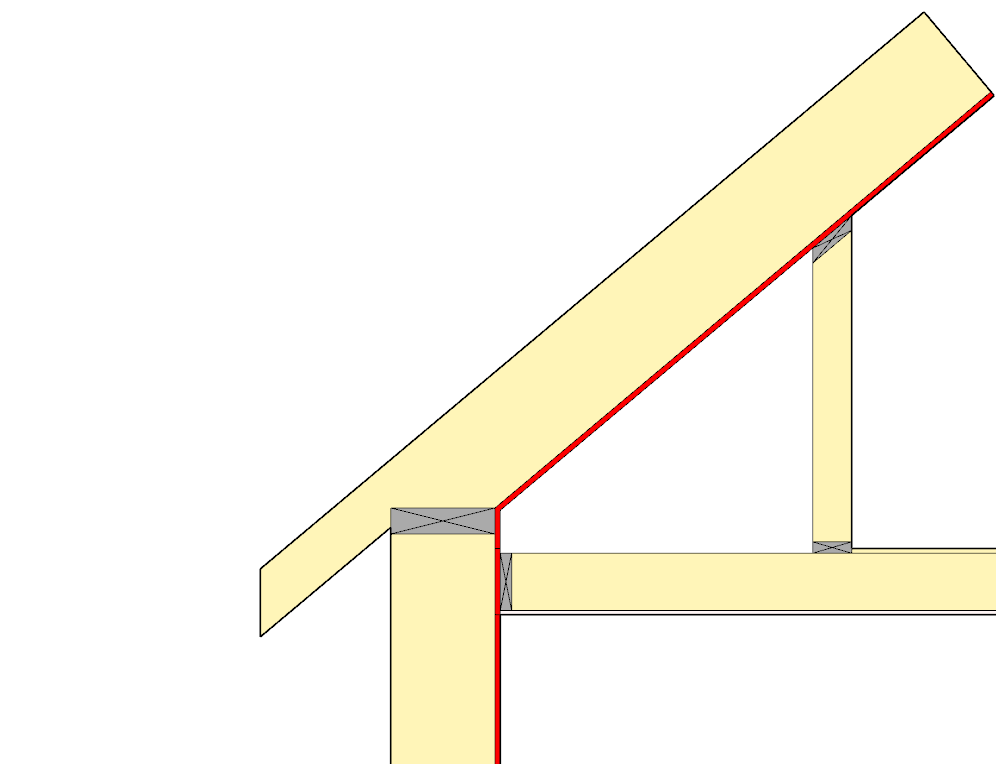
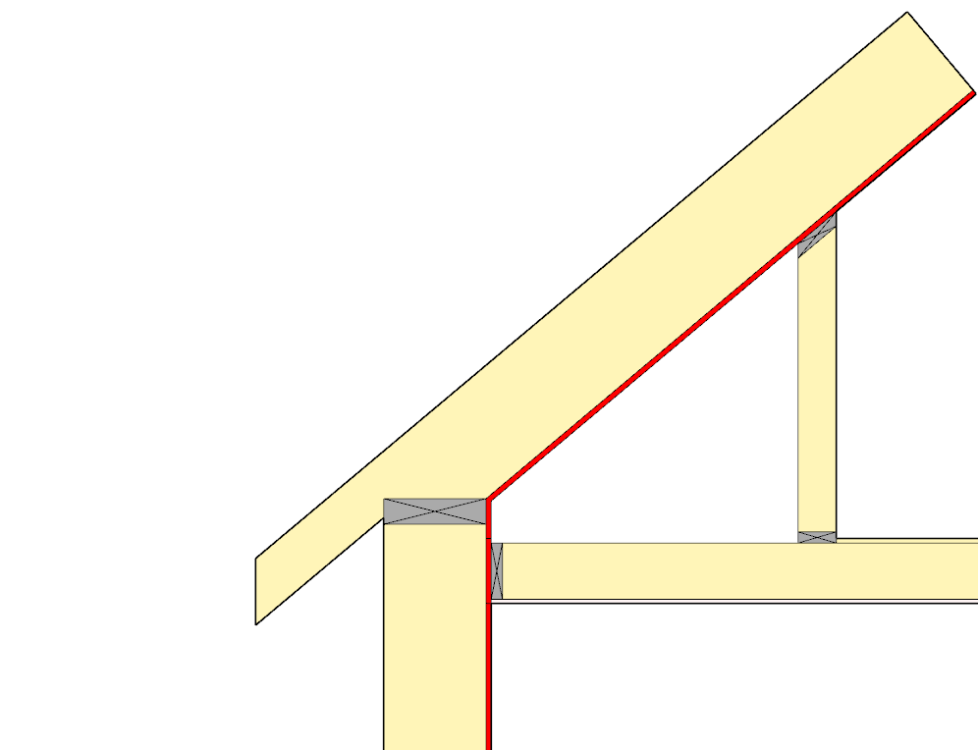
Ok here's an option for a cut roof. The red line is airtightness membrane/board In essence it separates the roof and wall and internal bracing is added afterwards. The fasteners would be taking a fair strain in this case so best run it by an SE.
-
Congratulations. Really plan for airtightness. Think passivhaus levels.
-
Warm attic is a top plan in my opinion. Do you have a wider shot showing the who house section, is it a cut or trussed roof? What kind of performance are you hoping for? A few cans of expanding foam doesn't fill me with confidence really regarding airtightness.
-
Perhaps this requires more digging into. Are you planning on doing much work yourself and have you allowed a reasonable price for your time. Say £20/HR.
-
Combining EWI and Cavity wall construction on a New build
Iceverge replied to Iceverge's topic in Brick & Block
The above is pretty much the conclusion I came to too. 2-3 rises of thermal blocks and externally insulate them with 100mm of EPS or PIR inside the slanted roof and use 450mm of insulation on the flat part at the bottom of the triangle. -
Steel Beam Thermal Break Alternatives?
Iceverge replied to bildbildbild's topic in General Structural Issues
Can you sketch what you are proposing? I did a bit of amateur THERM modelling on this recently. -
Timber Frame Soleplate overhanging cavity
Iceverge replied to john0wingnut's topic in General Structural Issues
Not the cheapest wall but it's an excellent spec. You could fill the cavity below the DPC with insulation if that's an option. Would help with thermal bridging. The majpell is an overkill in my opinion. 18mm OSB taped will be plenty airtight enough. -
MVHR installers or alternatives?
Iceverge replied to Swampy's topic in Mechanical Ventilation with Heat Recovery (MVHR)
dMev in that case. Any noise will be in kitchens, utilities and bathrooms so not critical. -
MVHR installers or alternatives?
Iceverge replied to Swampy's topic in Mechanical Ventilation with Heat Recovery (MVHR)
Have you considered a knock and rebuild. replacing 85% of the walls will take longer and cost more than a new house. -
A DPC isn't magic. It simply stops moisture being pushed up through a wall by a high water table. A french drain outside would solve this.
-
I'm very pro biodiversity, in fact I'm about halfway through planting a few hundred trees over the winter with this in mind... But .... I'm skeptical this will do anything other than create more delays and expense for the builder and more jobs for officialdom, planning is too hard as it is.
-
Acrylic render over EPS would be far cheaper for EWI and well tested. I put the word "breathable" in the bin a few weeks ago along with "thermal mass" and "eco". Unfortunately it doesn't mean much. You just get materials with various levels of vapour permeability .How they are stacked in a wall, along with the heat gradient, the internal and external atmospheric conditions and all important airtightness determines if the wall will accumulate moisture leading to issues. EWI is tremendously safe from a moisture perspective as the dew point never reaches in to the structure. The wall will never get damp so it really doesn't benefit to make it from expensive materials of higher vapour permeability. Not the case with IWI obviously.
-
Pitched Roof Thermal vs Acoustic insulation trade off
Iceverge replied to Nye's topic in Heat Insulation
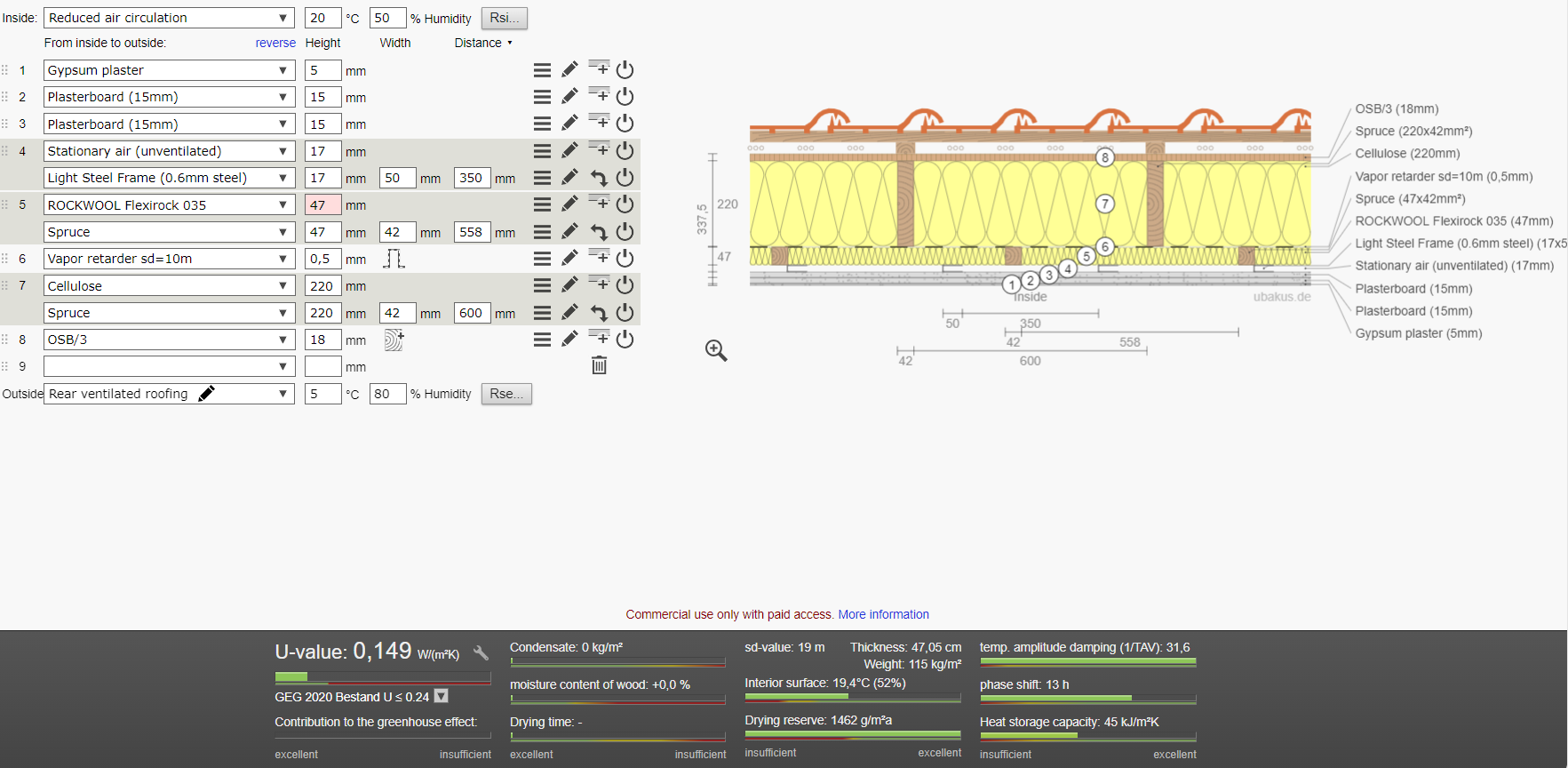
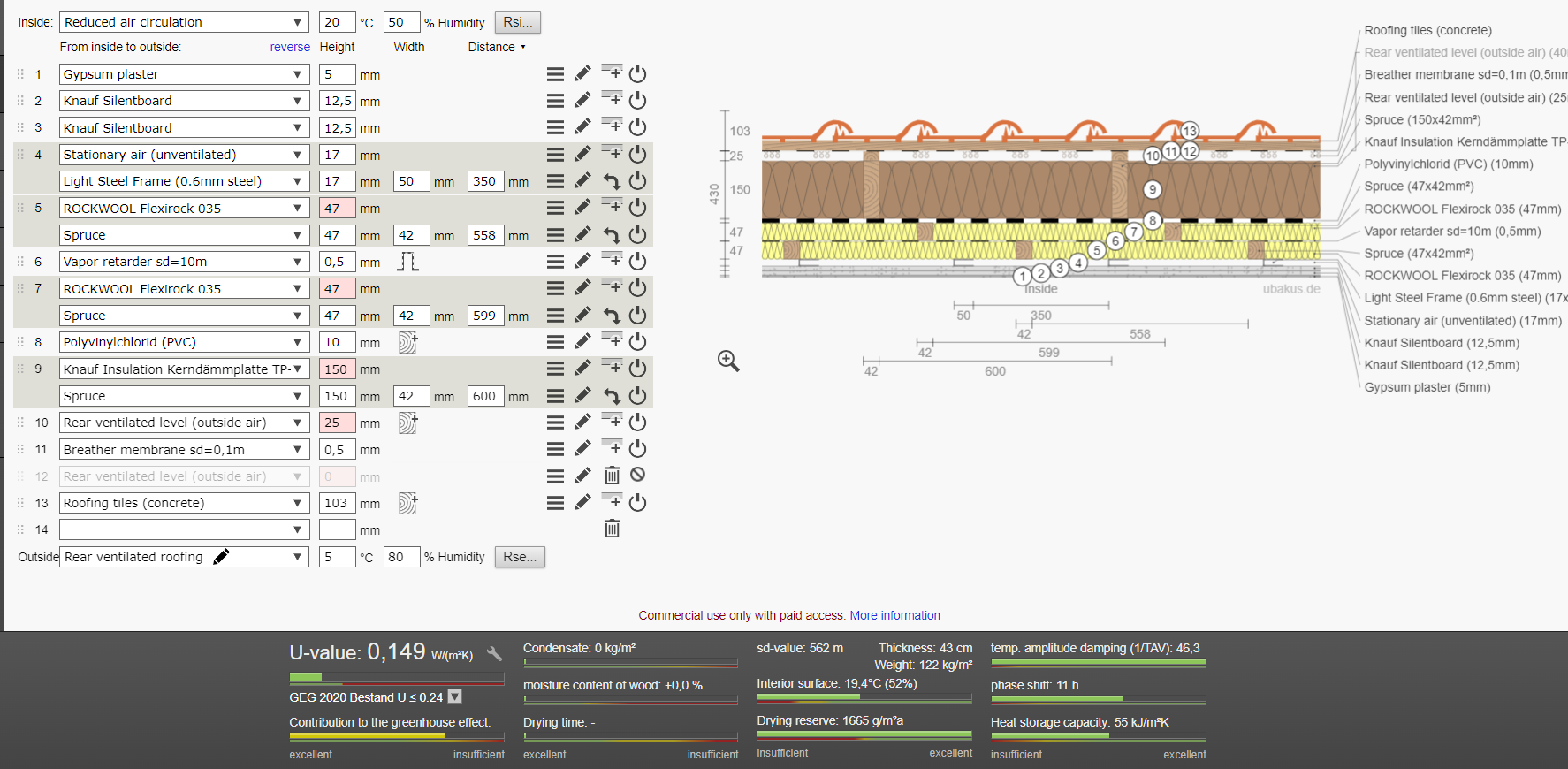
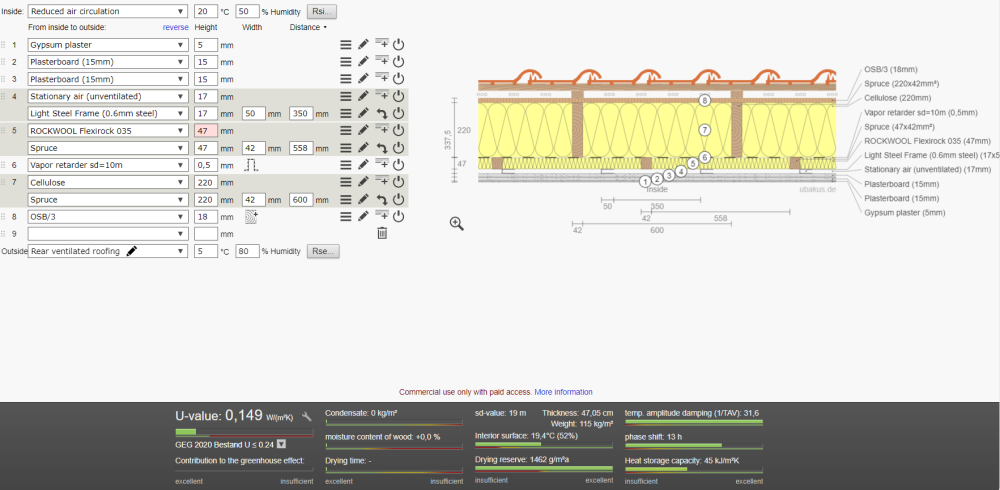
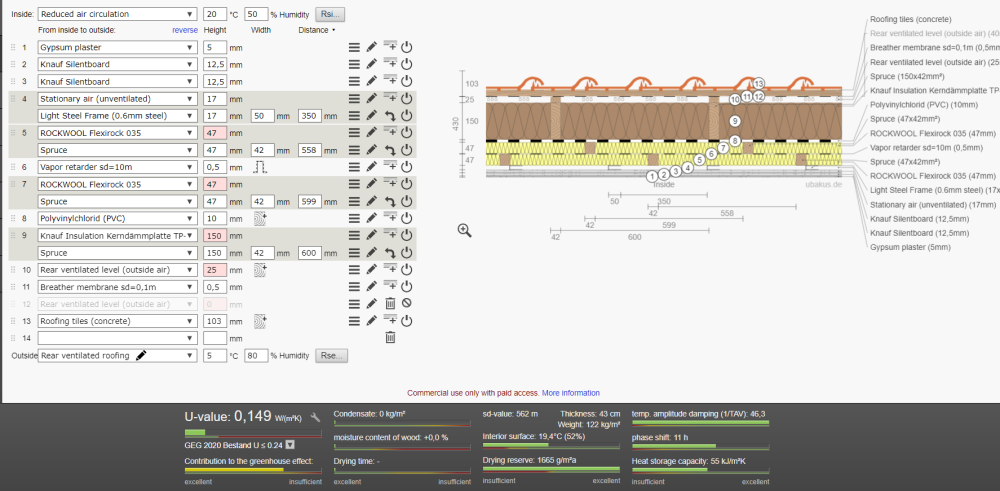
I would be cautious of the mass loaded vinyl. It's a material of low permeability and as such you risk trapping moisture in your roof as you already have a vapour barrier in there. At £25/m2 it's not cheap either. I would prefer to put a layer of 18mm OSB on top of the rafters. It's about the same mass/m2 but costs about £6/m2. It'd allow you to do a really top job here sealing any airpaths to prevent airborne noise entering in the first place. You'd need battens and counter battens to prevent pooling of any water that blows between the tiles. If you can get cellulose then it's got an installed density of 55kg/m3. Much better than mineral wool with a density of 10kg/m3 but more importantly it fills every single corner and really helps with airtightness too. Here's an idea at today's prices. As you can see insulation is also a very dear way to add mass. Plasterboard, Soundbloc and OSB are all about the same. How about the following buildup. Roof Tiles, Tile battens Counter battens Breather membrane. 18mm OSB sealed with flexible sealant at all joints. care taken at edges to do the same with appropriate noggins to block every airpath. 220mm Rafters with dense packed cellulose. A/T membrane. 50mm battens at 600cc with rockwool rwa45 infill at 90 deg to rafters. 17mm Resilient bars at 90deg to battens. 15mm plasterboard sealed with acoustic sealant 15mm plasterboard sealed with acoustic sealant. No penetrations other than a wire for pendant lights sealed with acoustic sealant. Skim It's 44.5kg/m2 excluding timber and skim and membranes and costs about £55.75/m2. With the same caveats your previous suggestion comes out at 36.6kg/m2 for a cost of £78.87/m2 for a U value of 0.15 W/mK.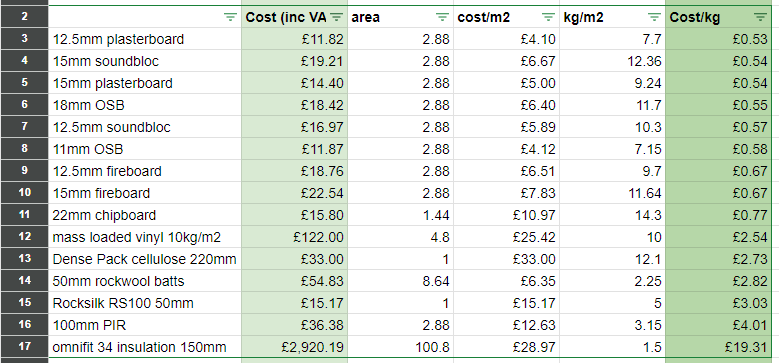
-
Good on you for having a punt. It's not easy and watching water pour away at 40⁰ is a tremendous waste of energy. I can see it being a solution for multi unit apartment with limits on the gas and electricity supply and no desire to install UVCs that require G3 sign offs. Ensuring the heat exchanger doesn't get clogged will be vital. With waxy soap compounds solidifying when cooled this could be a troublesome issue. For an individual bathroom in a house it'll be a hard sell. You can buy a well known electric shower for £70 and install it with basically a single pipe and cable.
-
2 x 100m or 1 x 200m borehole
Iceverge replied to ronaldgibbons's topic in Ground Source Heat Pumps (GSHP)
Hi Jonathan and Welcome to the forum. Building a house is tremendously exciting but also enormously complicated. Excellent looks like you turned up in the nick of time. My advice is. Digest the forum and build as close (or beyond) a passivhaus as possible. If done from the design stage it's not particularly expensive either but will need a little thinking. The forum will help. Post some de-identified drawings if you like. You'll have such low energy demand that your choice of heating systems is almost immaterial. -
Timber Frame Soleplate overhanging cavity
Iceverge replied to john0wingnut's topic in General Structural Issues
You could use a 220mm stud wall and bridge the cavity. Cladding Battens Membrane OSB 220mm stud with mineral wool or cellulose insulation installed flush with the outer leaf of the cavity. A/T membrane 47mm insulated service cavity. Plasterboard Skim. -
Bungalow renovation - insulation, vcl and airtightness
Iceverge replied to Rob000's topic in Heat Insulation
Knock and rebuild off the cards? Suck it out and blow EPS beads in instead. I really don't like PIR boards in a cavity. Bump the cavity to 150mm and use EPS beads or mineral wool instead. This would make the external wall very cold and unless you were really confident in doing a top job with airtighness you would risk moisture accumulation in the wall. How about External block 60mm EPS beads Internal block Sand/cement/lime parge coat 50mm Mineral wool batts between battens for service cavity. Plastered Skim -
Heating / hotwater systems -self build
Iceverge replied to cairstiona's topic in Central Heating (Radiators)
It's fine so long as you heat at steadily for long periods. If you put the rad in one room and close the door and turn it up then that room can get too hot. -
Heating / hotwater systems -self build
Iceverge replied to cairstiona's topic in Central Heating (Radiators)
Maximise your building fabric and it really doesn't matter how you heat the house. What is your planned airtightness level? What is the ventilation strategy? What levels of insulation are you planning on? We heat a 185m2 house with a single plug in radiator. About 3000kWh per year usage. However it's costing about €900/year to heat so we're installing an A2A heat pump which should bring it down to about €200/year. -
Hi Catherine and welcome. Can you post some photos please, internally and externally, wide angle showing the roof and close details of the cracking too. Do you have any photos of the house under construction? Unfortunately some continental building methods have been applied in Ireland without due regard for the massive volume of rain we get and it has caused issues but there's plenty of knowledge on here to help.
- 31 replies
-
- 1
-

-
- concrete slab
- lime render
- (and 1 more)
-
what stage is the house at? Any pics and it might give an idea of what can be done.
-
Drill a 25mm hole in the ply internally and blow it in from there.
- 1 reply
-
- 1
-

-
As a mere human it's hard to tell the difference between compressive strength and surface hardness. Just because you can dig your nail into a material doesn't mean it's not plenty strong enough to hold up a house. Infact the insulation can often be stronger than the soil below it.