Jeremy Harris
-
Posts
26430 -
Joined
-
Last visited
-
Days Won
360
Everything posted by Jeremy Harris
-
I've no idea at all as to how the overly-thick insulation ever got signed off for production. The people in the manufacturing plant, packing the units for shipment and fitting the lids, must have seen the problem, as it's unmissable.
-

Using Flow Restrictors to achieve schedule G" of the BRegs
Jeremy Harris replied to TerryE's topic in General Plumbing
The flow restrictors I used fitted to the supply to the tap, so inline with the hot and cold feeds, except for the shower where they can fit on the shower mixer outlet. The washer-type restrictors just replace the rubber seal in the tap connector. I found we had a wide range of aerators, so chose not to fit restrictors there. In practice, having the washer-type restrictors on some taps does make them a lot easier to use, with less splashing and a finer degree of control from the tap itself. -
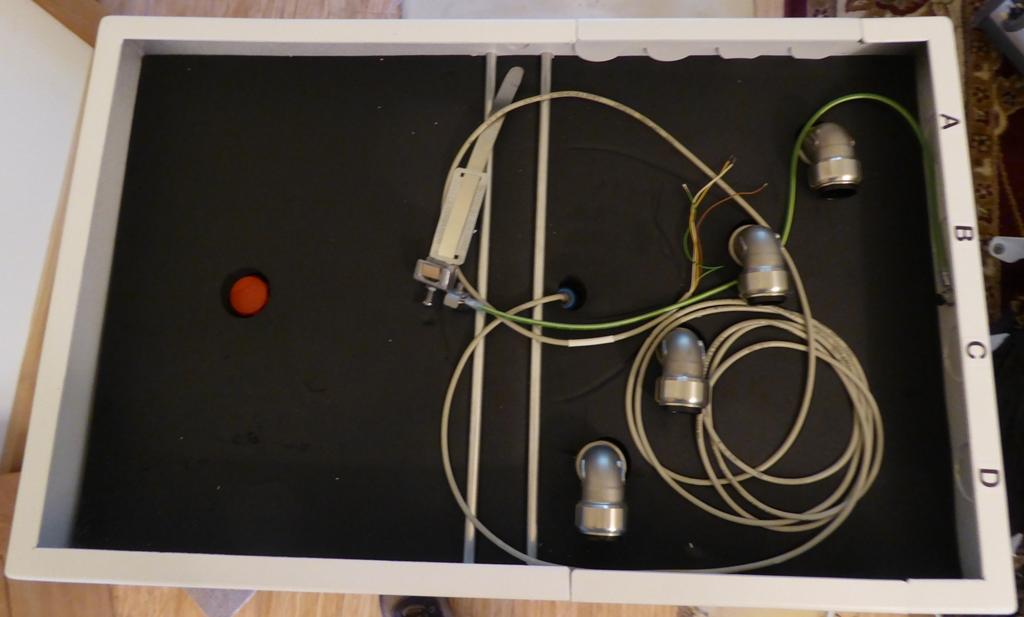
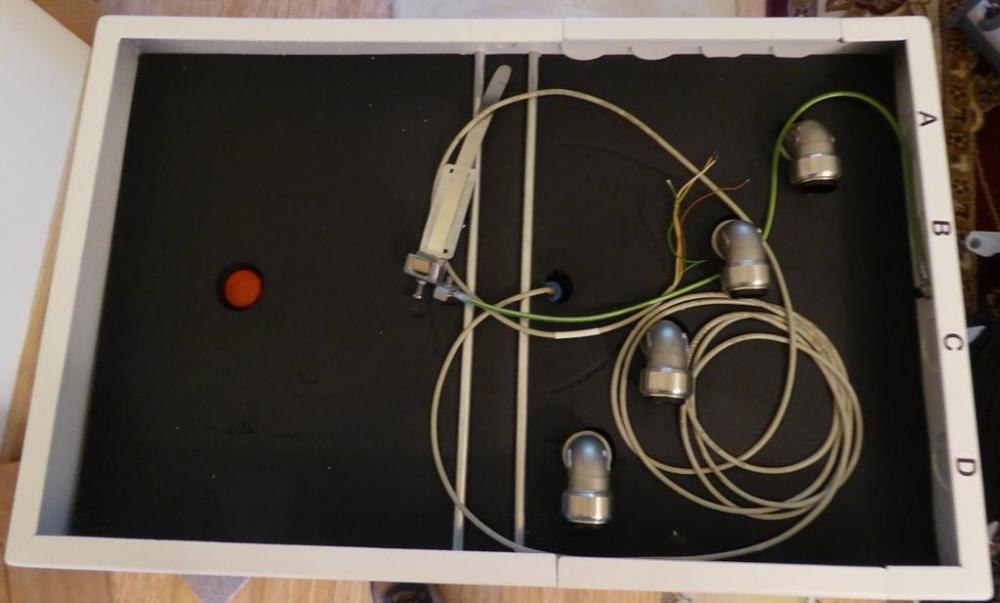
I tend to agree, as even the new lid bends upwards unless the insulation is trimmed. I'm certain that just substituting a bit of rigid insulation about 25mm thick, as a replacement for the top layer of closed cell neoprene, would completely cure the lid bulge problem, and remove the stress from the compressed foam (not that there's anything under it that would be harmed by this). This is what the unit looks like in the top, with the middle and top layers of neoprene foam removed. This was just as I'd unpacked it ready for installation, and the middle foam layer had four punched holes where the elbows stick up. However, you can clearly see that even with no pipes running out the foam was over-compressed, and has left witness marks where the coiled cables were stowed:
-
It is indeed. The bulging is only a cosmetic issue, and has no impact on performance as far as I can tell, but the inability to accept a charge when partly discharged is a significant issue, one that has a big impact on performance, to the extent where we ran out of hot water one morning because of it. This was crazy, as it never happened with the old Sunamp PV, and yet the Sunamp PV only had half the storage capacity.
-
Sounds like a good move, although the slight side bulging isn't really that much of an issue, IMHO. The main issue seems to be the excessive thickness of closed cell neoprene above the cell. I'm convinced that replacing the top sheet of neoprene with a rigid insulation sheet, bonded to the underside of the new lid design, would fix that problem easily, although I've found that careful trimming of the middle neoprene sheet, to allow room for it to expand out when compressed, seems to sort of work OK.
-
Two reasons. SWMBO gets up at the crack of dawn (I don't) and so I didn't want to have the light from the shower room shine into the bedroom at 5 am. The other reason was to do with the lack of space adjacent to the door, I'd have had to fit an architrave switch and I didn't want one set in to the oak architrave.
-
No, that's definitely not the case at all. The bulging is just down to everything being packed in too tightly and the case not being sufficiently rigid, that's all. The insulation at the top is closed cell neoprene, and it's too thick for the space available. This makes it push the top of the case upwards. The sides of the case aren't stiff enough either, and with the increased size and weight of the big PCM cell (which is slightly flexible) the case isn't stiff enough to resist the effect of the weight inside. The slight side bulging and the much greater lid bulging (with the old design of lid) was apparent on our brand new unit that hadn't been powered up, so definitely nothing to do with temperature at all.
-
The Sunamp PV didn't have any special startup sequence as far as I could tell. It had a pretty simple control system that just maintained the flow temperature into the heat exchanger when charging at around 65 deg C or so (may have been a bit higher). Because it used a relay to turn the heater on and off, it modulated the temperature by using a variable speed pump, together with an ultrasonic flow sensor. This meant that it could deal with a variable power level to the heater, as happens when using a PV diverter, by just varying the pump speed to maintain the set temperature. Despite the complexity of this charging system, part of which was a consequence of the unit using the same heat exchanger for both charging and discharging, with a cunning arrangement of non-return valves to keep the charging loop separate, it did work very well indeed.
-
I'm not sure, but would guess that it's probably over 100 deg C, so just limiting the element temperature to something like 70 or 80 deg C may well work OK. I'm not sure how easy it is to monitor the element temperature, though. It's not removable and I've not looked in the base of the unit to see if there's a thermostat or over-temperature sensor pocket adjacent to the element. I do know that there are no sensor cables running from the heater to the control box. @Nickfromwales may have looked at the area around where the element is installed into the base of the cell and be able to shed some light as to whether it would be possible to sense the element temperature directly. Alternatively, it wouldn't be hard to sense the element temperature indirectly, from measuring the change of resistance of the element itself. Easy enough to do by just adding voltage and current sensing to the element power cable. The element is bound to have a positive temperature coefficient, with the resistance increasing with temperature.
-
On the topic of noise, yesterday I replaced the (very noisy) pull switch in our ensuite shower room with one of these from TLC: https://www.tlc-direct.co.uk/Products/CM2781.html Very impressed with the quiet single "click", much better than the "wake the dead" double click from the old pull switch.
-
I think there is more to it than this. Back when we were talking with Sunamp about the Sunamp PV, one issue they had was with the way the product was being assessed for the energy rating. It didn't fit any standard category, so had been tested as an electric water heater, IIRC. As such it had quite a poor score. I believe that some work was done to allow a more accurate assessment of the product range in the light of it's unique features, and that probably explains the difference in the rating. The Sunamp PV was no less efficient as far as I can tell, as it never got warm on the outside, much like the UniQ, so wasn't wasting much energy. The key is either monitoring temperature throughout the cell, or just heating the cell to a few degrees above the phase transition temperature. If all the PCM in the cell is above 58 deg C it will always be liquid, and this was, I believe, the way that the Sunamp PV control system worked. It just chucked water at ~65 deg C through the heat exchanger until the output from that heat exchanger showed that the PCM was above transition temperature, at which point it stopped accepting charge. This worked well, as it is easy to just control the temperature of the charging loop, to be absolutely certain that the PCM can never locally overheat. I'm coming around to the view that a Willis heater, pump and temperature sensors, connected up to the low capacity heat exchanger, could turn a UniQ into a SAPV, in effect, and allow a much wider charge acceptance range. The key is that this would never allow the PCM to exceed the temperature in the charging circuit, which would be very easy to regulate to a safe temperature. Another advantage is that the cell could be charged and discharged at the same time with such a set up.
-
Not sure, TBH. I suspect the controller is playing safe to prevent any possible local overheating of the PCM, and one way of doing that is to prevent it from accepting a charge when it's partially discharged, as heat transfer internally may be a bit of an unknown. I suspect that convection is pretty slow within the PCM, and that it may be impeded by there being lumps of solid PCM randomly "floating around" within the liquid PCM. My guess is that letting the unit sit partially charged and not accepting a charge is simple a way to get around this problem, albeit at the loss of a lot of functionality in terms of optimising energy storage from excess PV generation. Yes, "ouch" indeed, especially given the effort it took to move the 150kg of Sunamp UniQ upstairs - that took me a whole day...
-
I have to agree with you 100%. Yes, our old Sunamp PV went back to be stripped and inspected, and no, there wasn't anything really wrong with it. It could usefully have had the software changed to increase the pump over-run time, something that was done on later Sunamp PVs, to prevent occasional over-temperature trips on the water heater tube, from heat soak after turn off, but that's all. All I really wanted was more storage capacity, to make better use of excess PV generation. I'd happily give direct feedback and am quite prepared to do some detailed measurement and data logging to determine what the unit is actually doing, with a view to trying to work out how to come up with a more intelligent control system. I'm sure the key is understanding heat transfer within the PCM, and making absolutely certain that the PCM cannot locally over heat. I very strongly suspect that the current set up has been designed to protect the PCM whilst allowing the cheaper and simpler direct heating system from the embedded element. One major advantage of the old Sunamp PV charging system was that it could never overheat the PCM locally, as the flow temperature in the charging circuit was restricted to around 65 deg C, IIRC.
-
When I noticed that our Sunamp wasn't accepting a charge, despite us having run a couple of showers that morning, I took the lid off the controller and checked the settings (hold down SW1 and read the settings on the four LEDs on the board). As supplied, my controller was showing LEDs D4, D3, and D2 OFF and LED D1 ON. According to the manual, this means the unit is setup as: Option 4 - Not used - OFF Option 3 - Heat pump (65 deg C flow) - OFF Option 2 - PV input possible - OFF (this seems weird to me) Option 1 - Charging demand level - ON There are another set of options that these status LEDs can display, which sets the type of unit that the controller board is operating. These are shown by holding down SW2, with the LEDs then giving this information: LED D4 on = Not used LED D3 on = UniQ_SBC_03 LED D2 on = UniQ_SBC_02 LED D1 on = UniQ_SBC_01 My unit is labelled as being a UniQ_SBC_01_PV, and shows in the above check as a UniQ_SBC_01 Charging demand level, Option 1 in the first set of checks above, is further defined in the manual as: Controller type: UniQ_SBC_01 (Electric storage water heater) Heating from bottom to top Cooling from top to bottom Option 1 on: demand signal generated when battery is approx. 90% depleted Option 1 off: demand signal generated when battery is approx. 50% depleted I sought clarification on the settings, specifically whether Option 1 = ON meant 90% depleted or 90% remaining, as if it really meant 90% depleted then that would explain why we'd run out of hot water one morning and also why the unit wasn't accepting any charge when we were exporting and had just run two showers. I got a quick response from Sunamp, which said this: So, the first point is that my unit was not shipped with all options OFF, but was shipped with Option 1 ON, so the cell was being allowed to deplete to only 10% charge remaining before it would accept a charge. This explains why we ran out of hot water one morning this week and had to endure cold showers. The second point is that even after I changed the setting on my unit to turn Option 1 OFF (as, apparently, it should have been in the first place) it still won't start to accept a charge until it has discharged by ~50%. The final sentence of that email doesn't make sense, as if the unit won't accept a charge until it's ~50% depleted then you cannot keep it topped up. I proved this yesterday. We ran two showers first thing in the morning, and then we had a period of bright sunshine when we were exporting ~3kW for a couple of hours or so. The Sunamp refused to accept any charge at all during this period, despite the fact that I know for sure we pulled about 4 kWh out of it with the morning showers. It would have been nice to have the Sunamp topped up with the excess PV generation, but instead it didn't top up until 3 am when our boost timer came on, so we paid for ~5 kWh of grid electricity to top the thing up, when we could have topped it up for nothing from yesterday's excess PV generation. I'm bloody angry about this, especially as the old Sunamp PV would not have behaved like this at all. I really wish that I'd just opted to keep the Sunamp PV and add a couple of extra cells to it, as that would have been a far better solution. Right now I'd happily look at developing an open source controller for these units. Not sure I'd want to work as a consultant (I already have one job like that) but I'm sorely tempted to have a go at modelling the behaviour of the PCM cell and coming up with a control system that allows it to be kept topped up whenever there is excess PV generation available. I have to say that I'd be very tempted to just use the low power heat exchanger (there are two inside the cell, currently connected in parallel) with a cell charging system like the Sunamp PV. Perhaps a Willis heater, pump, and temperature sensors, so that the charging loop could run at a carefully controlled temperature to keep the cell topped up all the time.
-
Spot on, @PeterW. The old Sunamp PV controlled pretty much everything from the temperature sensed at various points in the pumped water charge circuit. When excess PV was available, the pump would turn on, circulating water through the cell charging loop, which contained an inline water heater and a flow sensor, as well as temperature sensors either side of the cells heat exchangers. If the temperature coming out of the cells heat exchangers indicated that the PCM was charged, then the unit would shut down with the status SoC LED on the side telling you that the unit was fully charged. If you drew off some hot water, so lowering the temperature of the cell, then if excess PV power was available the unit would start charging again as soon as the water draw down had stopped (it couldn't simultaneously charge and discharge, because of the way the internal hydraulic circuit was arranged). The electrically heated UniQ models are fundamentally different, in that the heating element is in the PCM at the base of the unit. This means that another means has to be used to sense whether the cell is charged, and to what level. This is done via three thermistors that sit in a vertical tube within the cell, one near the base, one in the middle and one near the top. From what I can gather, this only gives a very approximate indication of the state of charge, both because three sensors in the middle of the cell is a bit coarse, in terms of sensing the whole cell PCM temperature, and because convection heating within the PCM is somewhat slower and probably a bit patchy, due to the mix of solid and liquid phase areas within it. I'm tempted to try and run a string of sensors down the cell to measure how the PCM temperature changes as the cell charges, logging the data to try and map the pattern of temperature change during charge and discharge. I have a feeling that by using this data I could come up with a more intelligent controller that allows the cell to accept excess PV charge before it has discharged to 50%. The key to this may well be modulating the charge power carefully, to keep the PCM temperature within limits everywhere in the cell. This isn't at all hard to do if the function of the control box and the PV diverter is combined into a single unit. It would also give an approximate SoC indicator, based on the results of mapping the temperatures within the cell and the energy going in. It would be nice to also measure energy going out, but that would mean adding a flow sensor, along with additional temperature sensors either side of the unit. One neat thing about combining the functionality of the PV diverter with the Sunamp controller is that everything can be solid state controlled, so no more big contactor clunking away. It would be easy to build in a boost function, too, just needs a RTC plus a small bit of additional code. The boost functionality could also include the cold start process, where the heating element is pulsed on and off so as not to locally overheat the PCM. I believe this could be done more effectively by modulating power to the heater, rather than just turning it on and off, and it should be straightforward to work out the required modulation from the existing on/off mean power.
-
Think Renewables have the best prices I've been able to readily find online: https://www.thinkrenewables.co.uk/sofar-ac-battery-storage I'm pretty sure that your interpretation of the VAT rules is spot on, 5% if installed with PV, 20% if installed later.
-
They can indeed! Looking at the (somewhat scarce) data that's available, it seems that a ten year life is a reasonably good bet, so that's probably around 2500 to 3000 cycles in practice (winter not being great). Clearly the sums don't quite add up, as 2500 cycles at a notional 80p per cycle (ignoring round trip losses etc for simplicity, and assuming that electricity prices don't increase over the next 10 years) gives a nominal return through life that's around the same as the capital investment (exc. VAT). However, what are the less tangible benefits worth? For me, having the ability to run some limited stuff during power cuts would be very useful (we had another three hour power cut last Thursday, for example, and will get several more through the winter, I'm sure). Hard to place a value on this, though. There's also the "feel good" factor of using more of the energy you generate yourself. Impossible to pin a value on, but nevertheless something to be considered when making an investment, much like the make, model and colour of car one decides to buy. I think the price of these system is so close to break even as to probably be worth the investment, given that I believe we are likely to see a significant increase in electricity price over the next 10 years. That alone may well tip a battery investment over into being profitable, who knows?
-
Probably. At a guess the COP might drop to as low as 2 on occasions, but that's still cheaper than using peak rate electricity directly to an immersion heater. The key thing would be getting a heat pump that could reliably provide a flow temperature of over 60 deg C under all conditions, but that should be possible. @PeterW has posted some interesting performance data on the IVT units that indicates that they can probably manage this OK.
-
Funnily enough I've been checking prices again this afternoon, in light of the problems with the Sunamp. Prices seem much the same, with the 4.8 kWh system coming in at just under £2k exc. VAT.
-
Yes, the primary benefit of the Sunamp is the much lower heat loss, together with the much smaller space it takes up. Charging with a heat pump presents a slightly different challenge, in that whilst water can just be heated up to any temperature and used to store heat, the Sunamp uses a phase change material (PCM), so needs to be heated to a temperature above the phase transition point in order to store the rated amount of heat energy. The transition temperature for the hot water Sunamp units is 58 deg C, but a heat pump would need to exceed this by a few degrees to ensure that all the PCM had changed to the liquid phase. This means that a heat pump with a relatively high flow temperature is needed, in excess of 60 deg C, and that creates an issue with COP, especially in cold and wet weather, where icing may be a problem.
-
I can understand that philosophy, but it seems at odds with the wide range of different models that are available. If looking to take on, say, thermal stores, head-to-head, then they only really need to make one model, in varying sizes, that compares favourably in most respects to a thermal store. The problem I have is that Sunamp started out by making a product that was specifically targeted at storing excess PV generated energy as heat. That's what I bought into with the Sunamp PV and that's what I thought I was buying into with the Sunamp UniQ eHW. In practice we've run out of hot water one morning (cold showers - not pleasant) since fitting the UniQ, something that never happened with the smaller, but much better suited to the task, Sunamp PV. To be fair, it seems that the controller for our unit was supplied set to not accept a charge until it was 90% depleted, which I've been told is a non-standard setting. Now controllers are shipped with all options set to "OFF", which defaults to no charge accepted until 50% discharged. It was easy enough to change the setting, but even so we are still getting very poor excess PV generation utilisation. This afternoon we were exporting around 3 kW for a couple of hours or so, I know full well that the Sunamp hasn't accepted any charge since two showers were taken this morning, so we've just wasted a load of energy that could have topped the Sunamp up to full capacity, ready for tomorrow morning. Instead, the chances are that it will drop below 50% overnight and so end up getting boost charged off the grid in the early hours, which is really, really annoying.
-
Might be an idea to tidy this thread and split off the discussion on charging etc into a separate thread, perhaps?
-
The tale of the sale of our old house
Jeremy Harris replied to Jeremy Harris's topic in General Self Build & DIY Discussion
I'm not sure whether or not all existing 2FA systems are going to be allowable under the new Directive. It seems that the focus is on using OTPs sent by text (which is a really crap system - it's what I have to live with as the only available option from my bank) and it seems as if First Direct are switching their verification system from using the code generator device, that @jack mentioned earlier in this thread, to an OTP sent by text. The problem seems to be the requirement to verify personal identity, although quite how robust using a text sent to a mobile is I don't know; I'd have said it's a pretty poor way of getting ID confirmation. Fingerprint reading is fine if you have a smartphone, but frankly I can't see any possible use for one for us, so we would be buying them solely to use as a payment verification device, which seems daft. As it is I very rarely turn my phone on, I think it's been turned on once since we met in Bristol, and then only because I was in the car expecting a call from our conveyancer earlier this week. My phone often sits in a drawer for weeks without being turned on. I've grown to really like not having an always on mobile phone since I retired. When working I had to carry a Blackberry all the time, and relished getting home and losing the signal, as the damned thing was like being leashed to my employer 24/7. Everyone I knows I don't use a mobile, and to call me on the landline if they really need to get in touch urgently, and that suits me perfectly. I can sometimes get a 2G signal via the booster/repeater, but not in bad weather. The best I get on the repeater is 1 bar of signal in nice weather, which drops out in rain etc. The advantage of internet radio is that it's portable, so doesn't need a connection to the dish, which is handy. We have a Roberts one that seems to work well enough. I'm probably going to have a go at building one with a Pi Zero W sometime, too, as it's cheap and relatively easy to do. -
The tale of the sale of our old house
Jeremy Harris replied to Jeremy Harris's topic in General Self Build & DIY Discussion
Referring back to our ongoing bank problems from earlier in this thread, it seems that ALL banks are going to have to switch to using mobile phone verification for every online transaction over €30, due to a bit of EU legislation that we've already accepted: https://www.bbc.co.uk/news/business-46399707 First Direct have already started the change: "One bank that has started sending passwords to mobiles is First Direct. It advised anyone having difficulties to get in touch with them." So, that rules out First Direct for us, and leaves us with no viable banking option in terms of being able to make online payments. Looks like it's going to have to be PayPal or nothing from now on, which is a right PITA. Still, it might highlight the plight of those who live in areas with no mobile phone signal. Perhaps someone might start looking at how to make the damned awful rural mobile network a bit better. We can cope with not getting radio or TV reception, thanks to Freesat and internet radio (although the latter units aren't cheap), but if we lose the ability to be able to use online banking and payments that will be a real nuisance. -
I'm now seriously considering a battery pack. I think I may start off with a relatively small and cheap Sofar/Pylontech unit, as they seem to be the most cost effective, and then maybe add battery modules to increase the capacity, based on experience. The nice thing about the Sofar/Pylontech system is that it's modular and "plug and play" so relatively easy to just increase capacity if need be. The other advantage is that it has a dedicated 3 kW max emergency output, so you can have some power available during power cuts, although that needs a bit of wiring reconfiguration to be really useful.