

Drellingore
-
Posts
307 -
Joined
-
Days Won
2
Everything posted by Drellingore
-
Is there anything preventing one from putting a drainage field uphill from the dwelling/treatment plant that feeds it? I can't see anything in Approved Document H2 precluding it. I would've thought that pump(s, with one for redundancy) would be required. Our proposed buildings are at the bottom of a valley and all about 15m from the boundaries, but we have 3 acres of land uphill that could be used instead.
-

110v versus 240v at start of project
Drellingore replied to Drellingore's topic in Tools & Equipment
Thanks for a more thoughtful and detailed critique @andyscotland, I genuinely appreciate the effort involved. It's much nicer than the alternative. As well as some good points (insurance, and the totally valid question of 'why not get a regular self-build mortgage') there are a few assumptions, I expect in part because quite understandably you don't have complete information on my businesses and their structures, and my collaborators. There are also criticisms that I've already addressed, and seemingly have been missed. The benefit to me of pointing them out is limited, with a guaranteed downside that this discussion gets drawn out even further, inviting more opportunities for people to take the worst possible interpretation of a general approach. I've been sat at my keyboard for far too long this Saturday morning trying to formulate the most polite explanation I can for why I think this discussion could become interminable and largely fruitless. Thanks for calling me out on the VAT stuff, I think I now understand the logic of that much more thoroughly. I also reckon I'll stick to battery-powered tools to avoid the 110v/240v issue for as long as possible -
110v versus 240v at start of project
Drellingore replied to Drellingore's topic in Tools & Equipment
I'm not sure I follow you. What is the difference between my SPV doing design-and-build and reclaiming VAT on a quarterly basis, and someone like Potton doing design-and-build and reclaiming VAT on a quarterly basis? What VAT is HMRC missing out on - especially given that as a self-build scheme it will all be reclaimed by the end client anyway? The whole point of a special purpose vehicle is to isolate financial risk by being for one specific project. I would have thought it's a concept HMRC are familiar with. What benefit in kind is that? Which tax is being evaded? VAT is being paid, corporation tax is being paid (which it otherwise wouldn't be, so if anything HMRC get more via this approach), capital gains tax is being paid. Can you quote any of my posts where I said the benefits were mostly avoiding tax? The benefits are mostly avoiding cash-flow pinches and expensive bridging finance. One of the reasons that I'm quite fine with posting things publicly is because it's all legitimate. -
Ta, I might try digging through the statutory instruments and guidance site, more out of curiosity than anything else. Given that it'll all be reclaimable eventually anyway, as you say, it's more of a cashflow optimisation with a small payoff and a large potential for calamity.
-
I shouldn't cast aspersions on HMRC! I got through after twenty minutes, and they reiterated that if it was taken down to the ground, then that would be considered "new construction". They said the description in the planning permission would suffice, and that from their point of view, it doesn't matter if it's a conversion or change of use. When I asked what evidence would be required, they said the planning notice and accompanying documents, and in some cases a photo. I gave the example of an internal frame needing to come down, be treated, and then be reinstated, and they said that was fine. Of course, both HMRC would need to consider it a new build and I'd need to be sure in doing so I don't break any planning rules, which brings us to... Thanks! Any idea where these rules are written down? I've read the NPPF and our Local Plan, but that's more about how to make a decision, rather than what certain terms mean. I'm at a bit of a loss of how to find the source of truth on these sorts of issues.
-
Interesting on the Class Q front. As we're in an AONB we don't have any permitted development rights, so it's an application 'in its own right'. I'm on hold to the self-build reclaim helpline to ask for their opinion. I wonder what the odds are of anyone answering the phone before the heat death of the universe?
-
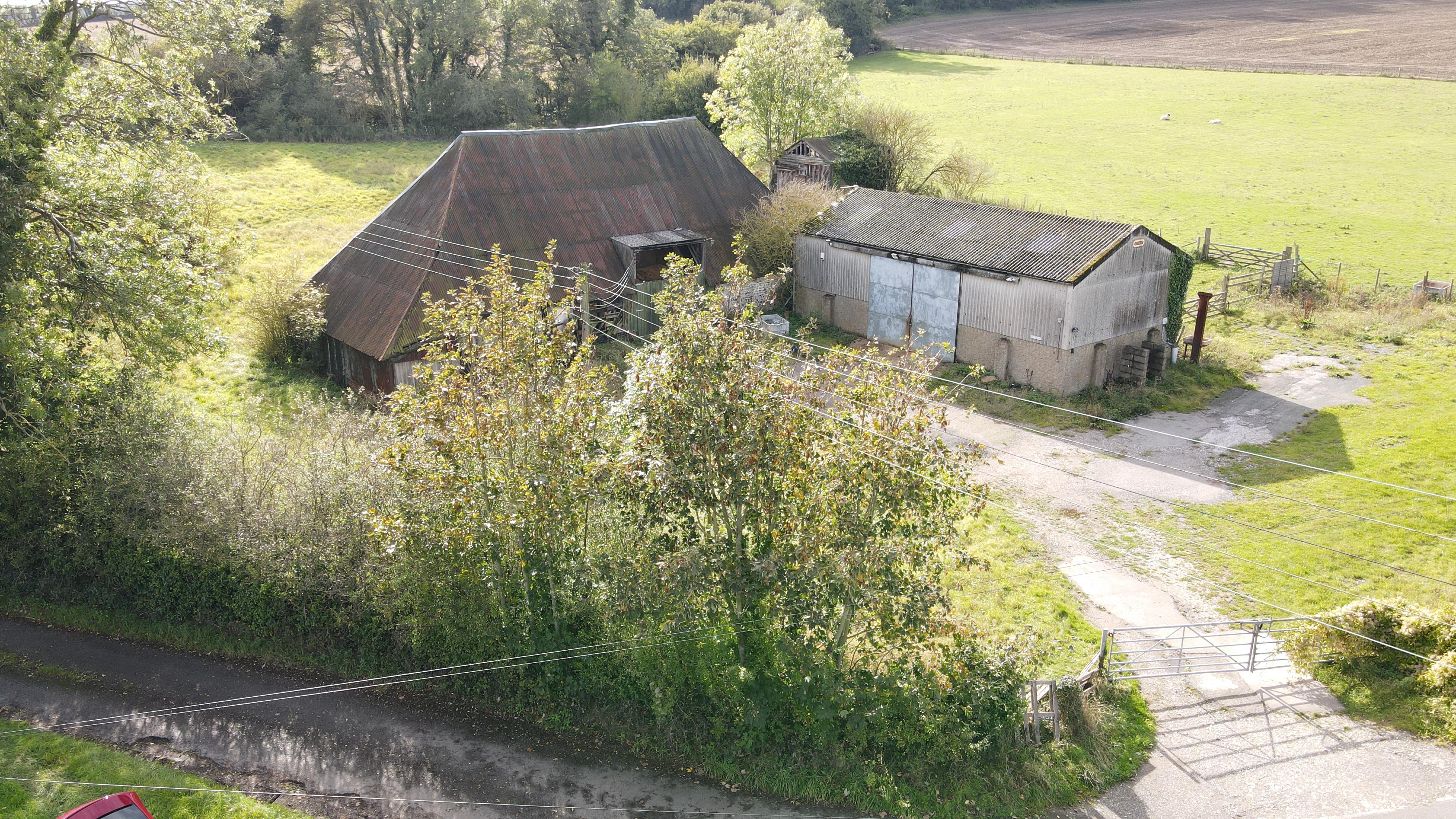
Nah, the barn is almost all roof. The walls are only a couple of meters tall, if that.
-
It's in an AONB, who will likely object to that. As would the wife
-
For those interested, the HMRC VAT Construction Manual says:
-
110v versus 240v at start of project
Drellingore replied to Drellingore's topic in Tools & Equipment
This has gone way off-topic, so I don't know if the mods want to move most of this thread to the VAT forum? We'll leave the holiday let stuff out of the equation for the moment, as our plans have changed and it's looking more like there might be a couple of rooms that we could AirBnB, but that's way down the line and hopefully not a planning condition. My current understanding, having spent yesterday reading VAT Notice 708, but not the HMRC VAT Construction Manual. Our limited company SPV is VAT-registered and has one SIC code: 41100. It will be engaged on a design-and-build basis as described in VAT Notice 708 3.4.1. We have most of the build budget in a different holding company, which will lend funds (with interest) to the SPV. Upon completion the SPV will charge us for its services, making a profit in order to demonstrate genuine trading. We will apply for a regular mortgage secured on the property to pay back the SPV. As an SPV, it will then be folded after paying its tax liabilities, and the retained profit will be redistributed to us. The build project itself will either be zero-rated under section 3, or reduced-rated under section 7. This depends on whether we'll be able to take the existing buildings down to ground level before putting the retained bits back up (the first type of qualifying building in section 3.2.1). If this is not possible then we'll default to section 7, which the build will be eligible for by merit of being a conversion of a non-residential property into a dwelling. When the build is completed, if it was reduced-rated, then we as individuals will be able to reclaim any VAT charged by the SPV via the normal self-builder reclaim process. If it was zero-rated, there won't be anything to reclaim. The advantages of this approach are: We can leverage funds in the holding company, meaning that we don't need expensive bridging finance. I last did the maths when corporation tax was 19%, and the overall cost of finance over a year was about 0.37% once inter-company interest has been charged, profits have been made, corporation tax paid, business asset disposal relief has been claimed, and capital gains tax paid. On a bridging loan at 0.5%pm, that would work out at 6.1% over a year. Cash flow will be better, as the SPV can reclaim VAT every quarter, instead of waiting until the build is complete. The number of invoices that need to be processed through the self-build reclaim scheme will be drastically lower. We can use all the business accounting software and processes we're used to, and have all the finance stuff firewalled off. A probably incomplete list of things I was wrong about and misunderstood: Section 4 and 5 require the title to change hands, which will not be the case here. I was wrong to cite those as relevant. Certificates are not relevant here, as they're only for builds that are not dwellings ('relevant residential/charitable purpose'). I previously thought they'd be useful. Merchants will charge VAT on materials, and this is explicitly stated in 11.1. I'd previously thought they'd remove standard-rate VAT if presented with a certificate, which is wrong on two levels! I look forward to finding out what else I've misunderstood before headbutting a wall for a few minutes I've not looked into the self-build reclaim scheme much, nor the HMRC manual, so those are possible blind spots. -
Nah, not really. It's an emotional starting point. We don't want to be off-grid, but we'd like to not need it. We've got a 3 acre field next door to try and provide as much permaculture food security too. Part of the rationale is to do my best to leave something to the kids and descendants that will be a 'safety net' of sorts - so they don't need to pay for rent, electricity, very basic foods, etcetera. Yep. I'm just at the start of figuring everything out, but I was figuring a few powerwalls or equivalents. Annoyingly we've got 112kWh of storage in the two cars, but neither does V2H It's a 22m long barn with a south-facing roof - that's also ignoring the other building, which is on a north/south alignment. Yeah, there's already a three phase supply to the property. I'll need to figure out what goes on what phases, and all that jazz. I'm just at the beginning, really. Yeah, we might have to register as a power plant (I can't remember what the technical term is). It's something we'll need to think about, for sure. Agreed. Asking on a Tesla forum, others have done similarly complex systems, and unfortunately there's no decent book on the subject.
-
Thanks for the data! Yep, this works out perfectly. Our average daily consumption is 22kWh (we have two electric cars, family of four). If we extrapolate your generation to our size array, we get: (171kWh * (22kWp/5.12kWp)) / 31 days == 23.7kWh
-
Yep, same here. We need a 22kWp system to cover our own usage in deepest, darkest winter, which means we'll have huge excesses in the summer. Maybe I just need to find more high-demand hobbies... Get myself a kiln or something!
-
110v versus 240v at start of project
Drellingore replied to Drellingore's topic in Tools & Equipment
I've done enough reading today to know that I've talked some absolute twaddle earlier in this thread. The end outcome is likely going to be the same, but the reasons I've given are wrong, so thanks for calling me up on this. I've learned more than I ever wanted to about VAT today! I'll put my consolidated thoughts in this thread when I'm a bit more sure that I've finally got it straight, so y'all can point out where I've missed stuff and so future readers of the thread aren't misled. -
0% vs 5%
Drellingore replied to sameulepapi's topic in Self Build VAT, Community Infrastructure Levy (CIL), S106 & Tax
Thanks for taking the time for a detailed reply @andyscotland. That all makes sense. I received another more cynical take in that it's good for HMRC's cashflow. In a simplistic view where everything is standard-rated, HMRC basically get to hold onto 20% of all money changing hands between businesses for three months. -
Thanks for the continued efforts. That refers to rainwater soakaways rather than PTP discharges, and also doesn't appear anywhere in approved document H. It does reference BRE Digest 365: Soakaway Design which sadly costs £28 to purchase, and NS EN 752-4 which also is locked behind paywalls. The fact that Government legislation forces us to abide by rules that we have to pay to read is, as my mum would phrase it more politely than I would, "a bit of a swizz".
-
Thanks. I've been through approved document H several times now, and I haven't managed to find any reference to this yet. For instance, the word "boundary" doesn't appear anywhere in the document. I'm wondering if it's one of those cases of there used to be a rule and now there isn't but it sticks in the minds of all the experienced folks, or maybe there's never been a rule but it seems sensible.
-
Assuming it's a new build, VAT Notice 708 3.3.4 says that landscaping and similar done as part of a planning condition is "closely connected work" and would therefore be zero-rated:
-
0% vs 5%
Drellingore replied to sameulepapi's topic in Self Build VAT, Community Infrastructure Levy (CIL), S106 & Tax
Section 18 says certificates are only for buildings that are a "relevant residential purpose" (ie not a dwelling, but a care home/halls of residence) or "relevant charitable purposes" (which I'm fairly sure doesn't apply here). I just downloaded the certificate template, and it seems that it only caters for those two cases, and not for a regular dwelling. -
0% vs 5%
Drellingore replied to sameulepapi's topic in Self Build VAT, Community Infrastructure Levy (CIL), S106 & Tax
*rocks back and forth in the corner, gently sobbing* -
0% vs 5%
Drellingore replied to sameulepapi's topic in Self Build VAT, Community Infrastructure Levy (CIL), S106 & Tax
As is evident from my prior posts, I'm very confused and must be being rather thick Where is the point in the reduced-rate scheme, if the developer charges 5% VAT, which goes to HMRC, and then HMRC give it back to the client? Surely then HRMC have gained nothing and it might as well have been zero-rated? -
If one is conducting a conversion that involves erecting a new garage alongside a conversion, do the rules in VAT Notice 708 Section 3 (zero-rating new construction) or Section 7 (reduced-rating conversion) apply? Section 7.6.1 specifically calls out reduced-rating a newly-constructed garage, in the context of a conversion. Section 3.2.1 specifically calls out constructing or converting a new garage when it is constructed or converted at the same time as a dwelling: If VAT treatment is on a per-building basis, why would anyone choose to go down the reduced-rated route? The conditions in 7.6.1 and 3.2.1 seem completely equivalent to me.
-
Is anyone aware of any planning legislation that precludes the demolition-to-the-ground of a building (in this case barn) that's being converted? VAT Notice 708 Section 3.2.1 lays out the criteria under which new construction can be eligible for zero-rating. One type of qualifying building is where any previous building is demolished to the ground before new construction takes place. Whilst we're still going through planning, the previously-approved scheme included the description "existing buildings to be demolished". The barn in question is a non-designated heritage asset and the internal frame will likely need to be retained, however the most sensible route is to take it down, treat it, and re-erect it. If there is a point when no above-ground part of the building is still standing, then it seems clear that this is new construction and can therefore be zero-rated (otherwise why the provision detailing under what circumstances it's okay to zero-rate when there was a prior building?). However, is there some general planning rule or regulation that would consider it a breach of consent if a converted building was entirely taken down for some period of time? I've got a vague recollection of a potential main contractor telling me about a barn conversion that he was working on where they had to take down half the barn, build the new half, then take down the other half, and then build that and join it up. The purpose was so the original building was never completely taken down, but I can't remember if that was down to some specific planning condition on that site, or because of a general principle. Any thoughts? Ta in advance.
-
If it's a new build that is zero-rated as per section 3 of VAT notice 708, erection of scaffolding is zero-rated: If it's a conversion eligible under section 7, then it's standard-rated:
-
Any suggestions as to where I should be looking to verify? What the English rules in question, do you recall?

