


Benpointer
-
Posts
445 -
Joined
-
Last visited
-
Days Won
6
Everything posted by Benpointer
-
Great, thanks everyone. (Although, I have to say @JohnMo that every single time I have tried to use hammer fixings it has ended in tears - wobbly fixings, bent screws or both.)
-
Ok thanks guys. Still not quite sure what we should do off of our floor which is planned to be block & beam + 200-300mm EPS + 70 screed with UFH. Is it ok to fix stud walls to 70mm of screed? If we leave the screed until after the stud walls are in what do we fit the base of the stud walls too? Not the EPS insulation obvs. Nor to the B&B itself. It'd be helpful if we can avoid building up from the B&B under every stud, with the cold bridging issues we would have to address.
-
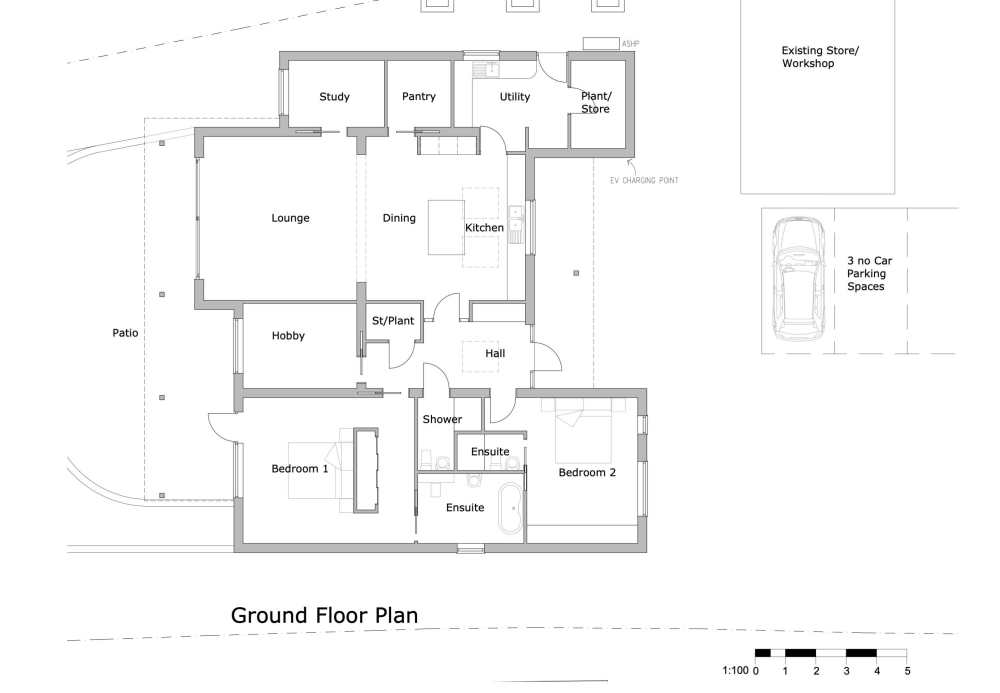
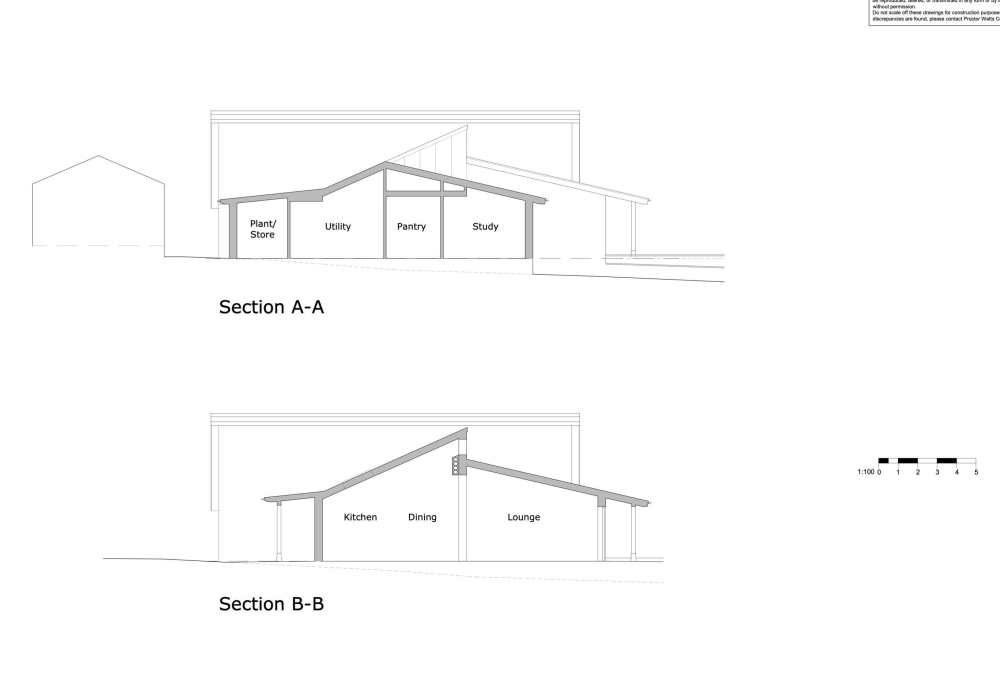
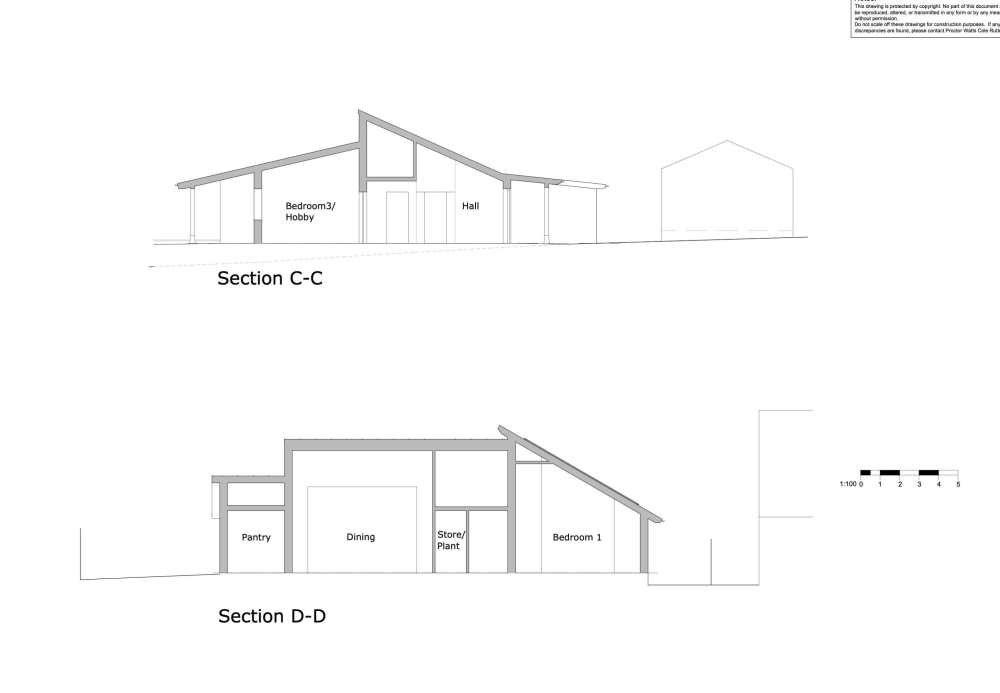
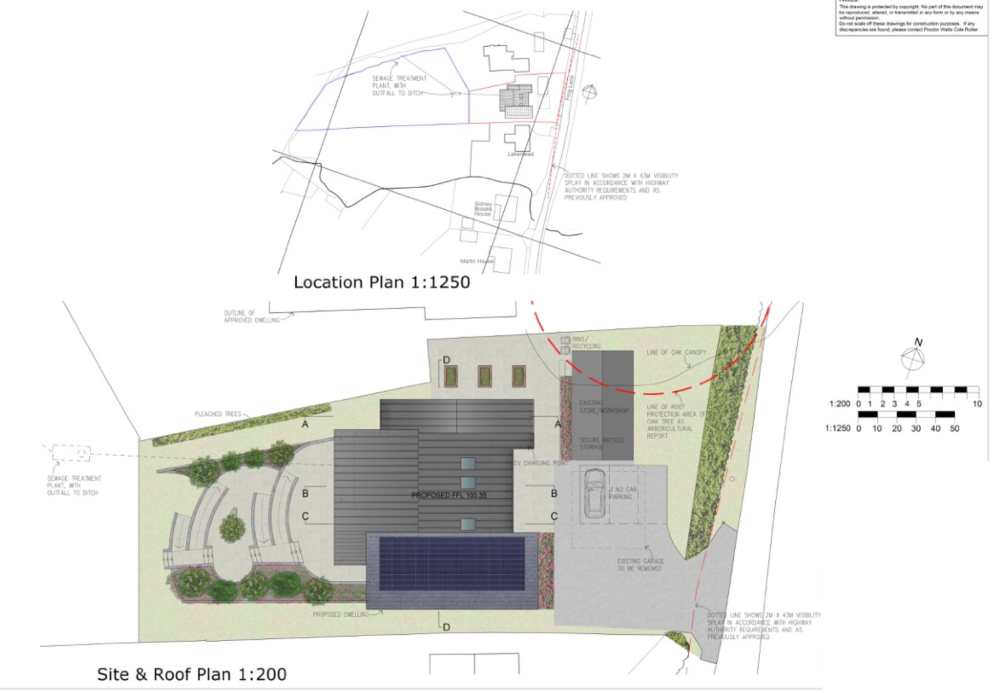
I know SE input will be required at some point but I am just trying to get my head around this now. Planning just submitted (see pics), plans out for initial quotes with several TF / SIPS company (we'd prefer TF with cellulose fill if we can afford it). Also trying to get an indicative quote from my preferred groundworker for the foundations. Floor is going to be B&B + 200-300mm EPS + 70 screed with UFH. Question I have is can the non-structural internal stud walls be built off the screed or will we need to build block upstands under each, with the concrete trenches, insulation detail etc. that those will require? Here are some pics:
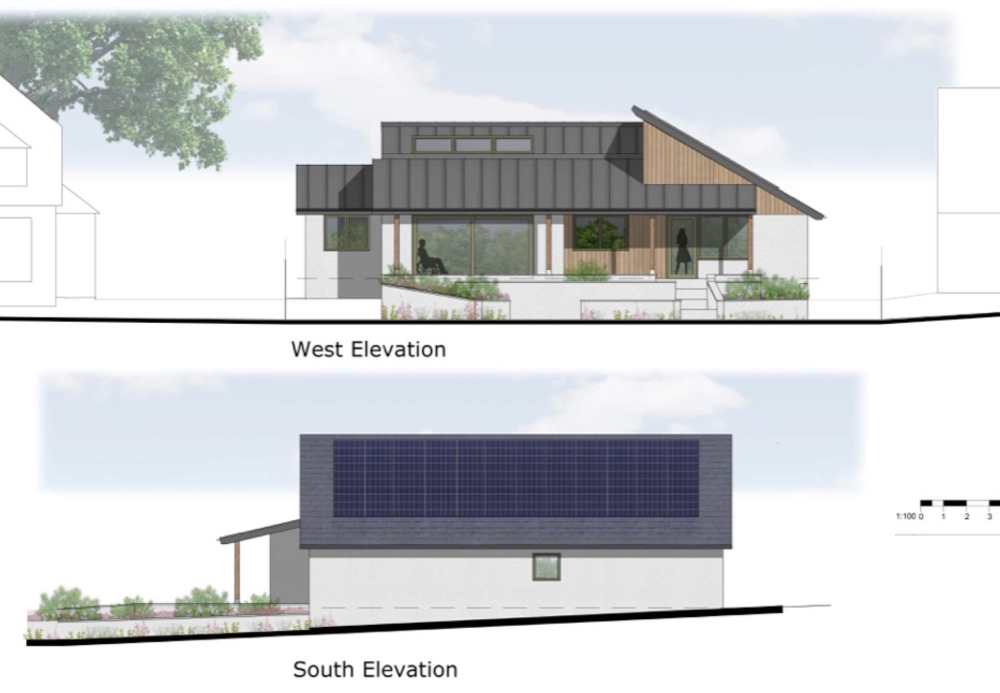
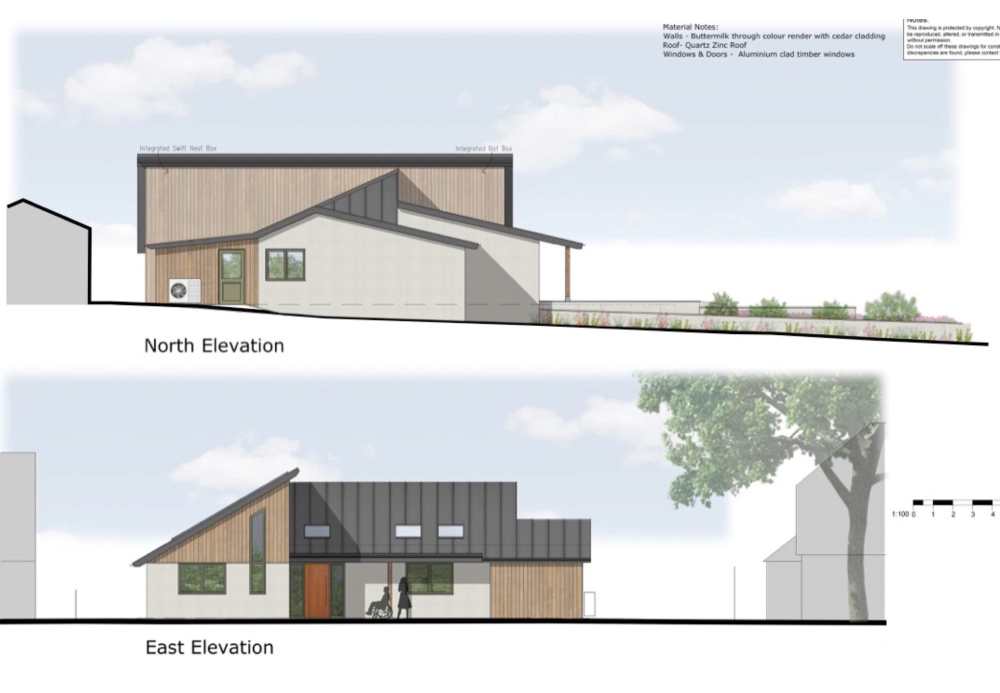
-
Our draft drawingsa specify the FFL in metres above see level (100.35 in our case). That is taken from our topographical survey. (We're currently debating with the architect whether we should raise the FFL up by 0.2m, given the amount of rain we've had this winter.)
-
Wouldn't it be better if the Marmox overlapped the PIR a bit more? At the moment there's a cold bridge in your diagram where there's only effective 25mm of Marmox between as warm screed and a cold concrete block. Ideally, surely the Marmox should extend down to the bottom of the PIR. Scrub that - you're not able to lay it in sufficient thickness according to Marmox's own specification: https://www.marmox.co.uk/file-uploads/Doors___Windows.pdf
-

Air Tightness Test - poor result
Benpointer replied to mike2016's topic in General Construction Issues
We probably will put in RWH as part of our SuDS, but for garden watering, not toilet-filling and clothes washing; grey toilets really suck. -
Air Tightness Test - poor result
Benpointer replied to mike2016's topic in General Construction Issues
High ceilings reduce stuffiness; MVHR avoids it completely. -
Air Tightness Test - poor result
Benpointer replied to mike2016's topic in General Construction Issues
Comfort, the freshness throughout the house all the time. Go away for two weeks, come back and the house feels great. We've never had that in any other house. Our current rented accommodation is by many standards a lovely house - well above average house price value - but it manages to be drafty and stuffy, at the same time, we even have mould in places. So yes, MVHR remains no. 1 on our list. (I agree with you about fads though - 3D TVs say "Hi", and rain water harvesting for the toilets and washing machines will not be repeated by us again!) -
Air Tightness Test - poor result
Benpointer replied to mike2016's topic in General Construction Issues
Of all the 'eco' things we did in our last house (amajor renovation) - triple-glazing, MVHR, ASHP, UFH, PV, Solar HW, masses of insulation... Of all those things, MVHR was number 1 on the list for our forthcoming self-build. Not for payback but for comfort. -
Would tool-hire plant and tools be covered by the tool-hire company's insurance?
-
Conduits in concrete slab - making it all work
Benpointer replied to Bancroft's topic in Foundations
This has got me thinking about a couple of points: For a block and beam floor, the conduits presumably need to come up between beams. So do you cut a hole in a block, leave a gap between blocks where the conduit i, or what? Do the conduits get sealed in with expanding foam where they come through the B&B? Same for the insulation layer above the B&B? How are the conduits mad airtight once the cables, pipes etc are drawn through them - is expanding foam acceptable? Thanks -
How thick is your screed JohnMo?
-
Quick question, and apols for taking this away from Botus's original crisis, but with UFH why wouldn't you just leave it on at a comfortable temperature 24x7? As I understand it Botus is doing a well-insulated new build.
-
We went down to see Norrsken last week and were quite impressed, so that's good to hear. However, I do quite like the look of Internorm's HV 450 Alu-clad triple-glazed + blind + outer-pane units (so effectively quad-glazed). I suspect we would only be able to afford one window though and would have to board up the rest of the openings... which may be sub-optimal.
-
These rendered images are great, what tool did you use to create it @Conor and @Great_scot_selfbuild? PS +1 for the hob on the island unit, close to the oven - casseroles, roasts etc often need to be transferred between the oven and the hob.
-
Option 4 or 5 will surely lead to Option 6 in an uncontrolled way. If you really don't want to rebuild, then Option 3 but aim for more than 50mm EWI.
-
Who could possibly begrudge their financial adviser creaming off the 3%?
-
E=mc2 ?
-
Vaulted rooms - benefits and issues?
Benpointer replied to Benpointer's topic in New House & Self Build Design
I think the acoustic clouds are a little more sophisticated - they hang at a set distance from the ceiling and absorb noise both coming from below and also rebounding from the hard ceiling. Cork tiles? - very 70s 😉 - and are they really that effective at noise reduction? I gained a little understanding of this topic when I was helping our village hall improve its acoustics. Apparently, it's all about the Reverberation Time (RT60, the time it takes an initial sound to drop by 60dB). It's very easy to download an app to your smartphone (e.g. ClapReverb) and test this yourself. Here's a site that explains more: https://commercial-acoustics.com/reverberation-time-graphic/ For homes an RT60 of between 0.5and 0.8 secs is ideal. Community spaces can be ok at higher levels and I was intrigued that you can tune the acoustics of restaurants, for example, depending on how 'buzzy' or intimate you'd like them to be. Our village hall had an RT60 of 2.3 secs before we fitted the clouds and 0.9 secs afterwards. Lots of villagers noticed and commented on the improvement. If anyone has an issue with echoey rooms, I'd definitely encourage you to download an app and test the actual reverb time. Then maybe put in some extra soft furnishings, temporary wall hangings, rugs, whatever you might be happy to live with, and test again to see what difference it makes. -
Vaulted rooms - benefits and issues?
Benpointer replied to Benpointer's topic in New House & Self Build Design
Great replies everyone, very encouraging, thanks! If anyone is suffering badly from acoustic issues we used these 'acoustic clouds' in our village hall - not cheap (£6k fitted, though a Lottery grant covered the costs) but very effective. However, a village hall, where you might get 60-80 people chatting over wine at a social evening is affected by acoustic issues much more than a domestic house, I should imagine. https://www.woollyshepherd.co.uk/acoustic-clouds/ -
Vaulted rooms - benefits and issues?
Benpointer replied to Benpointer's topic in New House & Self Build Design
Thanks John, that's all very encouraging. UFH was the second item on our requirement list, after high levels of insulation and just before MVHR, so we should be ok on that front. Very good point about lights - we are more wall lights and table lamps people but it would be an easy mistake for us to make. Cheers! -
Hi All, Our architect is working on detailed plans for our self-build, aiming to submit for full PP early in the new year. Site has existing PP for a chalet bungalow but we want a single storey house (I am a full-time wheelchair user) of a more modernist design... so new plans. Mrs. P is very keen on vaulted ceilings in the principal rooms, which is very fashionable right now of course. Our design is currently looking like fairly shallow 25° pitches for the roofs but across the widest span (11m) that still gets you to over 6m at the apex, if the edge ceiling is 2.4m. I like the idea of tall, airy rooms but worry a bit about the acoustics and whether the height will seem in some way a bit 'weird'? I am just wondering whether those who have experience of high vaulted ceilings have any thoughts, comments, suggestions, things to avoid or consider, etc.? Many thanks!
-
Depends if it ever gets used 😉
-
We did a very similar supply and extract in our kitchen diner (6.1m x 5.3m) and it worked very well.
-
Not an expert but from our experience of 15 years with full-house MVHR I'd say three things: We installed the unit in our service cupboard - noise has never been an issue in normal operation they are very quiet. Putting the unit in the loft will be a PITA when you have to change filters (every three months or so in our experience) put it in the airing cuboard if it will fit, or anywhere where you can easily get to it. Your inlet and exhaust locations look good to me.




