Benpointer
-
Posts
445 -
Joined
-
Last visited
-
Days Won
6
Everything posted by Benpointer
-

biodiversity Net Gain Exemption and LPA conditions!
Benpointer replied to Lincolnshire Ian's topic in Planning Permission
Our planning application appears to have been caught by this. Our planning consultant received an email from the planning officer: "You’ll be pleased to hear I’ve assessed the application and will be recommending approval, subject to ironing out final details such as agreeing conditions/obligations... The other outstanding issue is that the Council have been informed that if a self-build BNG exemption is being claimed a Section 106 legal agreement (S106) is required to ensure it is self-build and the case officer must instruct legal accordingly. The S106 will need to be signed and sealed prior to the determination of the planning application. Therefore, I’ll need your agreement before I instruct legal to generate the S106. In addition, if you able to provide details of your solicitor that would be helpful. Also, I’m obliged to tell you there are costs to the applicant associated with this as well for the instruction and monitoring of the agreement. Whilst some previous applications using the self-build exemption did not use a S106, it is now a Council-wide approach, that I have no choice but to request such." That was two weeks ago. We provided our solicitors' details the same day. Since then we've heard nothing. I reckon every week delay costs us £500 in rent 😞 -
A phased approach to BC drawings / approval?
Benpointer replied to Alan Ambrose's topic in Building Regulations
@mjc55, did you explore this approach with Dorset BC? I ask because we are facing the same issue, and we're also in Dorset. Thanks -
Using existing foundations for a new build
Benpointer replied to allthatpebbledash's topic in Costing & Estimating
You think the foundations for a 50s/60s bungalow were 'designed'? When we extended and refurbished a 1960 bungalow, having built a big, well-insulated extension we had intended to gut and radically improve the insulation of the original house. But as we started to dig up the concrete floor to put in a new insulated floor we quickly found ourselves below the original foundations, which only seemed to be 500mm deep. At that point discretion got the better of valour and we quickly repaired the floor, accepting sub-optimal flooring heat losses to avoid walls falling down or expensive under-pinning. -
Easi-joist roof - where to put the insulation?
Benpointer replied to Benpointer's topic in Timber Frame
Also, just taping up the TP10 should give me a sufficient SD on the inside surely? -
Easi-joist roof - where to put the insulation?
Benpointer replied to Benpointer's topic in Timber Frame
Tbf they seem to want to insist that the inside layer SD value is >= 5x the outer layer SD value. Our outer layer is likely to be 11mm OSB/3 with an SD of 2.5. So we just need a VCL with an SD of > 12.5 or more. DuPont AirGuard Reflective has an SD of 2000 so should more than be sufficient. I have put that build-up to PYC to see whether they are ok. The problem is on Ubakus that build up gives an insufficient drying reserve.🤷♂️ -
Easi-joist roof - where to put the insulation?
Benpointer replied to Benpointer's topic in Timber Frame
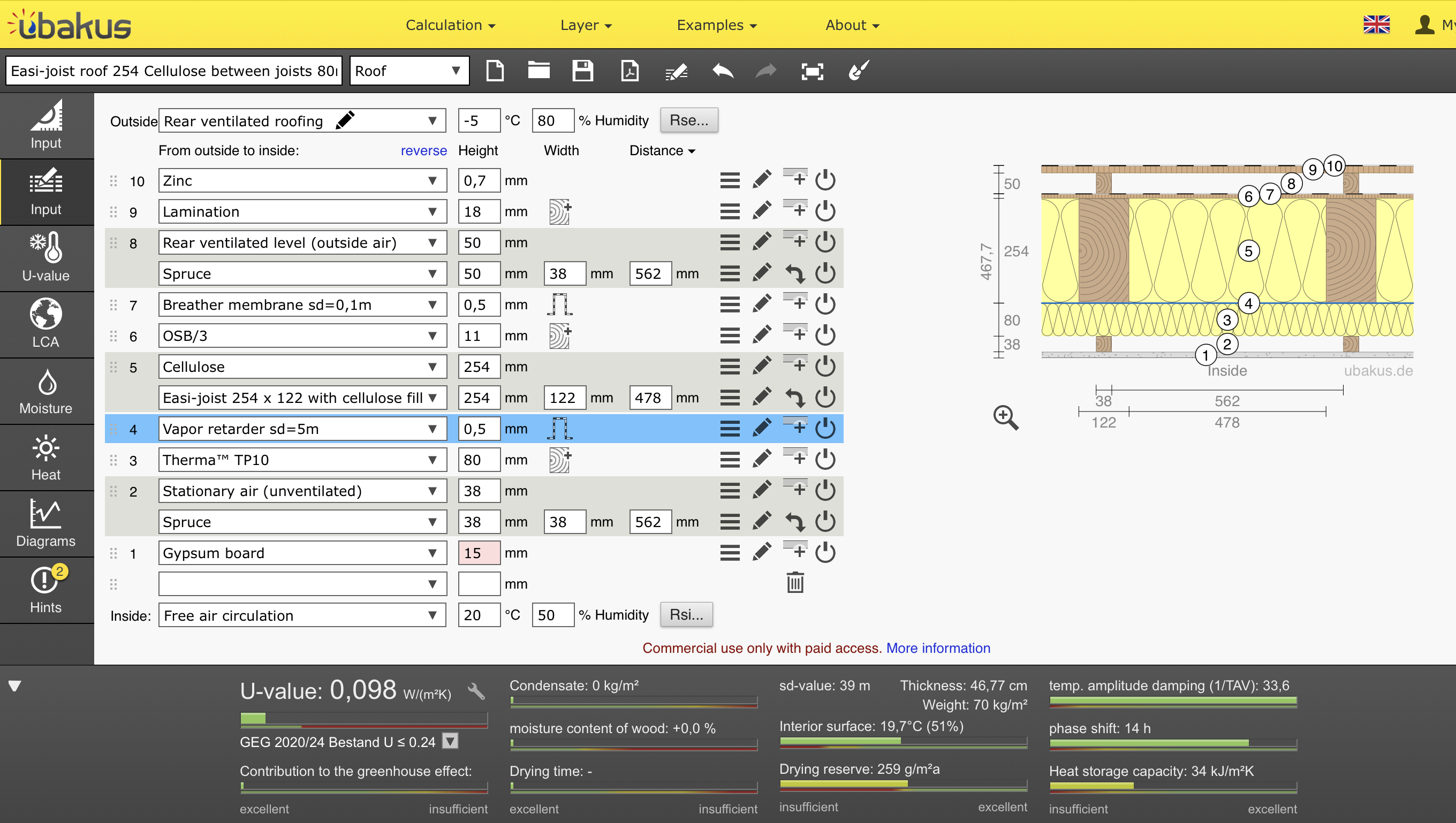
We're now investigating blown cellulose (254mm), with a layer of PIR on the warm side to get us to u = 0.1. However, the Warmcell distributor (PYC) are recommending that we'll need Smartply Propassive on the inside and Medite Vent on the outside, which would add £20 per m2 to the roof cost and that's before we factor in the cost of the blown cellulose itself. Given we will also have to have a 50mm ventilation gap then 18mm ext ply above the roof to take the zinc we would end up with 3 timber board layers in the roof: Smartply Propassive, Medite Vent and 18mm ext. ply. That seems like overkill to me - not sure why we can't go with a suitable VCL below and 9mm OSB3 above the cellulose. Ubakus certainly seems to think it's ok: The alternative might have to me mineral wool between the rafters rather than cellulose, which is a shame as I like the idea of blown cellulose. (-: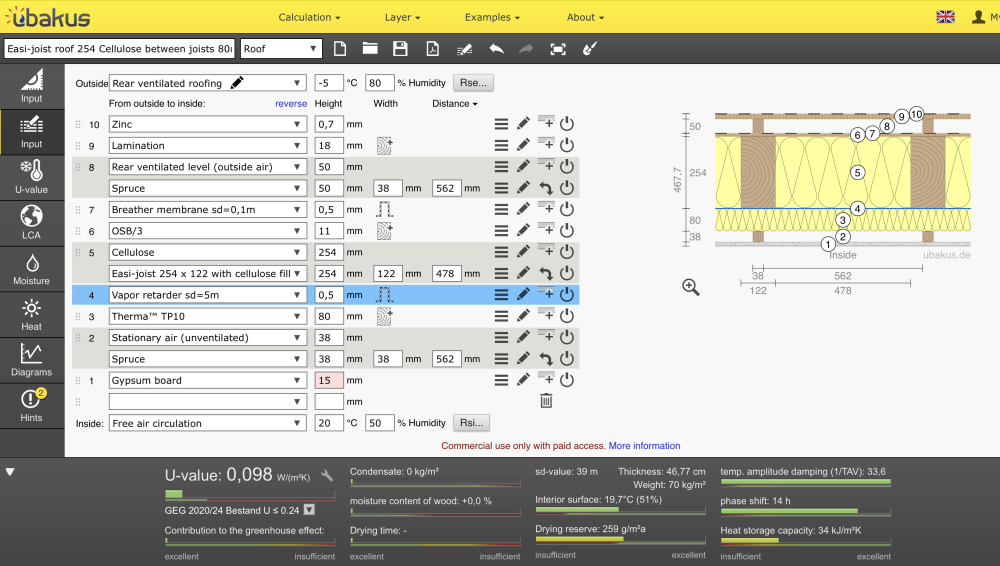
-
As a full time wheelchair user this kind of b******s really p****s me off. I came across the incredibly restrictive stuff in part M4(3) about kitchen design (worktops capable of being raised and lowered, no cupboards under a sink or hob etc.). This is rank 'ablesplaining' - able-bodied people deciding what disabled people need. Fortunately, our planning consultant and architect say we can ignore part M4(3) as we are not specifically designing a "Wheelchair User Dwelling" even though its going a be a dwelling occupied by a wheelchair user 🤔 On topic IANAE* on building regs obviously but I can't see anything in part M that says you cannot have a WC lid. I suspect it's an invention by low-lifes who think they can sell a few more shabby cut-price loos by calling them "Part M compliant". Rant over 🙂 (* I am. on the other hand, an expert on wheelchair use and I would always want a lid on a toilet.)
-
ASHP grants for self-build?
Benpointer replied to Benpointer's topic in Air Source Heat Pumps (ASHP)
Brilliant, thanks! -
Apols - I have tried searching BH for the answer to this but remain confused. Can I get a grant for an ASHP installation in our new self-build (in Dorset, England)? Thanks
-
Checking out a company at Companies House
Benpointer replied to Alan Ambrose's topic in General Self Build & DIY Discussion
Thanks - more good advice. This thread has helped me a lot, and as you summise I have now got to a position where I have a good degree of confidence in the company concerned. The risk is not zero of course but it's no longer going to keep me awake at night. -
Checking out a company at Companies House
Benpointer replied to Alan Ambrose's topic in General Self Build & DIY Discussion
I've now spoken to the Commercial Director. She's talked me through the company structure and history, and given me as much confidence as I am ever likely to receive that this is a long-established ongoing family business in good health. So I am going to sign up. Thanks all! -
Checking out a company at Companies House
Benpointer replied to Alan Ambrose's topic in General Self Build & DIY Discussion
The classic - a timber frame. I will talk to them about risk mitigation options but I assume the up front payments are for materials so I am not sure an escrow would work. -
Checking out a company at Companies House
Benpointer replied to Alan Ambrose's topic in General Self Build & DIY Discussion
Question to @Alan Ambrose or anyone else who feels able to answer: If, following the advice above, I find the company I am considering committing a fair chunk of up front money to is: quite small, reporting regularly and on time, only has three directors who are clearly members of the same family, saw it's retained earnings fall last year by 15% and those retained earnings are only 4 or 5 times the amount I am going to commit for... By Alan's advice, I should be cautious. But... If the company in question (call it A) is owned by, and has a charge due to, an ultimate holding company (call it B) with the same three directors and that holding company's retained earnings are 80 times my required up front financial commitment, and increasing... Can I then be reassured? Can company A go bust leaving a trail of unpaid creditors while it holding company B walks away with a big fat pile of cash? -
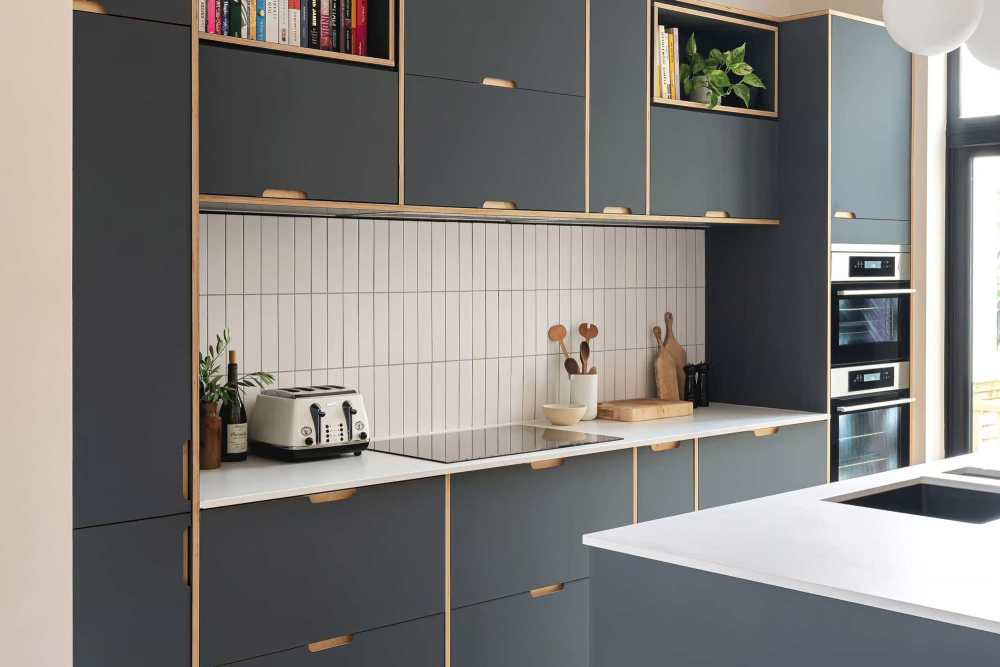
Mrs P. has fallen in love with Pluck: https://www.pluck.co.uk, particularly their HPL / FENIX doors (is FENIX a brand of HPL?) Fortunately there are others who do the same doors for, hopefully, lower prices: Husk will provide this kind of door for carcasses bought from Howdens, DIY-Kitchens or even IKEA, apparently. Still in the early research stages atm. Going to see Husk in Bristol in a couple of weeks. Whatever, doors we choose we'll be looking for Blum ironmongery - very solid.
-
Coming to this a bit late but if you're still logging in from time to time @thefoxesmaltings ... I see you used Turners and had some vaulted ceilings - if you don't mind me asking, did you insulate below, between, or above the easi-joists? And where did the vapour control layer go? We're thinking of using Turners but I just want to get my head around the roof detailing. Thanks
-
Easi-joist roof - where to put the insulation?
Benpointer replied to Benpointer's topic in Timber Frame
So, I am thinking there will be a calculated u-value from, say, 100mm PIR between the joists with nothing within the joists (i.e. between the webs), then say 150mm PIR over the joists. Sure it will be less than full-fill 100+150 PIR but better than just the 150mm over the top. Presumably could be calculated for the whole roof by calculating the % area with PIR versus % of unisulated joist. For 97mm joists at 600mm centres that's 83% PIR at 0.22u and 17% 47mm joist at 2.55u = 0.6u... Then add the 11mm OSB and 150mm PIR on the top to get an overall u of 0.11. Still, it might be easier/cheaper to simply put 200mm PIR on top and forget insulating between the joists. I don't want to full-fill the easi-joists because I'd like to thread services including MVHR through them. I am mindful of making the roof look very clunky though. -
Easi-joist roof - where to put the insulation?
Benpointer replied to Benpointer's topic in Timber Frame
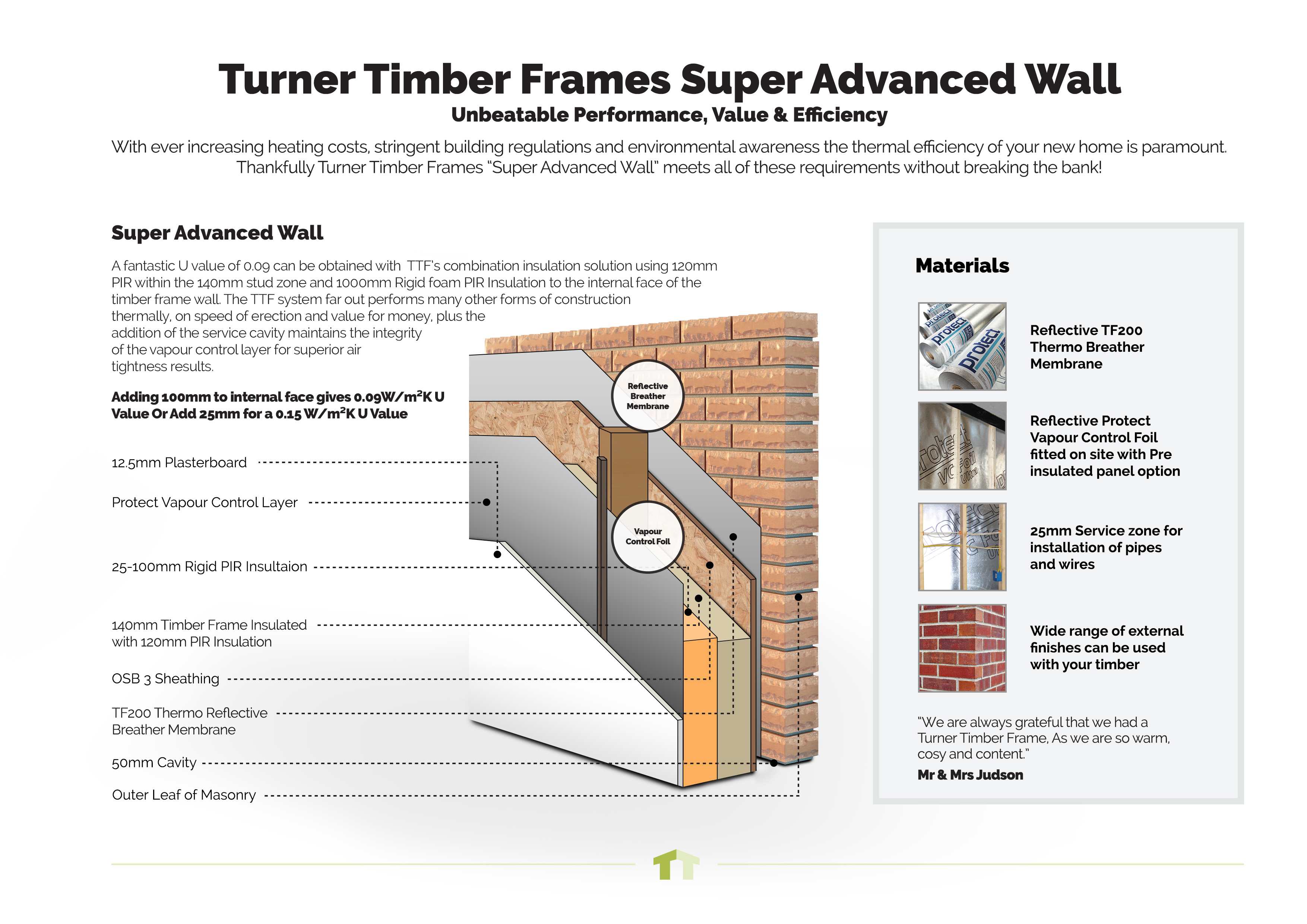
Wall structure is as per this diagram but we're cladding in cedar / cement boards & render rather than having a masonry skin. Either 50mm additional PIR for u = 0.12 or 100mm for u = 0.09.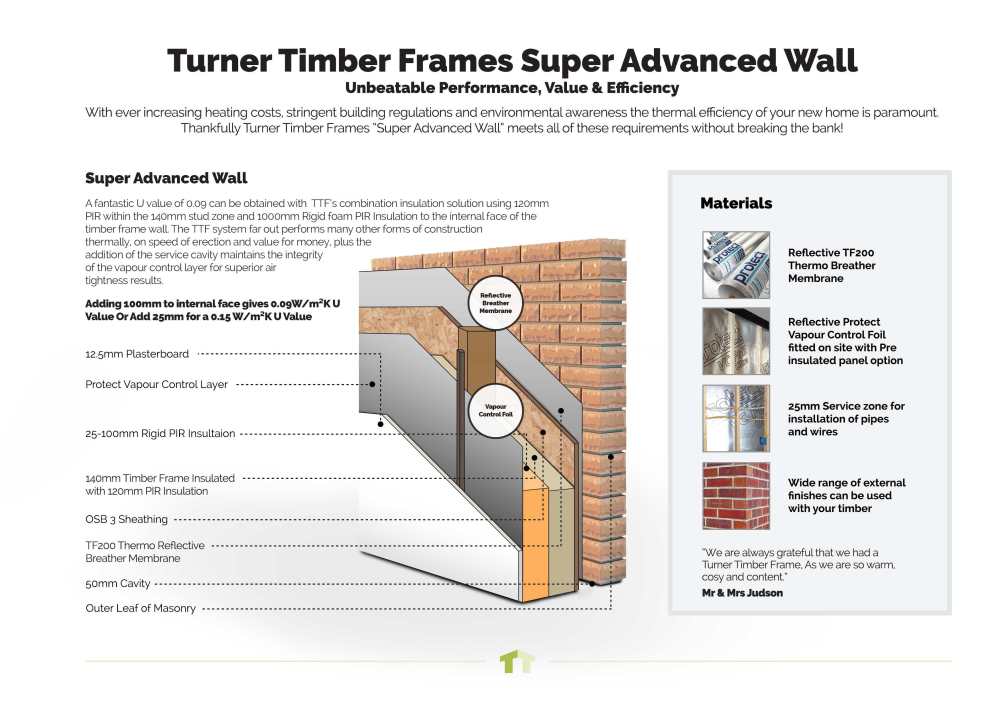
-
Easi-joist roof - where to put the insulation?
Benpointer replied to Benpointer's topic in Timber Frame
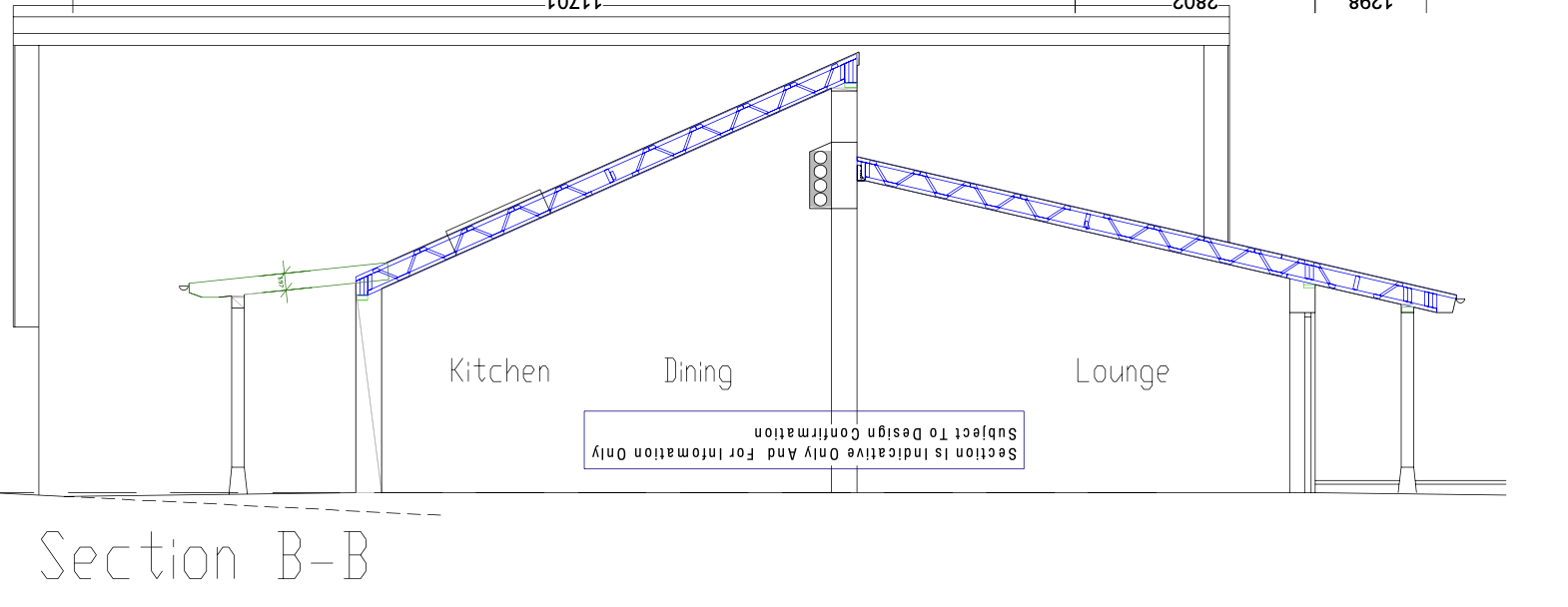
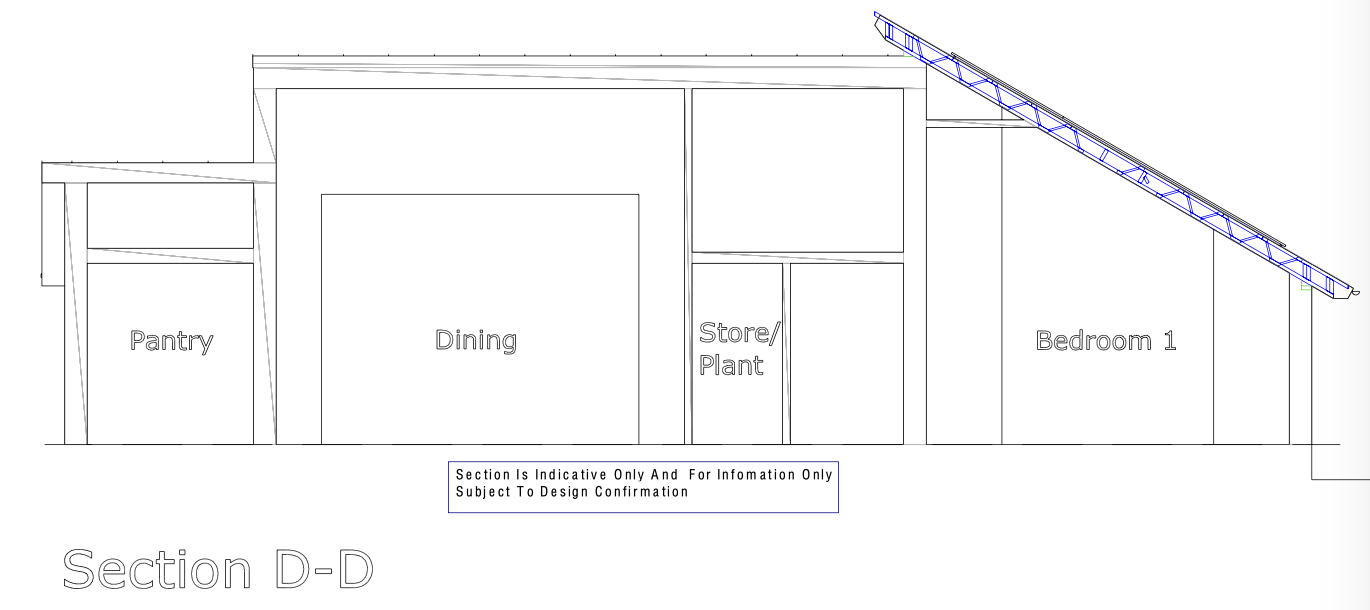
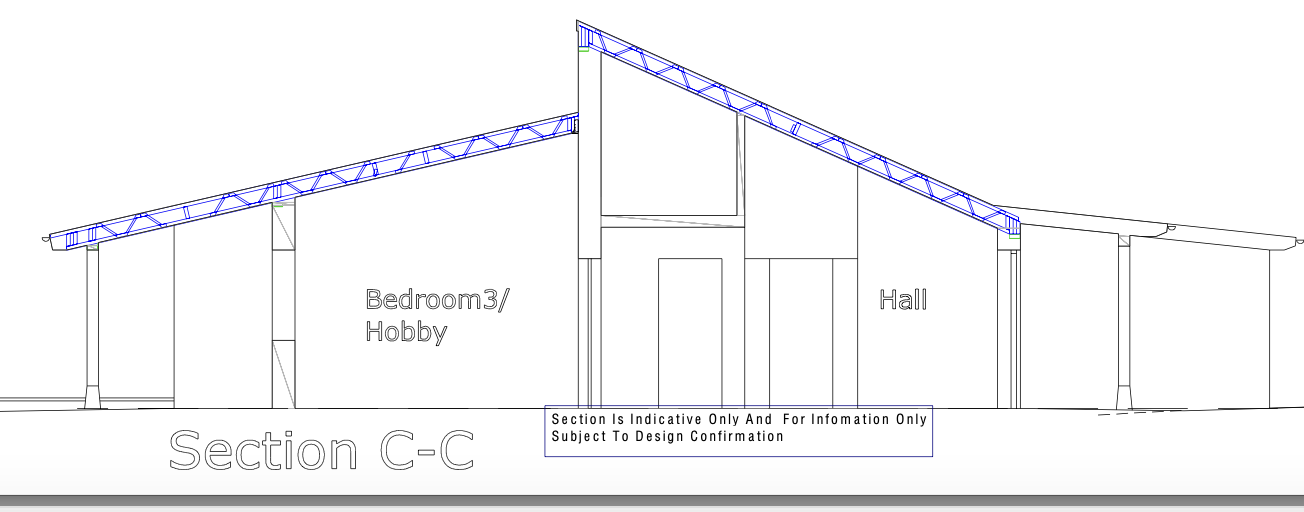
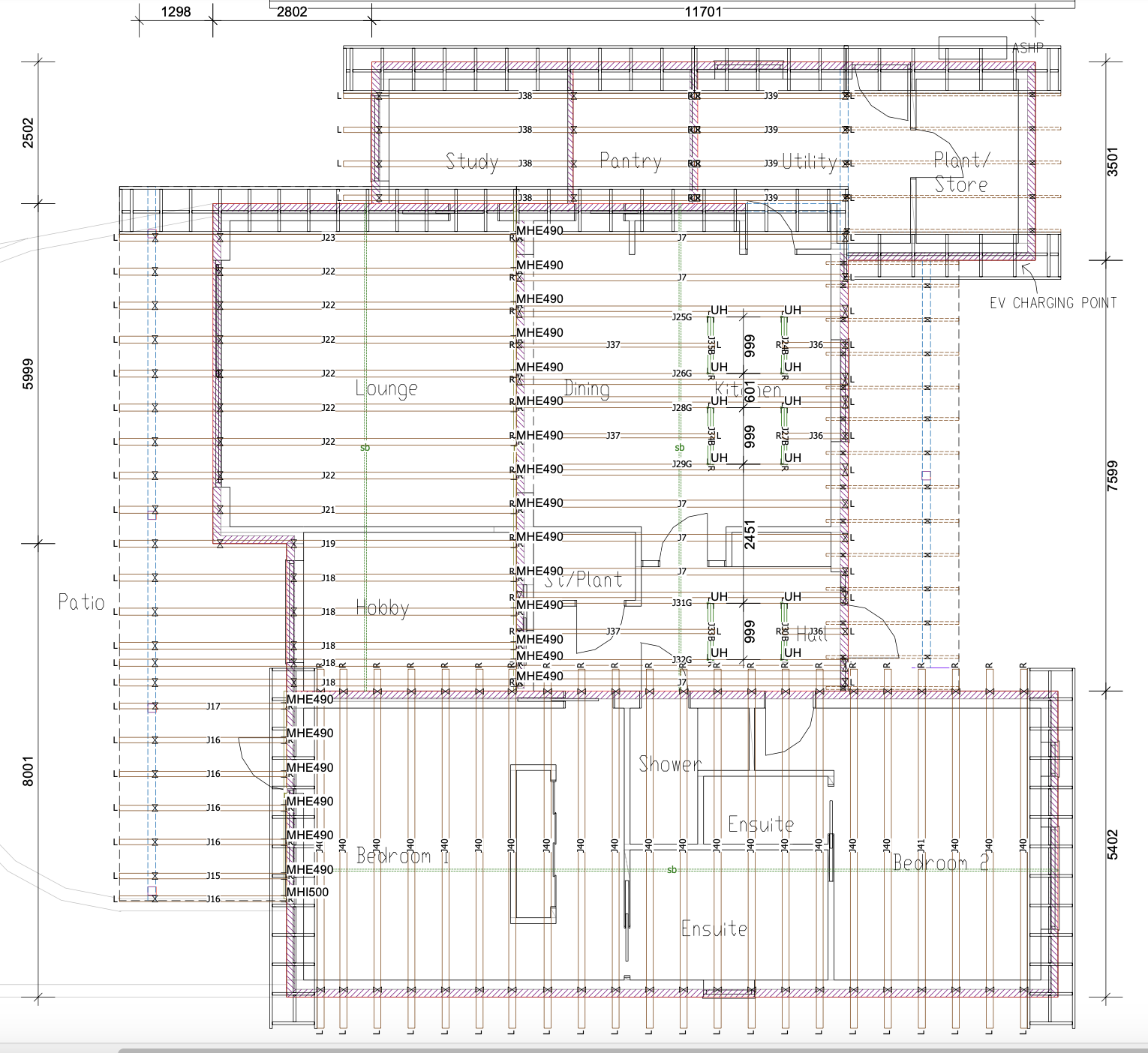
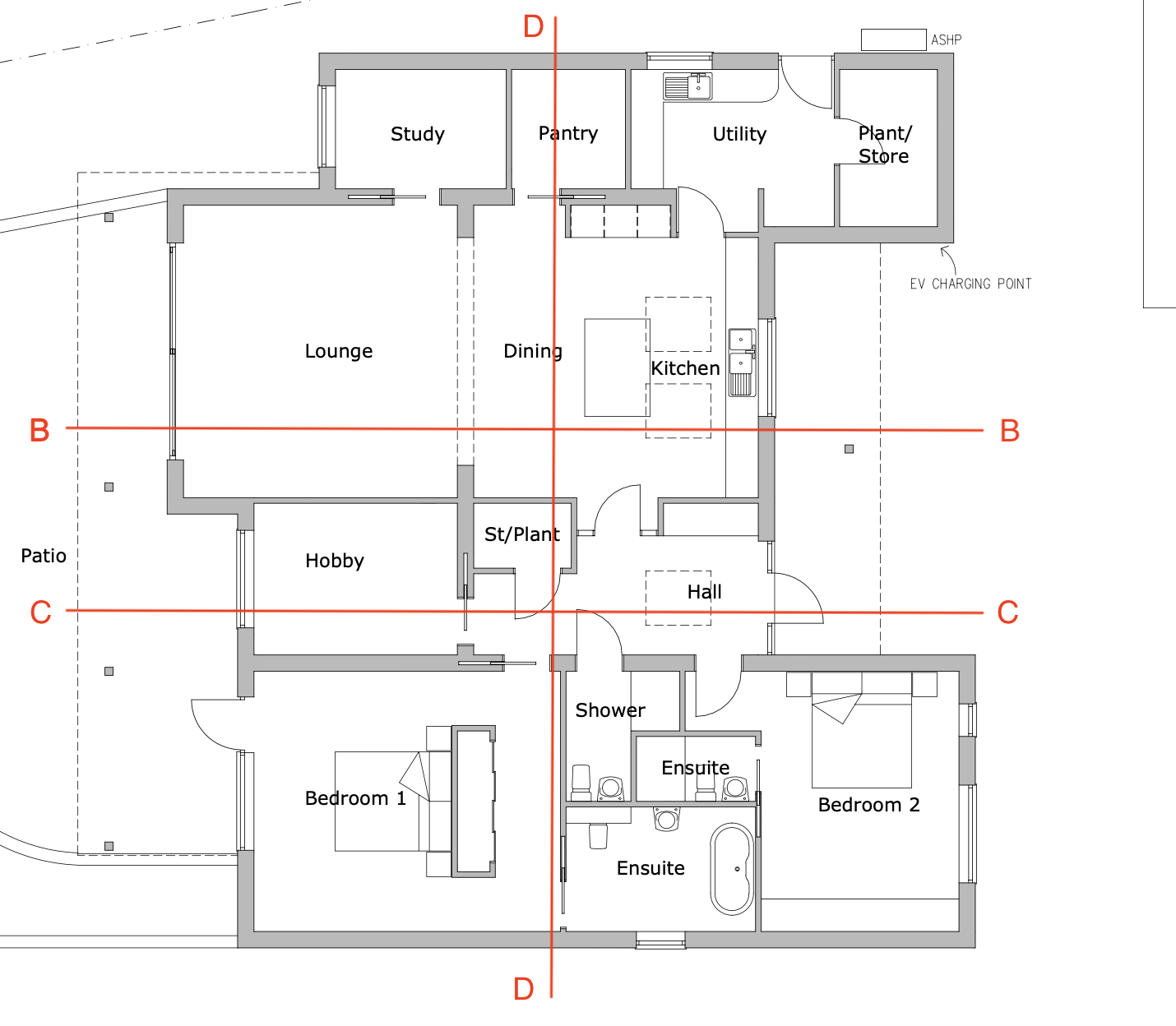
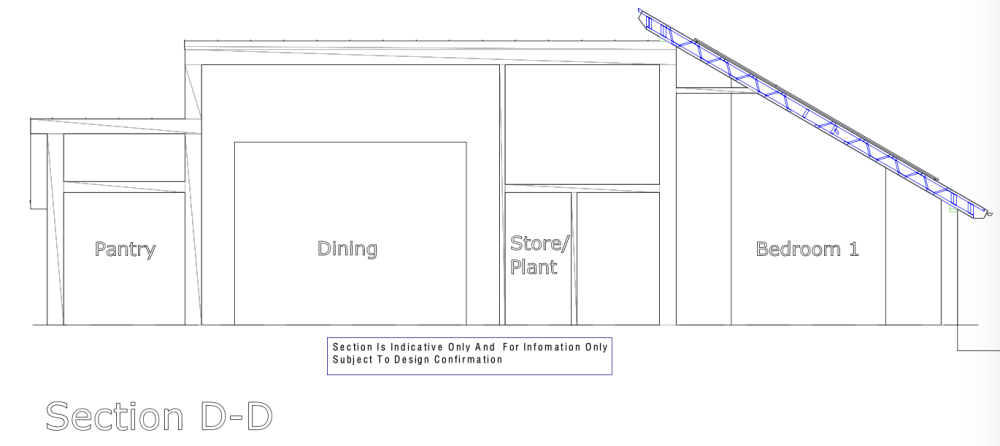
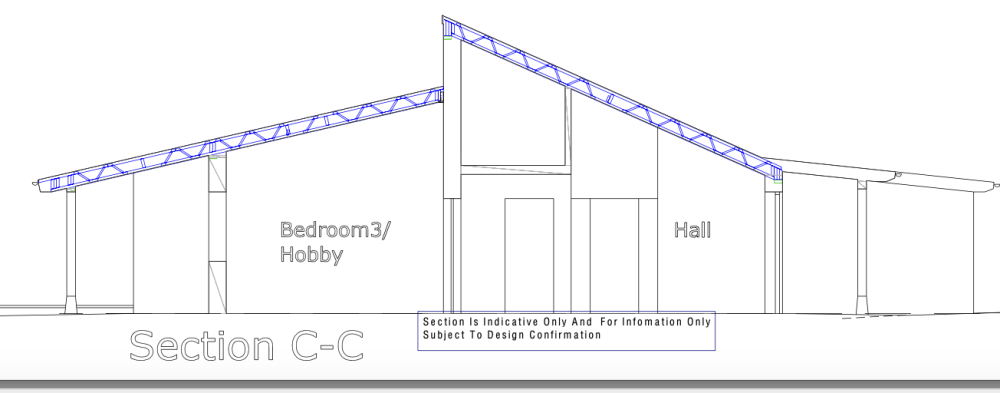
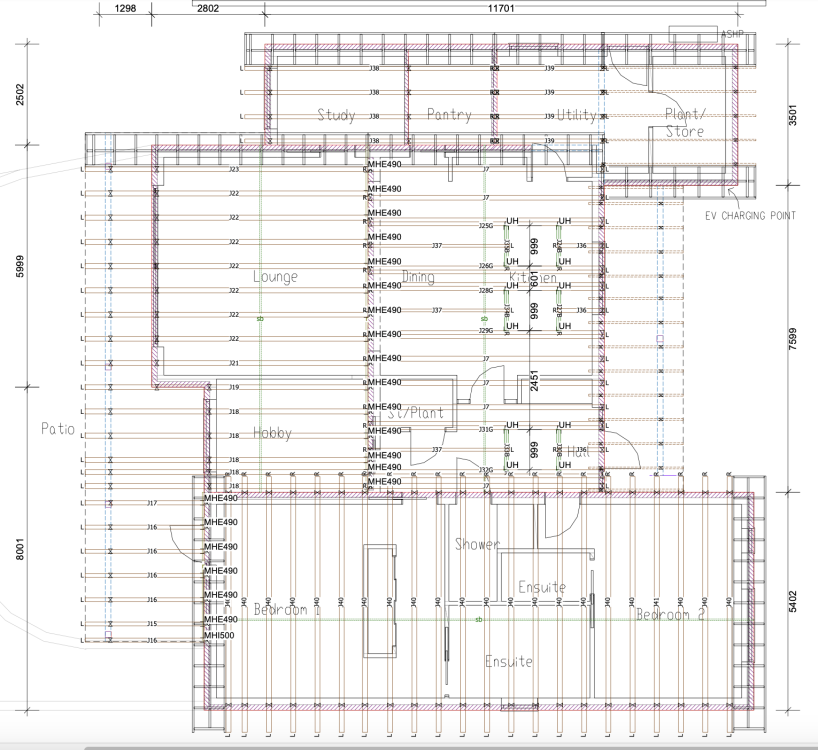
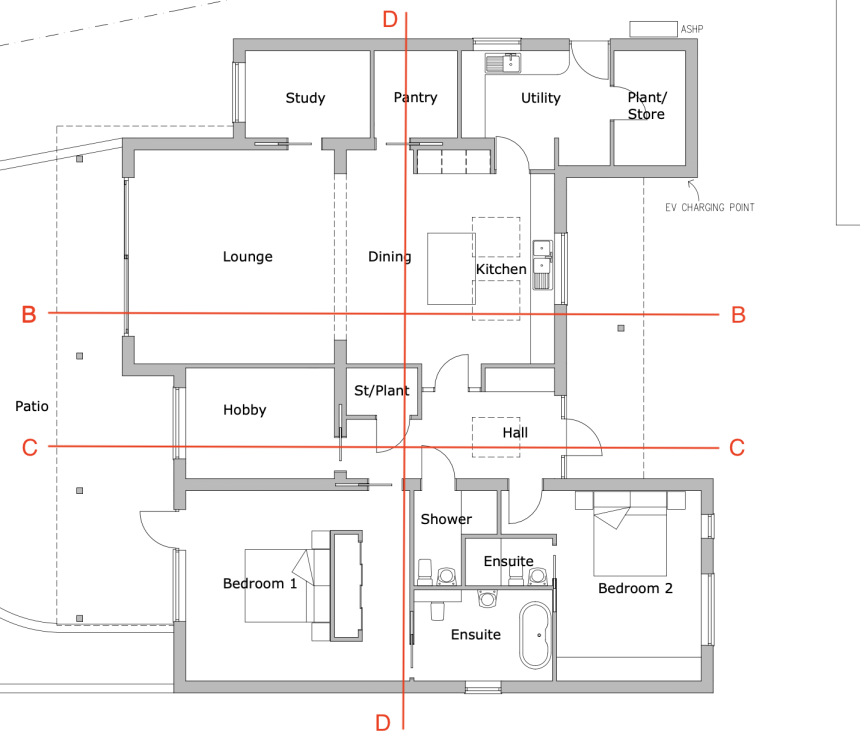
Oh, some pictures: Floorplan: Roof truss plan: Cross-sections: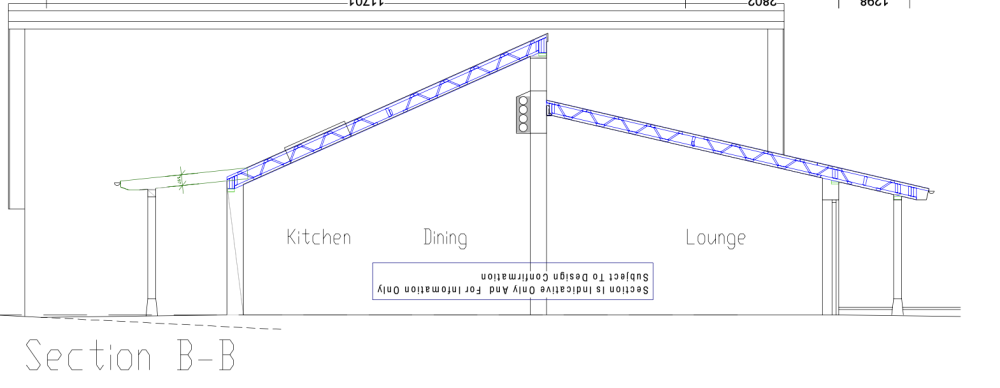
-
Getting structure quotes in for our 180m2 single-storey self-build. We've got vaulted ceilings which is complicating things a bit. The quotes are varying between £400 and £800 per m2 to get to u-values of 0.12 walls, 0.1 roof. One quote I quite like is Turner Timber's Super Advanced, which seems like a good price, and uses 254mm Easi-joists with 11mm OSB over for the roof, so no purlins intruding into the ceilings and potentially lots of room to run MVHR ducting and other services through the Easi-joists. Question is: should we insulate Between and under the joist, which loses the service space benefit, or Go for a warm roof with all the insulation on top, or Between and over, say 100mm PUR between and 150mm over (is that still a warm roof)? The roof will be a standing seam zinc so if we go option 1, we'll need membrane, 50mm battens, 18mm OSB or ply on top. VMZinc say you don't need that for a warm roof so is that a saving? Of course, I'll be asking our architect, who I rate, but fear I could be paying him £££ per hour to research this out, so if I can steer him in the right direction... 😉 Any views?
-
Block and beam for timber frame aiming for passivhaus
Benpointer replied to Barny's topic in Timber Frame
This was answered by @Roundtuit back in April - sit the sole plate on a course of Marmox blocks. And/or increase the size of the PIR upstands. I note you say no screed but what are you going to put UFH in (presume you are having UFH)? -
Although most houses have at least two sides, so if the other one faces south west, that'd be good for PV. Regarding the friends who 'regret their tiled floor because they hardly ever put their ASHP on', they are confusing things a bit. Presumably they had the tiled floor because they had underfloor heating and they had UFH because they had an ASHP. But none of those links are compulsory: you could put in a wooden floor over UFH and you could run UFH without an ASHP (though that would be an odd choice today). If you are only using the house for short periods the woodburner may be sufficient if the insulation levels are very good - your SAP calculation should help you decide that. But in any event at build time it would be sensible to put UFH pipes in when the floor is laid if there is any chance you might need more heating than the woodburner at some future stage.
-
Problem with the UFH mixing valve?
-
You mean a glue - you glue your stud wall sole plates to the screed?
-
Fabric and ventilation heat loss calculator
Benpointer replied to Jeremy Harris's topic in Heat Insulation
Just on this point, the spreadsheet inputs can easily be adjusted to reflect that an insulated UFH slab is likely to be 4°C warmer than the room temperature - just set the under slab soil temperature (cells B4 and B44) to 4°C lower than you expect it, so 4°C rather than 8°C, or 6°C rather than 10°C. -
Fabric and ventilation heat loss calculator
Benpointer replied to Jeremy Harris's topic in Heat Insulation
Just on the original spreadhseet... If I get a worse case* heat loss rate of 2,602 Watts that tells me a 5kW HP should be plenty big enough, is that right? (* Worse case being when I set the outside temperature to -10°C. An even worser case would be if I set it to -20°C but the heat demand is still only 3300W - and for -20°C in Dorset, I suspect the gulf stream will have stopped so other issues may be relevant.)