Garald
-
Posts
1113 -
Joined
-
Last visited
Everything posted by Garald
-
So, my architect is keeping out of light and lamp choices (she's unhappy because she wants more money - well, that, and my girlfriend vetoed the terracotta tiles she suggested - why she should care about that is not so clear, unless she was looking forward to add the pictures to her portfolio). The builder will still install them, but I have to choose them. In brief: what is there to know about lighting? - Sure, one has to choose more lux (lumens per sq.m.) for a working space than for a working space (or a bathroom) than for a bedroom; there are lists of suggested lux per space online. - OK, OK, warmer (more yellow) light for bedrooms than for reading rooms. - Lampshades are not an affectation, but useful, in that they keep us from hurting our eyes; on the other hand, they must affect how many lux really get through. How do I compute that? I must say I tend to see interior design as being pretty analogous to feng shui, but if there are things that actually make sense that I should know, please tell me! (For instance, is it true that one needs to balance out cool light with warmer light, and vice versa? How?)
-
-
- 1
-

-
Tiling the courtyard: having cement/concrete tiles made to order?
Garald replied to Garald's topic in Floor Tiles & Tiling
So, what thickness would you recommend for, say, tiles of these shapes, 20cm to a side? I really liked the result in the Youtube video, but it does sound like this would be a very long process - only a few tiles can be made at a time. Perhaps 3D-printed imprints are the way to go. Surely there are people who have made them themselves and have documented the process? Also, what are the advantages of moulded tiles vs. imprints?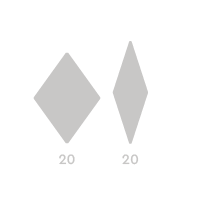
-
Tiling the courtyard: having cement/concrete tiles made to order?
Garald replied to Garald's topic in Floor Tiles & Tiling
Right, that's my fall back option. But you would think that, in these days of 3D printing, there would be some business that, at the very least, sells moulds and imprints made to measure. -
Work is moving forward, and I should start thinking of what to do with the courtyard once everything else is done. (My architect is miffed and has washed her hands of that task, so it's now up to me and the workers.) It's a shared courtyard (40m², much longer than it's wide), but I've got the coop's authorization to work on it, changing the surface (in poor condition) if needed. Now, I had originally thought that, if I had a bit of money left and the end, and the neighbors were nice and didn't force me to sink money on a soundproof sarcophage for the heat pump's external unit, I might offer a nice terracotta tiling as a gift to the coop, with an aperiodic tiling of course: (picture from todobarro.com) Then I learned that installing a terracotta floor on a Paris-area courtyard is a bad idea - water will seep into the terracotta, and, on the first non-trivial frost, it will freeze, expand and crack the tiles. I was just talking to the bookseller in a little bookshop on building trades I randomly found while walking down a street - I went it because I wanted to figure out what was up with the quasimasonic symbols. (The bookshop turned out to belong to an interesting organization called Les Compagnons du Devoir, which really seem to be something between masons and freemasons.) He confirmed what I had read, and told me that the courtyard would in fact get damaged much more quickly than I thought - in one winter rather than twenty. So, time to shelf that plan - - but I showed him pictures of tilings such as the one above, and he said that I should look into putting my plan into practice using colored concrete instead. Now, what is important here is not so much coloring concrete (though having it be non-gray would be nice) as shaping concrete. Of course, technically, that should be easy, in that cement basically begs to be cast into shapes, no? But where and how do I find a company willing to make tiles of two or three given geometrical shapes for me without charging me a fortune? ---- Someone in ForumConstruire.com has just suggested an alternative - googling "moule béton extérieur façon terracota" or "béton matricé". That looks like the poor man's version of courtyard tiles - using a plastic mould to make indentations on fresh cement. I guess I might be able to have a plastic mould 3D-printed somehow. However, it seems to me that this is really not that helpful for an aperiodic tiling; it's really meant for patterns that repeat. (Also, isn't drainage and the like more complicated if there aren't separate tiles? Or have I got this completely backwards?)
-
I'll just let my parents decide. They will be the guests in the guestroom much of the time. It does seem that cheap IKEA countertops have much better reviews than expensive IKEA countertops - that probably means that, if we were going to go for granite (or quartz - how does that compare?) we should get it elsewhere. Of course there's also marble:
-
It's a nook, and we might even be able to get folding doors to hide it. I take this IKEA countertop is practical but ugly or otherwise shameful?
-
Also, what would be wrong with just getting something inexpensive from IKEA? I'm not a fake-wood person in general, but this is a case in which a good-quality fake could be substantially easier to maintain than real wood. Take, for instance, https://www.ikea.com/nl/en/p/saeljan-worktop-oak-effect-laminate-60439173/#content
-
Odd - gf has been unjustly accusing me all along, then. What color of granite should I use if I want stains (oil and so forth) not to show much? Apparently the obvious answer (black) is not the correct one.
-
Well, my parents used to have tile, my grandma had tile, and I'm pretty sure that my grandpa on my other side had tile. I'm sure there's something to be said against that, though, since it is less common now. Also, this studio will be gf's home office much of the time, and she wants the kitchenette to be unconspicuous.
-
Time has come to choose the material for the ground-floor-studio's kitchenette's countertop. It's not much surface really, especially given that half of it or so will be taken by a small drain and a two-burner induction stovetop. Main issue: no matter how hard my girlfriend tries, it seems I can't be trained never to use bottlecaps to measure out oil. My ancestors on all sides must have done that for many generations. So granite and other expensive porous surfaces are definitely out. Advice?
-
What I've learned - Spanish tiles: Equipe is good - tasteful, lots of variety and, according to my architect, durable. My contractor did note that the hexagonal tiles we got from them were not completely flat, but I couldn't really notice, and, at any rate, since we were using them for a wall, it didn't matter. Mainzu is also good material, but if you look very closely you'll notice it's printed. (All patterns are printed nowadays, but you can't always notice.) They really go for a great variety of colors and patterns, which can't be to everybody's taste - visiting their website is like being stunned with new wealth, but then you may regret it if you don't use wisely. Their floor tiles do seem to have good anti-slippage properties. Todobarro is like Marmite. I do like it. Note the tiles are deliberately somewhat irregular - they are fired in some replica of a medieval Arab-Spanish oven. My girlfriend hates them, but to each her own. Their glazed, colorful tiles are very considerably thicker than most wall or floor tiles - that could be an issue. Their unglazed tiles come in many shapes - you can build a Penrose tiling with them. Of course then the problem is that terracotta tiles aren't really a good idea for a patio floor in any climate with frosts - they get soaked, the water inside freezes and thus expands, the terracotta breaks. The manufacturer's salesperson tried to convince me that they could resist many such cycles, but warned me that they would eventually give way. Others think this could happen much sooner. Portuguese tiles: New Terracotta is very nice but expensive. Some colors are more interesting than others. Worthwhile for a complicated project of the size of a shower, say, unless money grows spontaneously out of your ears.
-
PS. Even as of one or two years ago, only Miele and a couple of other brands used to reach efficiency rating A, with Bosch reaching only C - that's probably what did it for Ethical Customers. That has changed as of late.
-
That's a pity - as I said, Bosch did well on the German customer review tests (Stiftung Warentest), which are apparently based on some sort of white-goods torture session. To compare like with like, though - is a Miele entry-level washing machine (such as a WCD 020, 8 kg) really better than a midlevel Bosch (9kg) retailing for about the same price (800ish euros)?
-
Well, but I'll live alone half of the year (in the foreseeable future). Does a big capacity machine make sense then? I've done fine with 7kg for the last few years, and was planning on going up, but just to 9kg.
-
I was almost ready to buy Bosch (I did find some Bosch washing machines with an energy rating of A after all). Miele may be the gold standard, but Bosch is by all accounts very good and barely above half the price. Now I'm having a very trivial problem, though. Presumably the dryer (WTX87K90) should go on top of the washer (WGG24400FR) (since the washer will be heavy when full of water, and will also inevitably shake when spinning). However, some of the data given online (e.g.. Amazon and https://www.electromenager-compare.com/lave-linge-BOSWGG24400FR-BOSCH-WGG24400FR.htm) seems to imply that the dryer is larger than the washing machine. Now that I'm looking in other websites, I see that they give the dimensions of the washing machine are L x H x P : 59.8 x 84.8 x 63.6 cm, whereas those of the dryer are given as L x H x P: 59.8 x 84.2 x 61.3 cm. That makes sense (what sort of evil beings would manufacture dryers than can't go on top of their own washing machines?) but I'm still a bit concerned. The main problem seems to be that different countries give the dimensions in different orders. I've just consulted the Bosch website, and it lists the depth of the dryer as 590mmm (not 61.3cm) and that of washing machine as 590mm (not 61.3cm), so all is well, but now I'm genuinely confused! It can't be that other websites were giving the dimension of the box, since the height and the width were apparently correct.
-
I know - that goes without saying. German customer reviews are pretty thorough: they managed to torture a Samsung and an LG to death. An Amica survived but was apparently traumatized. The other participants (Bosch, Constructa, Miele , Siemens, AEG, Bauknecht, Sharp, Haier) survived, but only Miele, AEG, Bauknecht and Haier were rated A for energy efficiency, and Sharp and Haier apparently damaged some clothes. What sort of reputation do AEG and Bauknecht have in general? Of course these are particular models being tested. I should see whether I can get a Bosch washing machine rated A.
-
Right, I'll avoid washer-dryers, maybe out of prejudice. They were so horrible 10-15 years ago that I can't get over it. I'll just stack a dryer over the washer (or is the other way around better?). And yes, washing lines are better during the summer, though I wonder what my neighbors will think of it.
-
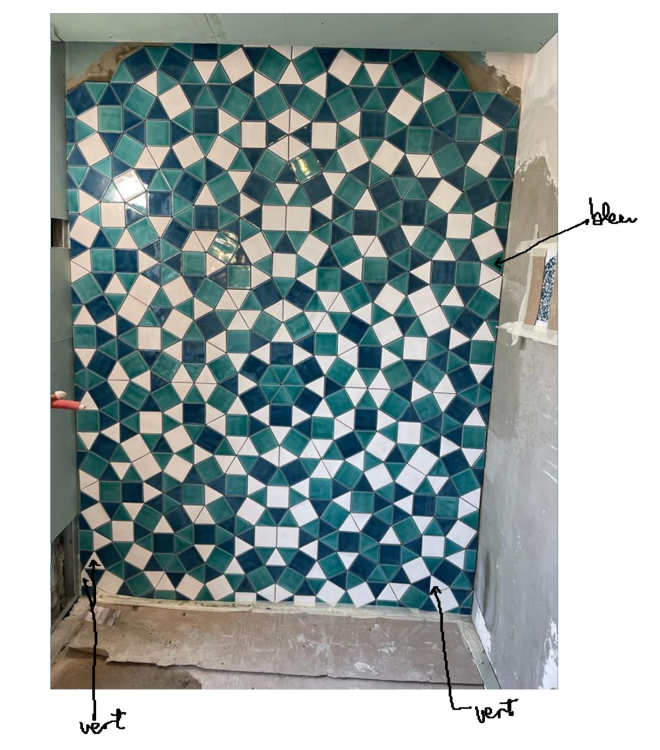
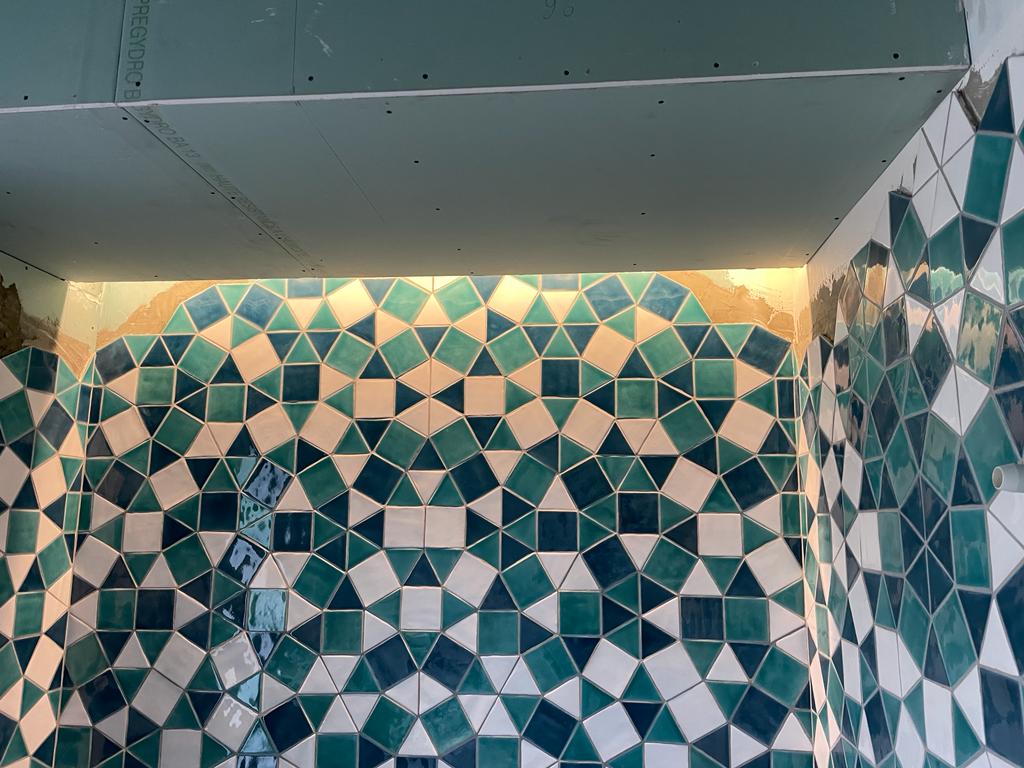
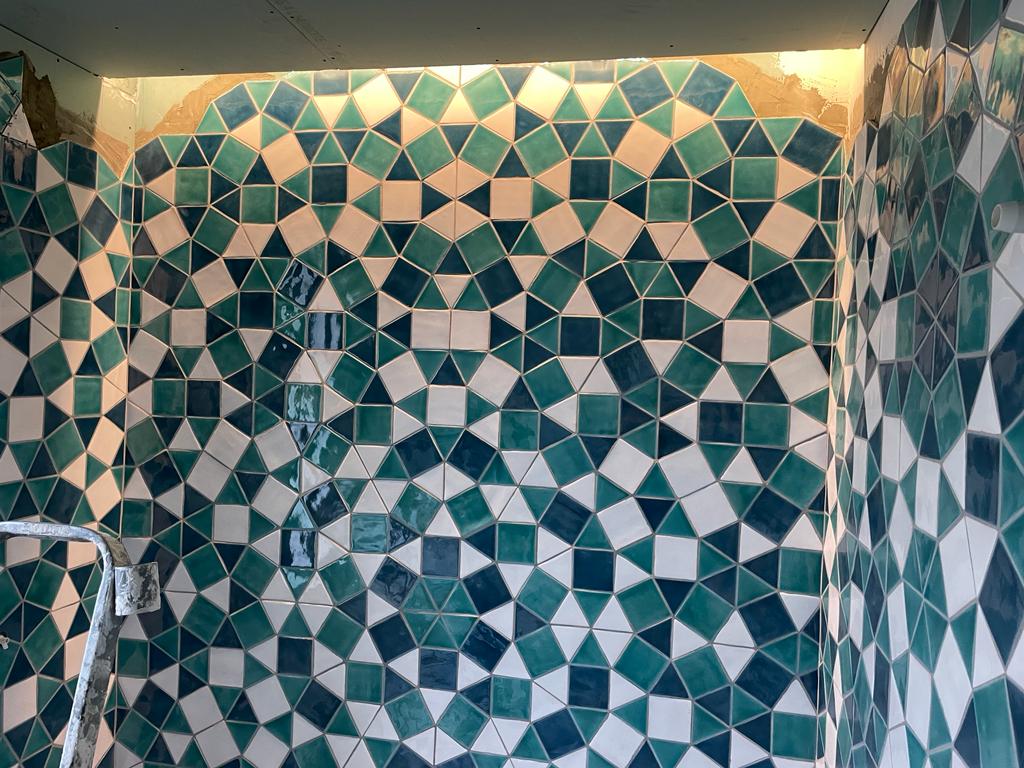
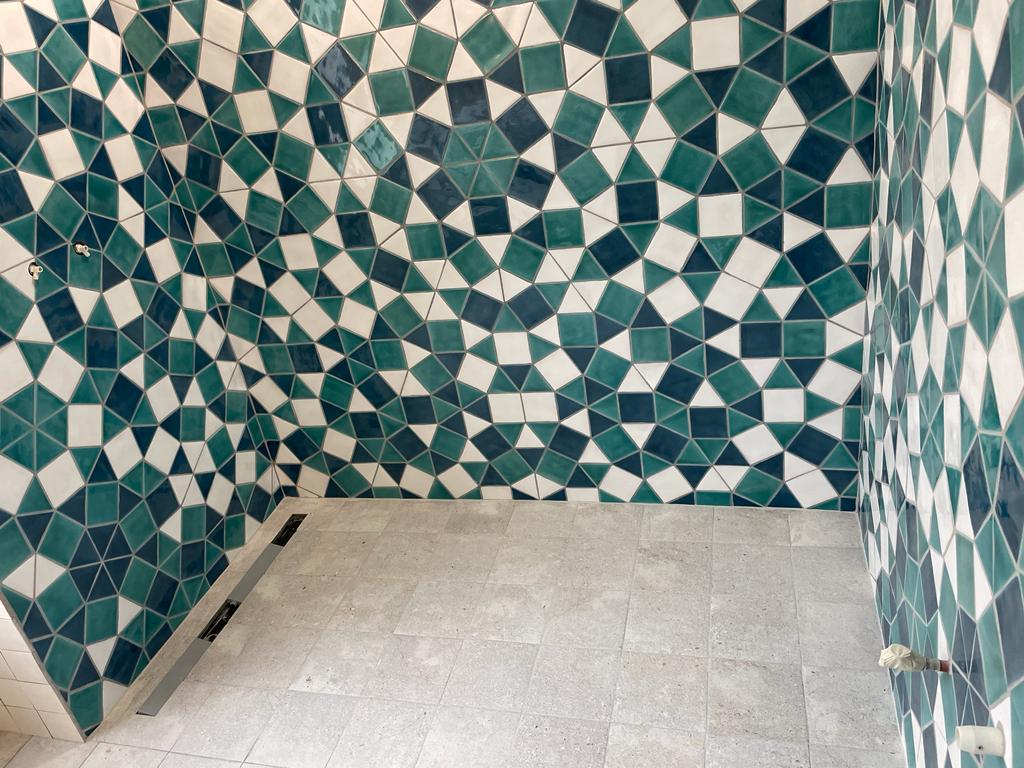
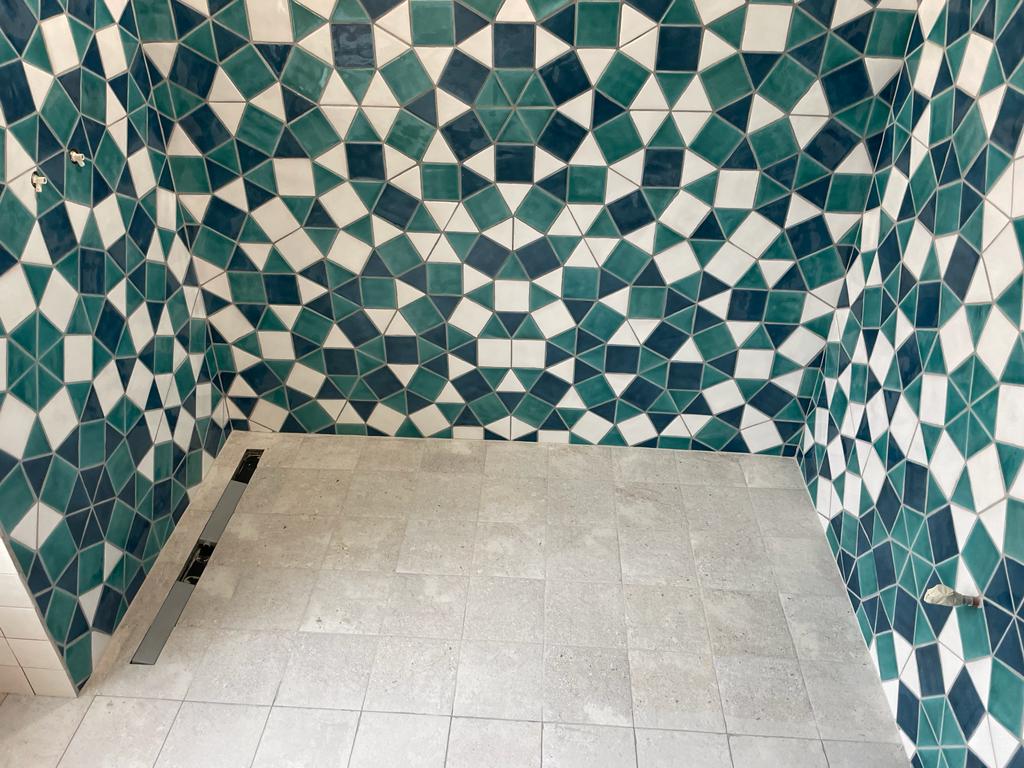
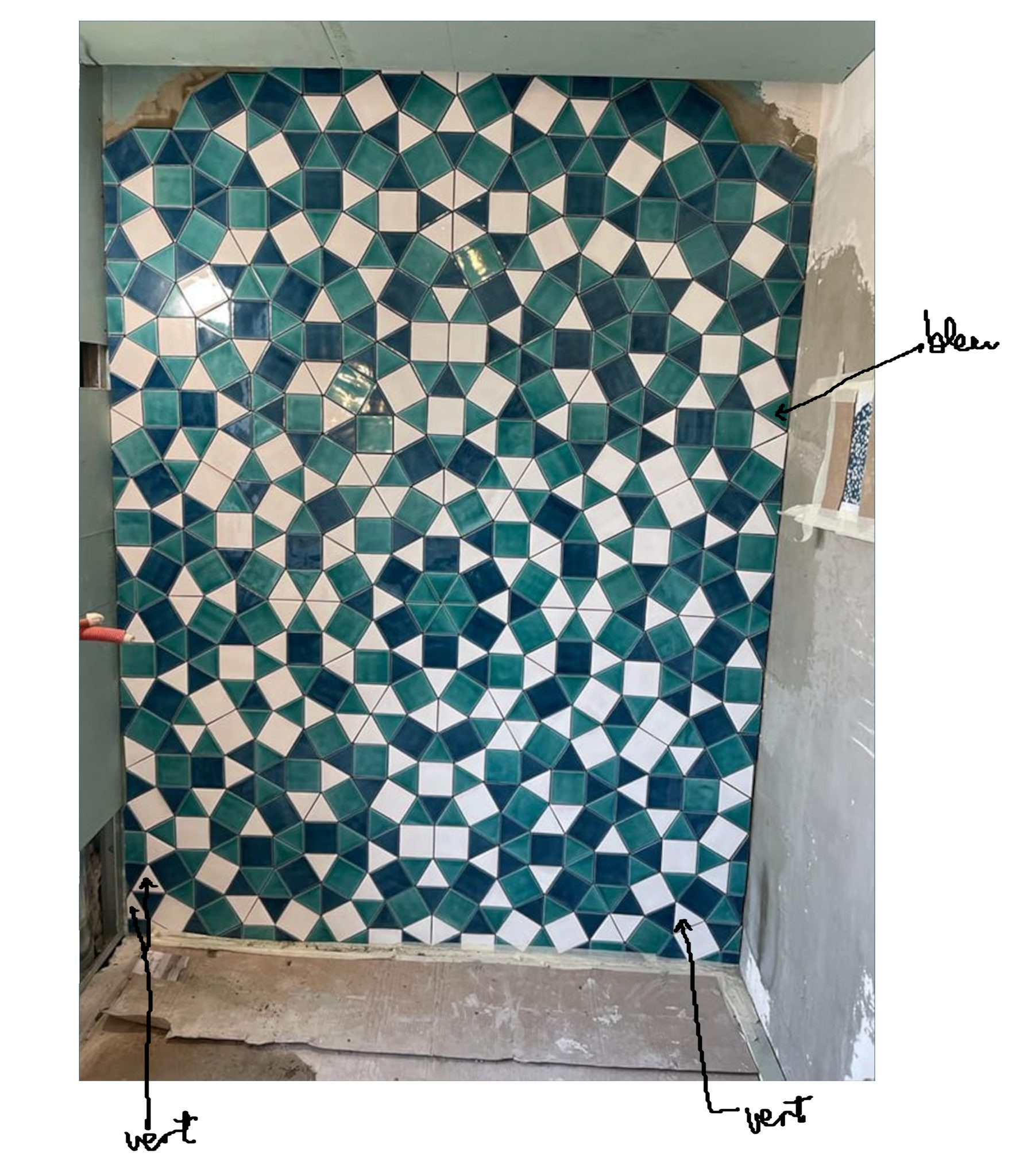
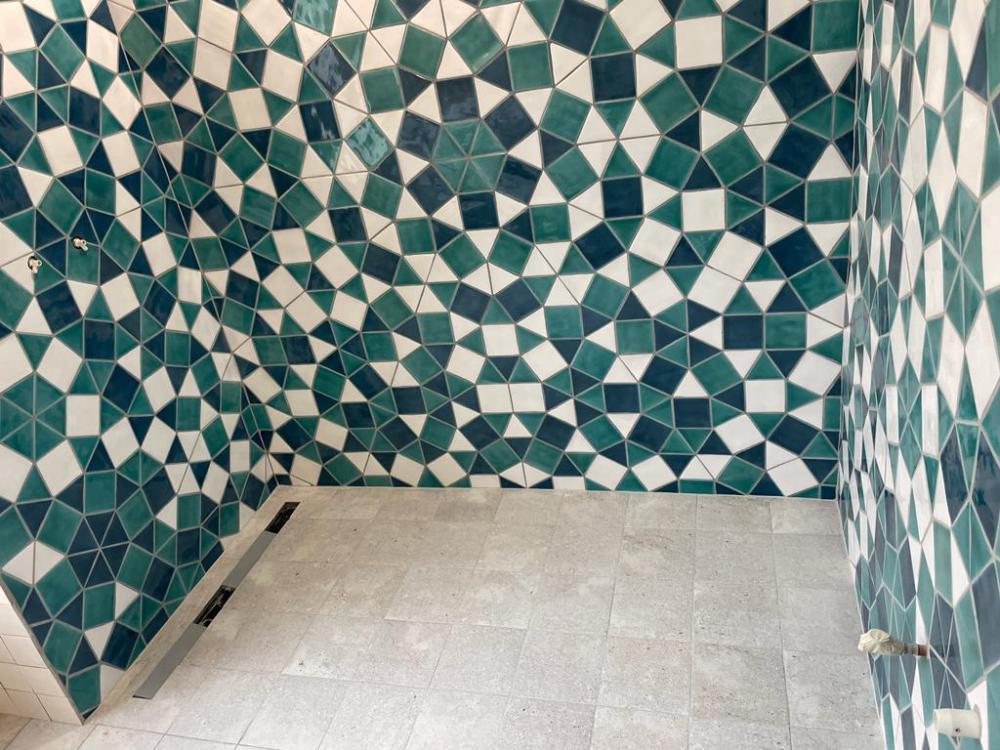
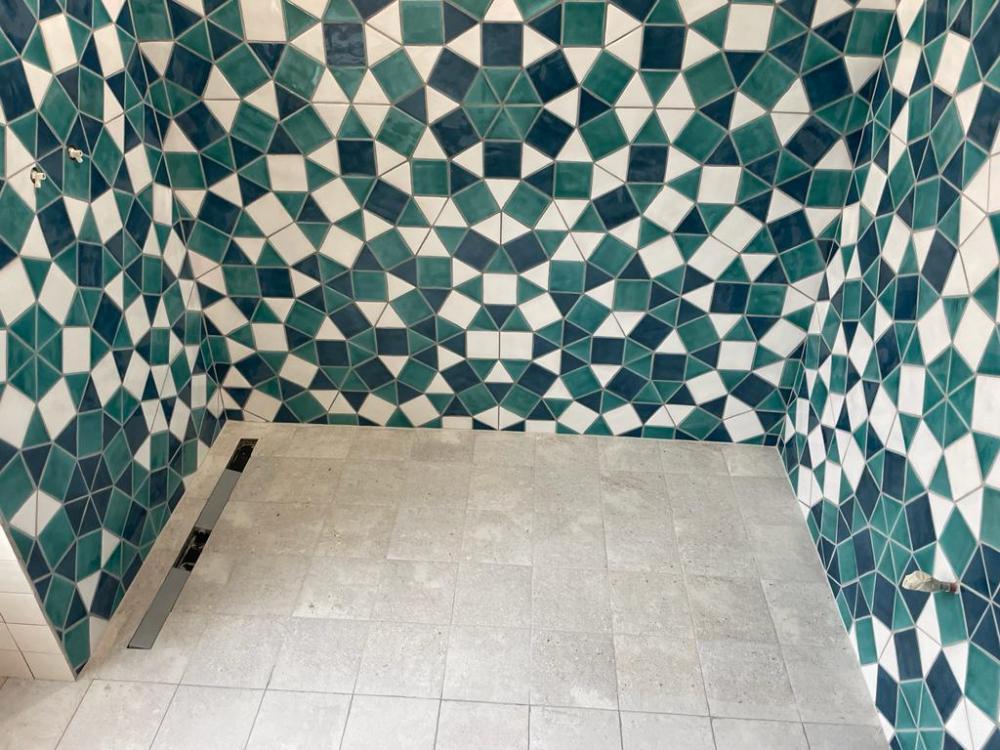
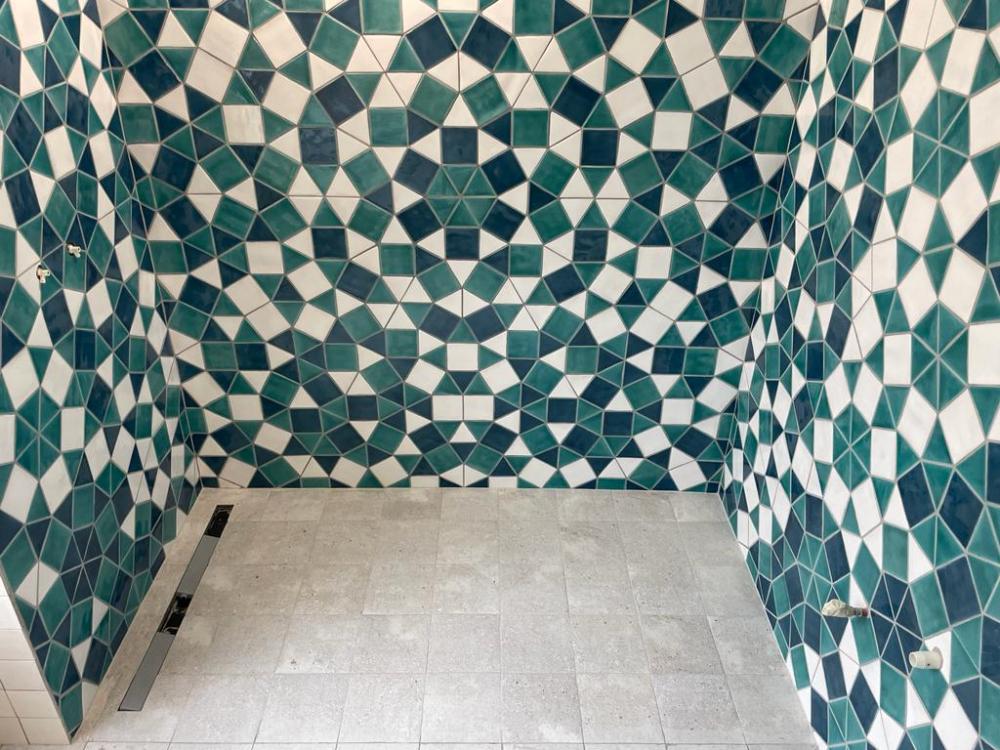
(Another cause of the asymmetry is that I have more teal tiles than white or blue tiles. I ordered more teal tiles simply because I liked the color!)
-
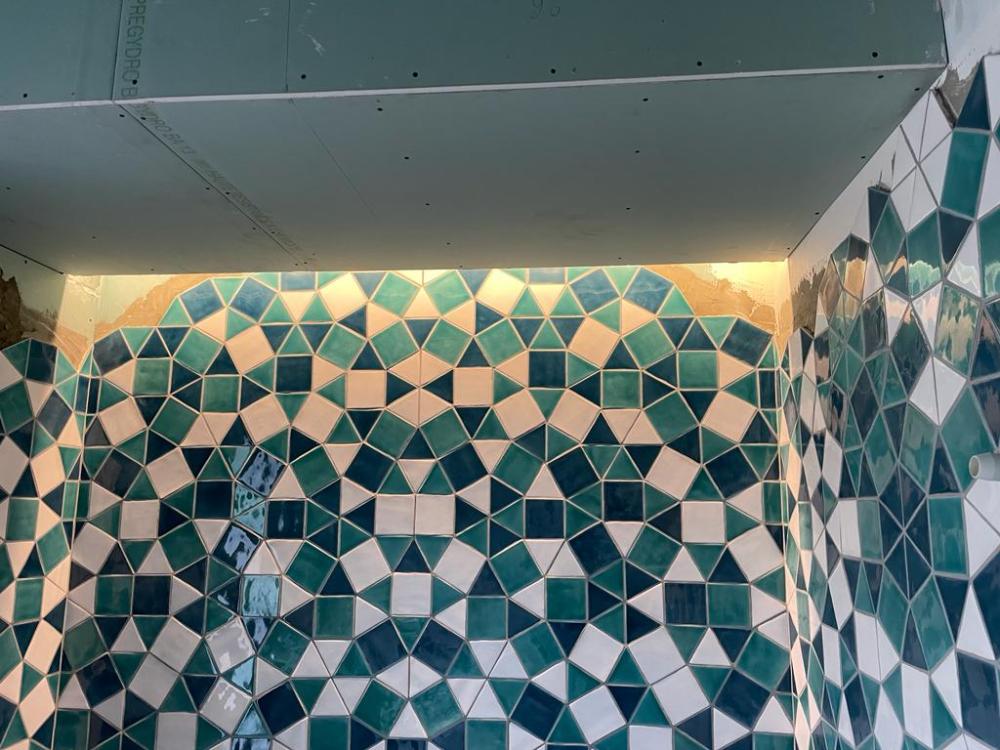
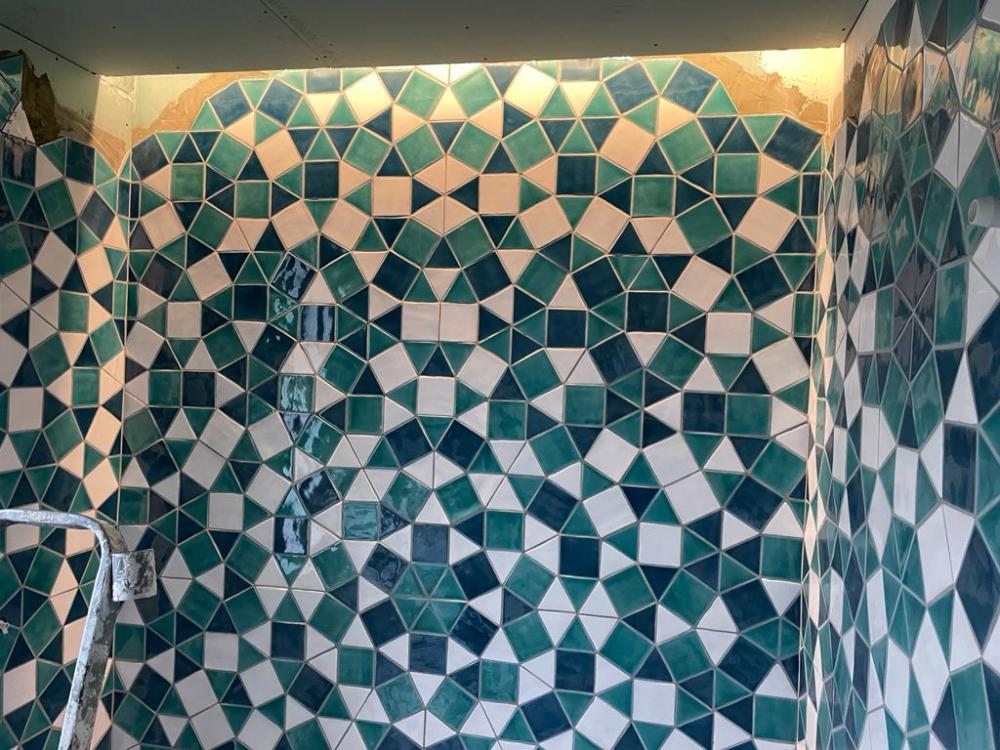
That's on purpose - the central circle (including the central panel but extending onto the sides) has D_6 (dihedral group) symmetry, but outside the circle I can do what I want. I thought it would be interesting to color things very freely outside the circle, emphasizing patterns rather attempting a 3-coloring.
-
Time to get a washer and dryer. Miele is clearly head and shoulders above the others... in terms of price. In terms of quality (energy rating, durability, performance, etc.), it's less clear, though it's certainly a top brand. German customer reports seem to suggest that Miele is primus inter pares among washers, but just one of several first-rate brands for dryers. What is word on the street? Does it make sense to get the least expensive Miele washing machine (something like the WCD020 WCS 8kg) or should I look more at other brands? Which brands of dryers (energy-efficient, with heat-pumps and so forth) have an equally good reputation?
-
At any rate, here there is a version with adjustments to the side panels, respecting the work already made. triptych5.pdf
-
Well, sure, I clearly tried to do a three-coloring, but that was going to be strictly speaking impossible due to the D_6 symmetry. And yes, there is a D_6 symmetry which is broken by the imperfections, but that's nothing deep.
-
Update for the sake of fairness: these turn out to be flaws in the design I sent the contractor last week. I had corrected when preparing a hi-res version with the architect - which she never sent to him in the end, or at least not on time. Since there is no mathematical meaning to the colors, and the errors, being on the edges, don't break the effect of symmetry, I think I'll just let the matter drop. I think it's nice as it is.
-
OK, found another error on the edge.