Garald
-
Posts
1113 -
Joined
-
Last visited
Everything posted by Garald
-
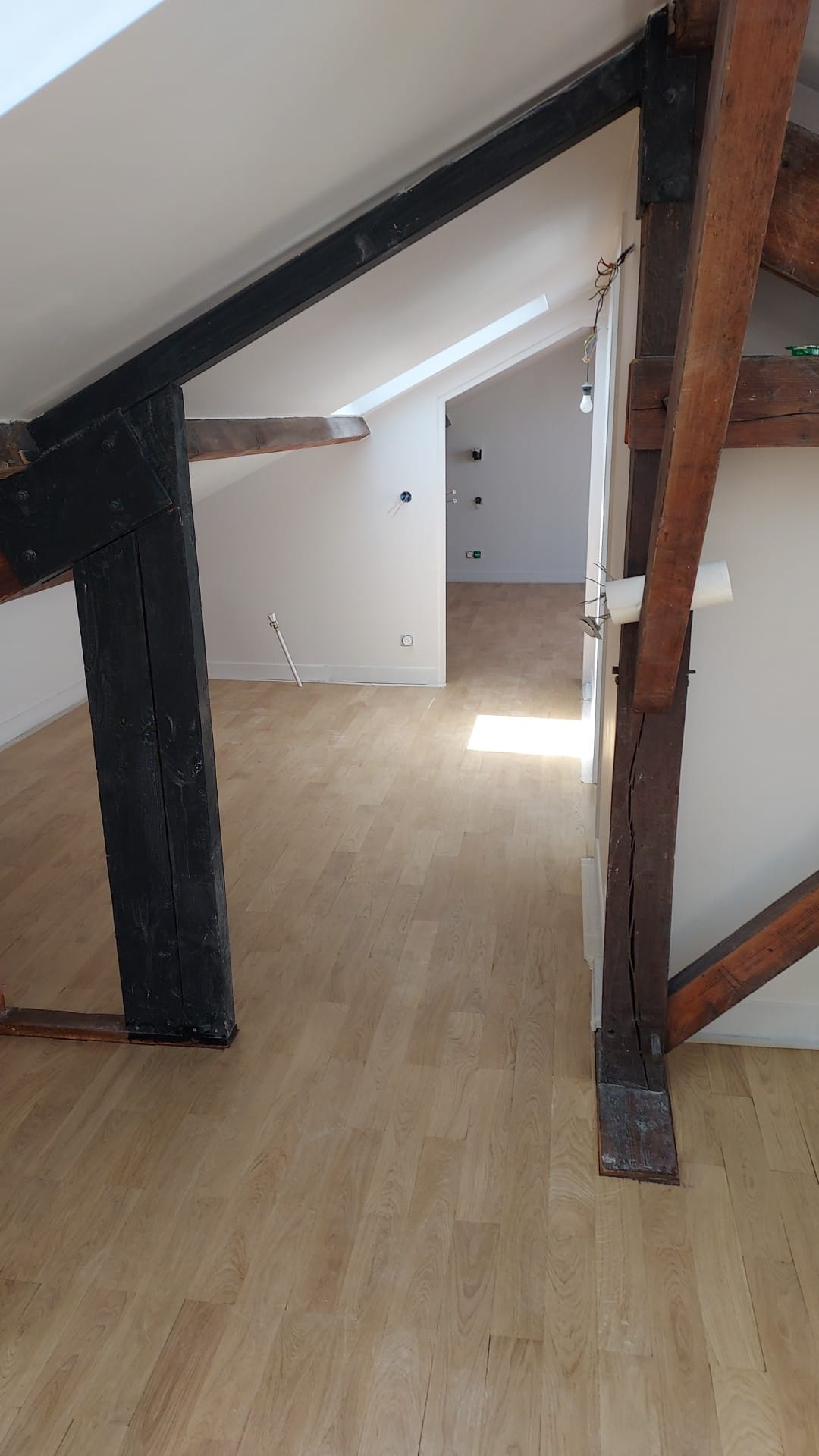
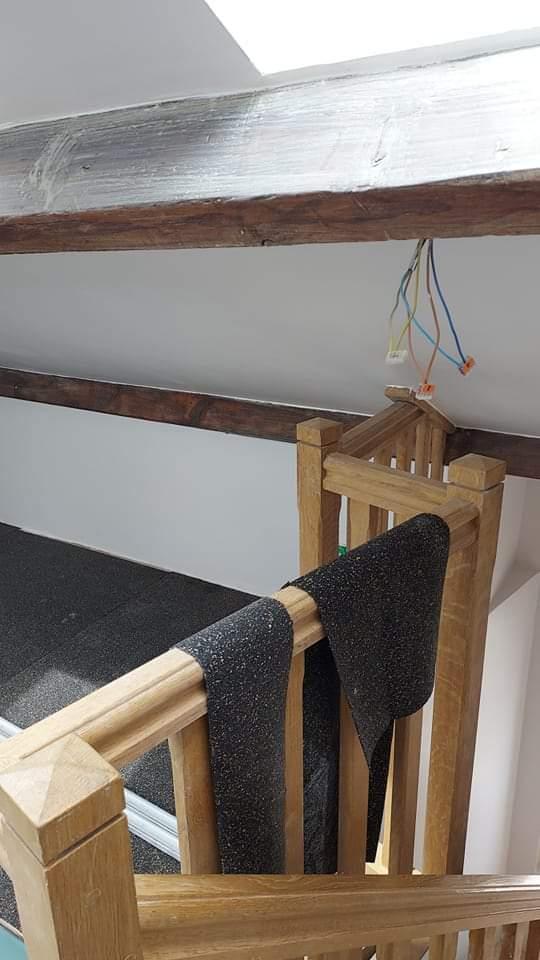
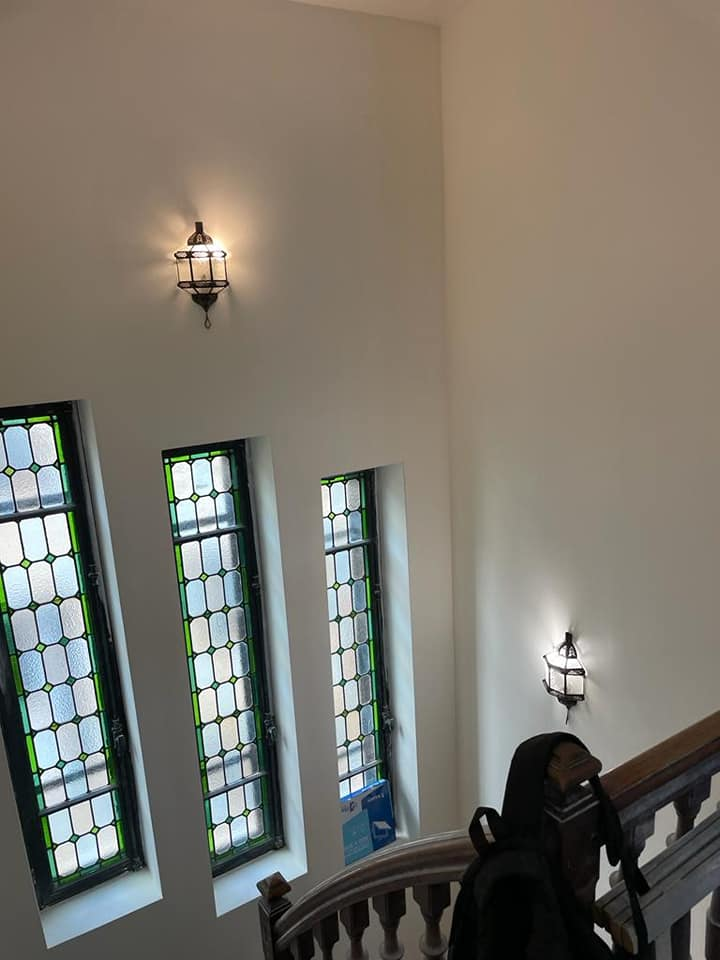
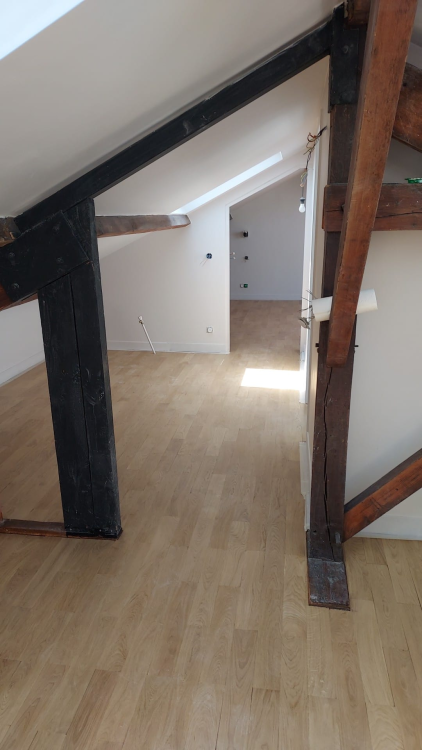
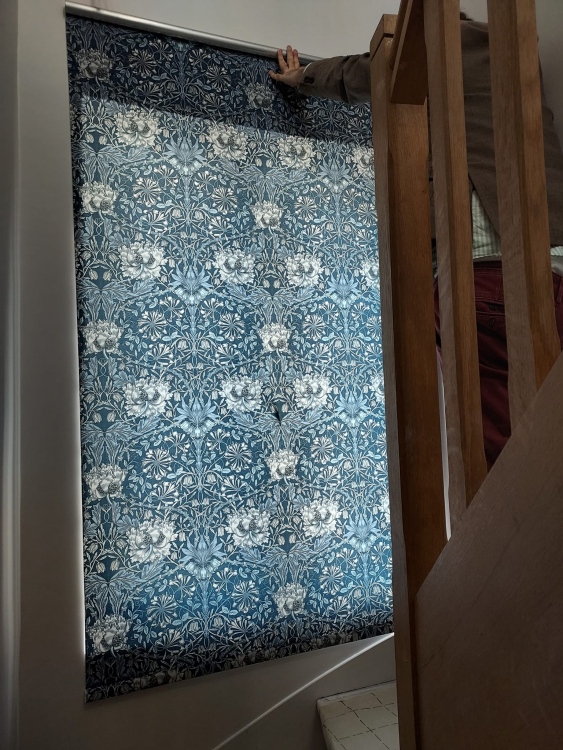
Here's part of the attic. As you can see, there are still a couple of radiators and lights to be attached. I think this is a picture from before the new floor got varnished (something that has just happened or is about to happen). A roll-down William-Morris curtain for the stairwell window. It's thin, but I hope that, if we place it correctly, it should still help a little with heat insulation (the windows on this side are old double-glazing - "old" meaning "10-12 years old").
-
Work on my place looks close to done. Weather in Paris is getting warmer, obviously, with maximum day temperatures approaching 30 C. Even though the awnings and shutters haven't arrived yet, the first floor is actually pleasant and not too warm (in spite of south-facing windows). However, the attic gets noticeably hotter, and I'm a bit concerned about what it will be like in July and August. As I've said in previous posts on this subject: my attic (where a bedroom and a home office will be) has a roof with insulation basically from 10 years ago (R about 4 I think) - the contractor just took out the rockwool that had gone black and replaced it by fresh rockwool; the walls/"combles perdus" have been newly insulated with BioFib (hemp-based) and cellulose, respectively. I've also installed a bunch of skylights (Velux brand; models MK04, CK04, ). If I've indeed got the precise kind that I was supposed to get, they are meant to block 77-80% of heat in summer (or so says the technical information). It's obvious that they are indeed not clear windows - they look that way from a distance, but they let a very blue light through. Still, that doesn't seem quite enough... Obviously, I'd prefer outside shades to inside shades, since inside shades would just create a mini-oven between themselves and the window (and a reflective material might not help much). What about this sort of product? https://avosdim.com/store-exterieur-pare-soleil-fenetre-toit-velux.html?utm_campaign=comparateurs&utm_medium=site&utm_source=google_fr&gclid=CjwKCAjwsvujBhAXEiwA_UXnAOMXDSG4_y8X1SJ-8lUU__alaLn3Rkym0zNZ8HD7HwlsYrdCT3IQsRoCFSUQAvD_BwE&fbclid=IwAR3QJSqK_8oDtP7YTkQnZIe67Qz58UDkM4ZCHgQXR6VVsIEPTs6B6DzWccc#EXTV100G Should it work? How inconvenient is it? (I imagine people would pull the shades up and down only a few times a year rather than daily?). Do people here have experience with this sort of thing?
-
Heavy is good for this purpose, no? Only mass stops lower-frequency noise.
-
Good point. I don't want the bookcases to go quite all the way up, anyhow, as then the mouldings (which the workers somehow managed to reinstall after putting in insulation!) would be hidden. I was thinking of letting the bookcases be open on top, and making the last shelf structural.
-
(But is the Shaker style in the above (with dovetailing and so forth) something I can reasonably ask from a carpenter? I'm a total beginner in these matters - up to now I've only ordered and assembled kit furniture, mostly IKEA.)
-
Right, the learning curve seems to be such that I am sorely tempted to do things in Python, with a 3D polygon library. (I just wasted the better part of the day getting familiar with Sketchup.) I can then just give a link to the html file to the carpenter - he'd be able to rotate it and so forth.
-
Update: the contractor treated the floor in some way and then put in some sort of magical squishy membrane before laying hardwood. Apparently it all works nicely (I last was on site after they started laying flooring but before they finished). Maybe the material used looks familiar?
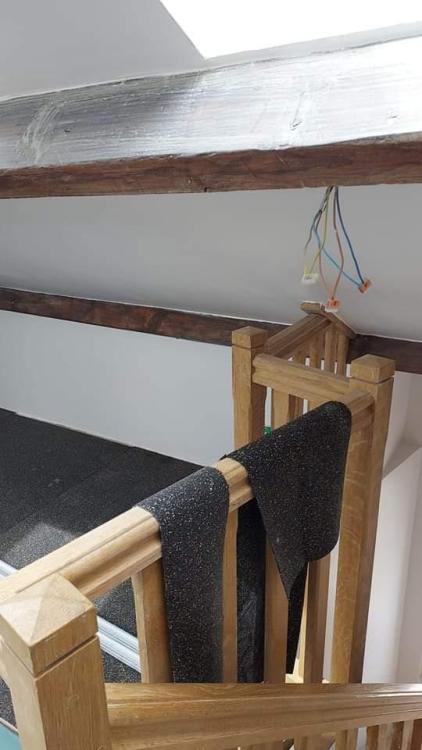
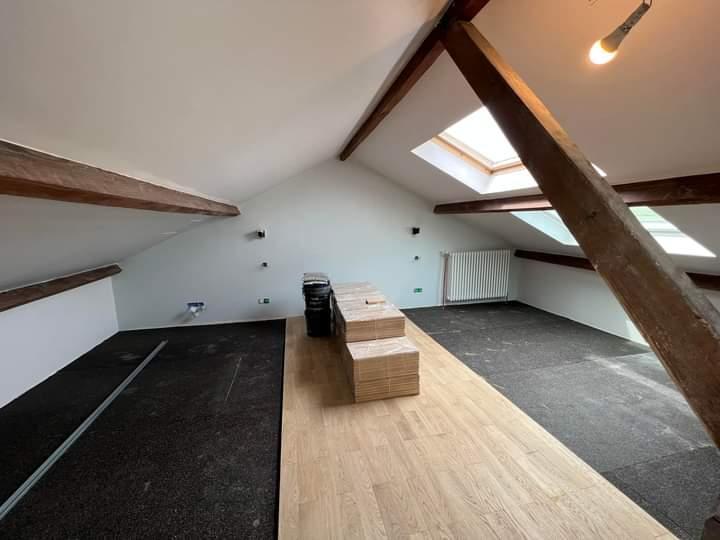
-
It seems I'll be designing my own built-in bookcases. a) Any tools you recommend - preferrably free-software ones? I've seen the online version to Sketchup - it's free to use, but not free software strictu sensu. b) I imagine I'll just sketch the bookcases and leave the joinery details to the carpenter/joiner (menuisier). I'd like to use either pine or (if possible) one of the less expensive hardwoods (such as ash). I rather like the idea of Shaker-like construction (at least as adapted in books for amateurs), but I do not know whether that's realistic - is it skills most joiners have? Here is an example (from Thomas Moser's "How to Build Shaker Furniture"):
-
FLIR 1 looks neat. I can ask about borrowing or renting an imaging camera. Sigh. I wish I had asked this a month ago. Temperatures in Paris will not drop below 7C for the next month, meaning, most likely, till September. Even for 7C, I'd need to stay awake until 4am or so next Tuesday...
-
The renovation saga is slowly coming to an end. The first floor and attic will be done soon - only a few cosmetic details (last coat of paint) remain, oh, and the awnings and shutters, which are taking forever to arrive; substantial work remains to be done only on the ground floor. The architect and I thought and talked a fair bit about thermal bridges, and I ended up doing more than she advised (and paying extra for it, obviously). The fact remains that our assessment tools were (a) opening up walls and seeing that insulation was grossly insufficient or nonexistent, (b) using a simple wall thermometer (the one that shines a bright red dot), (c) feeling walls to figure out whether they are cold or damp. Is there a way that I could find out reliably (and affordably) what thermal bridges remain now that the renovation is largely done? It may be too late for anything other than a postmortem, at least on the two top floors, but I'd like to have a way to evaluate the result - and it's not impossible that I'll carry out a second stage of renovations a few years down the road (replacing the attic roof by a higher and better-insulated one, or even adding an extra story), so I'd like to know where I am at.
-
PIV, heating and cooling: pros and cons, can and can't
Garald replied to Garald's topic in Other Heating Systems
Yes, it's installed now - but we've chosen to activate only the pre-heating, not the cooling. The heat-pump installer contacted Mitsubishi technical support, which advised us against using cooling - the heat pump would have been forced to switch between cooling and heating functions too frequently. So, in the end, we went with a heating-only heat pump. Not sure how much the VMI unit is supposed to dehumidify. Of course it does filter air (a good idea in the Paris area!). -
Hi, So, I need to make several decisions about curtain linings. (I'm getting mainly what I take are typical English curtains, with the "pocket" for the lining included - think of a vertical duvet (but if my "take" is correct, I do not need to explain things in this forum. They are also mostly William Morris, but that's a separate issue.) 1) There is a curtain that will go flat against a metal door, covering its edges. The idea is to provide heat insulation primarily by stopping convection - there's probably no fabric or material such that a 1cm-thick layer of it provides more than a modicum of R, after all. What should I use here? Polar tissue? My rationale here is simply that the curtain will as some sort of cardigan or jacket. 2) Then there are the curtains that go on the library windows, overlooking a busy street. The idea here is to provide a couple of dB's worth of sound insulation (on top of what the new double-glazed windows, optimized for noise reduction, provide). What to use here? I don't imagine loaded vinyl can go inside a curtain lining. Some heavy fabric? I'm not sure how that would work out. 3) There will also be a shade for a staircase window that (unlike the windows in 2) will not have outside shutters. I suppose I should worry about keeping heat out in this case (though, because of the orientation, it may not be a major problem). Should I just put some reflective material on the other side? How? Is there something flexible enough that it can go on the other side of a Roman blind?
-
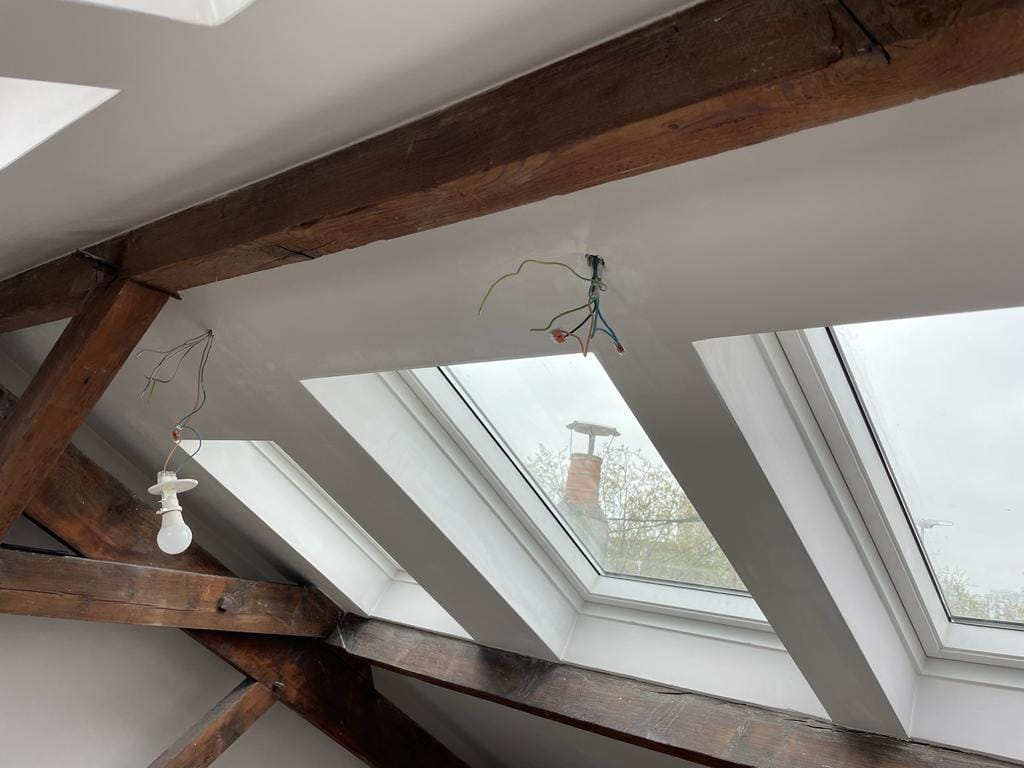
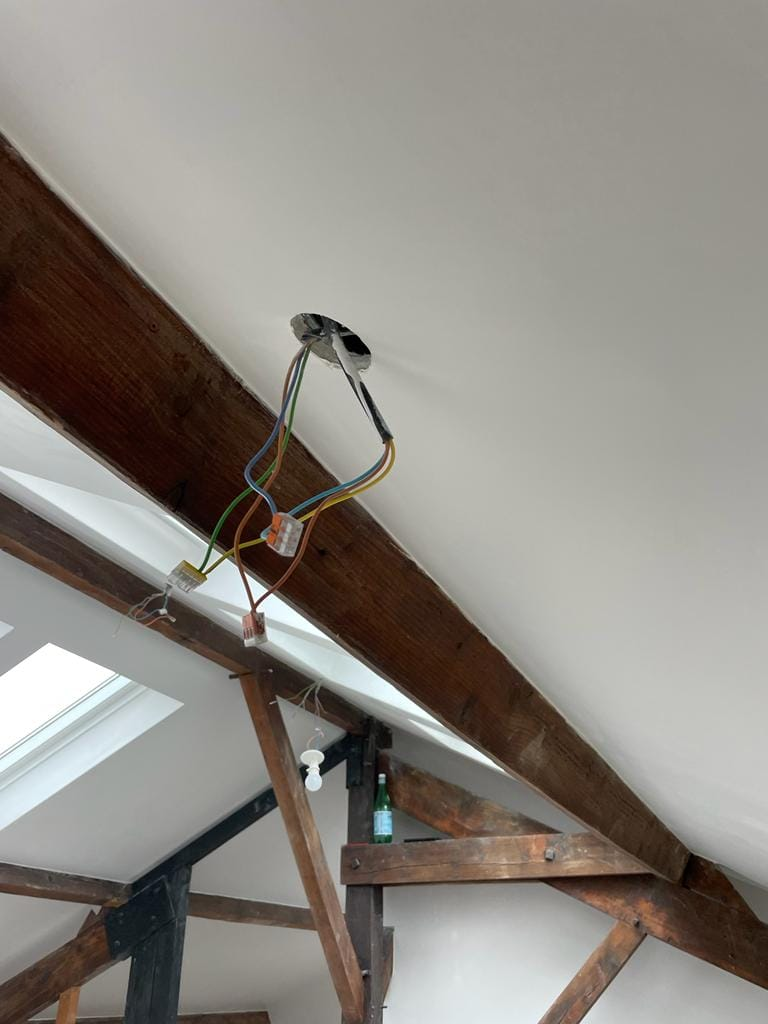
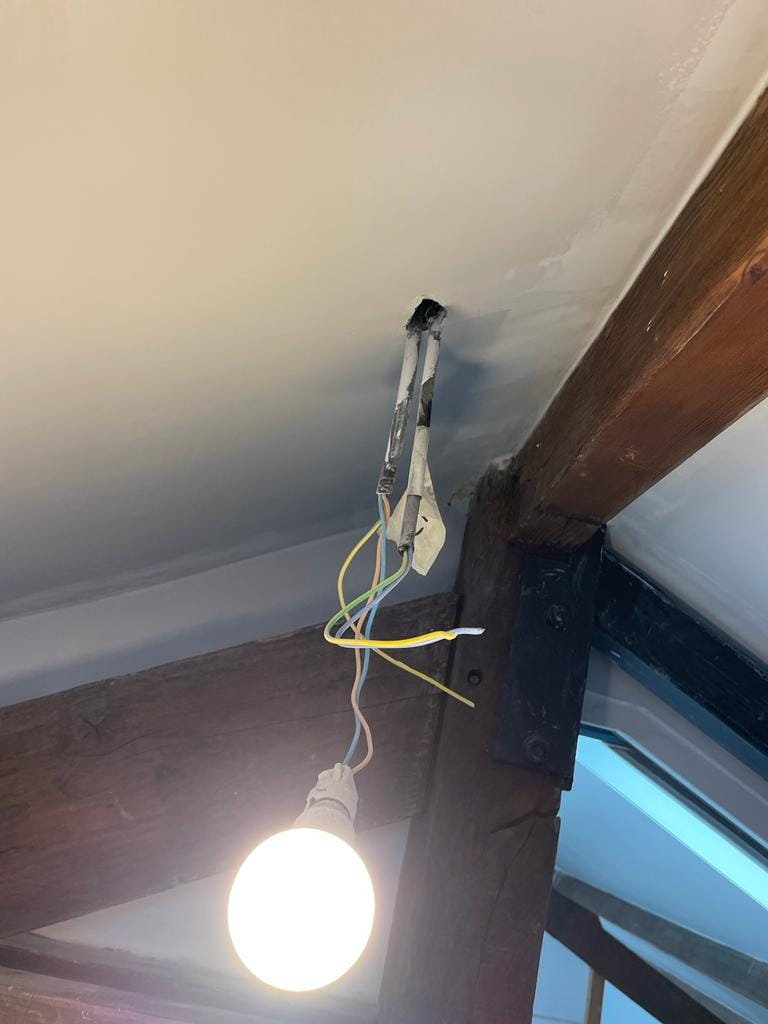
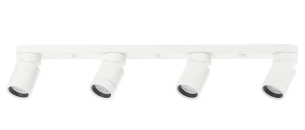
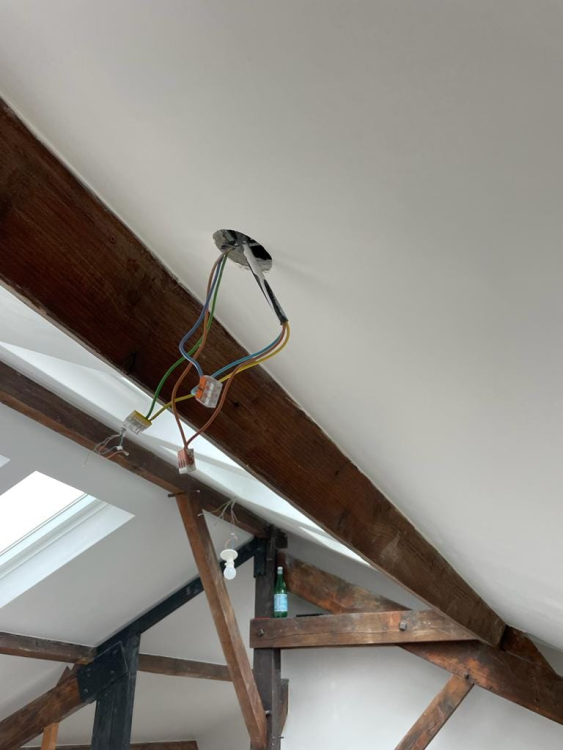
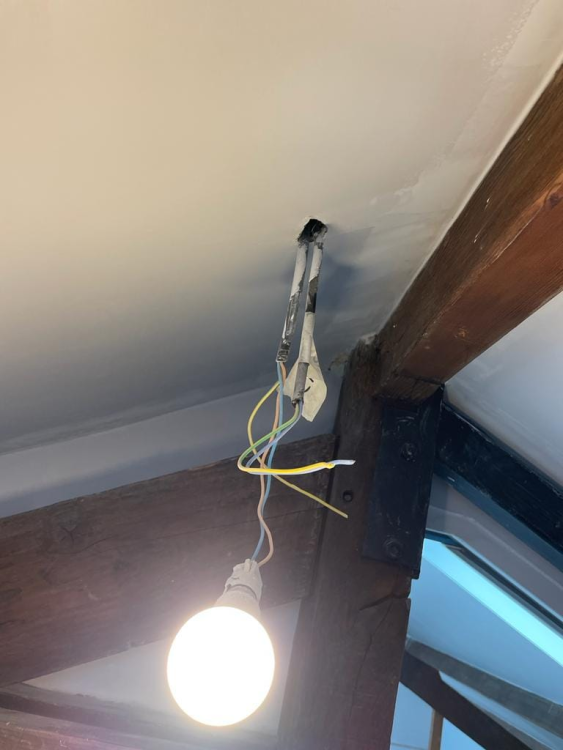
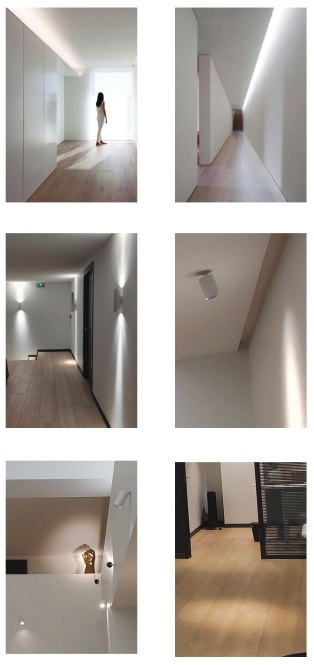
So, I've been choosing lights, and the contractor has been installing them. (The architect is now busy with other projects.) I don't think we've done too shabbily, given that I'm a total beginner: I've got things underway in the entrance and the first floor - I'm using a combination of IKEA Nymane and unobtrusively Moroccan lamps (like the ones in the picture), and I'm also indulging in two Tiffany lamps for the library. However, I am a bit of a loss as to what to do in the attic. There isn't much height to work with there (indeed almost all lamps will be wall lamps of some description, though we are often talking about inclined walls - what to do then) and I also don't have a clear idea of what works in that space. I've chosen a delicate color scheme there (two shades of white - basically Farrows and Ball's Great White and Borrowed Light, cloned by a less expensive brand; given all the skylights, the first one comes through as neutral, and the second one as a subtle light blue; then there's gray in the bathroom) and would also like not to upset it. Here are the places for the two ceiling lamps. What does one even put there? I think the highest point is barely 2m20, if that. I suppose the one on the right could be something like this:(somewhat appropriately, since this part of the attic will be a home office) - but what would I ever put on the one on the left? Or here: Or in the attic bedroom: Any sort of idea or clue would be helpful. I just don't know what to do with lighting in an attic. (The following may be a separate issue or not.) Now, looking at my architect's old notes for inspiration, I find: (I translate) "points of contrast between floors and walls... General lighting: indirect LED strip lighting, floor lamps and wall lamps [...] accent lighting" and I find this picture (no doubt cut and pasted from a catalogue): Now, the wall lights are actually eerily similar to the ones I got for a very reasonable price from IKEA (advised by my girlfriend's radiologist aunt - not sure there's a connection), but I'm simply confused by all of this strip lighting. The only time I've seen lighting that is at all like that provided by strips in these pictures has been in movies, to indicate "upper echelons of the bourgeoisie breed psychologically twisted children": the lawyer's apartment in I nostri ragazzi (https://www.imdb.com/title/tt3561348/ ), for instance. Perhaps the two problems are connected - could this "strip lighting" be the answer to what I ought to be doing in the attic? Or should I just leave strip lighting to the underside of kitchen shelves, and think of a more normal solution? (What would be a normal solution?)
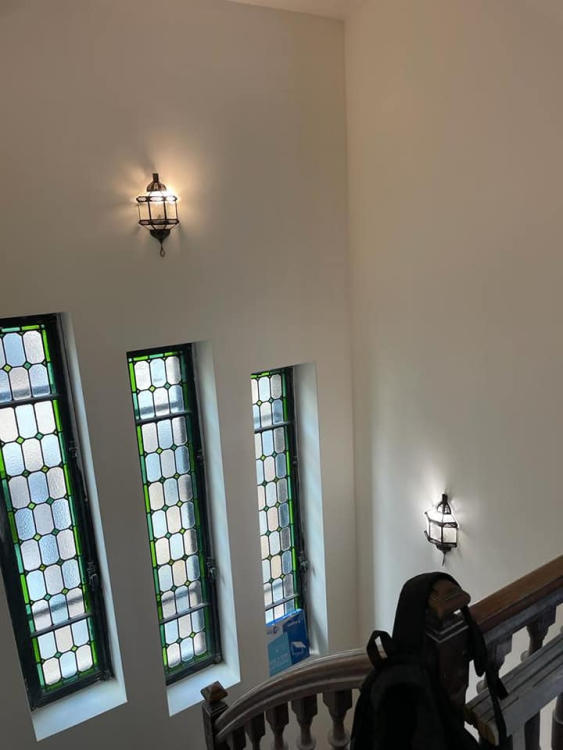
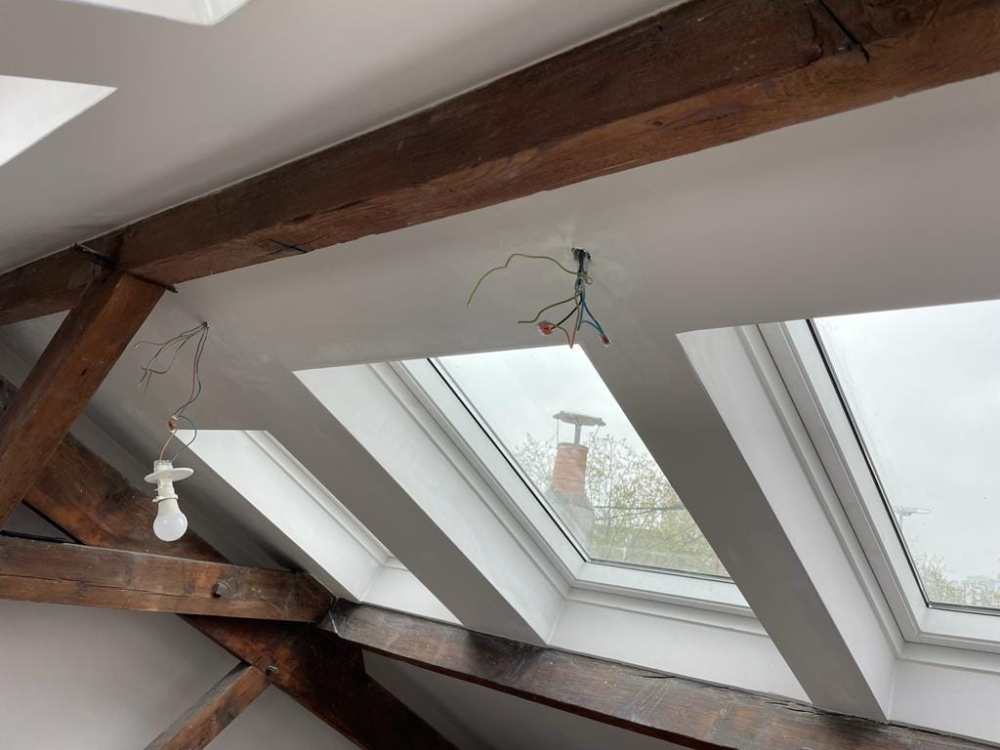
-
I'm considering getting some MLV (mass-loaded vinyl) for a cunning plan (OK, soundproofing). This would not go within the insulation (which is already done), rather between the wall and a full-wall bookcase, and so I want it to be fire-proof. There's mass-loaded vinyl that is fire rated class A by US standards: https://www.enoisecontrol.com/products/fire-rated-mass-loaded-vinyl/?fbclid=IwAR2CShdRwd0FAdXGbcmYP6G4-BNtWdr-eNjRcKVrly3TxEZMr3Ba-ZlhwHY#:~:text=eNoise FR-MLV is a,walls%2C ceilings%2C and floors Can one get any such product fire-rated class A by *European* standards? (Extra points if one can buy it in the EU.)
-
But what *is* the conclusion? That with 18cm of insulation, it is likely that almost all the noise is coming through the window, even though it has good noise-reduction properties (for a double-glazed window)?
-
Not to beat a dead horse (an activity at cross-purposes with noise reduction), but don't we need: - mass (books) - decoupling (bookcase that is only loosely attached to walls, and that only at a few points) - absorption (provided by something like, well, cork, or rubber, or acoustic foam, between the bookcase and the wall)?
-
There *is* such a thing as Peruvian cloud forest, and some farmers in that general region do grow coca (partly for legal consumption within the country - tea and chewing coca - and partly for ill-advised, illegal sales to cartels - some Colombian - which of course get the lion's share of the profits). Hard to do that without hacking part of the forest first, though. Same goes for cash crops that are made into completely legal drug foods (coffee, cocoa) - there's more and less responsible agriculture, but of course there's no such thing as zero-impact. That's off-topic, though. More to the point, there are no Mayas in the Peruvian cloud forest, unless they went there by plane, as tourists.
-
The *Peruvian* cloud forest? More seriously, while I can't put this kind of "sonic crystal" in my library's windows, maybe something like this could be done for heat pumps. They are getting quieter and quieter, though.
-
I see. But would it then not make a difference whether I attach shelves directly to the wall or whether I have made-to-measure bookshelves that are just attached to the wall (loosely?) at a couple of points? Just a data point - the kitchen, where insulation is thinner but the masonry is the same, is noticeably noisier. So, clearly quite a lot of sound gets through the masonry (and half the insulation, say). I'll get sound-reducing drapes- hopefully they will help even when not drawn, since presumably much of the noise gets in through the edges, no?
-
Well, by the time street noise gets through layers of brick and 18cm of insulation, it is no longer airborne, no? We are trying to protect the inside from outside noise, not the other way around. (We are using weight to insulate the ceiling of the laundry closet, for instance.) Meaning of several different densities? Then hiding mass-loaded vinyl behind the back panel of a bookcase sounds like a good idea, no? (Of course what really should have been done is put it behind the wall panel, no?)
-
Sure, heavy curtains for the windows. But what to to put behind the back panels of built-in bookcases? (Heavy vinyl isn't nearly as expensive as 2cm-thick solid wood (say 3cm if it is pine), no? What should I expect to pay for mass-loaded vinyl that is 10kg/m²?) For separation, what would be the solution? Have the shelves be attached to the back panels, not to the walls, and have the back panels be bolted to the wall (for safety) but not otherwise attached?
-
So, in the end, *what* should I put behind the bookcases? If mass were the only thing that mattered, then the best thing (for given thickness, at a reasonable price) would probably be mass-loaded vinyl, no? (Better ask the carpenter if the shelves can take it - unless of course it's pasted on the wall, though it's a pity to do that to a freshly painted wall.) Then it would be rubber, and then wood - and cork would be absolutely terrible. Yet cork is reputed to be a pretty good insulator. So, what gives?
-
Right, it could look a bit weird, *if it were visible at all*. Better get something that can be hidden tightly behind build-in bookcases. That's why I was suggesting cork - but then I'm not sure that's actually best. Say I can choose any material I want, as long as it's 1cm thick, uniformly so. What should I get? I'm not there right now, but this looks reasonably thick. (Yes, I was looking at samples for possible drapes...) I will ask for the documents, but I'm positive this is double-glazing that is especially made for soudn protection.
-
This is actually a first floor. The attic above it also belongs to me - it's home office space and bedrooms. Street noise isn't really an issue there, though the occasional sound of a plane is (there is a nearby airport). Different set of issues. I did ask the architect to specifically choose double glazing with sound-resistant specifications. I see in her plans that a "coefficient phonique" (decrease in noise?) of at least 35dB was specified; I *think* she got 38dB. As I said, there's a very real difference between noise in the kitchen (where the windows are the same, but where there's much less BioFib) and noise in the library. Well, we worked on those for the heat insulation, but nothing is perfect. True. At the same time, if I could get rid of the motorcycle noise, I could live with the rumble of buses (which go by only every 10 minutes or so, at most). Where should the tapestry go? Not behind the bookcase? At any rate, the recommendation would be what - to get a bookcase with a solid-wood or MDF back panel, rather than a thin panel whose back I would cover with cork? I'm trying to minimize depth (for usage reasons).
-
PIV vs sound insulation within the apartment: can't have both?
Garald replied to Garald's topic in Ventilation
Right, but does it also mean we shouldn't bother to insulate doors? Also - would a door brush strip at the bottom help, or would it just necessitate a larger opening (for air flow to be sufficient)?