Garald
-
Posts
1113 -
Joined
-
Last visited
Everything posted by Garald
-
My house saga is reaching its end (I hope!) and now I have to think about bookcases. Constraints: a) I am on a budget b) I like wood c) I'd like to minimize depth in certain places, since I don't have infinite depth (and my nontechnical books tend not to be large) I suppose I'll do one wall built-to-measure, and I'll use kit bookcases for the other walls. The problem that I am seeing is that there seem to be almost no solid-wood bookcases in the market that are both tall ( > 200cm) and shallow (<= 25 cm, say). In fact, I can find only one, and its has mediocre reviews: https://www.amazon.fr/dp/B08GLV1KPD/ref=twister_B09Y26TQ31?_encoding=UTF8&th=1 Is there a good reason for this? That is: is there something about wood (hard wood, even!) that prevents one from building a structurally sound bookcase that is both tall and shallow?
-
Hi, I decided to cover some metal doors with lined curtains (well, no lining yet) so as to limit convection. Workmen just installed the curtain rails (I'm very much not a handyman)... and installed the curtains as you would on a window, i.e. in an ondulating way. Wouldn't it make more sense to have the curtain flat against the surface, so as to minimise air flow? Also, will lining help at all? All it can do is change a bad R very, very slightly better - it doesn't help stopping convection, AFAIK.
-
Ceramic floor for bike shed/storage room (ex-garage)?
Garald replied to Garald's topic in General Flooring
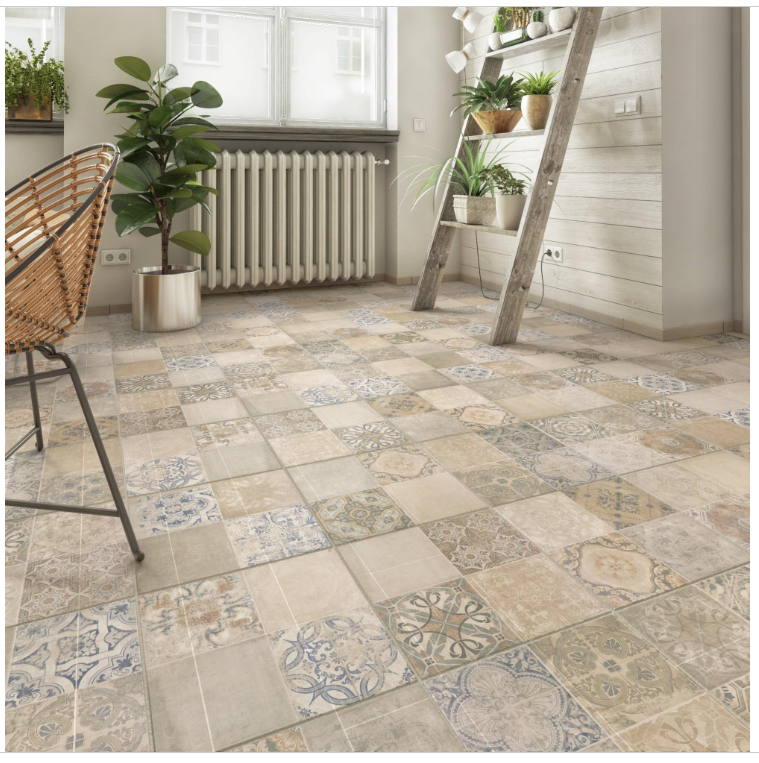
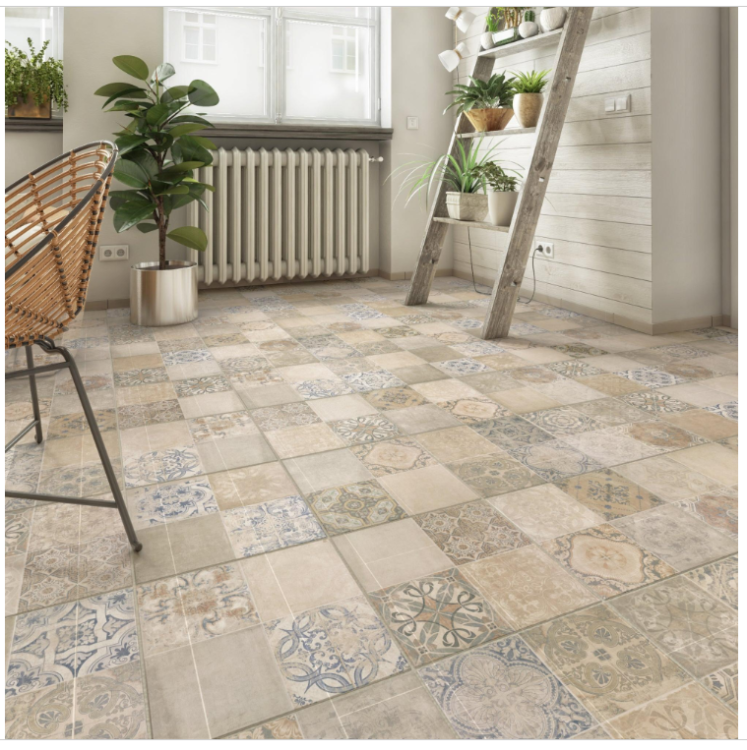
Better use porcelain tile, no? https://www.leroymerlin.fr/produits/revetement-sol-et-mur/carrelage/carrelage-cuisine/carrelage-cuisine-sol/carrelage-effet-ciment-bleu-patrimony-l-20-x-l-20-cm-89122943.html?fbclid=IwAR15xMYR49KeyNlYbPUm5JKHZIoB2fyNK3APLKLft_CqpQgSDd7WCMMkimc It says "carossable" (i.e. you can drive your carosse on it, or, if you live in this century, your automobile). (To nod: right, our messages crossed each other.)
-
We've made the garage a bit smaller and put a wooden door. We'll be using it as a bike shed/storage room, and of course it is also the place where the internal unit of the heat pump happily lives. Now we have to think what to use as flooring. (Before, it was naked concrete.) The contractor suggests linoleum (doesn't sound to good to me), but also says that tiles would be good, as long as they are at most 1cm thick. Are regular ceramic (not terracota!) tiles an option, given the intended usage? I suppose a tiny electric car could get in some day, though I don't foresee it. Example: https://www.leroymerlin.fr/produits/carrelage-parquet-sol-souple/carrelage/carrelage-sol/carrelage-sol-medio-effet-carreau-de-ciment-alcazar-l-45-x-l-45-cm-artens-80084501.html?megaBoost&at_medium=Sea-Paid&at_campaign=PD-06-SOLETCARRELAGEMURAL-SHP-BOOST&at_source=google&at_market=M4&at_section=R6&at_campaign_id=20325435523&at_campaign_type=SHP&at_campaign_sub_type=BOOST&at_account=FIL-ROUGE-SHOPPING&at_account_id=921-620-5076&gclid=Cj0KCQjwwISlBhD6ARIsAESAmp5nZTQzgPXF_dvWjZ5vPGowq97gar0t6r9B8K3FQk_v__XYQjM5sAAaAmjqEALw_wcB&gclsrc=aw.ds&fbclid=IwAR2hACIxNIf-6pMLXPS3jErjy5tzYhLK987aA6ULzDw9Xn9B1ma5ZqLsd3g Or would I have to get some special kind of tile? This is indoors.
-
PIV: no outlet in attic; how to make it less stuffy?
Garald replied to Garald's topic in Ventilation
Right, but in an attic it's the air that has been in the first two floors already (and has gone through a tiny staircase - I may have to rethink the idea of putting the cat's litter box under the said staircase, not that the cat has visited yet). And yes, opening skylights should help, for the reason you mention, and it does feel like it helps. Quite possibly! Hopefully these will work: https://www.velux.co.uk/products/blinds-and-shutters/exterior-sunscreening/awning-blinds -
Work on my place is almost done. Now, I've just noticed something surprising (which wasn't clear to me from the plans): the PIV (positive-input ventilation) takes air from the courtyard and distributes it to the ground floor and first floor, but there are no outlets in the attic (which has been turned into an otherwise very nice place). No wonder the attic feels a bit stuffy, on top of being hot. It's hot because of the skylights, and I'm getting outside shades installed, but that won't help with the stuffiness (which may or may not be in my head), though we can open skylights when we wish, obviously. Is this a serious defect? What can be done about it (other than "open the skylights")?
-
Exactly. I think we already zeroed into the right question, and got an answer; see the discussion above.
-
Of course they have to work harder - on less water, so that doesn't really answer the question. At any rate, it seems we are satisfied now. I was Googling badly :). The two wikipedia pages cited above do a reasonable job (and of course Feynman is very readable).
-
Right, mathematically the two things are the same (- \sum_i p_i \log p_i), though establishing a clear link between entropy in thermodynamics and in information theory (without going through the math, in the sense of saying "well, we can deduce either from a few axioms, and the axioms are the same once you forget what the words mean", or something to that effect) is tricky and not necessarily that useful, from what I understand (though knowing that the math is the same *is* useful).
-
You might not believe it, but entropy does come into play in probabilistic number theory. It shows up uninvited in the exponents of probabilities of various things, once you go way off the center of the distribution and into the tails.
-
Nice! I did take a course on that.
-
Right. If I ever do a second stage of the renovation (raising the roof, insulating the north wall from the outside (the insulation we've put on the inside barely approaches R=4, counting the air gap, and one of the two layers is reflective material - who knows how that will behave long-term), etc.), then I might consider hiring a good thermal engineer (unless I've learned enough stuff on my own by then, perhaps). And of course I should actually make either the remaining volumes of the Berkeley Physics course or Feynman's lecture into my bedside reading - or a more condensed version for more mathematically mature people, if it exists.
-
Ah, the Carnot cycle is also in lecture 44 of vol I of Feynman's Lectures. Of course again this needs to stand on its head.
-
That's interesting (as are all alternative derivations). At any rate, increase in entropy = heat exchanged divided by temperature does the trick. It turns out one can find everything (explained in too many words) in https://en.wikipedia.org/wiki/Carnot_cycle https://en.wikipedia.org/wiki/Heat_pump_and_refrigeration_cycle (put together). Time to look into vol. 5 of the Berkeley Physics Course...
-
Aha, so you are saying you can deduce Carnot's cycle if you know k as a function of the pressure of your gas?
-
Once you have that, you can deduce that the COP in the idealized model (Carnot heat pump) is 1/(1-(T_L/T_H)), where T_L is the outside temperature and T_H is the temperature at which you are heating the water of your system, both in Kelvins, obviously. So, clearly, you want T_H to be as low as possibly, and hope for T_L to be as high as possible, so that the COP is as large as possible. The math was basically worked out by Sadi Carnot in 1824, at least in the simplest, most idealized case. Of course he was working with the reverse situation (how to extract as much work as possible from as little heat as possible) so the result is standing on its head. (If you are running a steam engine, it is better if the ratio of temperatures is high!) PS. How do you typeset math here?
-
I think this is a good explanation of how the difference between the real world and a simple idealized model works further in favor of heating to lower temperatures. In the case of a heat pump, though, lower temperatures seem to be better even in the simple idealized model.
-
Thanks - this is the key bit. Well, sure, this is in an immediate corollary of Newton's law of cooling (which also explains why you need bigger radiators if you are operating at lower temperature). Not sure that's enough to give a satisfactory explanation - it would seem you need thermodynamics for that, and that's later. At the very least you need to know that the change in entropy equals the exchanged heat divided by the temperature, no? I'll read up quickly - I got off the bus at the end of vol 3 of the Berkeley Physics Course...
-
Well, obviously heating a *given volume* of water to a higher temperature takes more energy than heating it to a lower temperature. But why is it more efficient, overall? (Operating at a lower yemperature, you presumably have to heat a larger volume of water.)
-
How do you do this exactly?
-
This is not an answer but a complement to this question. When is the earliest, as in, the earliest in the *year* - how cool does one have to wait for the outside temperature to decrease for it to make sense to use a thermal camera?
-
Hi, Everybody knows that air-to-water heat-pump systems are more efficient if they heat water up to 45 C (say) rather than 60 C. But *why* is this the case? There has to be a simple explanation. (Note: - compare like with like (a radiator system with a radiator system, not with underfloor heating) - no need to discuss the *other* ways in which a lower-temperature system is better (less heat loss through pipes, less corrosion).) Assume basic university physics if needed.
-
Just for fun: getting close to the end of my renovation (pics)
Garald replied to Garald's topic in Decorating
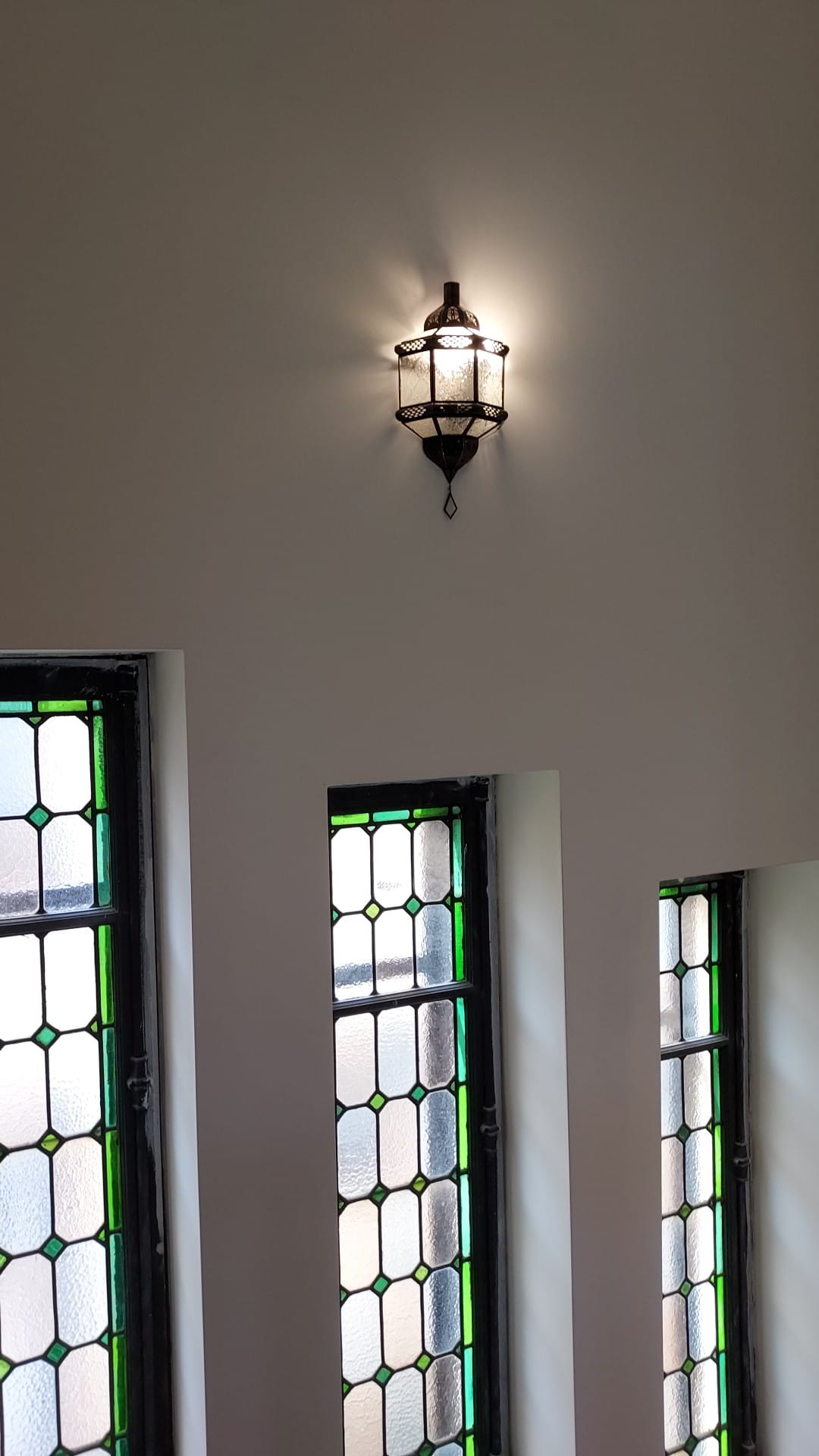
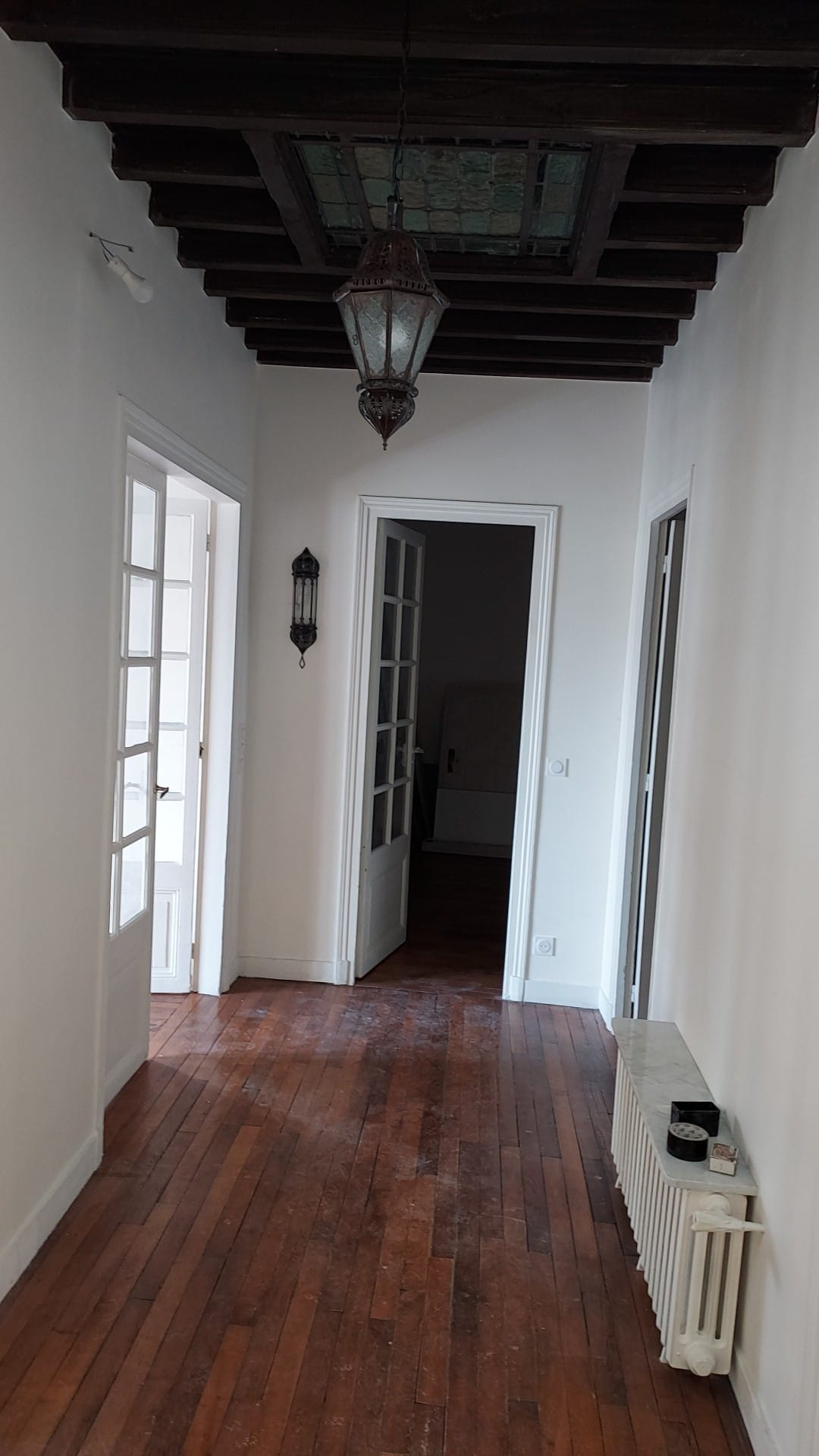
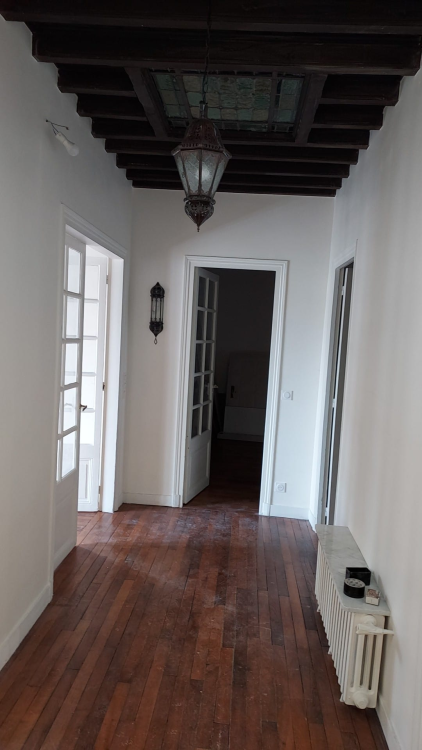
Staircase and corridor: Note: if any of the above seems technically off, please tell me now!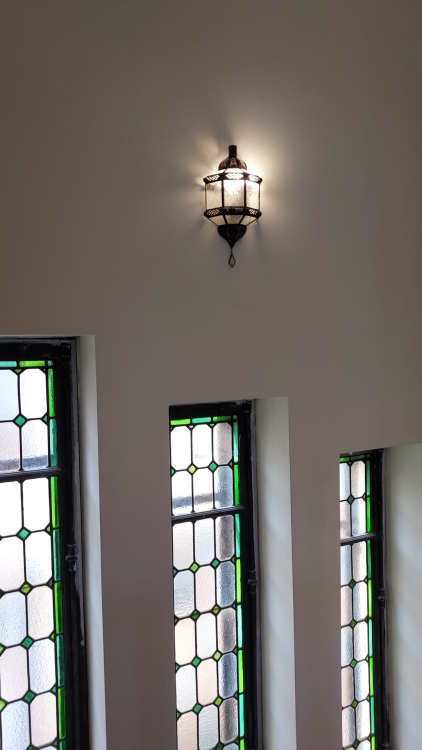
-
Just for fun: getting close to the end of my renovation (pics)
Garald replied to Garald's topic in Decorating
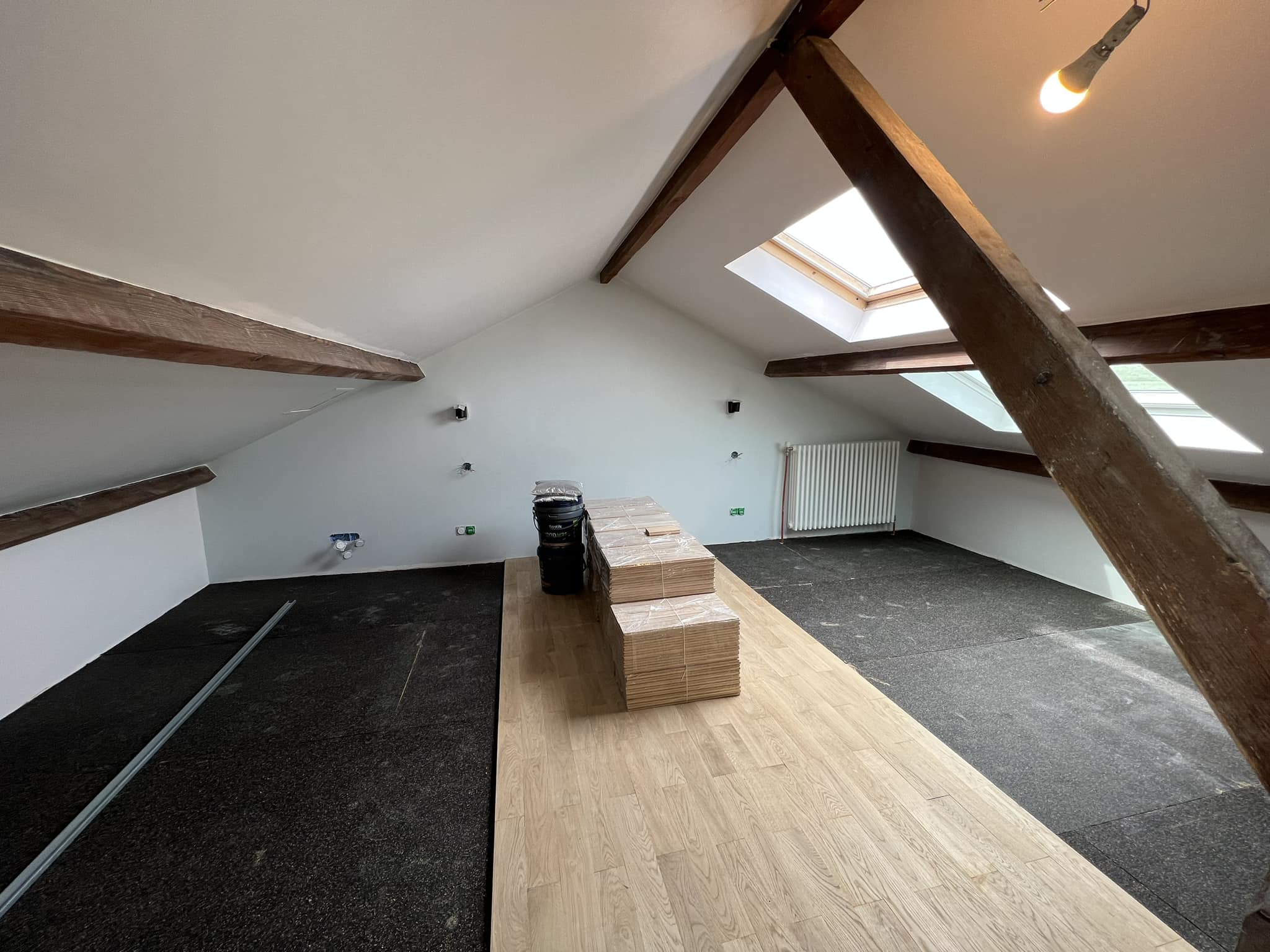
Here you see what lies under the attic hardwood.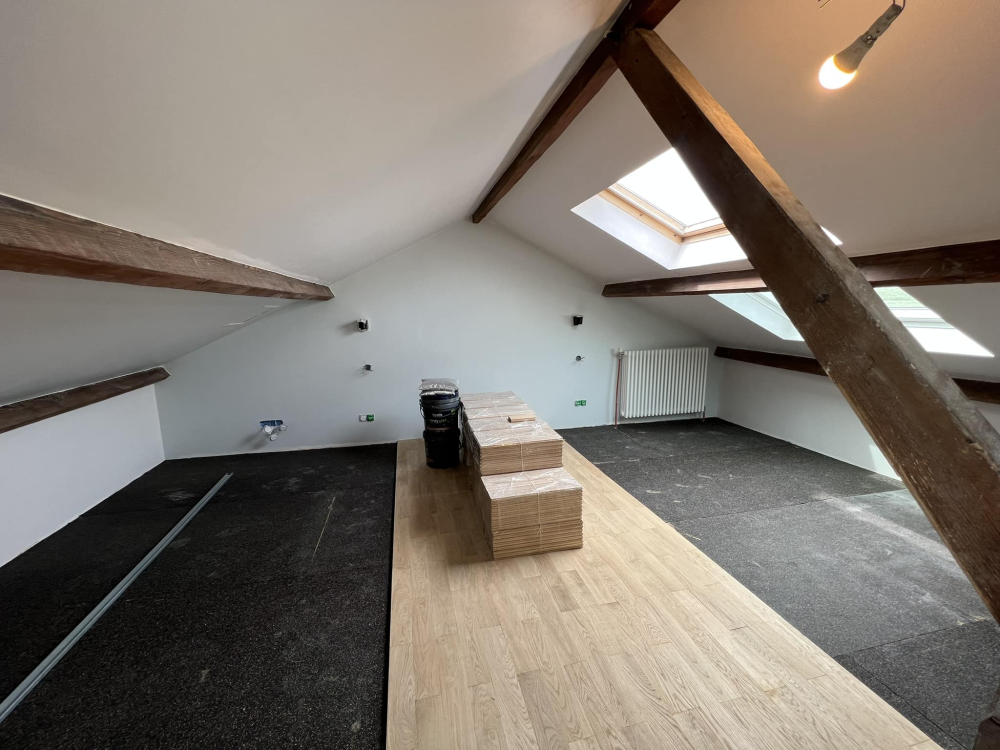
-
Just for fun: getting close to the end of my renovation (pics)
Garald replied to Garald's topic in Decorating
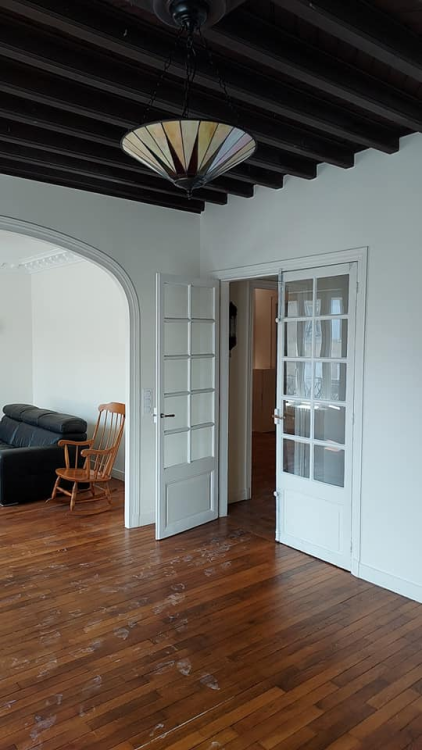
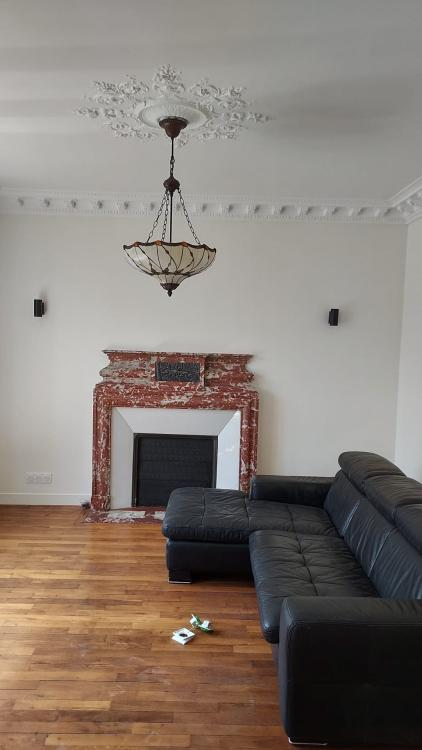
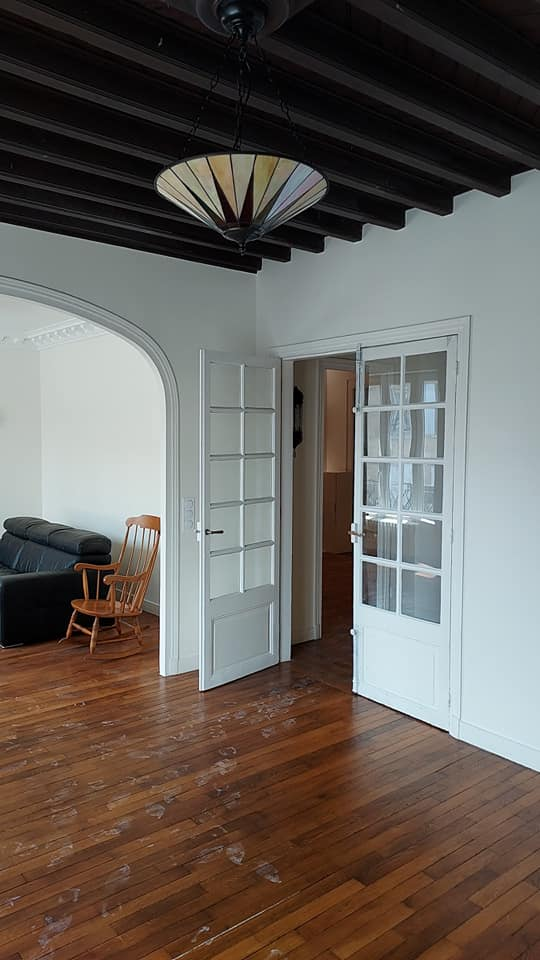
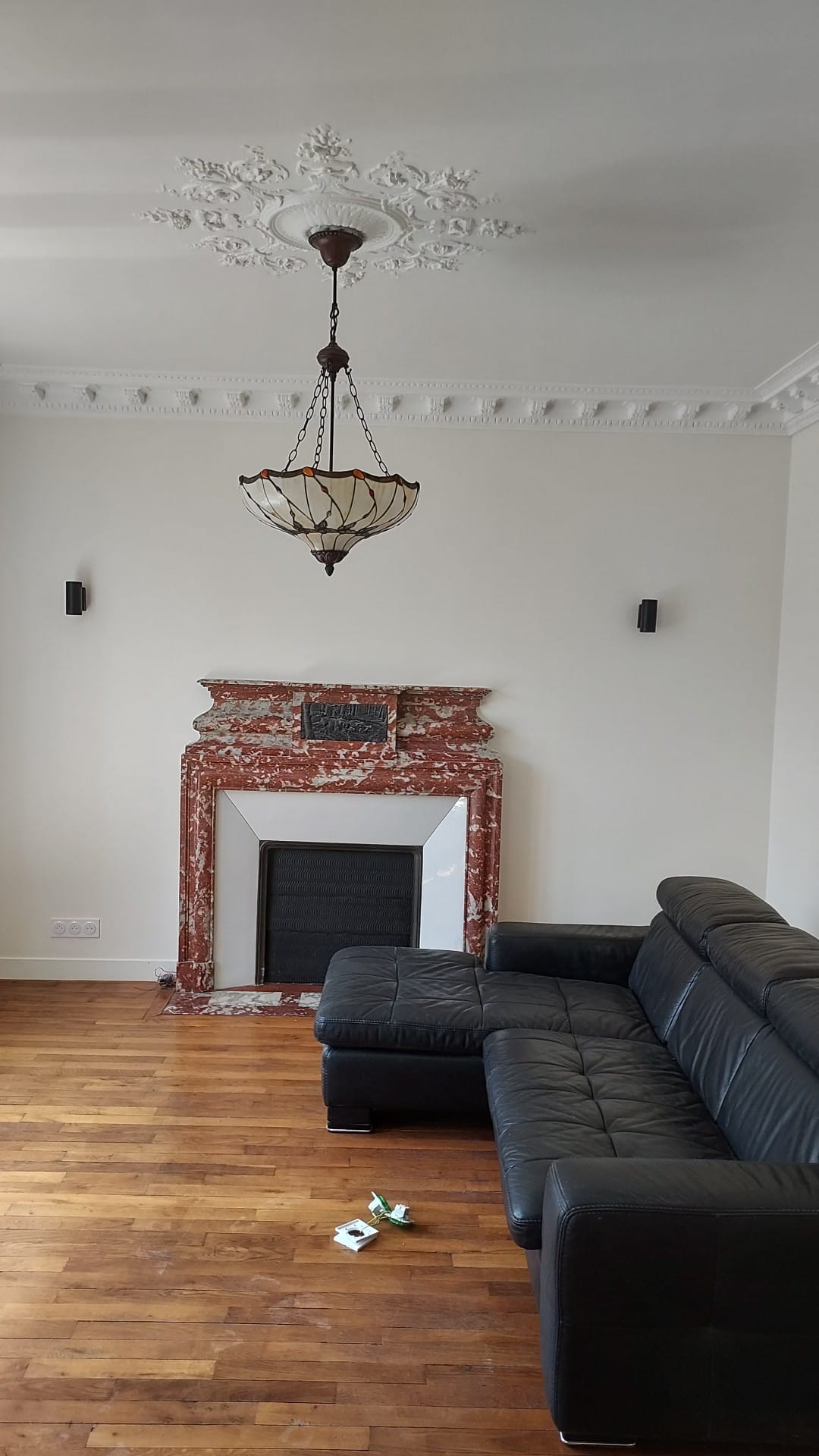
Of course there's still cleaning to be done (and we have to decide whether we keep the old sofa). I'll get bookshelves in a bit - some built-in, some IKEA. This lamp is a bit low. I wonder whether it will be easy to raise. My girlfriend really hates my shower. The stuff you see in there is just the kitchenette furniture, which must have been taken out by now and will be installed next week. The shower will have a glass panel (going all the way up, so it's stable).