LA3222
-
Posts
1185 -
Joined
-
Last visited
-
Days Won
11
Everything posted by LA3222
-
That's good as they were the ones I had been looking at for their minimalist impact. Would the buff have worked for you or was the colouring wrong?
-
@nod which type of weep vent did you use? As you say, they don't look great but I suppose it is something that will just have to be lived with!
-
@nod any chance y0u could take a couple of pics of yours near/far so I can get a feel for what they will look like. Tried an online search and can only see horrendous looking ones where the entire perpend is open - looks gash!
-
I have trawled this subsection and although it pops up now and then, it isn't clear what the requirements are with regards to weep vents in a rendered wall and how best to achieve it. From what I understand if you have traditional masonry Block work for both skins then you can omit them. However for those of us using TF for the internal skin they are still required. So, as I understand it, where you have a window you would have a cavity tray over it which then needs weep vents at max centres of 900mm? This could leave a load of ugly 'scars' all over the rendered surface. Is there an aesthetically pleasing way of achieving this? If not then how do you minimise the impact? Any particular way of doing it or brand of weep vent to use that is low profile? TIA Jamie
-
In my minds eye I envisage the window sat partially on the SIP, partially in the cavity where it's attached to pinch batten. This has insulation around it aswell. I haven't spent much time in the windows thread so going to do some research. Hopefully I'm thinking along the right lines!
-
Thanks, you have confirmed what I suspected needs to happen. As far as frame shrinkage, it is SIP which iirc doesn't suffer from shrinkage like a timber stud does (I'm happy to be corrected if wrong!). I see a lot of these kind if issues in the forum with members and their architects - it doesn t neccesarily reflect competence/knowledge - it may be haste while they carry out the other myriad jobs they have. I think we tend to forget that when we commission an architect, we are probably one in a long line of customers and these things may well happy. Overall I'm happy with the service. Ultimately it is our responsibility to check/challenge where necessary hence my sanity check question to the forum. Thanks Jamie
-
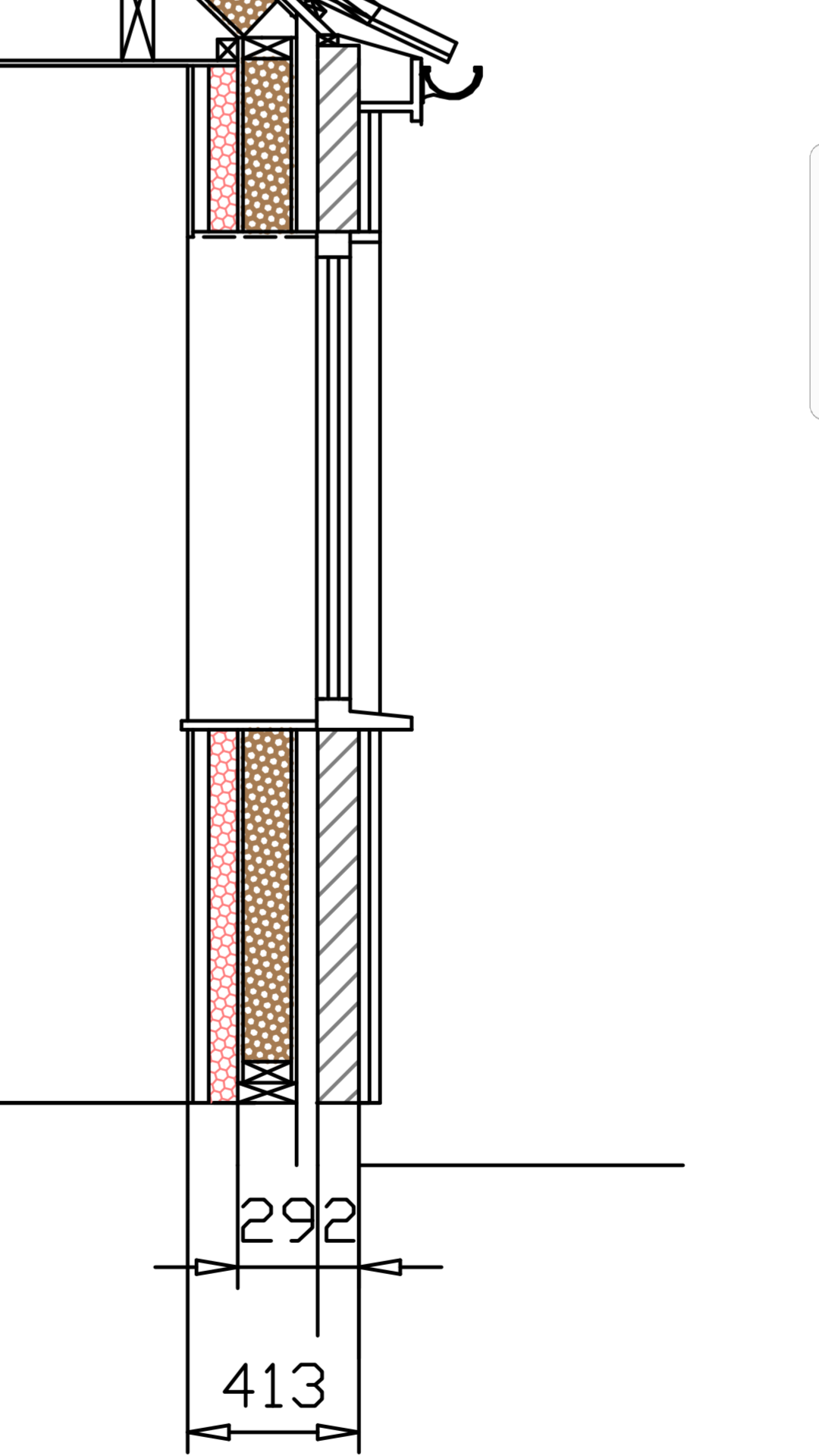
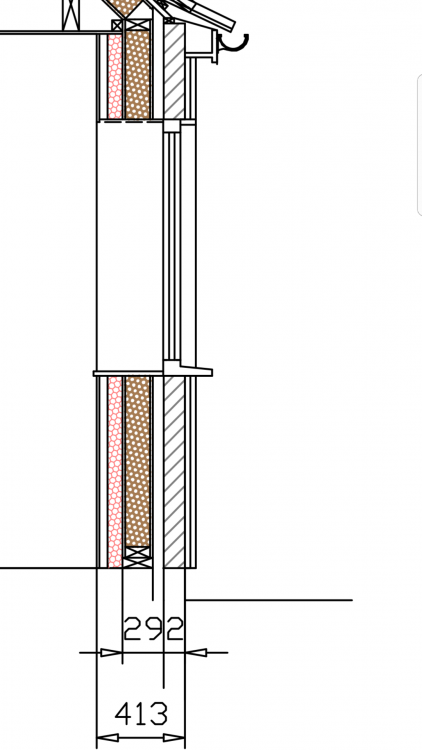
Quick question regarding the positioning of Windows within the reveal. The pic below shows where my Architect has drawn it. From bits I have read here I was under the impression it should be mainly sat within the SIP frame, bridging slightly out over the cavity as such. I am sure I've read on here that people using TF normally use 50mm pinch batten around window openings to give something to fix to once the frame is up and also ensure it is directly located as the rest of the house goes up around them at a later stage? Some advice would be appreciated. Ta.
-
How well sealed are SIPs in real life?
LA3222 replied to vivienz's topic in Structural Insulated Panels (SIPs)
I may be wrong, but from the TF companies I've looked the tolerances for the soleplate are all pretty much the same. -
How well sealed are SIPs in real life?
LA3222 replied to vivienz's topic in Structural Insulated Panels (SIPs)
I don't see why it's any different to a normal TF stud that comes in pre-manufactured panels. I may be missing something obvious though ?♂️ -
How well sealed are SIPs in real life?
LA3222 replied to vivienz's topic in Structural Insulated Panels (SIPs)
I've engaged with a SE who knows their business regarding the insulated foundation design. They are waiting on loading from the house which will be provided by the SIP company who in turn are waiting on final CAD drawings from Architect. So all the ducks are lined up, just waiting for each bod to do their bit! -
Thanks for letting me join. Just about to begin building my new house.
LA3222 replied to dnb's topic in Introduce Yourself
Hi @dnb, you seem to be carrying out a project very similar to my own! I am going down the SIP route, approx 280m2 over two floors and am also just now going through the building regs process so I will keep an eye out for your posts. Good luck with the build. -
Designing Mvhr in/pricing
LA3222 replied to eandg's topic in Mechanical Ventilation with Heat Recovery (MVHR)
It may be useful if members could caveat *their* costs with when they purchased and total floor space as both these affect the prices mentioned. @Bitpipe you mention approx £3k for what sounds like a very large house (probably larger than my own) - I have had a quote back from the usual suspect that everyone seems to use and it came in at £4k for a 270m2 build. This was supply only of MVHR unit and ducting along with the basic vents etc which is more than I expected as I had been reading through the MVHR threads and coming up with a price of a couple of k in my head. -
QS Costings versus The Real World Query?
LA3222 replied to Powerjen's topic in Surveyors & Architects
Yeah I would agree it's not wholly accurate but I would say it is a useful tool to get you started. The information can be easily amended from what I have seen, so with a bit of work it should become a useful budgeting tool. Ultimately you get what you pay for - this costs a couple of hundred and I would say is good value for that price. A full on bespoke analysis by a QS can cost 10 times that - like everything with a self build it all comes down to cash and how much people want to part with. -
QS Costings versus The Real World Query?
LA3222 replied to Powerjen's topic in Surveyors & Architects
I paid £200 for estimators online. Not trying to shill them but I have a detailed breakdown of the build in various formats - can save to pdf or excel etc, can amend prices for parts or labour manually. All in all I'm impressed with what I have seen so far. If nothing else it gives me a base line for a cost analysis of the build which will hopefully be of use when applying for a mortgage. Worth a look I would say for the small cost it is....sod paying a QS several thousands! -
This is what makes me think £800 for my job is a lot. It's only a few sockets and other bits yet your entire first fix isn't that much more (minus materials). But then everyone has said it's a fair price so as i am clueless I will go with the consensus!
-
Yes VAT free
-
Yes it is 3 phase. The cable to my van will be the garage supply eventually, hence the 4 core cable now rather than later. So, the general sense I get from all the responses is that the quote is reasonable which helps massively as I wasn't sure. Thanks all.
-
As things stand I have had minimal electrical work carried out and am still trying to gauge what is "reasonable" when it comes to quotes. I have no issue paying a fair price but don't want to be taken for a ride and ripped off. To that end if anyone is able to give feedback on whether the following quote is reasonable it would be appreciated, I don't want to drift off topic about the actual work being undertaken - just whether the price reflects the work carried out. Ta. Supply To Caravan (£578): 1. 10mm 4core + 10mm earth 35m 2. HAGER 50A 3P MCB 3. 40A RCD in rolec caravan hook up 4. Upgrade supply into caravan CU to hardwired supply. 5. Earth rod. 6. Connections, labour, certification. Outbuilding rewire (Labour & Materials £180): 1. 20A radial supply into lean to 2. 2 x metal clad socket 3. 1 x Light and switch Labour and materials Additional sockets in caravan (£70) 1. 2 x Single Sockets If the price seems way out, what ballpark figure should I be looking at? TIA
-
Where are all the SIPs suppliers???
LA3222 replied to hmpmarketing's topic in Structural Insulated Panels (SIPs)
You prob won't get a reply - that post is well old and having looked at the users profile they haven't logged in for a long time. There are loads of SIPs companies out there if you are after a quote - just send them your plans and they will likely send you a price. Likewise there are loads of TF companies which will do the same. Is it specifically SIP you are after? -
So the easy answer is don't use the TF company to design/sign off on foundations. Get them designed separately by an engineer who understands the system being used. SER? Is this a Scottish thing? I dont think ive come across that term before.
-
But the OP was thinking of pairing SIP with insulated raft foundation. What risk is there here that doesn't exist with any other timber structure paired with an insulated raft foundation? The way I read the OP original post is that the TF company they were engaging with weren't happy with an insulated raft foundation - deeming it to be unsuitable for the UK climate. I find this strange considering the number of people who actually have this type of foundation?
-
Cool, yeah I must have missed that memo about confirming it's not the floor sweeper I'm talking to. Prat. I've got a SIP company doing the house, a structural engineer doing the foundations and an architect pulling it all together. They are in communication with each other and thus far no one has said that any of it is a problem. My original point/query is as per the OPs post, The details of this are much more suited to a European build where the insulation is all external, and the masonry all internal, allowing for continuity of the insulation. In the UK, the detail for transfering the load of the insulated frame sits on the slab, and then you creaste a step detail to avoid cold bridging. It isn’t neat because the slab design is unsuitable for typical UK construction detailing. Our engineer’s won’t sign it off as it is essentially a floating raft without any tie in to the ground formations." Why would the TF company be overly concerned about the 'type' of foundation used? Surely that is the remit of the SE tasked to design that particular aspect? And surely the comment about this type of foundation being unsuitable for the UK is not true given the number of people who do have insulated raft type foundations?
-
At the minute I have my Architect putting the CAD plans together which will go to the SIP company to get all the engineering calculations etc produced for the building regs application and I have an engineer who is very familiar with insulated rafts waiting to design the foundation once they have the line/point loads and the sole plate layout from the SIP company. My Architect will then pull all of this together along with anything else required for the building regs app. I may be missing something but why does it matter if the TF company like how you do your foundations? Surely as long as they have a sole plate which is level and in the right place then what is beneath the sole plate is irrelevant to them? It's the structural engineer designing/signing off on the foundation who matters as far as the foundation type is concerned? In my head the SIP provider are saying the house will withstand all external forces and remain standing. The foundation engineer is telling me that the load imposed on the ground by said house can be supported in the location it will be sited and will not sink/subside etc. Am I missing something here?
-
Looks like a desert rose for lil people

-
@daiking I think that @bassanclan has hit the nail on the head - I got distracted with how much I intend to spend rather than the bigger picture which is the costs are what you want them to be. There will always be a point where you can't go any cheaper due to material cost but the top end is where you want it to be. One of the conversations I had early on with the chap who did my design was how much does he think was a reasonable budget for a garden covering 0.5acres (I was clueless!) - the answer I got was basically that it can cost as little or as much as I want it to, much like with the interior of a house. A patio slab is a patio slab, but you can spend pennies or hundreds per slab depending on your preference/budget constraints. You can buy a full grown tree or a bare roots sapling. All of these choices will determine how much you spend coupled with how much or how little work you do yourself. He told me that he would give me all the plans I need etc....how much I spend bringing them to fruition is down to my choices. It changed my perception of the garden and I now view it as much the same process of choosing how to fit out out the interior of the house - where to spend vs where to save. The cost of my design is an outlier, most self builders won't have half an acre to landscape, as such the cost of getting a design put together should be in the hundreds for most which is probably a worthwhile investment I would say.