
Nickfromwales
-
Posts
31382 -
Joined
-
Last visited
-
Days Won
346
Everything posted by Nickfromwales
-
 Yup. An age old thing, so if they start spitting water out it doesn't go all over the attic. As for the leak, these do flex and move about, and if they've been in for 30 years you've had "value for money" lol. Given the amount of water, and where these are, I'd put my hand in my pocket and get them both replaced immediately / local plumbing refreshed. Then enjoy another 30 years. In my experience, disturbing one and leaving the other often causes the other to leak. I think it's a pact that these things have, written in ancient transcripts by aliens who visited from far away, because old plumbing stuff just seems to hate to be interfered with. By the time you've got the plumber there changing the 1st tank, you're not looking at too much more to get it all up to scratch and all nice and new.
 -
I did plant room & M&E on what was essentially a 6 bedroom bungalow (split level) and they had spent £100k on 1st and 2nd fix plumbing. What a shower of shite, and they said they were experts. In their small-print was a statement that they couldn't guarantee results as they weren't doing the plant room / end equipment etc. Client then told me it was over their heads and they refused to quote for it..... 2000L of stored pressurised cold mains in the garage (detached) and then found the 32mm pipe that appeared each end actually then reduced to 25mm for the 75-80m between the buildings ffs. Told the client to dig it out and swap it to a 50mm run, and then the showers all worked in unison. No duct for ASHP or GSHP so we ended up having to install a 3phase electric boiler as no gas on site.
-
140/60 would be fine. A common misconception. A 50mm screed will be fine, just more often than not anyone tiling over it would insist in a decoupling membrane to cover their arses. The thicker the screed the longer to heat up, and at 50mm you'll be able to turn them on/off with reasonably accuracy without any issues, as they'll act a bit like a radiator would in the same room, just the end result would be far more comfortable. I've had my screeder lay from 50mm all the way down to 10mm, primer bonded, with a dry mix S&C screed, and we tile straight onto that with BAL ultra flex adhesive, only one tile hairline cracked and that was where the new UF heated floor met the existing original concrete slab (as I was young and still a bit wet behind the ears and didn't allow an expansion / break there.
-
Garage floor paint/resin/epoxy resin
Nickfromwales replied to BotusBuild's topic in General Flooring
Cheap lino for now, and it'll be warmer underfoot when the heating's not on. -
+1, I've done M&E for a load of their build clients, and have had 0.25, 0.26, and 0.27 ACH from their 300mm blown frame PH offerings, very good build quality, and they will put that up for you over 2 long lunch breaks.....SERIOUSLY fast build program, but seamless too as they do turnkey foundations and frame. That means that the frame goes into production whilst your slab is being installed vs other TF companies who will tell you to do the slab first, come out and measure, then put you in the queue for production. SIP's is quite acoustically transparent too, for anything less than 180mm / 200mm, whereas the blown cellulose TF offerings are graveyard quiet imho.
-
I'm not, hence.... Erm, why are you still messing with this, sorry! Get a sparky in, chop-chop
-
Plant Room Distance from ASHP - 25m too far?
Nickfromwales replied to SBMS's topic in Air Source Heat Pumps (ASHP)
👇 👍 😎 -
Plant Room Distance from ASHP - 25m too far?
Nickfromwales replied to SBMS's topic in Air Source Heat Pumps (ASHP)
Some do and some don’t so you may want to just look for one either way an external pump if worried, but upsizing the pipework to maybe 35mm should remove the issue of the additional hydraulic resistance, (meaning you can have the pump wherever, but more importantly you won’t have to be worried that you’re then wedded to that particular OEM pump (and its performance not being inadequate)) -
Dormer construction detail advice, please
Nickfromwales replied to Tony L's topic in General Construction Issues
Always a pleasure never a chore, lol. Plus my OCD often sees me stealth-editing. My turn to construct something is WAY off lol, I just to work for others who are doing it a lot (and now don't make the mistake of showing the wife!!). -
Dormer construction detail advice, please
Nickfromwales replied to Tony L's topic in General Construction Issues
BH policy sorry. You can ask for an amendment any time you wish, just shout I have edited the post for you. 👍 I think the timeout for editing is 20 mins. @MikeSharp01? -
Not a chance, matey. You would set all the joists out on the floor, twang a string line down each 1/3 point and then pre-drill for small bore services BEFORE installing . 3x 25mm holes down one end for electrics, 4x down the other for plumbing / other electrical / miscellaneous. Oh, and yes, fit the solid timbers in at 200mm oc and move on with life. It's not going to go anywhere, and as you say, it's perfectly DIY'able.
-
Extra insulation round SVP’s in a Kore passive slab?
Nickfromwales replied to Gibdog's topic in Foundations
Bruce, CT1 ffs, silicone is naff on a good day. -
Buy and fit one of these and then you're safe for the immediate concern, but tbh that cupboard is a whole lot of "no go" for little fingers so best to get a lock on it if you're that worried. LINK Get an electrician out to make it safe ASAP, or maybe ask them to put an outside socket on it for you if that would be useful where the cable is?
-
Extra insulation round SVP’s in a Kore passive slab?
Nickfromwales replied to Gibdog's topic in Foundations
LINK You will also need to use a primer for the concrete, before wasting one of these grommets and finding out the expensive way. This is only recommended in acceptance of the fact that your man is waaaaaaaaaaaaaaaaaay OTT. A good frame sealant etc will suffice here tbh, but best to be a good boy and do as one is asked.. Give the concrete a good scrub with a hand brush and then give a squirt of this, being careful not to be wasteful. LINK This is usually just for noise, so some Knauf acoustic mineral wool (rockwool etc) usually gets stuffed around the pipe at 100mm thickness to prevent the noise of flushed water creating nuisance noise to the room. -
You could try to strip it down and clean the flow switch(es), see if YT has a video on how-to, but these things just don't last forever. Defo sounds like a flow switch issue, so if that turns out to be a serviceable / replaceable part and it's cheap, then you may as well go for a fix (but that's on the proviso that the pump runs quietly and doesn't sound like it is dying elsewhere too).
-
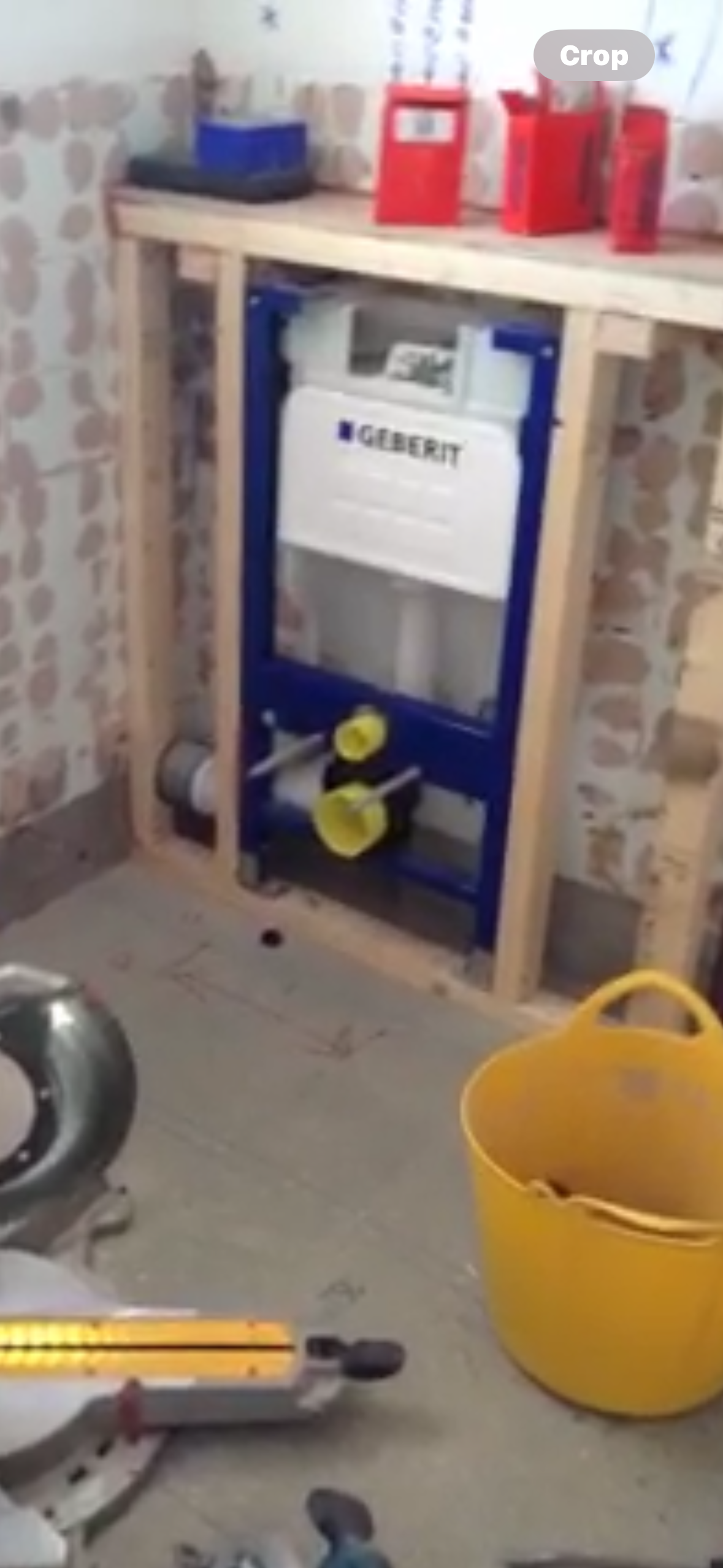
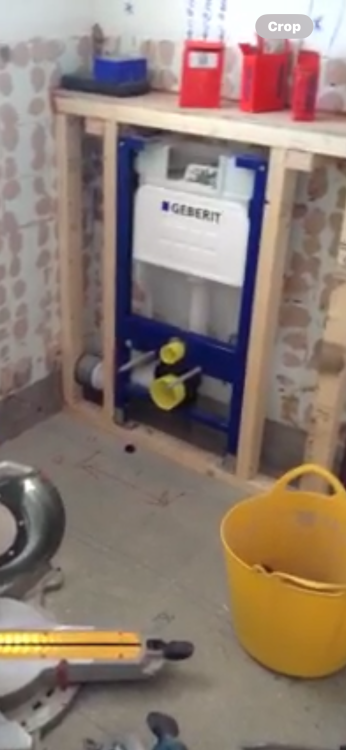
@MikeSharp01 A shit pic, but shows the final fitment and a decent fall. Nothing went anywhere other than downhill I assure you 🤣
-
The pan connector was laying on the floor It was later lifted up and into the receiver, and clipped in, locking it into place with a fall. I put some membrane against the wall, and pumped a load of foam under and behind the flexi so it couldn't ever drop / droop with time and use etc. I only used a flexi there as 2x 45 or 30 or even 15 degree bends couldn't get me lined up right for a rigid installation.
-
Acoustic underlay or sound insulation slab?
Nickfromwales replied to Beau's topic in Sound Insulation
Yes, it still functions even when screwed down, but a proper setup sees the floor floating iirc. See the manufacturers YT videos for install techniques -
Acoustic underlay or sound insulation slab?
Nickfromwales replied to Beau's topic in Sound Insulation
Yup. -
Acoustic underlay or sound insulation slab?
Nickfromwales replied to Beau's topic in Sound Insulation
The foam strips compress down to a few mm, so no probs there. -
Sand & priming anhydrite screed
Nickfromwales replied to YorkieSelfBuild's topic in Floor Tiles & Tiling
Just remember to apply a dilute mix of water / primer before you prime undiluted. I use a proper janitors mop and really go to town, with the dilute primer solution being left to saturate the screed / slab and soak right in. Then back mop to get rid of any that’s pooled anywhere and leave to dry for a few hours before final priming. You should be priming immediately prior to laying, and never leaving this down first days to become contaminated. Specialist primers will come with instructions, follow those in that instance. -
Silencers for mvhr
Nickfromwales replied to mistake_not's topic in Mechanical Ventilation with Heat Recovery (MVHR)
Yes to location, and direct off unit / before manifold ✔️ Do not use the flexible attenuators (flexi duct) as they’re just a cheap rubbish solution in comparison to using the rigid attenuators. I oversize these to max out on the acoustic benefits, but this obvs depends on a) how the design pressures would otherwise affect the audibility and by how much you then need to arrest it, and b) the length of the attenuator that you then need to do so. On a previous MVHR install the client wanted a lot of cooling to the 4 upstairs bedrooms, rear of the house with loads of glazing facing absolute south. After the explanation, that they would need elevated fan speed to effect cooling via MVHR, they opted to beef these up and we put 1000mm long ones in vs the usual 500(?)mm ones. One of the other ways to cheat this problem is to do what I do and jump up one size of unit to get the bigger ports / ducting; if a 325 unit will suffice I oversize to a 400 as this gives you much lower fan speeds and pressure, but also you jump from 150mm ducts to 180mm ones, further benefitting the occupants. This (imo) promotes longevity, as the fan is doing a much easier job, but also the longer heat stays in the heat exchanger the better the heat recovery should be (unless someone tells me different?). Budget MVHR doesn’t always work well, more just that it “functions” to tick a box. One of the places I wouldn’t skimp, certainly not with a flexible ‘silencer’! -
Hi. Answers will be along shortly I’ve just removed the duplicate thread as otherwise you’ll just have a volley of replies across both which is a bit messy
-
Retrofit UFH help - 2013 New Build
Nickfromwales replied to foundationsmcr's topic in Underfloor Heating
Any bare concrete will have dust / other surface contaminants so you primer that before laying any kind of screed or adhesive at a thickness of less that 50mm (normally above that you won’t need to prime but the installers would usually decide this). If you pour some screed onto a dry slab you’ll likely be able to chip it back off in one piece as it’ll have just adhered to the surface dust etc. A bit like you greasing a cake tin. The clip rails add to the mix as they provide a mechanical connection, but should not really be relied on as the only measure. Thin screed systems <30mm need a specialist primer which stays tacky for a long time. Boilers modulate, a bit like you controlling a light with a dimmer switch, so they can match the heat demand as closely as is possible. To drive a non modern boiler into UFH you’ll likely force some short cycling, the boiler repeatedly lights, heats up, can’t get rid of enough heat so hits the internal stat set point, then waits to cool slightly, then lights again, and repeat. That’s can lead to reduced longevity and much deceased efficiency. A buffer / volumiser adds a runoff volume of water, if you think of heat as air, it’s like you blowing up a balloon quickly, and then just letting the air out slowly over the next 10 mins, then repeating, therefore taking the ‘short’ out of short cycling. That make sense? -
Acoustic underlay or sound insulation slab?
Nickfromwales replied to Beau's topic in Sound Insulation
Hi. What are the floor coverings going to be in those rooms? I assume you’re lifting the floorboards to do the work and install acoustic insulation, and if so you can start by putting 50mm wide acoustic strips on top of the joists for the new floorboards to sit on. Depends really on how ‘mad’ you want to go, but you’ll need to be cautious of what insulation you pack around electric cables / light fittings etc, but the more acoustic insulation the merrier obvs.