


Crunchynut
-
Posts
88 -
Joined
-
Last visited
Everything posted by Crunchynut
-
I agree with @ProDave, however you can now get a P Trap with integral inlet vent for a tenner, and if that means you never hear a gurgle as your water goes don’t the plug hole then it’s worth doing in my book.
-
I would certainly drill the hole oversized. Chances are you will need it. Too many times I have gone for precision which was precisely not quite right, but then to find that making an adjustment is really hard if not impossible.
-
Short length of 110mm soil stack above screed
Crunchynut replied to MortarThePoint's topic in Waste & Sewerage
Solvent weld should work but I’d be worried about the state of the pipe. Alternatively maybe you could use one of those thick rubber couplers that have a jubilee clip either end. A bit unconventional but it would work. -
Short length of 110mm soil stack above screed
Crunchynut replied to MortarThePoint's topic in Waste & Sewerage
Looking at how scuffed the pipe appears to be I would be nervous that a push fit might not form an effective seal. -
I get that they only let air in to ensure the waste moving down the pipe doesn’t suck out the traps, but in what circumstances does air need to move in the other direction (other than reasons mentioned)?
-
I can’t help with your question specifically but I wonder why the insistence that at least one vent is to open air. We know air admittance valves work and they obviate the need for a cold bridge. So what’s the problem? I can think of only 2 objectives : firstly to ensure the drainage system (ie everything after the drains leave the property) is vented, though this can be achieved by vents to the drains elsewhere outside of the house. Secondly because there may sometimes be pressure back up the stack which needs to go somewhere- but can’t think why.
-
I bought our house 23 years ago. In-laws told me not to buy a house with a septic tank since they are nothing but trouble. Of course, I ignored that advice. Spent the last 22 years constantly fettling that nightmare tank - they were right. Has been much better since I replaced it with a treatment plant last year. So in the absence of detail, my headline advice would be not to take it as it is, without a plan and agreement to replace it with a treatment plant as @nod says. And a treatment plant that just services your own house at that.
-
Terracotta fittings internally, boxed in
Crunchynut replied to Super_Paulie's topic in Waste & Sewerage
My understanding is that they are fine so long as not exposed to daylight and UV, hence the boxing as you imply. -
I have a pumping station - about 2.5m deep with inlet at 1.0m. The pump just raised the effluent to an adjacent drain. It has a single DAB FEKA VS 550 pump. It is the least powerful ‘professional’ pump I could find since the lift is quite small and I was conscious of energy use if the pump was over sized. Though the sales folk advised not to undercook the pump lest blockages result. As it happens the pump rate is so high it only needs to pump for 5s every 45 mins for our complete 4 person household needs, so energy is negligible anyway. It has been installed just over a year and there have been no problems whatsoever. Building regs specificy the size of buffer needed in case of power cut. (Part H if I remember rightly). That may determine how deep you have to go beneath the inlet to the chamber. I didn’t quite meet the requirement but when I mentioned it to the BCO they were fine with it (seemed I knew more about the regs than they did). Digging a very deep hole near to your foundations would need the consideration of a structural engineer I suggest.
-
waste pipe is running back towards house
Crunchynut replied to vagrantly3893's topic in Waste & Sewerage
Lift the pipe to create a suitable fall then pour pea gravel in the ditch. The gravel will naturally fill beneath the pipe and prevent it falling back. Further fill over the pipe with gravel to about 150mm above the pipe then put back the top soil to ground level. The gravel serves to allow some natural movement as the earth swells and dries through the seasons and also prevents sharp stones that may otherwise be in the back-fill damaging the pipe. -
SOLIDO SMART Sewage treatment plant - discharging dirty water
Crunchynut replied to ollie's topic in Waste & Sewerage
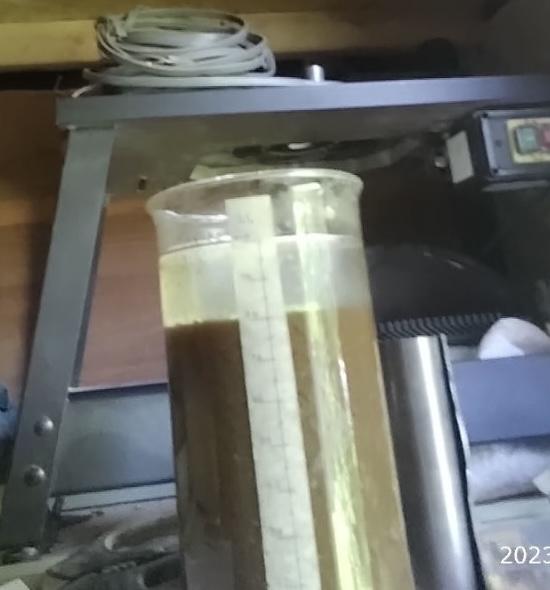
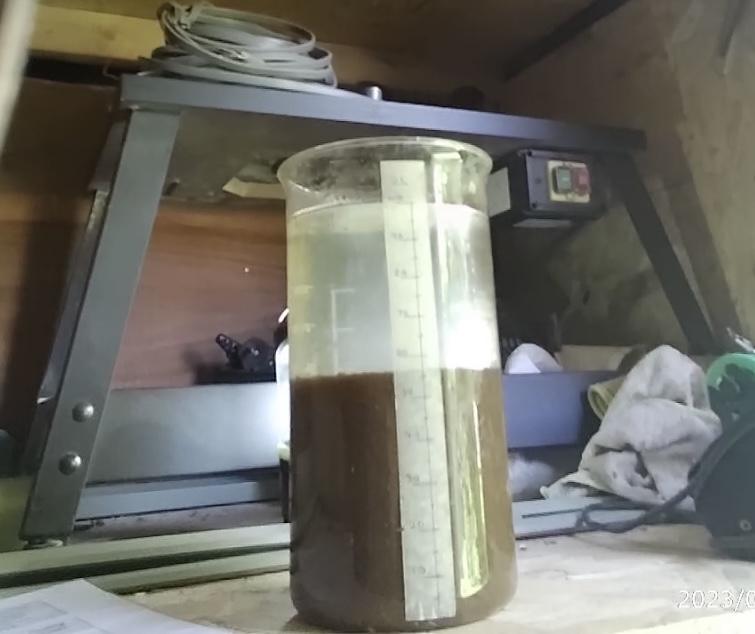
I don’t know this plant so my advice may not be right. For normal activated sludge I would say this : The symptoms may be because the settled sludge level in the tank is slightly above the draw level, meaning sludgey water flows until the level drops and the clear effluent is reached. Poor settlement could be due either to too much solids meaning it’s time for a desludge, or ‘bulking’ generally caused by under-aeration. To see which you’ve got, do this :- (I’m assuming access is possible on your tank. I apologise if that’s not the case) :- Take a large see-through container - a big sweet jar or coffee jar for example. Fill it with mixed effluent eg from the aerated zone. The effluent will start to settle - note how much it has settled after 30 mins. A healthy system will settle down to 50% or less. If it has only settled to 90% or so then next do this. Take a new jar full, with half taken as before and half taken from the clear effluent layer. Give the 2 halves a gentle mix then start the timer again. Now, if after 30 minutes the %settled is roughly half what was achieved in round one, then the problem is too much solids in the tank and a desludge is needed*. If the %settled is roughly the same as round one then the problem is bulking, in which case increase the amount of aeration and give it 3 or 4 weeks to see if it improves. *increased aeration might also help reduce the %solids if the sludge isn’t too old, so you might do this first and see if it helps. -
Cheap way to prevent boiler cycling
Crunchynut replied to Crunchynut's topic in Boilers & Hot Water Tanks
Ok. I need to dig out where I read this since my only source of intel in the past was the manufacture’s bumf. Are you suggesting that neither need replacing at service intervals? -
Cheap way to prevent boiler cycling
Crunchynut replied to Crunchynut's topic in Boilers & Hot Water Tanks
I tend to replace the nozzle and the braided flexi hose to the burner every 4 years. I read somewhere in the past that this was good practice but can’t now find that guidance, but it seems to make sense. The concern with the flexi hose is the rubber perishing and starting to deposit debris that block the nozzle (or maybe the filter bundle before the nozzle). However out of interest today I cut the old hose in half and looked at its condition and it seemed fine. -
Cheap way to prevent boiler cycling
Crunchynut replied to Crunchynut's topic in Boilers & Hot Water Tanks
Ah I didn’t know that. I have a Grant boiler with Reillo burner too. I just replaced my nozzle (like for like) as part of a routine service. Never crossed my mind to try a different one - though the boiler and CH runs fine (now I have my delay relay 😛). Out of interest, how often do you replace your nozzle? -
Cheap way to prevent boiler cycling
Crunchynut replied to Crunchynut's topic in Boilers & Hot Water Tanks
I agree the system should be set up correctly in the first place, but I never did get the idea of balancing rads if TRVs are installed, because if TRVs close then the whole balance of the system changes. Also, if the stat is a simple, not very accurate on/off with no built in hysteresis then you will get cycling regardless. -
Cheap way to prevent boiler cycling
Crunchynut replied to Crunchynut's topic in Boilers & Hot Water Tanks
Ah, you mean a smaller nozzle? -
My oil fired CH boiler was cycling. That is, it was cutting out having reached temperature but then re-firing again within a minute. I think it is a common problem, and given that it’s inefficient for the boiler to be stop/starting all the time, I wanted to fix it. I researched on-line and there are some really expensive products (£400+) that allegedly solve the problem. Electronics that introduce hysteresis into the control mechanism etc. Sledge hammer to crack a nut, I thought. Anyway, I solved the problem by wiring-in a time delay relay to the main supply. These relays - about £10 each - close their contacts after an amount of time has passed since their coil was energised, as determined by the adjustable setting on the relay body. I set mine to 6 minutes. What this means is, every time the boiler is off, or cuts out having hit the temperature limit, it will take a minimum of 6 minutes before it will restart. Cycling problem solved. FYI in case others have the same problem.
-
You are welcome. I see you have a vortex 10. I have a Vortex 6 so we are in the same territory.
-
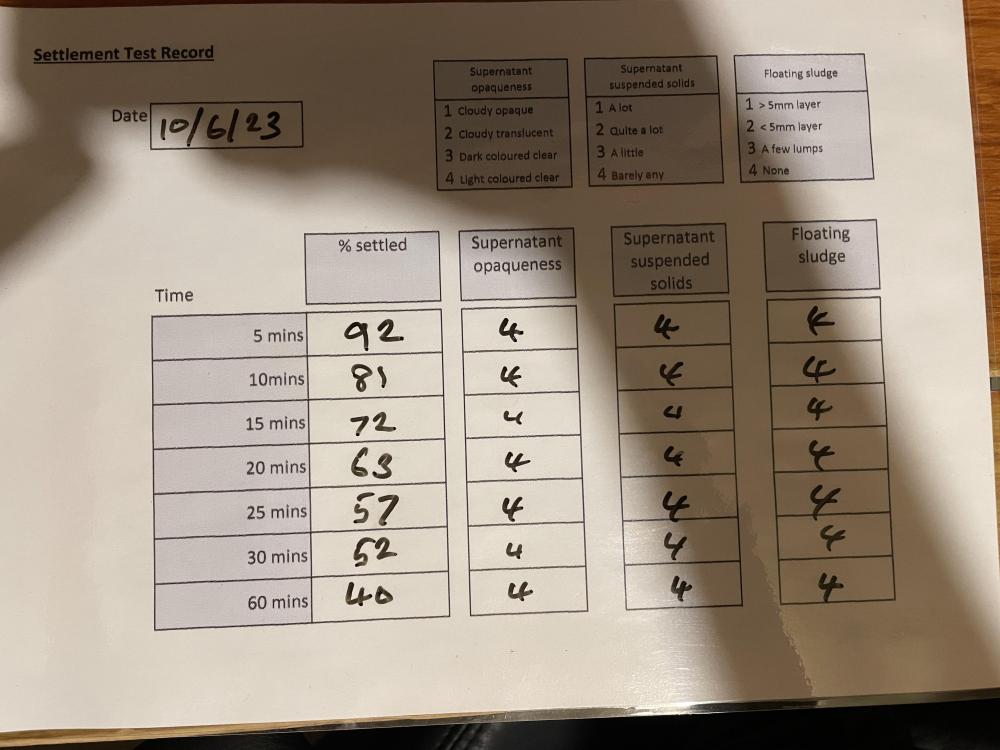
So, first of all, if you read my thread on here: https://forum.buildhub.org.uk/topic/32308-the-science-behind-sewage-treatment-plants/ you will see my general cynicism about the subject - that rules are put in place but there seems little or no real understanding or follow up. By chance I had a tradesman round my house recently who showed an interest in my stp because he said he used to work for a ‘maintenance’ company, but he gave up the job because he felt bad charging people for just cleaning off the greb and not doing any real maintenance or science based assessment. He said I was right to do it myself. So, I think it pays to understand how your plant works, know when it’s working correctly and when it isn’t, and what to do about it. Doing this, I think you will be much better placed to convince any EA inspector that you are in control. Now - the settlement test - it’s quite simple but tells you quite a lot. The way STPs work is that the muck/ bacteria soup forms a ‘floc’ that sticks together and will settle in still water. Then the clear effluent runs off the top. If this floc isn’t forming well then either it won’t settle or it won’t form in the first place. In either scenario there is no clear effluent to be had and hence it’s a problem. All sorts of factors can affect whether your floc forms nicely - the amount of oxygen in the water, the type of bacteria growing which is linked to what’s entering your tank etc etc. For the settlement test you just need a tall scientific beaker. There is a company on the web that sells ‘settleometers’ for a couple of hundred quid (!) but I found a company on the web that sold chemistry equipment to schools and got a tall 2 litre flask/beaker for about £20 delivered. All I did then was run some masking tape up the side and marked off 10% increments. You also need some kind of paddle to gently stir the effluent after you have filled the flask to the 2L mark, and use the paddle to bring the mixture to a standstill before removing it. You then start a timer and write down the %level that the effluent settles to every 5 minutes, for 30 minutes, with a final one at 60 mins. You can also record the clarity of the effluent too. See my pics. What you are looking for is ideally for settlement to be quite quick to begin with - perhaps down to 70% or so in 5 minutes, then it will start to slow down but should be around 30-50% after 30 mins. My tank went through a tricky period where it was only settling to 90% and I very nearly got it pumped out, but I figured my aeration wasn’t right and adjusted it, and after 5 months it has recovered to give a 30 minute settlement of 52% without having been pumped out - which shows if you understand these things then you can save yourself some money. If you are a real nerd (like me) then you can plot the settlement curves and have a whole series of them by date - proving that your stp is consistently performing well. Anyway - enough for know, but just ask if you want to know more.
-
I have a permit too. You need a permit if you can’t meet all of the binding rules - in my case my discharge is to a ditch which is seasonally dry and hence I need a permit. As you say, permit requires maintenance by a suitably competent person but it doesn’t clarify what this means. Also building regs requires home owner to appraise new owners of what it takes to run the STP when house is sold - but I bet that never happens. To comply with my permit obligations I record (using a cheap go pro type device) a video of me checking the tank once every couple of months. So, just video evidence that the aeration is working, effluent is clear, ditch is clear etc. I also do a settlement test which consists of taking a 2 litre sample and recording the % by which it settles every 5 minutes for 30 minutes. Basically you would expect it to settle down to around 30 or 50% in 30mins. This shows that the tank is operating properly and doesn’t need emptying. If it only settles to 90% then it may need emptying. I can share details on this if you are interested. I then just store my videos on my computer and if ever I am asked for evidence by EA then I have it. I have never been asked though. I wouldn’t pay anyone to do this - they will just charge you a couple of hundred quid for nowt.
-
Just as a slight aside in case it helps others. With the original problem of hair/soap blocking the trap exit, I have found the best approach is to remove the dip tube (as you eventually did) and then rather than start pulling strands of hair etc out, instead get some long nose pliers, grip the first strands and start to twizzle the pliers and so wrap the hair etc round them. This way you grow an increasingly strong grip on the offending mass, which could be a good few inches long, which is steadily pulled out. The alternative method of just pulling out what you can reach can result in having no strands left to pull on, but the mass is still there.
-
I found that an agricultural merchant was cheaper still, and had stock. I guess farmers won’t tolerate inflated prices.
-
Yes - I don’t know how they work because they are just butted up and seem full of soil /silt ….. but they do work. They knew a thing or two in times gone by …..
-
The science behind sewage treatment plants
Crunchynut replied to Crunchynut's topic in Waste & Sewerage
Ah good. There is some hope then! -
Yup-that’s the horse shoe shape. Like a big ‘u’ rather than an ‘o’


