


hb1982
-
Posts
40 -
Joined
-
Last visited
Everything posted by hb1982
-
Insulating a pebbledash solid wall and damp concerns
hb1982 replied to Ben Weston's topic in Heat Insulation
I believe typically EWI with 100mm EPS insulation can achieve around 0.30 W/m2K U-Value, a big improvement from existing 9 inch solid wall. 200mm EPS is not the standard. Although it improve the thermal performance to around 0.15 W/m2K (or lower?), i.e. around 3W per sqm (@ 20 degC temperature difference) in real term, it makes no practical difference. You are, however, introduce further risk of thicker / heavier build-up on existing masonry construction; much bigger and longer screws; non-typical details; bespoke windows cill... I would suggest to focus on the right materials which you have done so far already and stick with the industry norms. -
Is a cooker extractor necessary with MVHR
hb1982 replied to SBMS's topic in Mechanical Ventilation with Heat Recovery (MVHR)
the level of "small" "grease" generated in cooking is not universal. recirculation hood with carbon and grease filters may work for some people but not everyone. best to speak to friends or to experience hood performance at their place Even for "extraction hood", performance varies a lot. 6" duct with 900mm wide hood minimum 500 m3/hr is the minimum standard in my opinion (1.5m x 3.0m x 2.5m zone @ 40ACH x 1.1 leakage). -
Ceiling Speakers Recommendations
hb1982 replied to richo106's topic in Networks, AV, Security & Automation
I have a pair of Litheaudio Bluetooth ceiling speaker in the kitchen area and a pair of Yamaha 6" in the lounge as rear surround. The Kitchen one is bluetooth connected, no tech knowledge required The Yamaha is passive type and require a surround amp to power. -
1930s Semi Detached - Rear Extension / Internal Alterations
hb1982 replied to Ynned's topic in Introduce Yourself
I would double stack the Dryer and washer on the left and keep the right wall for the boiler and hot water cylinder (also water softener if required). If possible door open outward into the kitchen would give your utility more usable. You may put in a capped drainage in the study for now in case you may retrofit a shower there in the future. It looks fantastic -
I should say Heat Recovery is good and should be considered Benefit of heat recovery ventilation would subject to the house air tightness It is an expensive investment. If money is tight, it may not be the best use of money. For a house without continuous extraction (MEV) or MVHR, trickle vent should be opened / manually adjusted to maintain sufficient background ventilation. A trial and trusted method although not the most energy efficient.
-
A valid point to worry. Not just condensate but also grease that will accumulate overtime. Air filter is no perfect. A better way is to duct the exhaust to the bottom and exhaust under the plinth. You would still need extraction within the Kitchen to fulfil the building regulation.
-
The time that you need "heat recovery" is when the outside temperature is low (e.g. below 10 degC). In such scenario the temperature difference between indoor and outdoor would be big enough that stack effect will come into play, particular in a leaky house, driving fresh cold air in and warm air at high level leak through the roof. the heat recovery system as such is not going to reduce your heating bill much.
-
Thank you all! Will check out some local contractor regarding Tarmac surface. Thx
-
1920 house should be leaky enough to have sufficient background ventilation. Please make sure you have not blocked any air brick vent for the suspended floor. Forget heat recovery ventilation for a leaky house, no point and no payback. A simple WC extract fan would help your wetroom. Timer setting would be helpful. If using humidity sensor control type, make sure to tune down the set point otherwise you would have the fan running most of the time during cold winter (when RH is high indoor). Open up trickle vent (windows vent strips). Also please let us which wall you have condensation issue. Cavity insulation, if not installed properly, could mean bridging the DPC and cause damp at wall low level.
-
1930s Semi Detached - Rear Extension / Internal Alterations
hb1982 replied to Ynned's topic in Introduce Yourself
Looks like a big household. Are you planning to install a system boiler with hot water cylinder? you may make the study smaller and create a utility room / reconfigured shower? how deep is your rear wall new steel beam? Looks like that is going to be very beefy -
No need to considered MVHR unless the house / home is airtight, most likely newly built and will require MVHR by codes anyway. MEV for kitchen between 15l/s (4 inch) to 30l/s (6 inch), not sufficient to remove cooking gas anyway. A recirculation cooking hood would remove some grease but for serious cooking, hopeless in my opinion. Not great for household wellbeing as well. A discharge to outside hood is still the best option to remove odour and grease. Some people may consider that is non-green and wasteful but I would consider experience and wellbeing are more important factors to consider. Make sure the discharge duct is short, direct and made of good quality materials. The cooking hood extraction volume will be subject to your cooking style.
-
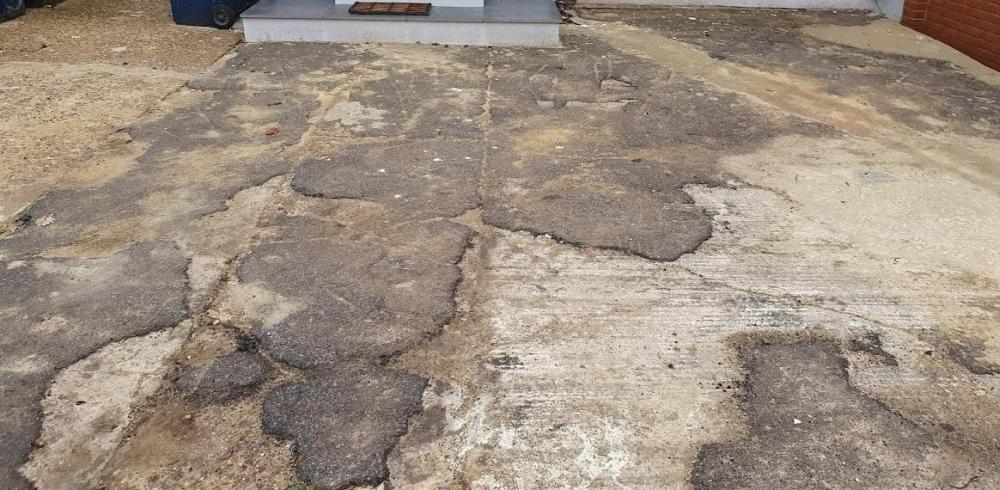
It is an existing front drive, 6m by 6m and around 5 degree slopped outward to the street side. Existing build-up is around 250mm thick concrete + patchy lose tarmac. A flower bed is planned around the side and front edge, where water can be drain to. I do not want to dig up the thick concrete in this scenario. I am thinking of 1. remove tarmac 2. repair existing concrete to achieve a smooth and sloped surface 3. Finish the surface with resin bound on top May I ask if this is the best and cost effective option? Any other brighter ideas that you can share here? Thank you
-
because I don't think discharging grease air into the void is a good idea. Ducting below the B&B would be too "low" when reaching the perimeter. Thank you
-
I have a similar situation and I would like to hear other's opinion. A downdraught extractor (Bosch made) to be installed in a kitchen island. The plan is to discharge extracted air to the atmosphere via air brick on the external wall face. (no MVHR) The floor construction is/was "Beam and Block" - "100mm Celotex" - "75mm screed with UFH pipe" - "10mm floor tiles". The exhaust duct is 220 x 90 mm PVC. To achieve a more "robust" floor, I am thinking to change the floor build-up as: "Beam and Block" - "110mm Celotex" - "65mm screed with UFH pipe" - "10mm floor tiles". I will install the flat duct in the insulation layer. 100mm insulation board (cut to 400mm width) on either side of the duct. This will leave a 1020mm (width) x 20mm (deep) zone which I can use a 18mm plywood to cover / bridge. I think this arrangement should be strong but I would like to hear other's opinion or suggestions. Thank you.
-
Actually I would advise to use "Semi-rigid Aluminium", pretty strong for residential application, not really prone to tear in my experience.

