jayc89
-
Posts
1389 -
Joined
-
Last visited
-
Days Won
1
Everything posted by jayc89
-
Day light coming through your roof is caused by the torching coming away. It's not necessarily a problem in itself - you can see daylight without water ingress, sometimes. That being said, torching was used prior to felting. As the torching degrades you're likely to find more slipped/fallen slates etc. as they're solely reliant on the ageing nails keeping them in place. Certainly needs some work but, if you fancy it, torching is certainly DIY'able. Im my experience - when the torching goes it allows rain in, and if you have fibreglass insulation that moisture will ruin the insulation's thermal properties, meaning a chunk, if not all of the insulation will need replacing too.
-
This could go all kinds of wrong...
-
I need to cut strips of 50mm x 50mm (W x H) EPS. I don't fancy doing it all by hand. I have a 190mm circular saw - would I get away with a fine-tooth blade (60T?), or would that still rip the stuff to shreds?
-
Working over the festive period
jayc89 replied to nod's topic in General Self Build & DIY Discussion
A bit of repointing, if weather allows, and then clearing out the garage, followed by numerous tip runs, ready for the insulation to arrive in the new year. Parents have just had a new pre-fab garage installed. It's 100mm higher than their drive so I've said I'll put them a ramp in at some point too. -
Doing £10/day in a 1880s 220mm solid wall build here. Something does indeed sound off. Hope you get it sorted.
-
IWI Wood fibre alternative build up using OSB or Woodwool
jayc89 replied to George's topic in Heat Insulation
And they rubbish numbers that are published but don't suit their ideals. By WVTR I assume you mean Water Vapour Transmission Rate, which I've generally seen published is the SD value. Anything with an SD value below 0.05m is generally considered acceptable for solid wall structures. Breather membranes and AVCLs advertise their values quite clearly. Tyvek HouseWrap has a SD value of 0.01m, for example. I've only been able to find anecdotal SD values for Rockwool, but they suggest 0.3m. Interestingly wood fibre is significantly higher; 80mm of Steico ThermDry has a claimed SD value of 0.24m, suggesting it's less breathable than RockWool... -
That's concerning. I need to get our windows ordered early next year Whilst labour might be coming down, it doesn't really help a self-builder renovator.
-
I'm currently pricing up some insulation. I've had a couple of prices today, the most expensive was nearly double the cheapest quote - for the exact same materials - and I've heard Rockwool insulation is going up another 8.5% next year. I hate playing business off one another, whether that's BMs or Car Dealerships but when some are playing silly buggers it has to be done, unfortunately.
-
IWI Wood fibre alternative build up using OSB or Woodwool
jayc89 replied to George's topic in Heat Insulation
I already am, plus others. Asked many times. Managed to find a guy to fit our new window heads and tidy up some brickwork using a hot lime mix mortar, but no one for plastering, unfortunately. -
IWI Wood fibre alternative build up using OSB or Woodwool
jayc89 replied to George's topic in Heat Insulation
For the reason stated in my first paragraph - It's near impossible finding someone local to plaster in lime. The nearest I've found are based in the Dales and wanted travel + accommodation costs covering (understandably) but ramps the cost of plastering a single room up considerably. -
IWI Wood fibre alternative build up using OSB or Woodwool
jayc89 replied to George's topic in Heat Insulation
I've been going around in circles on something similar. Solid brick walls, pointed in lime, not rendered. I want to insulate it but can't decide what to do. Locally I haven't found any plasterer who will work with lime (so are they really plasterers!?) so my finish needs to be Gypsum. I've come down to two options; 1) External Wall -> Breather Membrane -> Wool Insulation between studs -> Variable AVCL -> Cross-Batten for Service Cavity -> PB + Skim. The Service Cavity also acts to separate the breathable materials from the PB. Although there will be little ventilation behind there. 2) External Wall -> PIR stuck to wall + taped -> AVCL -> Studs through to External Wall (to act as Mechanical Fixings for PIR + Service Cavity) -> PB + Skim. Option 1) Is breathable up to the Service Cavity. Using a variable AVCL should prevent moisture passing through the insulation from the inside during winter, which along with friction fitted insulation should help prevent condensation, and allow any moisture in the wall to diffuse into the house during summer. My concern there is it would diffuse into the unventilated service cavity (once Skirting and Architrave is fitted, it's effectively a sealed space, so my assumption is that it would ultimately lead to damp. Whereas option 2) attempts to prevent the passage of all moisture. If moisture does make it to the inside face of the wall (broken gutter, drain, raised ground levels etc). It's effectively trapped forever as the insulation should prevent the heat needed to dry it out from ever reaching it. Option 1) feels like the least worst option as it's 1) easier to monitor (just pop a socket front off and check within the Service Cavity, even pop some moisture probes in there to track seasonal changes for good measure) and 2) easier to remedy any problems then having to strip everything back to brick again... I don't have any answers, but writing it all out was good therapy, so thanks -
I came across Knauf Thermoshell over the weekend, but all documentation appears to be 8+ years old and there's no more reference to it on Knauf's website. The EcoStuds in particular look quite interesting - essentially XPS bonded to OSB. https://www.foamseal-insulation.co.uk/images/brochures/knauf-brochure.pdf Anyone know what happened to it and why it's no longer available?
-
Are any more appropriate for a more airtight seal than others? I know Illbruck to an airtight foam, but I don't think it's meant to be used as an adhesive. Would a membrane behind the insulation, perhaps double sided taped to the wall (following its undulations), to try prevent any wind getting to the insulation at all be overkill?
-
It's pretty random, I guess the apprentice got the job of laying the internal bricks back in the day I do have a couple of backs of lime kicking around that I could use, but I can see it turning into a pain to get level given how random the gaps are. A foam adhesive opposed to an expanding foam? Something like Pink Grip foam, Insta Stick or Illbruck PU010?
-
I'm trying to insulate an internal wall. 50mm PIR adhered directly to it, followed by and airtight membrane (I know the PIR, taped should also provide this - but belt and braces...) then battens through to act as mechanical fixings and a service void. The wall is approx 20mm out of plumb at its worse and I didn't want to leave any void/air gaps between the wall and the insulation to avoid the risk of cold air from outside ratting around behind the insulation. There is no option to tackle this work from the exterior, unfortunately. Short of dubbing the wall to level it off, what would be the best course of action?
-
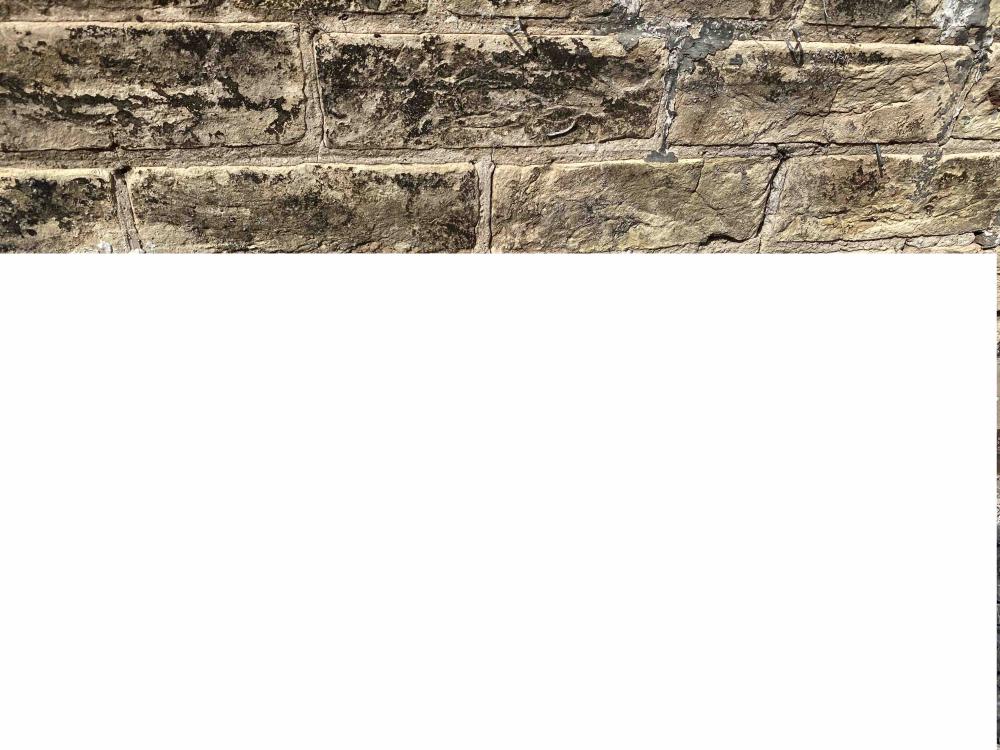
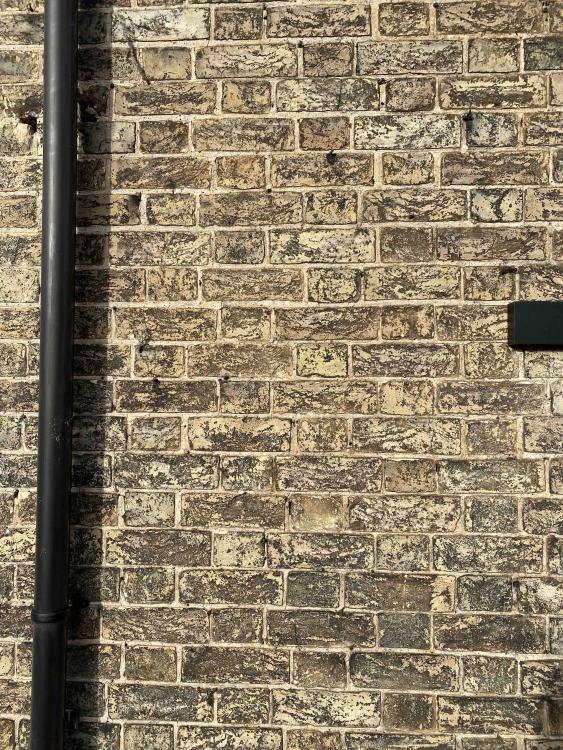
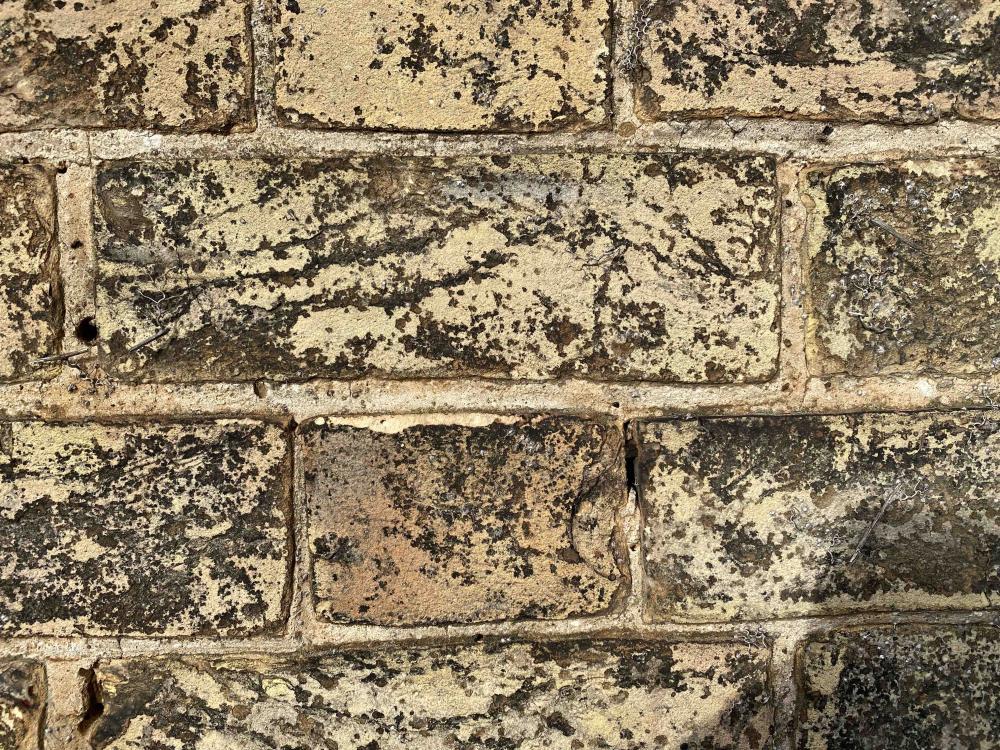
3" or 76mm so 73mm would do. I just can't find anything like to match though. I suspect the previous owner had a similar problem as where bricks have been replaced previously, it's quite obvious they're smaller, metric bricks.
-
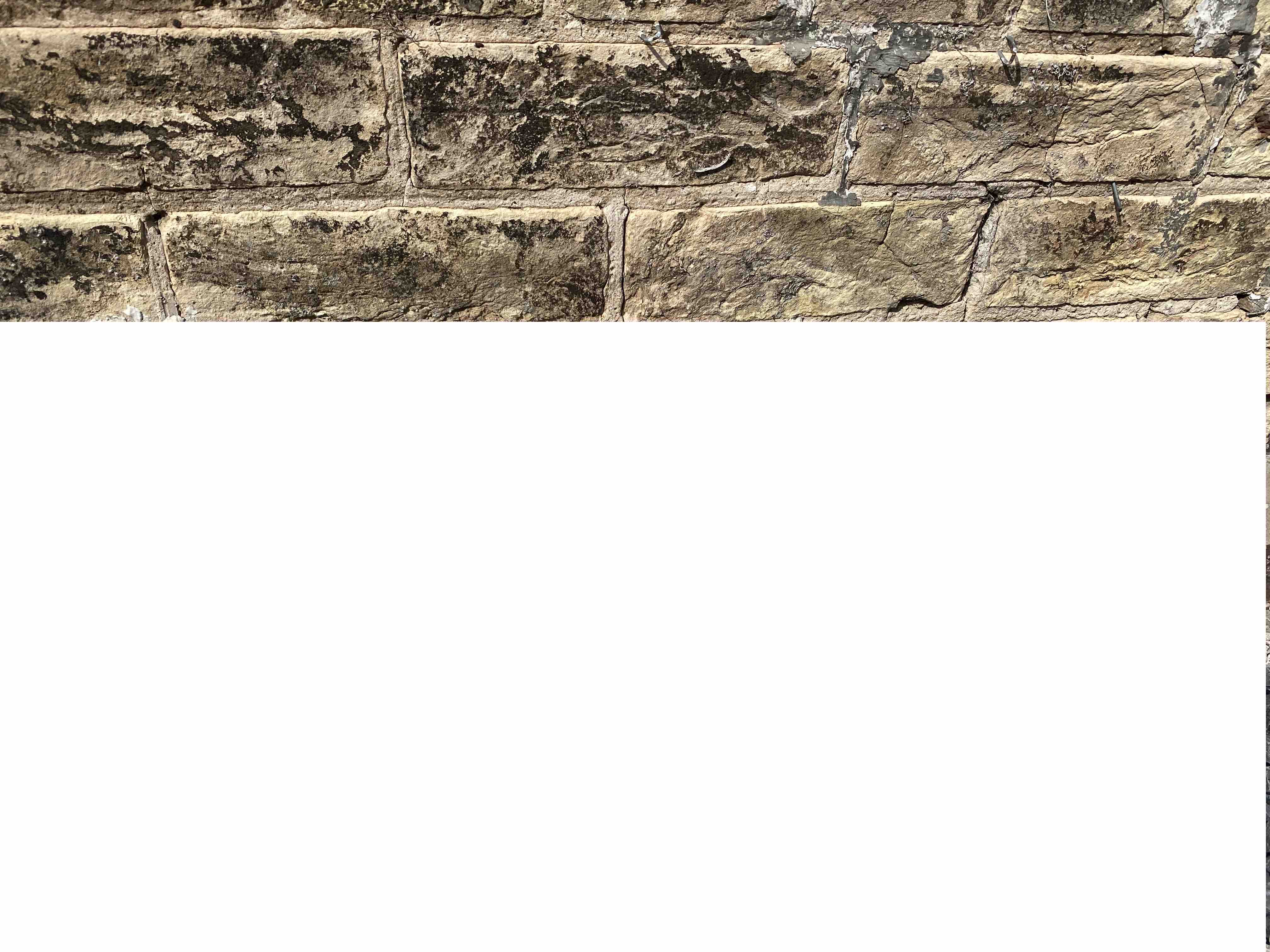
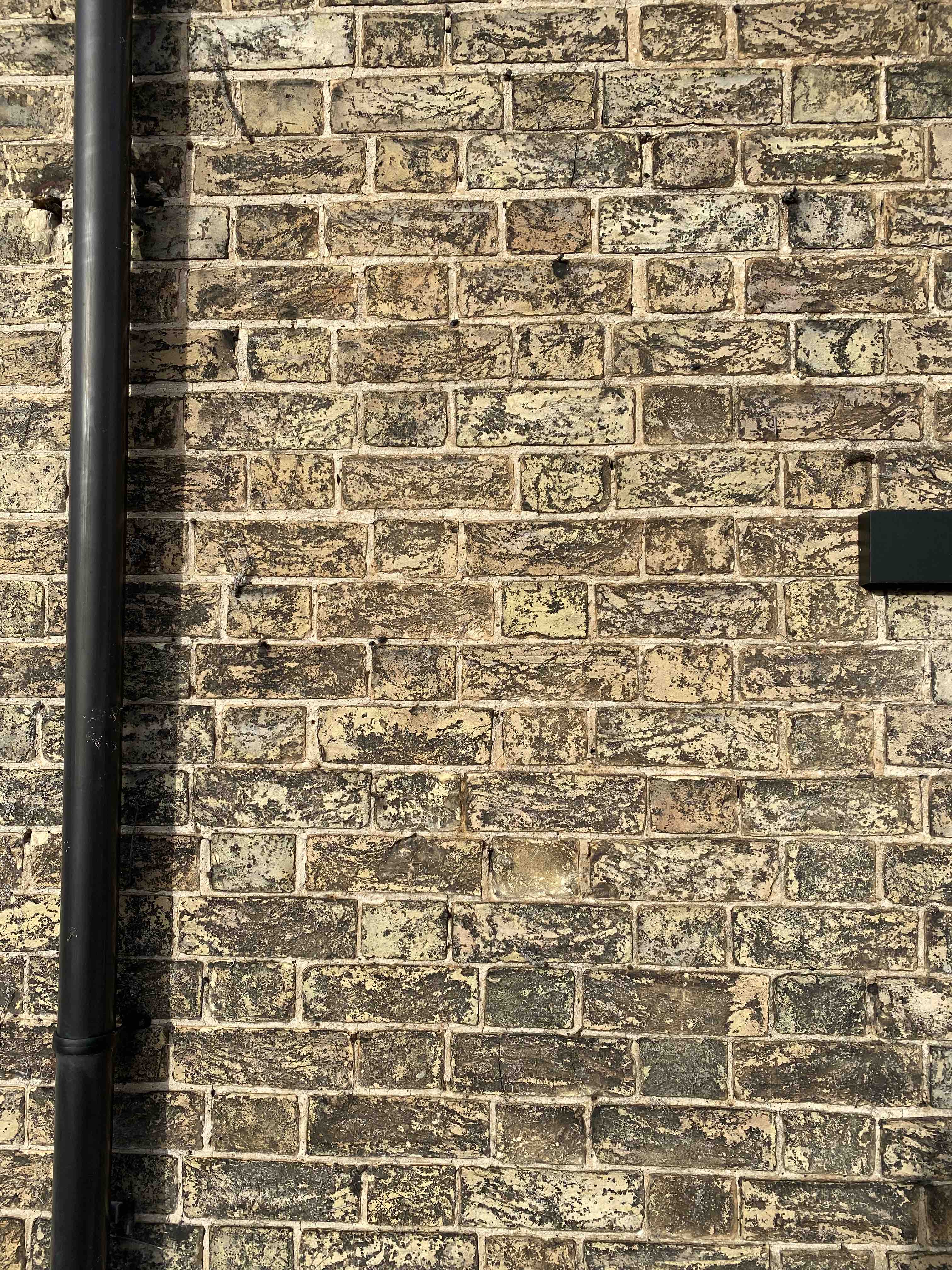
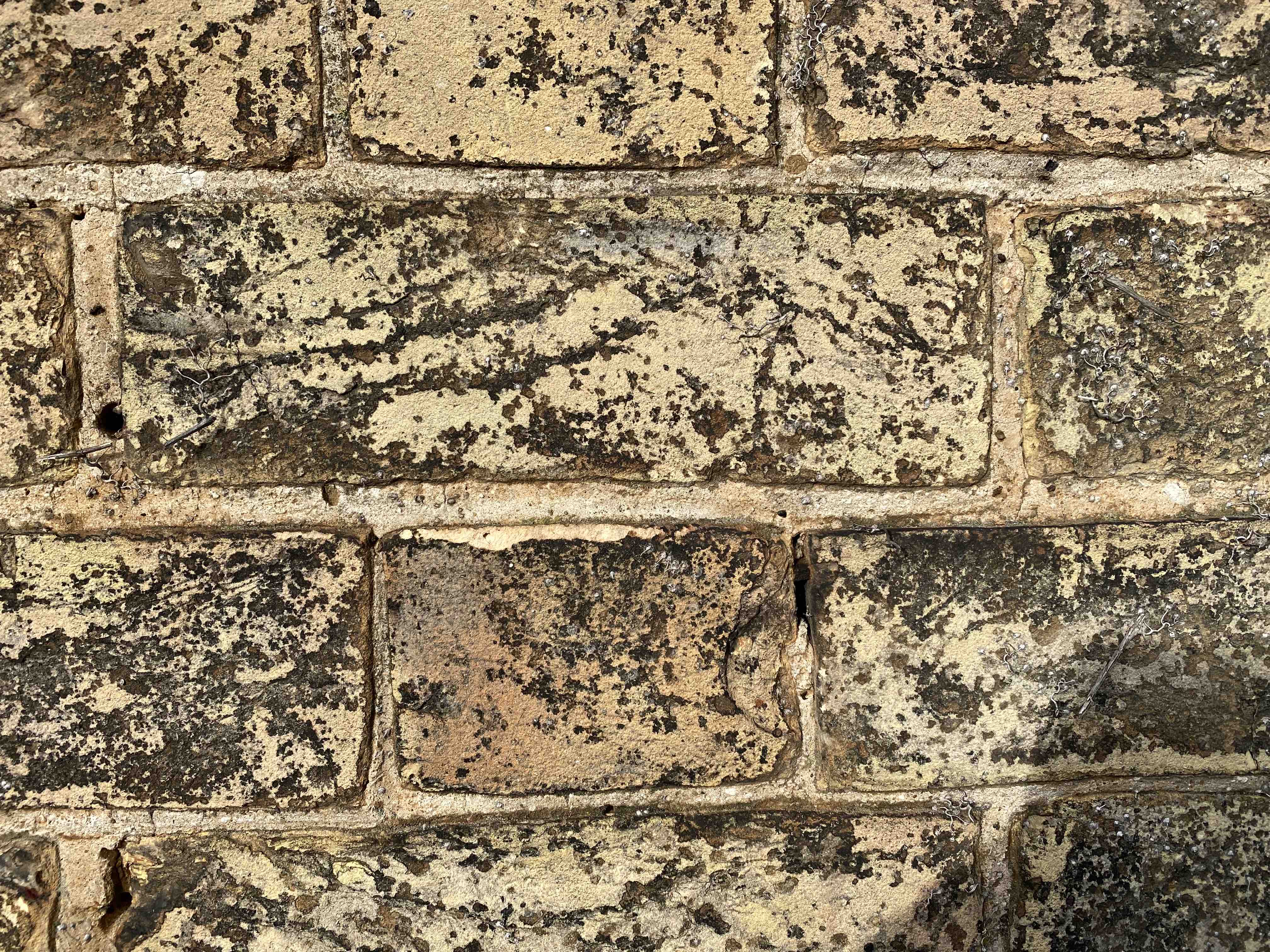
I'm looking for a brick match to our existing bricks. We're based in East Yorkshire, I believe there was a local brick yard active at the time of construction (approx. 1880) but have been told they look like Cambridge Whites. Imperial bricks, approx 9" x 3" x 4.5" so pretty big. I can't find a decent match for love nor money. Can anyone suggest anywhere I can look?
-
What type of screed? Generally it's "dry" to walk over within a couple of days. It's the curing which takes time. We had Cemfloor screed which we could walk on the following day.
-
Is that on a solid or cavity wall? Are you not concerned about air leaking through cracks etc in the existing plaster work reducing the performance of the PIR? The batten is only really needed to hold the membrane in place, so I'd likely do 25mm between the battens and 25mm across them. Without the membrane I'd have gone for the "warm batten" method, attaching battens through the PIR and into the wall.
-
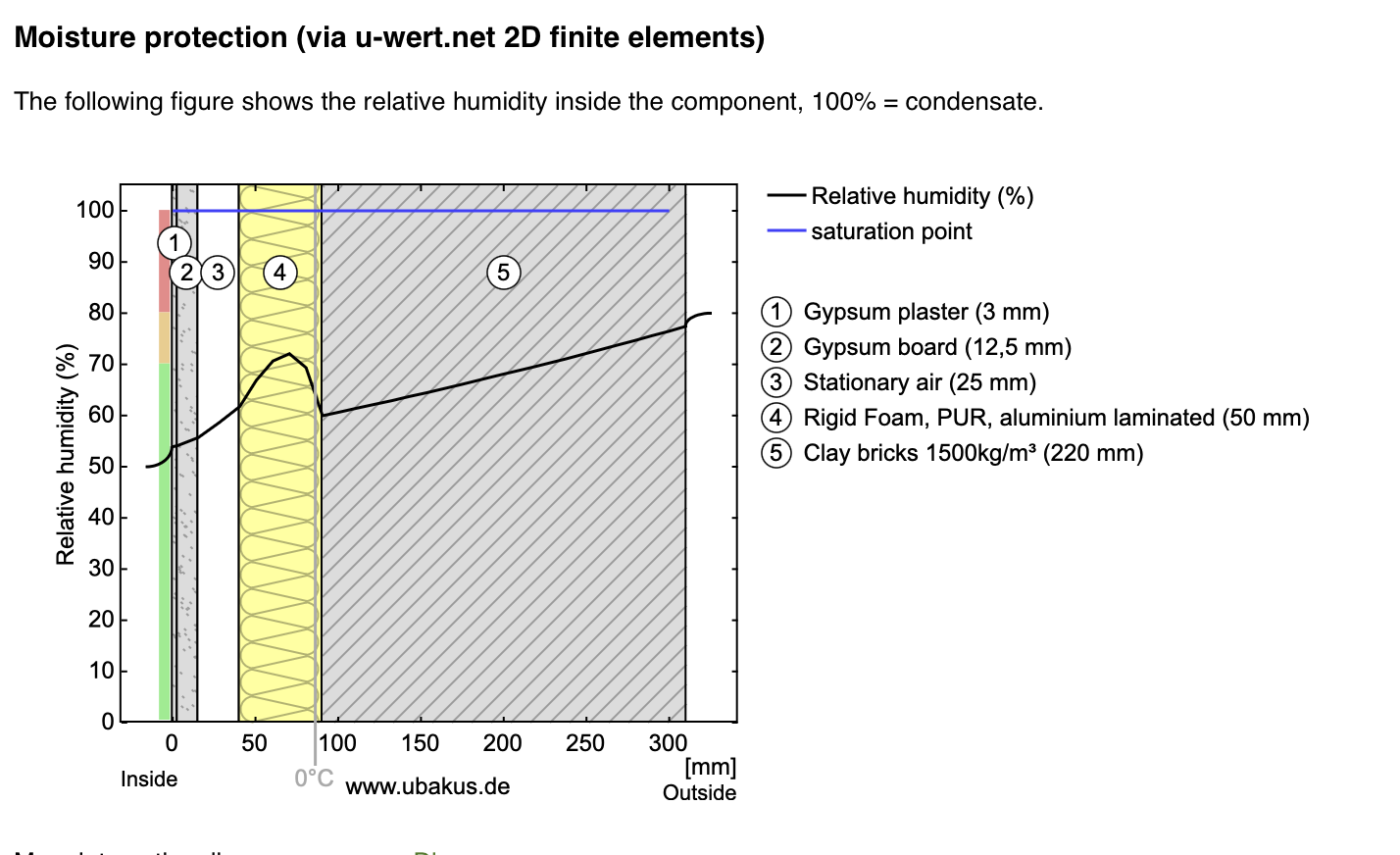
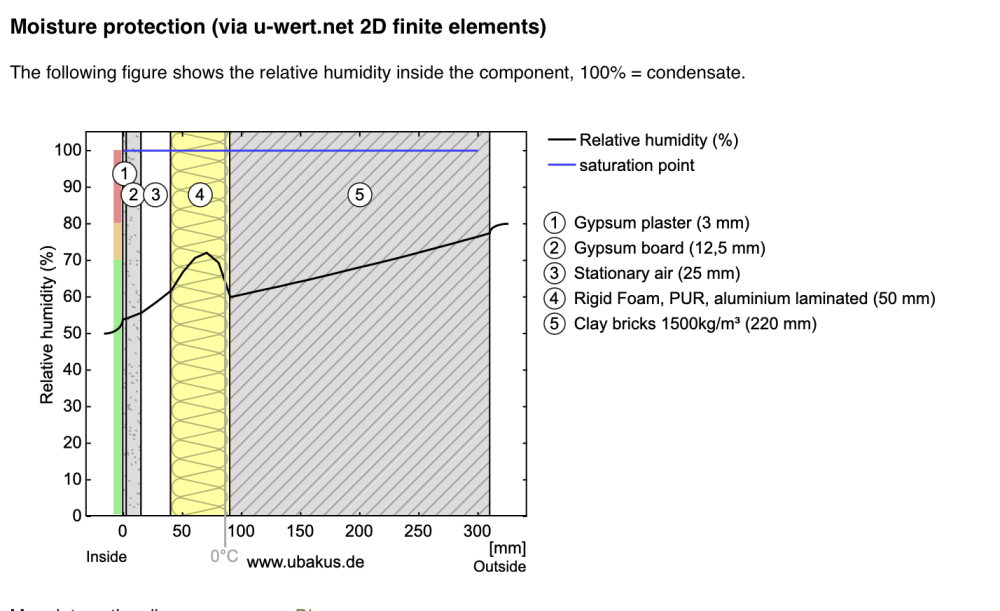
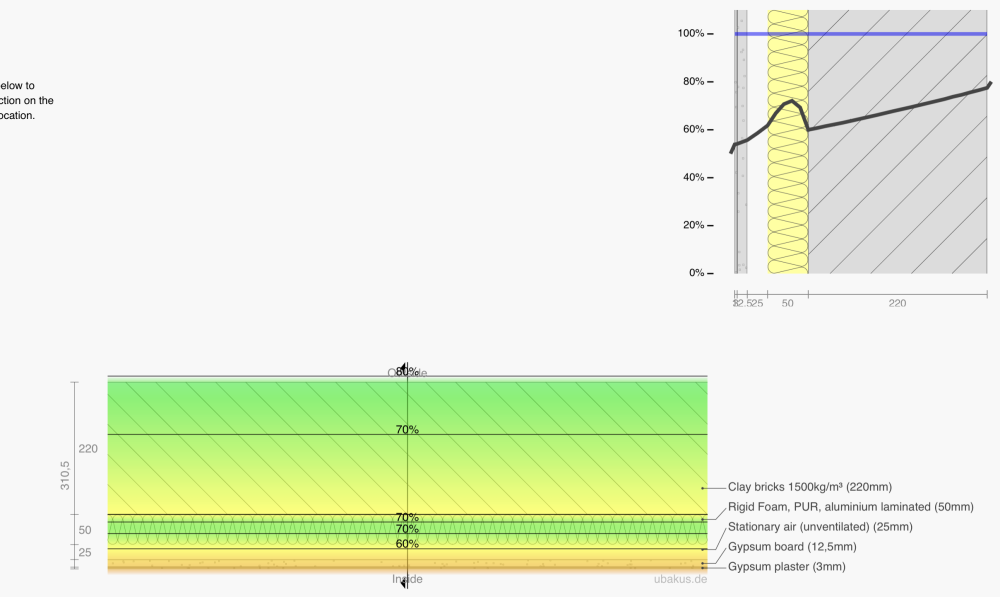
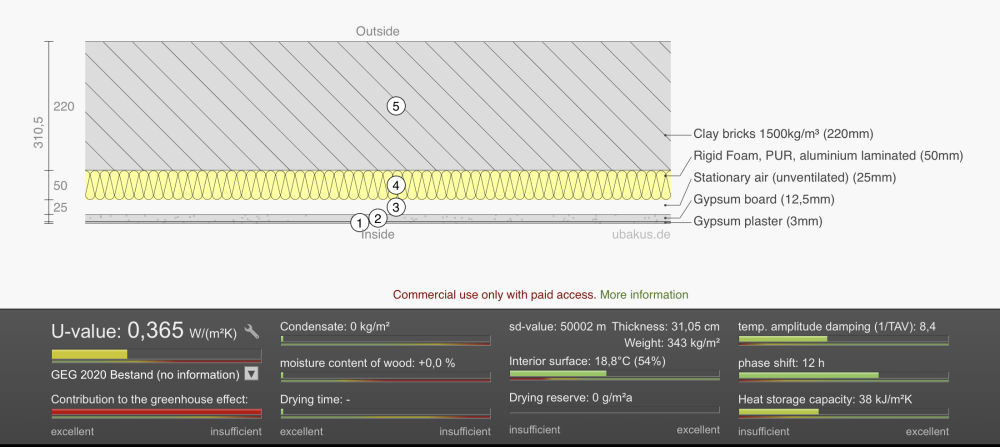
Also, without the breather membrane, regardless of the insulation used (Wood Fibre Batts/Loose or PIR), that modelling shows condensation becoming a problem between the cold side of the insulation and the wall without a breather membrane. I'd also suspect the breather membrane to maintain the efficiencies of the insulation by preventing the wind reaching it. (i.e. wind tight on the cold side, airtight on the warm side)
-
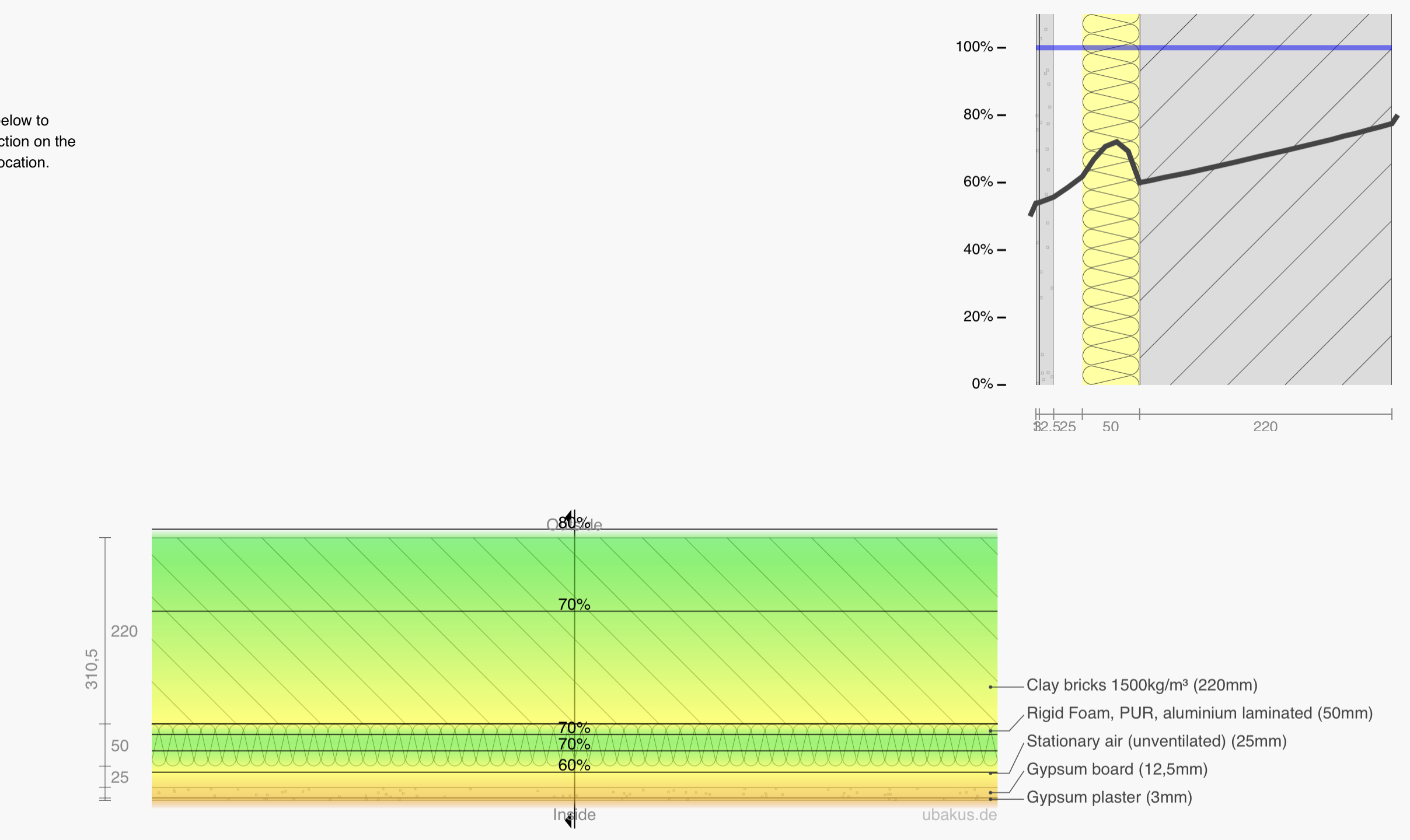
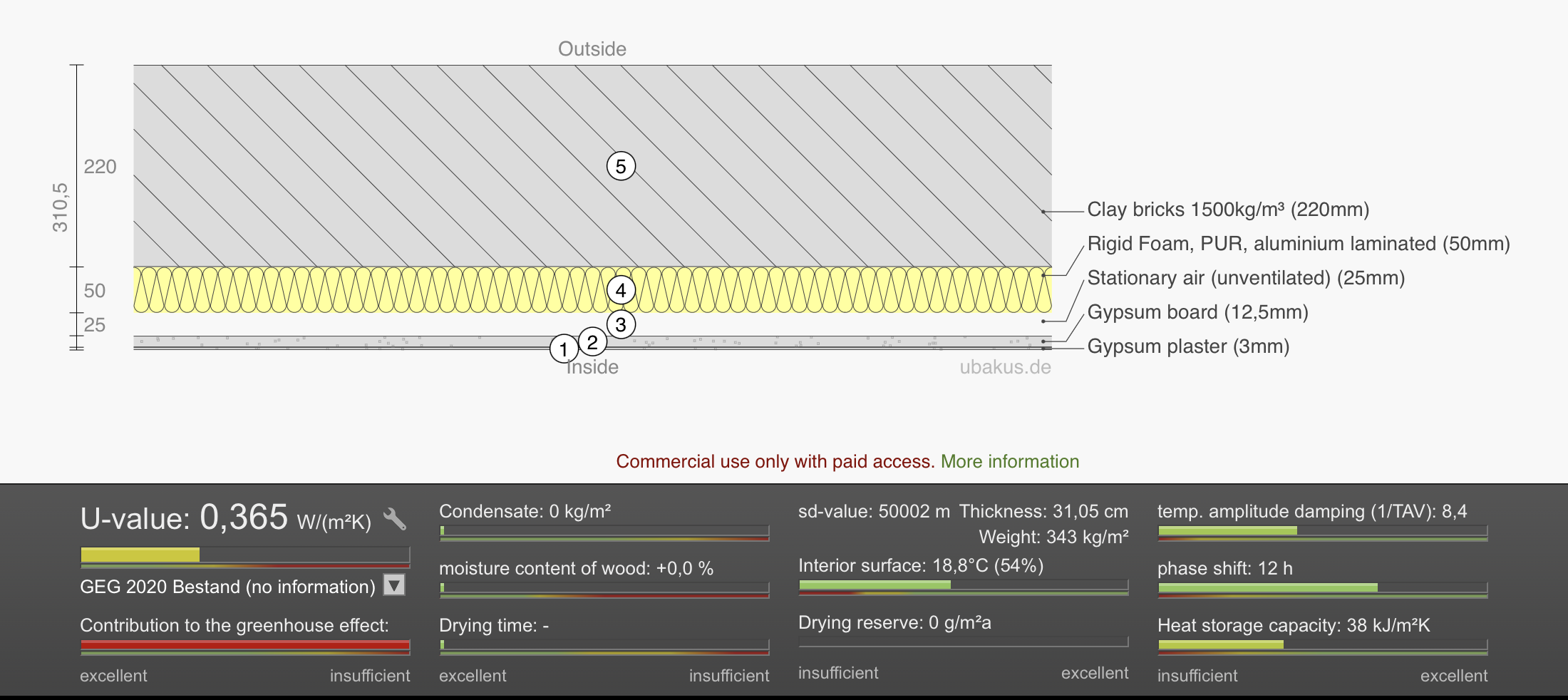
Thanks for the info. Not sure I follow the Ubakus calcs. According to it PIR boards would work just fine; Which would support my original plan (see initial post), but would go against other beliefs.
-
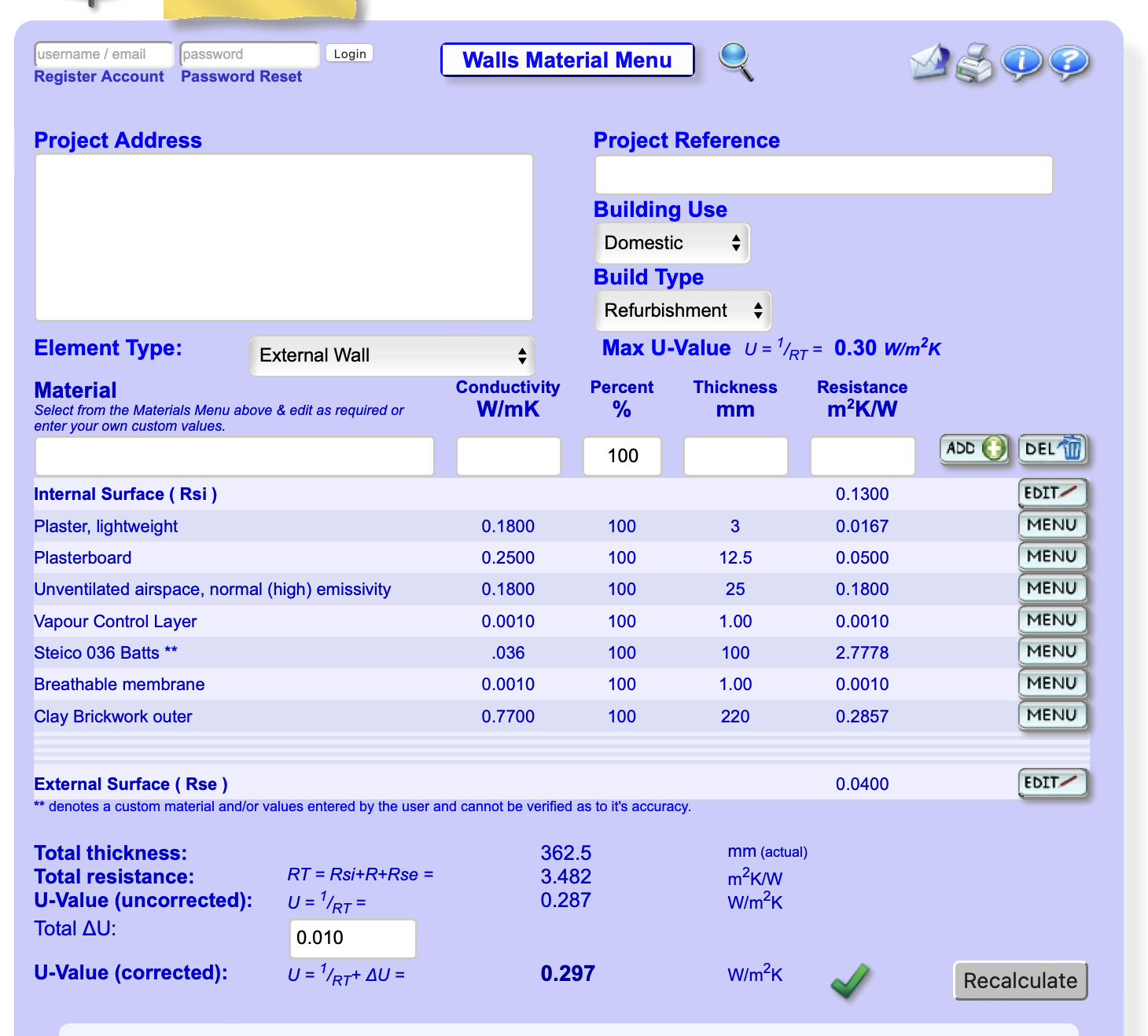
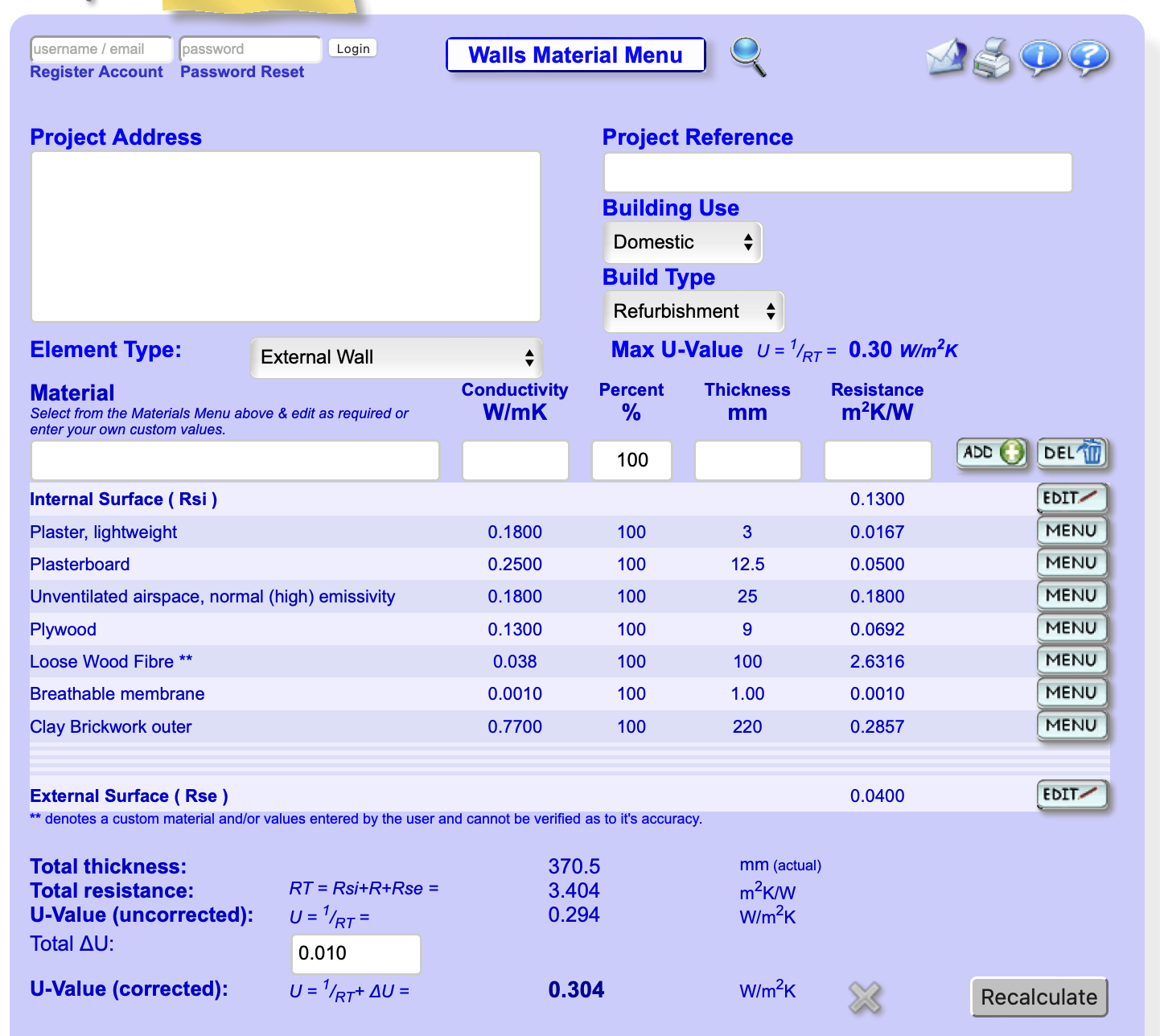
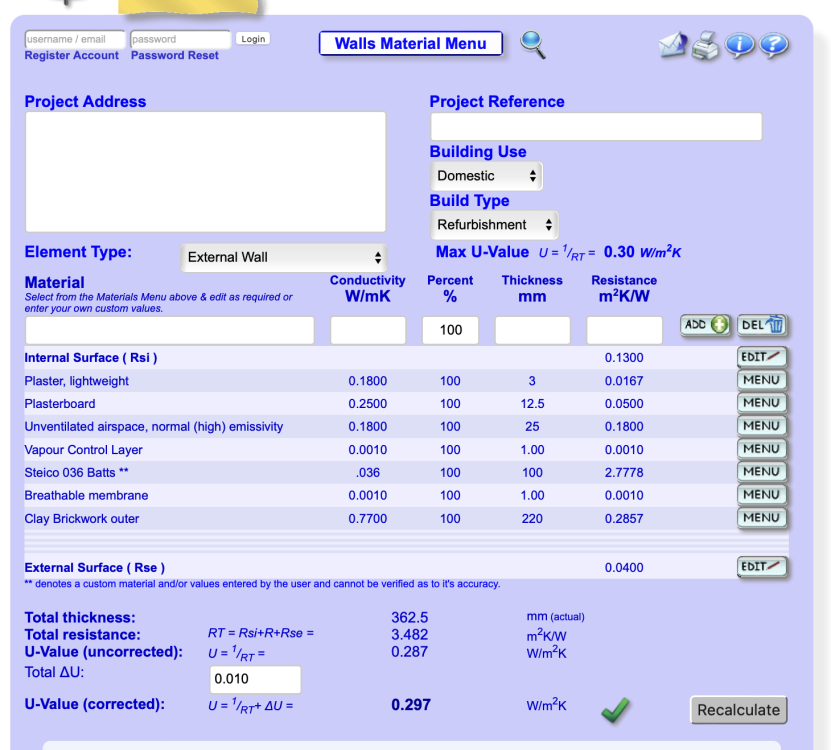
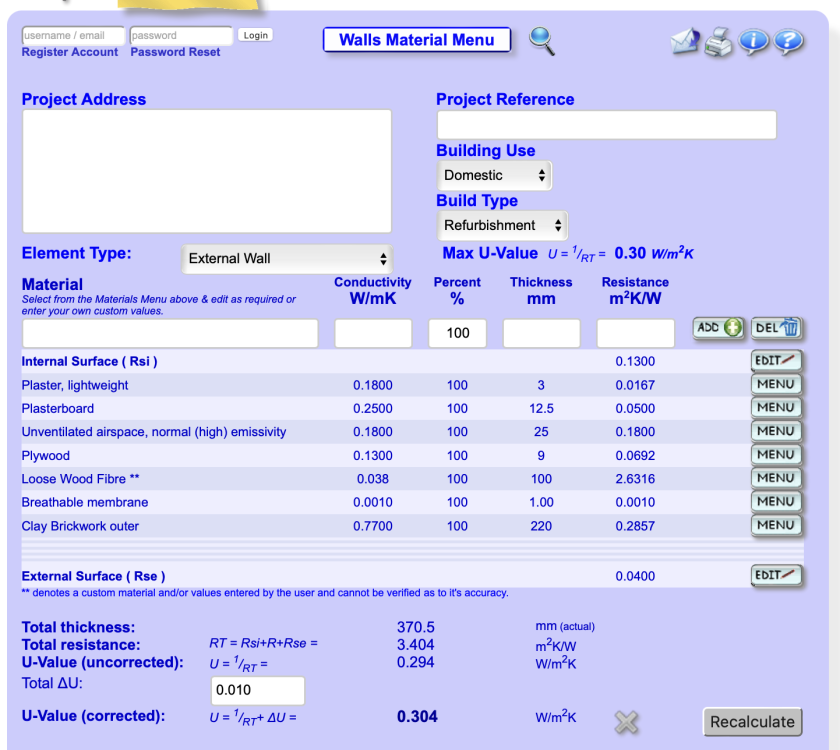
Looking into Wood Fibre some more. Initially I considered; - External Brick - Breather Membrane - Battens - 50mm Wood Fibre - Cross Battens - 50mm Wood Fibre - AVCL - 25mm Service Cavity - PB This would result in a u-value of 0.297 and cost approx £28.11/m2 in materials. I came across loose-fill wood fibre which is significantly cheaper than batts, and I assume an AVCL alone isn't enough to support loose fill insulation behind it, so I then considered; - External Brick - Breather Membrane - Battens - Cross Battens - 100mm Loose Wood Fibre - 9mm Ply (joints taped - acting as an AVCL) - 25mm Service Cavity - PB This is slightly wider (9mm ply...) and slightly higher u-value at 0.304 but works out at approx. £25/m2 in materials, so is saving me around £1000 in total on the job. I quite like the idea of #2, it's just short of building a TF house inside the existing, however I'm worried about 1) blowing the insulation into the newly created cavity void blind (i.e. ensuring good coverage) and 2) the loose insulation sagging over time (again, causing cold spots towards the top of rooms) What do y'all think?
-
Interesting comment about groundwork. I planned to do exactly that (hire a digger/dumper and do mine myself). Do you have any calcs you used to decide getting someone in to do it was cheaper?
-
Anything requiring a lime plaster finish would be an absolute nightmare. I'm yet to find anyone local who's willing to use it, and whilst I've rendered our under-stair cupboard using lime, my handiwork is nowhere near suitable to be on display in habitable rooms. I could infill with wood fibre batts opposed to PIR. Perhaps 50mm on the 330mm walls and 100mm on the 220mm walls (as they're generally a couple of degrees colder than the thicker walls). We'd still need to cross batten for a service void and fit PB though. I assume the service void would allow for some level of ventilation, between it and the AVCL, so might be a suitable compromise?
-
I have a Grundfos on our UFH (think it's a UPS3). It's running at speed 3 to provide the flow demand of all loops at the same time (single zone). There's a distinct humming noise when it's on, that can be heard ~ 3m away, separated by the under-stairs and a closed door.