


Roger440
-
Posts
2171 -
Joined
-
Last visited
-
Days Won
7
Everything posted by Roger440
-
 Good work if you can pull it off.
 -
You might not agree with my assesment of lining pockets, but that its often 10's thousand i dont think is really debateable. As each year rolls by, more and more "stuff" gets added. Councils just demanding a report on everything, soil contamination, newts, bats, archealogical digs etc. Even where this is absolutely no evidence that its needed. But it generates an industry of people who are seen/licensed/recognised as experts in those field, who all charge handsomely for often very little. You suggest it can (could?) be reduced with a good planning agent. Sure. But again, more (unknown) costs. They charge handsomely too. Eventually (well in some places already have) we arrive at a point where its simply uneconomic to build at all as the "non building" costs just keep going up. Which of course happens everytime government "meddles" and adds more layers of complexity. I saw the £76K figure reported. In some of the comments a couple of developers (big ones) pointed out that the report did not include planning costs (which it didnt). One of them said his planning costs per unit were greater than the £76k. Ok, all anecdotal, but its all adding up. Theres someone on here who paid over £10k for a bat survey!! Thats just ludicrous. There are few people willing to enter into building there own house when there are so many costs that cannot be known before you start. Of course there are a few with unlimited cash, and thats great for them, but thats not most people. That so many on here manage to see it through to the end, is in itself amazing, and hats off to those that do. I couldnt cope with that level of financial uncertainty as i couldnt simply rustle up and exta 20, 30, 40k based on a councils whim. The thread started around comments about what stops more people self building.
-
This comment, and that of Ed, is so true. The building game is in the dark ages, everything is a one off, even for volume builders. Its bonkers. I cant understand why no big corparate has entered the marke with a disruptive product thats better. Its happened in every other sector one can think of, but building seems stragely "off limits" And so we continue to mess about, paddling in mud, mixing up concrete, mortar and plaster, and chopping up bits of wood in said mud to build stuff! One day someone will.......................................
-
Its not any lack of understanding or knowledge holding things back. Its simple, practical issues, like land availability, planning, and most important now (more than in the past) is that it makes no financial sense in most of the country. Its not uncommon to spend several 10's thousands on "stuff" that has nothing to do with actually building, but more to do with lining other peoples pockets for reports, surveys, etc etc. I saw a report recently that "stuff" was adding £76k per hhouse in costs, on average, across the UK. Dont know how accurate the number is, but its a lot, regardless. I long harboured a dream to self build, but my first 2 points scuppered any hope, before i even got the the "does it make financial sense" bit. Saveasteadings point that the only sensible way now is a light renovation. Which, having thrown in the towel on self build is essentially what im doing. Will it be nice when its done, yes. Will it be what i really wanted, absolutely not. Beyond project management, which has its place, though not for me, im really not clear what you are offering. Being blunt, sounds like another "cost" thats adds little if anything to the task of getting a house built. Maybe ive misunderstood?
-
This is the kind of thing i used to dream about doing. Looks fantastic.
-
Well thats good news, but as above, really depends on background noise. Mind you, the average ASHP will drown it out.
-
As Nick said, mass is what you need. No tine, just concrete. Then line the inside with that egg crate noise absoroption foam. And most important rubber mounts. If i was doing it again, it would be double insulated, ie compressor rubber mounted to a frame using proper rubber mounts, like a car gearbox mount or similar, wood frame if you can, which is in turn, rubber mounted to the concrete slab base. Keep an eye on the air delivery hose, this was resting on the base of the plastic duct, which then transmitted resonance to the tank. Sadly it appears beyond the wit of man to design a "silent" sewage treatment plant. Once again, the building industry is miles behind. I guess if you live in a releatively noisy environment it bearable, but when its really quiet on a nice evening all you can here is the bloody pump running!
-
Im not sure any of them are "quiet". The vortex i had was hopeless in that regard. Much work was carried out to make it quiet. Whilst 90% better, i was never happy with it. If id stayed, i would have moved it some distance away into a summerhouse we had there. Would have needed a bigger compressor due to distance though.
-
Cant really see it having any detrimental effect on a decent sized body of water in the ground. I might get to find out at some point. Building a small retaining wall but just dropping some ducting in so i have the option to do it in future without digging stuff up again. I guess the primary advantage is a more consistent COP and the temp of the water wont really ever change, whereas ASHP has to cope when it gets to minus 10. (or minus 15 as per last winter.) But the economics may not stack up as you say even with excellent COP.
-
But im in the uk.
-
They do indeed. However, ive worked flatout for 40 years, so, i will soon be trying enjoy the limited time i have left enjoying myself, not wasting ut in parish council meetings.
-
Id agree, plenty of competemt people at the bottom. Like the road crew that came to patch up the road by my house. Again. Talking to them, they know what they are doing there is pointless. The old guy who has bern there since the dawn of time is the first to admit its depressing. Im not so sure where these highley competent top administrators are though? Agree however, its clear its near impossoble to get rid of useless people. Which is of course self fulfilling. These aee people that simply wouldnt survive in the real world.
-
No ones complained about what i do. Because im not a moron.
-
No thanks. Parish councils are mostly pointless talking shops with little power, see my previous post. They dont "do" anything much. My friend is the chair of the parish council, ive discussed. Conclusion was, dont do it. For some reason you believe we should just accept nothing much works anymore. Odd.
-
I do feel free to criticise, they are spending our money. And as such shuold be held accountable for their actions. Thats hows its supposed to wotk. Can you imagine how bad things would be if only those in the system were allowed to comment? Which is what you appear to be proposing.
-
Im retiring, so dont need another job, but regardless, i wouldnt get the job, nor would anyone else precisely for the reason that one may have some competence. Not welcome at the council. I donate some of my time to the village hall instead. Given ive run 3 business's, all of them profitable, all with excellent customer reputation, and one which i sold allowing an earlier retirement, with respect, id suggest i have a reasonable degree of competence that doesnt need further demonstration. You may choose not to believe me, but im pretty confident id not organise a change to bin collections that failed to cosider the 2 most basic aspects of that activity. Aside from demonstrating someones utter stupidity, and dont forget, stupidity with OUR money, it does, however, raise broader questions, probably not for this thread, about how our political system results in totally inappropiate people to rising to the top.
-
Why should i stop criticising useless people? I used to attend parish council meetings. It became evident the whole thing was a farce. Nothing ever got done. Indeed, i moved there in 2016, left in 2022, and looked at the minutes (which are only ever published on the day of the next meeting) recently. Essentially, most of the actions and issues are the same as they were in 2016. It is, literally, the definition of pointless. A couple of good people tried. Usually lasted a year and gave up. You were not supposed to achieve anything. At a higher level, our council here thought it was a good idea to re-arrange the bin collections. Which were working ok. Sadly, increasing collections per truck from 500-600 upto 900 whilst failing to realise the trucks did not have the capacity for the volume of waste, and the operators insufficent time to complete the new routes, was, apparantly an "oversight". We are months down the road and its still not sorted. The councillor responsible has been relieved of this part of her duties. But not her pay. Surprise surprise. This person, and others involved are simply brain dead. So i will critisise them. Because thats the very least they deserve. Is it easy, no probably not, but this level of stupid is inexcusable. Could i do do better. Absolutely, 100%. Most people could. And of course you are not allowed to take the rubbish to the tip (70 min round trip) without pre arranged appointments, and without paying. Even though ive already paid, and just want to dump the stuff they failed to collect! I could carry on for pages of their stupidity and waste.
-
Not sure i follow the last part? I dont have any batteries yet.
-
The problem is lots if that stuff doesnt happen any more. Funny you mention bridge inspections. One near me, the bridge parapet collapsed into the river. Turns out nobody has done any inspections underwater since fred retired. Nearly 20 years. Yep, doing a great job.
-
I know my way round ls engines in great detail. Im using the donor vehicle for whole drive line, suspension, subframes, wiring, dash etc. Know nothing about vipers, nor are donors cheap!
-
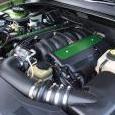
With a whole fleet of classics it not remotely viable. Ive just started building a 57 chevy truck hot rod project. I did, briefly, consider an electric drivetrain, but then i came to my senses and decided to stick with a 5.7 V8 LS1 driveline. That said, its rapidly getting cheaper. Whats a real shame is that GM never went ahead with the "eCrate" project. And electric "drop in" replacement for the LS series of engines. Dropped due to liability concerns. https://gmauthority.com/blog/2020/10/chevrolet-performance-launches-electric-connect-and-cruise-package/ The interest at its launch at the SEMA show was mental.
-
Yes, i recall your pictures. But isnt there a bank/tress behind offering some level of sheilding?
-
I also cant be in a position where travelling is reliant on my ability to use a smart phone. Which is clearly smarter than me.
-
I have wondered about this for a while. Clearly as the EV fleet grows, and the ICE fleet diminishes, total petrol(and diesel) sales will diminish. There will come a point, where its no longer economic to continue selling petrol. Clearly this is going to hit more rural areas first as volumes are lower. Which is a problem as ICE use is invariably higher. Regardless, there will come a point where fuel becomes hard to find, whilst a sizeable chunk of the vehicles on the road are still ICE. There seems to be no thought or plan as to how to manage that. I cant imagine it will end well though. Its also likely within 10 years based on renewal rates, the EV mandate etc. Will definitely be a problem for me, with no obvious answers.
-
No "technical" reason. But some dont.

