SteamyTea
-
Posts
23836 -
Joined
-
Days Won
200
Everything posted by SteamyTea
-

Charles Austen ET100 air blower failed again........
SteamyTea replied to ProDave's topic in Waste & Sewerage
I did not even notice it when I parked right next to it. -
Can you find the k-value of the materials the blocks are made from? Failing that, what thickness are the blocks, then it is possible to calculate the thermal resistance of the wall build up. I am not 100% sure, maybe @Gus Potter can clarify, but I think the N number is the compression strength (number of newtons) and different block types may behave differently when drilling and screwing into them.
-
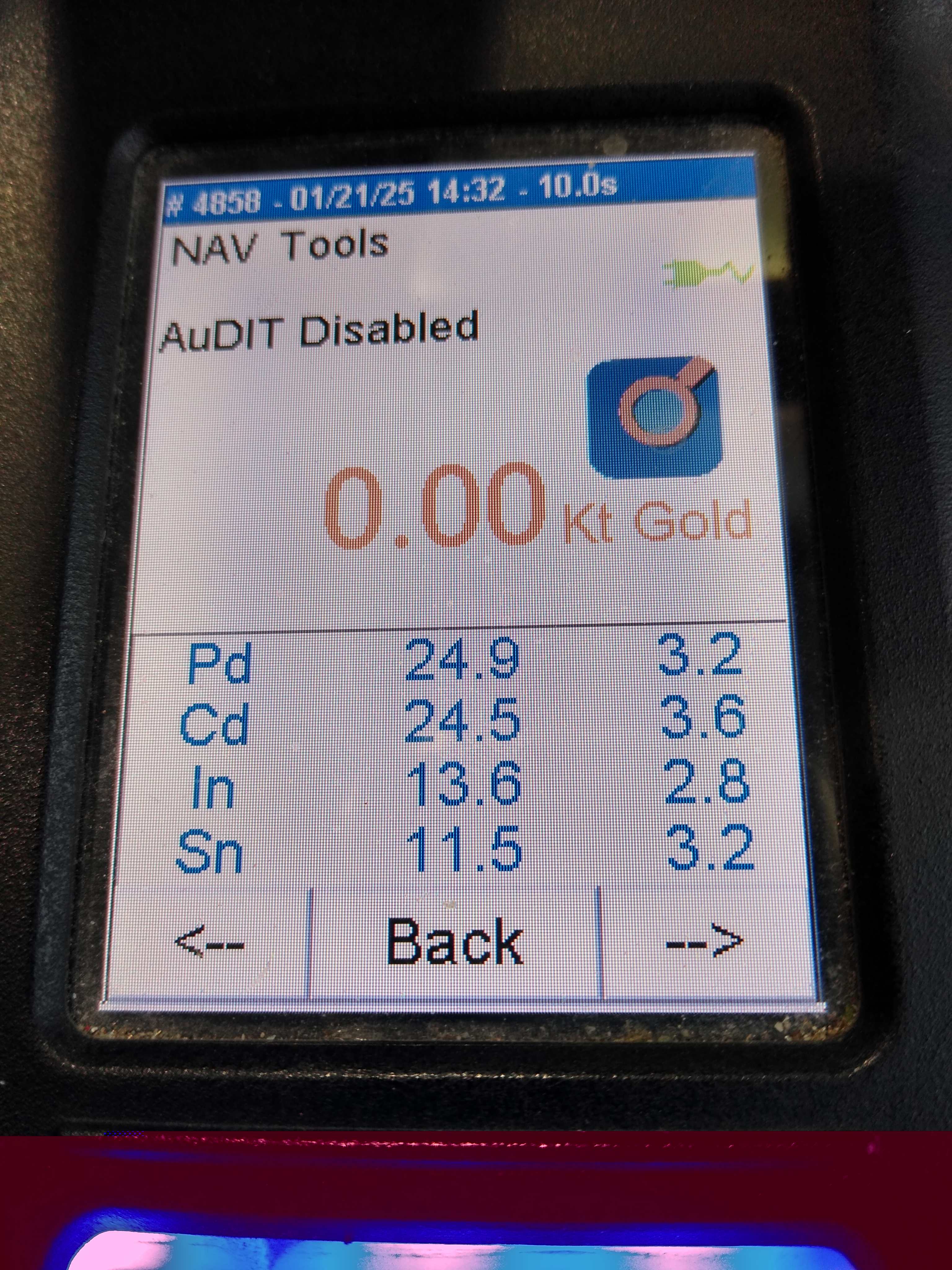
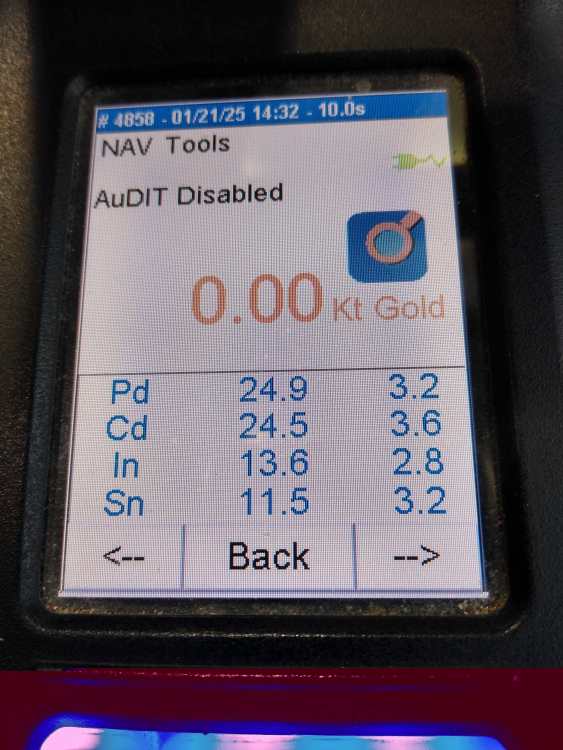
Saw the metal man earlier. The first column is the element, second the percentage and third is the uncertainty.
-
This could cause a problem for the building fabric. Sometimes a group of hot sweaty teenagers dancing, other times the yoga group not breathing properly, then there will be the village shindig with spilt beer, and worse of all the WI, who will never let on what they get up to. Could cause a lot of condensation problems.
-
Except that radiation is an inverse square law, so power diminished rapidly with distance. Would make the planet Earth rather warm if it was just slightly different on the physics.
-
New Highland Home, ASHP size + calcs advice :)
SteamyTea replied to HighlandHopeful's topic in Air Source Heat Pumps (ASHP)
Mean temperatures, and these can also be mean lowest temperatures, tend to follow a normal distribution. You can see if you have a local Met Office weather station nearby here. What you need to know is the base temperature you need to start heating at, for me that is around 9°C OAT (Outside Air Temperature), then look at the fraction of time (there are 8760 hours in a standard year) that your heating needs to be on. Then, this is getting more complicated, what power you need at the specific ΔT (temperature difference between inside and outside) to hold the inside temperature i.e. 100W.K-1. And now to make it much more complicated, you need to know what power the ASHP can deliver at those OATS. And this is the real hard bit, what the CoP (coefficient of performance of the heat pump will be at those temperatures). Then it is easy to sum the lot up and you know the energy used, the CoP and therefore the bought in energy price. DHW (domestic hot water) is an add on and needs to be treated as such, space heating and DHW are different things, and different times and at different temperatures. So some allowance needs to be made for the time that your DHW is being recharged, with that time subtracted from the space heating times i.e. you cannot use the 24 hour average power delivery for space heating as your DHW may need 2 or 3 hours of that 24 hours, so that ups the power that needs to be delivered to the space heating by around 10%. Initially you need to make some assumptions. These can usually be calculated from your existing usage for DHW. -
Welcome Are you from NZ by any chance, or just like drinking in the cinema.
-
Fabric and ventilation heat loss calculator
SteamyTea replied to Jeremy Harris's topic in Heat Insulation
When I went to your site, I go this.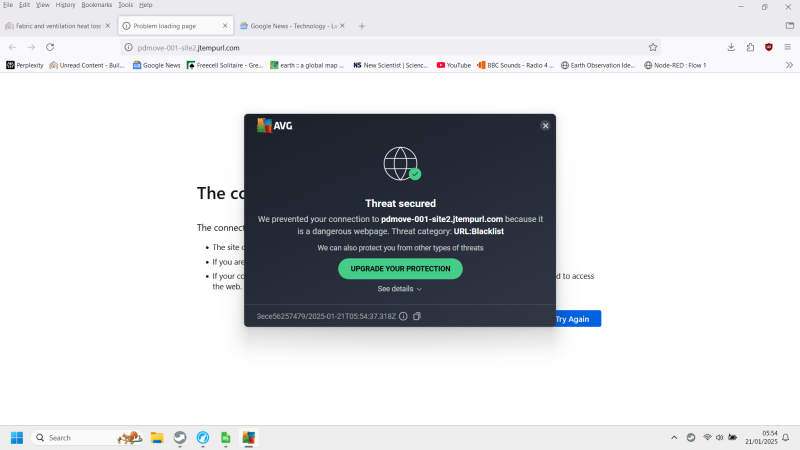
-
Willis heater UFH. Heaters in parallel or series?
SteamyTea replied to Russdl's topic in Underfloor Heating
Written as watt(s) when referring to power, Watt when referring to the man. Same with joule (J) and Joule. Kelvin(K) and Kelvin, can get away with that as the temperature is at the beginning of the sentence. -
Willis heater UFH. Heaters in parallel or series?
SteamyTea replied to Russdl's topic in Underfloor Heating
It should, units are important for clarity. kW kWh. -
Willis heater UFH. Heaters in parallel or series?
SteamyTea replied to Russdl's topic in Underfloor Heating
What is this? -
It gives the impression that the customer has some control and can reduce their energy bills. I blame the marketing departments. (Metal Mickey was not at work today, so could not put the PCM under the lazer, hopefully he is in tomorrow)
-
Your electricity must be very cheap. 2 kW x 24 hours is 48 kWh/day. £1.20 / 48 kWh is 2.5p/kWh. If I could get that price my house would be at 28°C and my bath would be full of hot water twice a day.
-
Willis heater UFH. Heaters in parallel or series?
SteamyTea replied to Russdl's topic in Underfloor Heating
Specific Heat Capacity times Mass Flow Rate time Temperature Difference. That gives you the power required. For just the energy you use Mass, rather than Mass Flow Rate. It is always best to use SI units (J, kg, K, s) rather than imperial or derived units. Convert all temperatures to kelvin, K, it can get funny when passing through zero sometimes, especially when dividing (after rearranging formula for instance). -
Too true. And they all park badly.
-
Advice needed - should we change building control approver?!
SteamyTea replied to ARC Guitars's topic in Building Regulations
I prefer In Our Time. -
Advice needed - should we change building control approver?!
SteamyTea replied to ARC Guitars's topic in Building Regulations
Every generation does that, though there are still things to be invented. When I was a lad, in the days of flared trousers and long hair, I watched an Open University program about engineering. It was about Lola and how they were designing the wheel uprights (the bit that connects the wheel to the suspension). They had had some failures and needed to sort it out for safety reasons. What they did was remove some material, in the correct place to reduce the mass, which reduced the forces and made the component stronger. Seemed very counter intuitive but the mathematical modelling was correct and the Lola stopped loosing wheels. The lesson I learnt was that just adding material does not make things dynamically stronger and to learn some of the theory and practices behind the engineering (real engineering, not fixing the washing machine engineering). A few years back, I read an article about why SpaceX made the shell of the rocket boosters out of stainless steel and not aluminium or carbon composite. It was to do with the thermal stresses and buckling characteristics. This allowed for the reuse of the boosters. And it works and allows for cheaper space flight. As Ken Tyrrell once said, "An engineering is someone that can do for 10p what any fool can do for a quid". (substitute fool cor (expletive deleted) as old Ken was colourful) So if you think that extra safety engineering is expensive, look at the cost of not implementing it. -
Willis heater UFH. Heaters in parallel or series?
SteamyTea replied to Russdl's topic in Underfloor Heating
You should get a slightly higher temperature because the pipework surface area is decreased. Probably too small to measure though. -
Will get very high point loads on the floor.
-
I go 2 minutes and 20 seconds into the video and could not put up with the guys tattooed arms waving about. Even the Heat Geek guy does it.
-
Are we targeting ASHP's at the wrong market?
SteamyTea replied to ProDave's topic in Air Source Heat Pumps (ASHP)
If that is the case, then, with the scientific definition, it would qualify. From Google A liquid is a type of matter with specific properties that make it less rigid than a solid but more rigid than a gas. A liquid can flow and does not have a specific shape like a solid. Instead, a liquid conforms to the shape of the container in which it is held -
Are we targeting ASHP's at the wrong market?
SteamyTea replied to ProDave's topic in Air Source Heat Pumps (ASHP)
There is a difference between liquid and fluid in science. A liquid is just the one of the 5 physical states a collection of atoms can be in. -
Are we targeting ASHP's at the wrong market?
SteamyTea replied to ProDave's topic in Air Source Heat Pumps (ASHP)
I think that part of the reason the A2AHPs are not eligible for grants is that they are relatively cheap to fit. When the grant systems were initially set up, it as based on a RoR of 8% I think (that may have been for PV, can't remember now). -
Why only 5, cheap at this stage to fill the whole roof up.
-
Just got back to Penzance for a coffee and then a kebab. Was good to see you. Going to send you a PM in a sec as there was something totally unrelated I meant to ask you.