


SteamyTea
-
Posts
23956 -
Joined
-
Days Won
203
Everything posted by SteamyTea
-
"I've searched all the parks in all the cities and found no statues of committees."
-
Lloyds Underwriters https://www.independent.co.uk/news/business/profile-two-men-who-lost-a-billion-names-in-the-lloyd-s-syndicates-run-by-anthony-gooda-and-derek-walker-are-facing-ruin-richard-thomson-relates-a-tale-of-two-incompetents-1494224.html
-
Yes, like Yes Minister, why we are still enjoying it now.
-
I forget you don’t get irony.
-
I take it you are unaware of the concept of civil war. Here is a potted history our ours. https://en.wikipedia.org/wiki/English_Civil_War
-
Will be no harder than us leaving the EU. That was all sorted out over a cup of afternoon tea wasn't it.
-
Don't say that, the anti-RE brigade may have to face some home truths that they spout nonsense out of their arses, or worse, do some research themselves.
-
They had to do a similar thing with car insurance by not quoting female drivers lower be aude they were female. Result was women drivers got higher quotes. I think the important metric with insurance is when it comes to paying out. Don't matter a (expletive deleted) if you pay 100 or 1000 a year, if they don't settle a claim adequately, the customer has been conned/scammed.
-
Interesting listen https://www.bbc.co.uk/sounds/play/m003011r
-
- 1
-

-
It does. Try using a £50 note down here, not many places will take them. Cash handling is also expensive, a charge that gets passed onto the end consumer. I hate using cash at work, card payments are so much easier. There is no technical reason that EV charging points cannot take the major cards, self serve checkouts at super markets manage it.
-
We pay for a lot of things we don't use all the time. Health care, vehicles (public and private), education (have you used a quadratic equation since you left school). I don't use roads in Scotland, and you don't use my local roads, but they are there if we choose to travel. Energy production is not just about generation, security and quality of supply is equally important. Gas, oil and nuclear also get paid to throttle production, it is not unique to renewables.
-
That is called 'The Tragedy of the Common'
-
Yes you can
-

Second shower install into power shower system
SteamyTea replied to Square Feet's topic in General Plumbing
Assuming this is a pumped system (twin impeller shower pump) on a vented system then you run the risk of emptying the loft tank and the DHW cylinder. This at best caused an air lock, at worse, the cylinder can distort and fail. If it is a mains pressure system (invented) then no need for a pump. On a combi system (instantaneous), then most struggle to run one shower, two will give trouble. So it all depends what you actually have already. -
I don't know. The article is rather speculative as it is an area where not much research has been done. I think our modern life, for some, is much more 'indoors' than it used to be. How much of a real difference that makes I have no idea. I am currently sitting out in the sun. There are 13 other people here (like the last supper) and they are all indoors.
-
Health The shock revelation that light bulbs are wrecking your metabolism Since the 2000s, our light exposure has changed drastically as we make our buildings more energy-efficient. Now, we’re discovering how this may mess with our mitochondria, contributing to diabetes, dementia and more By Graham Lawton 10 August 2026 Red light is missing from much of our lives Emanuel Santos Take a flashlight – the one on your phone will do – turn it on and place the pad of your index finger over the bulb. See that red glow? You might think it’s something to do with blood, but you’d be wrong. It’s photons of red light bouncing around inside your finger, looking for somewhere to land. This simple experiment is a doorway to one of the most profound and surprising biological discoveries of recent years. “Light is a nutrient,” says Bob Fosbury, who was an astrophysicist at the European Southern Observatory before he turned his attention to the biology of light. That’s obviously true for plants, which use light to make carbohydrates. But it turns out it’s also true for animals and fungi, all of which exploit light in a hitherto unappreciated way. All living organisms – including us – are solar-powered. Sunlight has long been understood to be critical to life on Earth. But the fact that light is also used to oil the wheels of metabolism is only just, er, coming to light. Long wavelengths, which come from red and infrared (IR) light, are particularly beneficial for creating energy, and are readily available from sources including sunlight and incandescent bulbs. But changes in lighting intended to help save energy have inadvertently deprived us from this crucial supply. The irony is that just as we have discovered the benefit of red light, we are unintentionally starving ourselves of it. How modern bulbs starved us of red light The story begins in the early 2000s with the widespread adoption of two now-ubiquitous energy efficiency technologies. The first was the light-emitting diode (LED), which largely replaced energy-guzzling incandescent bulbs. Although this change helped conserve energy, it had other unforeseen consequences. The second was window glass that filters out IR, designed to prevent heat leaking into or out of buildings. Together, these dramatically narrowed the spectrum of light we are exposed to indoors, an environment where most humans spend up to 90 per cent of their time. “We lost about 95 per cent of the spectrum,” says neuroscientist Glen Jeffery at University College London. “Suddenly, without warning, boom, the long wavelengths go. And that’s a problem.” For the vast majority of human existence, those long wavelengths of light were unavoidable. Daylight is rich in visible red light, which has wavelengths of about 650 to 750 nanometres. It also emits vast and invisible (to us, at least) quantities of IR, which extends out to about 2500 nanometres. People who spend much of the day outside are naturally exposed to these long wavelengths, even when fully clothed. When long-wavelength light hits a human body, it sails through clothing and penetrates deep into tissues (short-wavelength light such as UV, in contrast, is absorbed by clothing, which is why covering up helps prevent sunburn). Red and IR are also abundant in moonlight and in the glow of a campfire. Indoor light, too, used to be full of these wavelengths, either from sunlight streaming through windows or light sources such as open fires, candles and oil and gas lamps. The invention of the electric light didn’t change that, as the spectrum of an incandescent light bulb closely matches that of the sun. But the adoption of energy-efficient lighting and windows robbed us of longer parts of the spectrum. Glass that filters out IR obviously blocks that portion of sunlight, and while LEDs throw out a lot of visible light, they produce nothing beyond about 750 nm. “LEDs are completely dark in the infrared,” says Fosbury. Scott Zimmerman, founder of the lighting company Silas Inc. in New Jersey who collaborates with Fosbury and Jeffery, calls LED light “ultra-processed”, an analogy with ultra-processed food. The combined effect of ultra-processed light and modern glass means that the average human today receives much less long-wavelength light than their ancestors did. Campfires, as well as candles and incandescent bulbs, emit red light ClassicStock / Alamy Stock Photo At the same time, conditions such as obesity, type 2 diabetes, dementia and early-onset cancers are on the march. The usual suspects for this are poor diet and lack of exercise. But according to Fosbury, Jeffery and others, these are only a piece of the puzzle; another reason, perhaps the principal one, is red-light deprivation. “There’s not a single cause, but I do increasingly think that light is the most fundamental and dominant one,” says Fosbury. “And it’s probably the easiest one to solve.” To understand why light is so vital, we have to go back in time again, to the Soviet Union of the late 1980s, where, at the USSR Academy of Sciences in Moscow, a biophysicist called Tiina Karu was experimenting with red and near-infrared light as a therapy. She discovered that they were useful in wound healing and pain management and wondered what the mechanism was. Eventually she hit on energy metabolism, specifically the pace at which mitochondria inside the body’s cells produce a molecule called ATP. Red light, she found, accelerated this process. Karu’s work never found a wide audience, mainly because she came from the wrong side of the Iron Curtain, according to Jeffery. But she was right, and today red-light therapy is everywhere, used to promote wound healing and treat skin conditions, hair loss, cognitive impairment, chronic pain, osteoarthritis and much more. The evidence of its efficacy is patchy, but growing, according to John Mitrofanis, a neurologist at the University of Grenoble Alpes in France. There is much debate over the correct doses and wavelengths, but researchers are in agreement that its effects are mediated by mitochondria. The key to this is the electron transport chain, a complex and highly orchestrated metabolic process that takes in energetic electrons and passes them down a chain of proteins, creating ATP in the process. ATP is biology’s principal energy currency, analogous to cash in an economy. When a cell needs energy to perform a task – say, building new proteins – it uses ATP. When mitochondria are bathed in red or IR light, the electron transport chain runs a little faster and more ATP is produced – a process Fosbury calls “photometabolism”. The exact mechanism by which ATP production is accelerated remains a point of contention, but what’s certain is that diseased cells are often short of ATP, so a boost can make up the deficit. That, says Jeffery, explains why red-light therapy is beneficial. It also explains why taking away red light can be harmful. Jeffery points out that all life on Earth evolved in an environment rich in red light and IR, but humans now mostly live in one stripped of those wavelengths. The result is more sluggish ATP production. To add insult to injury, we have also flooded our indoor environment with shorter wavelengths in the form of blue light from screens and LEDs. Blue light inhibits ATP production by slowing down the electron transport chain. Lose, lose. The effects are insidious. Fosbury likens long-wavelength light to a vitamin and calls the effects of deprivation “21st-century scurvy”, a nod to the disease of vitamin C deficiency that killed and sickened tens of thousands of sailors in the 18th century. Like scurvy, it creeps up on you. “It’s something that accumulates over a period of time,” says Jeffery. It isn’t just the general benefits of being outside, but red light specifically that is proven to have benefits. One of the symptoms of 21st-century scurvy is elevated blood sugar, which, if left unchecked, can progress to type 2 diabetes. This is due to the slowing down of the electron transport chain, which burns glucose as its primary fuel. A couple of years ago, Jeffery showed that a 15-minute burst of red light blunts the blood sugar spike after a large dose of glucose. He has also done real-world experiments in windowless, LED-illuminated offices at University College London. When he added long-wavelength light from a dimmed incandescent bulb, he found that the office occupants had lower blood sugar, on average, than their colleagues labouring under pure LED light. “Their mitochondria are being kick-started by the red light,” says Jeffery. A study published in January found something similar; researchers at Maastricht University in the Netherlands exposed 13 individuals with type 2 diabetes to 4.5 solid working days of LED light in an office environment, then 4.5 days of natural light in the same location. The participants’ blood sugar control was much better during the daylight days. Jeffery also has concerns about other diseases and health problems usually associated with ageing, especially neurodegenerative conditions. One of the causes of these, he says, is mitochondrial dysfunction, which is effectively induced by red-light deficiency. Clinical trials have found that near-infrared light can slow down age-related cognitive impairment. A recent study of almost 88,000 people in their sixties found that, over the course of eight years, those who spent more time in daylight were significantly less likely to develop dementia, though the underlying causes of this relationship aren’t yet fully understood. Mitrofanis, meanwhile, has shown that red light can prevent Parkinson’s in a primate model of the disease. Cancer and cardiovascular diseases, too, have been linked to a lack of daylight. When dermatologist Richard Weller at the University of Edinburgh, UK, and his colleagues analysed data from more than 400,000 adults in a yet-to-be-published study, they found that people with higher habitual UV exposure – a proxy for sunlight exposure in general – were less likely to die from cancer and cardiovascular disease. Indeed, says Mitrofanis, the success of red-light therapy may simply be down to correction of a red-light deficiency. “Maybe all this is doing is rescuing processes that have gone awry because we’re inside all the time, getting illuminated with blue light.” The fact that longer-wavelength light speeds up energy production isn’t a happy accident. Fosbury and Jeffery argue that it is a design feature of living systems. Life, they say, evolved to feed off this once-abundant resource to maximise the efficiency of ATP production. “Life on Earth has evolved for 4 billion years in sunlight and it’s adapted exquisitely to the properties of sunlight,” says Fosbury. This greenhouse is flooded with pink LED lights, which emit red wavelengths Getty Images/Westend61 One of those adaptations is the ability to harvest and store photons. “The body literally is designed to absorb as much as possible in the infrared,” says Zimmerman. The amount of light energy we take in every day is staggering, he says. “Sunlight is the number one energy input into the body. It’s at least twice, if not three times, as much as food.” Once sunlight enters the body, it scatters, bouncing off cells and organelles repeatedly – perhaps tens or hundreds of times, says Fosbury – until it hits a molecule that can absorb it, dumping energy in the process. This scattering means that a photon of red or IR light remains inside the body for much longer than it would if it passed straight through. This is what you see when you press your fingertip to a flashlight. The photon’s final destination is somewhat random, but occasionally it is absorbed by a component of the electron transport chain. Scientists are currently evaluating whether water molecules in the mitochondria are key to converting light into energy. When they absorb energy from a photon, they vibrate faster and lubricate the passage of electrons down the chain. Remarkably, says Fosbury, each step in the chain requires the electrons to overcome an energy barrier of roughly 0.75 electron volts, which is almost precisely what a photon of long-wavelength light delivers. Without the supply of red light we evolutionarily developed for, we’re getting far less energy. Seeking out more red light exposure Fortunately, the solution to this modern-day scourge is simple: recharge your light battery whenever you can, either with daylight or an incandescent bulb. There are red-light therapy devices, but some of these are overpowered, which can send cellular energy production into overdrive and lead to inflammation. Of course, exposing yourself to sunlight also carries its own risk. But clothing and sunscreen help block cancer-causing UV, while letting red and IR through. For people stuck in modern offices, Jeffery recommends buying a light fitting with a dimmer switch and putting it on your desk with an incandescent bulb in it – if the building managers will let you. “Even when it [the incandescent bulb] is very, very, very dim, it still produces a vast amount of IR,” he says. There’s no specific magic wavelength and so a red LED light would likely be better than no red light at all, but nowhere near as effective as full-spectrum red light from incandescent light bulbs or the sun. A London hospital has created an outdoor ward King's College Hospital NHS Foundation Trust What would really make a difference, says Jeffery, is a change in attitude among the people who design and manage modern buildings. The pursuit of energy efficiency is laudable but has unintended negative consequences. And in any case, energy efficiency need not be sacrificed. True, incandescent bulbs are extremely inefficient as a source of visible light, producing mostly infrared, aka heat. But the energy consumption of a heavily dimmed incandescent bulb is no more than an LED, so there are no extra costs – and shedloads of savings in the form of a healthier workforce. “We can do masses for public health just by bringing back the long wavelengths of light you’re being denied in your office environment,” says Jeffery. “There’s a real need for change,” says Alistair Nunn, director of science at the Guy Foundation in London, which supports research on quantum biology and its applications in medicine. “At the moment, everybody’s going down this road of ‘let’s get lots of LEDs’, but it’s not doing us any good at all.” Low on energy? A new understanding of rest could help revitalise you There is a state of relaxation that few of us spend much time in, but which comes with profound well-being benefits. With healthier ageing, reduced risk of disease and feeling more energised all on offer, here's how to get there There are signs of institutional change, with – appropriately enough – hospitals at the forefront. Studies have shown that infrared light in hospital wards leads to improved clinical outcomes, including shorter stays. And it has long been known that inpatients who have access to daylight are discharged sooner, on average, than those kept in windowless rooms. Now, some hospitals are taking action. Jeffery and his team recently did a light survey of the critical care unit at King’s College Hospital in London. “It’s a beautiful building, but there’s absolutely no long-wavelength light in there,” he says. “I said to them, ‘obviously I’m concerned about your patients, but I’m concerned about your staff too.’” The hospital managers took heed and, in May, opened a new six-bed outdoor ward on the roof. Two other London hospitals are considering outside space for their critical care patients, says Jeffery. “I think they’ll follow because they can’t afford not to.” And even if you aren’t a patient in a critical care ward, you can’t afford to risk 21st-century scurvy through a steady diet of ultra-processed light. “You can live your life without red light,” says Jeffery, “but you cannot live healthily without it.”
-
Down here, there is only 1 24/7 gas station. Most of the rest close at 8PM during the winter. Was not that long ago (in my mind) that the country was brought to a virtual standstill when the fuel depots where blockaded (Year 2000). Was talking to a workmate who was talking about getting a hybrid (a shit 48V one). I asked why not a full BEV. Her reply "I am going to be driving to Camborne 4 days a week". So a total of 120 miles and she can use a Granny lead at home for the 10 kWh a day it will use.
-
Anyone gone down the max self consumption route?
SteamyTea replied to Alan Ambrose's topic in Photovoltaics (PV)
I was thinking more at the electronic/component level. Just putting a huge, variable resistor in parallel to the load would limit the current available for export, or you could quickly switch the inverter output, or even the DC input at varying rates. I am just not sure which is the most effective. -
Anyone gone down the max self consumption route?
SteamyTea replied to Alan Ambrose's topic in Photovoltaics (PV)
I am not sure how current gets limited. -
Nearly two decades ago my first post on the Green Building Forum was about open source kit housing. I still like the idea, but it fraught with problems.
-
when is a screed dry enough for flooring?
SteamyTea replied to saveasteading's topic in General Flooring
You can calibrate the RH with some salty water.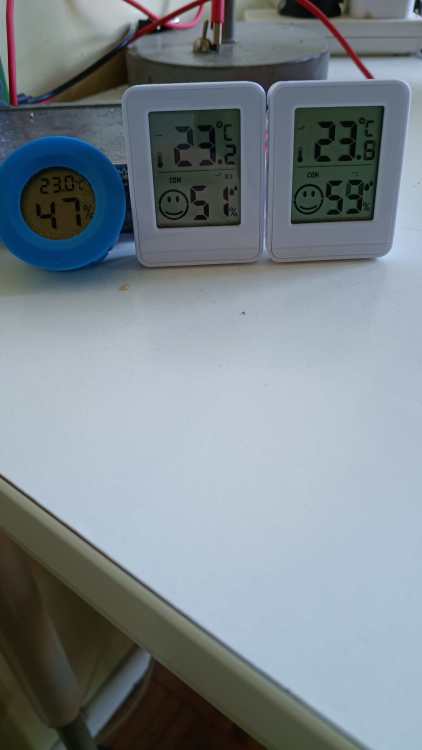
-
when is a screed dry enough for flooring?
SteamyTea replied to saveasteading's topic in General Flooring
26.7°C seems quite a high temperature, is the concrete still curing? I have some very similar T/RH units, not one pair of them read the same. -
Anyone gone down the max self consumption route?
SteamyTea replied to Alan Ambrose's topic in Photovoltaics (PV)
Correct. -
Anyone gone down the max self consumption route?
SteamyTea replied to Alan Ambrose's topic in Photovoltaics (PV)
16 (amp) x 230 (nominal voltage) = 3.68 kW (power per phase) -
Explain that a bit more in the context of the article.

