SteamyTea
-
Posts
23836 -
Joined
-
Days Won
200
Everything posted by SteamyTea
-

Habito, Fermacell, OSB & Plasterboard, Ply & Plasterboard, or…..
SteamyTea replied to G and J's topic in Building Materials
I have just been reading about OSB4, which I think meets some airtightness standard or other. Anyone know more than the marketing BS on the websites. -
Try it out on a small section and see what it looks like in a years time.
-
best type of SDS chisel for backboxes
SteamyTea replied to crispy_wafer's topic in General Self Build & DIY Discussion
I have used one of these in the past, it worked well. https://www.toolstation.com/tct-sds-plus-electricians-box-cutter/p17695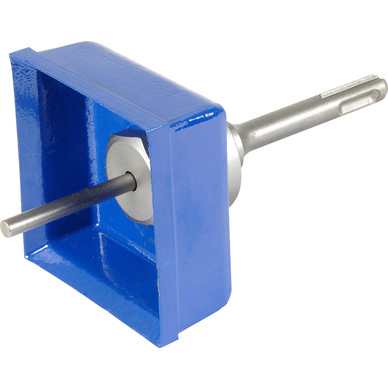
-
Quote for ashp - didnt expect that much!
SteamyTea replied to TheMitchells's topic in Air Source Heat Pumps (ASHP)
. Seem to have that multiple post problem again.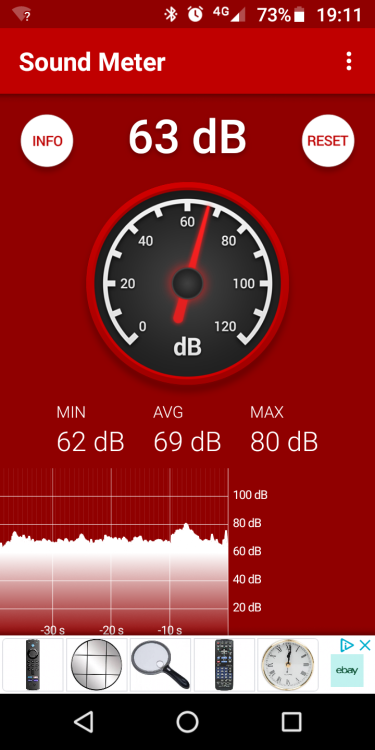
-
Quote for ashp - didnt expect that much!
SteamyTea replied to TheMitchells's topic in Air Source Heat Pumps (ASHP)
. -
Quote for ashp - didnt expect that much!
SteamyTea replied to TheMitchells's topic in Air Source Heat Pumps (ASHP)
Noise is such a strange thing. I am parked up on Penzance Prom, it is a 20MPH zone. Got the car door open (to slow the (expletive deleted)ing cyclist on the footpath, the cycle path is less than 2 metres away, but separated by a wall for their safety, (expletive deleted)). Here is the noise levels.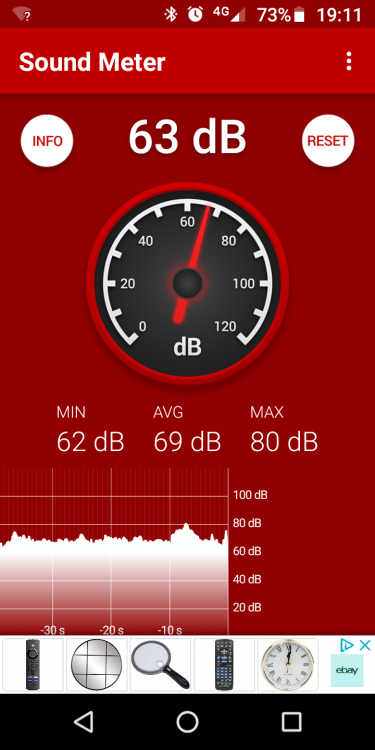
-
Quote for ashp - didnt expect that much!
SteamyTea replied to TheMitchells's topic in Air Source Heat Pumps (ASHP)
28.4 https://noisetools.net/decibelcalculator -
Quote for ashp - didnt expect that much!
SteamyTea replied to TheMitchells's topic in Air Source Heat Pumps (ASHP)
Half the real noise levels (the actual energy moving the air) or halve the number on the dB scale, which is logarithmic? -
No he doesn't. What makes you think that? I have not seen a ToU tariff that has a cheap peak rate. It is the price differential times the usable hours that investment in batteries needs to be based on, not some arbitrary high or low price.
-
How so, it is a standard contract price with a major supplier. If you based your invest on just one price, that you choose to justify that investment, you are not looking at the long term/whole picture.
-
It could be like a mix tape.
-
My E7 is 27.5p/kWh day, and 11.08p/kWh night, with the daily theft of 70.1p/day (before VAT). When I am heating, I use an extra 10 kWh/day. That would mean I need a usable storage capacity of 12 kWh, which would be in the region of £6000 I suspect. £6k, at today's prices, would buy me 51,573 kWh, or 16 years price for all my energy usage.
-
Abd pays a premium for imported power the rest of the year, and that is before the cost of installing PV and batteries. (Energy suppliers can change the tariff regime as well)
-
Why not just run the ASHP during the cheaper times and store some of the thermal energy in the slab (assuming UFH) or in water. Chemical battery storage is still a way off being economical.
-
Welcome. I seem to remember passing through Yelland. Can't think why or when now.
-
Using expanding foam questions
SteamyTea replied to Sparrowhawk's topic in General Self Build & DIY Discussion
Also makes it shrink back more, so as with most things, not as simple as first seems. -
Solar PV, combi boiler and wood stove with a back boiler?
SteamyTea replied to Hannah77's topic in Photovoltaics (PV)
How much PV you thinking of fitting and what size will the wood burner be. I take it you are fully aware of the health risks of wood burners in the domestic setting? -
So the paper pusher who makes sure a plane is refuel with the right type and amount is worth less than the guy who drives the truck to the right place. (expletive deleted)ing glad you don't work at an airport. It is the 'paper pusher' AKA middle management, that keep the country going.
-
How to calculate heat load…
SteamyTea replied to G and J's topic in Energy Efficient & Sustainable Design Concepts
Makes a lot more sense as we clean up our generation, but there should be a penalty for gas boilers. The main thing is to get the overall W.m-2.K-1 number as low as possible. More correctly would be to use W.m-2.ΔK-1 as that takes the users preferences and the house location into account. -
How to calculate heat load…
SteamyTea replied to G and J's topic in Energy Efficient & Sustainable Design Concepts
I seem to remember that the Passivhaus standard for energy usage was based on primary energy i.e. how much coal burnt in the power station and not the delivered energy i.e. what your meter reads. Am I correct here? -
They had smaller classes, so less social interaction, and what interaction there was, was just an echo chamber. (disclaimer, I went though the private school system, it does not guarantee success)
-
Only if the correct screws are used.
-
That is right. Used to be called Pizza ovens. (there is a load of shit spoken about kitchen equipment, easy to keep clean should be the overriding criteria)
-
How to calculate heat load…
SteamyTea replied to G and J's topic in Energy Efficient & Sustainable Design Concepts
Here is some Lowestoft Met office Data. https://www.metoffice.gov.uk/pub/data/weather/uk/climate/stationdata/lowestoftdata.txt Lowestoft / Lowestoft Monckton Ave from Sept 2007 Location 654300E 294600N 25m amsl to July 2007 & from Sept 2007 653000E 293800N, Lat 52.483 Lon 1.727, 18m amsl Estimated data is marked with a * after the value. Missing data (more than 2 days missing in month) is marked by ---. Sunshine data taken from an automatic Kipp & Zonen sensor marked with a #, otherwise sunshine data taken from a Campbell Stokes recorder. Edited to remove the data - which ruined the scrolling - the data is available at the link above. -
Is that really the case, or a Daily Mail story? 2 minutes googling, it is a Daily Mail type story. https://www.hse.gov.uk/construction/faq-ppe.htm