tvrulesme
-
Posts
153 -
Joined
-
Last visited
Everything posted by tvrulesme
-
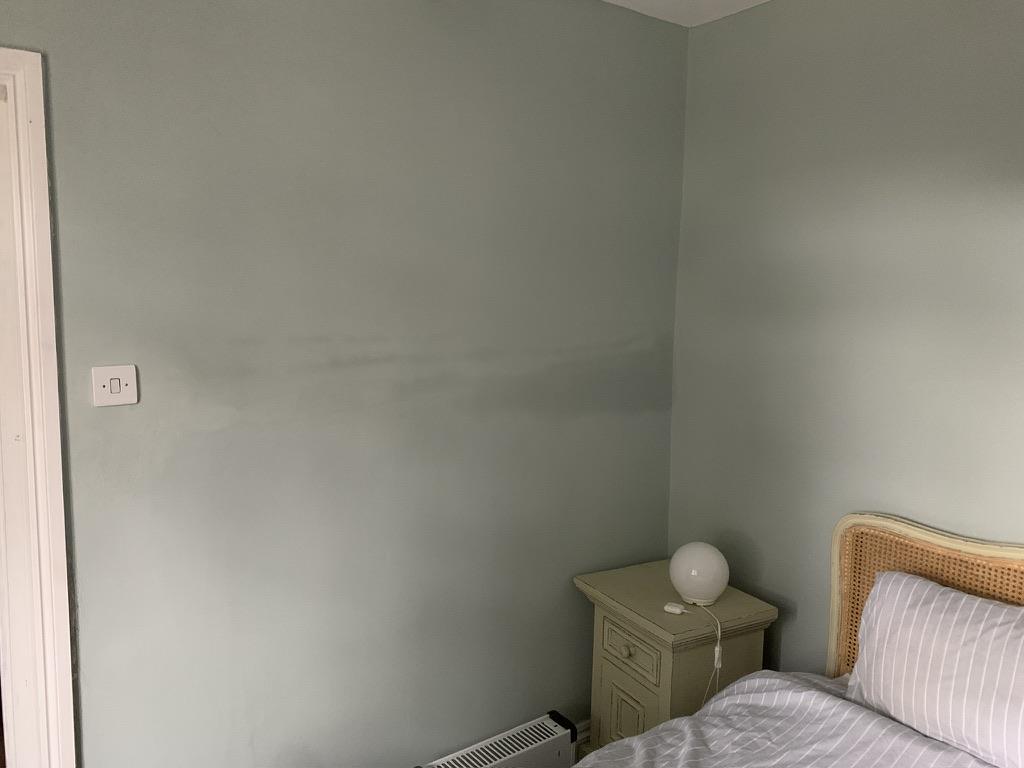
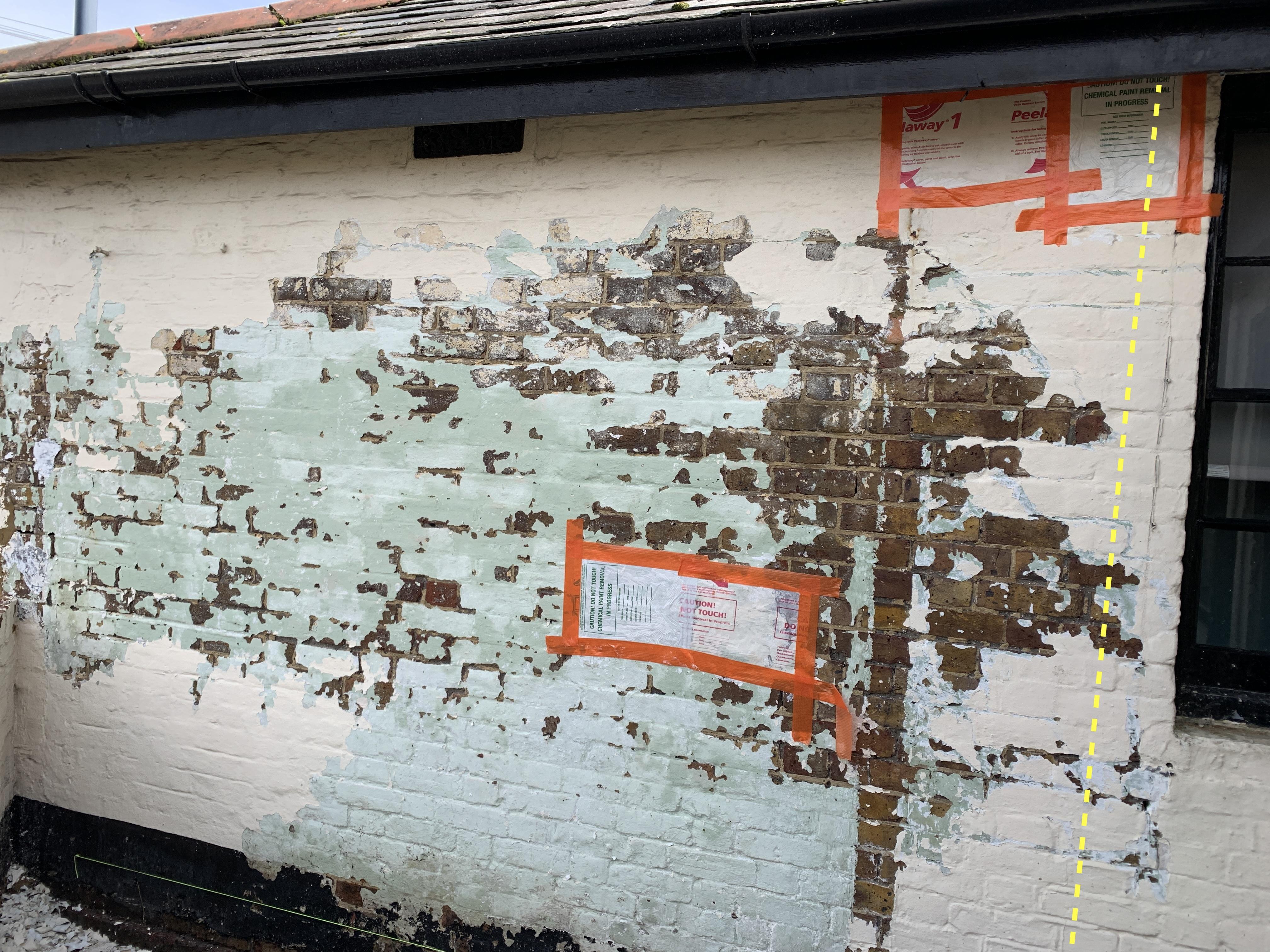
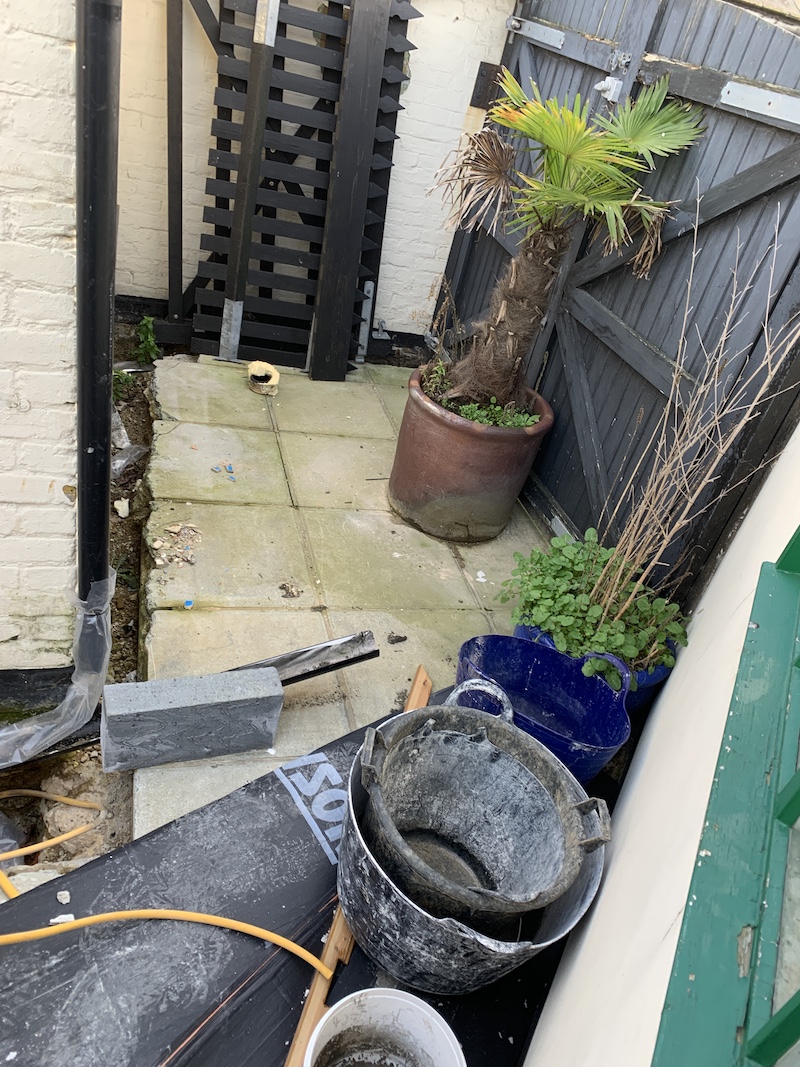
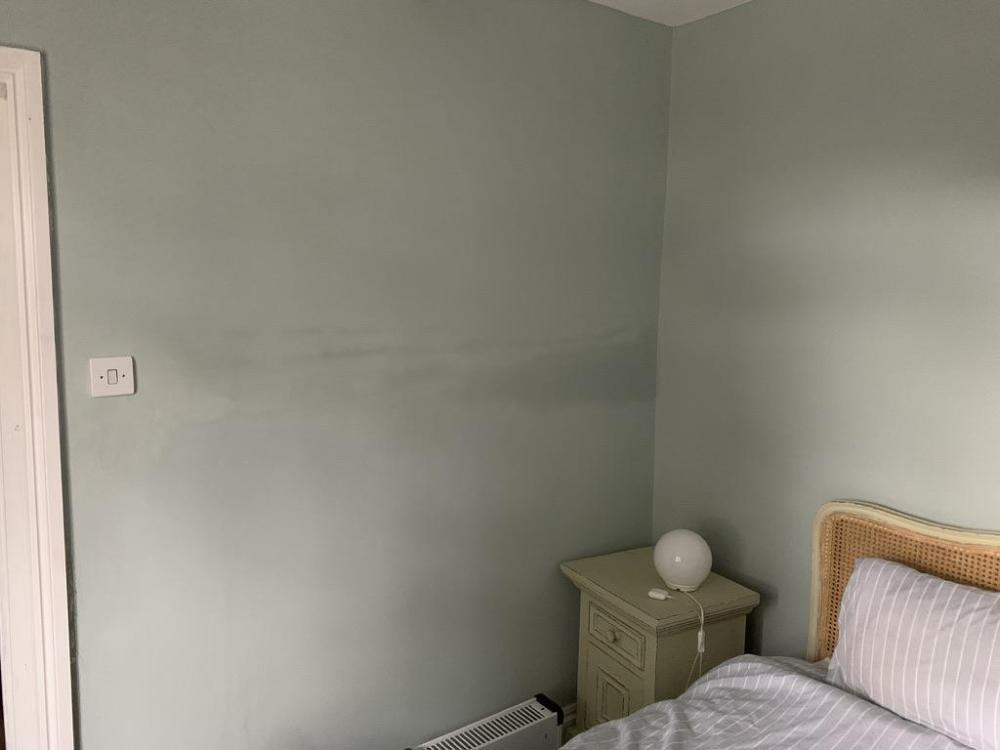
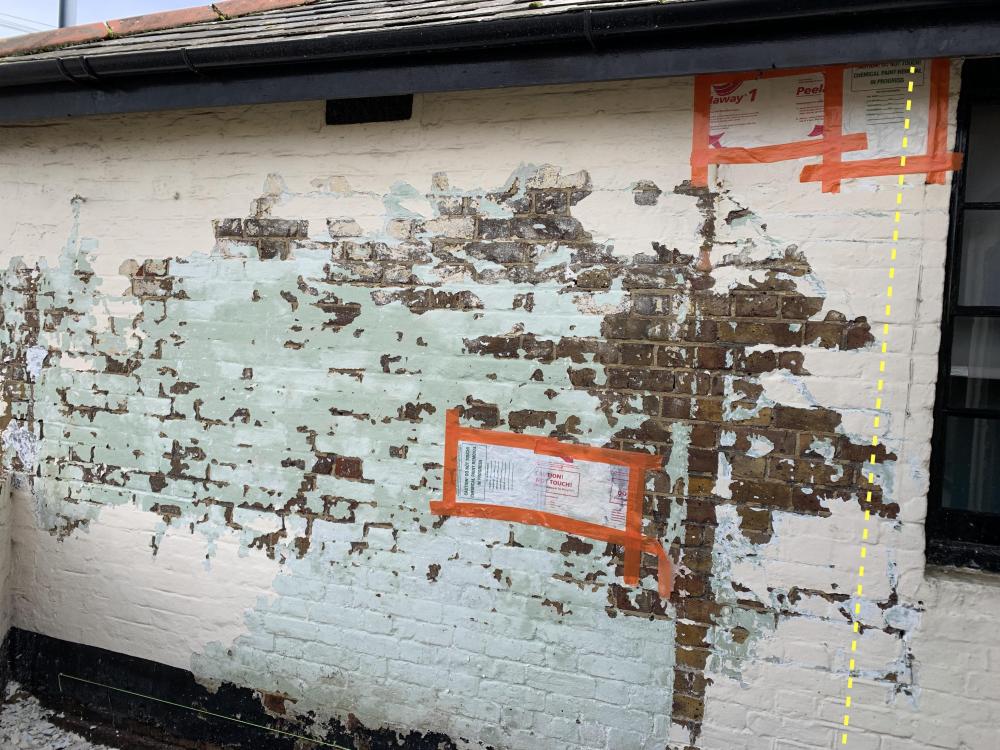
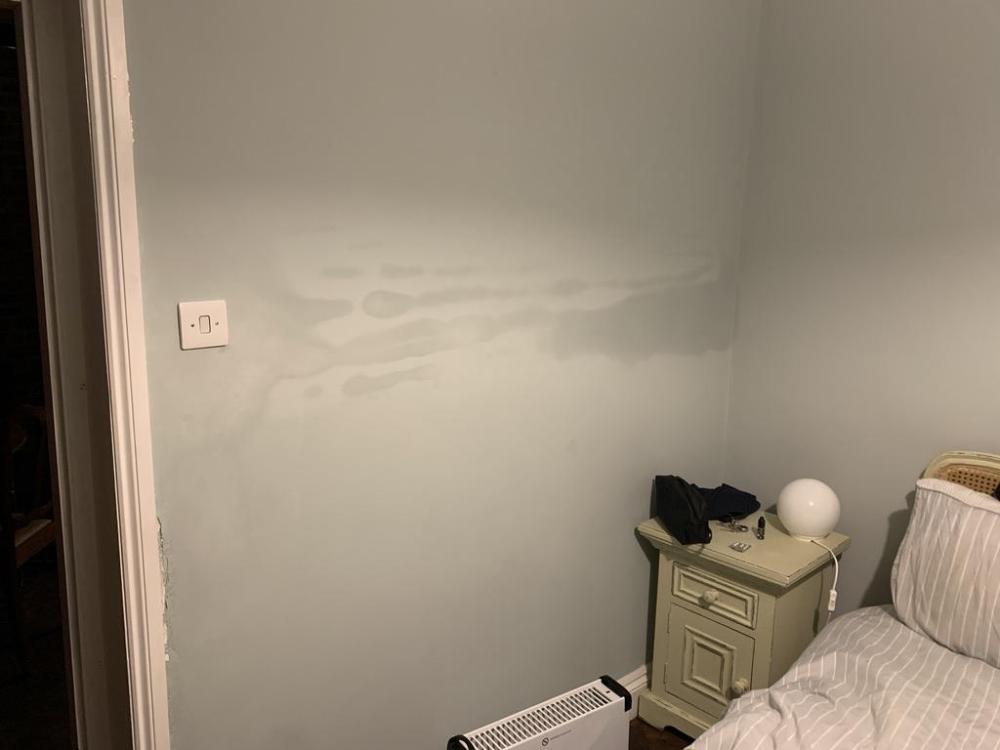
I have an internal wall with damp along the middle and I just can't figure out what is causing it. The wall is at right angles to this exterior wall where the dotted yellow line is. I'm 100% sure there are no pipes behind or within this wall. It had some thick plasticy wallpaper covering which has since been removed and has been replastered and decorated. I've checked in the loft and there is no sign of roof leaks and the top of the wall is dry. The opposite side of this wall is bone dry Things I have tried and the reasoning: Ground levels outside were too high and have now been excavated to well below DPC (If ground levels were too high I would expect the bottom of the wall to be damp, not this middle section) Removal of thick plasticy exterior masonry paint. This has been done over the last week or so in preperation for repainting the exterior (using hydrophobic yet breathable Emperor Masonry Paint). My thoughts are that water may have been penetrating the old masonry paint and getting stuck behind Gutters cleaned and checked for alignment ~2 months ago Is there anything else you think I should try or to investigate people can think of? This is an old building so tanking or "modern" techniques like injection are frowned upon by the conservation officer. They also seem to be concentrated on DPC issues which I don't think is the issue given the position of the damp
-
Thanks for the reply. I did look at this but the inside diameter is 100mm and I had concerns about reducing this further and wondered if Building Control would have a hissy fit. I understand the resin liners reduce the diameter only by a few mm so what I would lose in diameter, I would gain from a smoother interior. At least that's the theory
-
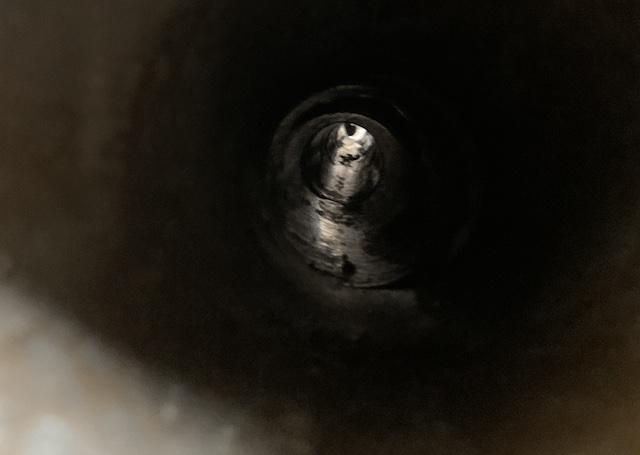
Thanks Liam, the picture is a bit decieving as it was taken by me sticking my phone camera to the end of the pipe (yuk). The run is actually pretty straight. 0DBF145C-2C84-43EA-9E2E-026A8B72C42D.MOV
-
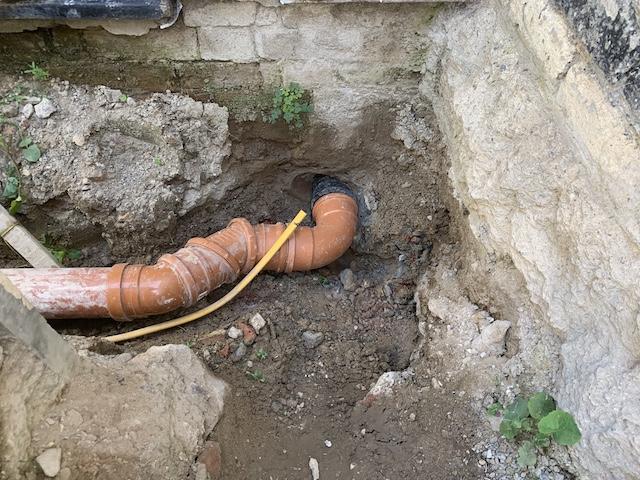
I have a clay pipe which goes directly under an extention in the house. No issues with it, flows fine, it's a short length of just 3.1m and I can see clear daylight when I lift the manhole cover at the other side and get a rodding pole with 100mm plunger all the way down the length with very little effort. It's currently very accessible with just a clay to PVC adapter temporarily in place. We will soon be building an extention which will make this pipe far less accessible though clearly will have the required rodding points. As 95% of the water from the house goes through this one pipe (comined foul and rain) I was thinking about getting it lined as a precaution just for belt and braces and to smooth out the old clay joints but the quotes I have had are ridiculously high as they all have a minimum of 6 meters and want to do CCTV survey in advance etc etc. So being a cheapskate, I'm thinking about doing it myself or just leaving it alone and trusting that it's been there for 100 years so another 50 or so isn't going to do any harm. I have found a local company that hires out DN70-100 Straight Packers for £50 a week and sells 1m pipe lining kits for ~£45 per meter. I already own an air compressor. Is it absolute madness to consider this DIY option, and has anyone out there done this successfully or unsuccessfully before?
-
Foundations - Clear site or cut trench first
tvrulesme replied to tvrulesme's topic in Building Materials
Yeah that makes perfect sense. Thank you. I do fortunately know exactly where all drainage and services go but garage foundations are an unknown so this will at least give me a view on that -
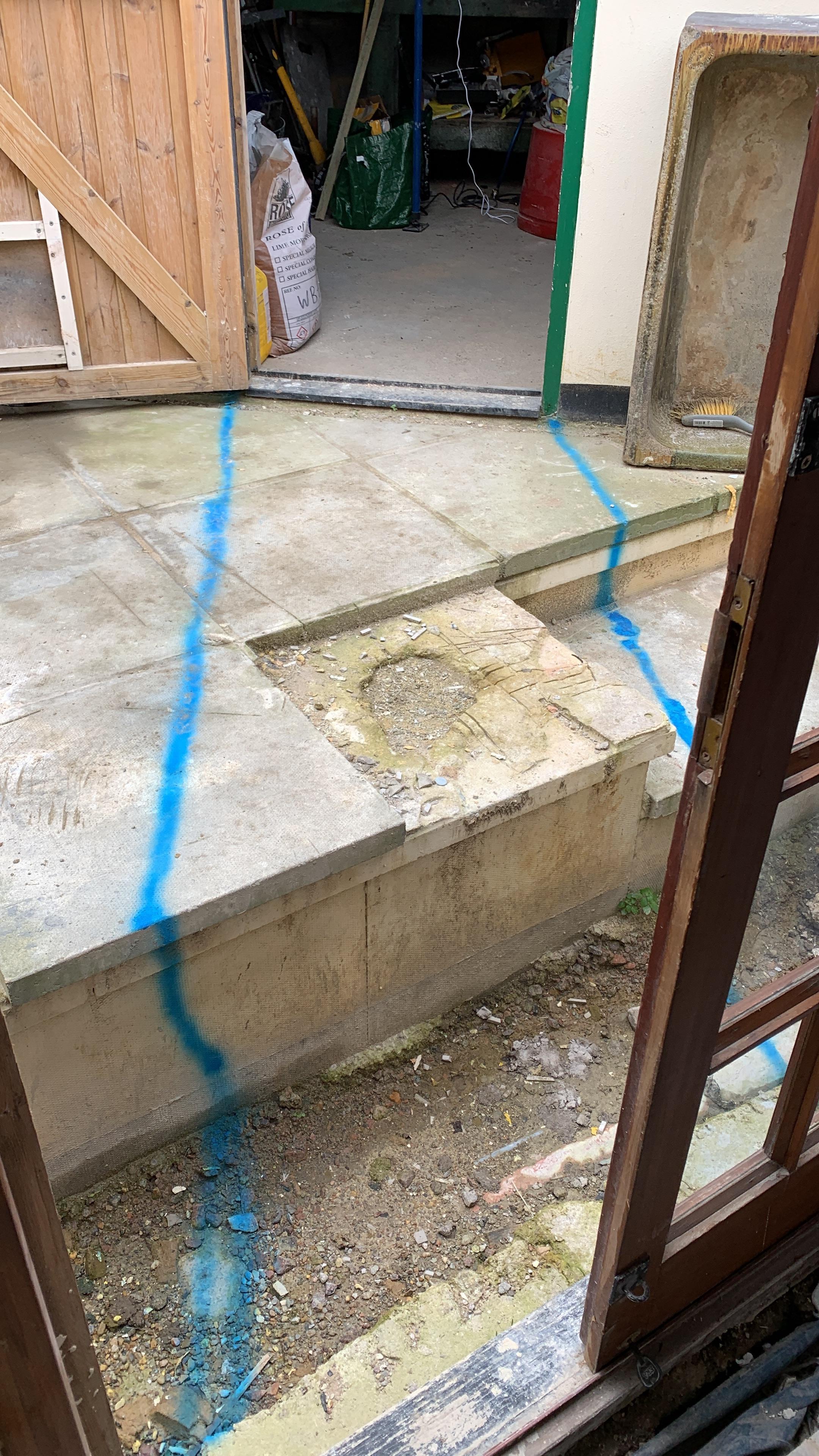
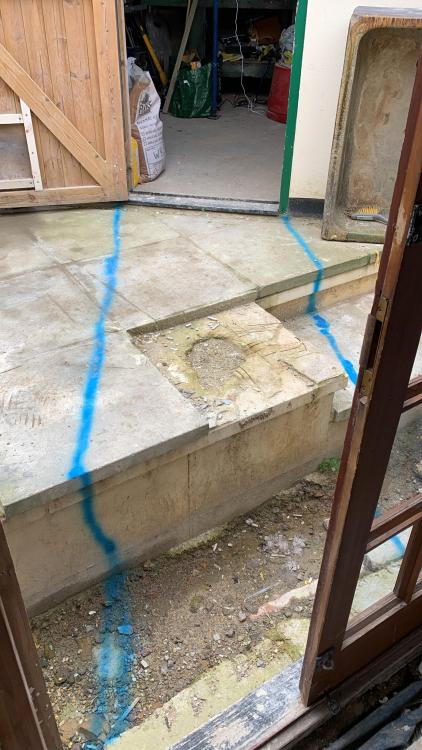
I'm building a small extention which will be a link between the main house and a detached garage. The garage sits ~45cm higher than the house so the foundations have been designed to be stepped. When it comes to building, does it make sense to cut the trench directly out of the concrete patio in the picture below and dig down or to completely clear the site and then dig the foundations? My thinking is that by removing less patio it will have less chance of collapsing but would be grateful of opinions. Blue lines below show the path of the inside walls of the extension
-
Capping a chimney which finishes in the loft
tvrulesme replied to tvrulesme's topic in General Self Build & DIY Discussion
Brilliant answer. Thanks so much. -
Capping a chimney which finishes in the loft
tvrulesme replied to tvrulesme's topic in General Self Build & DIY Discussion
Which effectively means it does not need to breathe? -
I have an old fireplace which has had the chimney removed by the previous owners. The chimney finishes at the loft floor but has been left completely open leaving a large void connecting the loft area and the room below. Currently there is just a large hole from the loft floor down to the fireplace in the room below which is a magnet for draughts and dust. Everything I read suggests you must let an unused chimney breathe but I'm wondering if this just applies to chimneys which still have the pots going through the roof and if I can safely seal off the bottom or top of this fireplace to prevent draughts? Keen to keep the fireplace in the room as a "feature" if possible
-
Thanks @JohnMo yes I did see that in my local B&Q the other day. Impressive product, I'm sure if you give it a few years there'll be more and more of this. I just can't justify the £10 m2 in comparrison to £2.77 m2 for Knauf Space. I've a whole load of chipboard in the garage so I think I can probably add some boards to crawl on and still come in cheaper
-
Thanks Conor. Right you are, hands and knees over the itchy stuff it is.
-
I need to replace some old glass mineral wool insulation in my loft. I have very reduced head height (approx 1.2m) and being a listed building I am not allowed to insulate between the rafters. I have a load of left over foil backed PIR which I was going to stick on eBay. Is there any reason not to use it between the joists on the floor? All searches seem to show PIR between the rafters and rockwool on the floor but I can't find anything which says this would be a bad idea. The loft is very well ventilated and I'll make sure I don't cover any soffit vents etc.
-
P-Trap burried in concrete slab for Freestanding Bath
tvrulesme replied to tvrulesme's topic in Waste & Sewerage
Wow and I thought I was cleaning obsessed. Hats off to you. Do you not need to unscrew the feet from the floor to do this? -
P-Trap burried in concrete slab for Freestanding Bath
tvrulesme replied to tvrulesme's topic in Waste & Sewerage
Yes I thought this would be the way to go. I was balancing the extra wiggle room above for the bath vs trying to get accuracy when I haven't even figured out which bath I'm going to get yet. -
P-Trap burried in concrete slab for Freestanding Bath
tvrulesme replied to tvrulesme's topic in Waste & Sewerage
Thanks Dave. Yes I'm lucky enough to have load of head height but I'll chase for the 110mm so that the other layers are unintterupted as much as possible. Slab will need levelling a little bit but there's not too much in it -
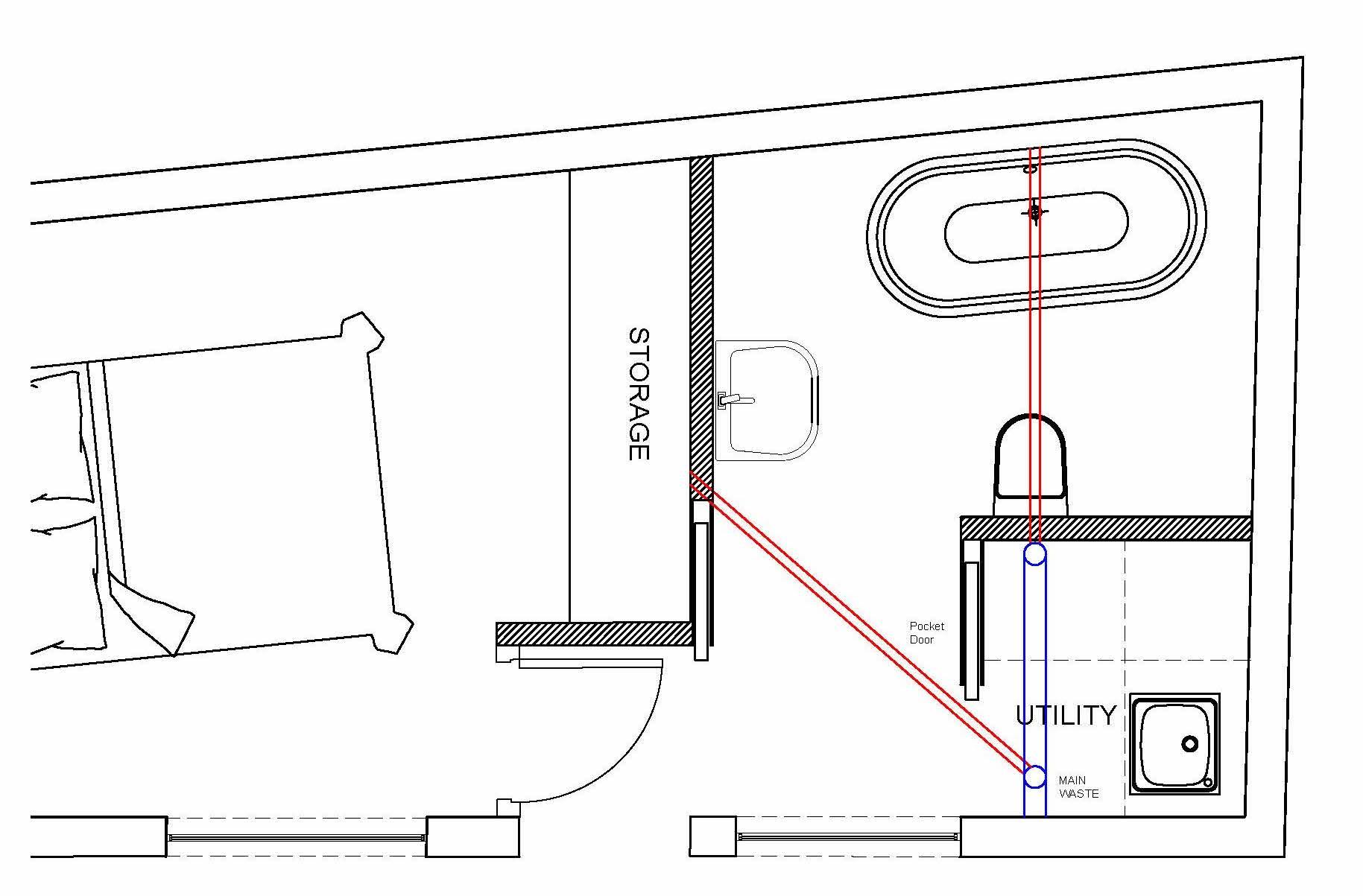
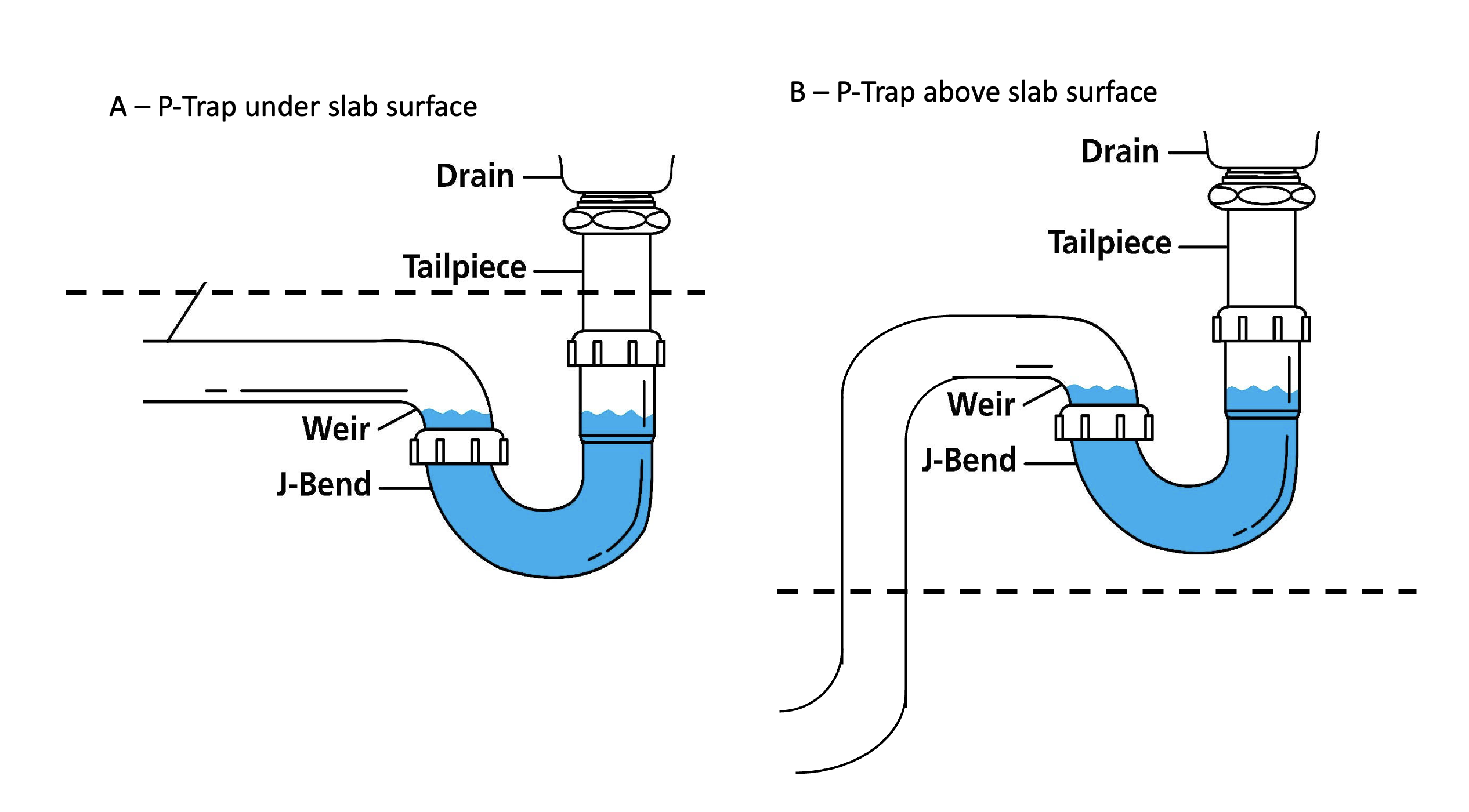
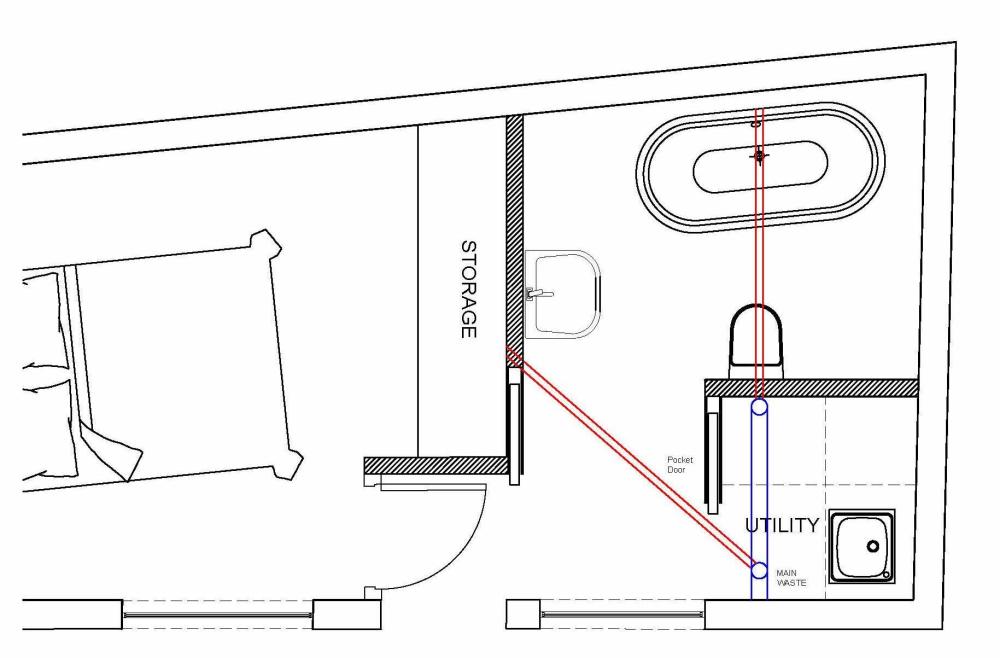
I'm in the process of slowly converting a garage into living accomodation. The garage currently has a concrete slab floor which will need to be insulated and screeded etc. One part of the garage will be the master bathroom. I have a basic layout and know that I will have a freestanding bath so would like to chase the concrete for the drainage as I will need to hire a floor saw for another job so may as well get this chased at the same time. Layout of the bathroom is below (red lines show 50mm waste, blue 110mm waste): My question is regarding a P-Trap for the bath waste. Is it advisable/recommended to have the P trap burried in the slab so I have max wiggle room above to connect to the freestanding bath or would you just poke a 50mm though the slab (with a 90 degree bend) and have the trap above the slab? i.e. A or B in this picture?
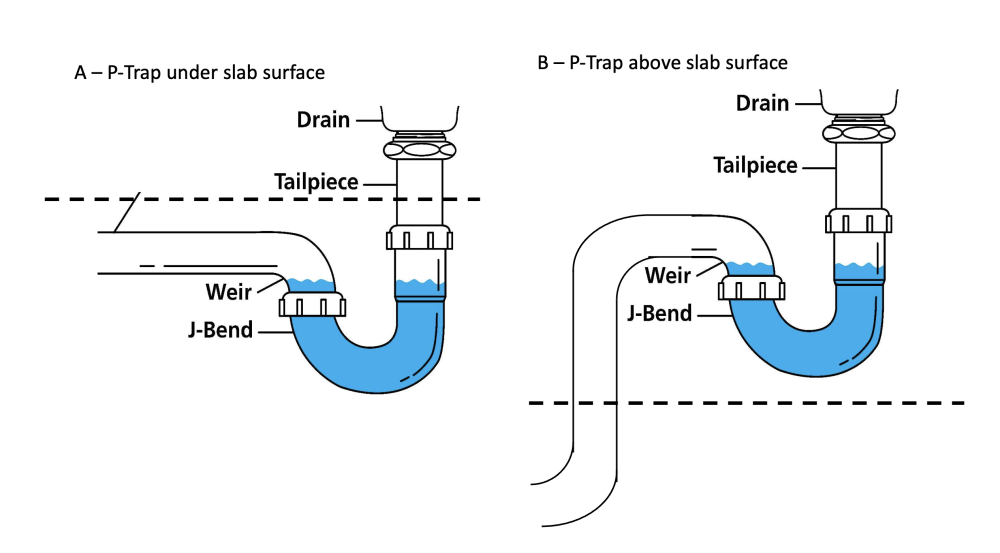
-
Advice on channel drainage to solve damp issues
tvrulesme replied to tvrulesme's topic in Landscaping, Decking & Patios
Thanks so much @ETC. Can't believe I didn't think about that. Presumably I could use this and still connect a small section of channel drain to the section by the driveway to prevent me having to also dig that part up? -
Advice on channel drainage to solve damp issues
tvrulesme replied to tvrulesme's topic in Landscaping, Decking & Patios
Option 2. Much simpler but requires me having faith in the channel drain's ability to take the water away from the wall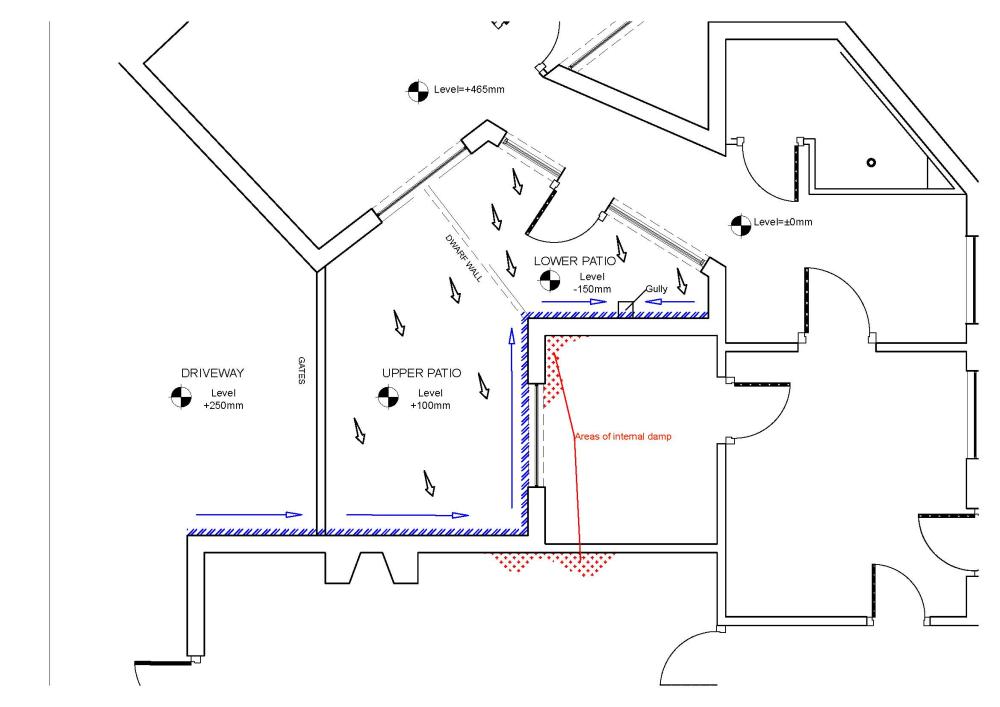
-
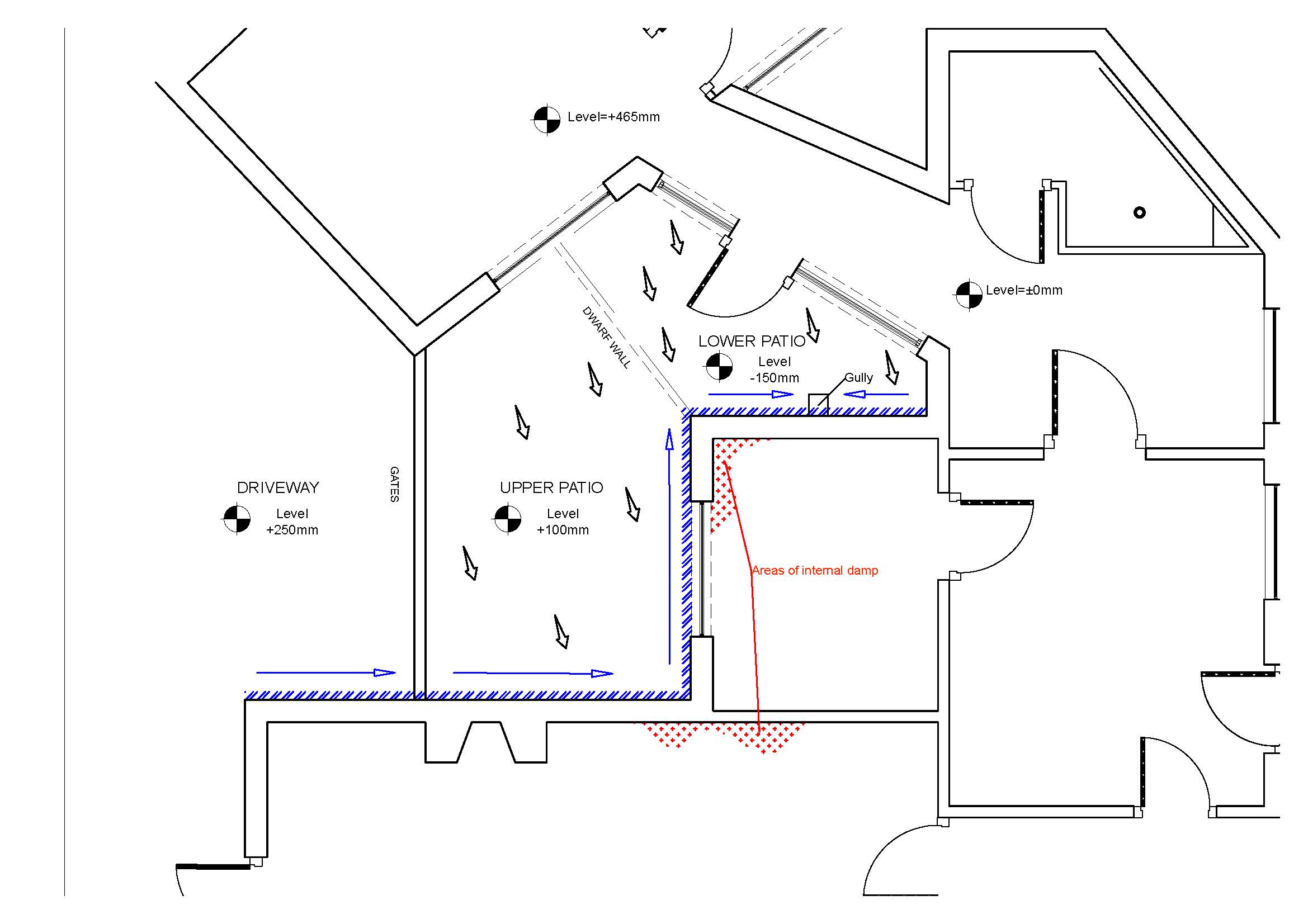
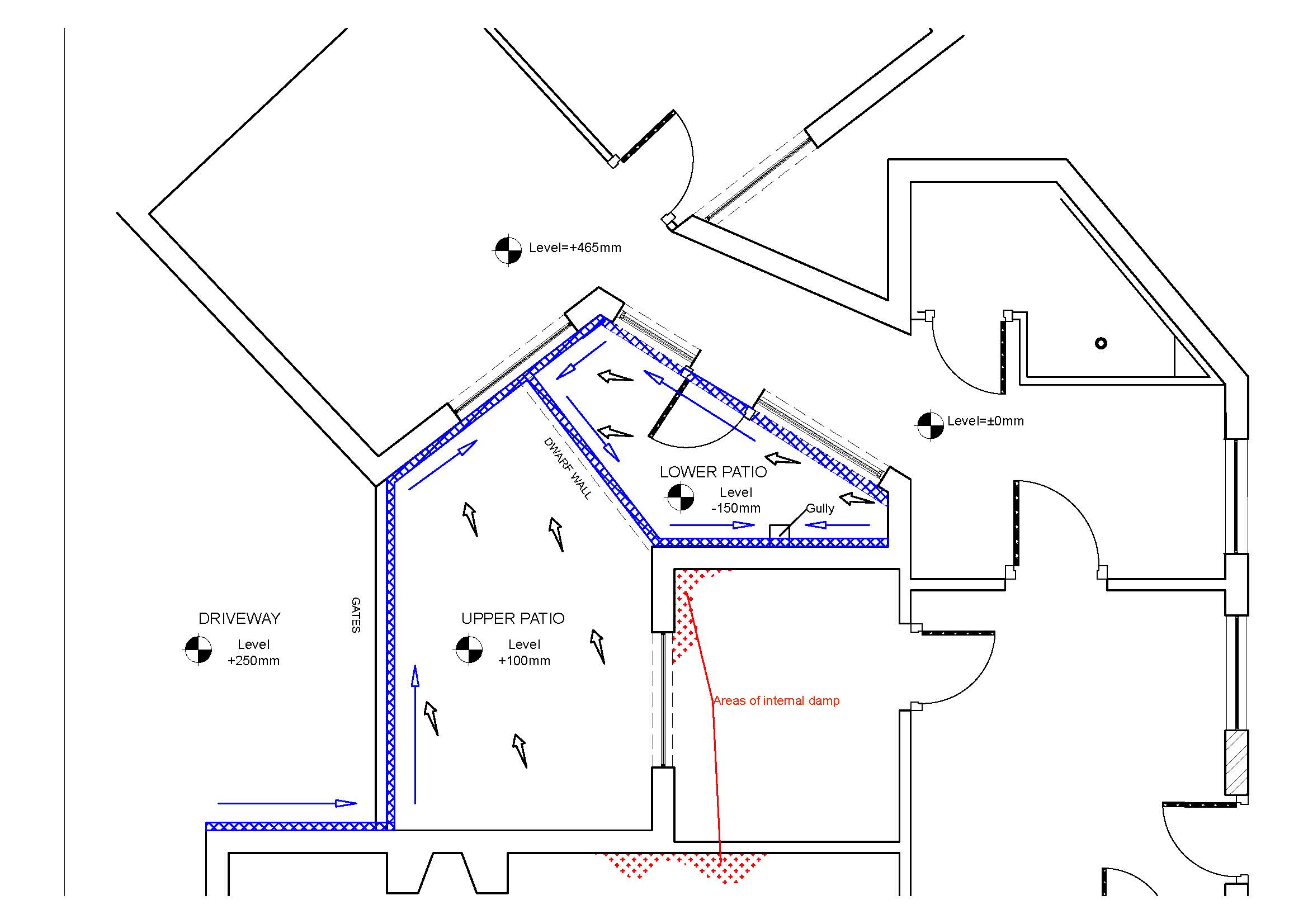
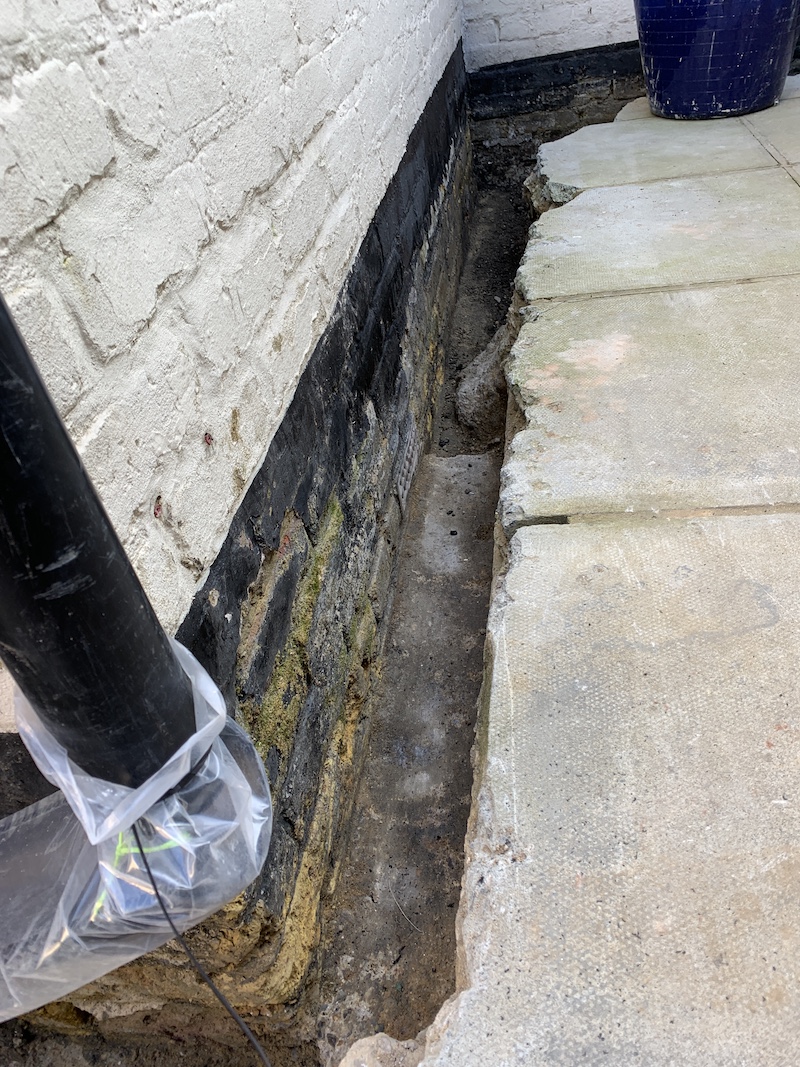
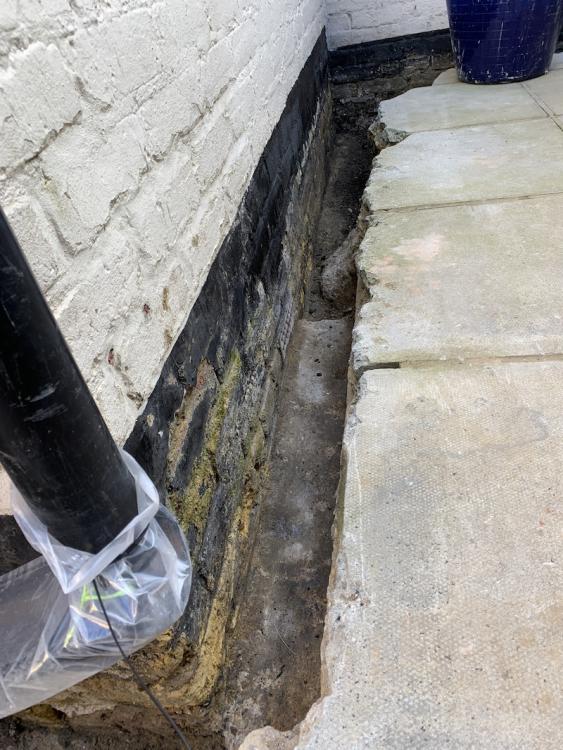
We're in the process of planning an extension and part of the building works will be to sort out some landscaping issues as well as some internal damp problems caused by high exterior ground levels. The site is complicated, overall it slopes quite a lot and the detached garage is 465mm above the house. We are trying to achieve: Lower the patio ground levels. I've dug a trial trench around the property and the internal damp now seems to be under control Have a multi level patio as the whole site slopes downwards but we want the areas to be usable for a seating area Finished surface to be yorkstone pavers which will finish a minimum of 150mm below DPC and floor levels All existing rainwater connects to combined waste and BCO has agreed that future rainwater can also join to this as there is no place for a soakaway or any other alternative The building is grade II listed and they are very fussy about changing anything in the existing structure but have agreed to allow channel or french drainage Drainage will most likely be ACO Hexdrain Current plan is the below which looks complicated but makes every effort to move the water away from the old damp house towards the garage which is much (465mm) higher so will be way below DPC. Some pictures to show the site Trial trench around property to reduce damp Looking towards where the new extention between the two buildings will be Upper Patio with gates Just looking for advice on whether this makes sense or if I am over-complicating it with my nerves over the damp issues?
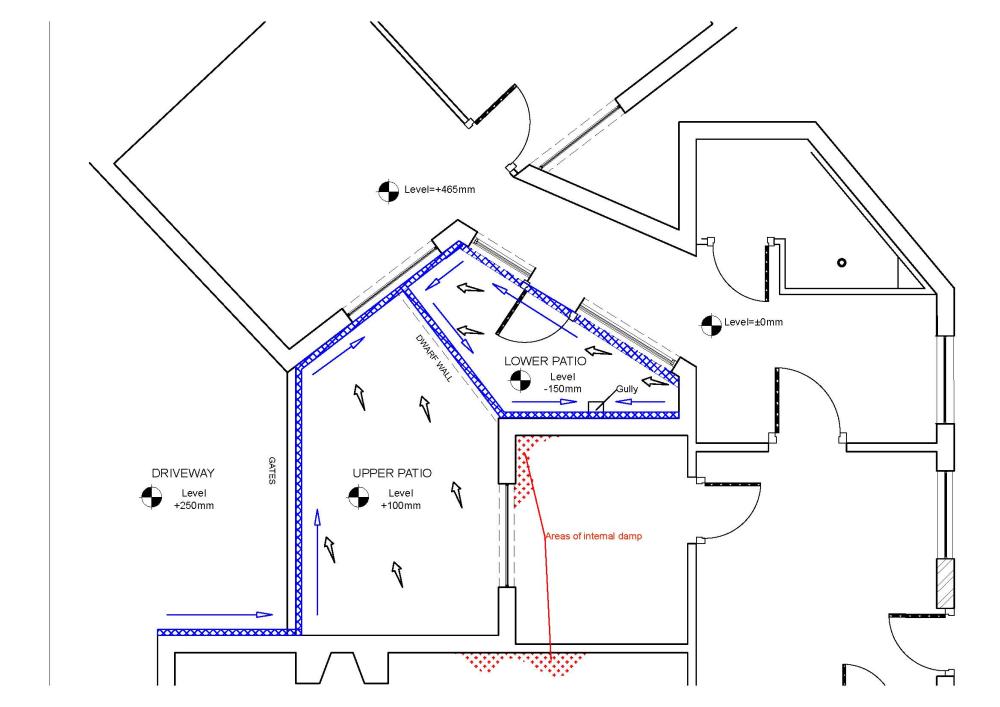
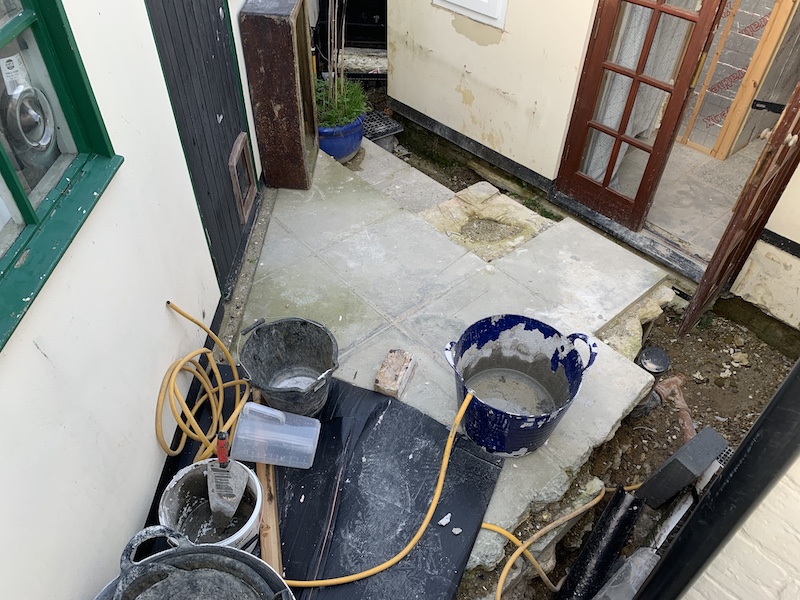
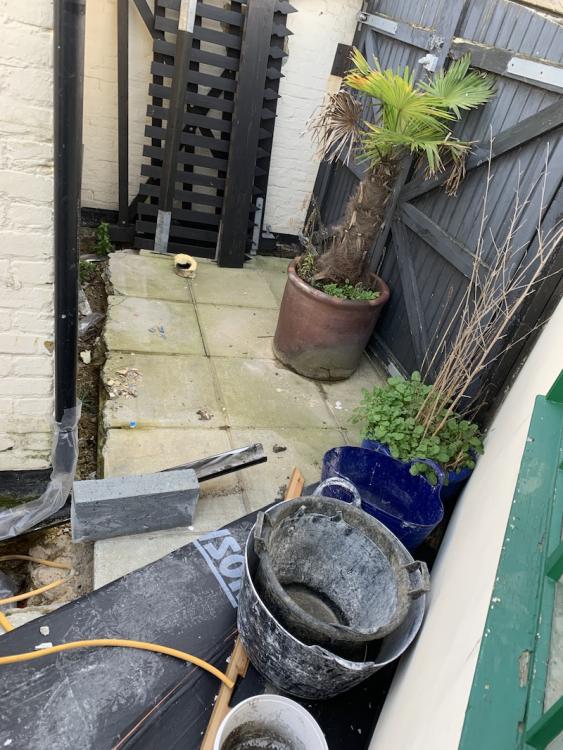
-
You're right, I could pull the Listed Building card and be completely exempt from most Building Control but I've found that it helps if you "try your best". In terms of the Roof/Ceiling height I have a lot to play with so in the grand scheme of things I may as well comply with Building Control on this ceiling aspect in order to play my cards for exemptions elsewhere. It's like a game of poker...
-
Wow they are lovely. Pricey but lovely. I'll have to consider myself a conservation idiot 😉 Not a bad shout on the collar ties at all. That could work really nicely. Having to meet 0.16 U value now so looking at these options: 100mm between 60mm over 125mm between 40mm over or 150mm between 25mm over Suprising (or maybe not) how the price varies between standard and non standard thickness of PIR
-
Fantastic idea. I hadn’t thought of this.
-
Like the idea of this. Are there any holes or anything drilled in the main ridge to allow the moving air to pass through or does it just rely on natural gaps?
-
Yes it's a breathable membrane. Looks pretty recent suprisingly. Tell me about it. There are so many things that suprise me in what they will allow and what they wont.
-
Thank you. I have the height but really really like vaulted/cathedral ceilings