Ferdinand
-
Posts
12213 -
Joined
-
Last visited
-
Days Won
41
Everything posted by Ferdinand
-

Part demolition - Short Version
Ferdinand replied to ElliotS's topic in New House & Self Build Design
Absolutely. Upstairs in the office at our ancient estate agent is the MRICS chap who has been doing all the local property auctions for 2 or 3 decades. I haven't needed him very often, but when I need things RIGHT, and maybe a little slow and a little expensive, he delivers ... eventually. Equally when I needed a housing estate application going through having inherited some land, and there was going to be a NIMBY plague suddenly interested in fox-watching, I got the consultant from the front page of the local paper from the report where a previous slomewhat similar application had been recommended, then had a political know from committee, then won on Appeal. Let's hear it for hoary old gits and gitesses ! -
Part demolition - Short Version
Ferdinand replied to ElliotS's topic in New House & Self Build Design
If you want advice in those circs, then you need someone who knows the Council better than the Council knows the Council. My suggestion is to go to your best established locally-based estate agent, who have been there for a decade or three, and talk to their in-house MRICS or planning bod. You ideally want the hoary old git or git-ess with the grey stubble, Columbo the Detective coat, and 4 unwashed coffee cups on the desk. Go in with your questions in your head for a general chat about your project and make them curious, and you may get an opinion on the spot. Or spend a relatively small amount of money on a 90 minute meeting and an opinion - making clear that you are looking for an informed opinion not advice over which you can sue if he is wrong. (The latter will cost much more.) Could also be done by email once you have made the contact. A tell tale that you have the right person is that they know several key planning officers, and their foibles, by name. It may be that you could get decent advice for a company that specialise in such projects, as they will know what usually works. HTH. -
Part demolition - Short Version
Ferdinand replied to ElliotS's topic in New House & Self Build Design
Yes a new permitted development right was added. But take care on the various things that limit it. eg: "1940s bungalow" The rights do not apply to: buildings converted to residential under permitted development rights conservation areas, areas of outstanding natural beauty, the Broads, national parks, world heritage sites and SSSIs buildings constructed before 1 July 1948 or after 28 October 2018 where the existing dwelling house has been enlarged already by the addition of one or storeys whether under permitted development or otherwise https://www.charlesrussellspeechlys.com/en/insights/expert-insights/real-estate/2020/permitted-development-a-right-to-add-new-storeys-to-your-home/ -
Now. Now.
-
The light in my front porch (stoop in Usonian) just went pop. It has a bayonet fitting, and has been a compact fluorescent om a smash-proof enclosure which has lasted about 5 or 6 years. Do I use a normal domestic compact flash or LED bulb, or is there a special version more resilient to either low/high temperatures, or moisture? Thanks Ferdinand
-
Driveway access fire brigade Reduced width long length
Ferdinand replied to Oz07's topic in Building Regulations
You may be able to have a conversation and a visit from the BCO just by ringing up and asking; they tend to be more approachable informally than Planning (in my experience), Just know exactly what your questions & ideas are ready for when you talk to them, and have any plans, Streetview Links etc ready to send by email whilst you are on the phone so you can have a good chance of resolving it in one hit. -
Driveway access fire brigade Reduced width long length
Ferdinand replied to Oz07's topic in Building Regulations
Or you could get yourself a special fire brigade 😉: -
Driveway access fire brigade Reduced width long length
Ferdinand replied to Oz07's topic in Building Regulations
IIRC the minimum reduced with is 2.75m so you are on the edge, and really need to make sure that your hedge is some way back form that. If if is' your hedge, one way is to replace it it with something better than conifers, and set it back further (which may mean make it thinner). If it is someone else's would they let you replace it. On the surface, I don't see why grass car park reinforcement would be a worse idea - it will be absorbed into the grass, and with little traffic would vanish into the earth / grass. Needs a careful reading of your PP wording, a conversation with the Fire Brigade or check of regs, and perhaps an application for a variation of the condition. Present it as something they did not consider? You could point out (or do if they say no) that you could consolidate the surface by legally driving up and down it 19645 times in a borrowed Fire Engine, so it would be better for all if they allowed it to be reinforced in an eco-friendly manner leaving it looking no different and less vulnerable to being turned into a mud-bath in the winter. A further option could be a sprinkler system, which mitigates risk of fires. -
Further thoughts - make sure there is somewhere to put and keep sticks upright if there is a pausing place. That may be a rail to hook them over (notch or nipples to retain them in place) and use a trad walking stick like Winston Churchill with a hooked top, or a thing like one of those hold-back-the-curtains hooks we get beside a window. There should be a wrought iron something that is the right shape, or a blacksmith could make one, or a wrought iron gate fabricator will have a curly bit about the right shape. For the rails I put in by my wheelchair ramp and rear shallow steps I put in for mum, I used post and half round fences just knocked in with 2 rails, which cost almost nothing, look rustic, and can be adjusted by a handyman or neighbour in an hour or two, and would need replacement every 4/5 years with a soundness-check at half way. But possibly splinters risk, which on slow-healing hands or skin may be problematic (wear gloves like a Bond villain, or fingerless cycling mitts with padded palms). Also grab handles can be useful if well placed - again external spec. Vertical ones are good for balance (make them 18" not 6-12" so work for both sexes), not pulling up, as they need strong fingers - which is not you 🙃. Horizontal ones are better for that as they can be elbow leaned on. Or loops of rope with can be wrapped round an arm - which may be attached to a portable hook you carry in your manbag. There are infinite varieties of helpful devices, and many are external-grade specced, and some are even attractive. I'm currently interested in accessible surfaces, as I've been looking at our local rail trails. If you need one you call fall on with a soft landing there are non-bound things (hoggin, gravel) and types of things used in children's playgrounds or gyms that they bounce off - such as rubber crumb things, or soft finish tarmac type things. If you plan to be wheelchair-friendly whilst planning to fall over on it with a lower risk of broken bones these are more difficult to roll over, especially manually - of those you probably want the resilient tarmac for that. For hard surfaces Plan B is to wear pads like a skateboarder ! It's all about taking enough, but not excessive, time to think it through, and which risks you want to mitigate and potential costs and benefits eg that more expensive soft surface vs being off your feet with a broken leg if the worst happens, and the consequent long term impact. When I did the bathroom for mum, the main research was thinking a bit, then chatting in situ for an hour with her sitting on the toilet lid. But her career was as a physio in a special school, so she was quite aware herself. I'll stop there or I could go on forever. F
-
On costs, there are various Govt, LA or charity grants that may be available. But I expect most on BH are unlikely to be eligible for the means tested ones. https://www.ageuk.org.uk/information-advice/care/housing-options/adapting-home/disabled-facilities-grants-to-adapt-your-home/
-
@ToughButterCup Your guidelines in the first post seem to be about right. I'd only make the following comments. These are based on my experience with the charity Wheels for Wellbeing for whom I campaign in the public realm, who promote accessible wheeling and cycling. A few links below if you want to rabbit hole. I'm not sure whether your path is "to the front door" or "round and round the garden like a teddy bear". This is a bit related to both, also for future readers. - for widths, the maximum size mobility aid you (or your friends) are likely to be using is a Class III mobility scooter, which has a maximum width of 0.85m (these are the ones with lights that can do 8mph on the roads). The biggest of these are usually Trampers (the SUV of mobility scooters), which are the ones you see for borrowing at larger NT properties and are specced for 1 in 4 slopes in steepness or crossfall. - pay attention to outer turning radius if your path has curves in it. Outer turning circle probably wants to be ~4.5m ideally if you have corners. - A 1:50 slope is great if you can do it. Or for 1:20 you would want a flat "take a rest" bit every 10m or so. Consider a seating area to the side in case anyone might want a rest (especially if you have a steeper part) or to sit with a cuppa to admire the newts. If you do, leave a space next to the bench for anyone to park their mobility aid. The recommended path width dimension 'minimum gap' is usually 1.5m between posts in the public realms. But 1.2m sounds fine in general - 1.5m is needed for more unusual things like side-by-side tandems. For the path to my front door (which is over a concrete path) I did a perfectly good wheelchair ramp by using Wallbarn Adjustable Support Pedestals and Pressed Council Slabs. Wallbarn do things like Megapads to take heavy weights, and optional Universal Joints at the top that let it self-adjust to whatever your needed slope is. I did the 10m run to my front door and platform outside, for around £400 including hiring 2 friends for half a day who have more muscles than me (2018). It wouldn't take someone doing a drag race start on a Tramper - the pavers might shift, but it has been great for what I need. I don't think I've done a blog about this. Make it hose washable to clear debris, and avoid features that will catch accumulations of leaves etc - provide a gap so you can wash or sweep then off the path. On surface, you could do something like scatter pebbles and wash it back, or just score the surface with a trowel when half set. Lots of options. But at 1:50 you should not have a problem. Finally, give a bit of thought on recovery if someone falls over, especially in the circs that they may be alone in the house - that might be having 2 handrails so they can pull themselves up, as well as things like always having a phone to hand or a rape alarm to call the neighbours. Links: Wheels for Wellbeing design guidelines for 'Inclusive Cycle Parking' Sounds off topic, but has a lot of relevant info in a small doc. https://wheelsforwellbeing.org.uk/14-features-of-inclusive-cycle-parking/ Index to their resource sheets: https://wheelsforwellbeing.org.uk/our-campaigns/resources/ Tramper Mobility Scooter with dimensions and specs: https://4zn.f0c.myftpupload.com/wp-content/uploads/2024/06/tramper_brochure.pdf Public realm recommendations: Guide to LTN 1/20 https://wheelsforwellbeing.org.uk/wheels-for-wellbeing-guide-to-ltn1-20/ Govt Inclusive Mobility standard: https://assets.publishing.service.gov.uk/media/61d32bb7d3bf7f1f72b5ffd2/inclusive-mobility-a-guide-to-best-practice-on-access-to-pedestrian-and-transport-infrastructure.pdf HTH Ferdinand
-
Low Carbon Heating Teachnologies and Social Relations
Ferdinand replied to Lewis Hubbard's topic in Other Heating Systems
It's about who you would listen to when thinking about installing a heat pump eg with family, friends, neighbours, tradespeople, organisations, and it's mainly personal data before being invited to do an interview. He doesn't want to know about your erotic life, or whether a heat pump kills your marriage, causes your cats to go AWOL, or causes your date to go BRRRR and get dressed again half way through the increasingly social relationship. 🙂 -
Good comments, In extremis, or as belt and braces, you could put a porch or canopy on it.
-
Tool to cut a 2" pipe close to a surface?
Ferdinand replied to Ferdinand's topic in Tools & Equipment
The answer to that one is appropriate regulation, and policing. There are places in the UK this stuff is addressed by the police force whilst mine pretends they don't have the powers they need. And we have a completely open supply of e-mopeds bought under "for use on private land*. There was a case in Cardiff last year where an idiot parent gave their 16 year old iirc teenager a Sur-Ron, and he killed himself and a 15 year old friend on it running at 40mph or so with no training or safety gear. This is about intelligence lead policing, a properly regulated supply chain for e-mopeds sold as "e-bikes", and properly funded police on motorbikes and e-mopeds themselves, rather than numbers slashed and many of the experienced officers gone as happened in 2010-2017. It can be done. -
Tool to cut a 2" pipe close to a surface?
Ferdinand replied to Ferdinand's topic in Tools & Equipment
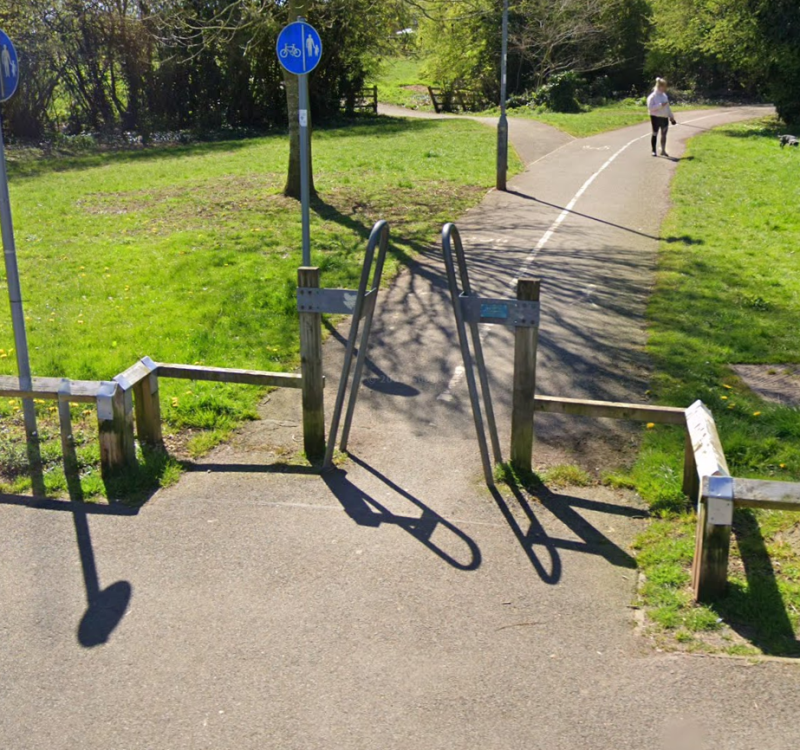
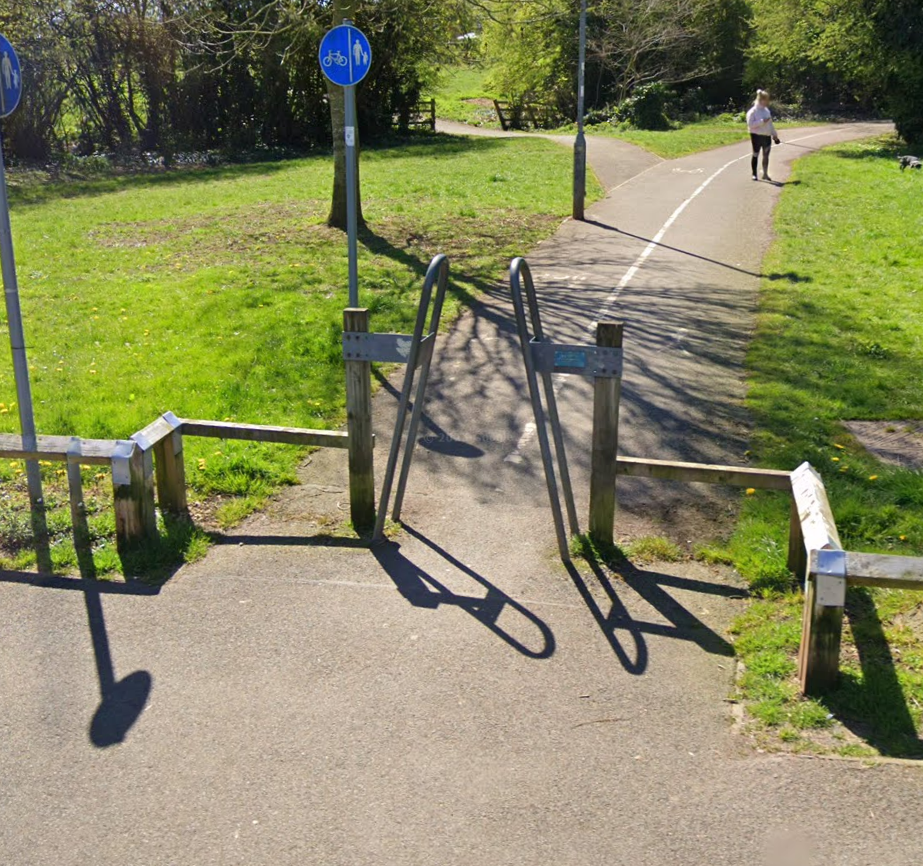
(I'll give a fuller reply to @scottishjohn on the motorcycle thing.) On this, I'm quite uncompromising - 30-50 years of excuses for discrimination is too much, and cannot be tolerated. I'm interested if there are believed to be good reasons - basically, what are the fairy stories they have told themselves? On this one, in this situation kissing gates are not lawful. You may not discriminate against disabled or elderly people in provision of a service including eg a public park or nature reserve. That's the legal duty of the service provider, and the organisation discriminating can be sued under the Equality Act 2010. I'm not clear where the "dangerous" idea comes from. Do you mean dangerous to let a person on a mobility scooter or a wheelchair into a nature reserve, or if the cattle somehow escape, or are the cattle inherently dangerous? I don't see why it should be dangerous for a person using a wheelchair, but safe for a pensioner walking into the reserve, or a person walking their pooch. It's horribly backward thinking, left over perhaps from the 1970s.. The legal requirement is couched in terms of "making reasonable adjustments", and since here an appropriate cattle grid can be installed (as used in the meadows in Cambridge City Centre, for example) there is no lawful excuse for excluding pedestrians using mobility aids. A decision about entering the nature reserve is their decision to make, not anybody else's wanting to impose their opinions. If the cattle breeds chosen to be put in an area accessible to the public are a danger to the public, then they need to change their breed, or perhaps have sheep instead. A further question is whether the nature reserve should be required to provide accessible routes. If they are a charity it is likely to be part of their constitution to do so. If it is there to "benefit the public" or similar, it is no more legal than if they chose to exclude women, or men, or black people. They would not do that - why do they do this? F -
Tool to cut a 2" pipe close to a surface?
Ferdinand replied to Ferdinand's topic in Tools & Equipment
Thanks, all. -
Tool to cut a 2" pipe close to a surface?
Ferdinand replied to Ferdinand's topic in Tools & Equipment
No, but actually the NT are moving on some of these accessibility questions. Every time I've been to my local property for the last year, I've been explaining how many of their potential visitors don't have driving licenses, and how 200k people live within walking distance, and 400k within cycling or scootering distance. Different story though. -
Tool to cut a 2" pipe close to a surface?
Ferdinand replied to Ferdinand's topic in Tools & Equipment
Yes. However we are dealing with emotions, and things like evidence tend not to register. From the point of view of the Council, putting a big stonking barrier "blocking off" a path is a cheap intervention that looks like something is being done. So it counts as a virtue signal. People shut in their own homes for want of nowhere to go don't count in that set of scales compared to a shouty voter. Videos don't make a difference. This is from when I first tumbled to these issues in a way, and then I got radicalised when I couldn't wheel my mum to the Doctor a few years later. One of the lessons I've learnt is to talk from the viewpoint of a disabled pedestrian. -
Tool to cut a 2" pipe close to a surface?
Ferdinand replied to Ferdinand's topic in Tools & Equipment
If a Council Department said "yes" to me, it would be gone before the other one had a chance to read the memo 🙂 . -
Tool to cut a 2" pipe close to a surface?
Ferdinand replied to Ferdinand's topic in Tools & Equipment
Thanks for the responses. Please forgive me a substantive reply. It's a huge issue everywhere. My numbers say that there are perhaps 200k-400k of such illegal barriers across the country. Technically it's every field style on a public footpath, but that is mentioned normally as a rhetorical distraction ("do you want a wheelchair path up Striding Edge?", and the rubber hits the road far more around eg Rail Trails, or Greenways, which are advertised as "accessible", yet exclude some lawful users. These or similar also exist, weirdly, keeping disabled and elderly people out of large numbers of Green Flag parks, making the core published message "these are for everyone" into a self-satisfied lie. So "bend it out of the way" or "go round it" may work in one place, but it won't fix the core problem, which is legal, cultural and political. Guidelines are clear (LTN 1/20 and Inclusive Mobility) that the acceptable option is a 1.5m air gap, with 5-10m flat approaches and usually a sealed surface. It will require a national policy that these are not acceptable and they must all be removed. In the meantime all kinds of things are removed, but one by one won't clear them all out. Every Council I have ever asked do not even have records of what they have installed, plus many are installed freelance. Councils are quite happy to discriminate against disabled / elderly / parents etc, do nothing, and rely on bullying / intimidation rather than meet their most basic legal responsibilities, it being difficult to hold them to account under Equality Law or Highway Law, and normal complaints processes taking 10s of hours, perhaps 2 years and delivering nothing. I have a friend who is a wheelchair user, who cannot walk more than a few steps around the house, who was prevented from taking a particular route because of a chicane barrier on a gennel. The Council's legal department wrote her a letter saying they would require her to turn up at the barrier, and physically prove she was incapable of lifting her mobility aid over the top. The attitude is mind-boggling. Writing the letter would cost less than removing the barrier. Underlying causes are around false folk beliefs in the local populations that these achieve something wrt ASB, which often came originally from police advice when estates were built 20, 30 or 40 years ago. I have several here which are pre-1970. That's another issue - this is not aimed at you personally, of course. People who don't know decide that they will impose *their* opinions and *their* assumptions on the disabled or elderly person, without knowing what their needs are, and not respecting their rights or the law. It's the standard pavement parking excuse, or for blocking a pedestrian drop kerb. "It looks like a wheelchair would fit" or "I could walk through there or "I'll only be five minutes" or "but I need to" or "can't you wait" or "go in the road" or "I had to", without knowing about wheelchairs or tricycles or that a Guide Dog walks next to a blind person, not in front. Then when their precious car gets scratched because they parked it on the pavement because they are lazy, selfish or stupid, they resort to abuse or threats of violence. I had that when someone had blocked the entire pedestrian entrance at my local hospital (he forced all the wheelchair users to do 200m on the main drive carriageway with 6000 vehicles per day), rather than park in a free space 20m further away, The only bit missing was the threat of violence. Removing the bit at the side is addressing a symptom, not the problem, imo. The full width of a PROW is required to be useable, and if we leave it there with a bypass that panders to the idea that it can be tolerated. As an interim, maybe, but that is a sticky plaster. All of those are being done, and there are various places where some groups do things by agreement. The real heroes in this are Sustrans, who go by the book and are removing about 400 per annum from the National Cycling / Walking Network. I'll leave it there 🙃.Thanks for reading. F -
@Daniel H . Yes, it could be something really simple, like sponsoring a Silver Band subset for an hour's concert on Well Dressing Festival Day, and everyone will have good memories of you. Just take care not to end up sponsoring it every year until 2057, which in that type of place just sort of happens without you noticing. I always enjoyed Bamford - I did much of my Duke of Edinburgh awarding in the area. And I love doing the cycle run around Ladybower and up to Slippery Stones and down the other side. It's somewhere I always thought I might like a holiday cottage for weekending and renting. I have a painting of Hope Valley I bought in the area, when I lunched one day at Hope Chest in the 1980s. It was run by a pair of retired lady teachers who reminded me of Hinge and Bracket. Have you cycled up, or sledged down, Bamford Clough yet?
-
Tool to cut a 2" pipe close to a surface?
Ferdinand replied to Ferdinand's topic in Tools & Equipment
I'm not sure how close an angle grinder will cut to the ground; I can't risk leaving a trip hazard. I'm quite drawn to the drill bit cutting wheel type thing, like this: -
Tool to cut a 2" pipe close to a surface?
Ferdinand replied to Ferdinand's topic in Tools & Equipment
I know people who have occasionally removed particularly awkward ones for their regular walks / rides by just turning up in Hi Viz with a pipe cutter and a wheelbarrow, and there is activism on this all over - but plenty of Councils that still install them and Councillors that still defend them, despite the law. One of the excuses used for putting one on the Thames Path in Greenwich last year was "everybody does it so they must be legal". In and around my town I have something like 400 of these, some going back to 1970, everywhere. So ultimately it's about changing the culture of councils who spend money on these things. I'm hopeful since the new Gov will care about equality and law, and seem thoughtful around transport. -
It's good to engage, but have an idea in your back pocket as to what you will do if someone turns rancid on you. Do not make anything that could be interpreted as a promise, as someone may 'remember' later. It may be helpful to do an occasional letter or 'newsletter' drop later on. When it is all over, do something to make the end of disruption. It could be bottles of wine to near neighbours or a Bar-B-Q or a Hog Roast. If you are in Hope could it be a wine tasting at the local Vineyard or in the local church hall or similar, or get Hope Silver Band to do a free concert at the next hinge point in the year such as Christmas or Easter or Well Dressing? If you have spent 6 figures on a house, it's probably worth £250 or £400 to mark properly moving in to the community. If it's in Foolow volunteer to be Deputy Duck Warden? (!) Ferdinand
-
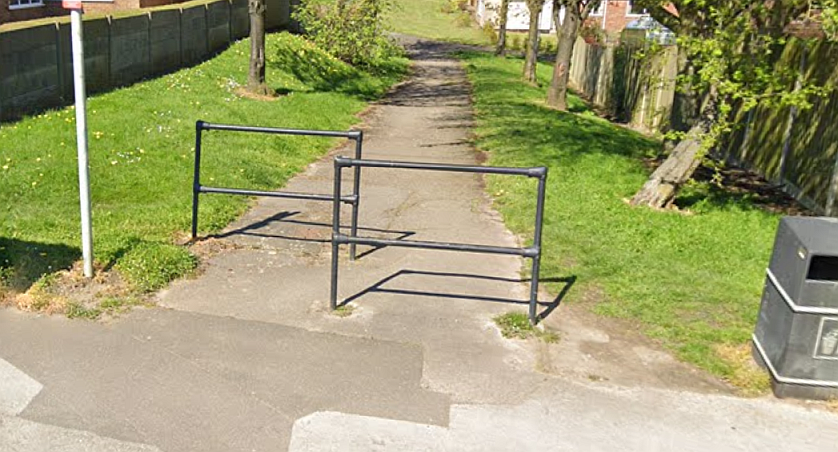
What is the best way to cut off a pipe sticking out of a surface cleanly? (Actually these are is 30 or 50 year old 2" hollow railing sticking out of the asphalt). This is what I may want to cut - a pipe constructed anti-wheelchair barrier on a local footpath. These are illegal under several areas of law, but if I put in a complaint most Councils in the country would say "yeh, we'll get onto it", then take 6 months or 5 years to schedule in the 60 minutes of work it would take. So if a competent volunteer offered to do it, what would be the best tool - clearly it needs to be cut off within a few mm of the ground - perhaps 5mm max, based on the official specifications for maximum accessible height for a drop kerb before it becomes a hazard. What is the appropriate tool and can anybody point me to one? I'm thinking either a pipe cutter, or a battery powered multitool. Cheers Ferdinand